


Table of Contents
You can have a removal day booked and still run out of boxes on Thursday night. It happens when you count bedrooms but forget cupboards, books and the garage. A useful whole-house packing supply order starts with your belongings, not a random bulk pack. The right packing supplies for moving house depend on what your cupboards contain.
Typical Sydney planning ranges start at 20–35 cartons for a studio or one-bedroom home. Allow 35–60 for two bedrooms, 60–95 for three, and 90–140+ for four or more. These are estimates, not fixed requirements. Storage areas decide the final count.
This guide explains quantities, room allocations and the costs that creep into an order. You’ll also get a simple quantity calculation and Sydney ordering checks.

Recommended Quantities by Home Size
Start with a home-size estimate, then count each packed room. Furniture, mattresses and large appliances need protection, but they don’t count as moving cartons. Consider your box tally a shopping guide, not your removalist’s truck-volume calculation.
| Home size | Planning range | Main adjustment |
| Studio / 1 bedroom | 20–35 cartons | Storage cage, books, kitchen |
| 2 bedrooms | 35–60 cartons | Second bedroom, study, linen |
| 3 bedrooms | 60–95 cartons | Children’s items, garage, pantry |
| 4+ bedrooms | 90–140+ cartons | Extra rooms, shed, years of storage |
| Large 5-bedroom home | 110–160+ cartons | Extensive stored belongings |
These ranges assume a normally furnished home and include a small allowance for specialty cartons. Add another 10–15% of spare flat-packed cartons if returns are permitted. Heavily stocked garages or home libraries may need more.
Studio / 1 Bedroom
Allow 20–35 moving boxes for a studio or one-bedroom unit. Start with 8–12 book cartons, 10–17 tea chests and one or two specialty cartons. Adjust the mix for a large wardrobe or kitchen.
A compact Parramatta unit might need only 22 cartons. A one-bedroom flat with books and a storage cage could need 35. Count what’s inside the cupboards before paying for a bundle.
2-Bedroom Unit / Home
Plan 35–60 boxes for a two-bedroom unit or home. A working estimate is 15–25 book cartons, 15–28 tea chests and two or three specialty cartons. Add more small boxes for books, crockery and pantry supplies.
A second bedroom used as a study changes the order. Archive boxes, monitors and paperwork need different protection from bedding and clothing. Think about what each room holds, not simply its name.
3-Bedroom Home
Allow 60–95 cartons for an average furnished three-bedroom house. A sensible 68-carton starting order includes 30 book boxes, 35 tea chests and three portarobes. Count fragile cartons separately if you need specialist sizes.
For a clearer room plan, use the whole-house move checklist for Sydney alongside this order. It helps uncover spaces that a basic bedroom count misses.
4+ Bedroom Home
Start with 90–140+ moving boxes for a four-bedroom house. A large five-bedroom household may need 110–160 or more, particularly with extra storage. These estimates include specialty cartons but exclude furniture protection.
A big suburban house in Blacktown or the Hills District can hide years of stored belongings. Complete the shed inventory before ordering. Otherwise, your last room can swallow the entire spare-box allowance.
What Affects Whole-House Packing Supply Quantities ?
The number of bedrooms is only the first clue. Storage density, room use and item weight affect the real order. Two identical floor plans can hold very different amounts of belongings.
- Length of occupancy: Long-term homes often collect books, spare kitchenware and seasonal items.
- Children and hobbies: Toys, games, craft supplies and sporting gear add cartons quickly.
- Room purpose: A study or home library needs more book cartons than a guest bedroom.
- Storage: Garages, loft spaces, sheds and unit storage cages need their own count.
- Decluttering: Sell, donate or recycle unwanted items before buying cartons.
- Access and timing: A unit lift booking or long carry makes neatly sealed cartons more important.
A move from a small unit is not always smaller than a sparsely furnished house. Walk each room with a notebook. List the cupboards, shelves and loose items that need boxing.
Did you know?
Your removalist estimates truck space from the whole inventory, including furniture. A carton count alone doesn’t determine truck size.
Room-by-Room Packing Supply Allocation
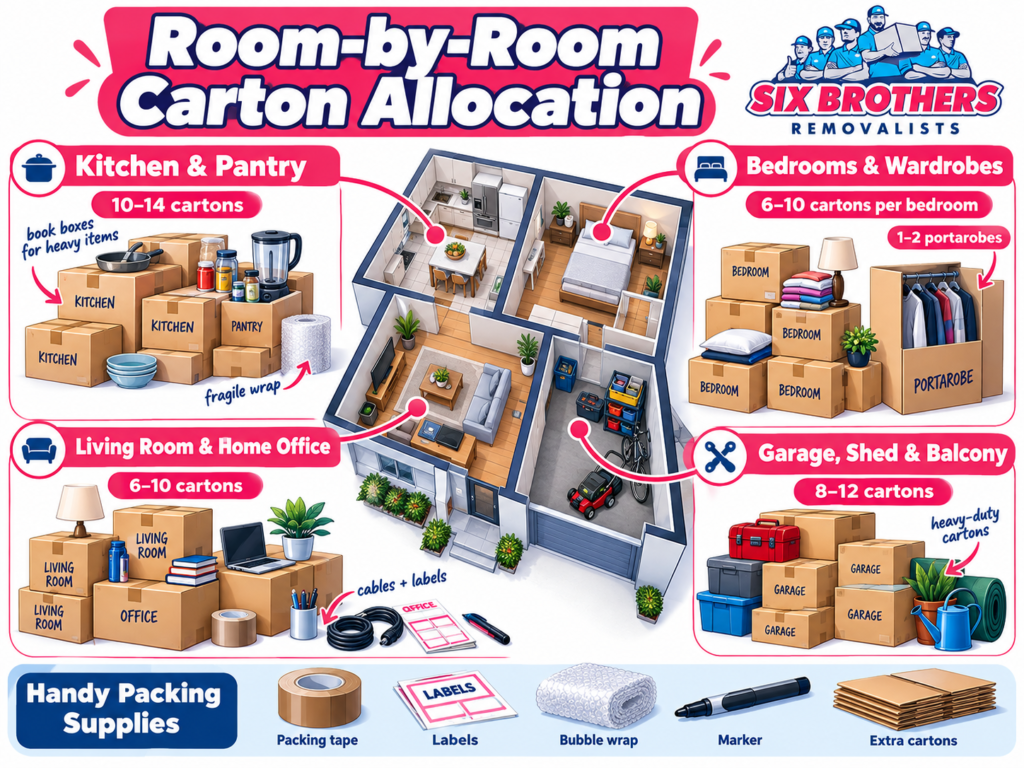
Allocate cartons by room before ordering the final total. This works like a shopping list for each cupboard. A whole-house number only becomes useful when every room has a share.
For a sample 75-carton home, allocate 20 to the kitchen and 22 to bedrooms. Set aside 13 for living areas and 20 for the garage. That adds to 75. Rebalance after checking what you own.
Kitchen and Pantry
A typical family kitchen may need 12–25 cartons, mainly smaller, strong boxes. Add clean packing paper, glass dividers and tape. Pantry tins, plates and jars become too heavy inside oversized cartons.
Our kitchen packing checklist explains which cupboards to pack first. Save a small last-day kit for plates, cups and breakfast supplies.
Bedrooms and Wardrobes
Allow roughly 8–15 cartons per occupied bedroom, depending on clothing, books and stored items. Use tea chests for linen and light bedding. Consider portarobes for hanging clothes that need crease protection.
Keep medication, documents and the first night’s clothing out of the truck cartons. Pack these into a separate essentials bag. Don’t use a full-height wardrobe carton for heavy shoes.
Living Room and Home Office
Budget 8–18 cartons for books, games, cables, ornaments and office supplies. Use smaller cartons for books and filing. Screens need suitable fitted cartons or protective wrapping, not loose newspaper against displays.
Label cables before unplugging the computer or router. Photograph their connections if that helps. In a home office, one tidy cable bag can save hours after arrival.
Garage, Shed and Balcony
Set aside 10–25 or more cartons for a stocked garage, shed or balcony. Toolboxes, planter accessories, sports equipment and smaller hardware need separate groups. Keep heavy hand tools in compact, reinforced containers.
Do not place fuel, gas cylinders, paint solvents or other restricted goods into standard removal cartons. Ask your removalist about exclusions. Arrange safe disposal or separate transport where required.
Essential Packing Materials Checklist
Every whole-house order needs boxes, cushioning, strong tape and a clear labelling system. Buying cartons alone leaves fragile items and furniture exposed. Check sizes before ordering anything in bulk.
Boxes
Include small book cartons, medium or large tea chests and specialty cartons where needed. Choose clean, dry, undamaged boxes with sound seams. Ask whether your carton order includes reusable crates or returned-box conditions.
Wrapping & Padding
Order clean packing paper for dishes, bubble wrap for suitable fragile items, edge protection for mirrors and furniture blankets. Add mattress bags or fitted covers where needed. Never apply adhesive tape directly to polished furniture or picture surfaces.
For heavy or awkward belongings, review heavy-duty packing materials for Sydney homes. It explains how specialist materials differ from everyday packing paper.
Labelling & Tools
Buy two permanent markers, room labels, a tape dispenser and a box cutter. Add coloured stickers if multiple bedrooms look alike. Keep scissors and a spare tape roll in your packing kit.
Label each carton with destination room, contents summary, carton number and fragile status. Write on the sides, not only the top. Stackable cartons become much easier to identify after loading.
Choosing the Right Mix of Moving Cartons
Choose carton sizes around the weight and shape of your belongings. One giant carton may look cheaper until its base gives way. A practical order contains several sizes, not one uniform stack.
Book Boxes for Heavy Items
Use book cartons for books, canned food, records and compact tools. Smaller containers restrict weight and help the crew carry them safely. Six Brothers lists a book carton measuring 430 × 400 × 300 mm.
Never fill a large tea chest entirely with hardcover books. The result can be awkward and unsafe to lift. Split heavy items across several smaller cartons instead.
Tea Chests for Bulky Items
Use tea chests for pillows, folded clothing, cushions and other lighter belongings. Six Brothers lists tea chests measuring 600 × 430 × 400 mm. Keep the heaviest items low, even inside a large carton.
These boxes also work for toys and mixed household items. Fill hollow spaces with paper or soft fabrics. A nearly empty tea chest can crush beneath another box.
Portarobes for Hanging Clothes
Choose portarobes for suits, dresses and hanging clothes. Count the length of the hanging rail you need. One wardrobe carton cannot hold an entire walk-in wardrobe.
Ask whether the carton and hanging bar are included in the quoted price. Returnable boxes may also carry a deposit. Confirm the collection window before removal day.
Specialty Carton Sizes
Use fitted cartons or protective packs for televisions, mirrors, pictures, bottles and archive files. Check measurements rather than relying on a size label. Large screens may need original packaging or professional packing.
Do not order ten specialty cartons without identifying ten matching items. Start with a list of actual fragile and awkward pieces. That prevents an expensive pile of unused protection.
Carton Strength and Weight Limits
Check the manufacturer’s marked limits and the removalist’s handling guidance. Box strength depends on board grade, seams and moisture. There isn’t one safe weight limit for every cardboard carton.
Some removalists may ask for unsafe or damaged cartons to be repacked. Confirm the company’s handling requirements beforehand. Keep heavy cartons manageable for one person using safe technique.
Extra Packing Supplies for Fragile and Bulky Items
Fragile and bulky possessions need protection beyond standard cartons. List each large item before ordering covers or wrap. This avoids guessing the amount of protection for an entire lounge room.
Crockery and Glassware
Use clean paper, strong small cartons and dividers where useful. Wrap each glass and plate, then cushion gaps. Pack plates on their edges when their packaging supports this method.
Check cartons by gently testing for internal movement before sealing. If glass rattles, add more cushioning. Mark the room and fragile status, but never rely on stickers alone.
TVs, Mirrors and Artwork
Measure screen width, mirror height and frame depth. Use fitted screen cartons, corner guards or picture packs. Prevent pressure on TV panels and picture glass.
Never place bare adhesive tape across a painted artwork or screen. Ask for trained packing support when items are high-value or unusually fragile. Insurance and cover terms should be confirmed separately.
Mattresses and Upholstery
Use correctly sized mattress bags and clean upholstery covers. A king mattress needs different protection from a single mattress. Avoid wrapping damp fabric or leather without considering ventilation.
Furniture blankets and stretch film can protect some exposed areas. Your removalist should explain what their furniture-protection service includes. Covering everything yourself may duplicate included work.
Large Household Appliances
Prepare fridges, washing machines and other whitegoods according to manufacturer instructions. Drain hoses, secure loose parts and protect corners. Keep screws and fittings in labelled bags.
Do not assume every appliance needs a cardboard carton. Many large appliances travel under blankets and straps. Check with the crew before purchasing expensive oversized packs.
How to Calculate Packing Tape, Paper and Bubble Wrap ?
Calculate each consumable from the cartons and fragile items you actually have. A box estimate is only the starting point. Use a simple formula, then add a modest backup allowance.
- Tape: Count three full strips per carton for a reinforced H-seal, where appropriate. For 50 cartons, that’s 150 strips. If each strip averages 60 cm, allow 90 m before waste and repairs.
- Packing paper: List glassware, crockery and other fragile items. Start with one 5 kg pack for a modest kitchen. Add another pack when you have many dishes or decorations.
- Bubble wrap: Measure the items that need it. Allow two protective layers where suitable and add overlap. Don’t buy rolls based solely on the number of bedrooms.
- Labels: Allow at least one main label per carton, with spares for repacking. Two side labels improve visibility when boxes stack.
If you prefer professional packing, ask Six Brothers about an itemised packing and removals service. Clarify which cartons, protective materials and labour are included before agreeing to the quote.
Inventory & Tracking Tools
Track each carton with a number, room and brief contents note. You don’t need a complicated app. A simple spreadsheet or notebook works well for most Sydney households.
Create columns for Box ID | Destination room | Contents | Fragile | Packed | Unpacked. For example, K07 might mean kitchen carton seven. Match the same code on two sides of the box.
Photograph high-value items before packing them. Record serial numbers for electronics where useful. Keep this inventory accessible during the move, not inside a sealed carton.
Whole-House Packing Supply Costs in Sydney
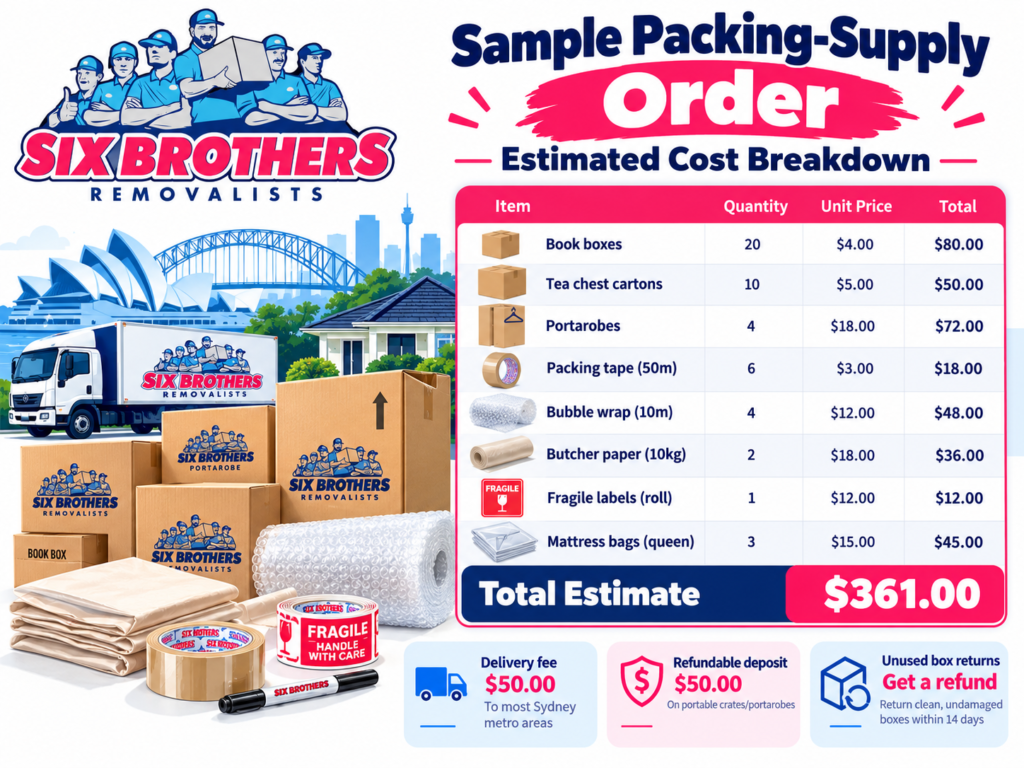
A packing supply budget depends on carton sizes, padding, special protection and delivery. Compare the whole order, not just the cheapest box. Returns and refundable deposits can change your final out-of-pocket cost.
Carton and Consumable Costs
Six Brothers’ published box-order page lists book cartons at $5.50, tea chests at $6.05 and portarobes at $22. It also lists 5 kg packing paper at $27 and tape rolls at $6.35. Confirm current prices, GST treatment and any refundable bond terms before ordering.
For an illustrative three-bedroom basket, take 30 book cartons and 35 tea chests. Add three portarobes, four tape rolls and two 5 kg paper packs. The listed item amounts total $522.15, before specialist protection and delivery.
That figure represents a sample listed-price order, not a confirmed Six Brothers quote. Some cartons may be returnable under separate deposit rules. Delivery and final net cost depend on your booking.
Sydney Delivery and Collection Fees
Delivery can change a cheap carton order into an expensive one. Ask for the full amount to reach your suburb. Confirm collection charges, delivery window and access requirements before paying.
Six Brothers’ box-order information currently lists Wednesday delivery and pick-up arrangements, subject to booking. Request a confirmed date early. Don’t assume same-day supplies will be available in every Sydney suburb.
Refundable Box Deposits
A refundable deposit is money paid upfront and returned when conditions are met. Ask which box types qualify, what condition counts as acceptable, and whether collection costs apply.
Six Brothers advertises full deposit refunds for qualifying boxes returned in the same condition. Terms apply. Confirm your eligibility and the required collection or drop-off process.
Unused Supply Return Policies
Unused tape, paper and unopened carton packs may have different return rules. Keep receipts and packaging until your move is complete. Ask the supplier what they will buy back or collect.
When to Order Packing Supplies Before Removal Day ?
Order your main packing supplies two to four weeks before removal day, where practical. This leaves time for packing, corrections and a top-up. Large homes may benefit from ordering earlier.
- Four weeks out: Declutter, count storage spaces and request packaging prices.
- Three weeks out: Order base cartons, paper, tape and special packs.
- Two weeks out: Pack low-use rooms and review what’s left.
- One week out: Check stock and arrange any extra cartons.
- Final day: Prepare an essentials bag and confirm labels, access and lift bookings.
A unit move in Sydney’s CBD may also require a strata-approved lift time. Check building rules before arranging deliveries. A late carton delivery can create a last-minute packing squeeze.
Where to Source Supplies in Sydney ?
Sydney households can buy, borrow or hire packing supplies through several channels. Compare carton quality, sizes, return conditions and local delivery. Cheapest upfront isn’t always cheapest after a move.
Full-Service Removalists
Many removalists can provide packing materials alongside a booked move. Ask whether boxes, paper, wrapping and packing labour are separate charges. That makes comparing an itemised quote much easier.
Removalist Box Bundles
Bundles offer standard carton mixes sized for different homes. Six Brothers advertises house-moving packs for studios through larger homes. Compare the pack list against your own room inventory before buying.
A two-bedroom bundle may work poorly for a book-filled study. Swap carton sizes if the supplier allows it. The right mix matters more than the word ‘bundle’.
Reusable Plastic Box Hire
Plastic crates can suit short local moves, especially when you can unpack quickly. Ask about hire length, stacking rules and collection fees. Late returns can reduce the savings you expected.
Crates may not suit every oversized or fragile item. Still plan for picture protection, mattress covers and bubble wrap. Reusable doesn’t mean protection-free.
Retailers
Hardware shops, office suppliers and packaging retailers sell individual cartons and tape. Buying locally can help with a small top-up. Compare internal dimensions, board strength and price per usable carton.
Second-Hand
Second-hand cartons can reduce costs when they are clean and strong. Inspect bases, corners and water damage first. Avoid boxes that smell damp or held leaking products.
Use new or suitable heavy-duty cartons for valuables and heavier items. A damaged box can cost more than the saving. Never use food-stained cartons for clean clothing.
Free & Cost-Saving Options
Ask local community groups or neighbours for reusable boxes. Keep only cartons that pass a basic strength check. Use towels for some padding without risking damage to delicate items.
Avoid collecting random box sizes without checking the load. They can be difficult to stack securely. A standard carton mix makes packing and truck loading simpler.
Pro-Tip
Order the boxes you can count, then reserve a small top-up. Check the supplier’s return terms first. This reduces overbuying while protecting your packing schedule.
Finalise Your Whole-House Packing Supply Order
Finalise the order only after checking every room and fragile item. A useful order list contains quantities, carton sizes, consumables, delivery dates and return conditions. Keep your total visible while requesting quotes.
Before you pay, confirm the following:
- Count each room, balcony, storage cage and garage shelf.
- Split the carton total between book boxes, tea chests and special sizes.
- Add paper, suitable protective wrap, tape and labels.
- Check delivery charges, GST, deposits and unused-item returns.
- Confirm what the removalist already supplies for furniture.
- Keep a separate first-night bag and spare flat cartons.
For Sydney moves, Six Brothers Removalists can discuss packing needs and removal options. Call 1300 764 372 or email info@sixbrothersremovalist.com.au to request an itemised quote.
Where to Recycle or Re-use Boxes After the Move ?
Reuse sturdy cartons for storage or pass them to another household. Ask whether the supplier collects returnable boxes before flattening them. A refundable box return may save more than recycling.
For cartons you cannot reuse, flatten clean cardboard and follow your council’s rules. The City of Sydney moving and recycling guide explains local options. It says clean flattened cartons can go into the yellow-lid recycling bin.
Don’t put bubble wrap into the yellow-lid bin. Check participating soft-plastic drop-off points or place unusable material in the correct waste stream. Council options vary by suburb.
A well-counted order leaves fewer unused cartons, less waste and a calmer removal day. That’s the goal: buy enough to protect your home without paying for clutter twice. If you want help checking the order, phone 1300 764 372.
FAQs
What packing supplies do I need for a kitchen?
Choose small cartons, paper, cushioning and clear labels. Wrap crockery separately and fill gaps to prevent movement.
Should I order extra boxes for a garage?
Yes, when shelves contain loose gear. Count each storage shelf and toolbox before adding your spare allowance.
How much tape do I need for 50 moving boxes?
Allow 90 m for three 60 cm strips each. That is a worked example, not a fixed rule. Your carton width and sealing method may require more.
Can I return unused moving boxes?
Only when the supplier’s current policy allows it. Confirm deadlines, condition rules and transport fees before placing the order.
Do Removalists Pack for You?
Some do, including Six Brothers’ advertised packing service. Confirm whether you need whole-house packing or just fragile rooms. Pricing and materials depend on the agreed service.
Where to Buy Removalist Boxes?
Try removalists, packing retailers and local hardware shops. Confirm availability before driving across Sydney for a specific size.