


Table of Contents
Packing a big Sydney home takes more than extra cardboard boxes. Books strain carton bases. Glass tabletops need rigid support. Long driveways leave wrapped furniture exposed to rain.
Start with strong cartons, suitable cushioning, furniture covers and surface protection. Match every material to the item’s weight, shape and travel conditions. This guide explains what to buy, how much to allow and where stronger protection matters.

Essential Heavy-Duty Materials by Category
The essentials are double-wall cartons, wardrobe boxes, blankets, cushioning, tape and fitted covers. Choose the materials around your actual inventory, not the bedroom count alone. One size rarely fits all when a home includes a garage and study.
Double-Corrugated Cardboard Boxes
Double-corrugated cardboard boxes use two corrugated layers for extra resistance against crushing. Choose compact book cartons for books, tools and small appliances. Reserve larger tea chest cartons for lighter bedding, cushions and toys.
Look for the maker’s printed weight or stacking guidance. Two boxes with similar dimensions may have different ratings. Carrying a lighter, tightly packed carton beats dragging an oversized one downstairs.
Port-a-Robes (Wardrobe Boxes)
Port-a-robes keep hanging clothes on a fitted rail during short removals. They’re useful for work shirts, coats and dresses. Avoid stuffing the base with shoes until the supplier confirms its load rating.
A full family’s wardrobe may need several cartons. Count hanging rail space rather than wardrobes alone. Empty hangers and heavy shoes can travel in smaller boxes.
Padded Furniture Blankets
Furniture moving blankets cushion timber edges, cabinet doors and upholstered frames. Fold them over exposed corners before securing them with suitable straps. Avoid taping directly onto finished wood, leather or paint.
Ask whether removalist furniture blankets arrive clean and dry. Ask if the crew supplies enough for the load. Blanket hire may make more sense than buying dozens. Check that enough covers remain available for the return trip or storage.
Industrial Bubble Wrap & Kraft Paper
Industrial bubble wrap protects fragile surfaces when supported by a suitably strong outer carton. Kraft packing paper fills gaps and separates plates, bowls and ornaments. Neither material can rescue a crushed box base.
Use clean paper directly against delicate finishes where suitable. Add cushioning outside that first layer. For a practical kitchen sequence, follow our kitchen packing checklist.
Stretch Wrap & Mattress/Lounge Covers
Stretch wrap holds blanket layers together and can contain loose furniture parts. It isn’t a substitute for padding. Don’t seal damp timber or leather tightly inside plastic for extended periods.
Use correctly sized mattress bags and lounge covers for dust and splash protection. Tape the cover closed without attaching adhesive to upholstery. Leave access for safe lifting and carrying.
How Much Heavy-Duty Packing Material Does a Large Sydney Home Need ?
A furnished five-bedroom Sydney home can start with about 80–140 cartons. That’s a planning range, not a guarantee. Garages, sheds, linen cupboards and hobbies can change it quickly.
Six Brothers’ five-to-six-bedroom bundle lists 30 large cartons, 30 medium cartons and 15 port-a-robes. It also lists 25 metres of bubble wrap, 15 kilograms of paper and six tape rolls. That’s a starter bundle, not a full inventory assessment.
| Material | Starter amount | Typical use |
|---|---|---|
| Large tea chest cartons | 30 | For light bulky contents |
| Medium cartons | 30 | For mixed household goods |
| Port-a-robes | 15 | For hanging clothing |
| Bubble wrap | 25 metres | For supported fragile items |
| Packing paper | 15 kilograms | For wrapping and cushioning |
| Packing tape | 6 rolls | Seal cartons securely |
Illustrative starter bundle published by Six Brothers. Check current availability and inclusions.
Illustrative starter bundle published by Six Brothers. Check current availability and inclusions.
Start with each cupboard, shelf, drawer and garage rack. Count heavy items separately from soft contents. Add a modest spare allowance. Our five-bedroom moving box guide explains the room-by-room method.
Packing tip: Order core supplies two to three weeks early when possible. Leave time to replace weak cartons and source custom protection.
| DID YOU KNOW? A five-to-six-bedroom box bundle can contain fewer cartons than a particular house needs. Count every shelf, garage rack and cupboard before ordering. |
How to Choose the Right Strength and Size of Packing Materials ?
Choose carton strength by weight, fragility and stacking pressure. Double-wall boxes usually suit demanding loads better than single-wall cartons. Triple-wall packaging may suit specialised freight, but is excessive for ordinary linen.
Check the manufacturer’s actual load rating, material condition and handle design. Smaller reinforced cartons generally work better for books and metal tools. Larger boxes suit light, bulky items. For mixed fragile items, add a snug inner box and protective gaps.
There is no universal safe lifting weight. Safe Work Australia considers load shape, handling distance and working conditions alongside weight. Keep every box manageable for the people lifting it.
The strongest packing tape should match the carton and its conditions. Good adhesive won’t fix poorly folded flaps or an overloaded base. How strong must the carton be? Check its printed limits. When comparing plastic moving crates with reinforced cardboard, check closure, carrying grips and stacking limits.
Specialised Protection for Oversized and Valuable Household Items
Oversized and valuable items need fitted protection rather than extra layers of random wrap. Give large flat pieces rigid support. Secure moving parts and identify anything needing specialist handling. Better safe than sorry when a single item is hard to replace.
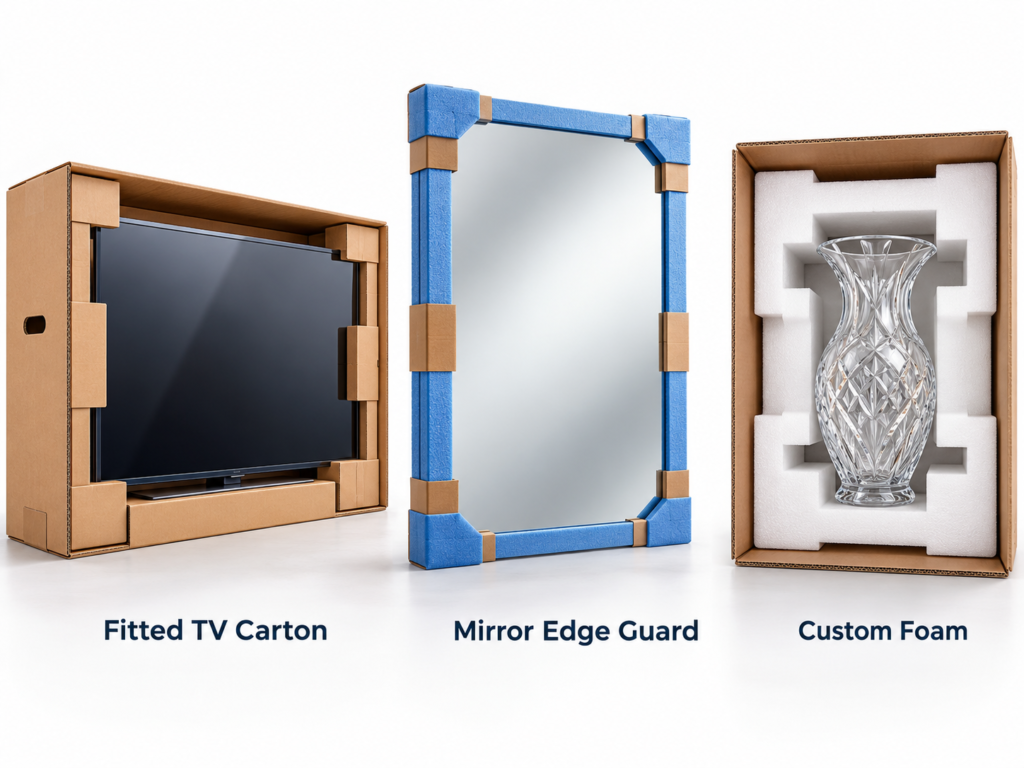
Large Mirrors and Glass Tabletops
Pack large mirrors and glass tabletops in suitable picture cartons or fitted crates. Cover their faces with clean soft protection. Add foam edge guards and stiff panels where needed.
Measure the glass before ordering supplies. Label the protected item and give the removalist its handling instructions. Never rest unprotected glass beneath stacked cartons.
TVs and Computer Screens
Flat-screen TVs and monitors travel best in original fitted packaging when available. Otherwise, use rigid screen cartons with appropriate foam supports. Remove stands and label their fixings separately.
Protect the screen without pressing hard on its panel. Keep boxed screens upright when their manufacturer requires it. Photograph cables before unplugging a multi-screen home office.
Artwork, Antiques and Collectables
Artwork and antiques need materials chosen for their finish, frame and value. Use acid-free tissue where appropriate, then protective boards and suitable cartons. Ask a specialist about delicate paint, gilding and fragile surfaces.
Photograph condition before packing. Keep a written inventory for collections and family heirlooms. Confirm transport cover and declared-value requirements before the removal begins.
Refrigerators and Large Appliances
Refrigerators need secured doors, protected corners and separate appliance accessories. Follow the manufacturer’s shutdown, defrosting and restart advice. Use straps and blankets without damaging controls or door seals.
Dishwashers and washing machines may need drained hoses and transit bolts. Don’t guess whether a machine can travel on its side. Follow its exact transport instructions instead.
Home Gym and Workshop Equipment
Home gym weights and workshop tools need small strong cartons or suitable rigid containers. Separate loose plates, blades and fittings. Wrap exposed metal edges and secure moving components.
Drain or isolate prohibited liquids according to the product’s instructions and carrier rules. Don’t put petrol, solvents or gas bottles into ordinary household cartons. List unusually heavy machines separately for the removalist.
Custom Foam Inserts and Protective Crates
Custom foam inserts stop unusual objects shifting inside rigid packaging. Protective crates may be worth hiring for marble, sculpture or fragile display pieces. They aren’t necessary for every lounge or dining chair.
Measure the object and the doorway route before ordering a crate. Our guide to specialty moving crates helps compare purchase, hire and custom options.
Protective Materials for Sydney Suburban House Layouts
Sydney suburban layouts need protection for both the furniture and the property itself. Walk the carrying route before anyone lifts a heavy item. A neat carton won’t help if a trolley gouges polished flooring.
Timber Floors and Stair Treads
Use non-slip floor runners and stair tread protection suited to the surface. Keep protection flat so it doesn’t create a trip hazard. Remove grit before laying it down.
Avoid unapproved adhesive on polished timber. Test any temporary covering where the supplier recommends. Carry heavy items instead of rolling unsuitable trolley wheels over delicate boards.
Door Frames and Hallway Corners
Use padded door-frame guards and removable corner protection for tight passages. Measure the widest furniture, not just the carton count. Check handles, light fittings and wall corners along the route.
A sofa may clear the doorway but catch at the next turn. Plan the angle and lifting team first. No use shutting the gate after the horse has bolted.
Split-Level Homes and Stair Access
Split-level homes need secure grips, stair coverings and a clear landing plan. Avoid stacking cartons where crews must turn. Keep pets and children away from lifting routes.
Ask the crew how it will move tall cabinets and heavy appliances. Some pieces need partial disassembly or specialist stair equipment. Don’t attempt an awkward lift alone.
Long Driveways and Outdoor Paths
Long driveways increase handling distance and expose supplies to changing weather. Use stable trolley routes and suitable ground protection where needed. Keep cartons off wet concrete while loading.
In Parramatta and Western Sydney, driveway access varies even within one street. Photograph slopes, gates and narrow side passages. Send them with your inventory before booking.
Patio and Poolside Furniture
Clean and dry patio furniture before covering it. Protect glass tables, umbrella parts and sharp chair legs separately. Label cushions and fittings for quick reassembly.
Poolside items may carry moisture, grit or chemicals. Keep them apart from clean indoor blankets and cartons. Ask about special handling for heavy outdoor planters.
How to Pack, Reinforce and Seal Heavy-Duty Cartons ?
Start with a sound carton and lock its base flaps correctly. Run strong tape along the centre seam and exposed edges. This H-taping method helps secure the top and bottom seams.
Place heavy items low and fill side gaps with appropriate cushioning. Keep the contents below the carton rating. Shake gently to check for movement, then close the top securely.
Label the room, contents and handling needs on two sides. Mark fragile cartons clearly without assuming that labels replace cushioning. Never use exposed tape to hold a loose metal tool in place.

How to Protect Packing Materials From Rain and Moisture ?
Keep packed cardboard above ground level and away from leaking walls. Store it in a dry room until loading. Cover the carrying route when rain threatens, but keep walkways safe.
Use clean plastic protection for short outdoor transfers. Don’t wrap damp upholstered or timber furniture tightly for long storage. Moisture trapped inside can cause staining and mould.
If a carton gets soggy, stop using it for heavy contents. Repack into a dry, sound replacement. A few minutes here can prevent an expensive spill.
Need help with specialist wrapping? Ask Six Brothers for a free written packing quote. Call 1300 764 372.
Common Heavy-Duty Packing Mistakes That Cause Damage
Most damage starts with mismatched materials or rushed packing. Catch the problem before the carton reaches the removals truck. An ounce of prevention is worth a pound of cure.
Overloading Large Cartons
Large cartons invite heavy loads, especially when packing books. Their size doesn’t prove their strength. Put dense items in smaller reinforced boxes and split the weight across more cartons.
Reusing Weak or Damaged Boxes
Avoid cartons with crushed corners, soft bases or torn handles. Old supermarket boxes may hide moisture damage. Reuse only clean, dry boxes that still meet the job’s demands.
Wrapping Timber and Leather Incorrectly
Don’t stretch plastic directly against delicate timber or leather for long periods. Use breathable protection where appropriate and keep surfaces dry. Secure blankets without applying tape to the finish.
Stacking Heavy Items Over Fragiles
Never put tool boxes above glassware cartons or delicate electronics. Load heavy, stable items low. Separate fragile packs from shifting furniture with appropriate restraint and padding.
Leaving Hardware and Fittings Loose
Bag screws, bolts and bracket parts for each furniture item. Label the bag and attach it to a suitable accessory carton. Loose hardware can scratch panels and disappear during unloading.
How Much Do Heavy-Duty Packing Materials Cost in Sydney ?
Costs depend on strength, quantity, specialty packaging and delivery. In an October 2026 online price check, Officeworks listed heavy-duty medium cartons at $6.50 each. Its heavy-duty large cartons were $8.50 each. These are retailer listings, not universal Sydney rates.
Officeworks also listed port-a-robes at $22 each. Six Brothers’ published packing supplies page lists a $5 bond for book or tea chest cartons. It lists a $22 port-a-robe bond and $6.35 tape rolls. Five kilograms of paper costs $27 on that list.
A refundable bond isn’t the same as a retail purchase price. Confirm return terms, materials included and delivery charges. Check the latest Officeworks moving box range before making your budget.
For a simple example, 20 medium cartons at the listed $6.50 rate cost $130. Add wrapping, tape and specialist boxes separately. A five-bedroom bill will differ because each household uses a different mix.
Why pay for cartons twice? Compare the complete supply cost, not just one cheap carton. Include protective covers, custom packing, crate collection and unwanted extras. An itemised quote protects your budget.
Where to Source Supplies in Sydney ?
Buy from retailers, box specialists, self-storage providers or your removalist. Check product ratings, collection options and delivery coverage. The best supplier can provide the correct item when your packing schedule needs it.
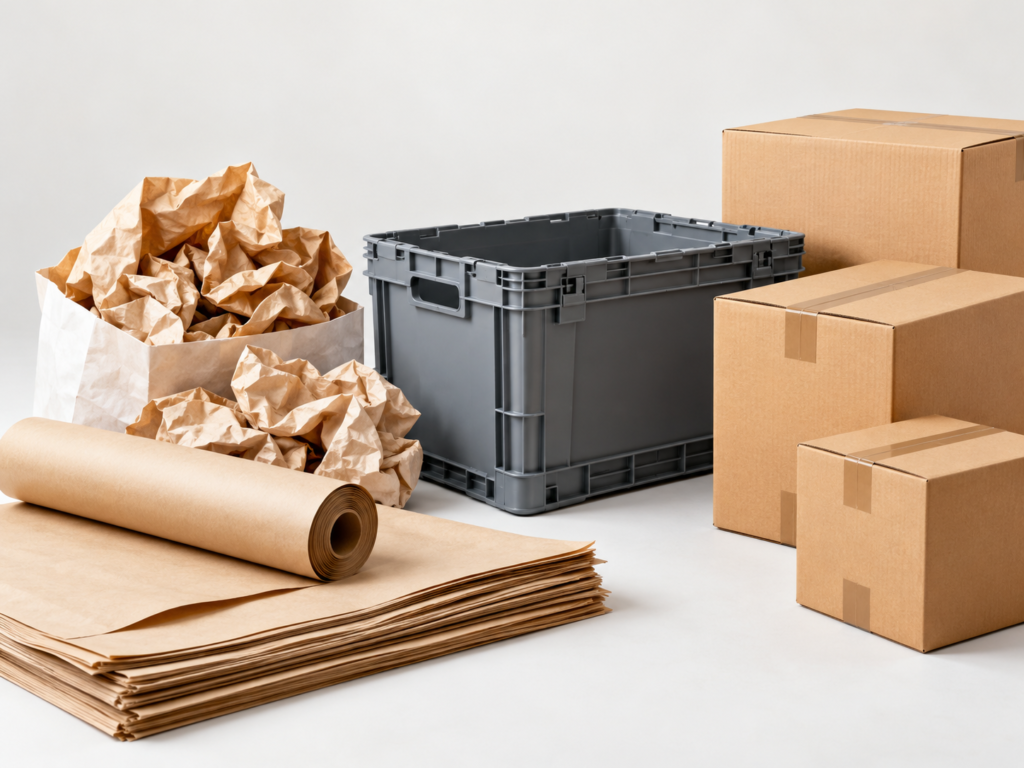
Local Box Shops & Self-Storage Providers
Local shops and storage centres often stock book boxes, tea chests and tape. Inspect the build quality before buying large quantities. Ask whether unused flat cartons can be returned.
Start with rated moving cartons from local suppliers or your removalist. Compare dimensions, strength and all charges.
Wholesale & Industrial Suppliers
Wholesale suppliers may suit families buying cartons in bulk. Ask for carton load information and delivery minimums. Industrial packaging is useful for crates, protective foam and large wrap rolls.
Buying huge quantities can backfire if sizes are wrong. Order a small sample first where practical. Measure your heavy items before committing.
Removalist Box Bundles
Removalist box bundles group sizes and protective materials into one order. Six Brothers lists packs for homes of different sizes. Review their contents against your inventory rather than assuming every room matches the bundle.
Ask what is purchased, hired or provided against a bond. Clarify whether blankets, mattress covers and unusual items cost extra. The real cost belongs in writing.
Eco-Friendly Heavy Crates & Delivery Options
Reusable plastic moving crates can reduce one-use cardboard and simplify stacking. Compare hire duration, crate dimensions, delivery fees and collection rules. Water-resistant crates aren’t a licence to leave valuables in the rain.
Use recycled cardboard only when its strength suits the contents. Reuse clean void fill and return sound cartons when possible. Flatten empty boxes and check your council’s recycling rules.
Sydney suppliers may deliver to Blacktown, Parramatta or the North Shore. Check the actual postcode, stairs and collection window before ordering. A box that arrives after packing day is no bargain.
When Should Large Sydney Homes Use Professional Packing Services ?
Use professional packing when time, fragility or access makes DIY risky. Large kitchens, valuable artwork, oversized glass and tight stairs create extra work. You can also book partial packing for the difficult rooms.
Six Brothers Removalists offers packing and removals for Sydney households. Tell the team about glass, antiques, stairs and access before requesting a quote. Confirm exactly which materials, labour and protections the written price includes.
If you’re comparing Six Brothers Removalists with other providers, ask consistent questions. Do the NSW Government’s removalist checks before agreeing to terms. Review itemised charges, insurance conditions and exclusions.
The same checks matter for house removalists, furniture removalists and office removalists. Piano removalists may need fitted protection and specialist equipment. Interstate removalists usually plan for longer handling and transit. International removalists may also need destination-specific packing rules.
Likewise, an interstate removalist, interstate furniture removalists or a furniture removalist should explain their packing approach. Ask removalist companies whether a removalist truck hire price includes materials. Cheap removalists can still provide suitable packing, but check the written scope.
When searching removalists near me or removalist near me, compare more than distance. Search terms like ‘removalists Sydney’, ‘removalists Melbourne’ and ‘removalists Brisbane’ cover different service areas. For Sydney departures toward Melbourne or Brisbane, ask about transit-ready cartons and handling transfers.
FAQs
Do Removalists Pack for You?
Some do, including full or partial packing. Ask for an itemised scope and material list.
How many cartons should a five-bedroom Sydney home allow?
Start with 80–140, then count cupboards and storage areas.
Are double-wall cartons always necessary?
No. Use them for heavier or delicate loads, not every cushion.
Can I wrap leather lounges in stretch film?
Avoid sealing leather tightly for extended periods. Use suitable covers and breathable padding.
What should I pack in small heavy-duty cartons?
Books, tools, crockery and dense small appliances suit manageable, strong cartons.
Are reusable crates better than cardboard?
They can work well for regular shapes. Compare costs, handling and collection times.
Does moving insurance cover self-packed boxes?
Cover varies by policy and cause of loss. Check the wording before packing.
Where to Buy Removalist Boxes?
Try local box shops, storage providers or removalist bundles. Confirm ratings and delivery.
The right materials protect the contents and your schedule. Count first, protect each vulnerable item and check the route. Then choose DIY, partial help or full professional packing with confidence.