


Table of Contents
A whole-house move checklist needs more than bedrooms, boxes and a booking date. The missed items usually hide outside, above eye level or behind cupboard doors. A good list catches them before they become removal-day surprises.
Picture a family leaving a Parramatta house for a home in the Inner West. Their lounge and bedrooms are packed. Then someone opens the shed and finds two bikes, a ladder and a workbench.
This whole-house move checklist Sydney homeowners can use covers those overlooked corners. It also helps you build an accurate inventory, compare quotes and finish your final sweep.

Frequently Forgotten Items
The most forgotten belongings sit away from everyday living areas. Check these spaces before counting your boxes. It’s better to be safe than sorry.

Outdoor gear
Start with the garden, balcony, garage and shed. Count outdoor tables, pot plants, barbecues, hoses, tools, bikes and ladders. Include empty pots and loose shelves, not just packed boxes.
Heavy garage and shed items can change loading time and truck space. A dismantled trampoline still needs its frame, poles, net and fittings counted. Ask which outdoor items the crew can transport safely.

Hidden storage
Open every built-in cupboard, attic hatch and under-stair door. Check beds with drawers, hallway cabinets and the top garage shelf. Don’t forget the boxes kept behind larger furniture.
A wardrobe count means little if its top shelf holds six storage tubs. Make each hidden space its own line on your inventory. Little things add up quickly.
Local commitments
Your belongings aren’t the whole moving job. Note school pickup, pet care, key collection and cleaning bookings. Allow time for building access or a final rental inspection.
Sydney traffic can turn a tight schedule into a squeeze. Keep appointment times beside your moving checklist. Give yourself a bit of breathing room.
Appliance contents
Check every fridge shelf, freezer drawer and dishwasher rack. Empty washing-machine pockets and dryer lint compartments. Look inside the oven, microwave and storage drawer below it.
Confirm appliance preparation with your removalist before unplugging or draining anything. Follow manufacturer advice for transport locks and standing times. No one wants a soggy surprise.
Sydney-Specific Moving Risks
Sydney access can affect the schedule even when your inventory is perfect. Plan both addresses, not just your current home. The devil is in the detail.
Parking restrictions
Check parking signs, clearances and loading access at pickup and delivery. A narrow street in Newtown needs different planning from a Parramatta driveway. Never assume a removals truck can stop outside your door.
Tell your removalist about time limits, bus zones and long carries. Ask the relevant council about any permits or approved loading arrangements. Send photos of the access area before accepting a quote.
Strata and lift bookings
Ask your building manager about lift bookings, move windows and loading docks. Confirm any lift protection, deposits or access-card rules. Save approval emails where you can find them.
NSW strata schemes have by-laws residents must follow. Read the NSW strata by-laws guidance if you need to check your obligations. Missing a booking can delay an otherwise organised move.
Narrow access
Walk the route from each room to the truck. Measure tight doorways, stair turns and side gates. Flag steep driveways, low branches and shared corridors.
A sofa may fit the lounge but not the stairwell. Photograph corners and measure bulky pieces before the crew arrives. It pays to know the lay of the land.
Why You Need a Moving Checklist ?
A moving checklist protects your time, budget and belongings. It connects four jobs: inventory, access, quote and final handover. Without that link, even careful packing leaves gaps.
A moving house checklist Australia guide often starts with utilities and address changes. That’s useful, but a Sydney whole-house move also needs a load list. Your moving out checklist Australia tasks should cover both.
Use a first time moving house checklist if this is your first relocation. Then add specialist items, truck access and quote details. This becomes your ultimate moving house checklist without turning into a novel.
DID YOU KNOW? NSW Government guidance recommends a written, itemised quote. It says the removalist contract should cover the household inventory.
Did you know?
NSW Government guidance recommends a written, itemised quote. It says the removalist contract should also cover the household inventory.
Choose Sydney house removalists who review the inventory and both addresses. A full list gives everyone the same picture. It makes comparing services much easier.
Build a Complete Moving Inventory Before Getting a Quote
Your inventory should show what moves, where it sits and how it needs handling. Treat it as the job’s map. Better information can reduce awkward quote changes.
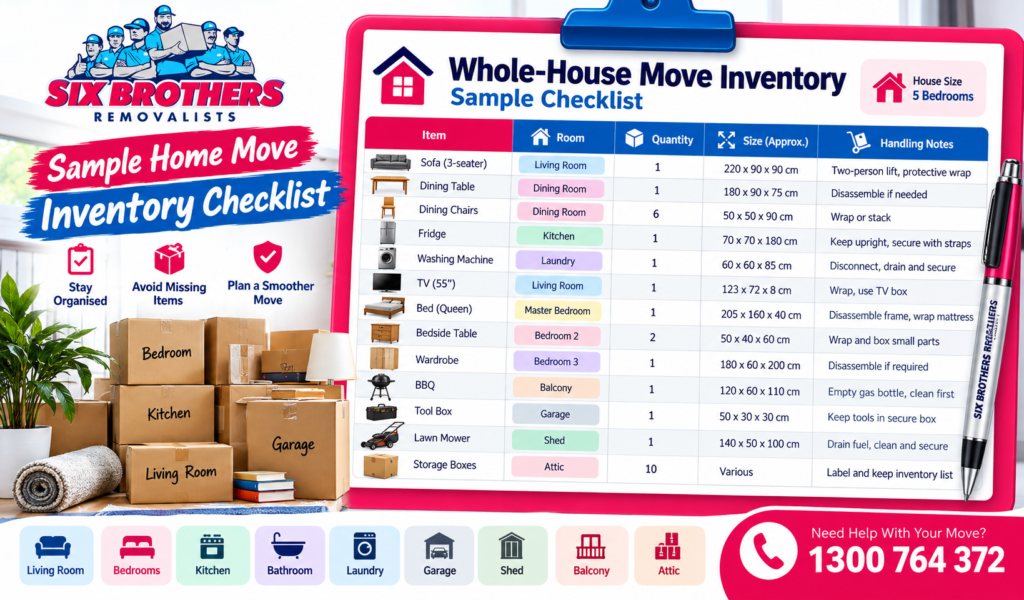
List Every Room Separately
Start at the front door and follow one fixed route. Record bedrooms, bathrooms, kitchen, laundry, living areas and storage. Give the garage, shed and balcony separate rows.
Create columns for item, quantity, location, size and handling notes. A simple removalist inventory list beats a vague bedroom count. Photos can support unusual entries.
Count Boxes and Loose Items
Estimate packed cartons by room and update the number later. Add lamps, fans, baskets, rolled rugs and unpacked chairs. Each loose item still takes space. Separate “removalist furniture” from things you will carry yourself.
Use a spreadsheet as your moving inventory template. Keep one version everyone can update. The home moving calculator can help organise an early size estimate.
Flag Bulky Items
Mark large wardrobes, lounges, fridges, mattresses and outdoor settings. Add rough measurements where access looks tight. Record whether each piece comes apart.
A large couch and a collection of small boxes load differently. Ask furniture removalists about protection and carrying needs. Don’t leave bulky items until the last minute.
Record Disassembly Needs
List beds, tables, shelves, gym frames and desks needing dismantling. Count their fittings and label hardware bags. Photograph cable positions before taking desks apart.
Don’t assume every crew includes this work. Ask whether a furniture removalist handles disassembly and reassembly. Agree the scope in writing.
Identify Items That Need Special Handling
Some belongings need a separate handling decision before you confirm your booking. They may affect equipment, labour, vehicle choice or transport rules. A stitch in time saves nine.
Pianos and Safes
Record a piano’s type, floor level and staircase access. Note the safe’s approximate weight and whether it’s fixed down. Never guess about lifting requirements.
Ask for specialist handling and an item-specific quote. Piano removalist cost Sydney questions need the piano details first. Generic hourly prices cannot answer every access problem.
TVs, Mirrors and Artwork
Measure screens, mirrors and framed artworks. Photograph existing damage and record available cartons or cases. Mark glass and fragile surfaces clearly.
Discuss upright transport, edge protection and who supplies packing materials. Fragile items shouldn’t become an afterthought. Handle them with care from the outset.
Gym Equipment and Pool Tables
List treadmills, weight racks, exercise bikes and pool tables individually. Note loose weights, detachable arms and access restrictions. Include any specialist disassembly requirements.
A gym equipment removalist Sydney enquiry needs more than the word ‘gym’. A pool table may require separate expertise. Confirm suitability before adding either to the standard load.
Plants and Aquariums
Count large pots and plants that may not fit through side gates. Measure aquariums and note any water, animals or delicate equipment. Arrange safe separate care for living contents.
For interstate moves, check quarantine rules and transport restrictions. Interstate removalists may not accept every plant or animal-related item. Ask before planning the truck load.
Check Wall-Mounted and Loose-Fitting Items
Items fixed to walls are easy to overlook during a room count. Decide what stays and what travels. Don’t remove anything without checking your tenancy or sale agreement.
TV Brackets and Speakers
Identify brackets, soundbars, speakers and wall mounts you plan to take. Check whether fittings belong to the property. Label cables and small mounting parts together.
Photograph the setup before dismantling it. Keep remotes with the matching device. That saves a wild goose chase later.
Curtains and Removable Fixtures
List curtains, blinds and removable shelves that belong to you. Check which fittings must remain for settlement or the landlord. Measure long rails before packing.
Store screws in labelled bags with each fixture. Don’t leave them on a window sill. It’s an easy oversight.
Security Cameras and Sensors
Review cameras, smart doorbells and removable sensors. Confirm ownership and any required permissions before removal. Keep reset instructions and access details secure.
Deactivate accounts only when the property handover requires it. Check battery rules before packing devices. Better safe than sorry.
Chargers and Connected Devices
Search behind desks, TVs and bedside tables for plugged-in chargers. Count routers, smart hubs, power boards and spare leads. Unplug devices safely and label each cable.
Keep the internet equipment you’ll need at the new property accessible. Charge your phone before removal day. Simple jobs save headaches.
Create a Do-Not-Load List
A do-not-load list prevents essential or restricted items entering the truck by mistake. Use a bright label on one bag or box. Keep it with you.
Valuables and Documents
Keep passports, deeds, jewellery, cash and identity papers close. Carry irreplaceable photos and small heirlooms yourself where practical. Confirm the removalist’s insurance terms separately.
NSW Government advice warns that removalists need not provide goods insurance by law. Read choosing a removalist before accepting vague cover promises. Know what’s protected and what isn’t.
Medication and Essentials
Prepare medication, glasses, chargers, pet supplies and basic toiletries. Add water, snacks, a change of clothes and cleaning basics. These form your moving day essentials checklist.
Keep temperature-sensitive medication within its storage guidance. Put essential items in your own vehicle or hand luggage. Don’t bury them under cartons.
Keys and Access Cards
Collect property keys, garage remotes, fobs and parking passes. Separate old-property returns from new-property access. Note the contact who receives each set.
A missing fob can stop a whole crew at the lift. Confirm access times with your building manager. Keep spare keys off the truck.
Gas Cylinders and Flammables
Ask your removalist about prohibited items before packing. Many crews restrict gas cylinders, fuel, paint and other dangerous goods. Arrange lawful disposal or suitable specialist transport.
Reconcile Your Inventory With the Removalist Quote
Compare the final inventory with the written quote line by line. This catches extras before the truck arrives. No one wants a nasty surprise.
Report Late Additions
Send an updated list when you find missing cartons or furniture. Name the added room and item count. Request written confirmation of any price or scheduling change.
The Sydney removalist quote checklist helps you check what’s recorded. Don’t rely on a quick phone comment. Keep both parties on the same page.
Recheck Truck Requirements
Ask whether the revised load changes truck size or crew numbers. Mention long carries, stairs and parking limits again. The smallest missing detail can affect the day.
When checking removalist cost Sydney quotes, compare the same inventory. Cheap removalists may appear cheaper when one quote excludes bulky items. Ask for the complete scope.
Confirm Specialist Items
Match your piano, safe, pool table and fragile goods to the quote. Confirm who packs, lifts and protects each item. Ask whether specialist equipment or extra workers are required.
Don’t assume a general household rate covers every special item. Get inclusions and exclusions in writing. Better to sort it now.
Verify Included Services
Check packing, unpacking, disassembly, reassembly, storage and waiting time. Review travel charges, stairs, minimum bookings and payment terms. Ask how changes are handled.
A clear quote should match the complete inventory and agreed access. Six Brothers Removalists can review your list before pricing. Request a free quote with your details and photos.
Do a Final Property Sweep Before the Truck Leaves
Walk the empty home once the crew finishes loading. Use your inventory, not your memory. It’s the last chance to catch something small.
Walk Every Room
Open wardrobes, drawers and under-sink cupboards. Check the laundry, balcony, shed, garage and roof storage. Inspect spaces behind doors and underneath stairs.
Tick each room only after checking its empty shelves. Keep a second person near the truck if possible. Two sets of eyes help.
Scan Walls and Power Points
Look for artwork hooks, mounted devices, speakers and adapters. Check power points behind furniture for chargers. Remember curtain rods or detachable items you agreed to take.
Only remove fixtures that belong to you. Photograph anything remaining for handover. It keeps things above board.
Collect Keys and Remotes
Count door keys, mailbox keys, alarm fobs and garage remotes. Put each group in a labelled pouch. Confirm the handover arrangement before leaving.
Test that you still have new-home access. A locked door can derail the best schedule. Don’t cut corners here.
Photograph Empty Rooms
Take clear photos of walls, floors and any visible damage. Capture inside cupboards and the meter area where appropriate. Keep copies with your handover records.
Photos support a clear condition record, not a guarantee against disputes. Record any issues promptly. Then you can shut the door with confidence.
Pro Tips for a Stress-Free Move
The best checklist is one you’ll actually use. Save one version, assign owners and check progress daily. Don’t try to keep everything in your head.
Keep these three habits simple. First, photograph unusual items before requesting quotes. Second, use coloured labels for each destination room. Third, refresh your list after every packing session.
For how to prepare for removalists, leave safe walkways and parking information ready. Keep fragile goods visible and tell the crew about access changes. Your checklist is a practical handover tool.
FAQs
How to Prepare for Removalists?
Send the inventory, confirm access and label cartons. Keep keys, medicines and documents away from the load.
Do Removalists Disassemble Furniture?
Some do, but inclusions vary. Confirm which beds, tables and shelves need work before accepting the quote.
What do Sydney homeowners forget most often?
Outdoor gear, hidden storage, wall fittings and appliance contents. Finalise the room list before collecting quotes.
When should I update my moving inventory?
Update it whenever packed boxes or large items change. Send major additions to the removalist promptly.
Can I use this for interstate or international moves?
Yes, but check special restrictions separately. Interstate furniture removalists, international removalists and local crews may have different limits.
Should I hire a truck or a removalist?
Removalist truck hire can suit some DIY moves. Compare labour, equipment, time and the risk of damage first.
How do I compare local removalist companies?
Give each company the same inventory and access notes. Searches for removalists near me or removalist near me are just starting points.
Does this checklist help with other move types?
Yes. House removalists, office removalists and piano removalists can all use clearer inventories. The same applies to removalists Melbourne and removalists Brisbane bookings.
If you’re comparing removalists Sydney options, ask about the full job, not just the hourly rate. Use Six Brothers Removalists to explore local services and next steps. For a clear plan and an upfront quote, call 1300 764 372.
Get a free quote once your inventory is ready. Share both addresses, access photos and anything needing special handling. You’ll have a stronger starting point for removal day.