


Table of Contents
Outdoor furniture wrapping materials need to block scuffs without trapping heat or moisture. Sydney summer moves test both jobs. A cover that handles sunlight can still damage a damp timber table.
Picture a Parramatta family packing a six-seat setting before a hot removal day. The chairs look sturdy. Yet loose glass, wet cushions and bare metal edges need different protection.
This guide compares wraps, padding, packing methods and costs for outdoor furniture removals. It also explains when professional help makes sense. Start with the material, not the marketing label.
Top Heat-Resistant Wrapping Materials
The best heat-resistant wraps combine shade, suitable barriers and room for moisture to escape. Think of UV protection as sunscreen, not an icebox. Horses for courses applies here. What matters is how each layer touches your furniture. Can a sun-safe cover still trap dampness? Absolutely.
Sydney heat is a real planning factor. The Bureau of Meteorology’s January 2026 report recorded a 42.2°C day at Observatory Hill. Keep wrapped furniture shaded during outdoor loading whenever possible.
UV-Stabilised Heavy Duty Polyethylene
UV-stabilised heavy-duty polyethylene is useful as a temporary outer barrier during exposed loading. It helps reduce rain, dirt and sunlight exposure. UV treatment slows plastic breakdown, but does not make furniture cool.
Choose light-coloured, sturdy sheeting with enough slack around padded corners. Add an approved air gap where practical. Never press a sealed plastic sheet against damp timber or warm painted finishes.
Solution-Dyed Polyester with Breathable PU Coating
Solution-dyed polyester with a suitable PU coating works well as a reusable furniture cover. It balances weather protection with practical handling. Not every PU-coated cover breathes, so check the product’s actual ventilation design.
Look for covered vents, reinforced seams and secure adjustable straps. A light colour may reduce solar heating compared with a dark alternative. Put soft padding beneath the cover before loading furniture together.
Industrial-Grade UV Stabilised Shrink Film
Industrial-grade UV-stabilised shrink film can form a weather barrier around large outdoor settings. However, it needs careful installation and ventilation. Film performance depends on its rating, seam design and heat exposure.
A heat gun can damage finishes or create fire risks. Leave heat shrinking to trained workers using approved equipment. For ordinary home removals, padded and strapped covers are usually simpler.
Solution-Dyed Acrylic / Outdoor Canvas
Solution-dyed acrylic or outdoor canvas can shield delicate furniture from direct sun. Quality woven covers also allow some air movement. Water resistance varies, so never assume every canvas cover is waterproof.
Use them over padded timber benches, wicker sofas and outdoor dining chairs. Check colour transfer and rough seams first. They suit repeated household use when kept clean and completely dry.
Heavy-Duty Vented Covers
Heavy-duty vented covers are a strong option for temporary outdoor protection and later storage. Vents help humid air escape beneath a fitted cover. They do not replace drying or sensible shade.
Pick a cover that follows the furniture’s shape without rubbing sharp corners. Fasten it beneath the frame, not across a polished face. For summer removals, use padding before the weather cover.
Did you know?
UV resistance and heat resistance are different claims. A UV-stable sheet may survive sunlight while trapping moisture beneath it. Choose ventilation and padding separately.
Materials to Avoid
Avoid materials that seal moisture or rub against vulnerable finishes. A cheap cover can become an expensive lesson. When in doubt, test a small hidden patch first.
Standard Plastic Wrap / Tight Polyethylene Sheets
Standard plastic wrap is risky when tightened directly around outdoor furniture in heat. It can hold condensation against timber, wicker and cushions. Tight folds may also leave pressure marks on softer surfaces.
Use stretch film to hold padding together, not as a bare surface coating. Avoid direct bubble wrap on delicate varnish during prolonged heat. Never tape a furniture finish to hold plastic down.
Wrapping for Moving Versus Long-Term Storage
Moving and storage demand different wrapping choices. Horses for courses applies to both. A short journey needs strong impact protection. Weeks in a storage unit make ventilation and moisture control more important.
Same-Day Removal Protection
Same-day protection focuses on bumps, friction, dirt and short outdoor exposure. Use dry blankets, foam corners and secure outer covers. Remove temporary plastic once the items reach a safe indoor location.
If you are checking a whole-house move checklist, include the patio separately. Large outdoor settings can hide detachable glass, umbrellas and small fixings. An accurate list keeps handling plans realistic.
Extended Storage Requirements
Extended storage needs breathable, clean, dry covers and suitable indoor conditions. Avoid leaving timber or upholstery sealed in ordinary stretch film. Moisture can remain trapped even when the outside feels dry.
Stand removable cushions separately where the facility allows. Leave airflow around stored pieces and inspect them regularly. Confirm the storage provider’s rules before bringing damp outdoor items inside.
Safe Unwrapping After Delivery
Safe unwrapping starts with a stable furniture position and a careful inspection. Cut film away from surfaces, never towards them. Avoid sharp blades near painted edges, woven wicker or outdoor cushions.
Photograph tears, marks or damp patches before removing every layer. Let hot furniture cool in shade before fitting cushions. Reassemble fittings using the manufacturer’s guidance and your labelled bags.
Preparing Outdoor Furniture Before Wrapping
Preparation matters more than buying the thickest plastic. Clean, dry and dismantle what the manufacturer permits. Measure twice, cut once is still good moving advice.
Remove Dirt, Salt and Debris
Remove dirt and salt before covering the frame. Fine grit acts like sandpaper during a bumpy drive. Brush wicker joints, table grooves and chair legs carefully.
For coastal homes near Cronulla or Manly, rinse salt residue with appropriate cleaner. Follow each finish’s care instructions. Allow every washed surface to dry before adding protective layers.
Dry Furniture Before Packing
Dry furniture fully before wrapping it for removal. Check timber joints, cushion seams and hollow frame ends. Hidden water can stain fabrics or encourage mould when covered.
Don’t rely on a fixed drying time for every material. Humidity, airflow and timber thickness change the result. Wait until both surfaces and cushion inserts feel properly dry.
Dismantle Large Outdoor Settings
Dismantle oversized settings only where the manufacturer allows it. Remove detachable legs, umbrellas and glass tabletops. This can reduce awkward lifting through narrow Sydney side gates.
Take a phone photo before loosening fittings. Keep each piece supported while working. Stone tops and heavy glass may require specialist handling rather than home dismantling.
Secure Loose Parts and Fixings
Keep screws, brackets and caps in labelled sealed bags. Tape each bag to protective packaging, not bare furniture. Match labels with the table or chair they belong to.
Record the number of cushions, glass panels and frame sections. A useful garden and shed moving checklist catches these easily missed items. Share the list before the crew confirms its plan.

Protective Padding Beneath Heat-Resistant Wraps
Protective padding should sit between furniture surfaces and any outer cover. It absorbs small knocks and stops rubbing. Do not cut corners on padding. Like a seatbelt, padding works only when secured correctly.
Non-Abrasive Furniture Blankets
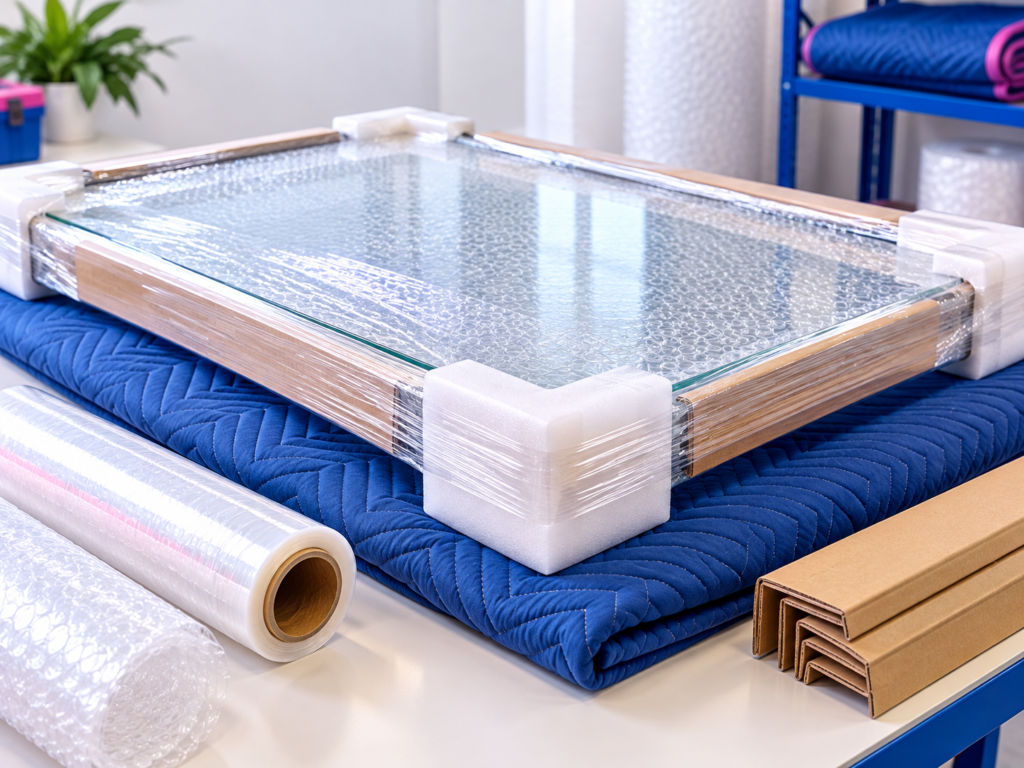
Non-abrasive moving blankets protect broad areas from scrapes. Use clean, soft blankets around tables, benches and metal frames. Keep gritty or wet blankets away from polished finishes.
Secure them with reusable straps over the padding. Avoid pulling the strap tight enough to dent wicker. Ask whether the crew supplies blankets before buying duplicates.
Foam Edge and Corner Protectors
Foam edge and corner protectors guard exposed table edges and chair legs. Choose non-marking foam without adhesive touching the furniture. Test the material against delicate timber coatings first.
Cover four tabletop corners, then protect exposed edges and leg feet. Add a blanket over those pieces. Secure the outer wrap without compressing the foam flat.
Glass Tabletop Protection
Glass tabletops need more than ordinary blankets. Remove the panel when its maker allows safe handling. Add corner guards and a rigid, correctly sized transport case or crate.
Keep glass upright only when the packaging and handling method require it. Do not rest heavy items against the pane. Confirm glass handling before booking your furniture removalist.
Timber and Metal Surface Barriers
Timber and metal need soft, clean surface barriers. Use acid-free tissue or suitable fabric beneath the blanket when needed. This reduces rubbing between finishes and moving padding.
Keep tape away from timber stain, varnish and powder-coated aluminium. Salt and grit are common coastal troublemakers. A quick wipe before padding prevents needless scratches.
Crucial Wrapping Tips for Hot Climates
Hot-weather wrapping works best with shade, airflow and removable soft items. Do not treat the cover like a sealed lunchbox. A little breathing room can prevent costly mistakes.
Integrate Air Vents
Use covers with purpose-made vents for furniture staying wrapped beyond loading. Vents help release humid air without exposing upholstery to splashes. Keep their openings clear of packed cartons.
Don’t cut random holes in rated shrink film. That may weaken the barrier or ruin its weather protection. Choose a product designed for airflow from the start.
Remove and Isolate Cushions
Remove cushions before wrapping outdoor frames whenever possible. Pack clean, dry cushions separately in suitable breathable bags. Keep them away from wet timber and sharp metal fittings.
Protect cushion corners without compressing foam for days. Label removable covers and inserts together. Avoid sealed plastic for prolonged storage unless the manufacturer permits it.
Avoid Dark Colors
Light-coloured covers are generally preferable under Sydney’s strong summer sun. Dark fabrics often absorb more solar energy. Still, colour alone does not prove a cover’s heat performance.
Check UV rating, fit, vents and surface contact together. Better safe than sorry when expensive outdoor upholstery is involved. Never leave wrapped sets in direct sun longer than needed.
Protecting Wrapped Furniture During Summer Loading
Summer loading needs a shaded staging area and a sensible truck plan. A truck can heat up quickly when parked. Keep your eye on the ball during longer loading delays.
Limit Direct Sun Exposure
Limit direct sun exposure while furniture waits for collection. Move covered pieces under a verandah or suitable shelter. Don’t place heavy tables on soft lawns that may become unstable.
For an Inner West unit, check lift bookings and access windows first. For a Parramatta house, plan the shortest clear path. Minimise the wait between wrapping and loading.
Reduce Heat Build-Up in Parked Trucks
Reduce unnecessary heat build-up through loading order and time management. Never depend on an unattended parked truck staying cool. Keep heat-sensitive covers and cushions out until the crew is ready.
The driver controls vehicle ventilation and load security. Don’t interfere with safety systems or opening procedures. Ask the team how it handles long hot-weather delays.
Check Wrapping After Heat Exposure
Check protective wraps after unexpected heat or rain exposure. Look for sagging plastic, moisture, loose ties and torn corners. Replace damaged padding before the furniture is stacked again.
Pay attention to painted metal and timber edges. These are easy places to miss early marks. Photograph anything concerning before the item travels further.
Securing Wrapped Furniture During Transport
Secure each item against friction, tipping and sharp edges. A good wrap cannot fix a poor load. When push comes to shove, stable loading matters most.
Use Surface-Safe Fastening Methods
Surface-safe fastening holds the blanket, not the furniture finish. Use webbing straps or suitable reusable ties over protected sections. Never stick tape directly to powder coating or varnish.
Protect contact points before tightening ratchet straps. Follow the crew’s lifting and restraint instructions. Excess force can crush wicker and deform softer furniture frames.
Prevent Friction Between Furniture Pieces
Prevent friction by separating chairs, benches and tabletop edges. Place padding between hard contact points. Avoid stacking delicate items beneath heavy stone or metal furniture.
Check whether nesting chairs can safely stack when padded. Some chair arms scratch each other despite identical shapes. Leave enough room for safe straps and unloading.
Protect Wraps From Tearing
Protect outer covers from bolts, sharp feet and exposed brackets. Add corner padding before applying sheeting. Replace torn film instead of hiding the tear under tape.
For awkward pieces, talk to Six Brothers Removalists about a suitable moving plan. Share measurements and photos before the quote. It’s easier to fix the plan than repair damage.
A safer move starts with an accurate outdoor inventory and a clear packing scope. Ask Six Brothers for a free quote when you need help. Call 1300 764 372 with your furniture list.
How Much Wrapping Material Do You Need?
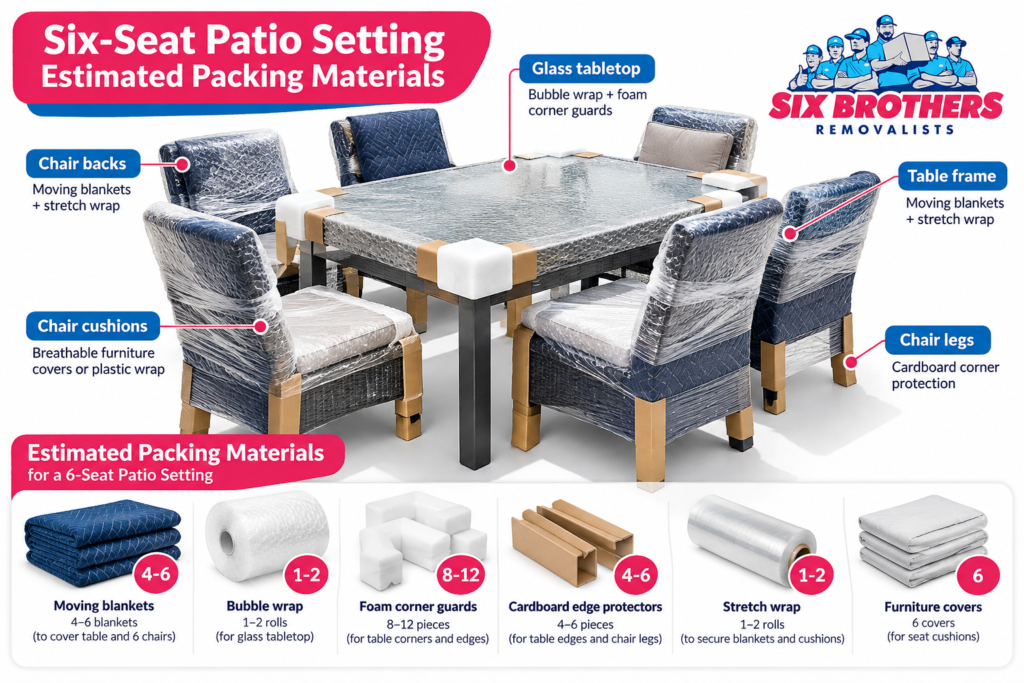
Calculate wrapping from actual furniture dimensions, not the number of seats alone. One size does not fit all. A six-seat setting might include one table and six chairs. Measure the length, width and height of each piece.
Start with this illustrative packing list for a six-seat patio set:
- Four to six moving blankets: Cover table surfaces and chair groups without bare contact.
- Four tabletop corner guards: Add longer foam pieces for exposed glass or timber edges.
- One suitable outer cover per large item: Check measurements and vent placement before buying.
- One roll of securing film or reusable straps: Secure padding without wrapping warm finishes directly.
- Separate cushion bags: Allow enough space for dry, uncompressed cushions and loose covers.
These are planning quantities, not fixed requirements. Bigger lounges, stone tops and non-stackable chairs need more. Allow extra padding rather than stretching a poor fit.
Outdoor Furniture Wrapping Costs in Sydney
Sydney wrapping costs depend on material quality, furniture size and labour. Cheap materials may waste money when used incorrectly. Compare apples with apples before accepting a packing quote.
DIY Wrapping Material Costs
DIY supply costs vary by store and product size. As checked in October 2026, Bunnings listed 1.8 × 2m quilted blankets at $13.15 each. Officeworks listed a 500mm × 400m clear hand-wrap roll at $27.
Four blankets cost $52.60 at that listed price. Add the $27 roll and a $10 bubble-wrap roll. The sample total becomes $89.60, before covers, corner protection and delivery.
This is a retailer-based example, not a standard Sydney moving price. Bubble wrap suits separated hard items, not direct contact with delicate hot finishes. Check prices and product suitability before purchase.
Professional Removalist Wrapping Charges
Professional wrapping charges depend on crew time, material use and special handling. Review extra charges for outdoor furniture and BBQs before finalising your inventory. There is no single reliable fee for every Sydney patio set. Ask for a written, itemised quote covering outdoor furniture.
A good quote should explain blankets, covers, dismantling, glass protection and any extras. The NSW Government’s removalist guidance recommends written, itemised quotes. Ask about GST, access delays, travel and insurance terms.
Professional furniture removalists may provide wrapping and transport support. Confirm inclusions rather than assuming every team supplies specialist glass crates. A clear quote helps avoid surprises on removal day.
When Professional Wrapping Is Worth It
Professional wrapping is worth considering for fragile, expensive or hard-to-handle outdoor furniture. Heavy glass, stone tables and delicate timber need planning. What good is a cheap cover if the glass arrives cracked?
DIY suits simpler stackable chairs and short journeys when you have suitable materials. Larger settings can benefit from tailored packing and careful loading. Don’t judge a quote by the headline price alone.
FAQs
Do Removalists Pack for You?
Many companies offer packing, but inclusions vary. Ask whether outdoor furniture wrapping, dismantling and cushion packing are included. Confirm this before booking.
How Much Do Furniture Removalists Cost?
Charges depend on distance, time, access and handling. Request a written quote listing materials and extra work. Prices should reflect the actual inventory.
Which outdoor furniture wrapping materials handle Sydney heat best?
Use light-coloured, UV-stabilised covers with suitable vents. Add clean padding first. No cover guarantees temperature control.
Can I use shrink wrap on a timber outdoor table?
Avoid tight, direct plastic contact during heat or storage. Protect the finish with a suitable barrier. Follow the manufacturer’s care guidance.
Should patio cushions travel inside plastic bags?
They should be completely dry before packing. Breathable bags are better for extended storage. Use appropriate short-trip weather protection if rain threatens.
How do I protect a glass patio table during a move?
Ask about manufacturer-approved dismantling and a rigid glass transport case. Corner guards and blankets alone may be insufficient.
When should I unwrap outdoor furniture after delivery?
Remove temporary film when the furniture reaches a suitable dry area. Inspect marks and dampness first. Let surfaces cool before refitting cushions.
The right wrap protects against more than sunlight. It needs padding, ventilation and secure handling. With a few careful decisions, your outdoor setting can arrive ready for its new space.
For outdoor furniture moving in Sydney, request a free quote from Six Brothers Removalists. Send your measurements, photos and access details. Call 1300 764 372 or email info@sixbrothersremovalist.com.au.