


Table of Contents
A garage can look half-empty until you start lifting boxes. Then the awkward items appear. Heavy tools, loose bolts, sharp blades and damp cartons all need different protection.
The supplies most Sydney homeowners underbuy are small reinforced cartons, padding, tape and small-parts bags. Stretch wrap, strong moving bags and spare tubs also disappear faster than expected.
This guide helps you count supplies, protect workshop gear and avoid last-minute shop runs. The goal is fewer surprises when the removals truck arrives.

The Most Underbought Garage Packing Materials
Small, strong cartons and protective padding are usually the first supplies to run short. Big household boxes cannot safely solve every garage-packing problem.
A typical garage mixes dense metal tools with irregular items. Think sockets, saws, shelving brackets, bicycles and gardening equipment. Start with these eight supply groups.
Heavy-Duty Twin-Cushion Cartons & Small Book/Tool Boxes
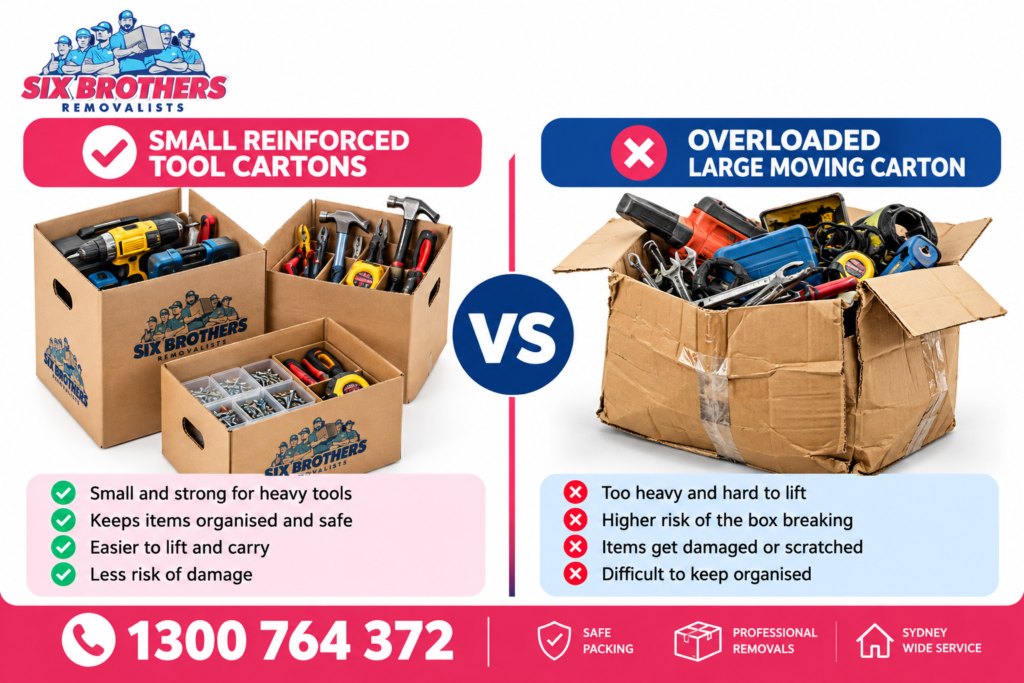
Choose double-wall cartons and smaller book boxes for heavy garage items. Heavy drill cases, spanners and socket sets quickly overload large tea chest cartons.
Twin-cushion and double-wall are not always identical product specifications. Check the carton construction, printed load rating and lifting handles before buying.
- Use small reinforced boxes for hand tools, bolts and compact machinery accessories.
- Keep fragile measuring tools in fitted cases with extra cushioning.
- Fill voids with packing paper, then seal both bottom and top seams.
If you are comparing heavy-duty packing materials, check the actual load rating. A big box is not automatically a strong box.
Industrial Stretch / Shrink Wrap
Stretch wrap holds protective covers and loose sections together. It works well around empty drawers, covered shelving components and rolled hose bundles.
Stretch wrap grips through tension. Heat-shrink film needs controlled heat and is unnecessary for most home moves. Never wrap damp metal tightly for extended storage.
Allow padding between wrap and painted finishes. Avoid wrapping sharp edges without corner protection first.
Heavy-Duty Moving Blankets & Quilted Pads
Moving blankets protect workbenches, garage cabinets and exposed shelving edges. One blanket often covers only one bulky surface.
Count furniture faces and exposed corners before ordering pads. A tall steel cabinet may need separate protection across its front and sides.
Quilted pads reduce rubbing. Secure them with suitable wrap without trapping moisture against bare steel.
Ziploc Bags & Small Hardware Containers
Resealable bags and lidded organisers stop small fixings disappearing. Label bags with their parent item before removing the first screw.
Keep bolts from a workbench separate from shelving fasteners. Photograph each assembly and tape its labelled bag inside a larger parts container.
Drill bits, blade guards and driver attachments belong in compartments, not loose carton corners.
Heavy-Duty Packing Tape & Dispenser Guns
Tape disappears faster when dozens of tool cartons need reinforced seams. Buy suitable carton-sealing tape, not light stationery tape.
A dispenser helps apply straight strips under tension. Seal the centre seam and both edge seams where the carton design requires it.
Check dusty cartons before sealing. Clean, dry cardboard gives tape a better surface to grip.
Tough Poly-Woven Moving Bags / Heavy Zip Bags
Strong woven bags suit lightweight, awkward and non-sharp contents. They can hold fabric covers, clean hoses and protective clothing.
Avoid loading bags with exposed steel tools or pointed garden heads. Handles and seams may fail under concentrated weight.
Use clearly labelled bags for soft garage contents. Keep small metal parts in rigid boxes instead.
Heavy-Duty Plastic Totes / Storage Tubs
Lidded plastic tubs help protect loose parts against splashes and dust. They are useful for hobby supplies and workshop accessories.
Check lid retention, grip strength and stacking guidance. Plastic tubs can crack when heavily loaded or poorly supported.
Tubs are not automatic waterproof storage. Even closed lids may allow moisture inside during rough handling.
Heavy-Duty Ratchet Straps & Cargo Ties
Ratchet straps secure large equipment during vehicle transport when used by trained handlers. Light cargo ties can organise loose cables.
Do not substitute packing string for rated restraints. Let the removalist control truck restraints and loading points.
Keep several hook-and-loop straps or cable ties for garden-tool bundles. Protect sharp ends before tying everything together.
Did you know?
A neat cardboard carton can still fail from a dense load. Split heavy tools between smaller reinforced boxes instead of filling one giant carton.
Which Garage Items Need Extra Packing Protection?
Sharp, heavy, fragile and awkward garage items need special packing attention. Size alone does not tell you how much protection to buy.
- Power tools: Use original cases, padded inserts and protected accessories. Follow battery and manufacturer guidance.
- Garden tools: Shield rake teeth, spade edges and saw blades. Secure each long handle without hiding sharp points.
- Bicycles: Protect frames, brake levers and protruding pedals. Photograph component positions before disassembly.
- Garage shelving: Wrap corners, bundle compatible pieces and bag all matching fasteners.
- Workbenches and tool chests: Pad corners, secure drawers and tell the crew the loaded weight.
- Pressure washers: Disconnect hoses, drain according to the manual and protect delicate couplings.
- Fragile workshop instruments: Use original fitted cases and cushion inside cartons.
Garage contents are often missing from a house-move inventory. Our guide to house move quotes that forget the garage explains why the omission matters.

Which Garage Items Should Not Be Packed for Removal ?
Do not assume petrol, paint, gas bottles or pool chemicals can enter a removals truck. Carrier policies and dangerous-goods requirements vary.
Set aside fuel cans, LPG cylinders, solvents, pesticides, aerosol products and leaking containers. Ask your removalist before loading lithium-ion batteries or petrol-powered equipment.
Use the NSW EPA Household Chemical CleanOut guidance for unwanted chemicals. It covers fuels, paint, batteries, gas bottles and pool chemicals.
Keep substances in their original, labelled containers where possible. Do not mix waste chemicals. Confirm the current collection location and accepted quantities.
How to Estimate Garage Packing Material Quantities ?
Count garage contents by item type, not floor area alone. One tidy single-car garage can contain more tools than a larger empty double garage.
Use the table as a starting checklist, not a fixed household allowance. Actual quantities depend on shelving, hobbies and stored stock.
| Garage type | Starter quantities | What changes the count |
| Lightly filled single garage | 6–12 small cartons; 1–2 tape rolls; 2–4 pads | Few tools, boxes already packed |
| Typical single garage | 12–20 small cartons; 2–3 tape rolls; 4–6 pads | Shelving, garden gear, loose parts |
| Busy double garage/workshop | 20–35 small cartons; 3–5 tape rolls; 6–10 pads | Power tools, workbenches, hobby gear |
These are editorial planning estimates, not observed averages or guaranteed requirements.
Start with five steps:
- List every shelf, cabinet, drawer and freestanding machine.
- Separate dense metal tools from soft or bulky equipment.
- Count one carton per manageable group, then match the carton rating.
- Count padded faces on benches, cupboards, bicycles and tools.
- Add a modest reserve for broken cartons, extra tape and overlooked parts.
Need help comparing carton packs? The house moving packs page lists bundle contents. Compare these against your garage inventory.
Packing Materials for Damp and Coastal Sydney Garages
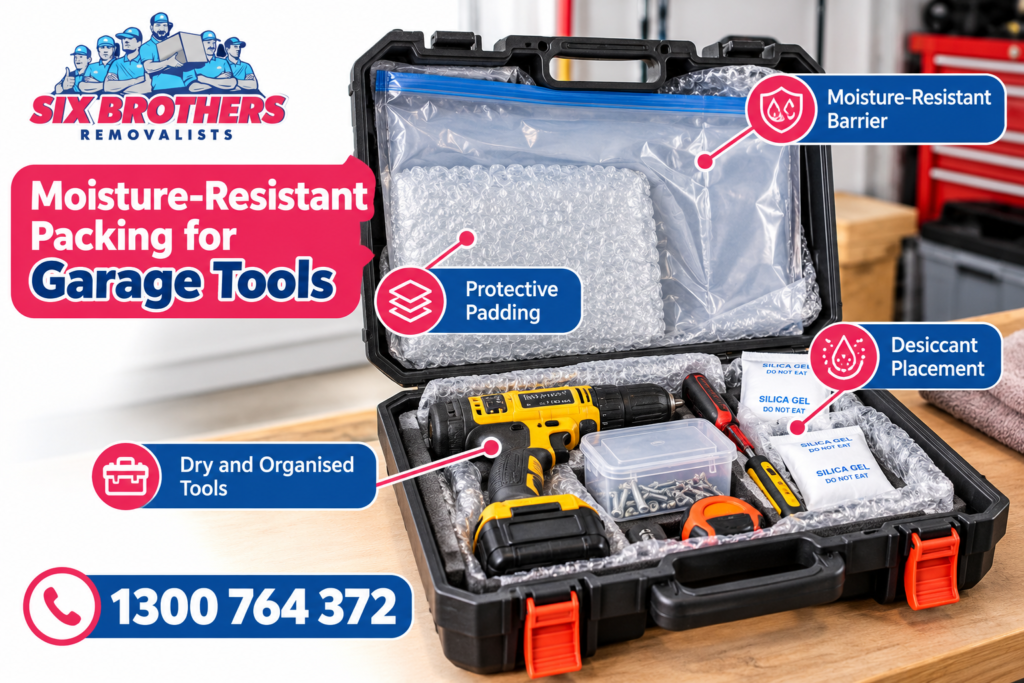
Coastal air and wet loading call for dry, breathable protection. Materials chosen for a dry storage room may perform poorly in damp conditions.
A Northern Beaches garage and a sheltered Parramatta storeroom face different moisture exposures. Inspect stored metal and cardboard before packing.
Moisture-Resistant Packaging
Use dry, lidded tubs for moisture-sensitive accessories. Place clean tools in their cases before enclosing them.
Replace cartons with damp, soft or mouldy bottoms. Do not seal already wet belongings in airtight plastic.
Rust Protection for Metal Tools
Dry exposed metal fully before packing. Use manufacturer-approved protective treatments where suitable for the tool and storage duration.
Desiccant packs can help inside closed cases when sized correctly. They cannot rescue equipment already stored wet.
Keep oily rags and chemical products out of ordinary moving cartons. Follow relevant safety and disposal instructions.
Wet-Weather Loading Protection
Cover cartons while they move from the garage to the truck. Keep boxes clear of puddles and open ute trays.
Use a dry staging area near the door. Ask the crew how they protect equipment during rain and loading delays.
What Packing Materials Will Your Removalist Provide?
Removalists may provide protective blankets, handling equipment and vehicle restraints. Customer cartons, packing labour and specialist wrapping may cost extra.
Six Brothers Removalists lists packing and removals services and carton options. Ask which supplies your written quote includes.
Request itemised confirmation for heavy tool cartons, protective blankets, fragile-item wrap and dismantling work. Do not assume every garage item is automatically covered.
Check transit cover, exclusions and claims procedures in writing. Tool values, self-packed cartons and fragile items may require special arrangements.
When comparing quotes, describe the garage separately from household rooms. List heavy benches, bicycles, shelving and awkward access paths.
For a Sydney move, the easiest first step is a clear item list. Then ask for a free quote by calling 1300 764 372.
How Much Do Extra Garage Packing Materials Cost?
Extra garage packing costs depend on carton strength, padding, tape and reused equipment. Protective gear can cost more than the boxes themselves.
The following online listings show example Australian retail prices. They were checked in October 2026 and may change by store.
| Sample retail item | Observed listed price | Main use |
| 52L heavy-duty moving carton | About $5.13 each | Dense but manageable loads |
| 104L heavy-duty moving carton | About $5.82 each | Bulky lighter contents |
| Quilted moving blanket (1.8 × 2m) | About $13.15 each | Furniture and cabinets |
| 48mm × 50m tape, three-pack | About $4.50 | Carton sealing |
For example, ten 52L cartons, two quilted blankets and one tape pack total about $82.10. This excludes bags, wrap, tubs and delivery.
These examples come from the Bunnings moving supplies range. Confirm stock, product specifications and local prices before buying.
Underbuying can mean extra shopping trips or fragile items riding unprotected. Overbuying wastes money and creates leftovers.
Price the missing materials first. Then compare that spend with any professional packing charge in your removalist quote.
Where to Source Garage Materials in Sydney
Source materials early from hardware retailers, storage suppliers or your removalist. Buying at the last minute often limits the carton sizes available.
Bunnings Warehouse
Bunnings carries moving cartons, tape, blankets and protection products. Check local availability, item dimensions and safe-load details before collecting.
A smaller reinforced carton is usually better for dense tools. Choose large cartons for lighter garage belongings.
National Storage / Storage King
National Storage and Storage King are other places to check for boxes and packing supplies. Product ranges and collection options depend on the site.
Storage King says its Sydney facilities offer box-shop supplies. Call your nearest branch before making a special trip.
Ask your Six Brothers Removalists coordinator whether available box packages suit your garage inventory. Compare supply and packing inclusions before booking.
FAQs
Where to Buy Removalist Boxes?
Start with Bunnings, storage suppliers or your removalist. Confirm reinforced cartons are suitable for heavy tools.
How many boxes does a double garage need?
A busy double garage might start around 20–35 small cartons. Count actual shelves and tools before ordering.
Are plastic tubs better than cardboard boxes?
Tubs can help with small parts and moisture exposure. Reinforced cartons often store and stack more efficiently.
Can removalists carry paint or LPG bottles?
Not automatically. Ask about their specific prohibited-items policy before packing. Use an approved disposal service for unwanted products.
What about lithium-ion power tool batteries?
Ask the carrier first. Cover exposed terminals when required and follow manufacturer instructions. Never pack damaged or overheating batteries.
Do Removalists Pack for You?
Many offer packing services, but inclusions vary. Ask whether garage tools, wrapping and dismantling are included.
Do I need to tell a removalist about my garage?
Yes. Include photographs, a rough inventory and bulky dimensions. This helps the crew plan space and handling.
When should I start packing a garage?
Start with seldom-used items two to three weeks ahead when possible. Leave essential tools accessible until the end.
A garage is not the room to tackle with leftover kitchen boxes. Count the gear, choose the protection and ask questions early.