

Table of Contents
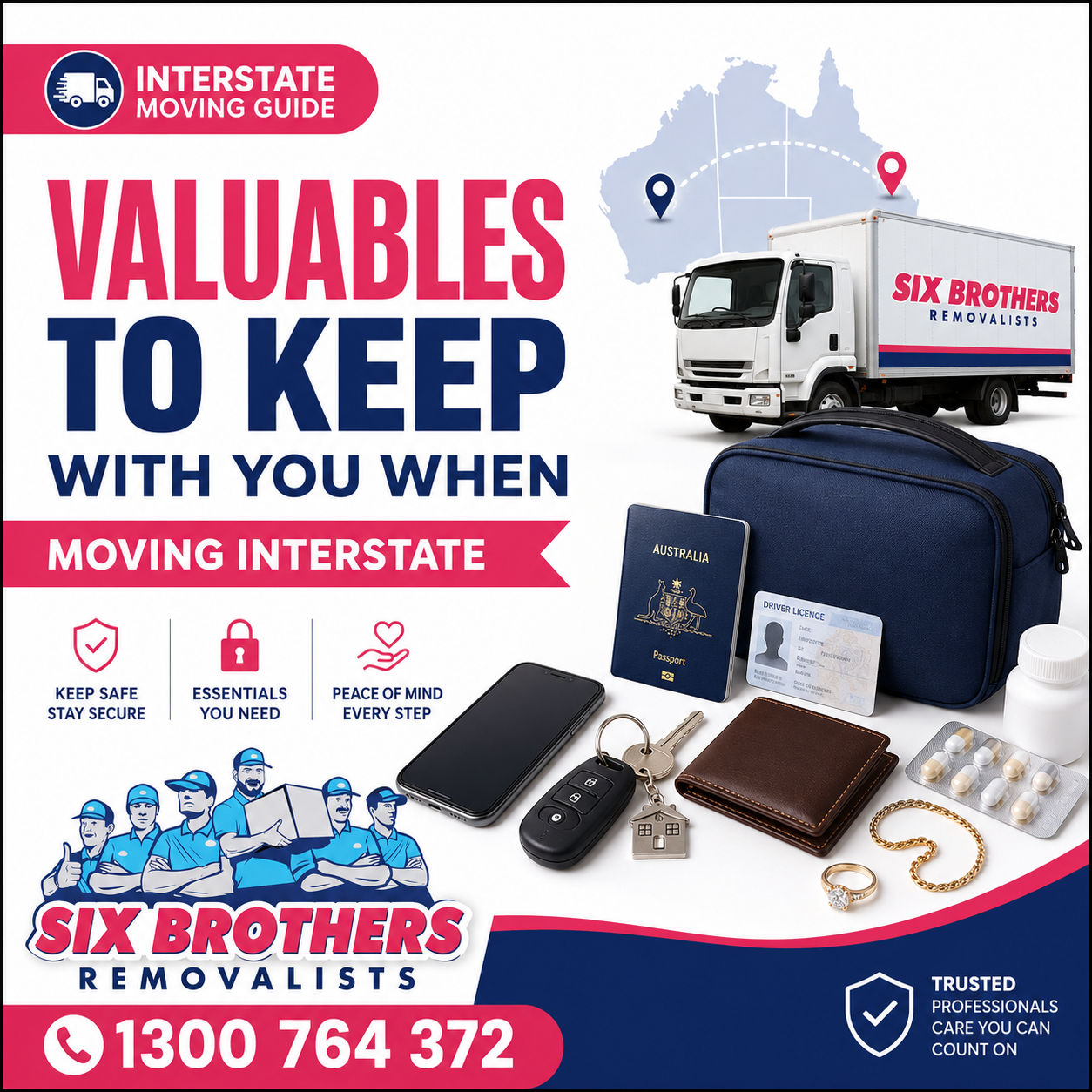
Moving interstate means deciding what goes in the truck and what stays beside you. Keep irreplaceable, sensitive, essential, and time-critical items with you during the trip. That includes identification, medicines, keys, jewellery, devices, backups, and important family records.
A moving truck is built for furniture, boxes, and household goods. It is not your mobile safe, pharmacy, or filing cabinet. Would you bury your passport under a truckload of boxes? When in doubt, keep the item close until you reach your new home.
This matters across Australia, especially on long routes from Sydney. Delays, weather, access problems, and schedule changes can happen. A small personal valuables bag can prevent a big headache.

Personal Identification Documents to Carry With You
Carry original identification documents with you throughout the interstate move. These papers can be difficult, slow, or costly to replace. They may also be needed before your moving truck arrives.
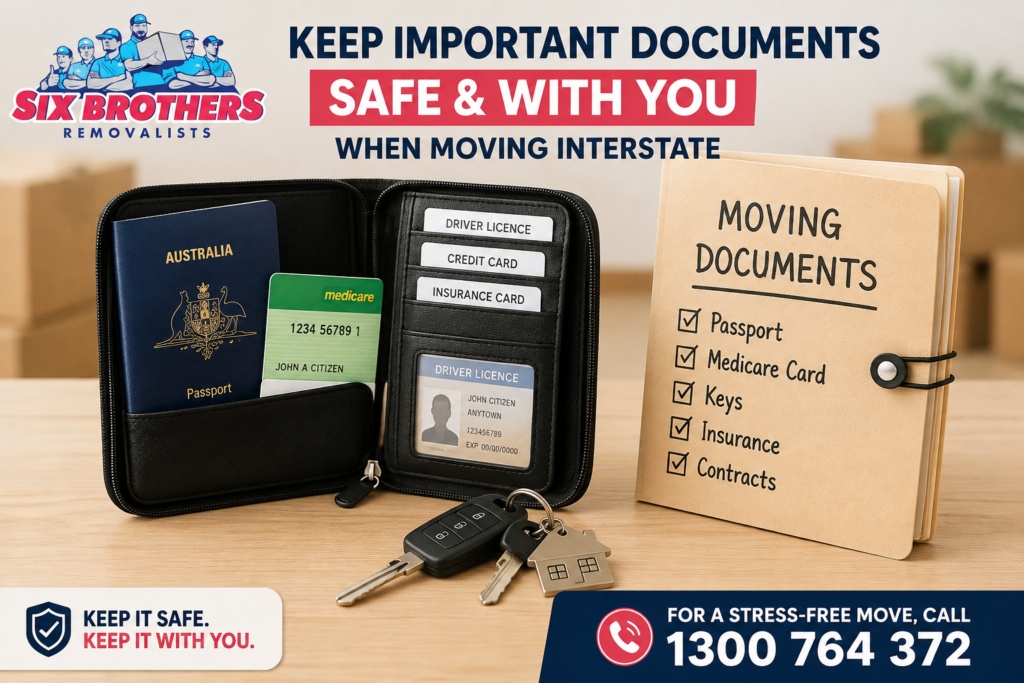
Keep passports, birth certificates, citizenship papers, and marriage certificates in one document wallet. Add Medicare cards, photo identification, and any required residency papers. Better safe than sorry when your whole household is between addresses.
If you are moving from Sydney, keep address change documents nearby too. You may need proof of identity for utilities, banking, schools, or state services. A locked travel pouch keeps these records organised and easy to reach.
Do not place your only identification copies inside packed furniture or sealed cartons. A delayed delivery could leave you without documents for several days. Think of your personal file as the key to restarting daily life.
People often search for a removalist near me before a rushed move. Speed matters, but document control matters more. Reliable interstate removalists should never need your original identity papers inside the truck.
Did you know?
A simple document wallet can reduce moving-day panic. Keep originals together, then store digital copies separately.
Financial & Legal Essentials for Interstate Moving
Keep financial and legal essentials with you, not inside the moving load. These records can protect access to money, property, insurance, and contracts. When the chips are down, paperwork can save hours of stress.
Carry bank cards, a modest amount of cash, cheque books, and payment devices. Keep property settlement papers, lease documents, wills, powers of attorney, and insurance records nearby. Add any legal papers needed during the first week.
Do not carry large amounts of cash unless truly necessary. Split payment methods between two secure places if two adults are travelling. This reduces the impact of one lost bag or wallet.
Store sensitive documents inside a zipped folder or small locked case. Avoid leaving that case visible inside a parked vehicle. A car boot can still become very hot during Australian summer travel.
For the wider move, use an interstate moving checklist to separate personal essentials from household freight. This makes handover easier when removalists arrive. It also stops last-minute items disappearing into the wrong box.
Comparing removalist companies is still important during this stage. Look beyond the cheapest quote and check how valuables are handled. Cheap removalists can be suitable, but low price should never replace clear processes.
Health & Vital Medical Supplies You May Need on the Road
Keep medicines and essential medical supplies with you for the full journey. The truck may arrive later than you do. A medical need cannot wait for a delivery window.
Pack enough medication for travel, the first night, and unexpected delays. Keep prescription details and emergency health contacts nearby. It is better to have a small buffer than cut things too fine.
The Australian TGA advises travellers to plan carefully with medicines and medical devices. It recommends keeping medicines identifiable and following storage instructions. See the TGA guidance for travelling with medicines and medical devices for current advice.
Prescription medications
Keep prescription medicines in clearly labelled original packaging where practical. Carry the prescription or supporting medical information you may need. This is especially helpful when replacement medicine is required away from home.
Heat can damage some medicines during long road trips. Follow the label and pharmacist instructions for storage. Do not leave temperature-sensitive medicine inside a parked vehicle.
If medicine needs cooling, use the correct insulated container. Avoid direct contact with loose ice unless the instructions allow it. Play it safe and ask your pharmacist before moving day.
Medical equipment
Keep essential medical equipment with the person who needs it. Examples include inhalers, glucose meters, CPAP accessories, mobility aids, and hearing devices. Pack chargers, spare batteries, and required consumables together.
Some equipment is too sensitive for normal furniture transport. Ask the manufacturer about safe movement if you are unsure. A delicate device can be as vulnerable as a glass ornament.
If professional handling is needed, tell your interstate removalist before quoting. Good removalists plan for weight, access, fragility, and loading order. Surprises on moving day help nobody.
First-aid basics
Carry a basic first-aid kit during the trip. Include dressings, antiseptic, pain relief, and any personal emergency items. Keep it reachable instead of buried under luggage.
Long drives can bring headaches, minor cuts, or motion sickness. Children may also need quick access to simple care items. A small kit is worth its weight in gold.
Do not use the kit as a substitute for professional care. Know where to seek help along your route. Keep emergency numbers available even if your phone battery fails.
Keys, Access Cards, and Remote Controls You’ll Need on Arrival
Keep every key, access card, and remote needed at your destination. These tiny items can stop the whole move if they disappear. Small things often cause the biggest dramas.
Place arrival access items inside one labelled pouch. Keep that pouch with your wallet or travel document case. Never tape important keys to furniture or moving boxes.
House keys
Carry all new property keys yourself. Include front doors, back doors, letterboxes, sheds, and storage areas. Check each key before leaving the old property.
If settlement happens near moving day, confirm collection arrangements early. Do not assume keys will be waiting at the property. Getting locked out after a long drive is no fun.
Keep old property keys separate from new ones. A simple colour tag can prevent mix-ups. It keeps the handover neat as a pin.
Car keys
Keep primary and spare car keys with your travelling group. Do not load spare keys into a vehicle being transported. You may need them during unloading or an emergency.
If two adults are travelling separately, split the keys sensibly. One person can carry the primary key. The other can hold the spare in a secure bag.
Vehicle transport plans should be confirmed before moving day. Some interstate furniture removalists do not transport vehicles. Ask what is included before you rely on assumptions.
Garage remotes
Carry garage remotes, gate fobs, and alarm controls with you. They are easy to forget inside kitchen drawers. A quick access test before departure can prevent trouble.
Remove old batteries if a remote will stay unused. Pack spare batteries when the remote is essential. A flat remote at midnight is a pain in the neck.
If a removalist truck needs garage or loading access, explain the entry limits. Good planning saves time on arrival. It also reduces avoidable waiting charges.
Building access cards
Keep apartment swipe cards and building passes close at hand. You may need them for lifts, loading bays, or secure parking. Building managers can have strict access windows.
Confirm lift bookings and access instructions before the truck arrives. Sydney apartment buildings often have loading rules and limited parking. Forewarned is forearmed when access is tight.
Office managers should also keep workplace access cards nearby. Office removalists need smooth entry to keep downtime low. Do not pack security passes inside office crates.
Vehicle and Travel-Day Documents for Interstate Travel
Keep driving and travel documents inside the vehicle you are using. Requirements can vary between states and travel situations. Keep your ducks in a row before crossing borders.
Carry your physical driver licence and any necessary identity evidence. Keep vehicle registration details and insurer information available. Add roadside assistance contact details for the route.
If you are relocating permanently, check your destination state’s licence rules. Do the same for registration and address updates. Do not assume every state follows the same timing.
Driver licence copy
Carry your actual driver licence, then keep a secure digital copy. The copy helps if the original is lost or damaged. It does not replace the legal licence when driving.
Store the copy inside an encrypted phone folder or secure cloud account. Avoid keeping identity scans inside an unlocked photo gallery. Personal information deserves the same care as cash.
If you are travelling with another driver, confirm their licence is current. Nobody wants a paperwork surprise halfway across the country. A two-minute check can save a bad day.
Registration papers
Keep vehicle registration information accessible during the drive. Digital access may be enough for some tasks. Still, save important details offline before entering low-signal areas.
Confirm the vehicle is roadworthy for a long interstate journey. Check tyres, fluids, lights, and required maintenance. Do not leave these jobs until the morning you move.
If a car is being transported, confirm the carrier’s document requirements. Different providers may ask for different evidence. Ask early and avoid a mad scramble.
Roadside assistance details
Save your roadside assistance membership and contact number offline. Keep the membership number inside your travel folder too. Phone coverage can be patchy on regional roads.
Tell travelling family members where the details are stored. Do not make one person’s phone the only source. Two copies give you a simple safety net.
Plan fuel, rest stops, and overnight breaks before departure. A long move is a marathon, not a sprint. Tired driving is never worth pushing through.
Interstate travel permits
Check whether any permit applies to your vehicle, load, route, or special item. Most household moves will not need a general travel permit. Special circumstances can still create extra requirements.
Oversized vehicles, certain trailers, and restricted goods can follow different rules. Your removalist should manage permits for its own commercial vehicle. Confirm this when unusual access or freight is involved.
If you are unsure, check the relevant state authority before travel. Do not rely on social media guesses. Better to ask once than fix a border problem later.
Essential Devices to Keep Out of the Moving Truck
Keep essential devices with you when they control money, communication, work, or access. Phones and laptops can become lifelines during a move. Do not treat them like ordinary boxed electronics.
Carry phones, laptops, tablets, smartwatches, and essential chargers. Add power banks, charging cables, and car adapters. Keep work devices close if you must work during the transition.
Back up each device before the move. Use a strong passcode and enable device tracking. This gives you protection if a bag goes missing.
Do not leave lithium battery devices cooking in a hot parked car. Follow manufacturer guidance for heat and storage. Electronics and Australian summer heat are not good mates.
If you use smart locks, cameras, or home apps, keep access credentials handy. Your new property may depend on those systems. A dead phone can turn a simple arrival into a circus.
The same rule applies when using furniture removalists or house removalists. Let them move televisions and household electronics. Keep your personal control devices beside you.
Digital Backups and Password Access for Important Accounts
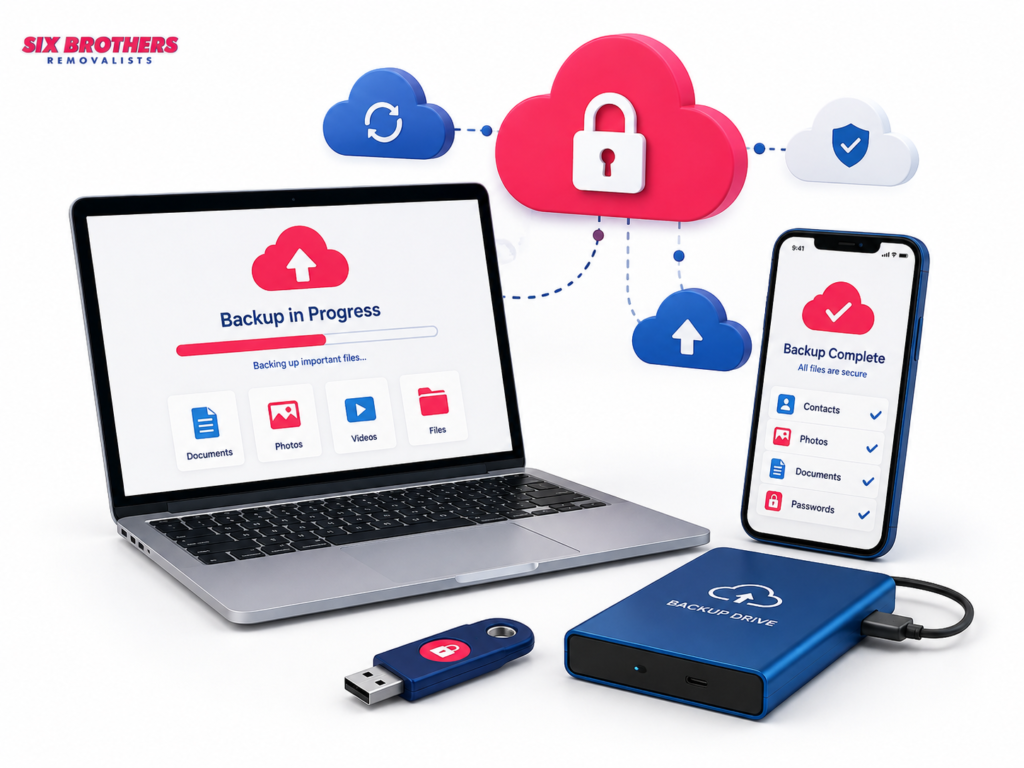
Keep secure backups and account access methods separate from the moving truck. A move can expose weak digital habits very quickly. Do not put all your eggs in one basket.
Back up critical files before packing computers. Use one encrypted local backup and one trusted cloud backup where possible. Test that you can actually open the files.
Keep account recovery methods current before changing address or phone service. Update recovery emails and trusted numbers if needed. A move is a bad time to discover old login details.
External hard drives
Carry irreplaceable backup drives yourself. Photos, tax files, business records, and creative work can be impossible to replace. Treat that drive like a small safe.
Protect the drive with a padded case. Keep it away from liquids, magnets, and extreme heat. Do not toss it loose inside a handbag.
Make a second backup before travelling. Hardware can fail even without physical damage. Two copies are better than crossing your fingers.
Cloud login details
Make sure you can access cloud accounts without your home computer. Check passwords and recovery methods before disconnecting services. Save emergency recovery codes in a secure location.
Do not write passwords on moving boxes or visible paper notes. Use a trusted password manager instead. That keeps your digital house in order.
If your internet connection changes on arrival, keep mobile data available. You may need online banking, maps, or utility accounts. Plan for a few hours without home internet.
Password manager access
Keep your password manager available on at least one personal device. Confirm the master password before leaving. Store recovery information in a separate secure place.
Avoid relying only on biometric access. A restart or security check may require the full password. Knowing it can save a stressful lockout.
If two adults manage household accounts, agree on emergency access. Do not share sensitive passwords casually. Use the password manager’s secure sharing tools where available.
Two-factor authentication devices
Carry authentication keys, token devices, and trusted phones with you. Losing them can lock you out of banking or work systems. Small security devices deserve first-class treatment.
Keep a backup two-factor method when the service allows it. Recovery codes can be stored securely offline. This gives you another door if the main one closes.
Business owners should protect office access and account tokens carefully. Office removalists can handle furniture and equipment. They should not carry your only login security device.
Irreplaceable Valuables You Should Carry Personally
Carry irreplaceable valuables personally whenever practical and safe. Value is not only about replacement cost. Sentimental value can be priceless.
Examples include heirloom jewellery, family medals, rare coins, small collectibles, and personal keepsakes. Keep sentimental photos and tiny inherited objects with you too. If losing it would break your heart, do not box it.
Use a plain, secure bag instead of an obvious jewellery case. Keep the bag under your control during stops. Avoid discussing valuable contents in public areas.
For larger valuable items, ask about specialist handling before the move. Piano removalists handle instruments differently from general furniture removalists. Antique furniture can also need custom wrapping or crating.
International removalists often use detailed inventories for high-value shipments. The same idea helps during an Australian interstate move. Record valuable items before loading, even when they travel with you.
You can also review what interstate movers will not take before packing. Some valuables, hazardous items, and personal essentials should stay outside the truck. Knowing the limits early keeps the day running smoothly.

Packing Jewellery for Safe Interstate Travel
Pack jewellery in small, secure, and discreet containers you can carry yourself. Keep pieces separated to avoid tangles and scratches. A little organisation goes a long way.
Use soft pouches for watches, rings, and precious-metal pieces. Thread necklaces through drinking straws or cards to prevent knots. Wrap delicate stones individually with soft material.
Keep an itemised photo record of higher-value jewellery. Store that record somewhere separate from the jewellery bag. Add valuation details if you already have them.
Avoid placing expensive jewellery in a suitcase that leaves your sight. Do not leave it inside a hotel room without secure storage. Keep the bag close during fuel and meal stops.
For extremely valuable pieces, check your insurer’s transport conditions. Standard household cover may have limits or exclusions. Do not assume every loss is automatically covered.
A professional interstate removalist can protect household goods. Personal jewellery is usually better under your direct control. That approach keeps things sweet and simple.
Proof of Ownership for High-Value Items
Keep proof of ownership for high-value items accessible during the move. These records can support insurance, warranty, and loss claims. Paperwork can turn a dispute into a clear answer.
Create a simple digital folder for valuable items before packing. Include receipts, valuations, serial numbers, and photos. Keep a second copy outside your main phone.
You can use this guide to photographing belongings before an interstate move for a practical record. Photos should show condition and identifying details. Clear evidence is better than relying on memory.
Purchase receipts
Save purchase receipts for expensive electronics, jewellery, furniture, and appliances. Digital receipts are usually easier to protect than paper. Export important invoices before closing old email accounts.
If the receipt has faded, photograph or scan it. Name the file with the item and purchase date. That small habit keeps records neat and tidy.
Do not worry if every older item lacks a receipt. Other evidence can still help establish ownership. Combine photos, bank records, and valuations where appropriate.
Valuation certificates
Carry current valuation certificates for jewellery, art, collectibles, and specialist items. Older valuations may not reflect current replacement values. Check insurer requirements before moving day.
Store the certificate separately from the valuable item. A photo or encrypted digital copy adds another layer. Two records are better than one.
If you use specialist interstate furniture removalists, discuss high-value items before quoting. Accurate information supports better packing and planning. It can also prevent cover misunderstandings.
Warranty papers
Keep warranty details for expensive appliances and electronics. Moving can expose faults that were not obvious before. Easy access to serial numbers and warranty terms can help.
Photograph serial labels before the item is wrapped. Save model numbers in your inventory. This is especially useful for televisions, computers, and premium appliances.
If a manufacturer requires approved transport methods, check those rules. Some specialist products have strict handling instructions. Do not leave this until damage has already occurred.
Photo evidence
Take clear photos before packing valuable or fragile belongings. Photograph all sides and any existing marks. Add close-ups of model and serial numbers.
Save images to the cloud before the truck leaves. Keep a local copy if internet access may be limited. A phone gallery alone is not a complete backup.
Photos also help you check items after delivery. Compare the condition during unpacking. If something looks wrong, document it before moving or repairing it.
Children’s and Dependant Essentials for Moving Day
Keep children’s and dependant essentials with the responsible adult during the move. Familiar items can reduce stress during a long travel day. Happy kids make life easier for everyone.
Pack one personal bag for each child or dependant. Include comfort items, snacks, medicines, spare clothing, and documents. Keep the bag inside the travelling vehicle.
Comfort items
Carry a favourite toy, blanket, book, or sensory item. Familiar objects can make an unfamiliar day feel safer. Do not pack the one item they cannot sleep without.
Add headphones or quiet activities for long road sections. Avoid relying only on screens. Batteries run flat at the worst possible time.
Keep comfort items easy to reach. A box under five suitcases is no help. Make access as easy as pie.
School documents
Carry essential school enrolment papers and recent records. These may be needed soon after arrival. Keep digital copies in a secure folder too.
Include identification, enrolment confirmations, and important learning support information. Add any documents requested by the new school. Do not assume every record transfers instantly.
If you are moving during a school term, confirm key dates early. A smooth start can help children settle faster. Organisation reduces unnecessary first-week stress.
Daily care items
Carry nappies, wipes, feeding items, special foods, and spare clothes as needed. Pack more than the exact journey requires. Delays can happen without warning.
For dependants with disability support needs, keep essential aids with you. Include chargers, communication tools, and emergency instructions. Do not load crucial daily equipment without a backup plan.
A labelled care bag helps another adult step in quickly. Keep routines simple during the move. No worries is easier when the basics are close.
Emergency contact details
Keep emergency contacts available on paper and digitally. Include family, doctors, schools, carers, and accommodation contacts. Do not rely only on one unlocked phone.
Teach older children the destination address and primary phone number. Younger children can carry a simple contact card. Keep private details limited to what is necessary.
If family members travel in separate vehicles, agree on meeting points. Plan what happens if phones lose service. A basic plan beats panic.
Pet Records and Travel Essentials for an Interstate Move
Keep pet records, medications, and travel supplies with you. Interstate pet rules can vary between Australian states and territories. Check your destination before you leave.
The Department of Agriculture warns that interstate animal movement can involve biosecurity restrictions. Some animals face state-specific rules. Review Australian Government guidance about travelling interstate with pets before moving.
Pack pets like family members, not freight. Keep their food, water, leads, bedding, and health records nearby. A calm pet makes the journey easier for everyone.
Vaccination records
Carry current vaccination records and your vet’s contact details. Boarding facilities or emergency vets may request them. Digital copies make access easier.
Check whether your destination has specific animal entry rules. Requirements can differ by species and location. Do not assume a previous interstate trip proves current rules.
Book a veterinary check before long travel when appropriate. Discuss anxiety, motion sickness, and ongoing health needs. A healthy start keeps you on the front foot.
Microchip details
Confirm your pet’s microchip details are current before moving. Update phone numbers and your new address when possible. Accurate contact information helps reunite lost pets.
Save the microchip number inside your travel folder. Keep a clear photo of your pet too. These details matter if an animal escapes during a stop.
Check collar tags before departure. Replace worn or unreadable tags. Small preparation can make a huge difference.
Pet medication
Keep all pet medicines with you during the journey. Pack dosing instructions and enough supply for delays. Use original packaging where practical.
Store temperature-sensitive medicines correctly. Ask your vet if you are unsure about safe transport. Do not place essential pet medication in the moving truck.
Keep flea, tick, or other preventative treatment current. Regional risks can differ across Australia. Your vet can advise based on the route and destination.
Travel comfort items
Carry a secure crate or harness suited to your pet. Add water, bowls, waste bags, bedding, and familiar items. Keep food portions ready for planned stops.
Schedule breaks safely and never leave pets in a hot vehicle. Australian temperatures can rise quickly inside parked cars. That risk is not worth taking.
For nervous animals, reduce noise and unnecessary handling. Keep routines as normal as possible. Slow and steady wins the race.
Moving Essentials to Keep With You on Moving Day
Keep a compact moving-day essentials kit beside you from start to finish. This kit covers the first 24 hours before full unpacking. It acts like a bridge between two homes.
Include toiletries, a change of clothes, chargers, snacks, water, basic tools, and cleaning items. Add toilet paper, towels, bedding, and a kettle if space allows. Keep essential documents and medicines in the same personal zone.
A dedicated interstate moving essentials box can help organise these basics. Label it clearly and keep it off the truck. You want immediate access after a long trip.
Families should add child and pet items to the plan. Office managers should keep laptops, access cards, and critical work files nearby. Every move has a different first-night list.
This is also where service choice matters. Full service removalists Sydney customers use can handle packing and transport. You still need a personal essentials plan.
People may compare removalists Sydney, removalists Melbourne, removalists Brisbane, removalists Perth, or removalists Adelaide. The same principle applies everywhere. Personal essentials should remain under your control.
If you are searching removalists near me, ask one question. The same applies to movers near me. What should stay with me? A good moving company will answer clearly.
Items You Should Never Load on the Interstate Moving Truck
Never load items you may urgently need, cannot replace, or should personally control. The truck should carry household freight, not your personal lifeline. Draw the line before loading starts.
This includes original identity documents, medicines, jewellery, keys, personal devices, and private records. Keep emergency cash and access tools with you too. When in doubt, leave it out.
Daily-use valuables
Keep daily-use valuables with you during the whole move. Phones, wallets, hearing aids, glasses, and medicines belong in this group. These are small items with a big impact.
Do not put them into a box marked “open first.” That box can still be delayed or misplaced. Carrying them removes the uncertainty.
House removalists and furniture removalists are best used for household loads. Let them focus on furniture, cartons, and protected equipment. Keep your personal essentials in your own hands.
Hard-to-replace documents
Never load original birth certificates, passports, legal papers, or irreplaceable records. Replacing them can take time and identity checks. Keep them in one secure travel case.
Digital copies help, but originals may still be needed. Store copies separately from the main case. This protects you if one bag is lost.
For interstate moves, your documents needed when moving interstate list can prevent missing paperwork. Review it before the truck arrives. A rushed morning is when documents disappear.
Private personal items
Keep highly private records and personal storage devices with you. Examples include tax files, medical papers, diaries, and private photographs. Your privacy is worth protecting.
Do not label a box with sensitive contents. Use a discreet bag and keep it locked where practical. Loose personal data can create bigger problems than a damaged chair.
This also applies to business owners using office removalists. Carry HR records, authentication devices, and truly sensitive files personally. Secure business data should not travel casually.
Time-sensitive essentials
Keep anything needed within the next 24 to 48 hours outside the truck. This includes medications, chargers, work devices, pet supplies, and overnight clothing. Delivery times can shift.
Long interstate routes create more variables than local moves. Traffic, weather, access, and mechanical issues can affect timing. Prepare as though the truck could arrive later.
Choosing the right provider still reduces the rest of the risk. Search terms vary by route and location. You may see removalist Sydney, Sydney removalists, or interstate removalists Sydney.
Other searches include removalist Melbourne, Melbourne removalists, and interstate removalists Melbourne. Queensland movers may search removalist Brisbane, Brisbane removalists, or interstate removalists Brisbane. The service questions should stay the same.
Ask about inventory, exclusions, packing, claims, access, timing, and communication. Check whether the quote suits your actual load. The cheapest removalist is not always the cheapest final move.
Sydney customers may also compare affordable removalists Sydney, cheap removalists Sydney, and best removalists Sydney. Western Sydney removalists and removalists Parramatta may suit local collection needs. Route experience matters when the destination is interstate.
Common interstate searches include removalists Sydney to Melbourne and removalist Sydney to Melbourne. Others include Sydney to Melbourne removalists and interstate removalists Sydney to Melbourne. These searches all point to the same need for careful planning.
Travellers also search removalists Sydney to Brisbane, Sydney to Brisbane removalists, and removalist Sydney to Brisbane. Others search interstate removalists Sydney to Brisbane and Brisbane to Sydney removalists. Every route still needs a personal valuables plan.
Adelaide routes create similar searches, including removalists Sydney to Adelaide. You may also see interstate removalists Sydney to Adelaide or Adelaide to Sydney removalists. Carry your essentials regardless of distance.
A furniture removalist can move bulky items safely when properly prepared. Interstate furniture removalists may also offer backloading or dedicated transport. Ask where your personal valuables fit into their policy.
Removalist truck hire can suit some DIY moves. Still, do not leave passports, medicines, or jewellery in an unattended truck. Your personal valuables need tighter control than removalist furniture.
For specialist items, piano removalists use different equipment and planning. That does not change the rule for personal valuables. Small irreplaceable items should travel with you.
Frequently Asked Questions
Do removalists have insurance?
Removalists may carry different types of business and transport cover. Cover does not automatically protect every personal valuable. Ask exactly what is included before moving day.
Check exclusions, claim limits, and required packing standards. Valuable jewellery and private documents may need separate arrangements. Never assume cover without reading the details.
Do removalists pack for you?
Many full-service removalists offer packing and unpacking services. They can pack household goods, furniture, kitchenware, and fragile items. Personal documents and daily valuables should usually stay with you.
Ask what the packing service excludes before booking. This helps you prepare a personal valuables bag. Clear boundaries make moving day easier.
What valuables should I keep with me when moving interstate?
Keep identification, medicines, keys, jewellery, devices, backups, and important records with you. Add child, dependant, pet, and travel essentials. Carry anything difficult to replace or urgently needed.
The exact list depends on your household. Start with the items needed before the truck arrives. Then add items that carry high financial or sentimental value.
Should I keep cash with me during an interstate move?
Carry a modest emergency amount instead of large sums. Keep most funds available through secure banking methods. Split payment options when two trusted adults are travelling.
Cash can help during outages or card problems. However, large cash amounts increase loss and theft risk. Keep the amount practical.
Should jewellery go in the moving truck?
Small valuable jewellery is usually safer under your direct control. Use discreet padded storage and keep an inventory. Check insurance terms for very high-value pieces.
Large collections may need specialist security arrangements. Discuss the move with your insurer beforehand. Do not rely on a standard box and hope for the best.
Should I carry my passport when moving interstate in Australia?
Carry your passport if it forms part of your important identity records. You may not need it for domestic road travel. It is still safer than placing it inside household freight.
Keep it with birth certificates and other sensitive documents. Use a secure document wallet. Avoid leaving it visible inside a parked vehicle.
What should I keep with me for the first night after moving?
Keep clothes, toiletries, medicines, chargers, bedding, towels, food basics, and access keys. Add child and pet supplies when needed. Include anything required before unpacking begins.
Think about your first evening and next morning. Pack for that short window first. Then add a buffer for delays.
Should laptops and hard drives travel with me?
Yes, keep laptops and irreplaceable hard drives with you where practical. Back them up before moving. Use padded cases and strong device security.
Do not leave important drives inside a hot parked car. Keep one cloud backup too. That gives your files more than one line of defence.
Keep your personal valuables list simple, secure, and separate from the household load. Give the truck what it handles best. Keep your identity, health, access, memories, and digital life beside you.
Six Brothers Removalists helps Sydney customers plan local and interstate moves with practical preparation. Call 1300 764 372 for a free quote. You can also email info@sixbrothersremovalist.com.au.