
Table of Contents
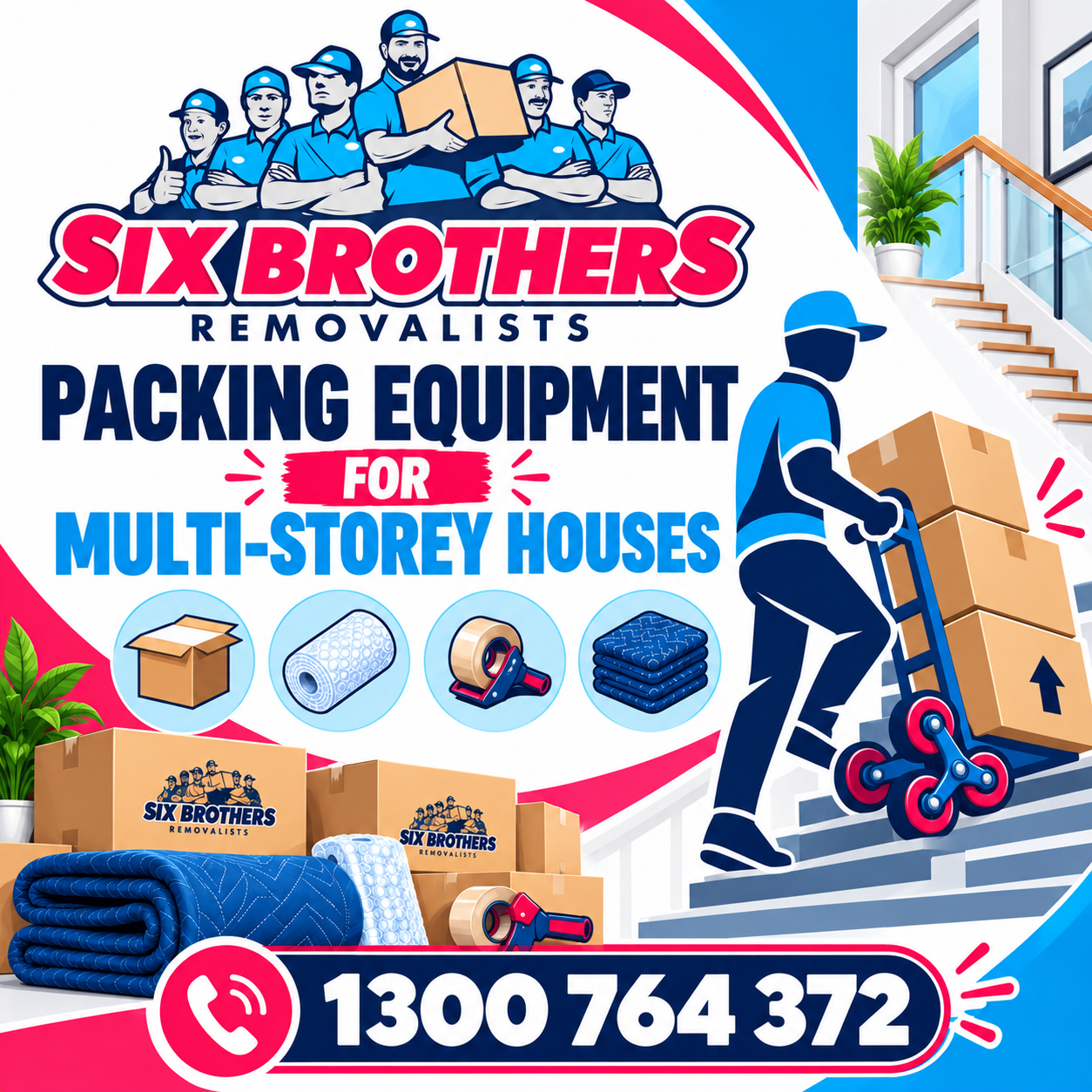
Packing equipment for multi-storey houses needs to handle stairs, tight turns and repeated carrying. Standard boxes and a basic trolley aren’t always enough. The real difference is matching equipment to each route, not simply buying more gear.
Picture a Parramatta townhouse with a narrow landing and a fridge upstairs. One wrong trolley could damage the handrail before the truck even arrives. This Sydney guide covers practical supplies, access checks, safer methods and hire decisions.
Multi-Storey vs. Single-Level: Key Equipment Differences
A multi-storey move needs lighter, controlled loads and equipment suited to changes in height. Single-level homes usually offer longer, flatter carrying routes. Stairs add turns, balance changes and repeated lifting.
Think of each staircase as a bottleneck. Large boxes, tall appliances and wide furniture can all get stuck. A little planning saves a lot of backtracking.
- Single-level home: standard trolleys, furniture skates and broad carrying paths often suit the route.
- Multi-storey home: smaller cartons, stair-rated equipment and more corner protection become important.
- Split-level home: short flights, thresholds and driveway slopes need separate access checks.
The best option depends on the property, load and crew. A standard wheeled trolley never becomes stair-safe simply because two people hold it.
The Essential Multi-Storey Packing Checklist
Start with supplies that keep each floor organised without crowding the staircase. Group gear by its job: movement, protection and clear identification. Keep a separate box for tools and loose fittings.
Specialty Moving Equipment
Useful equipment includes stair-rated hand trucks, furniture skates for flat floors and secure lifting straps. A removalist may also need an appliance trolley and tail-lift truck. None suits every staircase.
Check tread depth, wheel grip, turning space and the operator’s training first. Heavy equipment can create new hazards when the landing is too small.
Advanced Packing Materials
Choose strong cartons, padded wraps, mattress bags and rigid corner guards. Double-wall boxes suit dense contents when their rated strength matches the load. Soft covers protect upholstered furniture from rubbing against banisters.
Wrap furniture before it reaches the stairs. A padded lounge is easier to protect than a scratched one. Keep plastic wrap off delicate finishes unless the maker recommends it.
Safety & Labelling Gear
Use clear room labels, marker pens, nonslip floor protection and a small tool pouch. Label each carton with its destination floor and room. Mark fragile contents on more than one side.
- UPSTAIRS: Main bedroom, linen, lightweight boxes.
- GROUND FLOOR: Kitchen, laundry, garage items.
- FRAGILE: Glassware, framed art, electronics.
Leave walkways clear at all times. Shoes, tape rolls and loose cartons can quickly become trip hazards.
Pre-Move Access Measurements for Multi-Storey Equipment
Measure the actual carrying path before hiring equipment or promising a delivery time. Start at the room, follow every landing and finish at the truck. Record the narrowest point, not just the front door.
Stair Width and Landing Turns
Measure clear stair width between handrails and other fixed obstacles. Then measure each landing’s usable depth and width. A wide item still needs room to rotate.
Take straight-on and overhead photos when possible. Add a measuring tape to the photo for scale. A tight Inner West terrace often needs more dismantling than trolley power.
Doorway and Ceiling Clearance
Measure clear door openings with doors fully open. Note low ceilings, light fittings and sloped undersides. These can shorten the space available to tilt furniture.
Check the entire route at both properties. A successful exit proves little if the destination doorway is smaller. One missed archway can change the whole plan.
Furniture Dimensions and Equipment Fit
Record furniture height, depth and width, including fixed handles and feet. Compare those figures with every turn. Also measure the trolley or skate carrying the item.
A king-size mattress may flex, but some mattresses must not be folded. Check its maker’s advice first. Photograph sofas, wardrobes and fridges beside the narrowest access points.

Equipment Challenges in Australian Multi-Storey Homes
Sydney homes can hide difficult access behind an ordinary street frontage. Older terraces, hillside houses and strata townhouses need different plans. You cannot judge the job from bedroom count alone.
Narrow Terrace Staircases
Inner West terraces may have steep timber stairs and tight turning landings. First protect walls, rails and vulnerable edges. Then decide whether furniture needs dismantling or professional lifting.
Avoid forcing a lounge through a bend. Even a small scrape can damage plaster or painted timber. The sensible route is often the slower-looking one.
Steep Driveways and Split-Level Homes
North Shore split-level homes often mix outside steps, sloped driveways and short internal flights. Check traction on every section before moving heavy loads. Wet surfaces can change an otherwise suitable plan.
A threshold ramp helps only when its slope, support and rated load fit the site. It is not a shortcut for an unsafe driveway. Separate the flat-ground trolley route from the stair-carry route.
Strata and Shared-Access Restrictions
Strata buildings may limit lift use, loading times and shared access. Read the NSW strata by-laws and ask the building manager about moving arrangements. Rules vary between buildings.
Confirm lift bookings, protective padding, loading bays and resident access. Never block a fire exit with cartons or skates. Check parking arrangements before the truck arrives.
Did you know?
A trolley rated for flat ground is not automatically approved for stairs. Read its manufacturer instructions and inspect the full route before use.
Specialty Packing Material Differences
Multi-storey packing materials need to survive more contact points and repeated handling. The aim is secure, manageable loads. Bigger boxes can actually slow the move when stairs are narrow.
Smaller, Double-Walled Boxes
Smaller double-walled cartons work well for books, tools and cookware. Fill voids so contents cannot shift on stairs. Keep every box within the carrier’s comfortable handling range.
The safest practical weight changes with grip, stairs, person and item shape. There is no universal box weight suitable for every staircase. Test a packed carton before sealing dozens of them.
Neoprene Floor Runners & Stair Mats
Use purpose-made, slip-resistant runners compatible with the existing floor. Some products use rubber or neoprene backing. Ask about adhesive, finish sensitivity and removal residue.
Secure protection so it cannot bunch underfoot. Avoid loose blankets on stair treads. On polished timber, choose products recommended for that finish.
Cardboard Corner Protectors & Moving Blankets
Rigid corner protectors shield furniture edges and doorway corners. Removals blankets cushion broad surfaces such as wardrobes and dining tables. Secure covers so they cannot slip during carrying.
Use extra padding around projecting handles and carved edges. For delicate heritage pieces, check how the finish reacts to wrap. A blanket protects only when it stays in place.
Color-Coded Room Labels
Use one colour per destination floor and add the room name in large letters. Match those labels to a simple floor plan. This stops upstairs cartons being unloaded beside the ground-floor kitchen.
For a three-level townhouse, use three clear colours. Keep fragile and heavy warnings separate. Colour alone is not enough when someone cannot see the label clearly.
Heavy-Duty Transport Equipment
Heavy-duty transport equipment can reduce handling demands when it suits the job. Choose gear by route, load stability and manufacturer limits. Never assume specialist tools remove every risk.
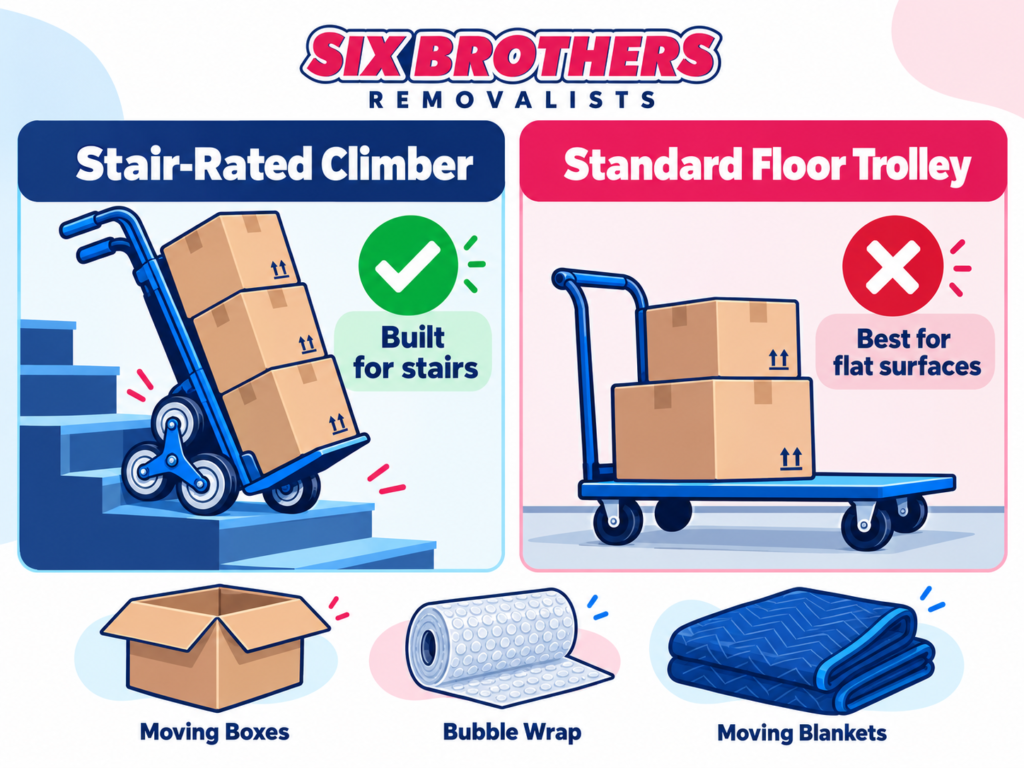
Stair-Climbing Hand Trucks
Stair-climbing hand trucks use special wheels or powered mechanisms for step changes. Models vary widely in stair suitability and controls. Their ratings and manuals decide where they can work.
Check the staircase angle, tread dimensions, surface and landing turns. Operators need product-specific training. A powered stair climber is not a safe DIY experiment.
Forearm Forklifts & Shoulder Dollies
Forearm and shoulder straps can help trained people share certain bulky loads. They do not make overweight or awkward furniture safe. Straps may reduce visibility on stairs.
Avoid them when footing, handholds or communication are poor. Stop if the item begins twisting. Mechanical assistance or dismantling may offer a safer method.
Appliance Dollies with Stair Climbers
An appliance trolley must support the item, protect its finish and secure the load. Fridges and washing machines present balance and handling challenges. Read appliance handling guidance before moving them.
Check strap position and centre of gravity. Ask whether the crew can keep the unit stable during each turn. Do not use a flat-floor appliance trolley on stairs without manufacturer approval.
Equipment for Tight Landings and Floor Transitions
Tight landings need small, controllable equipment rather than oversized wheeled platforms. Treat each doorway and threshold as a separate movement. Protect the property before the first heavy item arrives.
Low-Profile Furniture Skates
Furniture skates help move heavy pieces across suitable flat surfaces. They are useful in wide rooms and level hallways. They are not intended to carry furniture down stairs.
Match wheels to the floor and load. Keep fingers clear when placing or removing skates. Check that edges cannot catch the thresholds.
Threshold Ramps and Bridging Plates
A rated threshold ramp can bridge a small level change when correctly installed. Choose the ramp for its load, width and surface. Keep it stable and within the maker’s slope limits.
A bridging plate also needs suitable support at both ends. Never improvise with loose timber or unsecured boards. A few centimetres of height can still create a serious hazard.
Door-Jamb Protection
Protect door jambs with fitted pads or removable guards. Pay special attention to hinges and the latch side. Use surface-safe fittings that will not peel paint.
Check the available opening again after adding protection. A thick guard reduces clearance. That small detail matters when moving a wide fridge or lounge.
Moving Oversized Items That Cannot Fit Through Stairwells
Oversized furniture may need dismantling, a different route or a specialist lifting plan. Never assume a balcony or window offers an easy alternative. External lifting introduces serious fall and load risks.
External Furniture Hoists
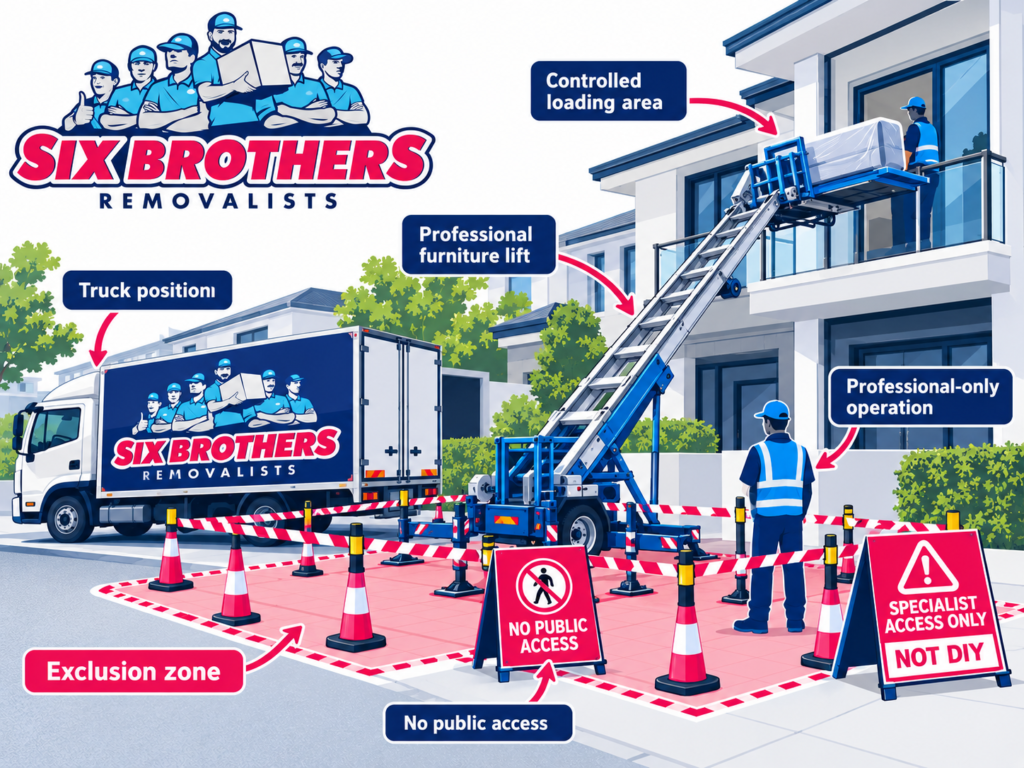
External furniture hoists can serve suitable buildings when professionally assessed. A specialist must check ground conditions, access and equipment ratings. Public areas and nearby services can also affect feasibility.
Ask who supplies the hoist and who operates it. Confirm any necessary permissions and exclusions in the quote. Do not hire a hoist based on photographs alone.
Balcony and Window Access
Balcony or window access needs structural and site checks before any lift. Handrails, glazing and overhead obstacles can complicate the route. Never pass heavy furniture through a window using household ropes.
A professional should assess the lift, landing area and exclusion zone. Check building rules first. Sometimes dismantling the furniture is the simpler answer.
Professional Lifting and Approvals
Professional lifting requires suitable workers, equipment and a documented safe approach. Depending on the job, building approval or council permission may be necessary. Confirm responsibility before booking.
Pianos, safes and heavy wardrobes need particular care. Ask for the specialist method, relevant cover and written inclusions. If the route is unsafe, change the plan rather than pushing through.
Equipment Weight Ratings and Load Stability
Equipment weight ratings set a ceiling, not a guarantee of safe movement. A load can be under the rating yet unstable on stairs. Shape, grip and shifting contents also matter.
Equipment Load Capacity
Read the manufacturer’s rated load and operating limits. Include the item, attached packing and any accessories. Ratings may change by surface or use.
Check each trolley, skate, strap and ramp separately. Never combine small ratings into one assumed safe capacity. The weakest part can determine the whole setup.
Securing Unbalanced Loads
Secure loads against tipping and side-to-side movement. Strap points should match the equipment instructions and item design. Balance matters most at stair edges and turns.
Tall fridges and upright cabinets can shift unexpectedly. Stop when a load leans or hides the next step. Reassess and use a different method if needed.
Wheel, Brake and Strap Inspections
Inspect wheels, tyres, brakes, buckles and straps before the move. Look for frayed webbing, loose fasteners and damaged tread contact. Test controls without a load where appropriate.
Remove faulty gear from use immediately. An inexpensive worn strap can ruin an expensive moving day. Carry a simple inspection checklist for hired equipment.
Safety & Personal Gear
Personal gear supports safe work but cannot fix an unsafe staircase or handling plan. Start by reducing the load and selecting appropriate equipment. Then choose footwear, gloves and protective clothing for the route.
High-Grip Work Gloves
Gloves should offer reliable grip without limiting finger movement. Choose a suitable size and material for dry or damp conditions. Inspect them for tears and slippery coatings.
Gloves cannot compensate for poor handholds. If an item lacks a safe grip, change the handling method. Keep gloves clean when carrying polished furniture.
Steel-Toed Boots
Protective boots may be appropriate where dropped loads threaten feet. Slip-resistant soles are especially useful on steps. Select footwear through a task-based risk assessment.
Check the tread for wear and trapped stones. Wet outdoor stairs can make any footwear less dependable. Keep the carrying path dry where practical.
Back Support Braces
Back braces are not a substitute for controlling hazardous lifting risks. There is limited support for relying on them to prevent injury. A brace should never justify a heavier lift.
The SafeWork NSW guidance on hazardous manual tasks prioritises risk controls over lifting advice alone. Reduce manual handling first, then train crews on the chosen controls.
Common Equipment Hazards on Staircases
Common staircase hazards include unsuitable wheels, loose protection and poor visibility. Equipment failures become harder to correct halfway down a flight. Spot hazards before a single carton moves.
Unsuitable Dollies and Trolleys
Standard dollies suit firm, level floors, not stair edges. Their wheels can slide or drop between steps. Never assume an extra person makes them suitable for stairs.
Use stair-rated equipment only where its instructions permit. If the route cannot support it, choose another handling method. Stop before the load reaches the first step.
Slippery or Uneven Stairs
Wet external steps, loose carpet and uneven risers increase the risk of slipping. Repair or isolate hazards where possible. Keep carrying routes clear of people and belongings.
Photograph damaged surfaces before moving day if you are renting. Protect the floor without introducing loose edges. A rushed first trip often causes the biggest avoidable headache.
When Mechanical Assistance Is Unsafe
Mechanical assistance is unsafe when it cannot fit or operate within its limits. A cramped landing, unstable surface or overhead obstruction may rule it out. Leave room for the operator to recover safely.
Stop work when visibility, communication or balance fails. Seek a different method or specialist assessment. There is no prize for squeezing a fridge around an impossible bend.
Pro-Tips for Multi-Storey Packing
The best packing routine keeps routes clear and reduces handling between levels. Sort items where they belong, then move them through planned stages. Use your crew’s assessment to set the order.
The “Stage and Drop” Method
Stage packed boxes in safe rooms near the route, not on the stairs. Move them in planned batches to a safe ground-floor area. Keep exits and landings open throughout.
Do not stack boxes beside a stair edge or doorway. Ask the crew where they want items staged. Their route may change when larger furniture comes downstairs.
Pack from the Top Down
Begin with rarely used upstairs belongings when practical. Keep daily essentials accessible until the final day. Finish each room with a clear label and photo.
Top-down packing is a guide, not a rule for carrying heavy items first. The two-storey house move day-plan explains how loading order affects the truck. Let access and item safety decide the final sequence.
Deconstruct Everything Upstairs
Dismantle furniture upstairs when its design allows and the manufacturer permits it. Remove detachable feet, bed frames and loose shelves. Bag and label every fitting immediately.
Photograph each item before dismantling. Wrap separate panels so edges stay protected. Our guide to equipment most DIY movers forget helps you spot missing tools.
Need a crew to check stairs, furniture sizes and lifting gear? Ask furniture removalists in Sydney about your access before confirming the booking.
Equipment Hire vs Professional Removalists
Equipment hire makes sense for manageable loads and routes you can assess safely. Professional removalists suit difficult stairs, heavy items and complex access. Compare the whole job, not the daily hire price.
Equipment Hire and Delivery Costs
DIY costs can include trolley hire, ramps, protective materials and delivery charges. Equipment deposits, extra hire days and vehicle rental may also apply. Ask what happens if the gear is unsuitable.
List the full hire cost beside expected handling time. Our moving house checklist for Sydney helps catch preparation tasks. Include the return trip when equipment must go back.
Equipment Supplied by Removalists
Ask which trolleys, blankets, straps and protective materials come with the service. Some crews provide specialist equipment only after reviewing photos. Always confirm the written quote.
You can compare Six Brothers Removalists with other house removalists on equipment and access planning. Ask who supplies the gear, who operates it and what the price includes.
Stair Access and Hoist Charges
Stair charges can reflect extra labour, time and access complexity. Hoists may add specialist labour, delivery and permissions. No single surcharge fits every Sydney property.
Request an itemised quote that lists floors, stair flights and bulky items. Ask whether waiting time, parking distance and dismantling are included. Cheap removalists are not always cheaper after access extras.
When Specialist Removalists Are Needed
Specialists are worth considering when stairs are narrow or loads are unusually heavy. Pianos, safes, large fridges and awkward lounges deserve an access review. Photos alone may not solve difficult geometry.
Ask about crew experience, safe methods and written scope. Check insurance terms, including any exclusions for property damage. A careful plan beats a last-minute scramble.
FAQs
Do Removalists Pack for You?
Many removalists offer full or partial packing. Confirm whether cartons, wraps and labelling are included. Ask about fragile items and upper-floor access.
Do Removalists Disassemble Furniture?
Some crews dismantle suitable beds, tables and wardrobes. Confirm inclusions before booking. Flat-pack designs and specialist fittings may require different handling.
What equipment do you need to move a two-storey house?
Start with strong small cartons, labels, furniture padding and stair-safe floor protection. Specialist loads may need rated moving equipment and trained operators.
Can a stair-climbing trolley move a fridge?
Only where its rated load, dimensions and instructions suit the fridge and stairs. A trained operator must assess the full route.
How do you protect timber stairs during removals?
Use surface-compatible, secured protection and keep the route dry. Avoid loose blankets and adhesives that could damage finishes.
What if a sofa will not fit around the landing?
Stop before forcing it. Check dismantling options, an alternative route or a professional lifting assessment. Do not improvise balcony lifting.
Is equipment hire cheaper than a removalist?
Sometimes, for smaller moves with simple access. Compare hire, delivery, supplies, vehicle costs and safe handling requirements against a written quote.
Do Sydney strata buildings require lift bookings?
Some buildings do. Ask the strata manager about by-laws, lift bookings, loading zones and protection before moving day.
For a clearer quote, share both addresses, floor counts, stair photos and your bulkiest furniture. Call 1300 764 372 or email info@sixbrothersremovalist.com.au. Get your free quote and confirm the access plan before moving day.