
Table of Contents
DIY house moves often fail at the equipment list, not the truck booking. A fridge, stairs and long driveway each demand different gear. This guide shows what to hire, what to check and when to call a removalist.
Plan around your heaviest item and narrowest access point. Then price every hire item, collection trip and helper. The cheapest-looking trolley may not suit the job.

Essential Gear Often Left Off the List
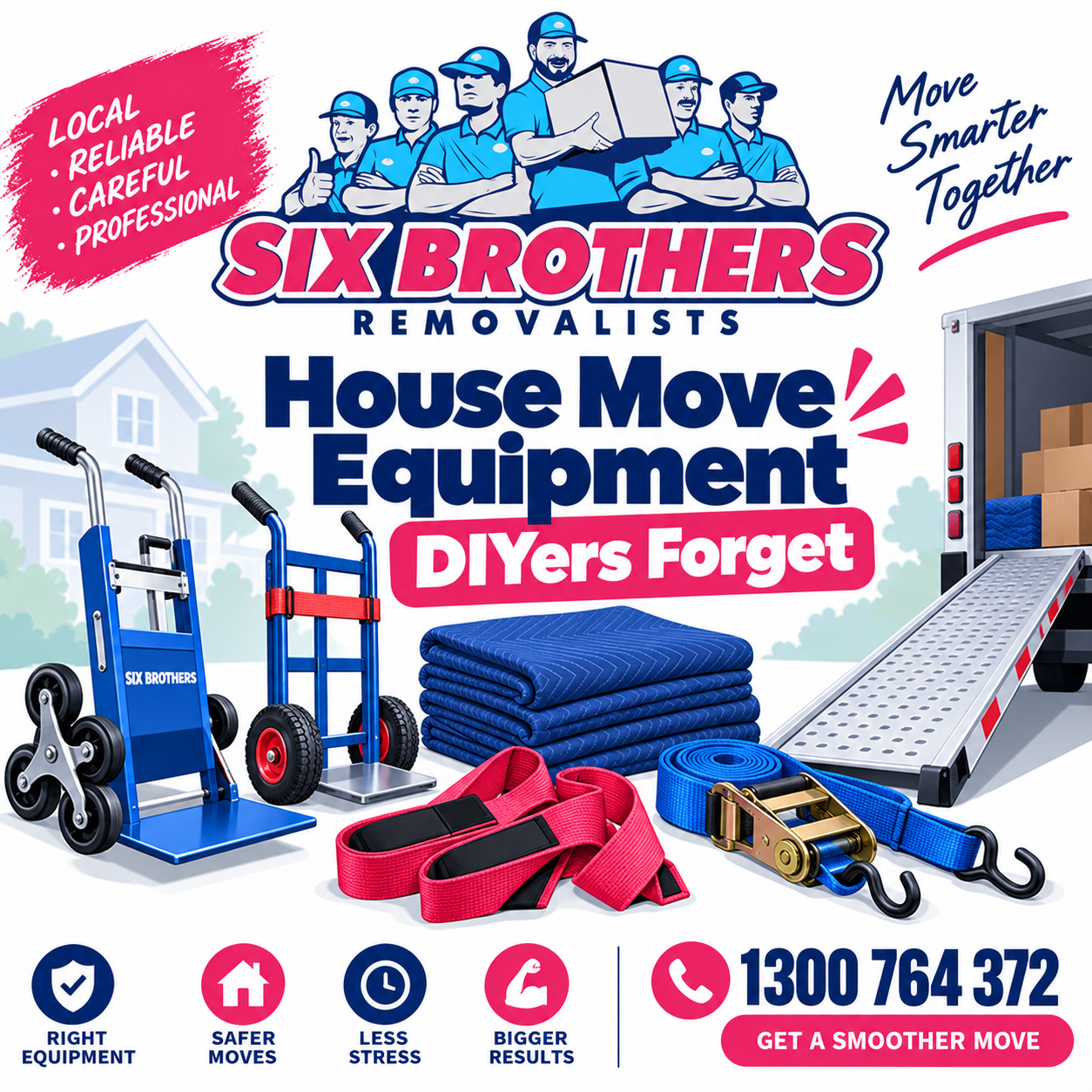
The forgotten essentials are stair gear, appliance dollies, padding, wrap and loading ramps. Most hire lists start with a truck and a generic trolley. Measure twice, move once applies to equipment too.
Stair-Climber Hand Trucks
A stair-climber helps move approved loads across steps using its purpose-built wheel system. Search stair climbing trolley hire only after measuring each flight and landing. Check the manufacturer’s stair limits, brakes, load rating and operator instructions.
A stair-climber is not permission to move a full fridge down steep stairs alone. Tight corners, loose carpeting and unexpected balance shifts can defeat the plan. Ask the hire supplier about a trained operator when needed.
Appliance Dollies
An appliance dolly supports tall loads with a frame, wheels and suitable securing straps. For appliance trolley hire, ask whether the model suits your appliance’s shape. A fridge moving trolley and washing machine moving trolley may need different handling.
Check doorway width, wheel condition and the strap contact points before loading. Follow each appliance maker’s moving and restarting instructions. Unplugging a washing machine does not automatically make its hoses safe to ignore.
Moving Blankets & Pads
Moving blankets cushion timber, glass and painted surfaces against everyday rubbing. They work best with corner protection and a secure, gentle wrap. Don’t mistake a blanket for a lifting aid or a load restraint.
Allow enough pads for a sofa, dining setting and stacked furniture. Keep damp, dirty blankets away from clean upholstery. A little care here saves a lot of grief later.
Industrial Stretch Wrap
Industrial stretch wrap can keep pads and loose furniture parts together. It should not replace a rated strap during transport. Test delicate finishes before wrapping and never seal moisture against timber or leather.
Wrap cleaned, dry pieces without crushing upholstery or trapping loose cables. Keep handles and lifting points accessible. Use covers or padding before film touches fragile surfaces.
Portable Loading Ramps
A portable ramp bridges a suitable height difference between the ground and the vehicle. Match its rating, length and fixing method to your actual vehicle. A ramp needs a firm, level approach and adequate width.
Never assume any plank will work as a ramp. Ask how the ramp stays secured against movement. Keep people clear of the load path during loading.
| PRO TIP Photograph the truck floor, stairs and narrowest doorway before booking gear. Send measurements to the hire supplier. |
Match the Equipment to What You Are Moving
Pick equipment by item, weight, shape and route rather than bedroom count. One narrow landing can change the entire setup. Here is where the rubber hits the road for a DIY plan.
Fridges and Washing Machines
Fridges and washing machines need an appliance-rated trolley and reliable load control. Measure appliance depth and height against doors and turns. Empty, disconnect and prepare each appliance under its maker’s instructions.
Avoid improvising how to move a fridge down stairs. A heavy, tall load may require trained help and specialist equipment. Ask the supplier about appliance moving straps and their approved use.
Sofas and Wardrobes
Sofas and wardrobes need padding, a clear route and controlled support. Furniture sliders can help on compatible level floors. Dismantle suitable sections before moving, following the furniture maker’s instructions.
Long pieces can snag on Sydney terrace turns and unit corridors. Protect corners before the first turn. Stop when an item will not clear the space.
Pianos and Heavy Furniture
Pianos and dense furniture demand a separate handling plan. Their weight distribution, finish and internal parts make them unlike ordinary boxes. A general furniture dolly hire may not suit them.
Ask piano removalists about the exact instrument, steps and access. Do not improvise with furniture lifting straps or a small jack. Better safe than sorry is a practical rule for high-value items.
Oversized Outdoor Items
Outdoor settings, large planters and workbenches need secure routes and suitable platforms. Measure gates, paths and turning space before hiring gear. Our guide to garage and shed moving costs explains why these pieces alter moving plans.
Clean loose dirt and drain suitable equipment before transport. Discuss fuel, gas cylinders and hazardous products separately with the provider. Do not assume a household removals truck accepts them.
Heavy Lifting & Mobility Gear
Mobility gear reduces repeated carrying when the load and route suit the device. It does not make every awkward item safe to move. No use crying over spilt milk once a load is already unstable.
Primary Use
Use a flat furniture dolly for stable, flat-bottomed loads on even floors. A hand trolley suits suitable boxed loads and some appliances. Furniture skates help with controlled short moves across a clear, level surface.
Key Feature
Look for an easy-to-read working load rating, stable deck and suitable wheels. Check handles, brakes and straps where applicable. A wheel that works indoors may snag on gravel or paving.
Why DIYers Forget It
People count furniture pieces but overlook the distance between home and truck. A long Parramatta driveway can mean dozens of repeated carries. The right moving trolley hire can reduce those trips.
Specialised Lifting & Transport Aids
Specialised aids suit particular loads, not every heavy item. Think of them as the right key for one lock. Check what each device can safely support before hiring it.
Primary Use
Use rated lifting straps for approved two-person handling tasks and short controlled moves. A purpose-designed lifting jack may briefly raise suitable furniture for positioning skates. Never use a furniture jack to support a person or unsupported load.
Key Feature
Check the stated capacity, lift height, contact surfaces and instructions. Lifting straps for moving furniture need correct fit and trained coordination. A rated device still needs stable floor conditions and a clear route.
Why DIYers Forget It
Small fittings look optional until the furniture sits flush against the floor. DIYers may also confuse a transport strap with a lifting strap. They perform different jobs and need different ratings.
Equipment for Tight Access and Long Carries
Tight access calls for smaller gear, measured turns and fewer rushed lifts. The shortest route is not always the safest. This matters in three-storey Sydney homes, narrow terraces and long townhouse paths.
Furniture Skates
Furniture skates carry suitable heavy pieces over smooth, firm surfaces. Confirm the combined rating and secure load contact before use. Avoid slopes, thresholds and uneven ground unless the product explicitly allows them.
Furniture Sliders
Furniture sliders help reposition suitable pieces across the right floor type. Use the correct slider face for carpet or hard flooring. Test a hidden area first to avoid scratches.
Lifting Straps
Moving straps for heavy furniture can distribute some lifting effort between trained helpers. Their use depends on the load and manufacturer instructions. Keep the path clear and stop when one person loses control.
Furniture lifting straps should never be used as improvised truck restraints. They also cannot solve a tight doorway or unstable object. Slow and steady wins the race.
Narrow-Access Trolleys
A narrow-access trolley helps where a normal dolly cannot pass. Measure the trolley with its loaded item, not its empty frame. Check turns, thresholds and lift doors before collection.
Essential Protection & Security Gear
Protection gear keeps the load stable and reduces contact damage during travel. Blankets protect surfaces; rated restraints control movement. You cannot cut corners on either task.
Ratchet Straps and Tie-Down Ropes
Use correctly rated ratchet straps for moving furniture when the vehicle has suitable anchor points. Match restraint method to the load and vehicle guidance. Inspect webbing, hooks and labels before use.
Ordinary rope may not meet a particular load-restraint requirement. Avoid sharp edges, overloaded anchors and straps rubbing against polished timber. Ask your vehicle provider how its tie-down system works.
| DID YOU KNOW? A trolley and a tie-down strap solve different problems. One moves a load; the other helps secure it during transport. |
Property Protection Gear DIYers Overlook
Property protection stops a moving task becoming a floor, door or wall repair. Choose coverings suited to the surface and check they cannot slip. A stitch in time saves nine.
Floor Protection Runners
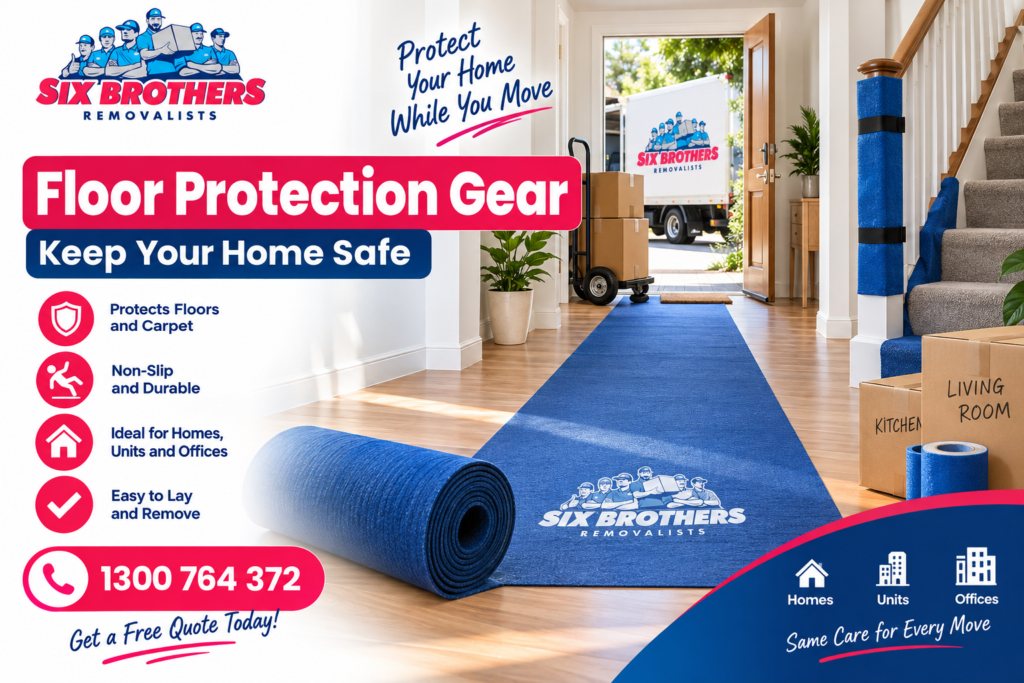
Floor runners protect suitable hard floors along repeated traffic routes. Select non-slip products approved for your flooring. Tape and loose edges can create trip hazards.
Carpet Protectors
Carpet protectors guard high-traffic areas from grime and trolley marks. Use only products suited to carpet type and duration. Test adhesive films before using them near delicate fibres.
Door-Jamb Protectors
Door-jamb protectors cushion corners where tall loads pass. Check door clearance after fitting them. Remove loose doorstops and leave hinges undisturbed unless qualified help is needed.
Wall Corner Guards
Corner guards protect tight turns from furniture contact. Position them along the full route, including stair landings. Measure the remaining opening before bringing furniture through.
Tools for Furniture Disassembly and Reassembly
Basic tools can turn one awkward unit into several manageable parts. Photograph fittings and label each small bag before dismantling. Do not bite off more than you can chew with fixed or connected items.
Cordless Drill
A cordless drill helps remove approved fasteners with the correct driver bit. Set low torque around soft timber and particleboard. Stop if a fitting begins to strip.
Socket Set
A socket set suits accessible nuts and bolts on compatible bed frames and tables. Match the socket size before applying force. Keep every bolt labelled with its furniture piece.
Allen Key Set
An Allen key set handles many flat-pack frames and removable legs. Use the correct size to avoid damaging the socket. Photograph bracket positions before taking a frame apart.
Furniture Lifting Jack
A furniture lifting jack can raise certain approved loads briefly for slider placement. Check lift height, capacity and stable contact points. Never reach under furniture supported only by a jack.
| PRO TIP Pack screws in labelled bags and tape each bag to a matching sealed parts box, not polished furniture. |
Check Equipment Capacity Before You Hire
Capacity is the first filter when choosing any moving aid. The item, accessory and route must all fit the rating. Look before you leap, particularly with heavy appliances.
Maximum Load Rating
Read the working load limit on the specific hired unit. Count the full item weight and anything attached to it. Ask the supplier when labels are missing or damaged.
Item Weight and Balance
A tall appliance can tip despite fitting a trolley’s stated weight limit. Consider its centre of mass and approved securing points. A helper cannot reliably catch a falling loaded trolley.
Wheel and Surface Type
Small hard wheels suit some smooth indoor floors, not every outdoor path. Confirm suitability for pavers, thresholds and wet surfaces. Do not force a loaded trolley through loose gravel.
Stair Compatibility
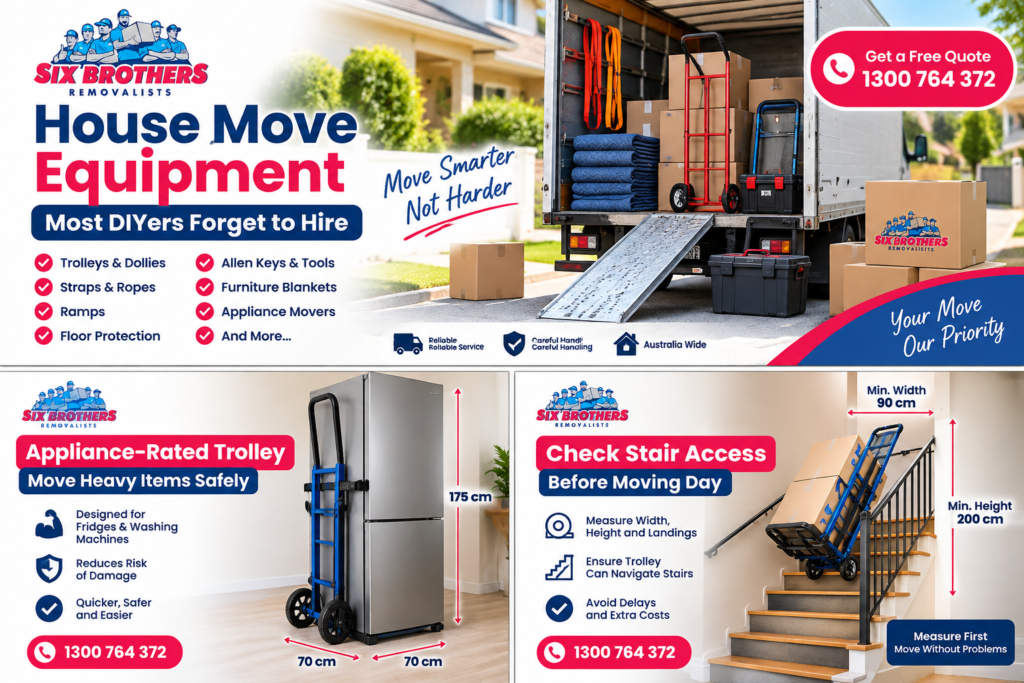
Stair compatibility depends on the exact device, stair shape and operator instructions. Check landing depth, step condition and turning room. Standard flat dollies are not stair-climbing equipment.
SafeWork NSW advises matching trolleys to loads and checking movement routes. Read its SafeWork NSW moving-equipment guidance before planning a difficult carry.
What to Check Before Collecting Hire Equipment ?
Check the actual unit, hire terms and vehicle fit before leaving the depot. A last-minute swap can change everything. Better to ask now than scramble on removal day.
Confirm the equipment: inspect tyres, wheels, handles, frames, welds, straps, brakes and rating labels. Ask for an operating demonstration. Photograph existing marks and request a replacement for damaged gear.
Confirm your route: bring item measurements, stair photos and vehicle deck height. Check ramp fixing points and trolley clearance. Confirm whether loading help is included or excluded.
Confirm the booking: record collection and return times, cleaning requirements, deposits and damage terms. Ask for written instructions and emergency contact details. Keep the receipt handy.
Common DIY moving mistakes and how to avoid them
Most avoidable mistakes start with unsuitable gear, missed measurements or rushed loading. Small oversights can snowball into extra handling and damage. Make the first trip a test, not a gamble.
Hiring one trolley for everything: match appliances, boxes and large furniture to separate approved devices. Guessing doorway width: measure with packaging and pads included. Skipping restraint checks: secure each load using approved anchor points.
Moving a fridge alone on stairs: stop and arrange trained help. Ignoring vehicle height: confirm ramp and truck compatibility. Leaving outdoor gear until last: include sheds, gates and paths in the plan.
Overloading helpers: share realistic workloads and rest breaks. Using sliders on the wrong floor: test the product first. Skipping the last load check: inspect restraints before the vehicle moves.
Hidden Costs of Hiring Moving Equipment
The hire price alone rarely shows the full DIY spend. Add transport, equipment returns and your time to the same budget. A penny saved can become a pound spent.
Hire Period Charges
Compare hourly, daily and weekend hire periods against your actual moving schedule. A delayed key handover may extend several separate bookings. Ask how partial days are charged.
Security Deposits
A security deposit can tie up money until the supplier checks returned gear. Confirm the amount, refund timing and allowed payment methods. A deposit is not automatically the final rental cost.
Late Return Fees
Late returns may trigger extra time charges under the rental agreement. Ask when the depot closes and whether after-hours returns count. Allow unloading and cleaning time before the deadline.
Extra Collection Trips
One overlooked trolley can create another drive across Sydney. Include fuel, travel time and vehicle space for returns. See our home moving calculator when planning the broader household workload.
Damage Charge
Damage charges depend on the hire contract and the condition recorded at collection. Photograph visible marks before departure. Ask which parts count as normal wear and what cover applies.
When Hiring More Equipment Stops Making Sense ?
More hire gear stops helping when the job still lacks safe handling and enough people. One expensive fridge, steep stairs or narrow turn can change that decision. Time is money, but safety matters more.
Compare the total hire basket against a scope-matched professional quote. Add a truck, trolley, ramps, protection, straps, helpers and collection time. Include the possible cost of taking extra leave.
For a simple ground-floor move, hired aids may be enough. For a loaded staircase, piano or awkward access, ask trained furniture removalists about the handling plan. A free quote can clarify the difference before you commit.
DIY Equipment Hire vs Hiring Removalists
Compare DIY hire and professional service by total cost, help, risk and available time. Neither suits every home. The right choice is the one your actual inventory and access support.
Equipment Hire Costs
DIY means booking and paying for each required item yourself. Removalist truck hire alone may exclude crew and handling aids. A professional quote may combine vehicle, crew and ordinary handling gear. Ask what specialist equipment, packing and difficult access add.
Review Six Brothers Removalists for Sydney service details before comparing like-for-like quotes. Do not compare one bare truck rate against a complete removals service.
Labour Requirements
DIY needs available helpers who can manage each load safely. Hiring house removalists gives you a crew for the booked scope. Confirm numbers, stairs, dismantling and packing before accepting a quote.
A single-item job may suit a furniture removalist. A removalist furniture quote should explain loading, protection and unloading. Full homes may need a larger house removals team. Both still depend on clear inventory and access details.
Damage Exposure
DIY places packing, carrying, loading and route decisions on your team. Professional help changes who performs that work, but does not guarantee zero damage. Ask any removalist about cover, exclusions and claims steps.
Review item condition before moving and photograph fragile pieces. Inspections protect everyone from disputes. If the job looks risky, seek specialist advice before lifting.
Time Commitment
DIY also consumes hire collection, packing, dismantling, loading, driving and returns. A professional booking can reduce your own lifting tasks. Compare the full day rather than the drive alone.
Office removalists may focus on workplace downtime, while house removalists focus on household needs. Interstate removalists also plan longer vehicle journeys and load security. Different scopes deserve different questions.
When Removalists Win
Professional help becomes practical when the move needs trained handling, specialist gear or a larger crew. Piano removalists suit certain instruments. Interstate furniture removalists handle longer-distance furniture transport; an interstate removalist may assess access at both homes.
International removalists plan shipping needs beyond a local truck journey. Searches for removalists Melbourne or removalists Brisbane involve different service areas. For this Sydney guide, start with the actual doors, stairs and furniture.
Searching removalists near me or removalist near me is only a starting point. A search for removalists Sydney may show truck hire and complete services together. Compare removalist companies by written scope, access questions and included equipment. Cheap removalists are not automatically cheaper after extra hire and damage costs.
For household loads, ask furniture removalists in Sydney how they would handle your heaviest items. Request a free quote from Six Brothers Removalists on 1300 764 372. Share stairs, item photos and your intended moving date.
| QUICK QUOTE Moving soon? Request a free quote from Six Brothers Removalists. Share heavy items, access photos and any stairs. Call 1300 764 372. |
FAQs
Can removalists disassemble furniture?
Some can dismantle and reassemble suitable items. Ask which pieces, tools and time the quote includes.
How much do removalists cost in Sydney?
Costs depend on inventory, distance, access, crew and booked services. Compare an itemised quote with your full DIY hire basket.
Do I need a different trolley for a fridge?
Usually, choose an appliance-rated model that fits the load and route. Confirm the hire supplier’s instructions.
Can a stair-climbing trolley move any fridge downstairs?
No. Compatibility depends on the load, staircase, device and operator. Seek trained help where control is uncertain.
Are lifting straps enough for heavy furniture?
No. They do not replace safe planning, suitable helpers, rated restraints or a clear route.
Should I hire a ramp with a removalist truck?
Only if your vehicle and load require one. Confirm the ramp’s rating and fixing system first.
Which protection gear is worth hiring?
Prioritise blankets, corner guards and suitable floor coverings for your inventory and access.
Does this checklist work for interstate moves?
Yes, but check loading security and each property’s access. Ask interstate removalists about their vehicle and handling scope.