


Table of Contents
Three-storey Sydney homes usually cost more to move because every item needs more handling. Stairs, landings, tight corners, and street access can all slow the job. Extra handling can also change the crew, equipment, and time needed.
Two homes can hold similar furniture but create very different removal workloads. Why can two similar bedroom counts produce such different quotes? The answer often sits between the front door and the top floor.
A three-storey move works like a relay race with dozens of repeated handovers. Each extra floor adds distance before the removals truck even enters the picture. That is why accurate access details matter before removal day.
Why Three-Storey Sydney Homes Cost More to Move
Three-storey homes cost more because the crew repeats more lifting, carrying, and positioning. The truck journey may stay identical while the handling workload grows. As the saying goes, the devil is in the detail.
A standard house removal quote should consider access alongside inventory and travel distance. Bedroom count gives useful context, but it cannot show every stair flight. It also cannot show tight landings, steep paths, or distant parking.
Vertical Carry Time Multiplies Across Every Floor
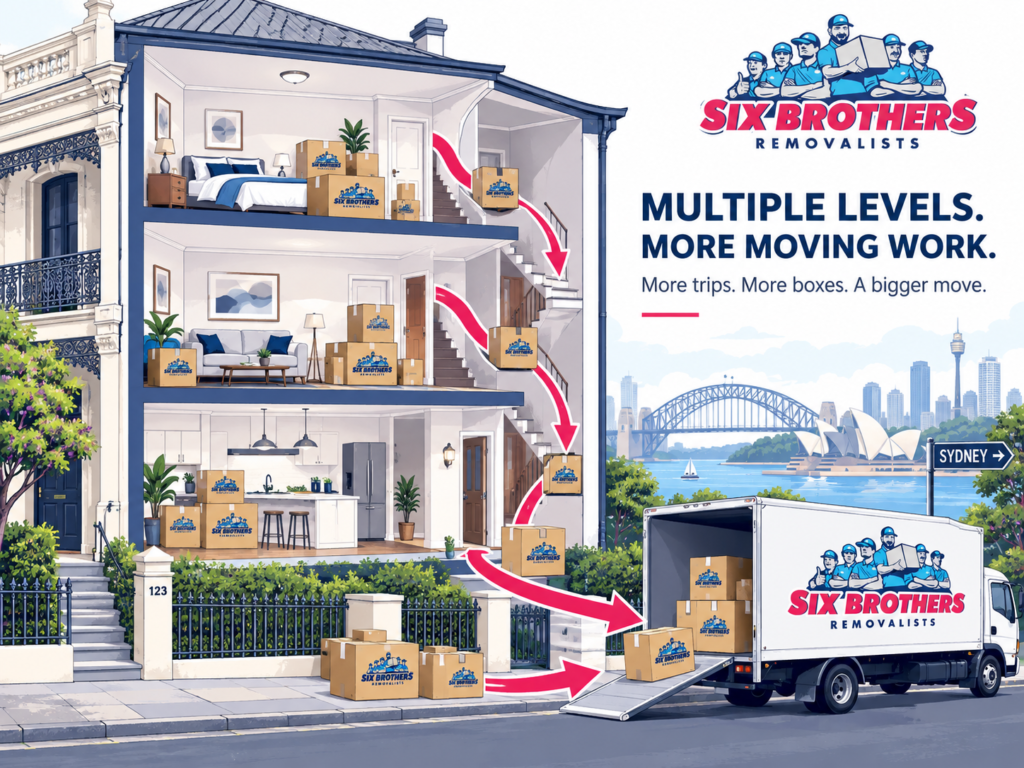
Vertical carry time grows because every upstairs item travels through more internal space. Boxes from the top floor cross stairs, landings, hallways, and the ground level. Then the crew still carries them from the door to the truck.
That repeated distance can add meaningful labour across a full household inventory. A few extra minutes per load can accumulate across many loads. Time is money when a local removalist charges for working time.
This matters for house removalists handling bedrooms, studies, wardrobes, and upstairs living areas. It also matters when a garage sits below the main living level. The property layout can matter as much as the room count.
Stairs Slow Heavy and Fragile Item Handling
Stairs slow handling because heavy items need controlled movement and clear communication. Sofas, mattresses, drawers, televisions, and appliances cannot always move at box speed. Furniture removalists must protect the item and the property together.
SafeWork NSW identifies force and awkward posture as manual handling risk factors. Its guidance on hazardous manual tasks supports careful planning around difficult carrying work. Better safe than sorry is more than a saying here.
Fragile items also need steadier turns around landings and stair rails. Glass, artwork, mirrors, and electronics leave little room for rushed handling. Careful work may look slower, but it protects the whole move.
More Storeys Create More Loading Bottlenecks
More storeys create bottlenecks because stairs limit how many people can move together. One removalist may carry downward while another clears space below. That flow can stall when bulky furniture blocks a landing.
Boxes can also queue near doorways when the truck crew loads faster. A good plan keeps each floor feeding the next stage. Many hands make light work only when those hands have room.
This is where experienced Sydney removalists can plan the sequence before lifting starts. The goal is smooth movement, not frantic movement. A clean loading flow protects both time and belongings.
Did you know?
A similar bedroom count can hide a very different workload. Stairs, internal distance, parking and furniture access can change how long loading takes.
Staircases Can Change the Crew Size and Moving Time
Staircases can change crew needs because every floor creates another carrying zone. A crew must balance speed, safety, and space inside the home. Horses for courses applies when choosing the right crew size.
The cheapest hourly setup is not always the cheapest final setup. A small crew may have a lower rate but need longer. The right choice depends on inventory, stairs, access, and heavy items.
Two Removalists May Be Slower on Repeated Stair Runs
Two removalists may take longer when both must repeat every stair run. Heavy furniture can also require both workers at the same time. That leaves nobody loading the truck during those carries.
The effect becomes clearer across three levels and many bulky pieces. Bedrooms upstairs can keep both workers away from the loading area. Ground-floor progress may pause while upstairs items move safely.
That does not make two removalists a bad choice for every property. Smaller inventories can still suit a smaller crew. The quote should match the actual workload, not a fixed formula.
Larger Crews Can Keep Loading Flowing
A larger crew can keep separate parts of the move progressing together. One pair can manage stairs while another worker prepares the truck. That can reduce idle time around difficult carries.
Extra workers still need enough space to work efficiently. Narrow stairs can limit how many people help one item. Too many cooks can spoil the broth when access stays tight.
The crew decision should therefore consider both space and inventory. Large homes with open stairs may suit different staffing than narrow terraces. An accurate removalist quote should reflect those differences.
Tight Landings and Turns Reduce Carry Speed
Tight landings reduce speed because furniture needs smaller, more controlled movements. The crew may need to rotate, tilt, or reposition an item. Each adjustment takes time and needs enough clearance.
A wide staircase can still have a sharp turn at one landing. Low ceilings can create another limit around tall wardrobes or mattresses. Measure twice, move once is useful advice before removal day.
Photos of stairs and landings can help a removalist assess access. Measurements can also flag furniture needing dismantling before the crew arrives. That preparation can prevent a surprise halfway downstairs.
Bulky Furniture Is Harder to Move Between Floors
Bulky furniture costs more to handle when stairs restrict normal carrying angles. Large pieces can need dismantling, wrapping, extra people, or another access route. You cannot fit a square peg into a round hole.
This is especially relevant for beds, sofas, dining tables, cabinets, and gym equipment. Pianos need even more specialised planning because size and weight work together. The route matters before anyone lifts the item.
Beds, Sofas and Tables May Need Dismantling
Large furniture may need dismantling when its assembled size exceeds stair clearance. Bed frames, modular sofas, and tables often become easier after safe disassembly. Smaller components also give the crew better control.
Dismantling still adds tasks before loading and after delivery. Parts should stay labelled and grouped for efficient reassembly. Missing bolts can turn a simple job into a headache.
Professional furniture removalists can assess which items need extra preparation. Tell them about unusual pieces before the quote is finalised. That helps the crew bring suitable tools and protection.
Oversized Items May Not Clear Internal Staircases
Oversized furniture may fail to clear a staircase despite fitting through the front door. Internal turns can be narrower than the entry point. Balustrades and ceiling heights can remove useful manoeuvring space.
The crew may test different safe orientations before choosing another solution. Some items can be dismantled further by design. Others may need specialist handling or a different route.
Forcing an item is rarely a smart shortcut. Damage can affect walls, stairs, furniture, or all three. Slow and steady wins the race around difficult internal access.
Balcony or Alternative Access May Be Needed
Alternative access may help when furniture cannot safely travel through internal stairs. A suitable balcony, external stair, or other route can sometimes change the plan. The route must still be assessed before use.
Specialist lifting equipment should never be assumed from a standard booking. Site conditions, item weight, clearances, and safe setup all matter. The right tool for the job depends on the actual property.
Tell the removalist about blocked internal routes before removal day. Photos can show balconies, side access, driveways, and external stairs. Forewarned is forearmed when access gets complicated.

More Levels Mean More Protection and Handling Work
More levels increase protection work because every route contains more contact points. Stairs, walls, rails, corners, and floors all sit near moving furniture. A stitch in time saves nine with property protection.
Good preparation can include wrapping furniture and clearing travel paths. It may also include protecting vulnerable floors and corners where needed. These steps can prevent rushed fixes after loading begins.
Walls, Floors and Stair Rails Need Protection
Walls, floors, and rails need attention because furniture passes them repeatedly. One awkward turn can bring a cabinet close to painted walls. Repeated foot traffic can also affect vulnerable floor surfaces.
The correct protection depends on the home and the moving route. Blankets, wraps, runners, or corner protection may help in suitable situations. The crew should keep walkways clear throughout the job.
That protection takes setup time, but it can save trouble later. Cutting corners can cost more than doing the groundwork. Careful preparation supports both speed and control.
Appliances Need Slower Controlled Handling
Appliances need controlled handling because they combine weight, bulk, and sensitive components. Fridges and washing machines can be awkward on narrow stairs. Their shape can also block the carrier’s view.
The path should stay clear before an appliance starts moving. Doors, hoses, loose shelves, and other parts may need preparation. Every appliance also needs handling that follows its manufacturer requirements.
A rushed carry can create more risk than a measured one. Easy does it is the sensible approach on stairs. Tell the crew which floor holds each major appliance.
Awkward Items May Need Specialist Moving Equipment
Awkward items may need equipment that improves grip, control, or safe movement. Trolleys, straps, blankets, and purpose-suited tools can support different tasks. Equipment choice still depends on stairs and available space.
A stair trolley cannot solve every staircase or every item. Tight turns may remove the room needed to use equipment safely. There is no one-size-fits-all answer for a three-storey home.
Piano removalists and other specialist crews often plan item routes carefully. Standard removalist furniture may need similar thought when dimensions become awkward. The equipment plan belongs inside the quote discussion.
Sydney Access Problems Can Increase the Final Cost
Sydney access problems can increase cost before the crew reaches your staircase. Parking, narrow streets, steep blocks, and long carries can all extend handling time. When it rains, it pours if several issues combine.
A three-storey home can therefore create both vertical and horizontal distance. The crew may travel floors inside and metres outside. Those extra movements can repeat for almost every box.
Narrow Streets and Limited Truck Parking
Narrow streets can place the removals truck farther from the front door. Limited legal parking can create the same result. A longer truck gap means every load travels farther.
Sydney suburbs vary widely in street layout and housing density. Parramatta, the Inner West, Eastern Suburbs, and North Shore can present different access patterns. The specific address matters more than a suburb label alone.
Plan lawful truck access before the booking where possible. Tell the removalist about loading restrictions or difficult street conditions. The early bird catches the worm with practical parking preparation.
Long Carry Distances Between the Truck and Door
Long carry distances add time because the crew repeats them throughout loading. Fifty small walks can matter more than one difficult walk. Each return trip also adds distance without moving an item.
Driveways, pathways, apartment-style access, and rear entries can create long carries. A three-storey house adds those outside metres to internal stair travel. The total route can become surprisingly long.
Send photos when the parking position is unclear. Include gates, side paths, driveways, and the likely truck position. A picture is worth a thousand words for access planning.
Steep Driveways, Terraces and Split-Level Blocks
Steep driveways and split levels make carrying routes more physically demanding. Terraced blocks may also add outdoor steps before the front door. Those features can slow loaded movement and trolley use.
Wet or uneven access needs even more care. SafeWork NSW notes greater risk when loads move across stairs, slopes, or uneven surfaces. Safety first keeps the job moving sensibly.
This is common enough to mention during quote discussions. Western Sydney removalists can face long driveways or steep suburban blocks. Removalist Western Sydney searches still need address-level access details.
Removalists Northern Beaches Sydney can face very different terrain. The same applies across hilly pockets throughout Greater Sydney.
Why Bedroom Count Alone Can Underquote a Three-Storey Move
Bedroom count can understate cost because rooms do not describe the carrying route. Two four-bedroom homes can have completely different stairs, parking, and furniture access. Do not judge a book by its cover.
A useful quote combines inventory with property layout and access. That gives the removalist better information before allocating crew and truck resources. It also reduces uncertainty on removal day.
Floor Layout Matters as Much as Inventory
Floor layout matters because the same inventory can sit across different levels. An upstairs lounge creates different work from a ground-floor lounge. A lower-ground garage can create another vertical route.
Tell the removalist where bulky items sit, not only what you own. Mention top-floor bedrooms, downstairs storage, balconies, and split-level areas. That context helps explain the real handling job.
This is why house removalists Sydney quotes should not rely on bedrooms alone. Sydney house removalists need access details to plan realistic labour. The layout turns an inventory list into a moving plan.
Stairs, Parking and Access Need to Be Disclosed
Stairs, parking, and access should be disclosed before the quote is accepted. Missing details can make the original estimate less useful. Full information gives both sides a clearer starting point.
NSW Government guidance recommends giving removalists all relevant move details. It also recommends getting a written quote before hiring. Honesty is the best policy when describing difficult access.
Mention stairs at both addresses, not just the current home. Also mention lifts, parking limits, long carries, steep paths, and heavy items. Destination access can affect unloading just as much.
- Every internal or external staircase used during the move.
- Legal truck parking and any long carry from the street.
- Steep driveways, narrow paths, gates, and outdoor steps.
- Pianos, gym equipment, oversized furniture, and heavy appliances.
- Lifts, access restrictions, or booked loading areas at either address.
Photos, Video Surveys or Inspections Improve Quote Accuracy
Photos and video can help a removalist understand access before arrival. A physical inspection may suit especially complex properties or unusual inventories. These tools add context that a bedroom count cannot show.
Show every staircase used during the move. Include landings, doorway widths, street access, driveways, and major furniture. Leave no stone unturned when the access looks difficult.
Search labels can also hide real differences between jobs. Removalists, removalist companies, and cheap removalists can offer very different service scopes. The property details remain more useful than a broad label.
How to Reduce the Cost of Moving a Three-Storey Home
You can reduce cost by removing unnecessary handling before the crew arrives. Decluttering, labelling, dismantling, and access planning can all reduce wasted movement. An ounce of prevention is worth a pound of cure.
The aim is not to rush the removalists. The aim is to remove avoidable delays from their route. Small preparation choices can repeat their benefit across three floors.
Declutter Before Packing
Decluttering reduces the number of items travelling through every floor and doorway. Unwanted furniture also takes truck space and loading time. Fewer items usually create fewer carries.
Start with storage areas that quietly collect heavy or forgotten belongings. Garages, spare rooms, wardrobes, and top-floor cupboards deserve an early look. Out of sight should not mean out of mind.
Use the home moving calculator after deciding what will actually move. A cleaner inventory can support a more useful planning conversation. It also helps you avoid quoting items already leaving the house.
Label Boxes by Destination Floor
Floor labels help the unloading crew send boxes to the correct level. A clear label can prevent boxes travelling upstairs twice. It also reduces repeated questions at the destination.
Use simple labels such as Ground, Level 1, and Level 2. Add the room name after the floor label. Keep it simple is the best rule here.
Place labels where carriers can see them while holding the box. Consistent labels help the crew sort loads during unloading. That can make a three-storey destination easier to organise.
Disassemble Bulky Furniture Before Removal Day
Safe pre-disassembly can reduce delays when furniture clearly cannot clear stairs assembled. Only dismantle items you understand and can prepare correctly. Keep every fitting organised for reassembly.
Some furniture is better left for trained removalists to dismantle. Ask during booking when you are unsure about beds or complex pieces. Better late than never does not work well on removal morning.
Do not dismantle anything that requires specialist trade work. Focus on normal furniture designed for disassembly. Tell the crew what has already been prepared.
Reserve the Closest Legal Truck Access
Closer legal truck access can shorten every carry between home and vehicle. The saving repeats across boxes, furniture, appliances, and return walks. Every little bit helps during a large move.
Check parking conditions early and follow local rules. Do not block driveways, traffic, or restricted areas without proper authority. Share access instructions with the removalist before arrival.
The truck position should also allow safe loading where possible. A shorter path is useful only when the setup remains lawful. Good access planning keeps the first hour productive.
Clear Stairways and Measure Tight Access Points
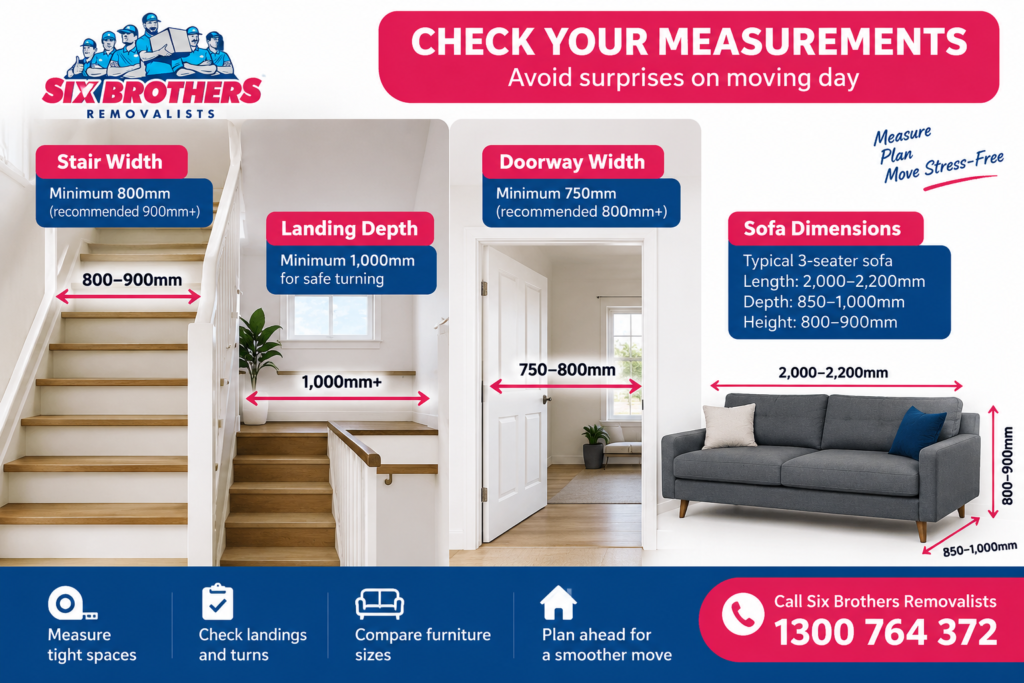
Clear stairs reduce interruptions and give carriers a cleaner movement path. Remove shoes, loose rugs, small furniture, and other obstacles beforehand. Clean access is half the battle.
Measure narrow doorways, stair widths, landings, and bulky furniture before moving. Share problem measurements during the quote stage. That gives the removalist time to plan alternatives.
When a Three-Storey Home Needs a Pre-Move Inspection
A pre-move inspection becomes valuable when access details cannot be explained clearly. Complex stairs, parking, or unusual furniture can justify a closer look. Look before you leap fits this decision perfectly.
Not every three-storey home needs a physical visit. Clear photos and video may answer straightforward questions. The removalist can decide what information is enough for planning.
Tight Stairs or Oversized Furniture
Tight stairs or oversized furniture can justify an inspection when clearances look uncertain. A removalist can review turns, ceilings, landings, and likely handling routes. Measurements can support that assessment.
Show large sofas, wardrobes, tables, gym equipment, and pianos during the review. Piano removalists Sydney searches often involve specialist handling needs. Heavy furniture removalists face similar route questions with other bulky items.
Do not assume the destination will be easier. Check both properties when the same item must cross difficult access twice. Two heads are better than one when planning awkward pieces.
Limited Parking or Long Carries
Limited parking can justify closer planning when the truck cannot stop nearby. Long carries can also change how the crew organises loading. The road-to-door route deserves the same attention as stairs.
Photos should show the likely legal parking area and full walking path. Include gates, ramps, steps, and steep sections where relevant. Prevention is better than cure when access can delay everything.
Removalists Parramatta and Parramatta removalists can face different parking constraints. Removalists in Parramatta still need address-level access details.
Removalists Sydney CBD can face another access pattern. Removalists Eastern Suburbs Sydney may face different street limits. Removalist North Sydney searches still need property details.
Complex Access at Both Properties
Complex access at both properties can multiply the effect on total moving time. The crew handles each item once during loading and again during unloading. Difficult access at both ends doubles the planning problem.
Give the removalist complete pickup and delivery information before accepting the quote. Include floor counts, stairs, lifts, parking, and long carries. What goes around comes around when missing details affect both ends.
Check removalist rates alongside your property details, not in isolation. Hourly pricing only becomes meaningful when you understand likely labour time. So, is the cheapest hourly rate really the cheapest move?
Get an Accurate Quote for Your Three-Storey Sydney Move
An accurate quote starts with the true carrying route, not only bedroom count. Tell the removalist about every floor, stairway, bulky item, and parking issue. The whole picture helps prevent surprises later.
Six Brothers Removalists can use those details when planning your Sydney removal. Include photos or measurements when access looks tight. Put your cards on the table before the booking is final.
This matters whether you need house removalists, furniture removalists, or piano removalists. It also matters for office removalists, interstate removalists, and an interstate removalist. Different services still depend on accurate access information.
Terms like furniture removalist, removalist furniture, and removalist companies describe broad service choices. Searches for cheap removalists or removalist near me can narrow options. They cannot replace a quote built around your three-storey home.
Removalists Melbourne, removalists Brisbane, and other city searches reflect different local conditions. Your Sydney property needs a Sydney-specific access assessment. That is the clearest path toward a realistic moving budget.
Call 1300 764 372 or email info@sixbrothersremovalist.com.au for your move details. Request a free quote after sharing the difficult access points. A well-planned start can make the whole removal feel lighter.
FAQs About Moving a Three-Storey Home in Sydney
How Much Do Removalists Cost in Sydney?
Removalist cost in Sydney depends on labour time, crew size, inventory, travel, and access. Three storeys can increase handling time even when the travel distance stays short. Parking and bulky furniture can add more complexity.
Generic searches for removalists Sydney cost or removalists Sydney prices need property context. Furniture removalists Sydney results also need stair and access details. Compare the service scope and likely total time together.
Cheap removalist Sydney results may focus on the hourly figure. Cheap removalists Parramatta results can do the same. Your access details still shape likely labour time.
Rates from removalists Melbourne or removalists Brisbane do not predict Sydney access costs. The same applies to removalist Brisbane QLD or removalist Melbourne searches. Local property details should guide your Sydney quote.
Search phrases like “cheap removalist near me” can find options, not final costs. “Cheap removalists near me” and “removals near me” have the same limitation. “Budget removals Sydney” results still need your access details.
What to Ask a Removalist Before Hiring?
Ask how stairs, parking, long carries, heavy items, and dismantling affect the quote. Ask what crew size suits your property and inventory. Also ask what information could change the quoted price.
Clarify whether the quote is fixed or time-based. Confirm what the service includes before booking. Get it in writing so everyone starts on the same page.
A removalist near me result is only the beginning of your comparison. Removalists near me searches do not prove experience with complex access. Ask direct questions about three-storey homes before choosing.
“Book removalist Sydney” searches can help you find available services. “Moving house Sydney” results cover easy and difficult properties. “Removal companies Sydney” searches still need proper quote checks.
Do Three-Storey Homes Always Cost More to Move?
Three-storey homes do not always create a dramatically higher final bill. Inventory size, stair design, parking, and preparation can change the result. An easy three-level property may outperform a difficult single-level property.
However, extra floors usually create more internal carrying distance. Bulky furniture can magnify that effect. There are exceptions to every rule, so quote the real property.
House removalist Sydney and home removalists Sydney services should assess access before assumptions. Full service removalists Sydney may also include different preparation or packing options. Compare like with like before deciding.
How Do Stairs Increase Removalist Costs?
Stairs can increase cost by adding repeated carrying time and slower bulky-item handling. They can also affect crew planning and equipment choices. Difficult landings may require extra repositioning.
Three floors create more stair travel than one level. The effect grows when most bedrooms sit upstairs. Long carries outside can then add another layer of work.
A furniture removalist Sydney booking should identify large upstairs pieces early. Furniture removalists in Sydney may need measurements for tight routes. Piano removalists Sydney NSW need even more specific access information.
Do I Need More Removalists for a Three-Storey House?
You may need a larger crew when inventory and access support parallel work. More workers can keep stairs and truck loading active together. Tight spaces can limit that advantage.
The ideal crew depends on floor layout, furniture size, and total volume. A smaller move may still work well with two removalists. A large family home may benefit from additional hands.
Best removalists Sydney claims matter less than a sensible staffing plan. Affordable removalists Sydney should still explain their crew recommendation. Budget removalists Sydney should also clarify how staffing affects total time.
A “removalist Sydney cheap” search may prioritise price wording. Sydney cheap removalists can still quote different access assumptions. Sydney removalists cheap listings need the same careful comparison.
Can Large Furniture Be Moved Through a Balcony?
Some furniture may use alternative access when internal stairs are unsuitable. That does not mean every balcony is suitable for lifting. Safe access requires a proper site and item assessment.
Never assume ordinary removalist truck hire includes specialist lifting equipment. Tell the company about the access problem before booking. Specialist solutions should be planned, not improvised.
International removalists and interstate removalists may face similar bulky-item planning at collection. Interstate furniture removalists also need accurate pickup access. The same principle applies to a local Sydney house.
How Can I Reduce Three-Storey House Moving Costs?
Reduce avoidable handling before the crew arrives. Declutter, label boxes by floor, clear stairs, and plan legal truck access. Share accurate measurements for difficult furniture and doorways.
Packing early can also reduce last-minute disruption. Office removalists use labelling because routing matters during unloading. The same simple system works well across home levels.
Do not choose cheap removalists only from the hourly figure. Compare what each quote assumes about stairs and access. Penny wise and pound foolish can become expensive on removal day.
Should a Removalist Inspect a Three-Storey Home Before Quoting?
An inspection can help when stairs, furniture, or parking are difficult to assess remotely. Clear photos or video may be enough for simpler properties. The removalist should request the detail needed for confidence.
Ask whether a survey would improve the quote before booking. Include both addresses when the destination also has three levels. A clear plan beats guesswork every time.
Interstate removalist, interstate removalists Sydney, and local removalist services all need accurate access information. Interstate removals also depend on accurate collection access. Office removalists Sydney benefit from detailed loading access.