


Table of Contents
A successful Sydney house move starts with one room, one inventory, and one clear plan. This moving house checklist helps you pack in order, prepare access, and settle in sooner. Follow each room’s tasks, then check the final moving-day walkthrough before your removalists arrive.
Moving from a terrace in Newtown or a family home in Parramatta? The same principles apply. Start with rarely used rooms. Keep daily essentials available. Tell your removalist about heavy items and awkward access.
A house move feels easier when every box has a destination. Treat this checklist as your road map. You can also ask Six Brothers Removalists to review your move details before booking.
Room-by-Room Packing Guide
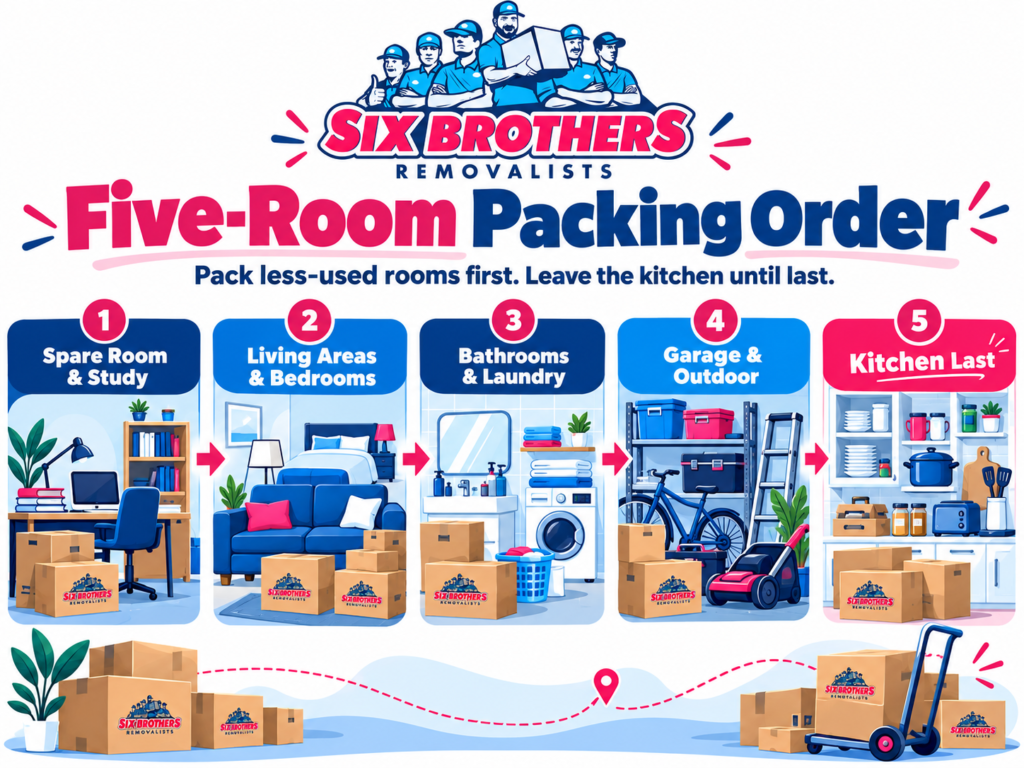
The easiest room-by-room packing plan starts with spaces you rarely use. Finish everyday rooms closer to removal day. Keep food, cleaning supplies, medication, and chargers within reach until the end.
Spare Rooms & Study (3 Weeks Out)
Start with the study, guest bedroom, and spare storage cupboards. Sort old paperwork before sealing cartons. Back up important computer files and label cables before disconnecting anything.
Pack books in small cartons because large boxes become too heavy. Wrap monitors and artwork separately. Keep passports, property documents, and work devices in your personal essentials bag. Don’t bury tomorrow’s work beneath today’s clutter.
Living Areas & Bedrooms (1–2 Weeks Out)
Pack spare bedding, books, decorations, and out-of-season clothes first. Keep one working set of clothes and bedding for each person. Photograph furniture before dismantling it.
Use a bedroom moving checklist for beds, drawers, lamps, wardrobes, and bedside tables. Put screws into labelled bags. Attach each bag to the matching furniture piece. Arrange extra protection for mirrors, glass shelves, and televisions.
Kitchen (Last 48 Hours)
Pack the kitchen last because you’ll still need to eat. First, box rarely used cookware and display pieces. Then protect plates individually and pack glasses upright in suitable dividers.
Seal pantry goods, check expiry dates, and avoid overloading cartons. Keep a kettle, mugs, basic cutlery, snacks, and one cooking pan aside. What will everyone eat on the first night? Plan simple meals before you disconnect the fridge.
Bathrooms & Laundry
Pack spare towels, bulk toiletries, and cleaning equipment before your final wash. Separate everyday medicines and personal care items. Seal liquid containers inside leak-resistant bags, then keep them upright.
Use the laundry until the last useful cycle. Drain and disconnect the washing machine according to its instructions. Check transit bolts and hose storage for your model. Book a qualified tradesperson when disconnection requires one.
Garage & Outdoor
A garage can hide more moving work than an entire bedroom. Count bikes, ladders, pots, tool chests, shelves, and outdoor furniture. Photograph what sits behind benches and storage racks.
Check garage and shed moving costs before finalising your inventory. Bulky or heavy gear can change truck space and handling needs. Separate fuels, chemicals, and other restricted goods for safe disposal.
Timeline & Preparation (4–6 Weeks Out)
Start the main plan four to six weeks before your move, where possible. Booking, access, supplies, and address changes need more lead time than last-minute packing.
Declutter & Sort
Walk through every room with four decisions: move, donate, sell, or dispose. Measure bulky items before deciding whether they are worth relocating. Give unwanted items enough time to leave your property.
Don’t leave donations beside the front door on removal morning. They’ll block the carry path. A smaller inventory means less packing and clearer quotes.
Gather Supplies
Gather strong moving cartons, packing tape, markers, labels, protective wrap, and furniture covers. Use small boxes for books and tools. Reserve larger boxes for light items such as cushions.
A packing list helps you avoid last-minute supermarket runs. If packing time is tight, review professional packing and removals support. Ask which materials and tasks your specific quote includes.
Notify Authorities & Providers
Create a change of address checklist Australia households can actually follow. Include banks, insurers, your employer, Medicare, subscriptions, schools, and healthcare providers. Arrange electricity, internet, and gas connections for your move dates.
For NSW records, use the Service NSW moving house guide. Some services require separate address changes. Consider Australia Post mail redirection while accounts catch up.
Did you know?
Service NSW lets eligible account holders update several linked government records together. Other providers still need separate notifications.
4 Weeks Out
Confirm the move date, expected settlement or key collection, and both property addresses. Request removalist quotes using the same item list. Compare the included crew, truck, travel, access, and any possible extra charges.
If you’re moving a large home, provide photos of stairs, garage stock, and difficult furniture. A written scope works better than a hurried phone estimate. Read the terms before paying a deposit.
1 Week Out
Finish most packing and confirm the booking details in writing. Check the arrival window and your contact number. Tell the crew about changes since the quote, including extra boxes or outdoor items.
Arrange child and pet care. Confirm lift bookings, parking permissions, and access keys. Photograph valuable furniture and update your item list. Keep your plan where everyone can find it.
24–48 Hours Out
Pack the remaining kitchen, bathroom, and bedroom items. Charge devices and back up important files. Photograph appliance connections before disconnecting them. Make a simple first-night meal plan.
Ask your removalist when the fridge should be emptied, disconnected, and ready. Requirements vary by model and travel plan. Follow the appliance manufacturer’s guidance rather than a universal hour rule.
24 Hours Out
Finish box labels and leave safe paths through the house. Place essential bags, medicines, documents, and valuables somewhere clearly marked not for the truck. Confirm who will meet the crew at each property.
Save digital copies of booking details and inventories. Check keys, access instructions, and your phone battery. Sleep is useful moving equipment too.
Build a Room-by-Room Moving Inventory
A moving inventory records what leaves each room and where it belongs. It also helps your removalist choose suitable equipment and plan the load. Keep a copy on your phone.
Furniture and Box Count
Create one row for each room. Record its furniture pieces and estimated carton count. Add sizes for oversized items and note anything that cannot be stacked.
For example, record Bedroom 2: one bed, one desk, eight cartons. Update totals after packing. This avoids a surprise pile of boxes on moving morning.
Fragile and High-Value Items
List mirrors, artwork, screens, glass cabinets, instruments, and sentimental objects separately. Photograph their condition before packing. Keep serial numbers or purchase records where useful.
Ask which items require specialist packing. Check your insurance policy and the removalist’s cover terms. Never assume every type of damage is automatically included.
Bulky and Specialist Items
Flag pianos, gym machines, pool tables, oversized sofas, and heavy stone furniture. Note dimensions, estimated weight when known, and unusual lifting needs. Share photos showing surrounding doorways.
Some items need specialist crews or equipment. Confirm this well before the removal truck arrives. A little detail now avoids big headaches later.
Items Not Moving
Make a separate list for fixtures, sold items, donations, and belongings staying with the property. Mark them clearly in each room. Tell your removalists which objects must remain untouched.
Keep passports, cash, jewellery, medicines, keys, and essential devices with you. Don’t place these into ordinary moving cartons. They need your direct supervision.
Share the Inventory With Your Removalist
Send the updated inventory before the move. Include both addresses, room lists, access photos, and specialist items. Ask the team to confirm whether anything changes the quote or truck plan.
Use the home moving calculator as an early planning tool. Then check the result against your actual cartons and furniture. A complete list is more useful than guesswork.

Set Up a Room Labelling System
Labels work when every person follows the same system. Make them easy to read from multiple sides. Use room names that match the destination property.

Destination Room Labels
Write the new room on every box. Use Main Bedroom, Kitchen, Study, or Garage, rather than vague labels. A coloured sticker can help, but written room names matter most.
Put a room-name sign on each destination doorway. The unloading crew can then place cartons correctly without repeated questions.
Box Numbering
Number cartons inside each room, such as KITCHEN 01/12. Keep the matching number in your inventory. Note the broad contents without listing every spoon.
This system makes missing boxes easier to identify. It also keeps unpacking manageable. Check numbers as cartons enter the new home.
Fragile Handling Label
Mark delicate cartons FRAGILE and identify the safest upright direction where necessary. Use suitable inner protection. A label alone cannot stop glass from moving inside a box.
Tell the crew about unusual pieces, not just marked cartons. Protect fragile objects as if labels could fall off. Packing quality remains the main safeguard.
Load-Last Markers
Mark essential cartons LOAD LAST / UNLOAD FIRST after agreeing on the plan with your removalist. These may include bedding, toiletries, basic kitchenware, and cleaning equipment.
Keep especially important items in your own car. Label any carton that should stay off the truck. One consistent system prevents crossed wires.
Check Access at Both Sydney Properties
Property access can change the time and crew needed for a house move. Check the pickup and delivery addresses separately. Photos are often clearer than written descriptions.
Truck Parking and Clearways
Check legal truck stopping options before removal day. Look for clearway signs, loading restrictions, driveways, and narrow streets. Ask the local council about permits when applicable.
Sydney streets differ sharply between Parramatta, Newtown, and the North Shore. Never assume a removal truck can stop outside your entrance. Share approved parking arrangements with your crew.
Stairs and Long Carries
Count flights of stairs and measure long walks between truck and front door. Flag basement parking, sloped driveways, uneven steps, and terrace staircases. Mention any heavy items needing special handling.
Extra carrying distance can affect the job duration. Tell the removalist early so the plan fits the property. Surprises at the door are nobody’s cup of tea.
Tight Doorways and Turns
Measure the narrowest doorways, hallways, stair turns, and lift openings. Compare them with sofas, fridges, wardrobes, and large bed frames. Record any pieces needing disassembly.
A simple sketch can prevent furniture getting stuck halfway through a doorway. Ask about safe handling when dimensions are tight. Don’t force bulky furniture through fragile frames.
Lifts and Loading Docks
For units and managed buildings, check strata rules and lift booking times. Ask whether protective lift padding or a loading dock booking is required. Confirm access hours at both addresses.
Share booking confirmations and contact details with your removalist. Missing a lift slot can disrupt the whole move. These checks are especially useful around busy Sydney developments.
Prepare Furniture and Appliances for Transport
Prepare larger items before collection, but don’t dismantle anything unnecessarily. Confirm who handles disassembly, electrical work, and appliance connections. Photograph anything difficult to rebuild.
Furniture Disassembly
Take apart suitable bed frames, table legs, and shelving when agreed with your crew. Photograph each stage and keep fittings together. Avoid dismantling items requiring specialist tools or skills.
Furniture removalists may offer assembly services, but inclusions vary. Confirm the work in writing. Protect exposed corners and loose panels after disassembly.
Appliance Disconnection
Empty and clean the fridge before moving. Check its manual for defrosting, water lines, and safe transport guidance. Never guess how long before moving you should turn off a fridge.
Secure washing machine hoses, and use transit bolts when required by its manual. Have qualified tradespeople disconnect fixed gas or electrical connections. Keep fittings and manuals together.
Empty Drawers and Cabinets
Remove loose contents from wardrobes, chests, cabinets, and sideboards. Heavy drawers can shift while furniture is carried. Wrap fragile shelving and glass pieces separately.
Ask your removalist whether lightweight contents may stay in specific drawers. Follow their handling advice for your furniture type. Don’t assume every chest travels safely when full.
Secure Cables and Hardware
Take photographs of television, computer, and appliance cables. Place labelled screws and bolts in sealed bags. Attach each bag securely to its matching item.
Coil cords loosely and protect plugs. Keep essential charging leads in your first-night bag. Small fittings can hold up a whole furniture rebuild.
Check What Your Removalist Won’t Take
Check the transport exclusions before you seal garage or laundry boxes. Removalists may refuse dangerous, leaking, or unsuitable items. Confirm the company’s specific rules in writing.
Fuel and Gas Bottles
Tell your removalist about petrol cans, LPG cylinders, and fuel-powered machinery. Don’t place fuel or gas bottles into ordinary moving boxes. Follow the provider’s preparation rules and applicable safety guidance.
Arrange legal storage or disposal for items the truck cannot take. Never pour unused fuel into drains. Avoid leaving hazardous goods for last-minute collection.
Paints and Chemicals
Separate paint, solvents, pesticides, pool chemicals, and unlabelled liquids from household cartons. These products can leak or react. Keep them out of the loading area until you’ve agreed on a safe plan.
NSW residents can check Household Chemical CleanOut options for eligible domestic waste. Check accepted quantities and event dates first. Never mix chemicals to save space.
Open Liquids and Perishables
Use or donate suitable pantry goods before moving. Empty leaking bottles and dispose of spoiled food responsibly. Transport any allowed liquids upright inside sealed containers.
Ask whether your removalist accepts chilled food, plants, and open containers. Service rules vary. Keep food needed during the journey in your own cooler.
Make Every Room Removalist-Ready
A removalist-ready room has packed cartons, clear access, and no unanswered decisions. Walk through each space before the truck arrives. Fix small obstacles before they slow the crew.
Clear Carry Paths
Move shoes, loose cables, toys, and spare cartons away from hallways. Keep doors and stairs free of clutter. Leave enough space to turn large furniture safely.
Tell the team about slippery paths or damaged steps. Don’t create a tower of boxes beside the doorway. Safe access comes before speed.
Mark Items Not Moving
Use clear STAYS HERE labels on fixtures, sold furniture, and belongings remaining behind. Keep a short list near the entrance. Walk the crew through confusing areas.
Check garages and sheds separately. A labelled item is less likely to join the load by mistake. Make one household member responsible for final decisions.
Protect Floors and Doorways
Ask how furniture and high-traffic surfaces will be protected. Remove loose rugs that could cause trips. Use appropriate protection for delicate flooring and doorway corners.
If the property has tricky access, arrange a pre-move inspection or share detailed photos. Planning protection early saves rushed decisions on moving day.
Secure Pets and Children
Arrange a safe, separate area for pets and young children. Ask a trusted adult to supervise them away from open doors. Keep leads, carriers, snacks, and comfort items available.
Tell removalists where children or pets will be during loading. Keep everyone clear of moving furniture. It’s one less thing to juggle.
The Critical “First-Night” Essentials Box
Your first-night kit should travel where you can reach it. Pack for the first evening and next morning. Use one labelled box plus a personal bag for valuables.
Daily Essentials
Pack toothbrushes, toilet paper, towels, medication, soap, pyjamas, and one clean outfit each. Add kettle supplies, breakfast food, and basic cutlery. Keep prescription medicines in your own bag.
Don’t pack essentials at the bottom of the truck. One accessible kit becomes your safety net when unpacking takes longer.
Tech & Admin
Carry chargers, power boards, keys, IDs, booking details, and important documents. Save the removalist’s phone number and new address offline. Keep payment details available if needed.
Photograph meter readings and important property conditions. Charge a power bank. Your moving-day plan should not depend on a single phone battery.
Comfort
Pack bedding, children’s comfort toys, pet supplies, and a few snacks. Include a small lamp if room lighting isn’t ready. Take water bottles for the day.
A familiar blanket can make the first night easier. You don’t need a perfectly unpacked house. You need somewhere comfortable to rest.
Tools
Set aside scissors, a tape measure, a torch, basic screwdrivers, rubbish bags, and spare labels. Keep sharp tools safely packed. Add only equipment you can use confidently.
Don’t attempt electrical or plumbing repairs without the right qualifications. Small practical tools help with safe unpacking. Larger jobs can wait.
Moving Day Walkthrough
Use a moving day checklist to confirm the property is empty, secure, and documented. Walk each room in the same order. Keep the final inventory available.
Final Meter Readings
Record electricity, gas, and water readings where you have access and responsibility. Photograph the display and note the time. Keep the images with your move documents.
Confirm any final supplier requirements before leaving. Not every property has accessible meters. Follow the provider’s instructions where access is restricted.
The Last Inspection
Check cupboards, kitchen drawers, bathroom cabinets, the garage, and outdoor storage. Look behind doors and under stairs. Close windows and secure the property as required.
Compare the load against your room inventory. Confirm what stays and what leaves. Complete keys and handover steps under your agreement.
Plan the New-Home Unloading Walkthrough
Unloading works best when every item has a destination. Start with access, then place furniture, then direct cartons. Check the final inventory before the crew departs.
Confirm Room Access
Unlock gates, confirm legal parking, and open the agreed entry points. Check lifts and loading docks again. Keep children and pets away from unloading paths.
Walk the crew through the layout before unloading starts. A two-minute room tour can prevent repeated lifting. Make sure doorways are ready for larger furniture.
Direct Boxes by Room
Point to room-name signs and have cartons delivered accordingly. Use your box numbers to check progress. Put load-last items somewhere accessible rather than under a stack.
One person can guide room placement while another checks the inventory. It’s teamwork, not a race. Keep the main path clear as cartons arrive.
Place Large Furniture First
Choose positions for beds, sofas, wardrobes, and major appliances before boxes fill each room. Check whether each piece fits through the intended doorway. Avoid blocking wardrobes or power points.
Confirm furniture assembly arrangements with the team. Set up the main bed early. You can organise bookshelves another day.
Check Items Before the Crew Leaves
Check major furniture, visible damage, and the carton count against your inventory. Note concerns promptly and follow the agreed claims process. Confirm all booked unloading tasks are complete.
For a planned Sydney move, Six Brothers Removalists can review your inventory, access, and packing needs. Call 1300 764 372 or email info@sixbrothersremovalist.com.au for a free quote. Ask what’s included before committing.
FAQs
How to Prepare for Removalists?
Finish packing, label every carton, clear paths, and share the final inventory. Confirm access, exclusions, and the arrival plan before moving day.
Do Removalists Disassemble Furniture?
Some do, but inclusions differ by company and quote. Ask which beds, tables, or cabinets they’ll dismantle and rebuild.
What should I pack first when moving house?
Pack spare rooms, seasonal items, books, and decorative pieces first. Keep daily-use rooms available until the final days.
How do I make a moving house checklist printable?
Copy this room order into a document. Add checkboxes, item counts, responsible names, and the moving date.
How should I label boxes for a Sydney house move?
Write the destination room, a unique number, and handling needs. Put the label on more than one side.
What should I keep out of the moving truck?
Carry passports, medicines, keys, jewellery, important documents, and daily essentials yourself. Confirm restricted items with your removalist.
When should I book Sydney removalists?
Start comparing availability once your moving date is reasonably firm. Busy periods and complex access may need earlier arrangements.
How can I avoid extra removalist costs?
Share the complete inventory and both properties’ access details. Compare written quotes, service inclusions, exclusions, and possible extra charges.
Once the boxes reach their rooms, start with sleep, food, and basic safety. The rest can wait. Your plan has already done the heavy lifting.