


Table of Contents
You’re staring at a full house in Sydney. Every cupboard, every shelf, every box in the garage. And somehow it all has to land in Melbourne, in one piece, without blowing your budget. That’s the moment most people start sweating.
Moving from Sydney to Melbourne isn’t just a long drive. It’s a logistics project. The Hume Highway run sits around 877 to 887 km, so your stuff spends real time on the road. Get the plan right and it feels smooth. Get it wrong and it feels like a slow-motion car crash.
This guide walks you through the whole thing. Costs, timing, packing, access, paperwork, and how to pick movers you can actually trust. As they say, measure twice, cut once. Let’s measure.
What should I consider or plan before moving interstate?
Start with one idea. This is a project, not a chore. Treat it like one and the stress drops fast.
First, lock your dates. When does your Sydney lease end? When can you get into the Melbourne place? That gap decides everything else. Next, build a rough inventory. Walk every room. List the big stuff. Beds, fridge, couch, washing machine, that heavy oak table nobody wants to lift. Then think about access. Stairs in Sydney? A lift booking in Melbourne? Tight street parking at either end? These small things cause big surprise bills.
Most people moving this far hire help. Good interstate removalists turn a nightmare into a Tuesday. They handle the heavy lifting, the truck, and the long-haul route. You just point and direct.
Want a head start? A clear 8-week interstate moving checklist keeps every task in order so nothing slips.
Did you know?
Planning for an interstate move should usually start 6 to 8 weeks out. Quotes, packing, access bookings, storage, and delivery windows all need time to line up. Leave it late and your choices shrink fast.
Estimated Moving Costs & Methods
Price is the first question everyone asks. Fair enough. So let’s be honest about it. There’s no single sticker price for a Sydney to Melbourne move. It moves with your home size, your stuff, the method, and the season. But the method you pick is the biggest lever.
Three main ways to do it. Each suits a different budget and a different stress level.
Professional Backloading
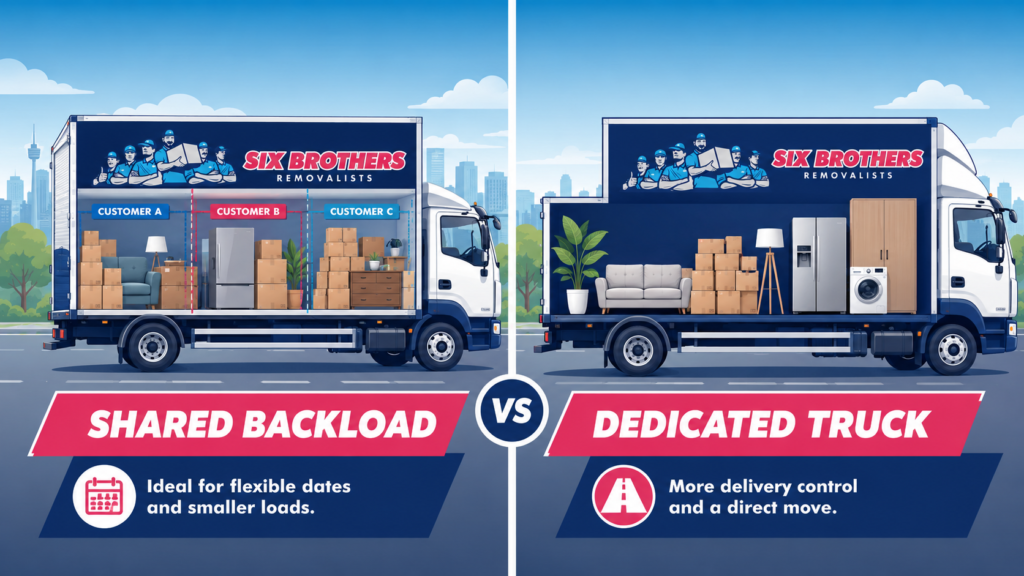
Backloading is the smart-saver option. Your goods ride on a truck already heading to Melbourne. You only pay for the space you use. It’s cheaper because you share the trip. The catch? Less control over the exact delivery day. Your stuff arrives in a window, not on the dot.
This suits flexible movers. If your dates can bend a little, interstate backloading can save you a solid chunk. Small loads love it.
Full-Service Removalists
This is the no-stress path. A dedicated truck. Your goods only. A fixed delivery plan you can build your life around. You pay more for that certainty. But for a family home or a fixed settlement date, it’s worth every dollar. No load-sharing, no guessing.
Full-service can also mean packing, loading, transport, and unpacking. You barely lift a finger. The furniture removalists do the work while you sort the kids and the keys.
Moving Pods / Modules
Pods sit in the middle. A container drops at your place. You load it on your own time, then it gets shipped to Melbourne. Good for slow packers. Good if your dates are messy. You’re not racing a truck clock.
The trade-off is muscle. You do the heavy lifting unless you pay for help. And you need space for the pod to sit.
How to Work Out Your Moving Volume Before Getting Quotes?
Here’s a truth most people learn the hard way. Quotes live or die on volume. Guess too low and the price jumps on the day. So measure your load before you call anyone. It’s not hard. It just takes an hour.
Walk room by room. Count the big items first. Then the boxes you think you’ll fill. Movers price by cubic metres, so the more honest you are, the tighter your quote. Not sure how to add it up? A simple moving home calculator does the maths for you. Pop in your home size and it estimates your volume in seconds.
Take photos too. A quick phone clip of each room helps movers quote without a home visit. It also protects you if something gets damaged later.

How to Compare Interstate Removalist Quotes?
Cheap quotes can be the most expensive thing you ever sign. Sounds backwards, right? But it’s true.
A lowball price often hides extras. Fuel levies. Stair fees. A “depot to door” gap nobody mentioned. So don’t just compare numbers. Compare what’s inside the number.
Ask every mover the same questions. Is it a fixed price or hourly? What’s covered? What costs extra? Get it all in writing. A written, itemised quote is your shield. It’s also your proof if a dispute pops up later. Verbal promises vanish on a stressful day.
Want a deeper breakdown? This guide on how to compare interstate removalist quotes shows you exactly what to check line by line.
Best Time to Book a Sydney to Melbourne Interstate Move
Timing is money. Move when everyone else moves and you pay top dollar. Move smart and you save without trying. The trick is simple. Avoid the rush. Stay flexible. Book early.
Peak Moving Periods to Avoid
Summer is chaos. December and January are the busiest months in Australia. Leases roll over, families relocate, and trucks book out fast. Month-end is busy too. Most leases end then, so the last week of any month is packed. Prices climb with demand.
Flexible Dates for Better Rates
Mid-week moves cost less. Tuesday or Wednesday beats Saturday almost every time. Fewer people want them, so movers price them softer. Flexibility is your best bargaining chip. If you can shift a day or two, backloading rates drop even further. Loose dates, lower bills.
Last-Minute Booking Risks
Leave it too late and you’re stuck. Good movers book out weeks ahead. You end up with whoever’s free, not whoever’s best. Rushed bookings also cost more. Urgency surcharges are real. So lock your mover early and breathe easy.
School Holiday Moving Demand
Families move in school holidays. It makes sense for the kids, but it spikes demand. Trucks fill and rates rise. If your timing is flexible, dodge the holidays. If it’s not, just book as early as you can. Curious about the cheapest month to move? Off-peak timing makes a real difference.
How interstate moves travel?
Ever wonder where your stuff goes once the truck pulls away? It’s a straight shot down the Hume.
The Sydney to Melbourne run follows the Hume Highway, the M31 corridor. It’s the fast inland route through Albury-Wodonga. Removalists use it because it’s direct. Your goods are loaded, strapped, and padded for the long haul. Moving blankets wrap the furniture. Straps hold it steady so nothing shifts on the road.
For backloads, your items share the truck with others. Everything is logged and separated so loads don’t mix. A good mover tracks it all by inventory.
How long does an interstate move from Sydney to Melbourne take?
Honest answer? It depends on the method. The drive itself is under a day, but delivery isn’t always same-day.
A dedicated truck can deliver fast. Sometimes next day, sometimes within a tight window you agree on. You pay for that speed and certainty. Backloading takes longer. Your goods wait for the right truck heading down. Delivery often lands in a 2 to 7 day window, give or take.
So if you need it there yesterday, go dedicated. If you can wait, backloading saves cash. Want the full picture on how long an interstate move takes? Timing depends on route, load, and method.
Getting Yourself to Melbourne
The truck handles your stuff. But how do you get there? You’ve got three solid options.
Flights
Flying is the fastest and easiest. Sydney to Melbourne is about 90 minutes in the air. You land fresh, not frazzled. It’s great if your car isn’t coming or you sold it. Book early and flights stay cheap. One quick hop and you’re home.
Driving
Driving the Hume is a long but doable day. Around 8 to 9 hours with breaks. Some people love the road trip vibe. You keep your car and your stuff with you. Pack an overnight bag and snacks. Just don’t rush a tired drive.
Car Transport
Got two cars or don’t want the drive? Car transport is the answer. A carrier moves your vehicle while you fly. It’s handy for families splitting the trip. Kids fly, car drives itself down on a truck. One less thing to juggle.
Sydney and Melbourne Access Planning for Removal Trucks
Access is the silent budget killer. A truck that can’t park or reach the door costs you time and money. Sort this before moving day. Both ends. Sydney pickup and Melbourne drop-off.
Street Parking and Permits
Tight inner-city streets are a nightmare for big trucks. Check if you need a parking permit at either end. Some councils require one.
No legal parking means a long carry. That often adds a fee. Sort the spot early and save the surprise.
Lift and Loading Dock Bookings
Apartment moves need a booked lift. Most buildings only allow one mover in the lift at a time. No booking, no access. Loading docks book out too. Call your building manager weeks ahead. Lock the slot at both buildings.
Stairs and Long Carry Access
Stairs slow everything down. Three flights with a fridge? That’s a real fee in most quotes. Tell your mover up front. A long carry from truck to door does the same. Distance equals time, and time equals cost. No surprises if you flag it early.
Building Manager Rules
Strata buildings have rules. Move-in times, protective coverings, even insurance proof. Break them and you cop a fine. Ask your building manager for the move-in policy. Both in Sydney and Melbourne. A five-minute call saves a headache.
Critical Cross-Border Checklist
Crossing the border means paperwork. NSW and Victoria have different rules. Miss one and you risk a fine. None of it is hard. It just needs doing on time.
Driver’s Licence & Rego
Once you live in Victoria, your licence must change. VicRoads says interstate holders must convert to a Victorian licence within six months of residing there. Your car rego follows the same logic. Update it to VIC plates after you settle. Don’t let it slide past the deadline.
Toll Accounts
Melbourne tolls work differently to Sydney. Check your e-tag works across both states. Most do, but confirm before you drive. Update your account address too. Tolls and fines chase you, even interstate. Keep the details current.
Address Notifications
Your address changes everything. Bank, employer, Medicare, electoral roll, the lot. Make a list and tick it off. Redirect your mail through Australia Post so nothing gets lost. You can set it for 1, 3, 6, or 12 months. Personal redirection starts from $38.50 for up to a month.
Packing Strategy for a Long-Distance Interstate Move
Packing for 880 km is different to packing for across town. Your boxes get handled more and travel further. They have to be tough. A loose pack survives a short trip. A long haul punishes it. So pack like your stuff is going on a bumpy road, because it is.
DIY Packing vs Professional Packing
Packing yourself saves money. It also eats your weekends. Fine for low-value items and a small home. Professional packing costs more but slashes damage risk. For fragile, heavy, or precious things, it pays for itself. Your call on time versus money.
Fragile Item Packing
Glass, mirrors, plates, art. These need real care. Bubble wrap, sturdy boxes, and clear “fragile” labels on every side. Pack them tight so nothing rattles. Empty space is the enemy. If you need a hand, here’s how to pack fragile items the safe way.
Essentials Box for Arrival
Pack one box you open first. Kettle, phone chargers, toilet paper, snacks, a change of clothes. Label it clearly and keep it with you. Your first night in Melbourne will thank you. No digging through ten boxes to find a toothbrush.
Room-by-Room Labelling
Label every box by room and contents. “Kitchen, plates.” “Bedroom, linen.” It speeds up unloading at the other end. Colour-code if you can. One colour per room. Movers drop boxes in the right spot without asking. Easy.
Are there items you can’t move interstate?
Short answer? Yes. Some things just can’t ride in the truck. Safety rules and removalist policies say no.
Most movers won’t take dangerous goods. Think flammables, gas bottles, paint, petrol, and aerosols. They’re a fire risk on a long haul. Perishable food is out too. It spoils and makes a mess. Empty the fridge and freezer before the day.
Plants can be tricky across borders. Some have restrictions between states. Check the rules or rehome them before you go.
Special Items That Need Extra Planning
Some things aren’t just heavy. They’re irreplaceable or awkward. They need a plan of their own. Tell your mover about these early. They affect the truck, the team, and the price.
Pianos and Heavy Items
A piano is its own beast. Heavy, fragile, and worth a fortune. Don’t trust it to amateurs. Specialist piano removalists use proper gear and trained hands. Same goes for safes and big gym setups. The right team saves your back and your treasure.
Antiques and Artwork
Old and precious needs gentle handling. Custom wrapping, padding, and sometimes a crate. One knock and the value drops. Flag these to your mover. Photograph them first. If you collect art, here’s how the pros handle a careful relocation of valuable pieces.
Gym Equipment
Treadmills and weight racks are bulky and dense. They often need dismantling to move safely. Don’t try the stairs solo. Let the team break it down and rebuild it. It protects your gear and your floors. And nobody pulls a muscle.
Large Appliances
Fridges, washers, and dryers need prep. Empty, defrost, and dry the fridge a day ahead. Secure drums and hoses on washers. A wet or loose appliance leaks and dents. Prep it right and it travels clean. Your mover can advise on each one.
Storage Options Between Sydney and Melbourne
Sometimes the dates don’t line up. Your Sydney lease ends before the Melbourne place is ready. That’s where storage saves you. It bridges the gap without panic. Your goods sit safe until you’re ready.
When Storage Is Needed
Settlement delays happen. Rental handovers slip. Renovations run late. Any gap between homes calls for a storage plan. It’s a buffer, not a backup. Plan it in early so you’re not scrambling on the day.
Short-Term Storage
A few days or weeks? Short-term storage covers it. You park your goods, then collect when the new place opens. It’s flexible and common. Many movers offer it as part of the package. Ask up front.
Storage-in-Transit
This one’s clever. Your goods stay on the mover’s side, in their facility, mid-journey. They deliver when you’re ready. One catch worth checking. Is your stuff insured while in storage? Cover depends on the policy, so confirm it in writing.
Delivery Date Coordination
Good coordination is everything. Tell your mover your real ready-date. They time delivery to match, not to guess. Clear dates mean fewer storage fees. And no truck turning up to a locked, empty house.
Moving-Day Plan Across Two Cities
Moving day spans two cities and a long road. A plan keeps it calm. Winging it invites chaos. Split your thinking. Pickup in Sydney. Delivery in Melbourne. Nail both.

Sydney Pickup Checklist
Be ready before the truck arrives. Boxes packed, labelled, and stacked. Path clear, parking sorted, lift booked. Do a final room sweep. Check cupboards, the balcony, and that one drawer everyone forgets. Then hand over and go.
Melbourne Delivery Checklist
Be at the new place before the truck. Or have someone there. Direct the team room by room using your labels. Check off your inventory as boxes come in. Count them. It’s your last chance to catch a missing item.
Key Handover Timing
Keys make or break the day. Confirm when you get the Melbourne keys. If there’s a gap, that’s where storage steps in. Line up the Sydney handback too. You don’t want to pay two rents over a timing slip.
Contact Person at Both Ends
Have a point person at each city. If you can’t be in two places, a trusted friend can direct the team. Share phone numbers with your mover. Easy contact means quick answers. No truck left waiting.
Are my belongings safe/protected during the move?
This is the fear that keeps people up at night. Will my stuff arrive in one piece? Fair worry. Let’s settle it.
Insurance is your safety net. Under Australian Consumer Law, services must be done with due care and skill. Movers must take reasonable steps to avoid loss or damage. But basic liability and transit insurance aren’t the same thing. Transit insurance covers your goods while packed, moved, and sometimes stored. Always check what your policy actually covers.
AFRA-accredited removalists can offer transit and public liability insurance. That accreditation is a real trust signal. It means proper standards and proper cover. Document everything too. Photos, an inventory list, and a written quote. If something goes wrong, that evidence is gold. Learn more about protecting your belongings during a move.
Did you know?
Consumer Affairs Victoria reported 89 complaints about one Melbourne moving company’s Victorian operations between January 2022 and June 2023. It’s a clear reminder why reviews, written contracts, and proper insurance matter so much.
Common Sydney to Melbourne Moving Mistakes
Most moving disasters are avoidable. They come from the same handful of slip-ups. Know them and you dodge them. Here are the big four.
Underestimating Inventory Size
People always lowball their load. Then the truck’s too small or the quote jumps. Count honestly and add a buffer. An accurate inventory protects your price. It’s the foundation of a fair quote. Don’t skip it.
Booking Too Late
Last-minute movers get stung. Higher prices, worse choices, no flexibility. Good teams book out fast. Book four to eight weeks ahead. It’s the single easiest way to save stress and money.
Ignoring Access Restrictions
Forgetting stairs, lifts, and parking is a classic. It turns a clean quote into a messy bill. Movers can’t guess what they can’t see. Flag every access issue early. Both ends. It keeps your quote honest and your day smooth.
Leaving Utilities Too Late
Arriving to no power or internet is grim. Yet people leave it to the last minute. Sort connections before you move. Disconnect in Sydney, connect in Melbourne. Book it a week or two ahead. Walk into a home that works.
Settling Into Melbourne After the Move
The truck’s unloaded. You made it. But the job isn’t quite done. A few setup tasks turn a house into home. Knock these out in the first week. Then relax.
Utility Connections
Power, gas, water, internet. Confirm they’re all live. Ideally you booked these before arrival, so just check they’re on.
Test the hot water and the wifi. Sort any gaps fast. A working home feels settled straight away.
Rental or Property Handover
Do a proper handover check. Note any existing damage with photos. Send it to your agent within the deadline. It protects your bond down the track. Five minutes now saves a dispute later.
Box and Packing Waste
Empty boxes pile up fast. Flatten and recycle them. Some movers even buy back or collect good boxes. Clear the clutter early. A tidy space helps you actually feel moved in.
Local Council Setup
New city, new council rules. Sort bin days, parking permits, and pet registration. In Victoria, dogs and cats generally need council registration from three months of age, with microchipping first. It’s quick admin but easy to forget. Tick it off and you’re a proper local.
Removal company from Sydney to Melbourne
So who do you trust with everything you own? That’s the real question. And it’s where the right mover earns its keep. You want a team that’s careful, upfront, and reliable. No vague quotes. No surprise fees on the day. No cowboys.
At Six Brothers Removalists, that’s the whole point. Clear pricing, proper care, and honest communication from quote to delivery. We’ve moved countless Sydney families and offices down the Hume. We handle the heavy lifting, the long-haul route, and the awkward access. You get a move that feels smooth, not stressful. Whether it’s a studio or a five-bedroom home, we size it right.
Ready to make your move easy? Get your free, no-obligation quote today. Call 1300 764 372, email info@sixbrothersremovalist.com.au, or request a quote online. No hidden fees. No surprises. Just your stuff, safe in Melbourne.
Frequently Asked Questions
How much do interstate removalists cost?
There’s no flat rate for a Sydney to Melbourne move. Your price shifts with home size, total volume, and method. Backloading is cheaper because you share the truck. A dedicated full-service move costs more but gives fixed delivery and full control. Stairs, lifts, long carries, storage, insurance, and peak-season timing all nudge the price. The best way to know your number is a written, itemised quote based on your real inventory.
Do removalists have insurance?
Reputable removalists carry insurance, but the type matters. Public liability covers their work and people. Transit insurance covers your goods while packed, moved, and sometimes stored. AFRA-accredited movers can offer both. Under Australian Consumer Law, movers must take reasonable care to avoid loss or damage. Always ask what’s covered, get it in writing, and check whether storage is included in the cover.