


Table of Contents
Moving house in Sydney takes extra planning when kids, pets and plants are coming too. A clear plan keeps people safe, routines steady and costs easier to manage. What’s the point of a tidy schedule if nobody knows who is watching the dog? You do not need to control every minute. Know who handles each job, what travels separately and what stays secure. As the saying goes, a stitch in time saves nine.
The Master Coordination Timeline
Start your family moving timeline four to six weeks ahead when your dates allow. The early bird catches the worm, especially when you need childcare, pet care and lift bookings. Use this plan as a guide, then adjust it to your lease, settlement and family needs.
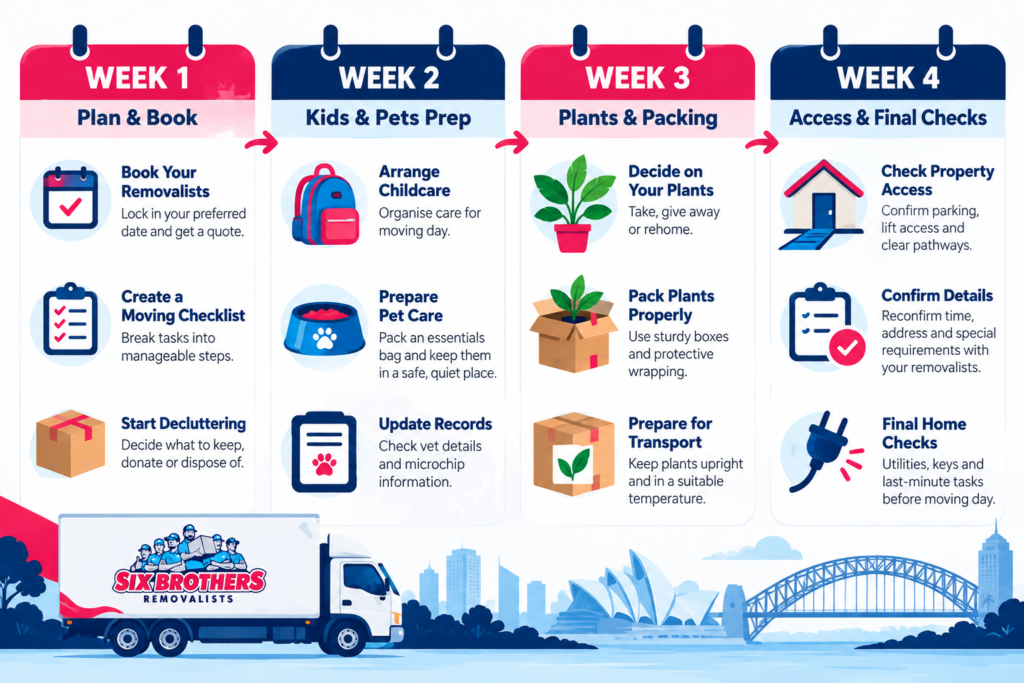
- Four to six weeks before: confirm dates, compare quotes, check access and choose plants to move.
- Two to three weeks before: book childcare or pet care. Update school plans and confirm lift bookings.
- One week before: pack the pet kit and first-night boxes. Label items that must travel with you.
- The day before: charge phones, confirm arrival times and prepare a safe room.
- Moving morning: keep children and pets clear before loading starts.
A Sydney moving house checklist can keep the ordinary jobs visible while you manage family needs. Keep one shared list on a phone, then give every task an owner. A plan only works when someone knows they are responsible.

Assign Family Responsibilities Before Removal Day
Give every adult a clear role before moving day starts. Many hands make light work, but only when each person knows their part. Avoid assigning jobs while the truck is waiting outside.
Adult Supervision Responsibilities
Choose who supervises the children and who handles pets. That adult should not be expected to carry boxes or answer every removalist question. For babies and toddlers, arrange a second trusted adult when possible. Better safe than sorry is the right rule around open doors and heavy loads.
One Removalist Contact Person
Name one adult as the main contact for your removalist. Share the inventory, access details, special items and family location before loading. Share a short written brief before the crew arrives. This stops different family members giving conflicting directions. Too many cooks spoil the broth.
Backup Contact and Keyholder
Pick a backup contact in case the main contact loses phone coverage or needs to leave. Give them the keys, building access details and destination address. Make sure they know where the children and pets will be. Keep the spare key separate from the household key ring, just in case. A backup plan is worth its weight in gold.
Managing Your Pets: Safety & Routine First
Keep your pets safe by preserving familiar routines and separating them from loading activity. A move can make a normal home feel unsettled. Feed, walk and medicate pets at their usual times where possible. Keep familiar bedding and a favourite toy within reach. No worries is easier to say when the routine is already planned.
Keep Routines Consistent
Keep meal times, walks and quiet periods close to normal. Pack familiar food, bowls and bedding last, so they remain available. Dogs may need a calm walk before the crew arrives. Cats often prefer a quiet room with a hideaway and a familiar-smelling blanket. Small routines can help the day feel less strange. Old habits die hard, so keep familiar cues where possible.
Admin Updates
Update your pet’s microchip contact details and address when you move. NSW cat and dog owners must keep relevant details current in the NSW Pet Registry. Also check council registration requirements when your new home falls under another local council. Keep your pet’s medication and vet details in the essentials kit. Keep your ducks in a row before the moving rush.
Professional Help
Book a pet sitter, family member or boarding service if noise upsets your pet. A familiar carer may be easiest. Book early for busy weekends and school holiday periods. Ask your vet for advice if your pet has specific care needs. A professional is useful when your family cannot supervise safely during loading. Sometimes it takes a village to make a busy day work.
The Moving Day Strategy
Decide where each pet will stay before the truck arrives. Choose a sitter’s home, boarding facility or secure room away from the loading route. Tell the supervisor what the plan is and who will collect the pet. A clear start beats a last-minute scramble.
Off-site or Confined
Keeping pets away from the loading zone usually makes supervision easier. If they must stay at home, use a secure, ventilated room with water and familiar bedding. Put a clear note on the door and tell the crew not to open it. Never rely on a child to keep a pet confined while adults carry furniture.
Should pets stay at home during removalist arrival? They can, if a trusted adult keeps them in a quiet, closed room. For anxious pets or homes with frequent door traffic, off-site care may be simpler. Pick the option that keeps the animal safe, not the option that looks easiest on paper. Keep them out of harm’s way.
Moving with pets and children means access and timing matter. Six Brothers Removalists can discuss your household plan before the move. Request a free quote or call 1300 764 372. There is no need to guess what the crew needs to know.
Communicate with Movers
Tell the removalist about pets before moving day. Share where they will stay. Explain whether a gate or room must remain closed. Mention large aquariums, cages or heavy pet furniture during the quote stage. Do not assume the crew has seen a pet just because it is in the room. Forewarned is forearmed.
Essentials Kit
Pack food, water, bowls, lead, harness and waste bags. Add litter, medication and vaccination details. Include towels, cleaning supplies and a familiar toy. Keep the kit in your car rather than on the truck. If a delay happens, you will not have to search through stacked cartons. Keep the essentials close at hand.
Settling In
Set up one quiet room at the new property before letting pets explore. Put water, bedding and familiar items in place first. Check fences, gates and balcony access before opening the carrier or letting a dog outside. Give pets time to investigate one area at a time. Slow and steady wins the race.
Managing Your Kids: Involvement & Belonging
Help children feel prepared by explaining what will happen and giving them safe choices. Moving can feel exciting one minute and worrying the next. Keep the plan simple and repeat the key details. Home is where the heart is, even while the boxes are everywhere.
Pre-Move Preparation
Tell children about the move in words they understand. Show them a calendar, photos of the new room or a simple map of the trip. Explain what stays with them and what the removalists will carry. Keep school, sleep and meal routines as steady as possible. A picture is worth a thousand words when a child is unsure.
Involve Them Safely
Let children label a small box, choose a toy bag or pack soft items. Keep knives, tools, lifting jobs and fragile belongings with adults. Give older children short jobs with clear limits. A job should build confidence, not place them in the work zone. Don’t bite off more than they can chew.
Childcare Support
Arrange childcare for the busiest hours if you can. A trusted relative, friend or carer can keep children away from trucks and open doors. Confirm pickup and drop-off times ahead of moving day. The best-laid plans still need a little breathing room.
The Moving Day Zone
Create a family zone away from the truck, driveway, stairs and loading path. Stock it with water, snacks, a charger and a quiet activity. Keep toddlers and young children with the assigned adult. Set a clear rule that nobody enters the loading area without that adult. Keep a clear head and a clear path.
How do you keep kids and pets safe around a moving truck? Keep them outside the loading route and under direct adult supervision. Use a separate room, a trusted carer or another safe location. Never ask children to watch an open door while adults move furniture.
The “First Night” Box
Pack a first-night box for each child. Add pyjamas, a change of clothes, toothbrush, comfort toy, bedtime book and any needed medicine. Include a night light or familiar blanket if it helps. Label the box clearly and keep it with the family, not the truck.
What should go in a child’s first-night box? Pack sleepwear, clothes, toiletries, a comfort item, a drink bottle and next-morning essentials. For a baby, add nappies, wipes, feeds and spare clothing. The goal is to make bedtime work before the rest of the house is unpacked. The little things make all the difference.
Unpack Their Rooms First
Set up the children’s beds and familiar items before unpacking less urgent rooms. You do not need a perfect bedroom on night one. Start with bedding, basic lighting and a few favourite toys. A familiar corner can help the new place feel like home. Take it one step at a time.
Decide Which Large Plants Are Worth Relocating
Choose plants to move based on size, health, value and transport risk. Large pots can be heavy, brittle or awkward through narrow doorways. Be realistic about what fits safely in your car or the removal truck. Measure twice, move once.
Oversized Pots and Heavy Planters
Measure the pot and check its weight before moving day. Large ceramic or concrete planters may need emptying or special handling. Do not lift a heavy pot by its stems or rim. Ask the removalist about size and weight limits before adding bulky planters to the inventory. Know your limits before lifting.
Fragile and Established Plants
Plan extra care for tall stems, delicate leaves and established root systems. Remove loose saucers, secure plant supports and place pots in stable trays. Avoid moving plants in extreme heat if you can choose the timing. A little preparation can prevent broken branches and spilled soil. Prevention is better than cure.
Rehoming Versus Replacement
Some plants are easier to give to a friend than transport. Compare the plant’s value with the time, space and risk involved. Consider local gifting for very large or damaged pots. Don’t let sentiment turn a simple move into a dangerous lift. Not every pot is worth the heavy lifting.
Managing Your Plants: Transport & Shock Prevention
Reduce plant shock by protecting roots, leaves and moisture while avoiding crush damage. Plants need air and stable support, not a tight wrap around every leaf. Keep a list of what travels with the family. The devil is in the details.
Check for Toxicity
Check whether your plants may be harmful to pets or young children. Keep any risky plant out of reach during packing, transport and unpacking. Label plants clearly if a sitter or removalist helps move them. Do not rely on a child to identify a safe leaf or berry. Out of reach is safer than out of mind.
Prep the Soil
Check soil moisture before you travel. Very wet pots can leak and become much heavier, while bone-dry soil may spill easily. Remove loose debris from the pot surface and secure any drainage tray. Avoid watering heavily just before loading. Strike the right balance between damp soil and a heavy pot.
Protect the Foliage
Gather long stems gently and use breathable protection when needed. Do not tape leaves tightly or seal plants inside airtight plastic for a long trip. Keep sharp stakes covered and prevent pots from tipping. A stable pot protects the plant better than a tight bundle of leaves. Less is more when wrapping delicate foliage.
The Tessellation Method
Use the tessellation method as a simple way to group pots in a stable layout. Arrange similar-sized pots close together, with padding between them and no pressure on leaves. Fill gaps so containers cannot slide or tip. Never stack fragile planters or use one plant as support for another. A place for everything keeps the load steady.
Transport by Car
A car can work for small plants that fit securely and get airflow. Keep pots upright, use a tray, and stop them sliding during turns. Do not leave plants in a parked car in hot weather. If you carry plants separately, secure them before the trip starts. Plan for a bump in the road.
Acclimatise to the New Light
Place plants in a suitable spot, then adjust their light exposure gradually. A bright new window may be much stronger than the old one. Keep watering close to the plant’s normal needs and watch for stress. Give them time to settle before repotting or heavy pruning. Let them take root in their new surroundings.
Did you know?
Pets and plants should not be treated as ordinary cartons. Both may need separate transport, different handling and a safe place during unloading. Add them to the move plan before the quote is final.
Check NSW Rental and Strata Rules for Pets
Check rental consent, strata by-laws and council rules before moving a pet into a new home. Do not assume the rules are the same at every Sydney address. Read the current requirements, then keep written approval with your tenancy records. Better to ask early than sort it out at the door.
Landlord Pet Consent
Tenants in NSW generally need the landlord’s consent to keep a pet, except for assistance animals. Read the current NSW Fair Trading guidance on pets in rental properties before applying. It explains the process and valid refusal reasons. From 2 October 2026, tenants moving into a new rental can apply within seven days. They can keep the pet while the request is considered. Check the current guidance for the full conditions before relying on that timing. Don’t leave approval questions to the last minute.
Strata Pet By-Laws
If you’re moving into a unit, townhouse or strata complex, ask for the current by-laws. Some schemes require written notification or an approval process. Tenants may need both landlord consent and any required strata approval. Keep the emails and forms together with your moving paperwork. Read the fine print before you sign off.
Council Animal Restrictions
Check the local council’s requirements if your move crosses into a new council area. Rules can cover animal numbers, registration and certain types of animals. Update your contact information and ask the council if anything is unclear. One phone call can prevent a headache later. Check before you go.
Inspect the New Property for Child and Pet Hazards
Walk through the new property before children and pets explore it freely. Look for exits, broken fittings, chemicals and areas that need temporary barriers. A quick check can reveal problems hidden behind an open door or garden gate. Start with the basics, then unpack. An ounce of prevention is worth a pound of cure.
Fences, Gates and Escape Points
Test gates and latches, inspect fence gaps and check the boundary before allowing pets outside. Look behind sheds and along side paths for possible escape routes. Trust but verify before letting pets roam. Tell older children which gate must stay shut. Keep the lead on until the outdoor area is secure. Check twice before you trust the gate.
Pool and Balcony Access
Check pool barriers, doors, balcony screens and access points before children or pets enter the area. Keep keys and access devices with an adult. Do not rely on a flyscreen or low barrier as a safety measure. Safety first is more than a slogan here. If something looks uncertain, block access until it is checked. Don’t take chances with an unknown hazard.
Unsecured Fixtures and Trip Hazards
Look for loose shelves, cords, tools, low boxes and slippery floors. Secure heavy furniture and keep chemicals away from children and pets. Leave clear paths between bedrooms, bathrooms and exits. Clear the way before unpacking everything else. Unpacking can wait until everyone has a safe route around the home. Clear space makes room to breathe.
Organise Sydney Parking, Loading and Building Access
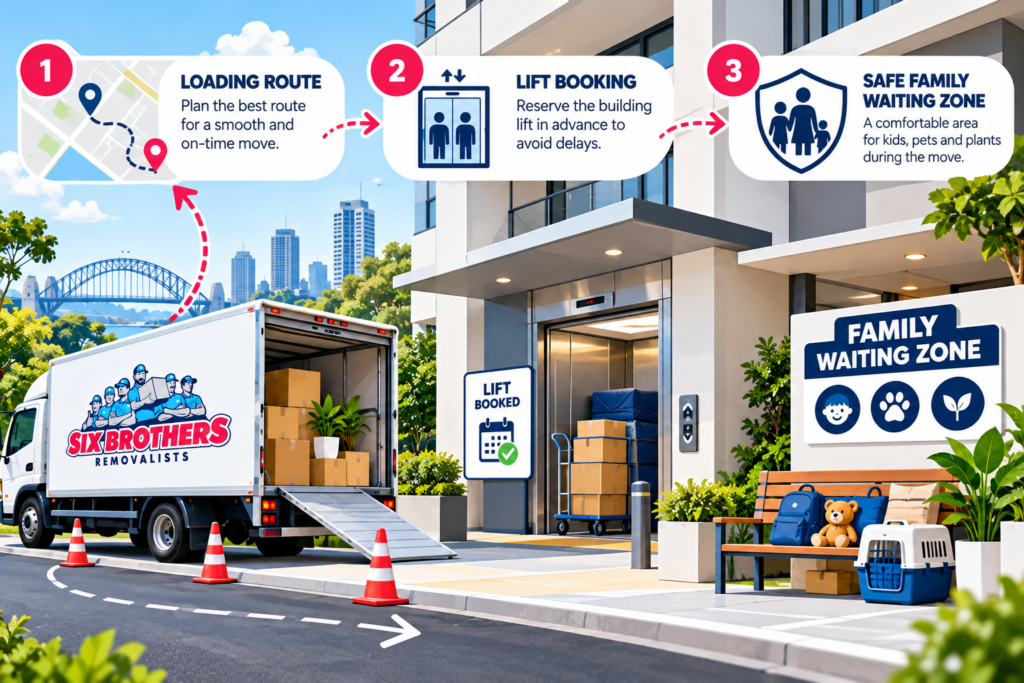
Confirm truck parking, building access and loading routes before moving day. Sydney streets, terraces and apartment blocks can have very different access limits. Why wait until the truck arrives to discover a blocked loading spot? Confirm access early to reduce waiting while you solve parking problems. Good planning pays for itself in saved time.
Removal Truck Parking Arrangements
Check the local council’s current parking rules and any permit requirements for your street. In busy areas such as the Sydney CBD or Newtown, space can be limited. Take photos of the loading area and share practical directions with the driver. Do not assume an empty kerb will remain available. First come, first served can apply to busy parking spaces.
Lift and Loading Bay Bookings
Ask strata or building management about lift padding, booking windows, loading bays and move-in rules. Confirm the date, start time and how long the booking lasts. Check whether a deposit, access card or caretaker handover is required. Put all details in the move-day brief. Time and tide wait for no one when bookings have fixed windows.
Separate Family and Loading Routes
Keep the family route separate from the route used for boxes and furniture. In a narrow driveway, terrace or unit entry, one blocked path can stop everything. Show children where they can wait and where they must not go. Clear routes are safer for the family and the crew. Keep the traffic moving in one direction.
Coordinate Separate Transport for Kids, Pets and Plants
Plan separate transport for children, pets and delicate plants when that makes the trip safer. The removal truck is built for household items, not every living passenger. Sort vehicles, drivers and arrival order ahead of time. Don’t put all your eggs in one basket.
Separate Vehicles and Drivers
Decide who will drive the children, who will transport pets and who will meet the truck. Consider whether plants need a separate trip. Share the destination address and arrival order with each driver. Two heads are better than one when plans change. Keep one phone contact available if plans change. Keep your options open.
Child Restraints and Pet Carriers
Check each child’s restraint before you set off and allow enough space for safe fitting. Secure pet carriers so they cannot slide or tip. Do not place a carrier in a position that blocks the driver. A safe trip starts before the wheels turn. Keep water and essential supplies within easy reach when safe to do so. Safety comes first, even when you’re running late.
Travel Order and Rest Stops
Choose the travel order based on the distance, weather, pet needs and access times. Build in breaks for longer journeys and confirm where pets can safely stop. Do not leave children, pets or plants in a parked car during hot conditions. A short delay is better than an unsafe shortcut. Better late than unsafe.
Budget for Extra Family and Plant Moving Costs
Budget for childcare, pet care, extra transport, plant handling and possible waiting time. These costs vary by family, provider and access conditions, so confirm them before moving day. A quote is only useful when it reflects the real job. Keep your ducks in a row.
Childcare and Pet Boarding Fees
Ask about minimum booking periods, cancellation rules and pickup windows. A late truck arrival may affect a sitter or boarding booking. Keep a small buffer in the plan if you can. Hope for the best and plan for the worst. Confirm who pays if a booking needs to run longer. Plan for a rainy day with a small buffer.
Extra Vehicles and Driver Costs
Work out whether the family needs one vehicle or separate trips. Include fuel, parking, tolls and any paid driver or transport service. Do not assume plants and pet gear will fit in a fully loaded car. Compare the total cost, not one line item. Look at the whole picture.
Large Plant Handling Charges
Tell the removalist about oversized pots, heavy planters and tall plants before the quote is confirmed. Send photos and measurements where useful. Ask whether these items fit the service scope or require special handling. Clear details now can prevent a price dispute later. Being penny wise and pound foolish rarely saves much.
Removalist Waiting-Time Charges
Ask how waiting time is measured when keys, lifts or parking cause delays. Confirm whether the quote includes travel, stairs, long carries or access restrictions. Write down the agreed start time and any extra-charge triggers. The cheapest quote is not always the lowest final bill. Value matters more than a bargain headline.
Use the whole-house move checklist to list family items needing separate handling. Use the Moving Home Calculator to estimate the job size. Then prepare details before asking for a quote. It is still worth giving the removalist an accurate item list and access information.
Review the service scope from Six Brothers Removalists when comparing local options. Ask what the crew will handle. If packing is the main pressure point, compare the available house removals and packing support. Make sure the quote reflects your pets, children, plant sizes and access arrangements.
Complete the Final Property Check Before Handover
Do one final walk-through after the truck is loaded and before you hand back the keys. Check the places people and pets use, not just the obvious rooms. A written checklist helps when everyone is tired. Leave nothing to chance.
Hidden Pet Spaces
Check wardrobes, under beds, laundry corners, cupboards and any room where a pet could hide. Look behind curtains and inside quiet spaces before closing the property. Make sure every pet is accounted for before the family leaves. A headcount is faster than searching a locked house later.
Balconies, Gardens and Sheds
Walk through balconies, gardens, sheds, storage spaces and side passages. Collect pet bowls, leads, plant trays, watering cans and garden tools. Check taps and gates before leaving. Small outdoor items are easy to miss when everyone is focused on the truck. Out of sight, out of mind.
Final Household Headcount
Count the people, pets, carriers and essential bags before the last vehicle departs. Check phones, keys, medication and first-night boxes. Confirm the new address and who is meeting the truck. Moving day rarely goes perfectly, but a calm final check keeps the important things together. Tick items off as you go.
FAQs
Do renters need pet approval before moving into a Sydney property?
Check the current NSW rules and your tenancy details before move-in. A tenant may apply before signing or within the allowed period after starting the agreement. Do not assume strata approval replaces landlord consent.
Can removalists transport houseplants?
Ask the company before the quote is final. Policies may vary by plant size, pot weight, weather and handling risk. For delicate or valuable plants, a separate car trip may give you more control.
How to Prepare for Removalists?
Make an accurate inventory and label priority boxes. Confirm access and tell the crew about pets, children, plants and heavy items. Keep valuables and essentials with you. Share one contact number so the crew has a clear point of contact.
How to Choose a Removalist in Sydney?
Compare written quotes, access assumptions, insurance information, reviews and communication. Ask how the provider handles fragile plants and heavy planters. Choose a team that answers questions clearly rather than relying only on the lowest starting price.
What should I check before leaving the old house?
Check every room, cupboard, garage, balcony, garden, shed and pet hiding spot. Collect keys and essential bags, then count people and animals. The last walk-through is your final chance to catch forgotten items.
A family move does not need to run like clockwork to go well. It needs clear roles, safe transport and honest information before the truck arrives. For a move with children, pets and plants, request a free quote from Six Brothers Removalists. Call 1300 764 372 or email info@sixbrothersremovalist.com.au. Share your date, addresses and special items. The more accurate the details, the easier it is to plan a sensible move.