


Moving house feels like juggling fire. You’re trying to save, pay rent, eat, and somehow afford a removalist too. Sounds familiar?
Here’s the truth nobody tells you. Most people blow their moving budget in the first week. Boxes, tape, last-minute petrol runs, that one weird trip to Bunnings at 9pm. It adds up faster than a Sydney summer storm.
But moving doesn’t have to drain your bank account. With a smart plan, you can balance everyday spending and saving without losing your mind. Let’s break it all down. There’s an old Aussie saying. “Look after the pennies and the pounds look after themselves.” That’s basically the rule for moving on a budget.
This guide walks you through the 50/30/20 rule, pre-move planning, post-move recovery, and the hidden costs of moving house. By the end, you’ll know exactly how to handle the chaos.
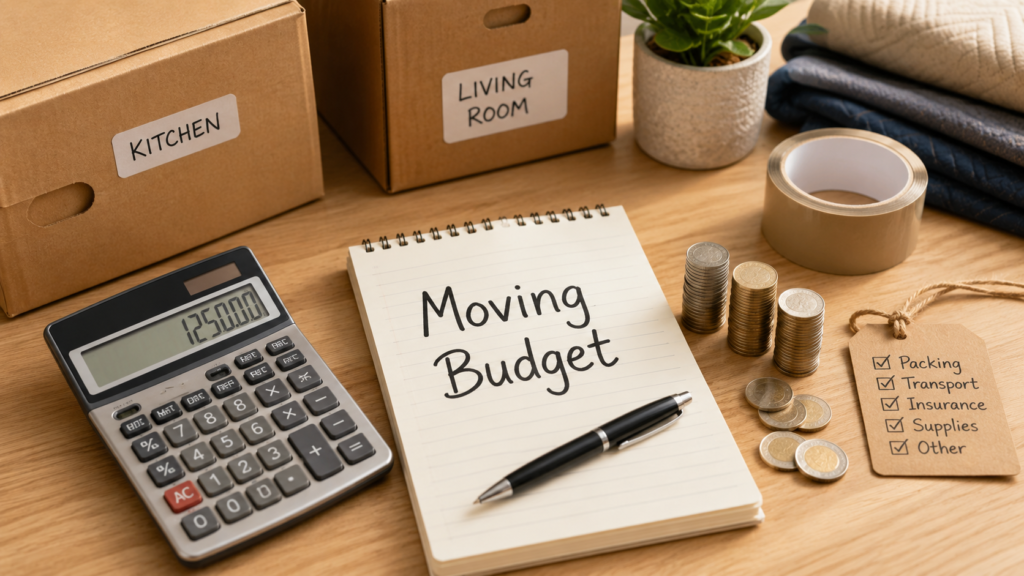
Why Moving House Disrupts Your Normal Budget
Moving house flips your finances upside down. One month you’re saving for a holiday. Next, you’re paying bond, removalists, and three months of utilities at once.
Most people don’t realise how brutal the hidden costs of moving house can be. Truck hire, packing supplies, cleaning fees, mail redirection, new keys, council bins. Each one looks small. Together, they’re a wrecking ball.
A typical moving house budget in Sydney can sit between $1,500 and $8,000. That depends on size, distance, and timing. The average removalist cost for a two-bedroom unit in Sydney runs about $600 to $1,200.
But that’s just the truck. Add bond, connection fees, and food. Suddenly your savings vanish.
Why does it hit so hard?
- Income stays the same but costs spike for 4-6 weeks.
- Time off work cuts your earnings.
- Emergency buys (like a new fridge) drain savings.
- Old debts don’t pause just because you moved.
The good news? You can fix this with a proper plan. Let’s get into it.
Use the 50/30/20 Budget Rule to Manage a Move
The 50/30/20 rule is simple. It splits your after-tax income into three buckets. Needs, wants, savings.
This rule works because it forces you to label every dollar. No more guessing where money goes. No more wondering why your account is empty by Tuesday. Here’s how it plays out during a move.
50% for Needs
Half your income goes to needs. Rent, food, bills, transport, insurance, and yes, your moving costs.
Needs are the things you can’t skip. If you stop paying them, life breaks. Your removalist falls into this bucket if you’re moving for work or a lease deadline. Track every “need” weekly. You’ll spot waste fast. Like that streaming bundle you forgot to cancel.
30% for Wants
Thirty percent goes to wants. Coffee runs, takeaway, gym, Netflix, weekend brunches. Stuff that makes life fun. During a move, shrink this bucket temporarily. Even cutting it to 15% for two months can save thousands. Use that cash for moving boxes, deposits, or packers and movers parramatta.
Pro tip? Don’t kill all wants. You’ll burn out. Just trim them.
20% for Savings and Debt
The last 20% covers savings and debt. This is the part most folks skip. Don’t. Even during a move, keep this bucket alive. Set aside something small. Future-you will say thanks when the hidden costs of moving show up.
Pay off high-interest debt first. Then refill your emergency fund.
How to Plan and Budget Before Moving House

Planning beats panic every time. A solid pre-move plan can save you 20-30% on total costs.
Most stress comes from surprises. So let’s kill the surprises before they hit.
Establish a Moving Budget
Start with a real number. Open a spreadsheet. List every expected cost. Use a moving cost calculator Australia tool or check removalist quotes online. Add bond, cleaning, utilities, food, and travel. Now add 15% on top. That’s your real moving budget.
A proper moving house budget template should include:
- Removalist fees (hourly or flat)
- Packing supplies
- Bond and rent overlap
- Utility connections
- Cleaning costs
- Food and transport during the move
- Insurance
Set a Specific Moving Goal
Vague goals fail. Specific ones win. Don’t say “I want to save for moving.” Say “I need $4,200 by August 15 for my moving from Sydney to regional NSW trip.”
A clear number pulls you forward. It also helps your partner or flatmate stay on track.
Create a 10-15% Buffer
Add a buffer. Always. Movers cancel. Trucks get stuck. Boxes break. A 10-15% buffer covers the chaos. If your budget is $3,000, set aside $300-$450 extra. You’ll likely use it.
Think of the buffer as your “oh no” fund. Tape on a fragile box. Quiet, but useful.
Separate Accounts
Open a second bank account just for moving. Name it “Move 2026” or something silly.
This stops you from dipping into moving cash for takeaway. It also makes tracking dead simple. Every dollar in that account has one job. Many Aussie banks offer free sub-accounts. Use them.
Automate Savings
Set up auto-transfers on payday. Even $50 a week adds up.
If you start six months out, that’s $1,300 saved without thinking. Add a bit extra each month and you’ll cover most of your moving costs Australia without stress.
Automation beats willpower. Always.
Audit Expenses
Print your last three months of bank statements. Highlight every expense. Be honest.
You’ll find leaks. Forgotten subscriptions, food delivery, random Amazon buys. Cut three. Redirect that money to your move fund. A quick audit can free up $200-$500 a month. That’s a free removalist day right there.
How to Cut Costs and Increase Cash Flow Before Moving
Cutting costs doesn’t mean misery. It means smart swaps. Small choices that pile up into real savings.
Let’s look at the four big wins.
Declutter and Sell
Every item you move costs money. Less stuff means a smaller truck, fewer hours, lower cost.
Sell what you don’t use. Marketplace, Gumtree, garage sale, anything. Books, old furniture, that exercise bike pretending to be a coat rack. A solid declutter can cut your how much do removalists cost quote by 20-30%. Plus you make cash on the side. Win-win.
Ask yourself, does this item earn its spot on the truck? If no, it goes.
Source Free Materials
Don’t pay full price for moving boxes. Free ones are everywhere.
Try these spots:
- Local supermarkets (ask the night staff)
- Bunnings or Officeworks bins
- Bookstores and bottle shops
- Facebook free groups
- Friends who just moved
You can grab 40-50 boxes for $0 with one weekend of asking. That’s $150-$200 saved instantly.
Get Multiple Quotes
Never book the first removalist you see. Get three to five quotes minimum. Prices vary wildly. One removalist sydney to wollongong quote might be $800. Another could be $1,400 for the same job. Same truck, same hours, double the cost.
Ask about hourly rate for removalists, fuel charges, weekend surcharges, and depot fees. The cheapest quote isn’t always the best, but comparing keeps everyone honest.
Choose Off-Peak Times
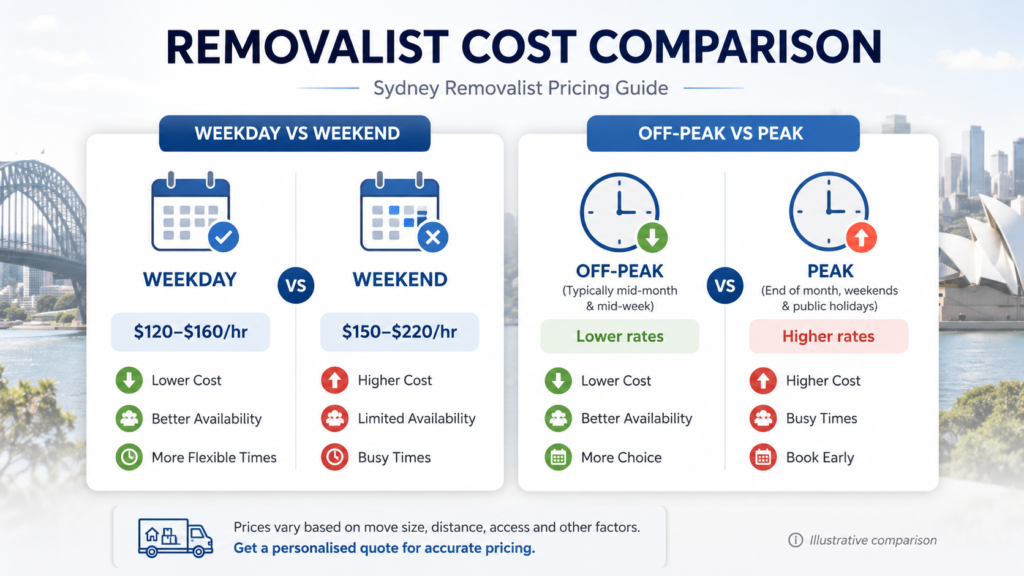
Timing changes everything. Weekends and end-of-month are the priciest. Try a Tuesday or Wednesday morning instead. Mid-month is even better. Many removalists parramatta offer 10-25% discounts for off-peak slots.
Avoid summer holidays and the end of June. Schools change over, leases roll, demand spikes. So do prices.
How to Balance Everyday Spending With Moving Costs
Balancing daily life with a move is the real trick. You still need groceries, fuel, and coffee.
The goal? Keep life going without breaking the budget. Here’s how.
Use the 50/30/20 Rule
We covered this above. But during a move, tweak it. Try 60/20/20 for two months.
More to needs. Less to wants. Same savings. This temporary shift covers the moving spike without killing your future fund. After the move, return to normal. The rule bends, then snaps back.
Bill Smoothing
Bill smoothing means paying utilities in even monthly chunks. Instead of one $600 power bill, you pay $200 every month. Most Aussie energy providers offer this. So do water and gas companies. Ring them and ask.
This stops nasty surprises mid-move. You know exactly what’s leaving your account each month.
Avoid High-Interest Debt
Credit cards and quick loans look easy. They aren’t. Interest rates of 18-22% turn a $1,000 expense into $1,400 fast.
If you must use credit, pay it off within the interest-free window. Better yet, save first. Spend second. A move is not the time to add more debt. It’s the time to clear it.
Smart Spending Choices Before Moving House in Sydney
Smart spending means timing your buys. Some purchases can wait. Some can’t. Let’s break down where to hold back and where to push forward.
Delay Big Purchases
Hold off on big buys for 60-90 days before and after moving. New TV? Wait. Couch? Wait. Fancy coffee machine? Wait.
Why? Two reasons. One, your cash needs to stay liquid. Two, you don’t yet know how the new place will feel. That huge L-shaped sofa might not fit your new lounge. Buying after the move saves regret and returns.
Compare Service Add-Ons
Removalists offer extras. Packing, unpacking, dismantling, removalist insurance Australia, storage. Each one adds cost.
Compare them carefully. Some are worth it. Removalist insurance for a long sydney to brisbane removalists trip? Yes, get it. Pre-packing for a one-bedroom flat? Maybe skip it and DIY. Ask each quote for an itemised breakdown. You’ll spot waste.
Plan Food and Transport
Moving days kill your food budget. Pizza and takeaway feel inevitable.
Plan ahead. Pre-cook three meals and freeze them. Bottled water, easy snacks, sandwiches. Total cost? Maybe $40. Same with transport. Don’t run six trips to the new place in your car. Group them. Petrol adds up faster than you think.
How to Save Money Without Cutting Your Entire Social Life
You don’t need to become a hermit to save for a move. Cutting all fun creates resentment. Resentment leads to splurges. Instead, swap, don’t slash.
Swap restaurant dinners for home dinners with friends. Swap pub nights for park hangs. Swap movie tickets for streaming nights at home. Try the two-for-one rule. For every social outing, plan one cheap or free hangout. Picnic, hike, board game night, beach trip. Free fun still counts.
Tell your friends you’re moving. Most will totally get it. Some might even help carry boxes for pizza. Real talk? That’s gold. Can you afford one big social event a month? Sure. Just pick one. Skip the rest. Your wallet stays alive. Your friendships do too.
Why You Should Avoid Quick Loans Before Moving House
Quick loans are tempting. The ad says “fast cash for your move!” The reality? Brutal interest and tight repayments. Most payday loans in Australia charge 20% setup plus 4% monthly. On a $2,000 loan, that’s $880+ extra in a year. Ouch.
Here’s the kicker. The stress of a new repayment hits right when you’re settling in. You’re trying to set up your new home and your phone keeps buzzing with debt collectors. Not great.
Better options than quick loans:
- Negotiate a payment plan with your removalist.
- Use a 0% interest credit card for short-term gaps only.
- Ask family for a short loan with no interest.
- Delay the move by 2-4 weeks to save more.
- Get a personal loan from a bank with lower rates.
Avoid buy-now-pay-later traps for moving costs. They split payments but trigger fees fast. If you can’t afford the move now, push it back. A four-week delay is way cheaper than a 12-month loan.
Post-Move Budget Tips After Moving House
The move ends. But the spending doesn’t. Post-move costs sneak up on most people. Here’s how to land safely without a financial hangover.
Buy Second-Hand
Need a new dining table? Try Marketplace first. Vinnies, Salvos, garage sales, op shops. You can furnish a whole 2 bedroom unit/house for under $1,500 second-hand. New? Try $5,000 plus. Quality second-hand stuff often beats cheap new stuff. Solid wood, real fabric, no flat-pack stress.
Focus on Immediate Needs
Don’t buy everything in week one. List what you need now versus what can wait.
Now: Bed, fridge, microwave, kettle, basic kitchen kit. Later: Decor, second TV, fancy bookshelves, garden tools.
This split keeps cash flowing. You can breathe. You can plan. You can wait for sales.
Prioritize Insurance
Once moved, sort insurance fast. Contents insurance, building (if owned), car if address changed. It feels boring. But one break-in or storm and you’ll be glad. Removalist insurance Australia covers the move itself. Home contents cover handles the rest.
Compare three providers. Premiums vary by 30-40% for the same cover.
Review Regularly
Set a monthly money date with yourself. Sit down, check the budget, adjust. After a move, expenses shift. New commute costs, different bills, new shops. Your old budget won’t fit your new life.
Update it monthly for the first three months. After that, every quarter works fine.
The Bottom Line on Balancing Money During a Move
Moving house is a financial sprint. Plan it like one. Budget tight, save hard, spend smart, then recover. The 50/30/20 rule isn’t magic. But it’s a starting line. From there, add buffers, automate savings, and cut waste.
Will you make mistakes? Probably. We all do. The trick is catching them fast and adjusting.
Need help with the move itself? Six Brothers Removalists has been moving Sydney families and businesses for years. We give honest quotes, no hidden fees, and flexible options that fit real budgets.
📞 Call us: 1300 764 372 📧 Email: info@sixbrothersremovalist.com.au 📍 Visit: Suite 1 Level 5/58-60 Macquarie St, Parramatta NSW 2150
Get a free quote today. Let’s make your move easy on your wallet.