


Moving house feels like watching your wallet do a backflip. One minute you’re booking removalists. The next, you’re paying for boxes, bond cleans, and three large coffees just to keep going. Here’s the truth nobody tells you. A house move isn’t just a logistics job. It’s a money test.
We’ve helped families across Sydney move without bleeding their savings dry. And we’ve seen the same pattern again and again. People who stay financially stable during a house move plan early, track every dollar, and never trust a single round-number quote. There’s an old Aussie saying. “She’ll be right” won’t save your bank account on moving day. So let’s get into the real stuff.
Why do some movers walk away smiling while others sit on unpacked boxes crying about rent? What separates a clean move from a money mess? This guide answers both. Whether you’re searching for how to save money when moving house, sorting your moving house budget, or trying to figure out how much do removalists cost, you’ll get straight answers below.

Create a Moving Budget to Stay Financially Stable
A budget isn’t a guess. It’s a map. Without one, you’re just spending and hoping. Your moving house budget should cover every dollar going out before, during, and after the move. That includes the obvious stuff. And the sneaky stuff too.
List All Expenses
Grab a notebook or open a sheet. Write down every cost you can think of.
Removalists. Boxes. Bond clean. Utility connections. Pet boarding. Time off work. Even pizza for the helpers.This is your starter list. You’ll add more as you go.
Essential Moving Costs to Track
Some costs hit you no matter what. These are the non-negotiables.
- Removalist fees
- Packing materials
- Transport or fuel
- Cleaning services
- Bond and rent on the new place
- Utility setup fees
Tracking these stops nasty surprises later.
Upfront Costs
These are the bills due before you even move a single box.
Think rental bond, first month’s rent, removalist deposit, and pre-paid packing supplies. Some landlords also want pet bonds upfront. This chunk of cash leaves your account fast. Plan for it.
Ongoing Expenses
Some costs don’t stop on moving day. They roll on into your new life.
Higher rent. New utility bills. A longer commute means more petrol. Maybe a gym closer to home costs more. Build these into your monthly budget for the next six months.
Common Hidden Expenses
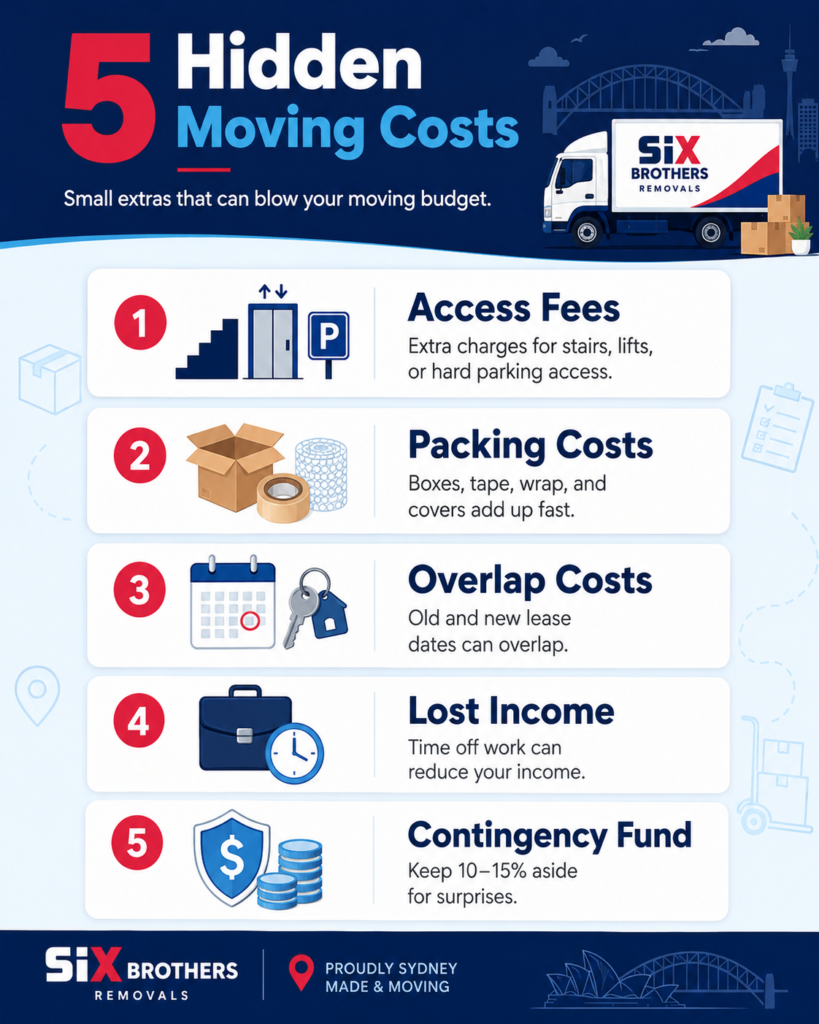
Here’s where most people slip up. The hidden costs of moving house can blow a tidy budget in hours. We’ve watched movers underestimate by 30%, sometimes more. Want to know why? Because nobody warned them about these next five.
Access Fees
Tight driveway? Stairs? Lift booking required at your apartment? Movers may charge extra for difficult access. So can your building manager. Always ask both before booking.
Packing Materials
Boxes, tape, bubble wrap, markers, mattress covers. It adds up fast. A three-bedroom move can chew through $200-$400 in packing supplies alone. Unless you know where to get free moving boxes. More on that below.
Overlap Costs
Sometimes your old lease ends after your new one starts. That overlap means double rent for a week or two. Same with mortgages. Buying and selling rarely line up cleanly. Plan for at least one week of overlap.
Lost Income
Took a day off for the move? That’s lost pay.
Self-employed? You might lose two or three days of billable work. Factor it into your budget like any other cost.
Allocate a Contingency Fund
Set aside 10-15% of your total budget as a buffer. Just for surprises. Truck breaks down. Box of glassware shatters. New fridge dies on day three. Without a buffer, these become disasters. With one, they’re just bumps.
Track Spending
Open a moving-only spreadsheet. Or use an app like Pocketbook or Frollo. Log every receipt. Every transfer. Every cash payment. This becomes your moving expenses checklist in real time. And it’ll save you serious stress.
How to Reduce Moving Costs Without Losing Financial Stability
Cutting costs doesn’t mean cutting corners. It means moving smart.
So how to reduce moving costs without making your move a nightmare? Five real strategies below.
Declutter Before Moving
This is the cheapest hack in the book. Decluttering before moving house can shrink your truck size by 20-30%. That’s hundreds saved on removalists alone. Sell what you can. Donate what you don’t need. Bin what’s broken.
The less you move, the less you pay. Simple.
Source Free Supplies/Cheap Packing Materials
You don’t need to buy fresh boxes. Real talk. Try Facebook Marketplace, Gumtree, local liquor stores, and supermarkets. Most give boxes away free.
Wondering where to get free moving boxes? Bunnings noticeboards, community groups, and recently moved neighbours are gold mines. For tape and wrap, hit a discount store. Half the price of the major chains.
DIY Where Possible
Pack your own boxes. Disassemble your own furniture. Drive a hired van for small loads. DIY won’t suit every move. But for a studio or one-bedroom shift, it can slash costs by 40%.
Just know your limits. Heavy furniture, pianos, or interstate runs need pros.
Move Off-Peak
Friday afternoon and weekend rates are the highest. Always. Move mid-week, mid-month, and mid-day if you can. Rates drop noticeably.
The cheapest day to hire movers is usually Tuesday or Wednesday. Skip the rush.
Book Strategic Timing
Avoid the end of the month. Avoid school holidays. Avoid public holiday weekends. Removalists are busiest during these windows. Prices climb. Availability shrinks.
Book six weeks ahead for the best rate. Last-minute bookings cost more, every single time.
How to Optimise Moving Logistics and Services to Protect Your Budget
Logistics make or break a move. Get this right, and your money stretches further.
Compare Quotes
Never accept the first quote. Ever. Get at least three written quotes. Make sure they include GST, fuel levies, and any minimum hours. When you compare removalist quotes, look beyond price. Check insurance, reviews, and what’s included. The cheapest quote often hides extra fees.
Use Backloading
Backloading is a Sydney mover’s secret weapon. You share truck space with another customer going the same way. The cost drops sharply. Perfect for interstate moves or smaller loads. It’s the cheapest way to move furniture long-distance.
Hybrid Moving
You pack. The pros lift and drive. That’s hybrid moving. You save on labour without the hassle of driving a truck yourself. It’s the middle ground between full-service and DIY. For a 3-bed move, hybrid can save $400-$800.
Utility Management
Cancel old utilities the day after you move. Connect new ones the day before. This avoids double billing. And avoids that first night without power or water.
Review Utilities
Use the move as a reset. Compare energy, internet, and phone plans. A 20-minute check on iSelect or Compare the Market can save you $300+ a year. Real money.
How to Protect Your Finances During a House Move
Moving day costs money. But the days after can hit harder if you’re not ready.
Keep Cash for Emergencies
Have $500 in cash or accessible savings on moving day. Always.
Tips for helpers, takeaway food, last-minute supplies, parking fees. They all need quick cash. Cards get declined. ATMs run out. Cash is king on moving day.
Secure Rental Bond Back
This is huge. Your bond can be your moving cushion. Use a proper bond clean checklist Australia style approach. Clean carpets, walls, ovens, and windows.
A final inspection checklist rental keeps you on the landlord’s good side. Photo everything before handing keys back. Every room, every wall, every appliance. Most bond disputes lose money over silly things. A dirty oven. A scratched floor.
Avoid New Debt
Don’t put your move on a credit card if you can help it. Interest on moving costs can follow you for years. We’ve seen people still paying off a 2022 move in 2025.
Save first. Spend second. If you must use credit, pay it off within the month.
Update Insurance
New address, new risks. Update contents insurance the day you move.
Some insurers cover items in transit. Others don’t. Check before you pack. A $20 monthly insurance bump beats a $5,000 loss any day.
Long-Term Money Planning After Moving House
The move ends, but the money game doesn’t.
Research the New Area
New suburb? New costs.
Council rates, water rates, parking permits, gym memberships. They all shift suburb by suburb. Research before signing the lease. Don’t get blindsided.
Reassess Subscriptions
Streaming services, magazines, food deliveries. Cancel what doesn’t fit your new life. A move is a perfect reset. Cut 5-10 subscriptions and you’ve saved hundreds a year.
Wait on Furnishing
Don’t furnish the whole house in week one. Live in it. Feel the spaces. Then buy what you actually need.
We’ve seen people drop $8,000 on furniture in the first month. Then sell half of it within a year. Wait. Watch. Buy slow.
How to Keep Track of Moving Expenses
Tracking is the difference between a clean move and a money mess. Open a free app like Pocketbook, Frollo, or just use a Google Sheet. Log every cost the day it happens.
Use categories. Removalists. Packing. Utilities. Cleaning. Food. Travel. Keep every receipt. Snap a photo. Drop it in a folder labelled “Move 2026”.
Why bother? Three reasons.
- Tax claims (some moves qualify, like work-related ones)
- Future move planning
- Spotting waste in real time
A solid moving expenses checklist keeps you honest and prepared. It’s not glamorous. But it works.
How to Prepare Financially for Unexpected Moving Costs
Surprises happen. Trucks break down. A storm rolls in. A wall gets scratched on the way out.
The smart move? Prepare for it before it happens.
Build a contingency fund equal to 10-15% of your total budget. If your move costs $4,000, set aside $400-$600 extra. Have an emergency credit card with a clear balance. Just in case. Know your insurance coverage. Both contents and transit. Read the PDS, even if it’s boring. Save the contact for a backup removalist. If your first choice falls through, you’re not stuck. And keep important docs in a folder you carry yourself. Bank cards, passports, leases, insurance papers. Don’t pack them in a box you can’t find.
What You Can Do Yourself to Save Money During a House Move
DIY isn’t for everyone. But every little bit you do yourself saves real cash.
Here’s what’s worth doing yourself for most moves:
- Pack your own kitchen and bedroom boxes – Saves $200-$500
- Disassemble flat-pack furniture – Saves time-based labour fees
- Drive small loads in your own car or a hired ute – Saves transport costs
- Clean the old place yourself – Saves $300-$600 on bond cleaners
- Source free boxes – Saves $100-$200 on packing supplies
- Cancel and reconnect utilities yourself – Avoids third-party fees
- Update your address – Use a free change of address checklist Australia template
Some jobs need pros. Heavy furniture, pianos, fragile art, and tight access spots. Don’t risk injury or damage to save $100. Know what to DIY. Know what to outsource. That’s the smart split.
Common Moving Money Mistakes That Hurt Financial Stability
We’ve moved thousands of Sydney families. The same five mistakes show up over and over.
Booking Too Late
Last-minute bookings cost 20-40% more. Period. Removalists charge premium rates for tight slots. Book six weeks ahead minimum.
Underestimating Volume
People always think they have less stuff than they do. For a cost to move a 3 bedroom house, expect 30-40 cubic metres. For a cost to move a 4 bedroom house, plan for 50+ cubic metres.
Underestimating means an undersized truck. That means two trips. That means double cost. Use a volume calculator before booking. Or get a home visit quote.
Ignoring Building Access
Apartment moves with no lift access cost more. Tight staircases cost more. No parking out front costs more. Tell your removalist about every access issue. Upfront.
If they show up unprepared, you’ll pay surge fees. Or worse, they walk away.
Buying Too Soon
New house, fresh start, time to shop? Slow down. People drop thousands in week one buying stuff they don’t need yet. Curtains. Couches. Pots and pans.
Wait a month. See what’s actually missing. Then buy.
Forgetting First Week Costs
The first week in a new home is expensive. Way more than people plan for. Takeaway food. New basics. Cleaning supplies. Hardware store runs for missing screws or fittings.
Budget $500-$800 for the first week alone. Trust us.
Financial Stability Checklist for Before, During, and After a House Move
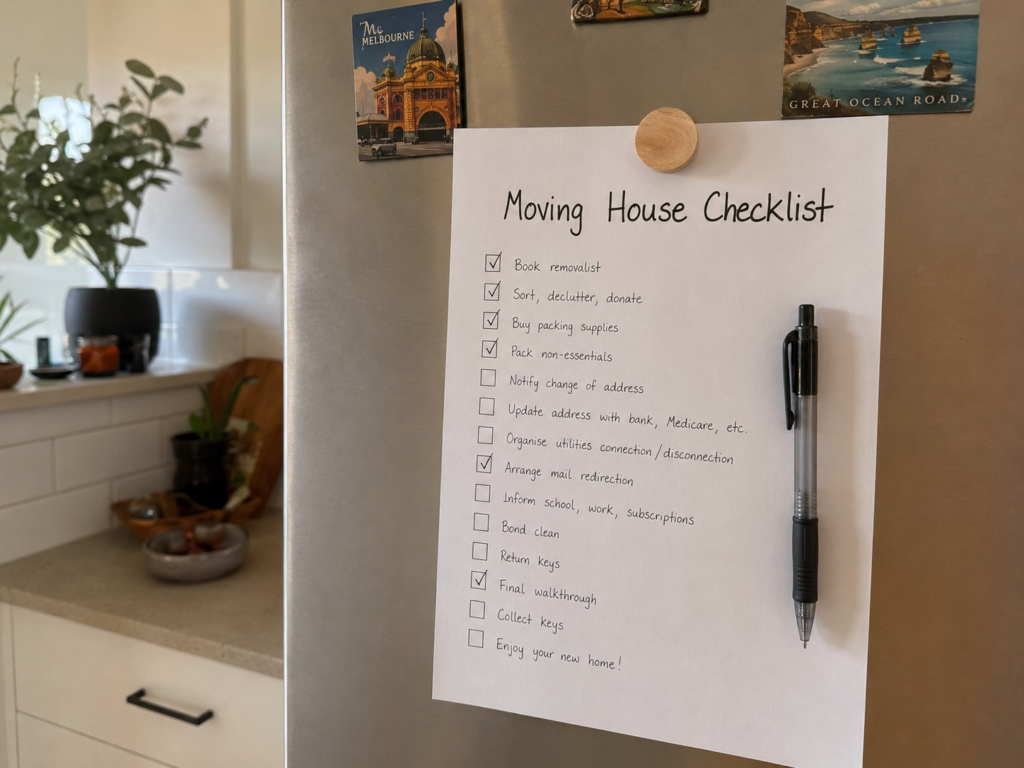
A clean checklist beats a fuzzy memory. Every time.
Before the Move
- Set total moving budget with 15% buffer
- Get three written removalist quotes
- Book removalists six weeks early
- Source free or cheap packing supplies
- Declutter and sell unwanted items
- Notify all utilities of disconnection date
- Update address with banks, ATO, Medicare
- Schedule bond clean
- Take photos of old place condition
- Confirm new place’s access details
During Moving Week
- Withdraw $500 cash for emergencies
- Pack a “first night” box (toiletries, kettle, phone chargers, snacks)
- Confirm removalist arrival time
- Photograph valuables before they’re loaded
- Keep documents and cards on you
- Stock up on basic groceries for new place
- Final read of meters at old place
After Moving Day
- Photograph new place condition immediately
- Connect utilities and confirm bills
- Review final removalist invoice
- Submit bond return paperwork
- Track all post-move spending
- Compare and switch utility plans
- Update insurance for new address
- Submit any damage claims within 7 days
Print this. Stick it on the fridge. Tick as you go.
When Professional Movers Can Save You Money During a House Move
Sounds backwards, right? Pros costing less than DIY? But here’s the maths. A botched DIY move can cost more than a pro one. We’ve seen it. Damaged TVs. Hernias and chiro bills. A broken pool table. A friend’s car scraped on a tight driveway.
Professional movers save money when:
- You’re moving more than two bedrooms
- You have heavy or fragile items (piano, marble, art)
- You’re doing an interstate move
- Access is tight (high floors, no lift, narrow streets)
- You’re working full-time and can’t afford lost days
- You want guaranteed insurance cover
Six Brothers Removalists has been doing this across Sydney for years. From Parramatta to Wollongong, Brisbane to Adelaide. Big moves, small moves, last-minute moves, planned moves.We don’t just lift boxes. We protect your budget.
Ready to get a quote that won’t surprise you? Call 1300 764 372 or email info@sixbrothersremovalist.com.au. You’ll talk to a real person at Suite 1 Level 5/58/60 Macquarie St, Parramatta NSW 2150.
Because staying financially stable during a house move isn’t luck. It’s planning, knowing the traps, and choosing the right team.
Your wallet will thank you.