


Table of Contents
A whole-house inventory checklist for insurance purposes records what you own before something goes wrong. It gives each item a name, location, value and supporting evidence. If you’re moving across Sydney, that same record also helps track every carton.
Start with one room, not the whole house at once. Photograph items before packing and save receipts where you can find them. This guide gives you a practical home contents inventory list, a spreadsheet structure and a moving-day system.

Whole-House Inventory Checklist Template
A useful checklist records your belongings, their value and where the evidence lives. You don’t need a perfect catalogue before you start. Begin with expensive, fragile and difficult-to-replace items, then fill the gaps room by room.
Printable Room-by-Room Checklist
Print one page for each room and tick areas after recording them. Use separate sheets for the garage, storage cage and garden shed. A fast tick-box walk-through stops hidden cupboards slipping through the cracks.
Room checklist: Room name and date; furniture; electronics; appliances; clothing; collections; cupboard contents; high-value items; photos taken; receipts saved; cartons numbered; final check signed.
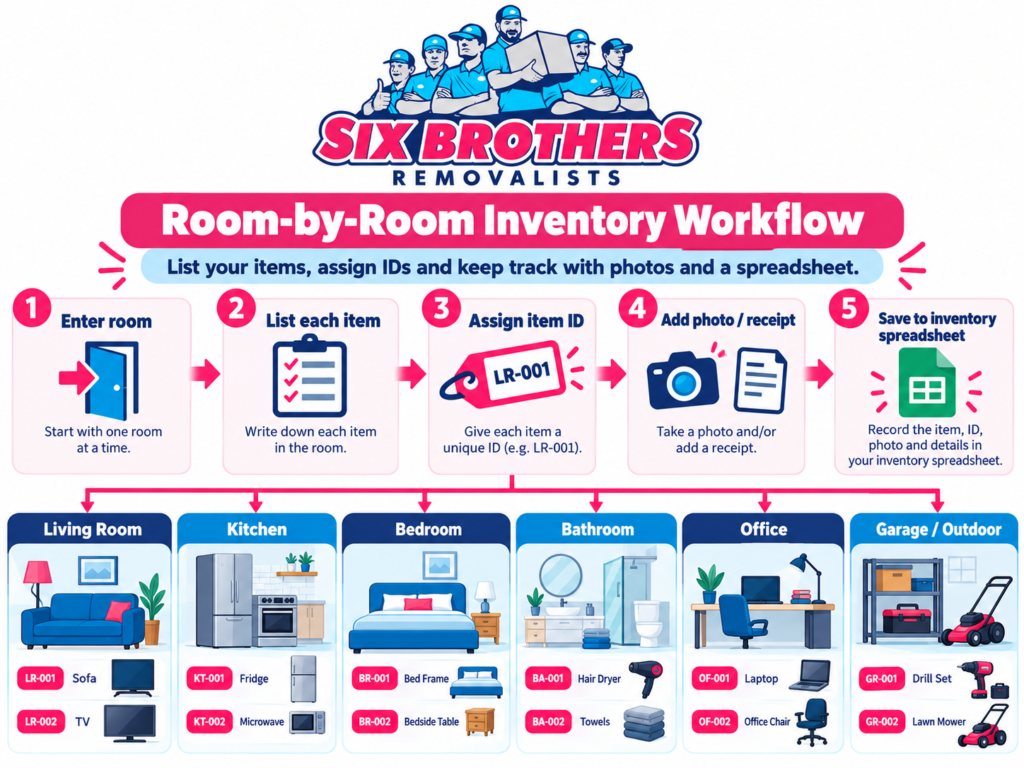
Example: Lounge room, 10 October. Sofa recorded as LR-001. Television recorded as LR-002. Photos saved under the matching item IDs.
Editable Insurance Inventory Spreadsheet
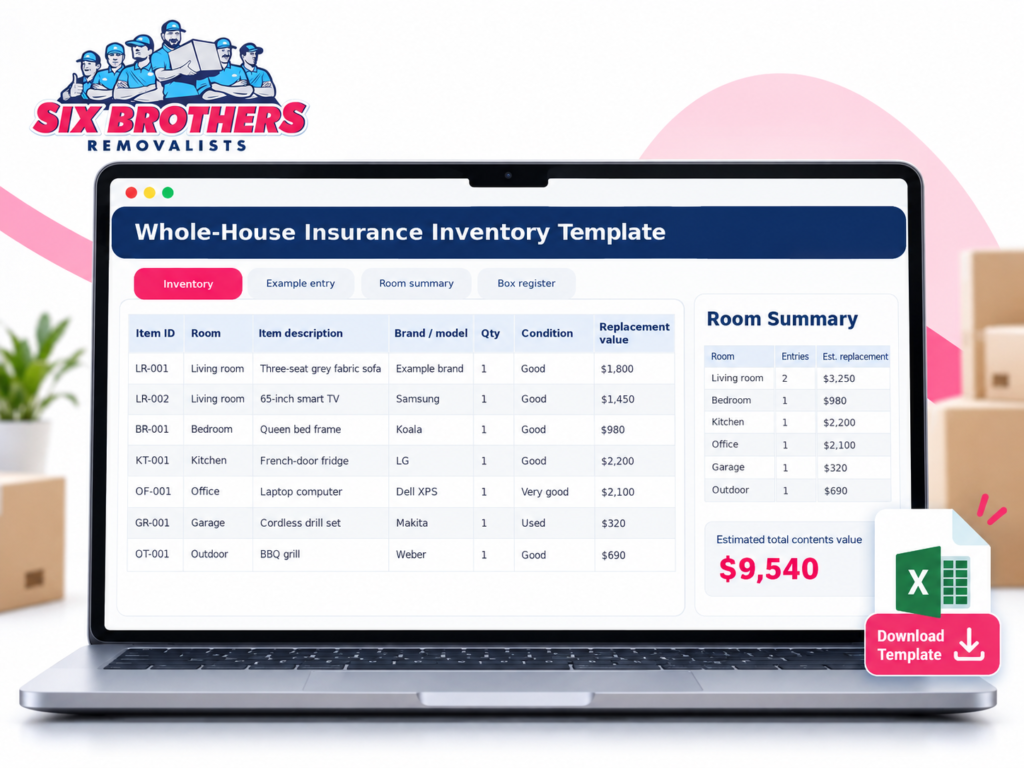
An editable home inventory spreadsheet template lets you sort by room, value and packing status. Make each row one item or one clearly described group. Separate every high-value item, even when similar items sit together.
Use these columns: Item ID, room, item description, brand/model, serial number, quantity, condition, purchase date, purchase price, estimated replacement cost, receipt link, photo link, box ID, move status and notes.
For grouped items, explain what belongs in the group. “Kitchen items” tells an insurer very little. “Twelve dinner plates, six mugs and four bowls” is easier to check.
What to Record for Each Item
Record enough detail to identify an item and support its claimed value. Your furniture inventory checklist should work even after the furniture leaves its usual room. Small details matter when boxes look identical.
Item Description
Describe the item using plain words, size, colour and key features. Write “three-seat grey fabric sofa” rather than “couch”. Record visible scratches or dents before removal day.
For a matching dining set, list the table and chairs separately. It makes missing-piece checks easier. You can still group low-value items when the group is clear.
Identifying Data
Add the brand, model and serial number whenever available. Photograph the label on televisions, laptops, cameras and whitegoods. Serial numbers help distinguish one product from a similar replacement.
Keep identifying details private. Don’t photograph passwords, account numbers or other sensitive information. Back up your inventory with controlled access.
Purchase Details
Record purchase dates, shops and prices when you know them. Email receipts, invoices and warranty documents can support ownership. If a receipt is missing, add an honest note rather than guessing.
Bought a second-hand dining table from someone in Parramatta? Save the transaction message if available. Note the item’s age and current condition.
Value & Proof
Record today’s estimated replacement cost separately from the original purchase price. Keep a link to each item photo and any receipt. Mark estimates clearly and revisit them before renewing cover.
Some policies use replacement value. Others use current value, limits or special conditions. MoneySmart’s contents insurance guide explains why those differences matter.

How to Organise a Whole-House Insurance Inventory
Organise your list so another person can follow it without guessing. A simple naming system beats a beautiful spreadsheet nobody updates. Give rooms, items, photos and boxes matching labels.
Assign Unique Item IDs
Give every important item a permanent ID, such as BR-001 or KT-014. Use the same ID on its photo, receipt folder and spreadsheet row. Never reuse an old ID for a different item.
A damaged fridge with ID KT-014 now has one clear record. You can find its model number, images and replacement estimate quickly.
Organise Items by Room
Sort records by the room where each item normally lives. Use clear room names, including laundry, balcony and outdoor storage. For moving day, add a separate destination-room column.
A carton might begin in the spare bedroom but end in the study. Keep its original item ID and update the destination. This avoids double counting.
Create an Inventory Summary
Make a short summary showing each room’s item count and replacement-cost estimate. Keep a separate list of items with missing photos or receipts. These gaps need attention before the truck arrives.
A home moving calculator can help estimate moving volume. That estimate is not the same as your insured contents value. Keep both figures separate.
Living, Family, & Dining Rooms
Inventory living areas first because expensive items hide in plain sight. Record furniture sets, electronics, rugs and collections individually where practical. A room photograph is useful, but item-level evidence goes further.
Furniture
List sofas, recliners, coffee tables, dining tables and chairs. Photograph damage, makers’ labels and detachable pieces. Keep dismantled legs or fittings in labelled bags.
When speaking with furniture removalists in Sydney, identify bulky or delicate items early. This helps them discuss protection, access and handling needs.
Electronics
Record televisions, soundbars, gaming consoles and speakers. Capture model numbers and screen condition before packing. Photograph cabling setups if reconnecting them could become tricky.
If you keep original packaging, note that in the box record. Record separate remotes and accessories, not just the main unit.
Decor & Furnishings
Include rugs, lamps, mirrors, framed prints and curtains you own. Photograph delicate corners and glass surfaces. Record size for oversized mirrors and artworks.
Media & Entertainment
List cameras, game collections, musical accessories and collectible media. Group ordinary books by a sensible category. Record rare or valuable editions separately with supporting photos.
Kitchen & Pantry
Kitchen inventories need both large appliances and small groups of everyday contents. Cupboard items add up quickly, so don’t rely on memory. Photograph shelves before you start boxing them.
Major Appliances
Record fridges, freezers, dishwashers and freestanding ovens that belong to you. Include model numbers, age and condition. Check whether built-in appliances count as contents under your policy.
Small Appliances
List coffee machines, mixers, air fryers, kettles and food processors. Record expensive accessories with the main appliance. Photograph serial labels before cords get packed away.
Cookware & Tableware
Group pans, utensils, plates and glasses into counted sets. Note material and brand where relevant. Your moving box inventory spreadsheet should show the carton holding each set.
Fine China & Silver
List fine china, silverware and heirloom pieces separately. Photograph hallmarks, signatures and existing chips. Ask your insurer about special limits or valuation requirements.
Bedrooms
Bedrooms contain furniture, clothes and personal belongings that are easy to underestimate. Empty wardrobes and under-bed drawers as part of the audit. Keep your most important items on a separate high-value list.
Furniture
Record beds, mattresses, bedside tables, wardrobes and dressers. Take photos before dismantling furniture. Keep a note of screws, rails and other loose fittings.
Bedding & Linens
Count quilt covers, pillows, blankets, sheet sets and spare towels. Group similar everyday pieces where values are modest. Record premium bedding separately if replacing it would cost more.
Clothing & Accessories
Estimate wardrobes by category, quantity and replacement cost. Count shoes, coats and workwear rather than writing “clothes”. Photograph designer accessories separately and retain proof where possible.
Bathrooms & Laundry
Bathrooms and laundries can contain more value than their size suggests. Check cupboards, baskets and shelving before sealing the last box. Don’t overlook items that move between these rooms.
Appliances
Record washers, dryers, dehumidifiers and portable heaters. Note whether a machine is freestanding or part of the property. Photograph hoses, visible marks and identifying labels.
Styling Tools
Include hairdryers, straighteners, grooming devices and electric toothbrushes. Record expensive devices individually. Keep chargers with matching item IDs where practical.
Consumables
Count unopened cleaning products and higher-value toiletries where your policy includes them. Some products cannot travel in a removalist truck. Ask your chosen removalist which goods are restricted.
Home Office
A home office needs a careful list of devices, documents and business-owned equipment. Separate personal property from items belonging to an employer. This keeps your claim record tidy.
Tech Hardware
List laptops, monitors, printers, hard drives, routers and cameras. Back up data before packing and keep sensitive records protected. Note serial numbers and photograph working screens before shutdown.
If you have an office move, ask office removalists about equipment tracking. Business policies may treat office equipment differently from household contents insurance.
Office Furniture
Record desks, ergonomic chairs, filing cabinets and bookcases. Photograph existing scratches and cable management. Mark drawers that must be emptied before lifting.
Hallways, Entryways and Hidden Storage
Hidden storage is where forgotten belongings pile up. Work through every cupboard, shelf and storage cage before calling the list complete. A quick doorway photo rarely tells the whole story.
Entryway Furniture
Add shoe cabinets, console tables, coat racks and mirrors. Photograph fragile glass or stone tops. Record loose keys separately from the household contents list.
Hallway and Linen Cupboards
Count spare linen, luggage, seasonal decorations and stored electronics. Open every tub and photograph its contents. Replace vague labels with descriptions and quantities.
Under-Stair Storage
Record vacuum cleaners, toolboxes, camping equipment and spare appliances. Check deeper shelves before sealing cartons. Take one wide photo to show the storage layout.
Apartment Storage Cages
Include bikes, suitcases, sports gear and boxed household items in a unit’s storage cage. Check the strata rules and access arrangements. Photograph the cage before and after you empty it.
Garage, Shed, Attic, & Outdoor Areas
Outdoor and storage areas deserve their own inventory pages. Tools and leisure gear can be expensive to replace. Sydney house moves often involve sheds, steep access or a long carry.
Tools
List drills, saws, ladders, toolkits and garden equipment. Keep power tools and batteries identified separately where useful. Check rules before transporting fuel, gas or other hazardous products.
Leisure & Fitness
Record bicycles, camping sets, weights, exercise machines and sporting equipment. Photograph scratches on bikes and equipment before loading. Mark pieces that need dismantling.
Outdoor Living
Add outdoor sofas, barbecues, planters, umbrellas and portable heaters. Check which garden items your contents policy includes. Built-in fixtures may sit outside standard contents cover.
High-Value Items (Special Attention Required)
High-value items need stronger proof than ordinary household goods. Keep a separate register for jewellery, artwork and delicate instruments. Ask your insurer whether each item has a special limit.
Jewellery & Watches
Photograph individual pieces from several angles. Record serial numbers, hallmarks, certificates and professional valuations. Keep valuable items secure and confirm the insurer’s transit conditions.
Fine Art & Collectibles
Describe the artist, title, material and dimensions of each piece. Save purchase papers, certificates and recent professional valuations where relevant. Note every existing crack or mark.
Musical Instruments
Record brand, model, serial number, case and condition. For a piano, include the size and access constraints. Specialist piano removalists may need photos of stair turns and entrances.
Best Practices for Evidence & Storage
Evidence works best when it is organised before a claim. A phone full of unlabelled photos can become another headache. Store clear images, documents and backup copies together.
1. Calculate Replacement Value, Not Purchase Price
Estimate what equivalent belongings cost today, rather than repeating their old price tags. Some policies replace items new for old. Others use current value or apply category limits.
Check the actual Product Disclosure Statement before choosing cover. Don’t treat spreadsheet totals as an insurer’s promise to pay.
2. Take Comprehensive Visuals
Record each room with a slow video before packing. Then take close-ups of valuable items, labels and existing damage. Photograph open cartons before sealing them.
3. Digitise Proof of Ownership
Save receipts, warranty emails, valuation reports and purchase messages as files. Name each document with its matching item ID. A simple naming rule saves time later.
4. Enforce the “Off-Site” Rule
Keep an encrypted backup outside the home, such as secure cloud storage. Restrict access to sensitive documents. A flood or fire could damage a paper inventory and its evidence together.
5. Maintain it Annually
Review your list when renewing insurance or buying expensive items. Update values, remove sold items and save new receipts. A calendar reminder helps keep things on track.
Did you know?
MoneySmart recommends keeping item descriptions, serial numbers, receipts, photos and replacement values. A room video can also support proof of ownership.
How to Check for Underinsurance Using Your Inventory ?
Underinsurance means your cover may be too low to replace eligible belongings after a loss. Add realistic replacement estimates across your inventory. Then compare that total with your contents sum insured and category limits.
Start with the spreadsheet total, then check each room for omissions. Review jewellery, electronics and collections separately. The Insurance Council’s contents calculator offers another estimate to compare.
Example only: Suppose your listed belongings total $85,000, but your contents sum insured is $60,000. The apparent gap is $25,000 before policy limits, excesses and other conditions. This is a review prompt, not a prediction of any claim payment.
Your insurer should explain the cover level and restrictions. Ask about specified valuables and any underinsurance provisions. Don’t assume a bigger moving truck means a bigger insurance requirement.
What Insurance Cover Applies During a House Move ?
Insurance during a move depends on the policies involved and what caused the loss. Ordinary contents cover might include some moving events, but exclusions vary. Ask your insurer before the first carton leaves home.
Check your policy’s cover for packing, loading, transit, storage and unloading. Ask what happens if you pack the box yourself. Get written answers about fragile items, valuables, limits and excesses.
A removalist’s public liability cover is not automatically insurance for your belongings. Transit cover and the removalist’s legal liability may also differ. Review the terms rather than relying on a verbal promise.
The article on DIY moving insurance gaps covers risks when you hire a truck or use friends. The same questions help when comparing house removalists or interstate removalists.
For longer journeys, ask interstate furniture removalists about storage and handovers. International removalists may involve additional policy and customs conditions. Your inventory helps document ownership, but it doesn’t replace suitable cover.
How to Track Your Inventory on Removal Day ?
Use carton IDs and a simple sign-off method to track your belongings during removal day. Your insurance list stays the master record. A separate packing-status field shows where each item should be.
Label every box with a code, destination room and brief contents summary. Avoid writing valuables on the outside. Record any pre-existing damage before loading begins.
Example: BOX-KT-07 contains plates KT-021 through KT-028. Mark it “loaded” when it enters the truck. Change the status to “received” after checking it at the destination.
Share an appropriate room and carton summary with the crew. Keep private receipts and valuations for yourself. Whether you choose cheap removalists or specialist removalist companies, ask how they record exceptions.
If comparing quotes, use this Sydney removalist quote checklist to discuss inventory scope and special handling. For a local move, Six Brothers Removalists can discuss the job details before booking.
How to Use Your Inventory for an Insurance Claim ?
Use your inventory to identify affected items, support ownership and explain the loss. First protect people and prevent further damage where safe. Then photograph the scene before moving or discarding damaged goods.
Find the affected item IDs and gather receipts, serial numbers and earlier photos. Note when and where you discovered the issue. Contact the relevant insurer promptly and follow their claims process.
Keep invoices, repair assessments, emails and the claim reference together. Don’t throw items away unless safety requires it or the insurer agrees. Your household contents insurance checklist should make evidence easy to retrieve.
FAQs
Do removalists have insurance?
Some carry different business policies, but protection varies. Ask for policy details and confirm what protects your goods.
Are removalists liable for damage?
Liability depends on the circumstances, agreement and applicable law. Record damage immediately and seek written guidance before assuming cover.
Does an inventory prove ownership?
It supports a claim alongside photos, receipts and other records. Insurers can still request additional evidence.
Should I list every household item?
Record major items individually and sensible groups for low-value goods. Photograph cupboards and storage areas before packing.
How do I track boxes without revealing valuables?
Use neutral box codes linked to a private spreadsheet. Keep any valuation details off exterior labels.
Can I use purchase price as insured value?
Keep purchase price as evidence, but calculate replacement cost separately. Follow your policy’s valuation basis.
What if I have no receipt?
Save photographs, bank records, manuals or correspondence where available. Explain any gaps accurately to your insurer.
Does my contents policy cover interstate transport?
Not necessarily. Read the PDS and ask about transit, storage and exclusions before moving.
Your inventory is a safety net for your records, not a guarantee of payment. Review insurance first, then brief your removalists about access and fragile items. For a Sydney house move, call Six Brothers Removalists on 1300 764 372. You can also request a free, itemised moving quote before booking.