

Table of Contents
An honest guide for Sydney movers heading across the country
Packing your whole life into boxes is one thing. Knowing where those boxes go before your new place is ready? That’s a different headache.
Maybe your settlement slipped. Maybe the new home needs paint. Maybe you’re moving from Parramatta to Adelaide and the dates just won’t line up.
Here’s the truth most removalists won’t tell you. You don’t always need storage for an interstate move. Sometimes you do. The trick is knowing which camp you’re in before you pay for a unit you’ll barely use.
This guide breaks it down in plain words. When storage saves you. When it’s a waste. And how to do it right if you go that way.
We’ve helped Sydney families move across the country for years. Some needed a depot for three days. Some needed one for three months. Most thought they needed storage and didn’t. A handful swore they didn’t and ended up stuck.
The pattern is always the same. The people who plan early sail through. The people who wing it pay for it, in cash or in stress. Usually both.
So read this before you book anything. Ten minutes now can save you hundreds later and a whole lot of moving-day panic.
QUICK ANSWER
You need storage when there’s a timing gap between leaving your old home and getting keys to the new one. Skip it when both dates line up cleanly. Most Sydney interstate moves fall somewhere in between.
When You Will Need Storage
Storage isn’t a default. It’s a fix for a specific problem. Here are the moments when it earns its keep.
Delayed Handover
Settlement dates shift. It happens all the time. Your buyer’s loan gets held up, or the seller on your new place asks for an extra week.
Suddenly you’re out of one home but not yet into the next. Storage-in-transit bridges that gap. Your gear sits safe while the paperwork catches up.
This stings most on interstate moves. A local delay is annoying. An interstate delay means your truck has already left Sydney with everything you own inside it.
Planning ahead means you’re not stranded with a truck full of furniture and nowhere to put it. Build a few buffer days into your plan and a hiccup becomes a non-event.
Temporary Accommodation
Some folks land in a short-term rental or a mate’s spare room while they hunt for the right place. You can’t cram a four-bedroom house into a studio.
So the big stuff goes into storage. You live light for a few weeks. Then it all comes out when you settle in for good.
This is common for people moving sight-unseen. You take the leap to a new city, rent something temporary, then find your forever home once you know the area. Storage holds your life together in the meantime.
Home Renovations
Buying a fixer-upper? Smart move. But you can’t lay new floors with a couch sitting on them.
Storage keeps your furniture clear of the dust and tradies. Once the reno wraps, your stuff comes home to a fresh space. No scratches, no paint splatter.
Renos always run long. Plan for the painted-walls dream and budget storage for the real-world timeline. A two-week job that becomes six weeks shouldn’t blow your whole plan apart.
Downsizing Decisions
Moving to a smaller place but not ready to part with everything? That’s normal. Letting go is hard.
Storage gives you breathing room. Park the extras while you decide what stays. Our guide on downsizing without regret can help you sort the keep pile from the let-go pile.
Don’t store stuff forever, though. Give yourself a deadline. If a box sits unopened for six months, that’s your answer. Sell it, donate it, or let it go.
Flexible Delivery Windows
Long-haul interstate trucks run on schedules. Sometimes the truck leaves Sydney before your new place is ready to receive it.
A short storage hold lets the timing flex. Your goods wait at the depot, then deliver the day you’re ready. No rush, no chaos.
When You Can Skip Storage?
Plenty of moves don’t need storage at all. If your dates line up, you’re golden.
Skip storage when:
• Both dates match. You vacate the old home and get keys to the new one on the same day or close to it.
• Your new home is move-in ready. No reno, no waiting, no surprises.
• You’ve planned a direct move. The truck loads in Sydney and unloads at your new door, start to finish.
Why pay for a unit you don’t need? Every extra week of storage is money you could spend settling into your new life. If the timing works, go direct and save the cash.
Direct moves are also faster. Your goods are handled once. No depot stopover, no extra loading and unloading. Less handling means less wear on your furniture.
Be honest with yourself, though. If there’s even a small chance of a delay, a few buffer days of storage is cheap insurance. Confident the dates hold? Go direct and pocket the savings.
The Great Sydney Storage Dilemma
Sydney moves come with their own quirks. Tight streets. Tall apartment blocks. Strata rules that read like a rulebook.
There’s an old saying: measure twice, cut once. Same goes for moving. Sort your storage question early and the whole move runs smoother.
The dilemma is real. Storage in Sydney can cost more than the move itself if you book it wrong. But skipping it when you genuinely need it leaves you stuck on moving day.
So how do you decide? Ask yourself two simple things. Is your new property ready right now? And how big is your home? Those two answers point you the right way nearly every time.
There’s a third question worth adding. How tight is your moving-day access at both ends? Two clean addresses with easy parking? You might skip storage. A high-rise with a single lift booking and timed parking? Build in a buffer.
Sydney rewards the organised. The movers who win are the ones who sort lift bookings, parking, and storage weeks out, not the night before.
LOCAL TIP
Sydney’s eastern suburbs and inner-city apartments often have the tightest move-out windows. Book your removalist and any storage early, especially over summer when everyone moves at once.
Sydney Access Issues That Affect Storage
Access problems can force you into storage even when you didn’t plan for it. Here’s what trips people up.
Apartment Lift Bookings
Most apartment buildings make you book the lift for a move. Miss the slot and you’re stuck.
If your lift booking doesn’t match your truck day, storage buys you time. Your goods wait safely until the building lets you in.
Strata Move-In Rules
Strata schemes set their own move-in hours. Some ban weekend moves. Others limit you to weekday mornings.
If you own or rent in a strata block, it’s worth checking your obligations before moving day. Buildings set their own rules on move-in hours, lift use, and bond deposits, so confirm them early to avoid a last-minute scramble.
Street Parking Limits
Narrow streets and timed parking can choke a move before it starts. A big truck needs room and time.
Some councils need a parking permit for removal trucks. If the permit falls through, a short storage hold saves the day.
Loading Zone Access
Loading zones fill up fast in busy Sydney suburbs. No clear access means slower loading and stress.
When access is messy, splitting the job with a storage stopover keeps things calm. Load when you can, deliver when the path is clear.
Common Storage Options
Not all storage is the same. Pick the type that fits your move and your budget.
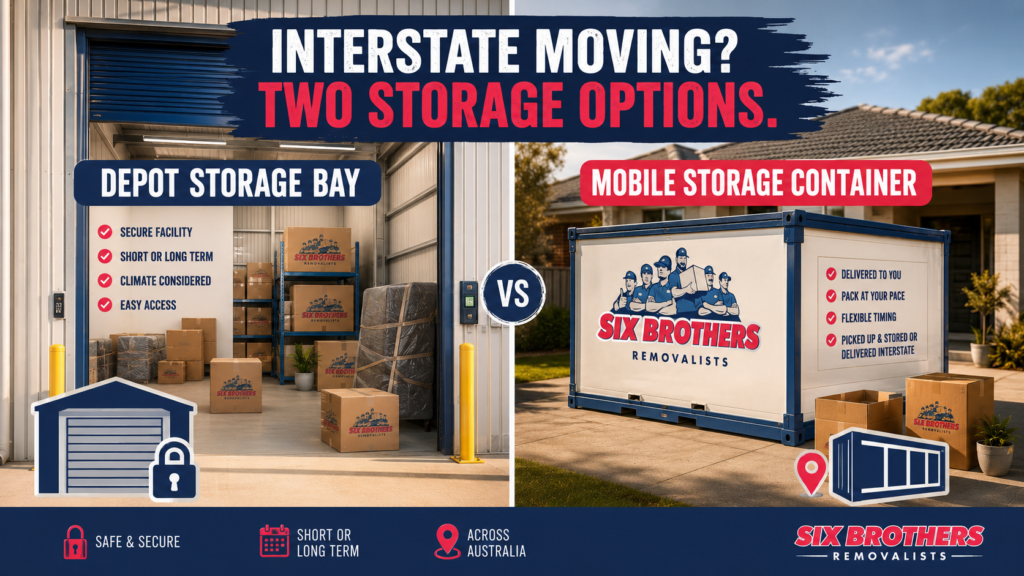
Removalist-Managed Storage
Many interstate removalists hold your goods at their own depot. This cuts out the middleman.
One company handles the move and the storage. Fewer handovers means less chance of damage. It’s often the cleanest option for an interstate run.
Self-Storage Facilities
Self-storage suits people who need frequent access. You hold the key and pop in whenever you like.
The trade-off? You load and unload it yourself. And you pay month to month, which adds up over time.
There’s also the access problem on interstate moves. If your self-storage unit is in Sydney but you’ve moved to Adelaide, you can’t just swing by. Match the location to where you’ll actually be.
Mobile / Portable Storage
Mobile storage drops a secure container at your home. You load it at your own pace. They cart it off and store it.
A PODS-style container can be a cost-effective, weather-resistant pick for a larger three-bedroom house or a studio apartment. No double handling. Load once, done.
The big win is flexibility. Load the container over a weekend instead of racing a removal truck on a single morning. Less rush, fewer mistakes.
WHICH ONE WINS?
For most interstate moves, removalist-managed storage is the simplest. Your gear stays with the same crew from pickup to final delivery, so nothing gets lost in a handover.
Short-Term vs Long-Term Storage
How long you store changes the maths. Short holds are cheap and simple. Long ones need more thought.
Storage for a Few Days
A few days of storage bridges a small settlement gap. It’s the most common need for interstate movers.
Costs stay low. Your goods stay packed and ready. Then they roll out to your new home within the week.
Storage for Several Weeks
Renovations or rental gaps can stretch storage to a few weeks. That’s still manageable with the right plan.
Label everything clearly so nothing gets lost in the shuffle. A few weeks is long enough to forget what’s in which box.
Open-Ended Storage Needs
Sometimes you just don’t know when you’ll need your stuff back. Open-ended storage gives you that flexibility.
Just watch the monthly cost. Open-ended is handy, but it can quietly drain your budget if you forget about it.
Long-Term Storage Risks
Store for months and small risks creep in. Damp, dust, and forgotten items top the list.
Climate control matters for long holds. Timber furniture and electronics hate humidity. Pay a little more to protect the gear you care about.
How Storage-in-Transit Works?
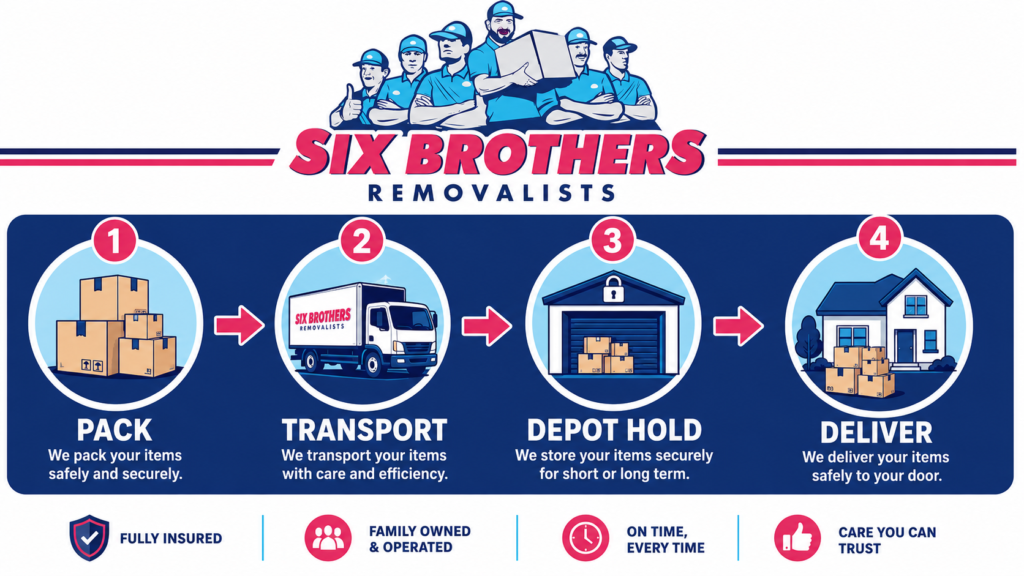
Storage-in-transit is the unsung hero of interstate moves. It’s storage built right into the journey.
Here’s the flow. Your removalist packs and loads in Sydney. The goods travel toward your new state. If your home isn’t ready, they hold everything at a secure depot.
You don’t lift a finger between pickup and delivery. When you say go, they deliver. One company, one chain of custody, one invoice.
This is where bundling shines. You skip the self-storage runaround and let the pros handle the gap.
Picture the alternative. Booking a separate storage unit means renting a truck, loading it, driving to the depot, unloading, then doing it all again when your home is ready. Storage-in-transit erases that whole circus.
For an interstate move, that’s huge. The last thing you want after a long haul is to wrangle a hire truck in a city you barely know.
WHY IT MATTERS
With storage-in-transit, your belongings are handled once and stored under one roof. Fewer touches means fewer dings, scratches, and lost boxes on a long interstate haul.
Benefits of Bundling Storage and Moving Together
Bundling storage with your move isn’t just convenient. It saves real money and stress.
• One point of contact. No juggling a storage firm and a removalist who don’t talk to each other.
• Fewer handovers. Your goods move once and store once. Less chance of damage.
• Simpler insurance. One transit cover can stretch across the move and the storage period.
• Better pricing. Bundled deals often beat booking each service alone.
When you bundle, the whole job feels like one smooth trip instead of three messy ones. That peace of mind is worth a lot on moving week.
There’s a hidden bonus too. When one crew handles everything, accountability is clear. If something goes wrong, you have one number to call, not a finger-pointing match between a storage firm and a removalist.
Do Interstate Removalists Offer Warranty Plans and Storage Options?
Short answer? Many do. But the details matter, so ask before you book.
Removalists aren’t required by law to insure your goods. Most only cover their own truck. So transit cover is something you arrange or extend.
The NSW Government notes that
Ask three things. Is storage covered by the same policy? What’s the excess? And how long can goods stay before extra fees kick in?
Your rights matter here too. Under the consumer guarantees that apply to removalist services, the work must be done with due care and skill. That covers your goods in storage as well as in transit, so don’t be shy about asking what’s protected.
Get every promise in writing. A friendly phone chat means nothing if a box turns up dented. The contract is what counts.
How Much Does Interstate Moving Storage Cost?
Cost is the big question, so let’s get specific. Storage prices swing based on size and features.
Monthly storage usually runs between $200 and $500. Climate control and bigger units push you toward the top of that range.
A mobile container like a PODS-style unit can be cost-effective for a larger home. You pay for the container and the transport, not a monthly self-storage rate that creeps up.
Want a fuller picture of what an interstate move costs end to end? Our breakdown of interstate moving prices across Australia puts storage in context with the rest of your budget.
Watch for the sneaky add-ons. Access fees, admin charges, and minimum-term clauses can pad your bill. Ask for an all-in figure, not just the headline monthly rate.
And factor in transit cover. Insuring your goods through the storage period is a small premium that saves a big headache if anything goes sideways.
BUDGET CHECK
Storage between $200 and $500 a month adds up fast. A few days of storage-in-transit often costs less than a full month at a self-storage facility, so match the option to your actual timing.
How Storage Affects Delivery Timing?
Storage gives you control over when your goods land. That’s a feature, not a bug.
Need a week to paint before furniture arrives? Storage holds the line. Your delivery slots in exactly when you’re ready.
On the flip side, storage can add a day or two to the door-to-door timeline. The goods pause at a depot before the final leg.
Talk timing through with your removalist early. A clear plan means no surprise delays and no truck idling outside an empty house.
Build in a little slack. Interstate roads throw curveballs. Weather, roadworks, and breakdowns can nudge a schedule. A short storage buffer absorbs the bumps so your delivery still lands smoothly.
What Items Should Go Into Storage?
Not everything needs storing. Be smart about what goes in and what travels with you.
Good for storage:
• Bulky furniture you won’t need straight away
• Seasonal gear like winter doonas or camping kit
• Spare appliances and second-hand pieces
• Books, decor, and anything non-urgent
Keep with you:
• Important documents and valuables
• Daily essentials and a week of clothes
• Medications and chargers
Think of storage like a pause button for the stuff you can live without for a while. The day-to-day things ride with you.
One warning. Some items should never go into storage at all. Perishable food, plants, flammable liquids, and anything that leaks or rots will cause grief. Keep those out, full stop.
And don’t store the things you’ll panic about. Passports, jewellery, and the kids’ favourite toys travel with you. Storage is for the bulky and the boring, not the precious.
How to Choose the Right Storage Size?
Pick a unit too small and your gear won’t fit. Too big and you waste money. Right-sizing matters.
A handy rule of thumb:
• One-bedroom home: small unit or a single mobile container
• Two to three bedrooms: medium unit, roughly the size of a single garage
• Three-bedroom house and up: large unit or a full shipping-style container
When in doubt, ask your removalist for a quick volume estimate. They size moves every day and can match your gear to the right space.
Wondering how much storage space you need for a three-bedroom house? A standard PODS-style container or a large self-storage unit usually does the trick.
A quick way to estimate. Walk through each room and picture it stacked. Beds, wardrobes, the lounge suite, the fridge. A rough volume in your head saves you from booking blind and paying for air or running out of space.
Packing for Interstate Storage
How you pack for storage decides what comes out the other end. Do it right and everything survives the wait.
Label Every Box Clearly
Label boxes on the top and at least two sides. Write the room and a quick note on what’s inside.
Future you will thank present you. Clear labels mean you find the kettle without opening twelve boxes.
Use Storage-Grade Materials
Flimsy boxes sag and split in storage. Use sturdy, double-walled cartons that stack without crushing.
Grab proper supplies before you start. Our range of moving boxes and packing supplies is built for long holds, not just a quick trip.
Protect Furniture Properly
Wrap timber and upholstery in proper covers. Bubble wrap the corners that scratch and dent.
Don’t drape furniture in plastic for months. It traps moisture. Use breathable furniture blankets so your pieces can air out.
Create an Inventory List
Write down what goes into storage, box by box. A simple inventory list saves hours later.
Number each box and match it to your list. When delivery day comes, you’ll know in a glance if anything’s missing.
PACKING PRO TIP
Take a photo of each open box before you seal it. A quick phone snap beats a written list when you’re hunting for one specific item weeks later.
Mistakes That Make Storage More Expensive
Storage costs balloon when you make these slip-ups. Dodge them and keep your bill lean.
Booking Storage Too Late
Leave it to the last minute and you pay premium rates. Or worse, nothing’s available.
Book early, especially over summer. Sydney’s peak moving season fills depots fast, and prices climb with demand.
Underestimating Your Volume
Guess your volume wrong and you’re paying for a second unit. Or cramming gear in until it breaks.
Get a proper estimate up front. A right-sized unit always beats two badly sized ones.
Poor Box Labelling
Bad labels mean wasted redelivery trips. You can’t find what you need, so the truck comes back twice.
Clear labels save real money. Every extra trip adds to your final bill.
Multiple Redelivery Trips
Splitting delivery across several trips racks up charges fast. Each run costs fuel, time, and labour.
Plan one clean delivery where possible. Tell your removalist exactly what you need and when. One trip beats four.
The fix is simple. Decide what comes out of storage and when, before the truck rolls. A clear delivery plan turns four messy trips into one tidy run and keeps your final bill where it should be.
Your Quick Storage Decision Checklist
Still not sure? Run through these questions. They’ll point you the right way in two minutes.
• Do your move-out and move-in dates match? If yes, you likely skip storage. If no, you likely need it.
• Is the new place move-in ready? A reno or a clean-up first means storage buys you time.
• How tight is the access at both ends? Lift bookings and parking limits can force a storage buffer.
• Are you downsizing? If you’re not ready to part with everything, storage holds the overflow.
• Could a delay leave you stranded? Even a small risk makes a few buffer days worth it.
Mostly yes answers? Book storage and bundle it with your move. Mostly no? Go direct and save the cash. It’s that simple once you lay it out.
Frequently Asked Questions
Do interstate removalists offer storage as standard?
Not always, but many do. Storage-in-transit is common for long-haul moves where dates don’t line up. Ask up front so you know it’s on the table before you book.
How long can I leave goods in storage?
Anywhere from a day to many months. Short holds are cheapest. Longer holds need climate control and a clear plan. Just check whether your provider caps the term or charges extra past a set point.
Is my furniture insured while in storage?
Only if you arrange it. Removalists aren’t required to insure your goods by law. Extend your transit cover across the storage period for a separate premium and you’re protected the whole way through.
What’s the cheapest storage option for an interstate move?
For most people, storage-in-transit through your removalist beats a full month of self-storage. A few buffer days at a depot is far cheaper than locking in a monthly unit you barely use.
Can I access my goods while they’re stored?
It depends on the type. Self-storage gives you a key and free access. Removalist depot storage usually doesn’t, since your goods are packed for transit. Pick the option that matches how often you’ll need in.
Ready to Move Interstate Without the Storage Stress?
Storage doesn’t have to be a guessing game. With the right plan, it slots into your move like it was always meant to be there.
At Six Brothers Removalists, we handle the move and the storage under one roof. Your goods stay with one crew from Parramatta to wherever you’re headed. No middlemen, no lost boxes, no stress.
Whether you need a few days of storage-in-transit or a flexible long-term hold, we’ll size it right and price it fair.
Call us on 1300 764 372 or email info@sixbrothersremovalist.com.au for a free, no-pressure quote. Let’s get your interstate move sorted, storage and all.
We’ve moved Sydney families to every corner of the country. Melbourne, Brisbane, Adelaide, Perth, and the small towns in between. Storage gaps, lift bookings, tight streets. We’ve seen it all and sorted it all.
Tell us your dates and your home size. We’ll tell you straight whether you need storage or not. No upsell, no spin. Just an honest answer and a plan that fits your move.