


Table of Contents
Before you unpack, walk through the empty house and check safety, fixtures, damage and access. Photograph each room, test essential services and note anything requiring repair. Then check your furniture delivery before the removalists leave. That simple order protects time, money and peace of mind.

Essential First Steps & Safety
Start with safety, services and proof before the first carton enters your Sydney home. An empty house makes hidden issues easier to spot. This first pass is your safety net.

Read and photograph
Read the handover notes, meter details and appliance instructions before unloading. Photograph each meter display with its serial number and the date visible. Capture entrance doors and every empty room from the doorway.
Verify services are live
Check electricity, running water and gas only when safe. Confirm the retailer has activated your accounts for the correct address. For a gas smell, leave the area and call the appropriate emergency service. Never test a suspected leak with a flame.
Locate the Main Water Meter & Shut-off Valve
Find the water meter and main isolation valve before connecting appliances. They may sit near the front boundary, laundry or side passage. Photograph the valve location and show another adult how to reach it. Never force a stuck or damaged valve.
Locate the Electrical Switchboard / Fuse Box
Locate the switchboard and identify the safety switches and labelled circuits. Keep access clear of boxes, rugs and furniture. Record any missing cover, scorch mark or exposed wire. Ask a licensed electrician to assess electrical faults.
Test Smoke Alarms
Use each smoke alarm’s test button as its maker instructs. Check the hallway and each storey, including upper bedrooms. In NSW rentals, landlords must maintain working smoke alarms. Report failed alarms immediately instead of disconnecting them.
Check the NBN Connection Box
Find the nbn connection box and check that its power supply remains. Depending on the technology, your home may use a wall socket instead. nbn-supplied equipment belongs at its registered address. Follow the nbn moving checklist and contact your provider if equipment is missing.
NSW Rental and Settlement Handover Checks
Renters and buyers need different paperwork, so match your checklist to your handover. A quick signature now can create a headache later.
Did you know?
NSW renters must return their completed entry condition report within seven days of moving in. Keep photos and a dated copy of the report.
Complete the NSW Entry Condition Report
If you rent, review the NSW rental condition report before your furniture hides marks. NSW tenants must return their completed copy within seven days of moving in. Note every chip, stain, crack and faulty fitting. Keep photographs and a copy of your returned report.
Verify Agreed Fixtures and Inclusions
For buyers, compare fixtures with your sale contract and final inspection notes. Check lights, blinds, built-in appliances, keys and any agreed inclusions. For renters, compare appliances and fittings against the inventory and agreement. Raise missing items with the agent or conveyancer promptly.
Confirm Outstanding Repairs
Find written promises about leaking taps, broken locks or damaged doors. Photograph anything still unfinished and request a clear repair plan. In a tenancy, report urgent hazards immediately to the agent or landlord. Never assume a verbal promise has been logged.
Check the Property Is Vacant
Look inside garages, sheds, roof-access areas and built-in storage. Record leftover furniture, stored goods or rubbish before moving your own items in. Buyers should flag handover concerns to their conveyancer. A pre-settlement inspection helps identify issues before settlement finishes.
Photo Documentation and Reporting
Create a photo record before unloading, then keep moving-day damage photos separately. Photographs are worth their weight in gold when memories differ.
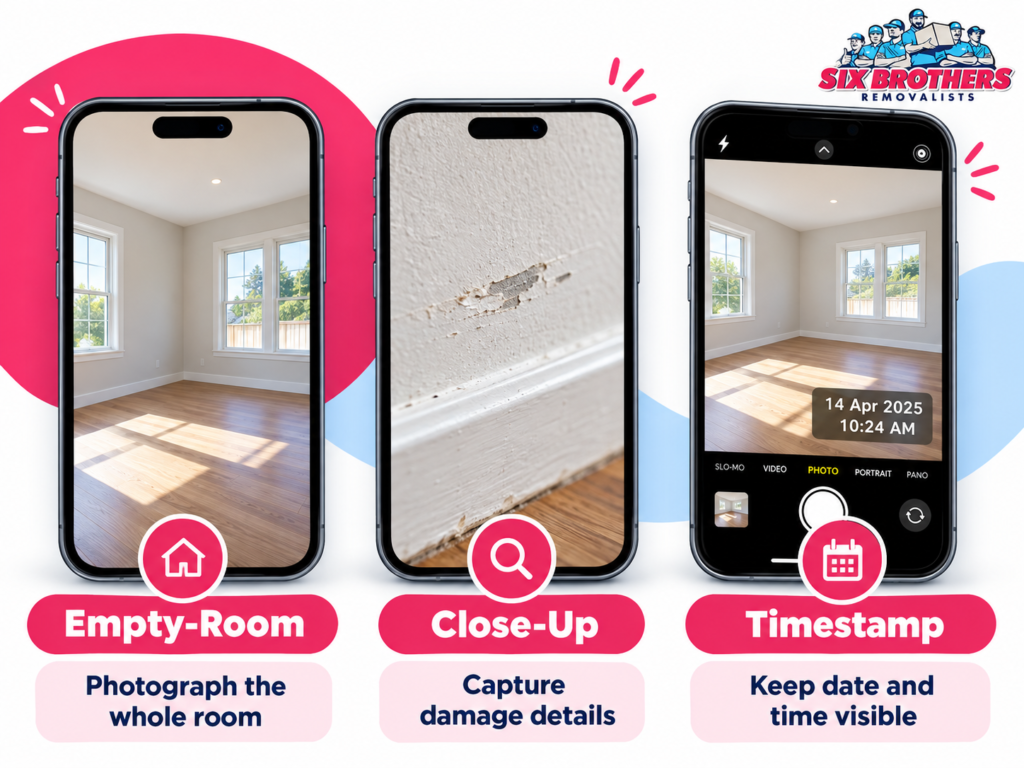
Photograph every room
Take wide photographs from each doorway and close-ups of vulnerable corners. Capture floor edges, tiles, window frames and cupboard interiors. Use consistent filenames with the room and date. Back up the album somewhere accessible after moving day.
Note any pre-existing damage
Describe the exact location, size and appearance of each mark. For example, record a 6 cm scratch beside the hall doorway. Include a ruler or coin for scale when useful. Separate old property damage from new marks caused during delivery.
Report major issues
Send written notice with clear photographs and the address. Tell the agent, landlord or conveyancer about relevant property concerns. Notify your removalist promptly about possible moving damage. Keep emails, timestamps and a record of who received the report.
Cleaning, Mould and Pest Checks Before Unpacking
Inspect difficult corners while the rooms are empty. A clean-looking floor does not guarantee a healthy cupboard.
Check for Mould and Damp Odours
Open wardrobes and inspect window edges, ceiling corners and skirting boards. Watch for musty smells, dark patches, peeling paint or damp carpet. Photograph suspected mould before wiping anything. Renters should report it promptly because its cause affects repair responsibilities.
Look for Pest Activity
Look inside pantry corners, under sinks and around outdoor doors. Check for droppings, chewed packaging and insect trails. Record activity and avoid mixing contaminated surfaces with unpacked food. Ask for suitable treatment before using affected storage.
Inspect Hidden Cleaning Areas
Check rangehood filters, shower screens, toilet bases and the tops of cupboards. Look behind the laundry taps and inside appliance recesses. Wipe food-contact surfaces before unpacking plates and utensils. Keep children clear of cleaning chemicals.
Identify Leftover Rubbish
Count leftover cartons, paint tins, broken furniture and garden waste. Photograph the location before moving or disposing of any disputed items. Ask your agent or seller representative about ownership and removal. Handle sharp or unknown waste with care.
Room-by-Room Structural & Cosmetic Inspection
Walk each room in the same order so nothing slips through the cracks. Start near the doorway, then work clockwise.
Walls, Ceilings & Floors
Check for cracks, water stains, loose tiles and damaged floorboards. Look along skirting boards where furniture may conceal marks later. Photograph uneven flooring or sagging ceilings. Avoid any space showing serious structural warning signs.
Doors & Windows
Open and shut each door and window without forcing the frame. Test latches, keys, flyscreens and window stops. Report broken glass, loose handles and windows that cannot secure properly. Confirm bedroom exits remain easy to use.
Power Points & Switches
Use a basic working lamp to check accessible outlets where safe. Avoid outlets with heat, buzzing, burning smells or visible damage. Record loose plates and failed switches. Leave electrical repairs to a licensed electrician.
Built-in Wardrobes
Open drawers and sliding doors, then inspect hinges and tracks. Look for mould behind shelving and damaged runners. Measure hanging space before installing organisers. Keep screws and sharp debris away from pets.
Living and Bedrooms
Photograph floors before beds and lounges cover large sections. Check fan controls, curtains and reachable heating outlets. Find suitable furniture positions without blocking windows or escape paths. Mark each room for its cartons.
Kitchen & Appliances
Test the kitchen before stacking plates and filling every cupboard. Better safe than sorry when water meets cabinetry.
Taps & Sinks
Run hot and cold taps, then inspect visible pipes for drips. Watch whether water drains normally without pooling. Look under the sink for swelling, mould or fresh stains. Stop testing and report a substantial leak.
Cooktop & Oven
Check that the supplied oven and cooktop work as expected. Follow appliance instructions and avoid unfamiliar gas controls. Photograph broken knobs, cracked surfaces or missing racks. Record whether appliances were included in your agreement.
Dishwasher
Check hoses, seals, racks and the drainage area before using the dishwasher. If safe, run a short cycle and watch for leaks. Leave clearance for its door and nearby drawers. Contact the agent or appliance specialist about faults.
Cabinetry
Open every door and drawer, including the awkward corner cupboard. Look for soft shelving, damaged hinges and pest droppings. Clean the interiors before loading food or crockery. Photograph damage while the surfaces remain visible.
Bathrooms & Laundry
Water issues can hide behind spotless tiles. A few checks now may prevent a soaked moving carton.
Toilets
Flush each toilet and check that the cistern refills normally. Inspect the pan base for leaks or movement. Look for a working lock and suitable ventilation. Report blocked toilets or active leaks promptly.
Showers & Baths
Run showers briefly and check water temperature after it stabilises. Watch drainage, screen seals and tap fittings. Look for leaks outside the shower recess. Avoid using visibly damaged screens until assessed.
Grouting & Silicone Sealant
Check cracked grout and missing silicone around baths, basins and showers. Photograph gaps where water can enter walls. Do not cover damage with new sealant before documenting it. Ask the responsible party to arrange repairs.
Exhaust Fans
Switch on fans and check that they operate without harsh noises. Look for heavy dust, moisture and blocked vents. A bathroom needs usable ventilation to manage damp air. Record faulty controls or persistent condensation.
Laundry & Garage
Find washing machine taps, drainage outlets and power points. Inspect the floor near hot-water equipment and any garage storage. Measure where appliances will stand before delivery. Keep access to valves and switchboards open.
Hot Water, Climate Control and Internet Performance
Test comfort and connectivity before moving day ends. No one wants a cold shower after carrying boxes.
Test the Hot Water System
Run a hot tap and allow the system time to respond. Record a complete lack of hot water or unusual noises. Find the system label without opening sealed covers. In NSW rentals, essential hot-water failures may qualify as urgent repairs.
Check Heating and Air Conditioning
Try each supplied heating or cooling unit using its normal controls. Check remote batteries, airflow and visible filters. Record leaks, warning lights or unusual smells. Avoid running damaged equipment until it is checked.
Test Internet Connectivity
Confirm activation with your internet provider before judging speed. Connect a device beside the router and check basic browsing. Try another room to spot Wi-Fi dead zones. If the service is absent, contact the provider before blaming the nbn box.
Check Indoor Mobile Reception
Make a call from bedrooms, the garage and your main living area. Test messages and mobile data indoors. Note weak spots before deciding where to work remotely. Keep a backup way to contact help during moving day.
Exterior, Garage & Access
Check outdoor access before the removalists arrive. Sydney’s narrow streets can turn a short carry into a long one.
Check all locks and keys
Test front, rear and side-door keys, window locks and garage access. Count all supplied keys, fobs and remotes. Record anything missing and secure external doors. Ask the agent or seller about replacement arrangements.
Inspect outdoor areas
Walk paths, steps, balconies and garden edges for loose surfaces. Check for exposed nails, branches and slippery moss. Mark trip hazards before the crew starts unloading. Keep pets away from open gates.
Test exterior lighting
Test front-door, driveway and pathway lights before nightfall. Photograph failed fittings and damaged covers. Check visibility between the truck and entrance. Temporary lighting should never create a trailing-cable hazard.
Garage Door
Open and close the garage using the normal control. Watch for jerking movement or a door that fails to latch. Never stand under a faulty moving door. Report any issue before planning truck-side loading.
Gates & Fencing
Check gate widths, latches, fence gaps and access paths. Make sure a trolley can clear tight corners. Keep side gates secured when children or pets are inside. Photograph a broken latch before moving day.
Gutters & Downpipes
Look for loose downpipes, obvious blockages and water stains nearby. Observe drainage from a safe position during rain. Avoid climbing onto roofs or ladders for inspections. Refer suspected defects to the responsible owner or agent.
Removalist Access Check
Measure the driveway, gate and tightest doorway before the truck arrives. Note stairs, low branches, steep ramps and long carries. Parramatta streets and Inner West terraces need different unloading plans. Tell the removalist about parking restrictions and any booked loading area.
Furniture Fit and Room Preparation Before Unloading
Measure first, then direct furniture into its final rooms. This avoids a game of musical chairs with heavy wardrobes.
Measure Large Furniture Clearances
Measure sofa width, bedhead height, stair turns and door openings. Compare those sizes with the furniture, including handles and legs. Tell your crew about items needing safe disassembly. Never force a large piece through a narrow frame.
Check Fridge and Washing Machine Spaces
Measure appliance recess width, depth, height and opening clearance. Allow ventilation gaps required by the manufacturer. Locate water connections, drains and safe power access. Keep fridge and washing machine paths clear.
Plan Furniture Placement
Put a simple room plan on each door for the crew. Mark bed positions, heavy shelves and work desks. Keep hallways, exits and switchboards open. For large loads, the whole-house move checklist can help assign cartons by room.
Protect Floors and Internal Corners
Cover vulnerable timber floors and doorway edges using suitable protectors. Remove loose rugs before trolley traffic starts. Ask how the crew will protect corners and lift heavy pieces. Keep photographs of the original surfaces before unloading.
Child and Pet Safety Before Unpacking
Set one safe area aside before the first heavy item moves. Little feet and wagging tails do not mix with trolleys.
Set Up a Safe Room
Choose a ventilated room away from entrances and unloading paths. Add water, snacks, favourite toys and basic supplies. Check window locks and any reachable hazards. Tell every helper which room must stay closed.
Keep Children Clear of Unloading
Keep children with a trusted adult away from stairs and truck ramps. Use one designated route for movers. Avoid leaving packing knives or tools within reach. Explain when children can safely enter other rooms.
Secure Pets During Furniture Delivery
Use a secure room, suitable carrier or trusted minder during delivery. Place food, water and bedding inside. Check gates before opening the front door. Update your pet’s contact details after moving.
Check Blind Cords and Loose Hazards
Look for hanging blind cords, exposed nails and loose furniture brackets. Move cords out of children’s reach and arrange compliant safety devices. Secure tall furniture against tipping when appropriate. Do not leave tools scattered after assembly.
Check Belongings Before Removalists Leave
Check the delivery while the crew is still there. A quick final count helps avoid chasing missing cartons later.

Match Delivered Items to Your Inventory
Match the delivery against your room-by-room inventory and labelled cartons. Tick large items first, including beds, tables and appliances. Then review numbered boxes room by room. Photograph the completed list for your records.
Inspect Furniture for Transit Damage
Check table edges, chair legs, glass panels and sofa fabric before signing completion. Photograph anything newly chipped, dented or torn. Our furniture removalists Sydney service can help plan careful handling before a move. If something looks wrong, tell the crew leader promptly.
Check for Missing Cartons
Compare box numbers against your inventory rather than guessing by stack size. Look in the garage, spare room and inside wardrobes. Ask the crew to check the truck before departing. Record missing carton numbers in writing.
Identify New Move-Day Damage
Compare empty-room photographs with the property after delivery. Check door jambs, stair corners and floor edges. Separate possible transit damage from pre-existing property defects. Keep images and notes without making assumptions about who caused them.
Confirm Delivery Completion with the Crew
Walk through the property with the crew leader and list unresolved issues. Read any completion form before signing. Ask how to report an issue discovered after unpacking. Keep invoices, inventory records and written replies together.
Want help planning furniture delivery? Ask Six Brothers for a free, itemised moving quote. Call 1300 764 372.
Sydney Council Bins and Moving Waste Disposal
Sort packing waste before it takes over the garage. Council rules differ across Sydney, so check your address.
Locate Bin Storage Areas
Find the wheelie bins and approved storage area before unpacking. Check where bins may stand on collection night. Keep shared access paths clear in strata properties. Do not block neighbouring driveways with flattened cartons.
Confirm Council Collection Days
Look up your council collection calendar using your exact address. Note which week accepts recycling and garden waste. Rules can differ between nearby streets and councils. Put a reminder in your phone before the first collection.
Plan Moving Carton Disposal
Flatten clean cardboard and follow local recycling rules. Save strong boxes for reuse or offer them to someone moving. If you need packing supplies, compare house moving packs before moving day. Avoid leaving loose plastic wrap outside in windy weather.
Check Bulky Waste Collection Rules
Check council booking requirements and accepted materials before placing items outside. Mattresses, whitegoods and timber may have different rules. Never assume a kerbside pile will be collected automatically. Arrange legal disposal for hazardous or excluded items.
Why Sydney Moves Need Their Own Special Checklist ?
Sydney homes bring their own moving challenges, from narrow terrace entries to busy apartment loading docks. A North Shore driveway may suit a truck that cannot enter an Inner West lane. Parramatta units may require lift bookings and strata approval. West Sydney family houses often hide extra garage and garden loads.
Choose house removalists who ask about access, lifting and item sizes before quoting. Check an itemised quote, the crew size and any parking or stair charges. Cheap removalists may suit smaller loads, but a low headline price tells only part of the story. The right removalist should explain what is included and what needs planning.
For a local, interstate or larger move, plan unloading around the property rather than the postcode alone. Ask about furniture removalist equipment, piano removalists for specialist items and realistic truck access. Some moves need interstate removalists or interstate furniture removalists. International removalists may also coordinate separate customs and delivery stages. Your move-in inspection still protects the home at the delivery end.
Searches for “removalists near me” or “removalist near me” help you build a shortlist. Check each company’s access plan before booking. Office removalists need separate workplace inventories during mixed relocations. Your removalist furniture list should flag oversized items and protective materials. Advice from removalists Melbourne or removalists Brisbane cannot replace Sydney-specific access checks.
Compare removalist companies carefully, not just removalist truck hire prices. Six Brothers Removalists offers Sydney moving and packing services with quote options. You can ask about an inventory, clear access details and protecting your new rooms. Do the hard thinking before the truck arrives.
Need a Pre-Made Digital Template?
Make one shared document with columns for room, issue, photo, owner and status. Add a second tab for the delivery inventory and missing boxes. Keep it simple enough to use while standing in an empty hallway.
Ready for your Sydney move? Request a free quote from Six Brothers on 1300 764 372. Share your postcode, property access, furniture list and preferred date. A clear brief helps your quote reflect the real job.
Frequently Asked Questions
How to Prepare for Removalists?
Clear entrances, measure large furniture and label rooms. Reserve approved loading space where required. Keep valuables, medicine and essentials with you.
Are Removalists Liable for Damage?
Australian Consumer Law requires services to be provided with due care and skill. Remedies depend on the facts and contract. Photograph damage, notify the company promptly and keep supporting records.
What should I check before moving into a new Sydney house?
Start with locks, smoke alarms, water, electricity and property photographs. Then inspect damp, fixtures and appliance spaces. Finish with access and the delivery inventory.
How long do NSW renters have to return their entry condition report?
Seven days from moving in. Record faults and return one completed copy to the landlord or agent. Keep a dated copy for yourself.
What should I do if furniture arrives damaged?
Photograph damage before moving the item again. Note it on the delivery record and contact the removalist promptly. Keep the quote, invoice and photos.
Should I inspect the home before furniture arrives?
Yes, wherever access allows. Photograph empty rooms and check hazards before boxes conceal floors and walls. This helps distinguish older defects from new damage.
Who should I tell about mould or a water leak?
Renters should notify the agent or landlord promptly, especially for urgent faults. Buyers should contact the appropriate tradesperson and their conveyancer about handover concerns.
Can I put moving boxes on the kerb in Sydney?
Not automatically. Check your council rules and collection calendar for your address. Flatten clean cardboard and book bulky collection where required.