

Table of Contents
House removalists and apartment movers need different training because the work environment changes the risk. Freestanding homes reward volume control, yard movement, and smart truck placement. Apartments demand lift timing, building protection, and tight-route discipline.
The property is the playbook, and the crew needs to know it. A strong mover can still lose time in the wrong environment. Would you use the same plan for a driveway and a loading dock?

The Operational Split: Houses vs. Apartments
Horses for courses describes the split between house and apartment moving work. Houses usually offer more loading freedom, but bigger volumes and longer property routes. Apartments usually add shared spaces, building rules, and vertical travel.
A crew trained for one setting can work in the other. The difference is how quickly they recognise the hidden constraints. That recognition protects time, property, and the quote.
Primary Logistics
Primary logistics change with the property, so know the lay of the land. House crews plan driveways, garages, side gates, yards, and room-to-truck flow. Apartment crews plan lifts, corridors, loading docks, access cards, and booking windows.
The route often matters more than the postcode. Searches for removalists Sydney can hide very different jobs. A Parramatta house and Sydney CBD apartment need different crew habits.
Spatial Traps
Spatial traps are different, and the devil is in the detail. Houses can hide stairs, narrow side passages, garden steps, sheds, and long carries. Apartments can hide sharp turns, fire doors, lift corners, and narrow service corridors.
Crews should measure the route through the whole property. Our guide to narrow side access moving costs Sydney shows why repeated handling adds time. One tight corner can affect every large item.
Legal & Regulatory
Legal and building controls differ, so better safe than sorry. House moves mainly need safe work practices, parking awareness, and lawful access. Apartment moves can also involve strata rules and managed common property.
NSW strata by-laws vary between schemes. They can affect parking, shared facilities, and common-property behaviour. Apartment crews should confirm the building rules before removal day.
House Removalists: Training for Volume and Open Space
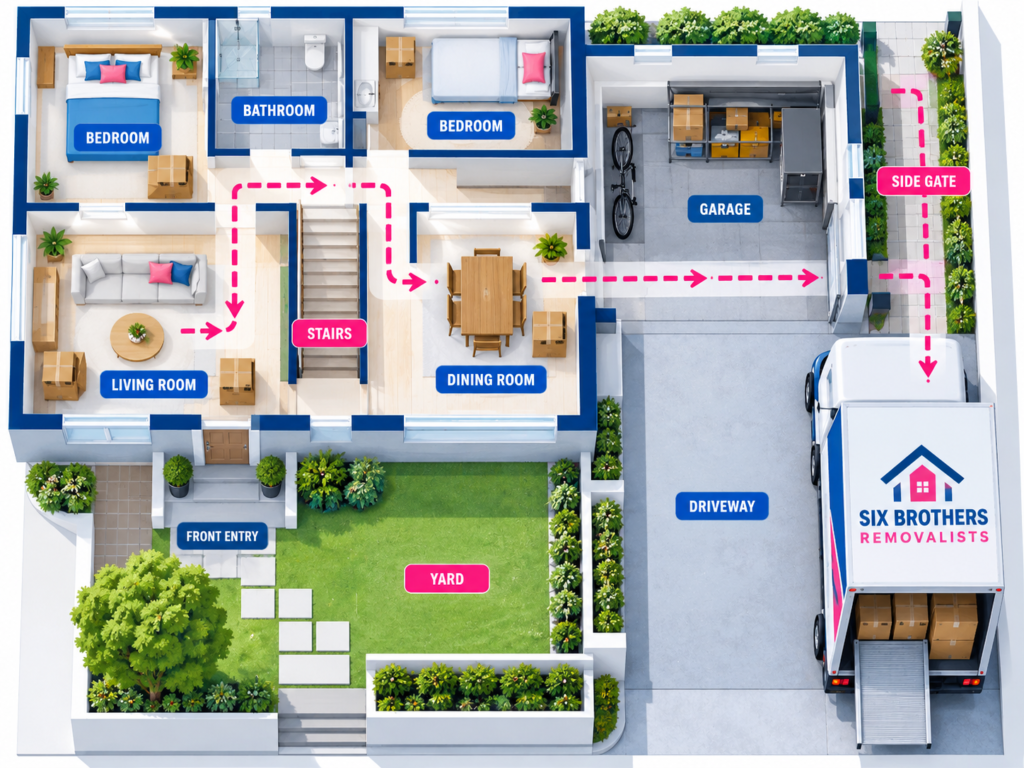
House removalists need training for volume, distance, and changing outdoor access. Many hands make light work, but only when roles stay organised. Larger homes can spread furniture across bedrooms, garages, sheds, and yards.
House removalists Sydney should recognise how volume changes the whole workflow. Furniture, cartons, appliances, and outdoor items need one loading sequence. The goal is fewer wasted walks and fewer unnecessary touches.
Weight and Yard Navigation
House crews need weight awareness across yards, steps, and uneven ground. Slow and steady wins the race when surfaces change underfoot. Dollies can help on firm paths, but grass and gravel may change the plan.
Heavy items need controlled routes before anyone lifts. Piano removalists and furniture removalists face the same basic question. Can the item travel safely from room to truck?
Truck Parking Strategy
Truck parking strategy matters because every extra metre repeats across the move. A stitch in time saves nine when parking is checked early. The closest legal spot may still require stairs, gates, or a long footpath carry.
Removalist truck hire is only one part of transport planning. A bigger truck can lose value when it cannot approach the property. Crews should match vehicle size with legal and practical access.
Bulk Stacking
House crews need bulk-stacking skills because the truck becomes a moving puzzle. Measure twice, stack once is the useful rule. Sofas, mattresses, cartons, appliances, and fragile pieces must share limited floor space.
Good stacking keeps heavy items stable and fragile items protected. Removalist furniture should never become a loose wall inside the truck. The crew also needs a sensible unload order.
Apartment Movers: Training for Tight Spaces and Rules
Apartment movers need tighter route control and stronger rule awareness. Keep your eye on the ball because one missed booking window can slow everything. Lifts, foyers, loading docks, and shared corridors create extra dependencies.
Apartment removalists Sydney should train for controlled movement through common areas. The job may look smaller than a house move. The access can still make it more demanding.
Elevator and Hallway Navigation
Apartment crews need lift and hallway discipline, because every turn can become a bottleneck. No worries only works when the route has been checked first. Long furniture may need upright turns or careful rotation.
Crews should confirm lift dimensions, door widths, and the usable hallway path. A lift trip also adds repeated waiting. That changes pace, task order, and crew handoffs.
Building Protection
Building protection matters because apartment moves touch shared surfaces all day. Look before you leap around lift doors, corners, glass, and finished walls. Protective covers and controlled carrying reduce avoidable contact.
The same care applies inside the apartment. Furniture removalists Sydney should protect both the item and its route. A clean move leaves common areas in good nick.
Time and Loading Dock Rules
Apartment crews need time-window discipline because building access may be booked. Time waits for no one during a managed loading slot. Late arrival can compress the move or create conflicts with other building users.
Searches like removalists Sydney CBD often involve this kind of planning. Crews should know the dock location before arrival. They should also confirm access cards, lift bookings, and contact details.
Spatial Navigation & Maneuvering
Spatial navigation training teaches crews to move items without turning every corner into guesswork. Practice makes perfect, especially with bulky pieces. Houses and apartments both have tight points, but the patterns differ.
The route is the track the whole move runs on. One blocked point can slow everything behind it. Training should focus on planning before force.
House Crews
House crews need to read driveways, porches, internal stairs, side gates, and yards. Forewarned is forearmed when outdoor access changes suddenly. Wet grass, slopes, loose gravel, and garden edges can affect footing.
Three-storey homes add repeated vertical carrying. Our guide to three-storey house moving costs in Sydney explains that extra handling. The crew should plan rest points and item order.
Apartment Crews
Apartment crews need tight-space turning skills through doors, lifts, and shared corridors. There is more than one way to skin a cat, but safety comes first. A sofa may need a different angle than a tall cabinet.
Removalists north Sydney and removalists northern beaches can face older apartment layouts. Removalists eastern suburbs Sydney can face narrow entries and limited street access. Training should adapt to the actual building.
Specialized Equipment Mastery
Specialised equipment training helps crews choose tools for the route, not habit. Use the right tool for the job. Trolleys, dollies, moving blankets, corner guards, and straps solve different problems.
Removalist lifting straps can help with certain controlled carries. They do not replace route assessment or team communication. Equipment only works when the crew understands its limits.
House Crews
House crews often need equipment for volume, outdoor distance, and heavy furniture. Don’t put the cart before the horse. Choose the route first, then choose the trolley, dolly, straps, or protective gear.
Home removalists Sydney may also move items from garages, sheds, and upper floors. House movers Sydney need equipment choices that match those surfaces. One trolley setup will not suit every path.
Apartment Crews
Apartment crews need compact equipment that works in lifts and corridors. Less is more when space is tight. Oversized gear can become another obstacle in a small loading area.
Movers and packers Sydney should protect lift floors and shared finishes. Furniture removalists in Sydney face the same shared-space limits. Compact dollies and covers can support that work. Building rules may limit where equipment can sit.
Pre-Move Site Assessment and Crew Briefing
Pre-move assessment gives the crew a shared plan before the first box moves. Two heads are better than one when access is complex. Photos, measurements, inventory details, and parking notes can expose hidden work.
A useful briefing should cover the route, equipment, item risks, and customer priorities. Why pay for delays that a proper site check could prevent? Clear information lets the crew start with fewer surprises.
House Access Assessment
House access assessment should trace the full route from rooms to the truck. Measure twice, move once suits this job perfectly. Check stairs, gates, driveway slope, side access, garages, and backyard items.
Cheap removalists Sydney may advertise a low rate, but access still drives labour. Affordable removalists Sydney should still ask detailed questions. Price matters, yet scope matters first.
Apartment Access Assessment
Apartment access assessment should confirm every shared-space dependency before booking. The early bird catches the worm with lift bookings and dock access. Ask about loading times, lift size, keys, cards, parking, and protection rules.
Removalist inner west Sydney jobs can include older walk-up buildings. Removalists Sydney inner west can face similar stair access. Removalist north Sydney jobs can involve managed high-rises. Removalists Sydney north shore can face both patterns.
Item and Load Assessment
Item assessment turns a room list into a realistic handling plan. Count your chickens before they hatch by listing bulky items early. Sofas, fridges, wardrobes, pianos, stone tables, and gym equipment deserve separate attention.
A furniture removalist Sydney search often starts with one difficult item. Full service removalists Sydney must still assess the whole load. The largest pieces often decide equipment and route choices.
Pre-Job Hazard Briefing
A pre-job hazard briefing aligns the crew before lifting begins. Start as you mean to go on. The leader should flag stairs, blind corners, heavy items, fragile zones, pets, and vehicle risks.
Good removalist services Sydney include clear role assignment before difficult carries. New risks should be added during the job. The briefing is a living plan, not paperwork theatre.
Manual Handling and Injury-Prevention Training
Manual handling training should focus on risk control, equipment, and safe systems. Prevention is better than cure. SafeWork NSW treats lifting, carrying, pushing, pulling, and awkward posture as manual-task risks.
Its guidance on hazardous manual tasks also stresses risk factors and control measures. Training should cover mechanical aids and safe procedures. Generic lifting slogans are not enough.
Did you know?
SafeWork NSW treats lifting, lowering, carrying, pushing, pulling, awkward posture, and repeated force as manual-task risks. Training should cover risks, controls, safe procedures, mechanical aids, and reporting.
Team Lifting Techniques
Team lifting training should teach shared timing, clear commands, and balanced grip. Many hands make light work when everyone moves together. One person should call the lift, turn, pause, and set-down points.
Removalist crews should rehearse heavy carries before entering tight routes. This matters for house removalist Sydney jobs and apartment moves. The strongest worker should not become the whole safety plan.
Awkward Load Handling
Awkward loads need planning because shape can matter as much as weight. Square pegs do not fit round holes. Long sofas, glass tables, wardrobes, and gym equipment create different balance problems.
Piano removalists Sydney may use specialist methods for weight and shape. Furniture removalist work can involve similar route challenges. The crew should decide when extra people or equipment are needed.
Stair Carry Techniques
Stair carry training should cover position, communication, balance, and planned stopping points. One step at a time is the safest mindset. The lower mover and upper mover face different loads and visibility.
Stairs also change fatigue across repeated trips. Sydney home removalists should rotate tasks where practical. Apartment walk-ups need the same care, even with smaller inventories.
Repetitive Handling Risks
Repetitive handling can build risk even when each item feels light. Little strokes fell great oaks over a long day. Cartons, small furniture, and lift trips can repeat the same movement hundreds of times.
Crews should vary tasks and use aids where useful. Good removalists Sydney should not treat fatigue as a badge. A tired crew can lose precision before strength.
Mechanical Aid Decisions
Mechanical aid training teaches when equipment reduces risk and when it creates new problems. Horses for courses applies again here. A dolly helps on smooth floors but may not suit stairs or loose ground.
Removalist lifting straps, trolleys, and dollies need route-specific judgment. Best Sydney removalists should explain equipment choices clearly. The goal is control, not gadget collecting.
Crew Roles, Spotting and Team Coordination
Crew coordination training turns individual movers into one working system. All hands on deck still needs a captain. Clear roles reduce crossed paths, repeated lifting, and mixed instructions.
This matters for removalist companies of every size. A small crew can work smoothly with defined roles. A larger crew can waste time without them.
Crew Leader Responsibilities
The crew leader sets priorities, assigns roles, and keeps the route under control. The buck stops here when plans change. They should confirm customer instructions, parking, access, item risks, and job sequence.
A removalist should also know when the original plan no longer fits. Leaders need permission to pause and reset. That protects the crew and the customer.
Spotter Responsibilities
The spotter protects blind sides, corners, walls, and nearby people during difficult moves. An extra pair of eyes can save the day. Spotters should speak clearly and avoid competing instructions.
This role matters with stairs, reverse vehicle movement, and large furniture. It also helps apartment crews near lift doors. The spotter watches what carriers cannot see.
Two-Person Carry Roles
Two-person carry training should define who leads direction and who controls the rear. Too many cooks spoil the broth when both people call different moves. One clear voice keeps turns and set-downs predictable.
The crew should agree on grip, route, and pause signals before lifting. Two-person work suits many items. Some items need more people or mechanical support.
Carry-to-Truck Handoffs
Carry-to-truck handoffs should reduce double handling and blocked loading zones. Keep the ball rolling without rushing. One mover can stage items while another protects the truck-loading sequence.
This matters on large house moves with high volume. It also helps apartment jobs with lift cycles. The handoff point should stay clear and stable.
Stop and Reset Signals
Stop signals must be simple enough for every crew member to use immediately. When in doubt, stop and sort it out. A pause should never be treated as failure.
Crews need clear words for stop, lower, reverse, and reset. Noise and distance can hide casual speech. Short agreed signals improve coordination.
Regulatory Compliance & Strata Bylaws
Compliance training should separate general safety duties from building-specific access rules. Read the fine print before removal day. House moves and apartment moves share safety duties, but strata adds another layer.
NSW Government guidance explains that strata by-laws differ between schemes. Residents must follow their scheme rules. Apartment crews should get the relevant moving instructions from the customer or building manager.
House Crews
House crews usually face fewer shared-building rules, but they still need safe systems. Better safe than sorry applies to every driveway and staircase. Parking signs, public paths, neighbours, and property hazards still matter.
Removalists western Sydney and removalists Parramatta may face busy streets or long driveways. Removalist western Sydney jobs can also involve detached homes with side access. Local layout matters more than a broad suburb label.
Apartment Crews
Apartment crews need building-rule awareness alongside normal removal skills. Rules are rules, even when the clock is ticking. Confirm lift bookings, loading areas, access cards, parking, and protection expectations.
Removalists in Sydney often work across very different strata schemes. Recommended removalists Sydney should ask for building instructions early. That reduces avoidable conflict on the day.
Contingency and Incident Response Training
Contingency training prepares crews for problems without turning one issue into five. Keep calm and carry on only after the risk is controlled. Good crews know when to pause, re-plan, and document.
House and apartment moves fail in different ways. Lift outages, blocked parking, rain, access changes, or damaged property can all disrupt flow. Training should make the next step obvious.
Lift Failure Procedures
Lift failure procedures should stop crews from improvising unsafe alternatives. Don’t jump from the frying pan into the fire. Confirm whether stairs are suitable before changing the route.
The customer or building manager may need to reschedule access. The crew should protect staged items while waiting. Apartment removalists Sydney need this scenario in their briefing habits.
Unexpected Access Changes
Unexpected access changes need a fast reassessment before work continues. When it rains, it pours on poorly scoped moves. A closed driveway or blocked dock can change carrying distance and equipment needs.
Cheap removalist Sydney searches should not distract from this risk. Budget removalists Sydney still need a safe alternative route. The quote may also need a clear scope discussion.
Injury and Near-Miss Response
Injury and near-miss training should prioritise safety, reporting, and immediate risk control. Better to be safe than sorry. Crews should know who stops work and who contacts the right person.
A near miss can reveal a bad route or poor equipment choice. The team should not simply restart. The cause needs attention before the next carry.
Property Damage Response
Property damage response should be calm, factual, and prompt. Honesty is the best policy when something goes wrong. Secure the area, record what happened, and explain the next process.
This matters for homes and shared apartment spaces. Customers should not chase the crew for basic information. Clear communication protects trust even during a difficult moment.
Escalation and Documentation
Escalation training should tell crews what must be documented and who must decide. If it is worth doing, it is worth doing properly. Photos, time notes, customer comments, and changed access details can matter later.
The crew leader should know when to contact the office. Complex changes should not rely on memory. A short record can prevent a longer dispute.
Client Communication & Customer Service
Client communication training should explain the move in plain language before problems appear. Put your cards on the table from the start. Customers mainly want clear timing, scope, access needs, and cost expectations.
Six Brothers Removalists can use property details to match planning with the job. The customer should know what information the crew needs. That makes the quote and removal day easier to understand.
House Crews
House crews should ask about rooms, garages, sheds, yards, stairs, and parking. Ask the right question and you get the right answer. Hidden outdoor items can change volume and carry distance.
A customer comparing home removalists Sydney or house removalists Sydney should share the full property. The same applies to cheap removalists and premium services. Missing scope can hurt any quote.
Apartment Crews
Apartment crews should ask about building contacts, lifts, docks, parking, and access windows. Get your ducks in a row before the booking date. The customer may need to arrange those permissions directly.
Moving company Sydney searches can lead to many service styles. Best removalists Sydney should still ask building-specific questions. Good removalists Sydney make those questions easy to understand.
Matching Crew Skills to the Property
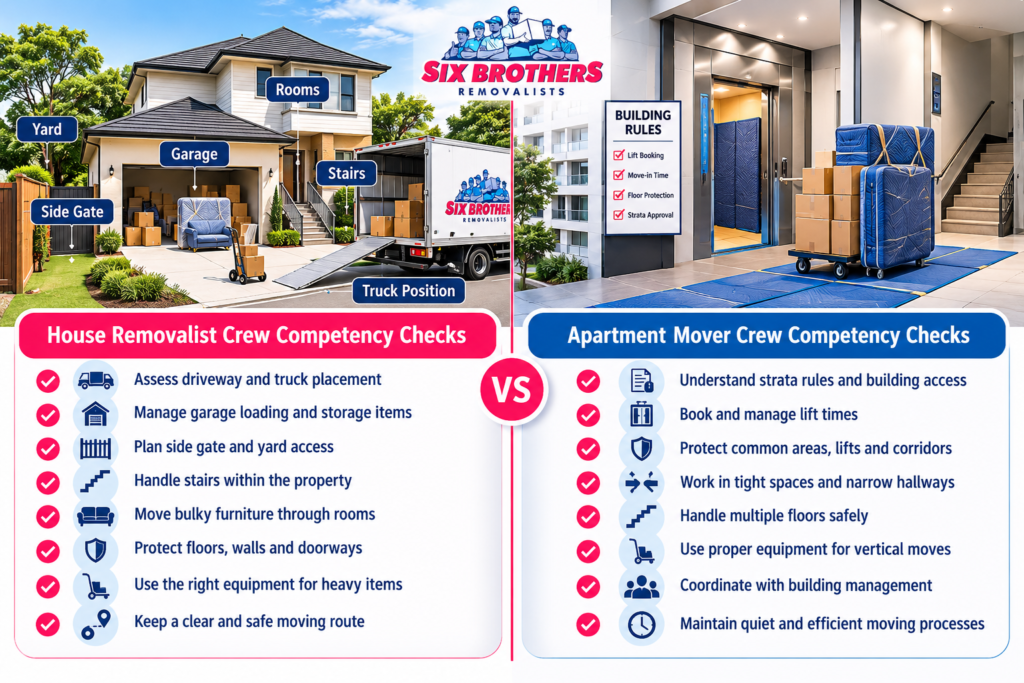
Matching crew skills to the property reduces avoidable delays and handling risk. The right person for the right job makes all the difference. Crew size alone does not guarantee the right capability.
A strong booking process should look at access and inventory together. House, apartment, office, interstate, and specialist moves have different handling patterns. Training should reflect those patterns.
House Crew Competency Checks
House crew checks should test volume handling, stairs, outdoor routes, and loading sequence. The proof is in the pudding. Supervisors should observe real decisions, not only classroom answers.
Sydney removalists should be able to plan large homes without losing control of the route. Furniture removalists also need item-specific judgment. Competency means applying knowledge under pressure.
Apartment Crew Competency Checks
Apartment crew checks should test lift planning, corridor movement, building protection, and timing discipline. Practice what you preach during supervised jobs. A worker should show control before leading difficult apartment moves.
Removalist in Sydney and removalists in Sydney searches cover both houses and units. The crew allocation should reflect the property. A generic label does not prove apartment competence.
New Worker Supervision
New workers need close supervision until they can read routes and risks independently. Learn the ropes before taking the lead. A skilled partner can explain why the crew changes grip, order, or equipment.
This applies to office removalists, house removalists, and furniture removalists. Office removalists Sydney may face lifts, docks, and business access rules. Commercial removalists Sydney need similar building-specific planning. Supervision should match the hardest task workers face.
Refresher Training
Refresher training keeps safe habits current when equipment, rules, or work patterns change. Use it or lose it applies to moving skills. Teams should revisit incidents, near misses, and recurring access problems.
Full service removalists Sydney may handle many property types in one week. Refresher training helps crews switch without carrying the wrong assumptions. It also supports consistent customer communication.
Cross-Training Crews
Cross-training helps crews move between houses, apartments, offices, and long-distance work. Variety is the spice of life, but competence still needs structure. Workers should build capability in stages, with supervision and feedback.
The principle also applies beyond Sydney. Removalists Melbourne, removalists Brisbane, and interstate removalists face property-specific access. Interstate furniture removalists and international removalists also need route and handling discipline.
An interstate removalist may move the same furniture through very different buildings. Office removalists add business access and downtime concerns. Removalist near me and removalists near me searches never show those details.
Removalist companies should match training to the actual job, not the search label. That includes removalist Sydney, Sydney removalists, and moving service enquiries. The safer question is simple: what does this property demand?
FAQs
How to Choose a Removalist in Sydney?
Choose a crew that asks about property type, access, inventory, parking, and special items. Compare written scope, not only the hourly rate.
What to Ask a Removalist Before Hiring?
Ask who will move you, what access details they need, and which equipment they expect. Also ask how changed access affects the plan.
Do House Removalists Need Different Training From Apartment Movers?
Yes, because the work patterns differ. House crews manage volume and outdoor access. Apartment crews manage lifts, common areas, and building rules.
What Training Matters Most for Apartment Removalists?
Route planning, lift use, building protection, manual handling, and timing discipline matter most. Clear communication with building contacts also helps.
What Training Matters Most for House Removalists?
Volume control, truck loading, stairs, yard navigation, bulky items, and access planning are central. House crews also need strong role coordination.
Can the Same Crew Handle Houses and Apartments?
Yes, when the crew is cross-trained and competent in both environments. The booking team should still match experience to the property.
Why Do Apartment Moves Sometimes Take Longer Than Expected?
Lift cycles, long corridors, loading docks, parking, and booking windows can add repeated delays. A smaller inventory does not guarantee a shorter move.
Do Removalist Lifting Straps Replace Extra Crew Members?
No. Straps can support certain carries. They do not replace enough people, route planning, or mechanical aids.
If your move involves tight access or a large household, share those details early. Six Brothers Removalists can review the property type and plan the crew around it. Call 1300 764 372 or request a free quote online.