

Table of Contents

A Sydney mover’s plain-talk guide to picking the right unit, size, and price
Moving interstate is a lot. Now add storage on top. Your settlement slips. Your new place isn’t ready. And your whole life sits in boxes. Where does it all go? That gap between homes is where storage saves you.
Here’s the truth most removalists won’t tell you. Pick the wrong unit and you’ll bleed cash. Or worse, find mould on your couch. We’re Six Brothers Removalists. We move Sydney families across the country every week. We’ve seen what good storage does and what bad storage costs.
There’s an old saying. Measure twice, cut once. Storage works the same way. Plan it right and your gear stays safe. Rush it and you pay for years. This guide walks you through every choice. Storage type, timeline, size, cost, security, and the Sydney quirks most people forget.
We’ll keep it plain and useful. No jargon, no fluff, just what actually helps your move. By the end, you’ll know exactly what to ask, what to skip, and what to book first. Ready to skip the rookie mistakes? Let’s go.
QUICK TAKE
Match your storage type to how you move, lock in a unit early, measure your real volume before booking, and compare the full cost, not just the weekly rate. Nail those four and the rest falls into place.
Match the Storage Type to Your Move Style
Not all storage works the same. Your move style decides the winner.
Do you need to grab a box next week? Or lock it all away for three months? Pick the type that fits your real life. Here are your three main options.
Removalist-Managed Storage
This is the hands-off choice. Your mover packs, stores, and delivers it all. Many interstate movers hold your goods in a secure warehouse. No truck reloading. No double handling. It often cuts extra transport fees too. Your stuff travels once and waits safely.
The trade-off? You can’t pop in for a forgotten item. Access is limited during the move. It’s great for long gaps and stress-free moves. Just pack your essentials box first.
Mobile & Portable Storage
Love control? This one’s for you. A container lands at your old home. You load it at your own pace. Then it’s trucked interstate and stored at a depot. No unloading and reloading a truck twice. That saves your back and your wallet.
Got a busy work week? Load the container across a few evenings. No single mad rush.
Self-Storage Facilities
Need to visit your stuff often? Traditional self-storage wins here. You rent a unit and hold the key. Drop off or grab items whenever you want.
Local units give flexible access during the move. Handy if your plans shift. The catch is the legwork. You load, drive, and unload it all yourself. Fine for small loads. Rough for a full house.
WHICH ONE WINS?
For most interstate moves, removalist-managed storage is the simplest. Your gear stays with one crew from pickup to final delivery, so nothing gets lost in a handover.
When Do I Need Secure Storage?
Sometimes a move runs smooth. Old home empties, new home fills, same day. Lucky you. But interstate moves rarely line up that neat. Gaps happen. That’s when storage steps in.
You likely need secure storage when:
• Your settlement date and move-out date don’t match.
• Your new place isn’t ready yet.
• You’re staying in temporary accommodation between homes.
• You’re downsizing and sorting what to keep.
• You’re moving for a new job before housing is sorted.
See yourself in any of those? Then storage isn’t a luxury. It’s the bridge between two homes.
What Is Secure Storage?
Secure storage means more than a locked shed. It’s space built to protect your goods. Think of it like a safe-deposit box for your furniture. Watched, guarded, and climate-aware.
Real secure storage usually includes:
• 24/7 CCTV across the whole site.
• Individual PIN-code or key access so only you get in.
• Strong locks and secure entry points at every door.
• Climate control for wood, electronics, and art.
• Clean, dry, pest-checked space to stop mould and damage.
Why does this matter? Because cheap storage skips these. A leaky shed in summer cooks electronics and warps timber. Damp corners breed mould.
DID YOU KNOW?
Transit cover can often be extended to protect your goods through the storage period for a separate premium. Don’t assume your home or car policy covers stored items, ask before you book.
Set Your Storage Timeline Before Booking
Storage isn’t just about space. It’s about time too.Map your dates before you book. A clear timeline saves you fees and headaches.
Move-Out Date
When do you have to be out? This is your hard deadline. Your goods must leave by this date. Storage needs to be ready before then.
Settlement Gap
Selling and buying rarely close on the same day. That gap is the danger zone. Count the days between settlements. That’s your minimum storage window.
Always pad your estimate. It’s cheaper to book one extra week than to scramble at the last minute.
Temporary Accommodation Period
Staying with family or in a rental for a bit? Your gear can’t come with you. A spare room won’t hold a four-bedroom home. Add that whole stretch to your storage plan. Don’t guess it short.
Flexible Delivery Window
Can your mover deliver on a range of dates? Flexibility cuts stress and cost. Ask about a delivery window, not a single locked day. Life shifts. Your plan should too.
Storage Extension Terms
What if your move runs late? It happens more than you’d think. Check how easy it is to extend. And what each extra week really costs.
TIMELINE CHECKLIST
Confirm your move-out date in writing, count the gap between sale and purchase settlement, add any temporary accommodation time on top, and ask for a flexible delivery window with clear extension terms.
Calculate Your True Volume First
Here’s where most people slip. They guess their space. Then they pay for the mistake. Too small and your goods won’t fit. Too big and you waste money every week. So nail your volume before you quote. Always.
Audit Before Quoting
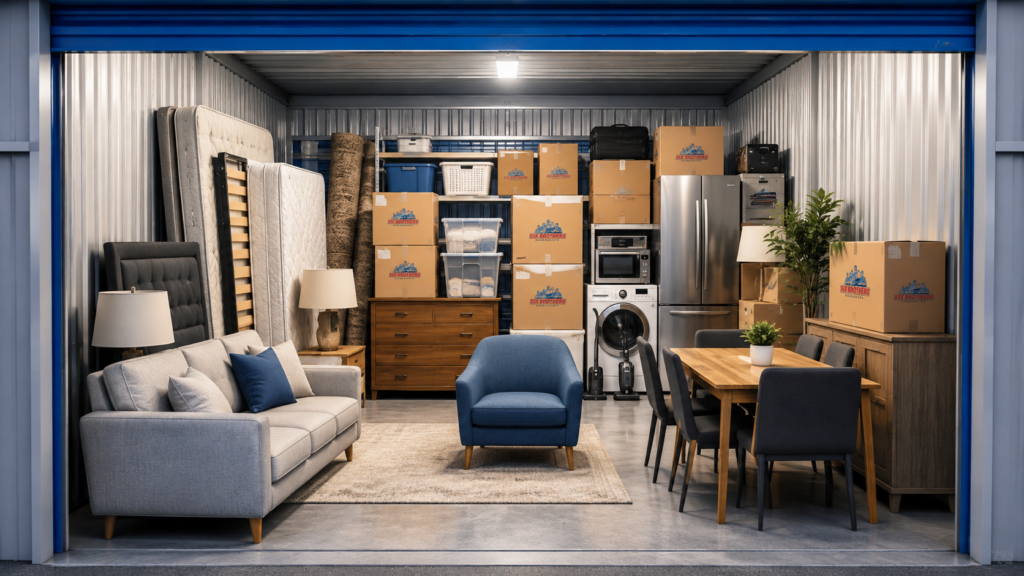
Walk every room first. Note the big stuff and the box count. Snap a quick photo of each room as you go. It jogs your memory and helps the mover quote you right.
Create a Strict Inventory
Write down what you’re actually keeping. Not what you wish you’d keep. Flag large or fragile items. A piano, artwork, antiques, or a big flat-screen TV. These shape your unit size, access level, and security needs. Don’t leave them off.
Size Benchmarks
Need a rough guide? Storage size tracks the number of rooms and furniture. Here’s the quick math.
• Studio or 1-bedroom: medium unit, like a walk-in wardrobe or small bedroom.
• 2-bedroom home: around a 3×3 or 3×4 metre space.
• 3 to 4-bedroom home: large unit, like a single or double garage, often near 3×6 metres.
Use these as a starting point. Wondering how much storage space you need for a 3-bedroom house? A standard container or large unit usually does the trick.
VOLUME RULE
Audit every room before you ask for a quote, list only what you truly plan to keep, mark fragile and oversized items separately, and pick your size from real volume, never a rough guess.
Compare the Full Storage Cost
A cheap weekly rate can hide a fat final bill. The sticker price isn’t the full story. Smart movers compare the whole cost. Not just one shiny number.
Weekly Storage Rate
This is the headline figure. What you pay per week to hold the space. Compare a few options first. Furniture storage cost shifts a lot by size and suburb.
Handling Fees
Some places charge to move goods in and out. That’s a handling fee. Ask if it’s included or extra. On a full house, handling can rival a week of rent.
Redelivery Charges
Getting your stuff back can cost more than you think. Redelivery is its own line item. Ask how it’s priced. By the hour, by distance, or a flat fee? The answer shapes your budget.
Minimum Storage Period
Many units lock you into a minimum term. Even if you only need a week. Some places bill in whole months. A nine-day stay can cost you a full month’s rent. Read the terms.
After-Hours Fees
Need access at night or on a weekend? That might cost extra. Ask about after-hours fees if your schedule is tight. Surprises hurt.
Want a fuller picture of what the whole move costs? Our breakdown of interstate moving prices across Australia puts storage in context with the rest of your budget.
BUDGET CHECK
A few days of storage-in-transit often costs less than a full month at a self-storage facility. Match the option to your actual timing and you won’t pay for space you barely use.
Verify Security and Environmental Features
Your goods sit there for weeks. Maybe months. So safety isn’t optional. Don’t just trust the brochure. Verify the real protection on offer.
Climate Control
Storing wooden furniture, electronics, artwork, or delicate things? Climate control matters. It helps stop warping, cracking, moisture damage, and mould. A hot tin shed does none of that.
Physical Security
Look for 24/7 CCTV and individual PIN-code access. Then check the locks. Strong locking systems and secure entry points keep strangers out. That’s the whole point.
Stand-Alone Insurance
Here’s a trap. Don’t assume your home or car insurance covers stored goods.
Ask your removalist or storage provider about transit and storage protection. The NSW Government notes that transit cover can be extended to protect your goods during the storage period for a separate premium.
Your rights matter here too. Under the consumer guarantees that apply to removalist services, the work must be done with due care and skill. That covers your goods in storage as well as in transit.
WHY IT MATTERS
Insurance is the part people skip and later regret. Read the limits, the excess, and what counts as damage. A clear policy buys real peace of mind for the whole journey.
Check Packing and Handling Standards
Good storage starts with good packing. Sloppy wrapping ruins furniture before it even arrives. Ask how your mover handles the details. The little things protect the big things.
Furniture Wrapping
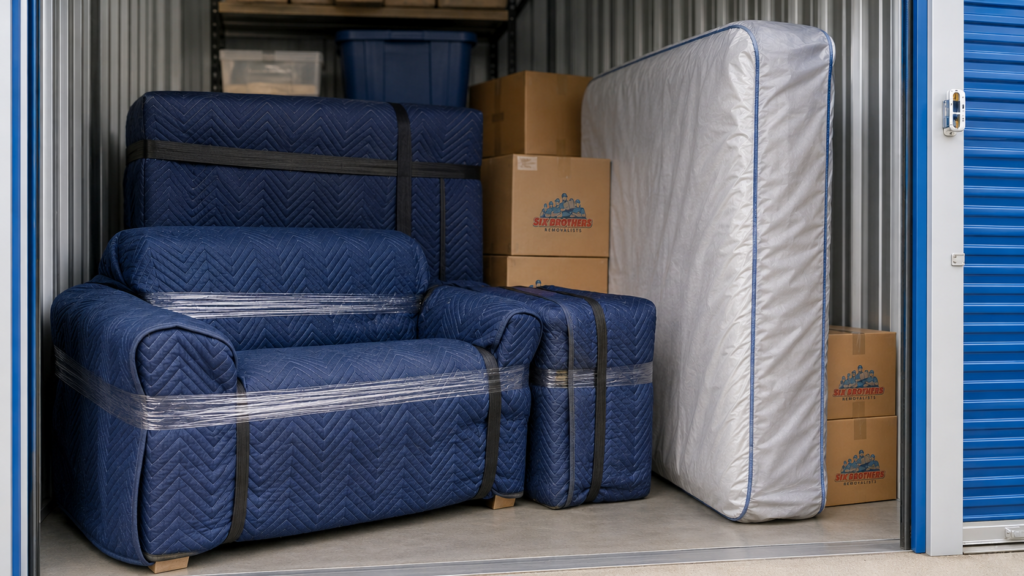
Every piece should be wrapped before it’s stored. Wrapping shields against dust and scratches. Blankets and protective covers do the heavy lifting. Bare timber against bare timber is a recipe for marks.
Fragile Item Packing
Glass, mirrors, and dishes need real care. Not a quick toss in a box. Wrap each piece on its own. Fill the gaps so nothing shifts. A rattling box is a broken box waiting to happen.
Bulky Item Handling
Big, heavy gear needs a plan. Think wardrobes, fridges, and lounges. Movers assemble and disassemble large pieces too. Flat-packing a wardrobe saves space and stops it twisting in storage.
Mattress and Sofa Protection
Soft goods soak up damp and dust fast. So they need a barrier. Stand mattresses upright in covers. Wrap sofas fully. These simple steps save you a smelly surprise later.
Box Labelling System
A clear label system is a quiet hero. It tells you what’s where without opening a thing. Label by room and contents. Keep mid-move boxes at the front so you can reach them fast.
PACKING PRO TIP
Take a photo of each open box before you seal it. A quick phone snap beats a written list when you’re hunting for one specific item weeks later.
Strategise Location and Access
Where your goods sit changes everything. Cost, convenience, and access all hinge on it. Think it through before you commit. A smart location choice saves real money.
Origin vs. Destination Storage
Should you store near your old home or your new one? Each has a payoff. Origin storage is handy if your move-out is rushed. Destination storage lets your goods wait close to the finish line.
Try to lock down a facility at your destination before moving day. Less travel on redelivery often means a smaller final bill.
Access Limitations
Some warehouse storage limits access during the move. You can’t just drop in. Know the rules before you book. If you need mid-move items, plan around the limits and keep those boxes near the front.
The only interstate furniture removalists you need….Read more
Sydney Factors That Affect Storage Choice
Moving in Sydney has its own rulebook. The city throws curveballs other places don’t. Miss these and your move-out day stalls. Plan for them and it flows.
Strata Move Rules
Living in an apartment or unit? Your strata likely has move rules. Some need bookings, bond, or set move times. Break them and you can cop a fine or lose your slot. Check with the building before the truck rolls up.
Loading Bay Bookings
Many Sydney buildings share one loading bay. And it books out. Reserve your slot early. A missed booking can mean carrying gear an extra hundred metres, which lifts your hourly cost.
Clearway Restrictions
Clearways ban stopping on key roads at peak times. Park there and you risk a tow.
These are strict no-parking zones for every vehicle, even residents with permits. Check the signs and timing on your street. The NSW Government rules on restricted parking spell out exactly when you can’t stop.
Narrow Street Access
Plenty of Sydney streets are tight. A big truck may not squeeze in. Tell your mover about narrow access early. They may bring a smaller shuttle truck. A photo of your street helps the crew plan.
High-Rise Delivery Limits
High-rise moves face lift bookings and floor limits. Time slots run tight. Confirm lift access and building hours upfront. A locked lift can blow your whole schedule.
LOCAL TIP
Sydney’s eastern suburbs and inner-city apartments often have the tightest move-out windows. Book your removalist and any storage early, especially over summer when everyone moves at once.
Common Storage Mistakes to Avoid
We’ve watched these slip-ups cost good people real money. Here’s how to dodge them.
Booking Too Late
Short-term and interim storage fills up fast in peak season. Wait too long and you’re stuck. Book early. Summer and end-of-month windows are the busiest. Lock in weeks out, not days out.
Guessing Your Volume
Eyeballing your space rarely works. You end up too cramped or paying for air. Underguess and you scramble for a second unit. Overguess and you pay weekly for empty space. Do a proper audit.
Ignoring Redelivery Costs
A low weekly rate feels like a win. Until the redelivery bill lands. Ask about redelivery before you sign. It’s part of the true cost.
Storing Restricted Items
Some things just can’t go in storage. Fuel, gas, food, and chemicals are common no-gos. Food draws pests. Gas bottles are a fire risk. Empty the mower and the BBQ before they go in.
Choosing Price Alone
The cheapest unit can be the costliest choice. Skimp on security and you risk it all. A damaged lounge or a stolen TV wipes out any saving. Knowing your rights helps too. The NSW consumer protection regulator sets out what fair and skilled service should look like.
AVOID THESE TRAPS
Don’t book at the last minute, don’t guess your storage volume, don’t ignore handling and redelivery costs, and never choose on price alone. Those four traps catch most movers.
Short-Term vs Long-Term Storage
How long you store changes the maths. Short holds are cheap and simple. Long ones need more thought.
Storage for a Few Days
A few days of storage bridges a small settlement gap. It’s the most common need for interstate movers. Costs stay low. Your goods stay packed and ready. Then they roll out to your new home within the week.
Storage for Several Weeks
Renovations or rental gaps can stretch storage to a few weeks. That’s still manageable with the right plan. Label everything clearly so nothing gets lost in the shuffle. A few weeks is long enough to forget what’s in which box.
Long-Term Storage Risks
Store for months and small risks creep in. Damp, dust, and forgotten items top the list. Climate control matters for long holds. Timber furniture and electronics hate humidity. Pay a little more to protect the gear you care about.
RULE OF THUMB
Match the storage length to the gap, not the other way around. A few buffer days at a depot beats locking into a monthly unit you’ll forget you’re paying for.
How Storage-in-Transit Works
Storage-in-transit is the unsung hero of interstate moves. It’s storage built right into the journey.
Here’s the flow. Your removalist packs and loads in Sydney. The goods travel toward your new state. If your home isn’t ready, they hold everything at a secure depot. You don’t lift a finger between pickup and delivery. When you say go, they deliver. One company, one chain of custody, one invoice.
Picture the alternative. Booking a separate unit means renting a truck, loading it, driving to the depot, unloading, then doing it all again. Storage-in-transit erases that whole circus. For an interstate move, that’s huge. The last thing you want after a long haul is to wrangle a hire truck in a city you barely know.
There’s a hidden bonus too. When one crew handles everything, accountability is clear. If something goes wrong, you have one number to call, not a finger-pointing match between a storage firm and a removalist.
WHY IT WORKS
With storage-in-transit, your belongings are handled once and stored under one roof. Fewer touches means fewer dings, scratches, and lost boxes on a long interstate haul.
What Items Should Go Into Storage?
Not everything needs storing. Be smart about what goes in and what travels with you.
Good for storage:
• Bulky furniture you won’t need straight away.
• Seasonal gear like winter doonas or camping kit.
• Spare appliances and second-hand pieces.
• Books, decor, and anything non-urgent.
Keep with you:
• Important documents and valuables.
• Daily essentials and a week of clothes.
• Medications and chargers.
Think of storage like a pause button for the stuff you can live without for a while. The day-to-day things ride with you.
One warning. Passports, jewellery, and the kids’ favourite toys travel with you. Storage is for the bulky and the boring, not the precious.
Your Quick Storage Decision Checklist
Still not sure? Run through these questions. They’ll point you the right way in two minutes.
• Do your move-out and move-in dates match? If yes, you likely skip storage. If no, you likely need it.
• Is the new place move-in ready? A reno or a clean-up first means storage buys you time.
• How tight is the access at both ends? Lift bookings and parking limits can force a storage buffer.
• Are you downsizing? If you’re not ready to part with everything, storage holds the overflow.
• Could a delay leave you stranded? Even a small risk makes a few buffer days worth it.
Mostly yes answers? Book storage and bundle it with your move. Mostly no? Go direct and save the cash. It’s that simple once you lay it out.
Ready to Move Interstate Without the Storage Stress?
Storage doesn’t have to be a guessing game. With the right plan, it slots into your move like it was always meant to be there.
At Six Brothers Removalists, we handle the move and the storage under one roof. Your goods stay with one crew from Parramatta to wherever you’re headed. No middlemen, no lost boxes, no stress.
Whether you need a few days of storage-in-transit or a flexible long-term hold, we’ll size it right and price it fair. We’ve moved Sydney families to every corner of the country. Melbourne, Brisbane, Adelaide, Perth, and the small towns in between. Storage gaps, lift bookings, tight streets. We’ve seen it all and sorted it all.
Call us on 1300 764 372 or email info@sixbrothersremovalist.com.au for a free, no-pressure quote. Let’s get your interstate move sorted, storage and all. Tell us your dates and your home size. We’ll tell you straight whether you need storage or not. No upsell, no spin. Just an honest answer and a plan that fits your move.
Frequently Asked Questions
How much does furniture storage cost per month?
It depends on size, suburb, and features. A small unit costs far less than a large one. Climate control and prime location push the price up. Get a few quotes and compare the full cost, not just the weekly rate.
How much storage space do I need?
Match it to your home size. A studio fits a medium unit. A three to four-bedroom home needs a large one near 3×6 metres. Audit your rooms first. Real volume beats a rough guess every single time.
How do I keep furniture safe in storage?
Wrap everything, pick climate control, and lift items off the floor. Cover mattresses and sofas fully, pad fragile pieces, and label boxes so nothing gets crushed at the bottom.
How far ahead should I book storage?
As early as you can. Peak-season space fills fast and the best units go first. Once your move dates firm up, lock in storage straight away. Last-minute booking limits your choice and your price.
Can I access my items while they’re stored?
It depends on the type. Self-storage lets you visit often. Removalist warehouse storage usually limits access. If you need mid-move items, say so upfront and keep those boxes near the front of the unit.