

Table of Contents
Receipts look small, but they can carry a lot of weight during an interstate move. A missing invoice can delay a claim, refund, or budget check. Keep them organised early, and moving week feels far less chaotic.
This guide shows how to organise receipts before an interstate move in Australia. You will sort costs, approvals, insurance evidence, and urgent moving-day records. The goal is simple: find any proof within seconds, not hours.
Sydney moves can add strata fees, parking permits, tolls, storage, and access charges. Those costs arrive from different places and on different days. A clear receipt system keeps the whole move on the same page.

Sort Interstate Moving Receipts by Category First
Sort receipts by purpose before you sort them by date. Categories make each document easier to find later. As the saying goes, a place for everything saves a lot of hunting.
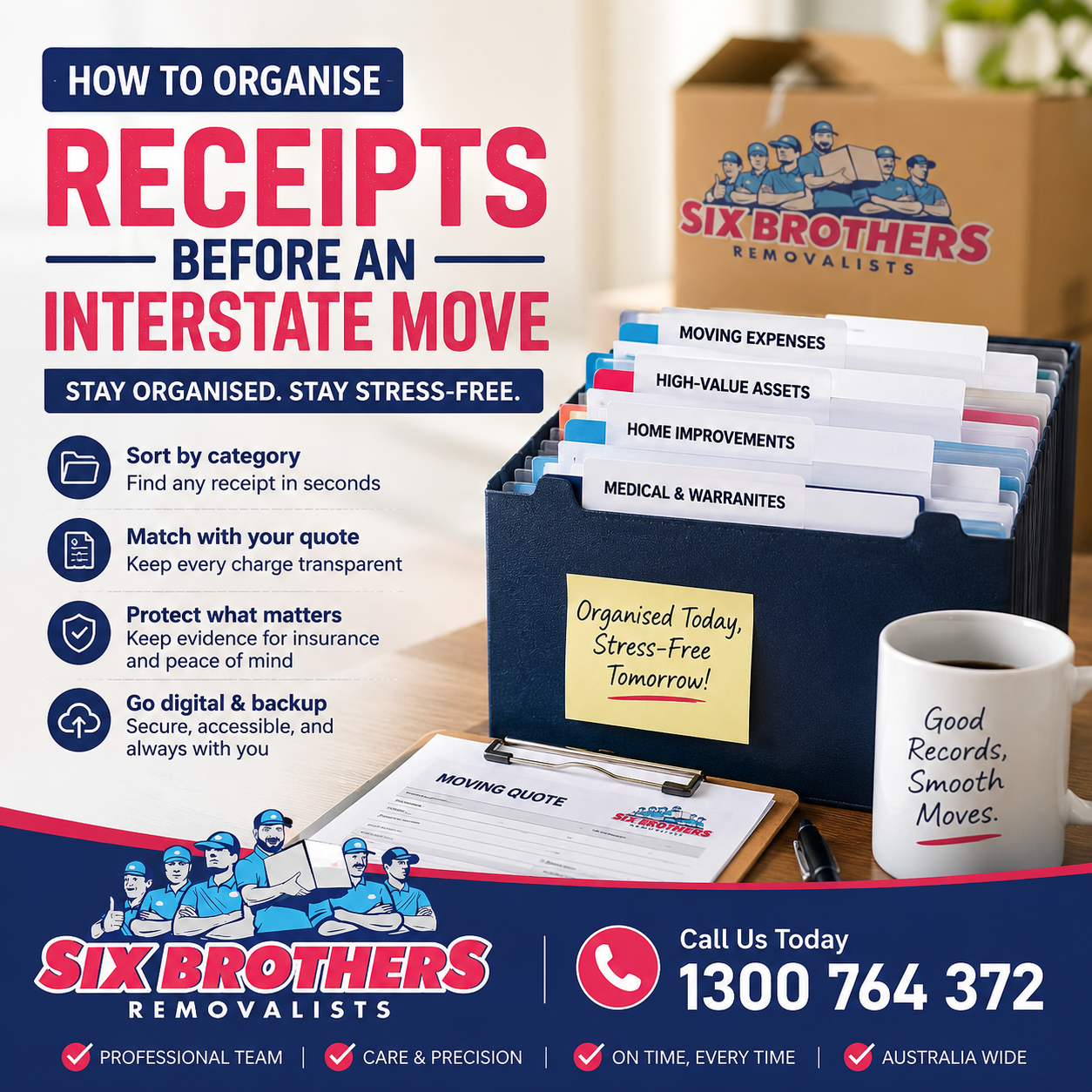
Start with four broad folders for costs, valuable items, property work, and personal records. Add smaller folders only when a category becomes crowded. Use this folder beside your moving interstate checklist Australia for one clear command centre.
Moving Expenses
Moving expenses should hold every direct cost connected with the relocation. Include removalist invoices, storage charges, fuel, tolls, cleaning, boxes, and temporary accommodation. Keeping your ducks in a row makes the final budget far easier to check.
Save the quote beside the matching receipt, not in another random folder. That pairing shows what you expected and what you actually paid. It also makes extra service charges stand out quickly.
High-Value Assets
High-value asset receipts help prove what expensive belongings cost before the move. Keep invoices for jewellery, artwork, electronics, musical instruments, antiques, and designer furniture. Better safe than sorry is the right rule here.
Add photos, serial numbers, valuations, and warranty documents beside each receipt. A digital folder can mirror your moving inventory list. That bundle becomes useful if an item is lost, damaged, or questioned.
Home Improvements
Home improvement receipts belong together when work happens before selling or after moving. Keep invoices for painting, repairs, flooring, electrical work, locksmiths, and cleaning. A stitch in time saves nine when property paperwork starts piling up.
Label each receipt with the property address and job type. Add before-and-after photos when the work changes the condition of the property. This record can also help with later property, warranty, or tax questions.
Medical & Warranties
Medical and warranty receipts need their own folder because they serve different deadlines. Include prescriptions, mobility equipment, appliance warranties, and recent service invoices. Keeping them close means you are not caught on the hop.
Do not pack urgent medical receipts deep inside the moving truck. Keep originals or clear copies in your personal folder. The same rule applies to warranties you may need immediately after arrival.
Match Removalist Receipts With Your Interstate Moving Quote
Your receipt system should mirror the quote from your interstate removalists. This makes every charge easier to reconcile after the job. When everything lines up, you can see the wood for the trees.
Create one folder for the chosen removalist and place every payment record inside it. Include the quote version you accepted and any written variations. That folder becomes your single source of truth if a charge looks unfamiliar.

Deposit payment proof
Deposit proof confirms you secured the booking and paid the agreed amount. Save the receipt, bank confirmation, booking email, and payment reference together. Do not leave it to chance when moving dates are tight.
Name the file with the payment date and removalist name. Add the move date if you have several bookings or properties. This makes the proof easy to show from your phone.
Final invoice records
The final invoice should show what the completed move actually cost. Save the invoice beside the original quote and deposit proof. That keeps the numbers apples with apples.
Check the business name, date, service details, GST treatment, and total paid. Keep any receipt showing the balance was settled. If something differs, add a note explaining why.
Extra service charges
Extra service charges can include stairs, storage, waiting time, tolls, or added packing. Keep each supporting record beside the final invoice. Forewarned is forearmed when you need to question a surprise charge.
Ask for written confirmation when the job changes during moving day. Photograph any site condition causing extra work, such as blocked access. That evidence gives the charge useful context later.
Packing material costs
Packing material costs can quietly grow across boxes, tape, wrap, covers, and cartons. Store packing material invoices with any packing and removals paperwork. Many hands make light work, but scattered receipts make heavy admin.
Record refundable box bonds separately from permanent purchases. Mark whether a charge should return after boxes are collected. That small note stops refundable money disappearing inside your total moving cost.
Keep Sydney Moving Access Receipts and Building Approvals Together
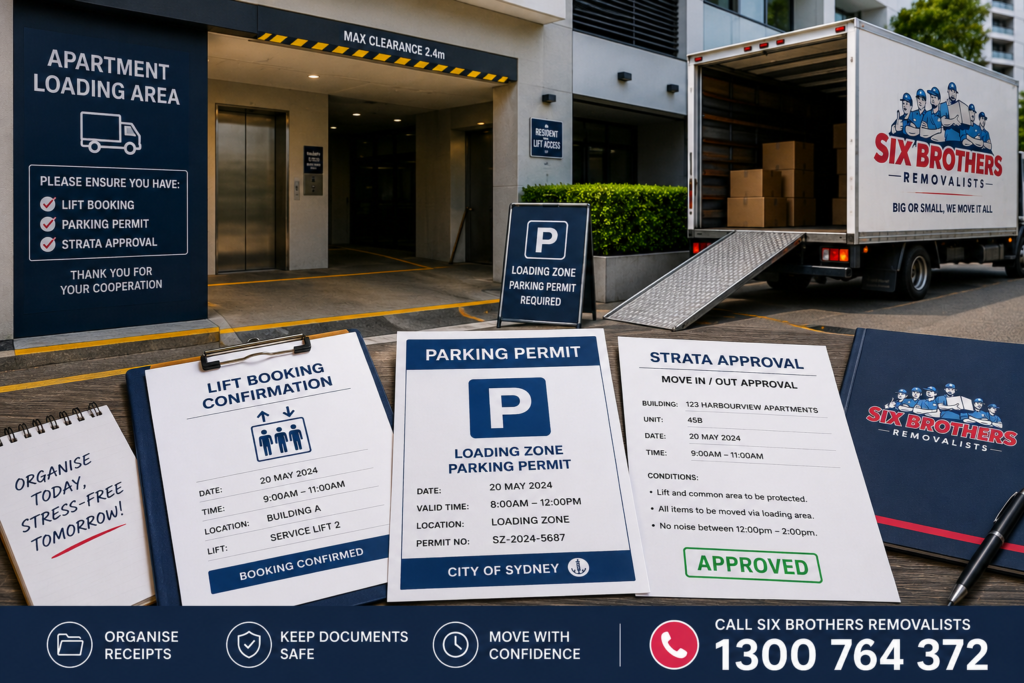
Sydney apartments often create access paperwork before the truck arrives. Keep strata, parking, lift, and loading approvals inside one access folder. In busy buildings, getting your ducks in a row really matters.
A receipt may prove payment while an approval proves permission. Keep both together when they relate to the same booking. That pairing can prevent disputes with building managers or parking officers.
Strata booking fees
Strata booking fees can cover move-in slots, supervision, protective padding, or refundable deposits. Save the invoice and the booking confirmation in the same place. Measure twice, move once works well with strata rules.
Add the building manager’s contact details and booked access window. Note whether any deposit should be refunded after inspection. Set a reminder to chase the refund after the move.
Parking permit proof
Parking permit proof should be available before the removalist truck reaches the street. Save the application, payment receipt, approval, and permit conditions together. The early bird catches the worm with scarce Sydney kerb space.
City of Sydney visitor parking permits can cover some removalist trucks under local rules. Other councils use different processes and restrictions. Check the correct council well before moving day.
Lift access charges
Lift access charges may appear as a fee, bond, or building service payment. Keep the receipt with the approved lift time and loading dock instructions. It pays to know the ropes before the first box arrives.
If the building requires lift padding, key collection, or security access, save that proof too. Photograph any access card or key receipt. Returnable access items should have a clear refund note.
Building move approvals
Building move approvals prove the move was booked under the property’s rules. Save emails, forms, certificates, and payment receipts in one folder. Better to be safe than sorry when managers change shifts.
Keep a screenshot on your phone for moving morning. Add the approval contact and emergency number beside it. That can save precious time if the loading dock is locked.
Organise Utility, Lease, and Storage Receipts Before Moving Interstate
Utility and property receipts often sit outside the main removalist bill. They still shape the true cost of moving interstate. Keep them under one roof so your budget does not miss hidden edges.
Create subfolders for your old property and new property. That avoids mixing refunds, connections, and final bills. A clean split keeps both sides of the move on track.
Bond payment records
Bond records should include lodgement proof, payment receipts, and refund communications. Keep condition reports and cleaning receipts nearby. Dotting the i’s and crossing the t’s supports a cleaner exit trail.
If you are renting again, separate the old bond from the new bond. Do not combine them under one generic label. Clear property addresses prevent expensive confusion later.
Cleaning service receipts
Cleaning receipts can support bond discussions and your moving expense tracker. Save the invoice, payment proof, service scope, and completion date. A clean sweep is more than an expression here.
Photograph the property after cleaning and before handing back keys. Keep those images beside the cleaner’s receipt. The combination shows both payment and visible completion.
Storage unit invoices
Storage invoices should show the unit, period, recurring rate, and extra fees. Save entry charges, insurance options, locks, and transport costs too. Keep tabs on recurring payments before they run away with your budget.
If storage bridges two states, label both locations clearly. Note the expected move-out date and cancellation notice period. Add reminders for refunds, deposits, or unused prepaid time.
Utility connection fees
Utility connection fees can include electricity, gas, internet, water, and technician visits. Keep final bills from the old address beside opening bills from the new address. Two sides of the same coin should still have separate folders.
Record account numbers and connection dates without storing sensitive passwords. Keep any disconnection confirmation and refund notice. This helps spot overlapping charges between properties.
Prepare Receipts for Interstate Move Insurance Claims
Insurance claims rely on evidence. Receipts can become the backbone of that evidence. Organise purchase proof before anything enters the truck. An ounce of prevention is worth a pound of cure here.
Build a claim-ready folder for valuable belongings before moving day. What good is proof if you cannot find it? Keep copies in cloud storage instead of relying on one device.
Proof of item value
Proof of value helps show what an item cost before damage. Keep purchase receipts, valuations, order confirmations, and warranty records. Put your best foot forward with the strongest evidence first.
Older items may not have a perfect paper receipt. Search email accounts, retailer portals, and bank records for supporting evidence. Save whatever clearly identifies the item and transaction.
Repair quote records
Repair quotes show whether damaged property can be fixed and the estimated cost. Keep each quote with photos and the original purchase evidence. Two heads are better than one when a second quote is sensible.
Do not throw away the damaged item before claim instructions permit it. Keep written communication from the insurer or removalist. Record dates for inspections, quotes, and responses.
Replacement cost evidence
Replacement cost evidence shows the current price of a comparable item. Save retailer screenshots, written quotes, or product pages with dates. Compare like with like, not chalk and cheese.
Match size, model, specifications, and quality as closely as possible. Avoid choosing a premium upgrade as the only comparison. Clear matching strengthens the logic behind your evidence.
Claim reference details
Claim reference details should sit at the top of every claim folder. Include the claim number, contact person, dates, and requested documents. Keep the ball rolling by tracking each response deadline.
Name files with the claim reference when several items are involved. Keep sent emails and uploaded documents in a subfolder. That creates an easy timeline if you need to revisit the claim.
Track Interstate Moving Expenses in One Place
Track every moving expense in one master sheet or app. A receipt folder proves the cost, while the tracker explains the full picture. Keep your finger on the pulse as costs change.
Use simple columns for date, category, supplier, amount, payment method, and receipt link. Add quoted amount and actual amount for removalist charges. That makes budget drift visible without complicated accounting software.
Keep a spreadsheet
A spreadsheet turns dozens of small receipts into one readable moving budget. Link each row to the matching scan or PDF. Seeing everything at a glance is worth its weight in gold.
Create separate totals for removalists, accommodation, storage, utilities, packing, access, and cleaning. Add a refundable column for bonds and deposits. Your final total should exclude money you expect back.
- Use one row for each receipt or invoice.
- Record the supplier exactly as shown on the document.
- Add a status such as paid, pending, disputed, or refundable.
- Link the digital receipt directly from the spreadsheet.
- Keep notes short and factual for easy review.
Work-related moves
Work-related moves need careful tax treatment because relocation costs are often private expenses. The Australian Taxation Office says employees generally cannot deduct relocation costs. When in doubt, go by the book and seek qualified tax advice.
Still keep receipts when an employer reimburses or reviews relocation expenses. Your workplace may need evidence even when the tax deduction is unavailable. Separate employer-paid, reimbursed, and personally paid costs in the tracker.
Use a receipt system that scales across mover types
The same system works across many removalist service types. House removalists and office removalists fit easily. Furniture removalists fit too. It also works for piano removalists, international removalists, and interstate furniture removalists. One size rarely fits all, but one filing logic can.
Create separate supplier folders when comparing removalist companies or cheap removalists. The same applies to removalist truck hire and specialist removalist furniture services. Keep each quote, variation, and invoice under the correct supplier name.
Route folders also help when comparing removalists Sydney, removalists Melbourne, and removalists Brisbane. Search terms like removalists near me or removalist near me can produce many suppliers. Do not let similarly named quotes end up in the same folder.
Digitise Receipts Before Your Interstate Move
Digitise important receipts before packing paperwork into boxes. Paper fades, tears, gets wet, and disappears at the worst moment. Do not put all your eggs in one basket.
A digital copy also makes claims and reimbursements easier to send. Why hunt through twenty folders when one system works? Save originals when they hold warranty or legal value.
Scan everything
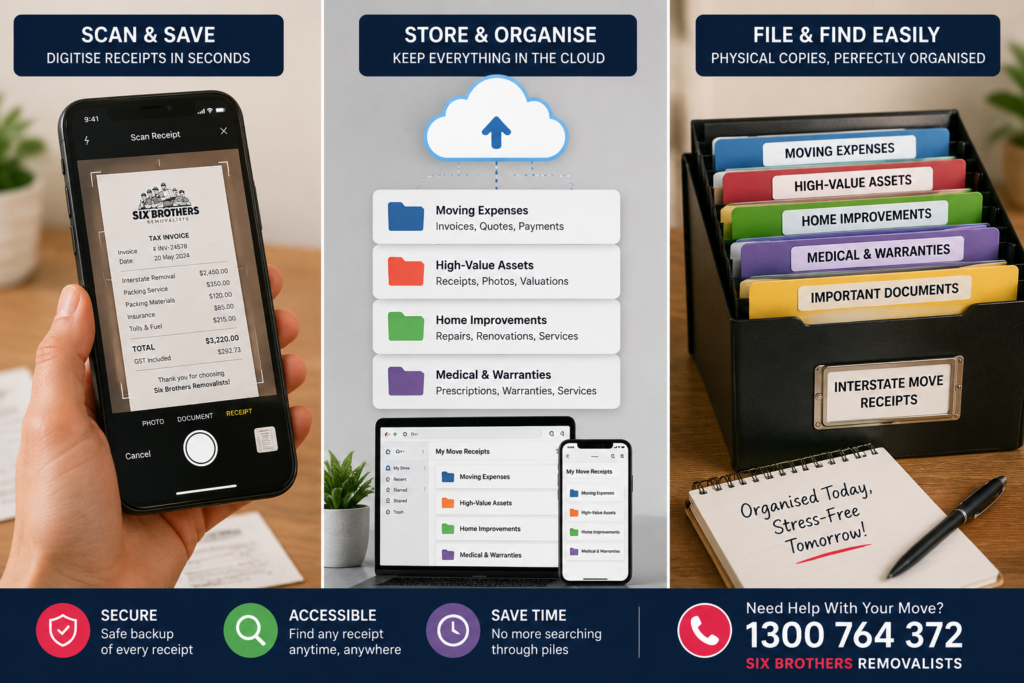
Scan receipts with a phone app or document scanner before moving week. Flatten curled paper and use good light. Clear as day beats a blurry mystery every time.
Capture the whole receipt, including edges and small print. Check the image before throwing anything into a storage box. Rescan immediately if a number or date looks soft.
Create a cloud folder
Cloud storage keeps receipt copies available while your computer sits inside the moving truck. Create one main moving folder and share it only with trusted people. Keep it under lock and key with strong account security.
Use folders for quotes, payments, property, insurance, utilities, and tax records. Add a read-only backup in another location when the documents matter greatly. Avoid public links for private invoices or personal details.
Use clear file names
Clear file names make digital receipts searchable without opening every document. Use date, supplier, purpose, and amount when useful. Call a spade a spade instead of naming files scan1 or photo7.
Examples include quote-removalist-sydney-to-melbourne, invoice-interstate-removalists-sydney-to-brisbane, and receipt-removalists-sydney-to-adelaide. Other useful names include removalist-from-sydney-deposit and interstate-removalist-sydney-final-invoice. Consistent names beat clever names.
You can also label folders for removalists parramatta, house removalists sydney, and office removalists sydney. Separate cheap removalists sydney comparisons from your chosen provider folder. That keeps research documents away from confirmed payment records.
Did you know?
The ATO accepts electronic records, including photos of receipts. For many tax records, the standard retention period is five years after lodging the relevant return.
Build a Physical Moving Binder for Essential Receipts
A physical binder gives offline access to critical receipts and approvals. Keep it small enough to travel with you, not inside the truck. Sometimes old school is the safest bet.
Use copies for most documents and protect important originals in sleeves. Divide the binder with tabs matching your digital folders. The same structure reduces mental load when moving day gets busy.
Buy a plastic accordion file or binder
Choose a sturdy binder or accordion file with a secure closure. Plastic protects better against rain, spills, and dusty loading areas. Cheap and cheerful works if the closure stays reliable.
Pick a bright colour or add a bold label. Do not use a plain box that looks like packing material. You want the folder visible whenever you leave the property.
File the essentials
File only documents you may need quickly during the move. Include payment proof, access approvals, accommodation bookings, insurance details, and urgent warranties. Less is more when speed matters.
Keep your documents needed when moving interstate beside urgent payment records. Keep your change of address checklist Australia beside the binder. Add your moving day essentials checklist to the front pocket.
Keep it with you
Keep the binder in your car, carry-on bag, or personal backpack. Never load it with general household boxes. Keep it close to your chest until the move is complete.
If another adult carries it, agree who owns that job before departure. Do not swap responsibility during a rushed stop. One clear owner reduces the chance of leaving it behind.
Separate Moving Day Receipts You May Need Quickly
Moving day creates fresh receipts while you are under the pump. Create a temporary ‘today’ pocket before the truck arrives. Strike while the iron is hot and file each receipt immediately.
Use a physical envelope and matching phone folder. Photograph paper receipts as soon as you receive them. Move them into permanent categories after you arrive and settle.
Removalist payment receipt
The removalist payment receipt proves the final payment and should stay immediately accessible. Save the digital copy before leaving the property. Do not count your chickens before the payment record arrives.
Compare the final amount with the quote and approved variations. Note the payment time and method. If the invoice arrives later, set a reminder to download it.
Fuel and toll receipts
Fuel and toll receipts matter when driving between states. They also help track total moving costs. Keep them together instead of mixing them with daily shopping. Every little bit adds up over a long route.
Electronic toll accounts may issue statements instead of individual paper receipts. Download the relevant period and mark moving-related trips. Keep private travel separate when accurate tracking matters.
Hotel booking proof
Hotel booking proof should include payment, address, dates, and cancellation terms. Keep it available if the drive spans more than one day. A roof over your head is worth planning before sunset.
Store parking charges and pet fees with the hotel invoice when they relate to the move. Photograph any paper receipt before checkout. Add the expense to your tracker that evening.
Emergency purchase receipts
Emergency purchases may include replacement chargers, tape, food containers, tools, or basic bedding. Keep the receipt even when the amount seems small. Look after the pennies and the pounds look after themselves.
Mark emergency costs separately from planned costs. This helps you understand which surprises increased the move budget. It also improves planning for any future relocation.
Review All Receipts Before Interstate Moving Day
Review the receipt system two or three days before departure. This catches missing records while suppliers and building managers are still reachable. A final once-over can save a world of pain.
Open every critical scan and test every important folder link. Confirm the binder matches the digital structure. Then share backup access with one trusted person if needed.
Check missing receipts
Check deposits, final invoices, access fees, storage, cleaning, utilities, and accommodation first. Missing proof is easier to replace before moving day. Do not shut the stable door after the horse has bolted.
Search email by supplier name and payment amount. Check bank transactions for forgotten purchases. Ask suppliers for replacement invoices when your records remain incomplete.
Confirm payment dates
Confirm payment dates against invoices and your bank account. A date mismatch can make future searching harder. Get your facts straight before the paperwork leaves your desk.
Record pending payments separately so they do not look settled. Note scheduled direct debits after the move. This is especially important for storage, utilities, and cleaning balances.
Label urgent records
Label urgent records so anyone can identify them immediately. Use tags such as moving day, refundable, claim, access, or action needed. Make a beeline for what matters when time gets tight.
Keep urgent documents near the front of the physical binder. Pin important digital files inside the cloud folder. Do not bury them inside general receipt archives.
Share copies safely
Share only the copies another person genuinely needs. Use secure cloud permissions instead of public links. Loose lips sink ships, and invoices can hold private information.
Remove access after the move when it is no longer needed. Avoid sending sensitive documents through large group chats. Keep account numbers and identity details protected.
Safely Purge Receipts You No Longer Need
Purging old receipts reduces clutter, but timing matters. Do not destroy records connected with active claims, warranties, refunds, taxes, or property matters. When in doubt, hold your horses and check first.
Create a review date instead of making rushed decisions during packing. Move uncertain documents into a temporary archive. Revisit them after the move when your head is clearer.
Shred old receipts
Shred paper receipts containing names, addresses, account fragments, or payment details. Do not place sensitive paperwork loose in recycling. Better safe than sorry applies to privacy too.
Use cross-cut shredding for higher-risk documents. If you use a secure destruction service, keep its receipt for business records. Only destroy originals after confirming a reliable digital copy exists.
Check tax guidelines
Check current tax rules before destroying receipts linked to deductions or business activity. The ATO commonly requires records for several years. Play it by the book instead of guessing retention periods.
Personal moving costs are not automatically tax deductible. Work circumstances, business use, reimbursements, and asset rules can differ. Ask a registered tax professional when your situation is complicated.
Avoid Common Receipt Organisation Mistakes Before Moving Interstate
Most receipt problems come from small habits during a busy move. Mixing categories, skipping tiny costs, and saving unreadable scans create avoidable gaps. Nip problems in the bud before packing accelerates.
Use one simple system and stick with it until the move finishes. Fancy apps do not help if nobody uses them consistently. A boring system that works beats a clever system that fails.
Mixing personal expenses
Mixing ordinary shopping with moving costs makes the budget harder to trust. Separate groceries, personal purchases, and unrelated travel from relocation expenses. Keep chalk and cheese in different folders.
Use a moving category in your banking app when available. Transfer only genuine moving costs into the master tracker. Add notes when a single receipt includes mixed purchases.
Forgetting small costs
Small costs can become a meaningful total across weeks of preparation. Tape, parking, tolls, snacks, labels, and cleaning supplies add up. Many a little makes a mickle, even during a modern move.
Photograph small receipts immediately instead of saving them in pockets. Enter them into the tracker every evening. Weekly batching works only if you rarely lose paper.
Saving blurry scans
Blurry scans can make a receipt useless when key details cannot be read. Check every image before filing it. Clear as a bell is the standard you want.
Zoom into the supplier name, date, amount, and description. Retake the image if any detail looks doubtful. Do not assume image enhancement will rescue missing pixels later.
Losing original receipts
Some original receipts still matter for warranties, returns, or formal processes. Store them in a labelled sleeve after scanning. Do not throw the baby out with the bathwater.
Keep thermal receipts away from heat and sunlight because they can fade. Add a digital scan immediately for important purchases. Note where the original is stored in your tracker.
Use Your Receipt Folder to Compare Removalist Costs Clearly
A clean receipt folder helps you compare quotes clearly. It separates advertised prices from final costs. Keep quote versions, included services, levies, and variations side by side. The proof is in the pudding when the invoice arrives.
This is useful when comparing affordable removalists sydney, best removalists sydney, or recommended removalists sydney. It also helps with full service removalists sydney and budget removalists sydney. Judge the complete scope, not one headline rate.
Keep route quotes separate
Route-specific folders prevent long-distance quotes from blending together. Separate removalist sydney to melbourne from removalist sydney to brisbane records. Keep each route on its own track.
You can also separate removalists sydney to melbourne and sydney to melbourne removalists research. Do the same for removalists sydney to brisbane and sydney to brisbane removalists. Save only the accepted quote inside the booked supplier folder.
For other routes, separate removalists sydney to adelaide and interstate removalists sydney to adelaide records. Keep interstate removalists sydney to melbourne and interstate removalists sydney to brisbane distinct. Clear route labels reduce wrong-file mistakes.
Record local quote language
Local searches often use slightly different wording for the same service. Your research folder might contain removalist sydney, sydney removalists, and removalist in sydney. Do not let name variations create duplicate supplier records.
Other common comparisons include removalists in sydney and removalist services sydney. You may also see good removalists sydney or best sydney removalists. Furniture removalists sydney can appear in the same research folder. A removalist from sydney may quote several interstate routes.
Other folders may include cheap movers Sydney, affordable movers Sydney, or Western Sydney removalists.
Parramatta removalists and removalist Parramatta are common local wording variations.
Research folders may also include budget removals Sydney, cheap removalist Sydney, or packers and movers Sydney.
Searches like movers near me or local moving companies near me should stay in research folders.
A house removalist Sydney or moving company Sydney quote may cover the same move.
For flexible routes, backload removals and interstate backloading need their own quote records.
Interstate folders may contain interstate removalists sydney and interstate removalist sydney quotes. You may also collect sydney interstate removalists comparisons before booking. Keep research quotes separate from the final supplier record.
Track price wording carefully
Price research may use several phrases. Examples include removalists sydney cost and removalists sydney price. Removalists sydney prices can describe the same comparison intent. Keep your eye on the ball by recording actual quoted totals.
A low advertised rate may exclude access, fuel, tolls, storage, or packing. Your accepted quote should show the agreed structure. The final invoice then proves what you really paid.
Create a Final Receipt Pack for Your New State
A final receipt pack gives you one clean record after the move. Keep it for refunds, claims, warranty questions, budgeting, and future reference. Finish strong and leave no loose ends.
Archive the quote, paid invoice, access costs, utility changes, storage, accommodation, and valuable-item evidence. Add a final spreadsheet showing planned and actual costs. Then remove temporary duplicates and expired sharing permissions.
Close refundable items
Refundable items should remain open until the money returns. Track box bonds, key deposits, lift bonds, and unused service credits. Do not count your chickens before every refund lands.
Record the expected refund date and supplier contact. Save the refund receipt or bank confirmation when it arrives. Mark the tracker row closed only after the payment clears.
Archive the move summary
Archive one final summary showing supplier, route, dates, and total moving cost. This makes future budgeting far easier. Hindsight is twenty-twenty, so capture what the move actually taught you.
If you want one point of contact, Six Brothers Removalists can help plan the move. Call 1300 764 372 or email info@sixbrothersremovalist.com.au for a free quote. Keep the accepted quote inside the same receipt system from day one.
Keep Your Moving Receipts Simple and Searchable
Organising receipts before an interstate move is really about reducing uncertainty. You want proof ready when a cost, refund, claim, or booking needs checking. Build the system early, then keep feeding it as the move unfolds.
Start with categories, match removalist payments to the quote, and digitise everything important. Keep urgent originals with you, not inside the truck. Review the full set before departure and close refunds after arrival.
If you are comparing removalists in Sydney, clear paperwork also makes quotes easier to judge. Six Brothers Removalists can provide a free quote for interstate moves. Call 1300 764 372 and keep the confirmed quote inside your new receipt folder.
Frequently Asked Questions
How much do interstate removalists cost?
Interstate removalist costs vary by route, volume, access, timing, and service level. Keep quotes and final invoices together for a true comparison. Record tolls, storage, packing, and access charges separately when they are not included.
How to prepare for removalists?
Prepare by confirming access, packing, parking, payment terms, and important documents. Keep the accepted quote and payment proof ready on your phone. Separate valuables, medicines, keys, and the receipt binder from truck-loaded items.
How long should I keep moving receipts in Australia?
Keep receipts while refunds, claims, warranties, reimbursements, or disputes remain possible. Tax-related retention depends on the record and your circumstances. ATO guidance commonly requires relevant tax records for five years after lodging.
Should I keep paper receipts after scanning them?
Keep originals when warranties, returns, claims, property matters, or formal processes may require them. Otherwise, a clear digital copy may be enough for everyday budgeting. Check the specific rule before destroying an important original.
What receipts are most important on interstate moving day?
Keep removalist payment proof, accommodation bookings, access approvals, parking permits, and urgent purchase receipts close. Fuel and toll records also matter when you are driving. Store them in one temporary moving-day pocket.
Can I claim interstate moving expenses on tax in Australia?
Employees generally cannot deduct relocation costs simply because work caused the move. Business or other circumstances can involve different rules. Keep records and get qualified tax advice for your exact situation.
How do I organise digital moving receipts?
Use one cloud folder with clear subfolders and consistent file names. Include the date, supplier, purpose, and amount where useful. Link each receipt to a simple expense spreadsheet for fast searching.
What should I do if I lose a moving receipt?
Ask the supplier for a replacement invoice or receipt first. Search email, payment apps, and bank records for supporting evidence. Keep notes explaining what happened when the missing record affects a claim or reimbursement.