


Table of Contents
Moving a single-storey home usually takes less handling than a similar double-storey home. But bedroom count alone will not tell you the full moving time. Stairs, furniture volume, parking and truck access can change the day. This Sydney guide compares each stage and shows what to prepare.

Single-Storey vs Double-Storey House Moves: A Direct Time Comparison
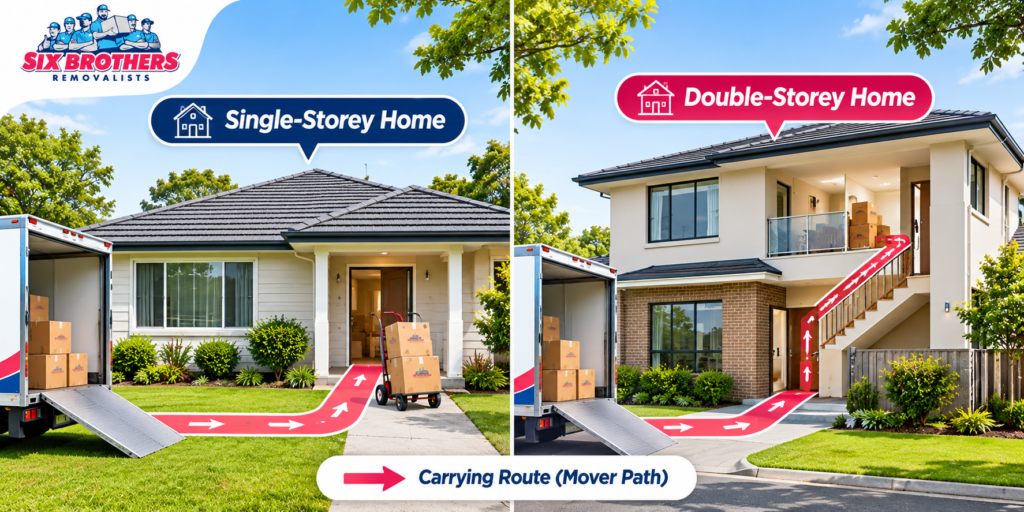
With the same furniture and access, a single-storey home is usually faster to clear. A double-storey move adds repeated stair trips, especially when bedrooms sit upstairs. Yet a tidy two-storey home can beat a cluttered single-level property. Horses for courses applies.
Same Bedroom Count, Different Moving Time
A three-bedroom label does not show how many items need carrying. It does not show whether bedrooms sit upstairs or whether the garage is full. A Parramatta home may have clear driveway access. A similar home in Balmain may need street parking and careful stair turns. The devil is in the detail.
Comparing Floor Area and Furniture Volume
Floor area can indicate room size, but furniture volume drives truck space and handling. Bedroom count misses packed wardrobes, bulky lounges, garage tools and outdoor pieces. Bedroom count is a rough ruler, not the whole measurement. Use a full inventory and the home moving calculator to count items, not room labels. Measure twice, move once.
How Household Items Are Distributed Between Levels
Where items sit matters as much as what you own. If beds, wardrobes and desks are upstairs, each trip uses stairs. If the ground floor holds most cartons, the crew can stage work with fewer repeat trips. Plan a floor-by-floor list and agree on the loading order. The two-storey loading plan shows one way to organise that sequence. No worries when everyone knows the plan.
Time Differences by Stage
Every local move has three main clock stages: loading, transit and unloading. A single-storey layout often shortens carrying at both ends. The road leg depends more on suburb, timing, route and traffic. Keep each stage separate. A move works like a relay. A delay during loading can push back unloading. A stitch in time saves nine.
Loading / Load-Out Time
Loading often takes the largest share because crews wrap, protect, carry and secure items. A three-bedroom planning range may allow around 2–3 hours with ordinary access. The home must also be packed and ready. Upstairs bedrooms can extend repeated carrying cycles. A long walk to the truck can add time too. The early bird catches the worm.
Transit Time
Transit time is the drive between pickup and delivery, not stair work. A local Sydney planning allowance can range from 30–90 minutes. Distance, peak traffic, roadworks and access decide the actual run. Check Live Traffic NSW before moving day. Better safe than sorry.
Transit time forms part of the elapsed moving-day schedule. Whether it is billed, and how, depends on the written booking terms. Ask about depot travel, return travel, tolls, waiting time and minimum charges. Do not assume every company starts its clock at the same point. A fair go starts with clear terms.
Unloading Time
Unloading may be quicker when rooms are labelled and access is clear. A three-bedroom planning range may allow 2–3 hours at the destination. An upstairs destination can reverse the challenge. Cartons and furniture may need carrying up again. Many hands make light work when roles are clear.
Total Move Duration (Average 3-Bedroom Home)
For a packed three-bedroom local move, use 4.5–7 hours as a planning example. That combines 2–3 hours loading, 30–90 minutes transit and 2–3 hours unloading. It is not a fixed double-storey estimate. Add time after checking stairs, long carries, furniture size and both addresses. Do not count your chickens before they hatch.
Did you know?
Six Brothers’ current planning guide breaks a three-bedroom local move into 2–3 hours loading, 30–90 minutes transit, and 2–3 hours unloading. That gives a 4.5–7 hour planning range before unusual delays or extra work.
Time Breakdown by Property Size
Use these ranges as rough local planning guides, not guaranteed durations. They assume a packed home and ordinary access. A double-storey layout can push loading or unloading beyond the baseline. Slow and steady wins the race.
Indicative local moving-day duration
| Property size | Loading | Transit | Unloading | Total elapsed time |
| Studio / 1 bedroom | 1–1.5 hours | 30–60 minutes | 1–1.5 hours | 2–3.5 hours |
| 2 bedrooms | 1.5–2.5 hours | 30–60 minutes | 1.5–2.5 hours | 3.5–5.5 hours |
| 3 bedrooms | 2–3 hours | 30–90 minutes | 2–3 hours | 4.5–7 hours |
| 4+ bedrooms | 3–4 hours | 30–90 minutes | 3–4 hours | 6.5–10 hours |
These figures are not storey-specific. The layout changes the carrying work, not the road distance. A four-bedroom home with limited furniture may move faster than a smaller home packed tightly. The proof is in the pudding.
For a three-to-four-bedroom home, compare the inventory with the 3–4 bedroom house removal service details. Six Brothers lists a guide capacity of 50–55 m³ and 2–3 removalists. Individual jobs still need their own access assessment.
Key Factors That Change the Timeline
These variables can change the estimate more than the number of storeys. Tell the estimator about both homes, not just the pickup address. The devil is in the detail.
Stair Fatigue & Crew Size
Repeated stair trips slow carrying and increase the work needed from each person. A larger crew can help when tasks happen at the same time. One person can prepare furniture while others handle cartons. Extra workers cannot remove a narrow doorway or a tight turn. Many hands make light work when everyone has a clear role.
Ask how many removalists will attend and who leads the job. The Sydney crew-size guide explains why inventory, access and truck capacity matter together. Would you book the same hours for a home with several flights of stairs? Probably not. Horses for courses applies.

Bulky Items Upstairs
Large wardrobes, king beds, lounges and desks need more space to move. A narrow staircase can act like a bottleneck. One awkward turn may slow several items. Measure the item and the narrowest route before moving day. Share photos when a piece looks awkward. Better safe than sorry.
Access & Parking
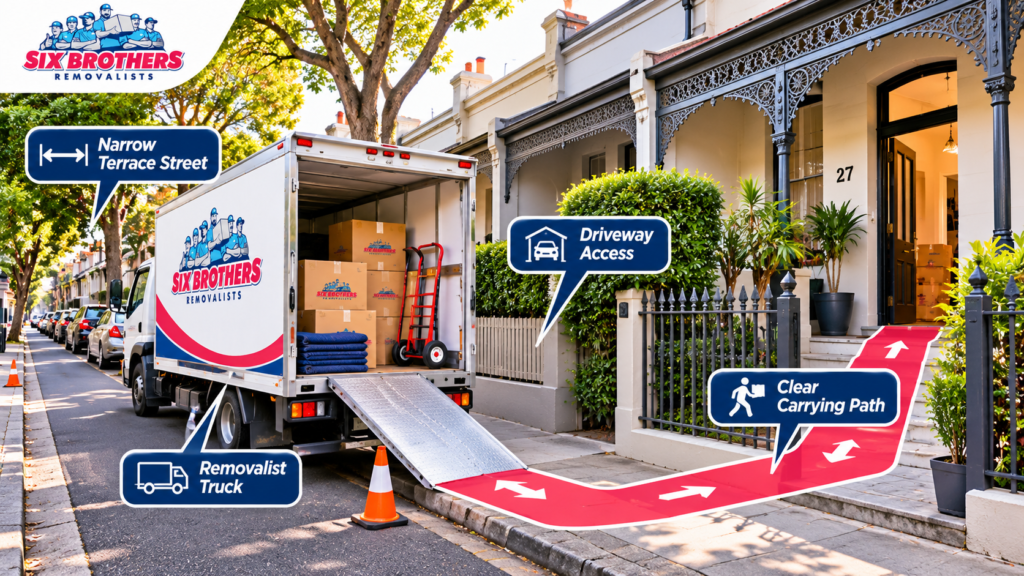
Truck access affects every carrying trip. A long walk from the kerb adds handling time, even on one level. Check driveway width, gates, loading areas and any building rules. Read the NSW parking rules before assuming a truck can stop anywhere. Would you plan a Sydney move without checking the truck’s parking spot? Best not.
Maneuvering Angles
Doorway width, hallway bends and landing space decide how larger items can pass. Tight turns may slow furniture handling or require a different route. Measure the widest furniture and the narrowest point. Near enough is not good enough when a sofa meets a staircase.
Increased Disassembly
Beds, tables, shelving and some wardrobes may need dismantling. That adds preparation at pickup and reassembly at delivery. Agree on the items and service scope before booking. Keep small fittings labelled with their matching furniture. A stitch in time saves nine.
Outdoor Multi-Level Logistics
Raised decks, steep gardens, basement stairs and side paths create extra carrying routes. This can affect homes with split yards or sloping blocks. Count sheds, balconies, garages and outdoor furniture in the inventory. The short cut can become the long way round.
Sydney Home Layouts That Complicate a Simple Storey Comparison
Storey count does not describe the path between every room and the truck. Sydney blocks can have unusual levels and access. Horses for courses matters here.
Split-Level Homes on Sloping Blocks
Split-level homes can have short flights between living areas and bedrooms. A sloping driveway can also place the truck far below the main entry. This happens across hilly parts of the North Shore and Northern Beaches. Give the estimator photos of each level. Forewarned is forearmed.
Terrace Houses with Attic Conversions
A terrace with an attic conversion may involve narrow stairs and a tight hatch. Furniture may need to leave through a different route. Older streets around Newtown, Glebe and Paddington can also limit truck positioning. Do not treat an attic as a standard upstairs bedroom. Measure twice, move once.
Homes with Additional Occupied Levels
Basements, mezzanines, granny flats and converted garages add more inventory points. They can also have separate entrances or awkward paths. Count each occupied space, even when it is not a formal bedroom. Good as gold starts with a complete list.
How Removalists Assess Moving Time Before Giving an Estimate
Removalists assess time by reviewing inventory, access, crew size, truck capacity and travel. Good house removalists ask about the items, not bedroom count alone. A search for removalists near me is only a starting point. Compare the written scope too. A fair go starts with complete information.
A useful estimate should account for beds, wardrobes, lounges, cartons, appliances and garage items. Furniture removalists also need dimensions for bulky pieces and narrow routes. Note stair flights, lift bookings, tight turns, driveway slopes and parking distance. Photos help when a hallway looks tight. Send details before comparing quotes.
Ask removalist companies whether quotes include packing, dismantling, reassembly, travel, tolls and waiting time. Cheap removalists should still explain what the price covers. Confirm when the clock starts and ends. Ask what happens if inventory changes. Clear terms beat guesswork every time.
Specialist pieces need their own note. A piano, pool table or oversized cabinet may need planned handling. Piano removalists may require different equipment or staffing. Do not add these items after the quote without telling the estimator. The devil is in the detail.
Ways to Speed Up a Sydney Double-Storey Move
Preparation can shorten avoidable handling, but it cannot remove the stairs. Focus on work you can finish before the crew arrives. An ounce of prevention is worth a pound of cure.
Consolidate Downstairs
Group ready-to-move cartons in a clear ground-floor staging area. Keep doorways, stairs and exits open. Do not carry heavy or awkward furniture downstairs yourself. Agree on the staging area with your removalist. Safety first, then speed.
Dismantle in Advance
Dismantle suitable beds, table legs and shelving before moving day, when agreed. Photograph the setup and keep fittings in labelled bags. Leave complex or heavy items to the crew. A little preparation goes a long way.
Label by Level and Room
Mark each carton with its destination level and room. Use clear labels such as “Upstairs – Main Bedroom” or “Ground Floor – Study”. Add a room sign at the new property. The Sydney moving-house checklist can help you organise the packing and final checks. Get your ducks in a row.
Secure Parking Access
Confirm where the truck can legally stop at both addresses. Ask the relevant council or building manager about local arrangements. Check clearways, signs, loading zones and vehicle height limits. Keep the route from the truck to the front door clear. Sort access early and stay ahead of the game.
FAQs
How long do removalists take?
A three-bedroom local move may take around 4.5–7 hours with ordinary access. Stairs, packing, parking and travel can change that range.
Do you need a home inspection from a removalist?
Not every move needs a site visit. It can help with split levels, attic rooms, narrow stairs, awkward parking or unusually bulky items. Ask what the estimator needs to inspect or photograph.
How much longer does a double-storey house move take?
There is no reliable fixed extra-hour rule. The difference depends on upstairs furniture, stair design, carry distance and crew workflow.
Does a double-storey house cost more to move than a single-storey house?
It can cost more when stairs add labour time. The storey count alone does not set the price. Inventory and access matter too.
Does travel time count in removalist booking duration?
It counts in the elapsed moving-day schedule. Whether it is billed depends on the removalist’s written travel and hourly terms.
Should furniture be moved downstairs before removalists arrive?
Only move items when the route is safe and your crew agrees. Keep exits clear and leave heavy, awkward pieces to the professionals.
How many removalists are needed for a three-bedroom double-storey house?
Two or three may suit some homes, but no fixed crew size fits every layout. Ask for an inventory and access-based recommendation.
What should I tell removalists before requesting a quote?
Share both addresses, floor plans, stairs, parking, furniture, cartons, outdoor items and any specialist pieces. Photos help explain tight access.
A good estimate uses your items, access and route, not bedroom count alone. Six Brothers Removalists can review your Sydney move details before booking. Request a free quote or call 1300 764 372. You can also email info@sixbrothersremovalist.com.au. Get your ducks in a row before moving day.