


Table of Contents
Packing a heritage home takes more than cartons and a roll of tape. Older Sydney properties often contain surfaces that mark easily. Think original timber floors, fragile plaster, leadlight windows and tight staircases. The furniture may be valuable too, but the building needs protection before anything leaves.
The short answer: Use acid-free wrapping for sensitive objects, stronger cartons and non-adhesive surface protection. Add specialist crating only where an item’s size, weight or condition justifies it. Heritage packing can cost more because materials, access checks and careful handling take longer. Start with the risks, not the biggest shopping list.

Specialized Materials: What “Extra Care” Requires
Heritage home packing materials should protect both movable belongings and original building surfaces. The right choice depends on finish, weight, age and transport conditions. One-size-fits-all wrapping rarely works for an Inner West terrace or a Federation home. Measure twice, carry once is a good rule here.
Acid-Free Packing Paper
Acid-free packing paper helps protect suitable documents, books and some delicate objects. It reduces direct contact with ordinary paper that may transfer colour or contain unsuitable additives. Choose unbuffered, archival-quality tissue for objects that need it. Ask a conservator before wrapping photographs, pastel drawings or unstable painted surfaces.
Acid-free does not automatically mean safe for everything. Loose pigment, flaking gilding and fragile coatings can catch on paper. Use a rigid support or specialist enclosure when a surface must remain untouched.
Smaller, Double-Walled Cartons
Smaller, double-walled cartons make heavy or breakable contents easier to control. Use them for books, ceramics, metal ornaments and dense glassware. Fill voids so objects cannot collide, but avoid forcing the lid shut.
A smaller carton is often safer than a large box packed to the brim. Test each loaded box’s weight before sealing it. On old staircases, lighter loads give handlers more control around landings and banisters.
Non-Adhesive Neoprene Floor Runners
Non-adhesive neoprene floor runners can help shield suitable floors from foot traffic. Use clean, non-marking products with a stable underside. Test the material first, especially on waxed or recently restored timber.
Never assume every rubber-backed mat is safe. Some backings may stain finishes or trap moisture. Keep edges flat to reduce trips. Where floors are especially delicate, ask a flooring specialist about a compatible barrier and protection system.
Rigid Cardboard Corner Protectors
Rigid cardboard corner protectors shield protruding furniture edges during loading and transit. They also help around framed mirrors, tabletops and cabinet corners. Put a clean, non-abrasive layer between the protector and sensitive finishes.
Protect walls and door frames separately. A padded antique wardrobe can still scrape original skirting boards. Good protection works on both sides of a narrow doorway.
Custom Wooden Crating
Custom wooden crating may suit fragile artwork, large mirrors and unstable decorative pieces. A crate should control movement without pressing against the object’s vulnerable surfaces. Foam supports need careful selection and positioning.
Crating is not necessary for every antique. It adds material, design and handling costs. For a deeper look, compare specialty moving crates before choosing a custom option.
Cell-Divided Box Inserts
Cell-divided box inserts separate glasses, crystal and small ornaments within a carton. They reduce item-to-item contact but do not replace individual wrapping. Adjust cell size so delicate rims and handles avoid pressure.
Put heavier pieces in lower cells when the insert allows it. Keep each glass upright and fill empty spaces gently. Mark the carton fragile on several sides, not just its lid.
The Financial Breakdown: The “Extra Cost”
Heritage packing usually costs more when specialist labour, extra protection or custom materials are needed. A standard moving kit may handle everyday belongings. An antique cabinet or ornate staircase calls for a different plan. As the saying goes, the cheapest option can cost more later.
Published 2026 Sydney guides show around A$50–A$80 per packer-hour for general packing labour. That is market context, not a Six Brothers price. Specialist work may be quoted differently. Always ask whether cartons, transport, GST, minimum hours and specialist materials are included.
Standard Moving Kits
Standard moving kits cover everyday cartons, tape, paper and labelling supplies. They are useful for clothing, cookware and ordinary household items. A kit does not automatically include acid-free tissue, archival sleeves or custom-size protectors.
Check carton dimensions before buying in bulk. Old homes often need extra small boxes for books and décor. Returnable cartons may change the upfront cost, so check bond and return terms.
Partial / Fragile-Only Packing
Partial or fragile-only packing targets the items most likely to break or suffer finish damage. You pack clothes and ordinary household goods. A trained team handles paintings, crystal, mirrors and delicate furniture.
This hybrid approach often gives better value than specialist wrapping for every saucepan. Request a written fragile-item inventory. Note which pieces need crating or a separate conservation assessment.
Full Professional Packing
Full professional packing covers most household belongings, subject to the agreed service scope. It can reduce your personal packing time. However, older homes may still need extra preparation for floors, doorways and staircases.
Ask what happens before the crew arrives. Who measures narrow access? Who protects fixed features? What happens if a dresser cannot safely pass through the staircase? Get those answers in writing.
Hourly Packing Labor
Hourly packing labour rises with packing time, worker numbers and job complexity. For a simple illustration, two packers working six hours at A$65 each cost A$780. That example excludes materials and any other charges. It is not a quoted or advertised rate.
Ask whether the rate applies per person or per crew. Confirm travel, parking, stair access and extra time. A low hourly figure tells only part of the story.
Custom Crating & Specialty Items
Custom crating and specialty handling generally require separate assessment. Crate dimensions, timber, cushioning and collection access affect the quote. Large gilt mirrors, chandeliers and fragile display cabinets can need very different methods.
Request an itemised allowance before booking. Separate the standard pack from bespoke protection. That makes competing quotes easier to compare without guessing.
| Option | Main cost | Ask before booking |
| Standard kit | Cartons and supplies | Sizes, bonds and returns |
| Fragile-only pack | Specialist labour and padding | Included items |
| Full pack | Crew hours and materials | Scope, access and minimum hours |
| Custom crate | Design and fabrication | Survey and written price |
How Much Extra Packing Material Does a Heritage Home Need?
There is no reliable fixed percentage of extra material for every heritage home. Two houses with four bedrooms may need very different protection. Count vulnerable objects and exposed building features first. Better safe than sorry applies to stocktake day.
Walk through each room with a short checklist. Count framed artworks, fragile glass items, antique furniture and heavy books. Note narrow doors, original stair treads, fireplaces and any leadlight near the moving route.
For ordinary boxes, start with a room-by-room supply count. Our packing supplies for moving house in Sydney guide helps with the basic quantities. Add a separate specialist-material list for each valuable or delicate item.
Practical example: A two-bedroom terrace might need standard kitchen cartons, six smaller book cartons and several floor runners. It might also need one custom mirror crate. Those figures are an illustrative checklist, not a universal recommendation. Measure and quote actual items before ordering.
What Increases the Cost of Heritage Home Packing?
The main cost drivers are fragile contents, complex access, delicate finishes and specialist handling. Materials matter, but time matters just as much. A narrow Paddington staircase can slow every trip. No dramas comes from planning those delays early.
- Fragile collections: Crystal, ceramics, artworks and inherited furniture require more individual protection.
- Access restrictions: Tight landings, upper floors and long carries increase handling time.
- Surface sensitivity: Original floors, decorative plaster and timber joinery need careful barriers.
- Specialist services: Custom crates, dismantling and conservator advice can add separate costs.
- Timing: Wet weather, storage delays and short booking windows may change the plan.
- Vehicle access: Check legal loading arrangements on narrow Sydney streets before moving day.
Ask each removalist to price the same inventory and access information. Include photos of major items. The best comparison is the total scope, not one hourly rate.
How to Protect Original Features in Heritage Homes
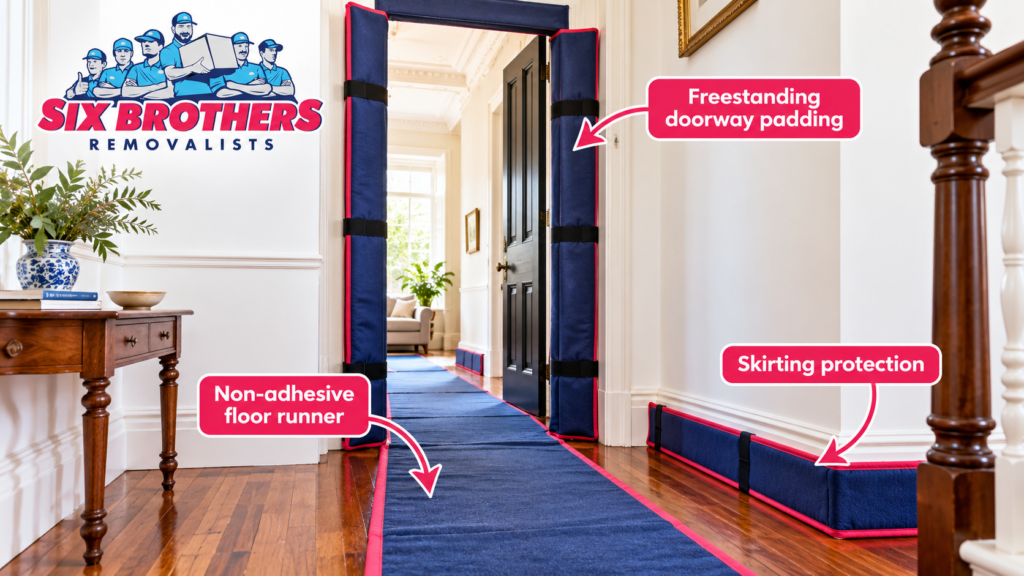
Protect original features before the first carton crosses the threshold. Start with floors, stairs, door frames and narrow turns. Mark any areas where heavy furniture could strike plaster, joinery or glass. Prevention beats patching an original feature later.
Use freestanding padded barriers where practical. Avoid fastening anything directly onto historic fabric without suitable advice. Cover fireplaces and mantelpieces only with materials compatible with their surfaces. Keep protection dry, clean and free of gritty debris.
Take precise doorway and staircase measurements. Record furniture dimensions too. If a large piece cannot pass safely, plan another route or a specialist assessment. Never force it past an ornate banister.

Packing Materials to Avoid in Heritage Homes
Avoid materials that stick, stain, abrade or trap moisture against delicate surfaces. Familiar packing products can cause trouble when used the wrong way. A stitch in time saves a lot of repair work.
Adhesive Tape on Historic Surfaces
Never put adhesive tape directly onto historic paint, timber, wallpaper or plaster. Adhesive can lift loose coatings or leave residue. Use freestanding protection, ties around a separate cover or another non-contact method.
Even painter’s tape may be unsafe on an aged finish. If a proposed fixing touches original fabric, seek appropriate specialist advice first.
Bubble Wrap Against Delicate Finishes
Bubble wrap should not touch fragile polished timber, gilding or unstable paint directly. Its texture may mark vulnerable finishes. Trapped condensation can also create problems during storage.
A compatible intermediate layer may help with certain stable objects. For museum-quality or damaged items, follow a conservator’s packaging advice. Do not improvise against flaking surfaces.
Newspaper and Coloured Tissue
Newspaper and coloured tissue can transfer ink or dye onto valuable objects. Avoid direct contact with fabrics, pale ceramics and porous finishes. Choose suitable clean, unprinted materials instead.
For archival objects, use tested conservation-grade supplies. Ordinary packing paper may be fine for robust household goods. It is not a substitute for specialist storage materials.
PVC and Unsuitable Plastic Packaging
PVC and unsuitable plastic packaging are poor default choices for long-term heritage storage. Some plastics can affect sensitive materials or hold damp conditions. Choose appropriate archival sleeves or breathable covers when needed.
Do not seal damp timber or books inside plastic. Dryness, airflow and a stable storage environment matter. Ask a specialist when materials are rare or deteriorating.
Packing Antique Furniture, Artwork and Heirlooms
Antiques and heirlooms need item-specific packing, not one blanket method. Their age alone does not reveal their weak points. Check joints, surface coatings and existing damage before lifting. Slow and steady wins this part of the move.
Antique Furniture and Timber Veneers
Protect antique furniture by supporting its structure and avoiding pressure on veneers. Empty drawers where needed and secure loose parts separately. Do not tape handles or doors directly to original finishes.
Use clean padded covers with ties placed over the covers. Support weak legs and joints during handling. A trained furniture removalist should assess unstable cabinets before lifting.
Gilded Frames and Paintings
Gilded frames and paintings need protection that avoids direct pressure on decorated surfaces. Photograph frames, note loose ornament and inspect the painting’s condition. Use rigid edge support and suitable transport enclosures.
Do not press paper, foam or bubble wrap onto flaking gilding. Large or valuable works may need specialist art handlers. Where the surface is unstable, consult a conservator first.
Crystal Chandeliers and Light Fittings
Crystal chandeliers and historic light fittings need safe isolation and careful dismantling plans. A qualified electrician should disconnect fixed electrical fittings when required. Label removable pieces and photograph their positions before packing.
Wrap detachable drops individually within divided, cushioned compartments. Support the main frame so nothing hangs under strain. Some listed fixtures form part of protected heritage fabric. Check permissions before removing them.
Historical Books and Documents
Historical books and documents benefit from clean, supportive archival enclosures. Keep small batches upright or flat, depending on their condition. Avoid overloading cartons with heavy volumes.
Separate brittle paper from rough packing materials. Never apply labels directly to original covers or pages. Seek a paper conservator’s advice for mould, loose bindings or damaged manuscripts.
Moisture-Safe Packing for Heritage Items
Moisture control protects timber, textiles, paper and artworks during transit and storage. It matters in Sydney’s wet weather and humid conditions. Keep items dry before packing and check storage conditions in advance. Don’t shut the stable door after damage starts.
Breathable Covers for Antique Timber
Breathable covers allow better moisture movement than tightly sealed plastic around antique timber. Use soft, clean fabric that will not snag rough or decorative details. Avoid trapping damp padding against polished finishes.
Breathability is not a licence to expose furniture to rain. Protect covered pieces from direct water during loading. Remove wet outer transport barriers promptly once safe.
Moisture Protection During Transit
Moisture protection begins with dry cartons and a weather-aware loading plan. Keep boxes off wet pavements. Use a covered route where possible and protect vulnerable cartons during vehicle transfers.
Desiccants may help inside suitable sealed packages. Their quantity and placement depend on the object and enclosure. Do not let sachets rub against artworks, documents or delicate finishes.
Preventing Condensation in Storage
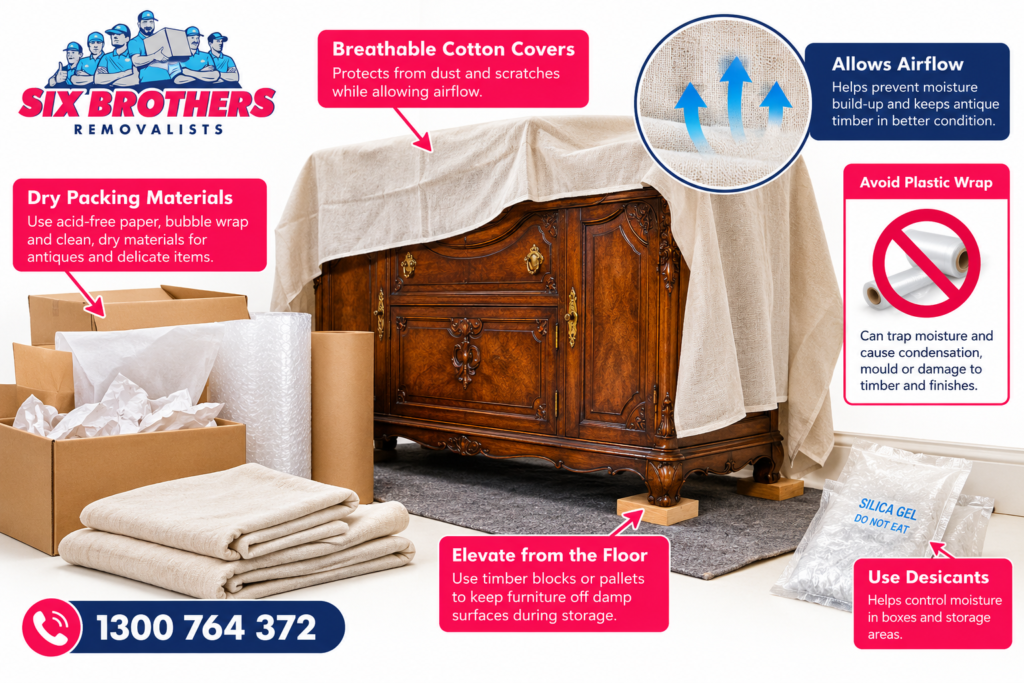
Condensation risk rises when temperatures change around poorly ventilated or sealed items. Avoid wrapping damp materials tightly. Ask the storage provider about humidity control, temperature swings and monitoring.
Inspect cartons before long-term storage. Do not place valuable paper or timber directly against cold exterior walls. Raise vulnerable boxes off floors using stable shelving or pallets.
Packing for Long-Term Storage
Long-term storage needs more careful material choices than a short local move. Archival-quality enclosures suit valuable paper collections. Stable climate conditions matter for timber, artwork and textiles.
Make inspection access part of the storage plan. Record box numbers and storage positions. Check insurance terms for storage separately from transit.
Heritage Property Rules for Temporary Protection
Ordinary household packing is different from altering a protected heritage feature. A non-invasive removable barrier may be straightforward. Drilling, fastening or removing significant material can raise approval issues. When in doubt, check before you touch.
Checking Heritage Listing Restrictions
Check the property’s heritage status before planning any work on original features. A Sydney property may be locally listed or appear on the NSW State Heritage Register. Conservation-area status is different from an individual state listing.
Use the official State Heritage Inventory to start your check. Read the listing details and contact the relevant council or Heritage NSW where needed.
Temporary Fixings on Protected Features
Temporary fixings can still affect historic fabric if they require adhesives or penetrations. Avoid screws, nails and sticky protection on vulnerable surfaces. Prefer freestanding guards where suitable.
State-listed sites have specific approval and exemption rules. Some temporary work may qualify for an exemption, but conditions apply. Never assume a temporary installation is automatically exempt.
When Council Advice Is Needed
Ask council when protection plans could alter or attach to locally protected features. Property managers should also check any strata or access rules. Heritage NSW handles State Heritage Register matters where applicable.
Moving loose household contents is not automatically the same as modifying the building. However, removing a listed fitting or moveable heritage object can require permission. Record the advice you receive before moving day.
Did You Know?
NSW distinguishes local heritage listings from State Heritage Register items. That difference can affect who advises on proposed fixings or changes. Simple moving protection is not a blanket approval for altering protected fabric.
Navigating Multi-Storey Heritage Layouts
Multi-storey heritage homes need a clear handling route and a steady loading rhythm. Victorian terraces in Surry Hills and Paddington can have sharp turns. That is why a walk-through matters more than guesswork. Slow is smooth and smooth is fast.
Clear Structural Signage
Use clear, removable signage to point out risks without attaching it to historic surfaces. Mark low beams, weak steps, narrow turns and rooms containing fragile objects. Place signs on freestanding boards or movable boxes.
Tell the crew where original glass and plaster are exposed. Walk through the route before carrying heavy furniture.
Multi-Sided Fragile Markings
Put fragile labels on at least two visible sides of vulnerable cartons. Add the destination room and basic handling instructions. Keep item descriptions useful without advertising valuables from the street.
Use simple labels such as ‘GLASS’, ‘THIS WAY UP’ and ‘TWO-PERSON LIFT’ where appropriate. Labels support good handling but cannot replace adequate packing.
Weight Distribution
Spread loads across manageable boxes and suitable handling equipment. Avoid heavy book cartons stacked onto fragile furniture. Keep the heaviest stable items low inside the vehicle.
Older floors and staircases may have unknown structural limits. Do not guess a safe loading weight. Seek a qualified professional’s advice if there is a structural concern.
Keep Walkways Impeccably Clear
Keep walkways clear of cartons, loose paper, cords and unused equipment. Establish one packing zone away from doorways. Move completed boxes to an agreed holding area.
Check emergency exits and stair landings throughout the day. Clutter can turn a careful move into an avoidable accident.
Documenting Heritage Features Before Packing
Document existing conditions before protection or moving equipment enters the property. Clear records support better planning and help resolve later questions. A few minutes with a camera can save headaches.
Photographs of Existing Damage
Photograph existing cracks, chips, scratches and worn finishes before removal day. Capture wide views and close-ups. Include original stair edges, wall corners, skirting boards and leadlight panels.
Record the date and room location. Repeat the photos after removal. Keep the original files rather than relying on compressed messaging-app copies.
Inventory of Fragile Valuables
Build an inventory of fragile valuables before handing items to the crew. Record each item’s description, condition, location and packing method. Add photographs and valuation documents when available.
The whole-house inventory checklist is a useful starting point. Add extra fields for antique finishes and custom crates.
Pre-Move Condition Reports
A pre-move condition report helps distinguish existing wear from possible moving damage. Note floors, stairs, plaster, frames and fixed fittings. Have relevant parties review the record before work begins.
A signed report does not replace suitable insurance. It helps everyone see the same starting condition. Check whether the insurer wants valuations or specific packing standards.
Strategy to Mitigate Risks and Costs
The best cost strategy puts specialist care where the actual risk is highest. Not every book needs a custom crate. Not every old surface tolerates a cheap stick-on cover. Put your money where it protects something important.
Opt for a Hybrid Packing Strategy
A hybrid packing strategy separates everyday packing from specialist items. Pack linens, sturdy kitchenware and clothes yourself. Ask professionals about artwork, antiques and access protection.
For example, a household might DIY thirty ordinary cartons. It could then book delicate furniture and mirror packing separately. Agree on the boundary before the team arrives.
Pre-Map and Color-Code
Pre-map the moving route and colour-code boxes by destination room. Use labels on cartons, not original walls. Keep red for fragile items and blue for upstairs rooms if that helps your crew.
Share your floor plan, access photos and inventory ahead of time. This reduces repeated handling and rushed decisions. Before booking, ask Six Brothers for a written packing scope. Get a free quote on 1300 764 372 or email info@sixbrothersremovalist.com.au.
How to Choose a Removalist for Heritage Home Packing
Choose a removalist that asks about delicate items, historic surfaces and difficult access before quoting. The right questions matter more than a cheap headline rate. In Sydney, a careful inspection can reveal issues a phone quote misses. Look before you leap.
Compare house removalists and furniture removalists on the same written scope. Ask about antique handling, floor protection, stair access, exclusions and valuation records. For extra-sensitive items, ask whether a conservator or specialist handler is needed.
Six Brothers Removalists provides packing and removals services. You can also review Six Brothers Removalists and its service information before contacting the team. Ask for a written, itemised quote rather than assuming every specialist material is included.
The NSW Government’s guidance on choosing a removalist recommends written details and checking insurance. A removalist’s vehicle insurance may not protect your goods. Confirm the insurer, cover limits, exclusions and claims process.
FAQs
Do Removalists Pack for You?
Many removalists offer packing as an additional service. Confirm whether it covers all items or only selected rooms. Ask about specialist materials before booking.
Do Removalists Have Insurance?
Removalists are not automatically required to insure your belongings. Ask for written details of available cover. Check whether antiques and packing-related damage are included.
What is the safest packing paper for antique documents?
Use appropriate archival-quality paper or enclosures. A paper conservator should advise on unstable or valuable originals.
Can bubble wrap touch antique timber?
Avoid direct contact with sensitive finishes. Use tested, compatible barriers where appropriate and prevent moisture getting trapped.
Do I need approval to protect heritage floors temporarily?
It depends on the property’s listing and method. Non-invasive protection differs from attaching materials to protected fabric. Check council or Heritage NSW when unsure.
When is custom crating worth the extra cost?
Consider it for large, unstable or high-value pieces. A specialist should assess the item and transport conditions.
Can I save money with fragile-only packing?
Often, yes. Packing sturdy items yourself can reduce professional hours. Keep highly vulnerable items with suitable specialists.
How should I compare heritage packing quotes?
Compare identical inventories and access details. Check labour, materials, crating, travel, exclusions and insurance separately.
PLANNING A HERITAGE HOME MOVE? Call 1300 764 372 for a free, itemised packing and removals quote. Ask about specialist materials and cover.
For a heritage home, the best packing plan respects the property and the belongings. Protect first, measure carefully and ask questions early. A thoughtful quote can make the move calmer without paying for unnecessary extras. Request your free packing and removal quote from Six Brothers Removalists on 1300 764 372.