


Table of Contents
Packing a kitchen takes more planning than packing a bedroom. Plates break, appliances hold water, and dinner still needs cooking. This checklist gives Sydney households a clear order, from four weeks out to moving day. You’ll know what to pack first and keep accessible. Unloading for breakfast becomes easier.
Before you begin, choose one kitchen cupboard for items you’ll use until the final day. Keep your packing supplies together and label every carton by destination room. That small routine prevents most last-minute searching.
Four phases. One organised kitchen move.
Phase 1: 3 to 4 Weeks Out – The Deep Clear & Declutter
Start with cupboards, pantry shelves, and items you hardly touch. This is the best time to reduce carton numbers without disrupting meals. There’s no point paying to transport things you’ll throw out next week.
Purge the pantry
Check every pantry shelf for expired food, leaking packets, and duplicate ingredients. Plan meals around opened pasta, tins, rice, and sauces. Move dry foods into sealed containers only when needed. Keep each container’s contents and expiry details clear.
Don’t pack opened food beside books, linen, or fragile dishes. A small spill can damage several cartons. Set aside unopened donations only if the receiving organisation accepts them.
Purge and Donate
Sort duplicate mugs, chipped plates, unused gadgets, and spare storage containers. Create three clear groups: keep, donate, and recycle. Ask local charities what household items they currently accept before visiting.
Check drawers separately from cupboards. That second pass often catches spare peelers, takeaway cutlery, and worn tea towels. Fewer items mean fewer boxes and a simpler unpack.
Sort hazardous items
Separate bleach, aerosol cleaners, solvents, batteries, and other problem waste before packing. Never hide chemicals inside ordinary kitchen cartons. Ask your removalist which products cannot travel on the truck.
The NSW EPA household recycling guidance explains where problem waste belongs. Sydney councils may offer different collection options. Always check local rules before disposing of anything hazardous.
Source heavy-duty supplies
Buy sturdy small cartons, packing paper, tape, markers, and protective dividers. Choose small boxes for plates and heavy cookware. Use larger cartons for lightweight plastic containers and tea towels.
For cartons and wrapping supplies, compare our house moving packs before shopping elsewhere. Check that each box has a sound base and can close flat. Don’t assume a reused fruit box suits glassware.
Pack low-use items
Pack spare serving platters, seasonal baking tins, and rarely used utensils first. Wrap delicate items separately and label the contents. Leave a short inventory in your phone notes.
Our whole-house move checklist helps catch items hidden in the garage and laundry. A kitchen-only list won’t cover every part of your home.
Phase 2: 1 to 2 Weeks Out – Core Kitchen Packing
Now pack what you can live without for a fortnight. Think of your kitchen as two zones: packed and still working. Keep essential tools together rather than scattering them across cupboards.
Artwork & Decor
Take down kitchen prints, wall clocks, and decorative shelves. Remove hanging hardware and place screws in labelled bags. Wrap frames with paper, corner protectors, and a rigid outer layer.
Mark glass-fronted items clearly. Don’t place a heavy pan on top of framed artwork. Keep wall-hanging hardware with the matching frame.
Special Occasion Items
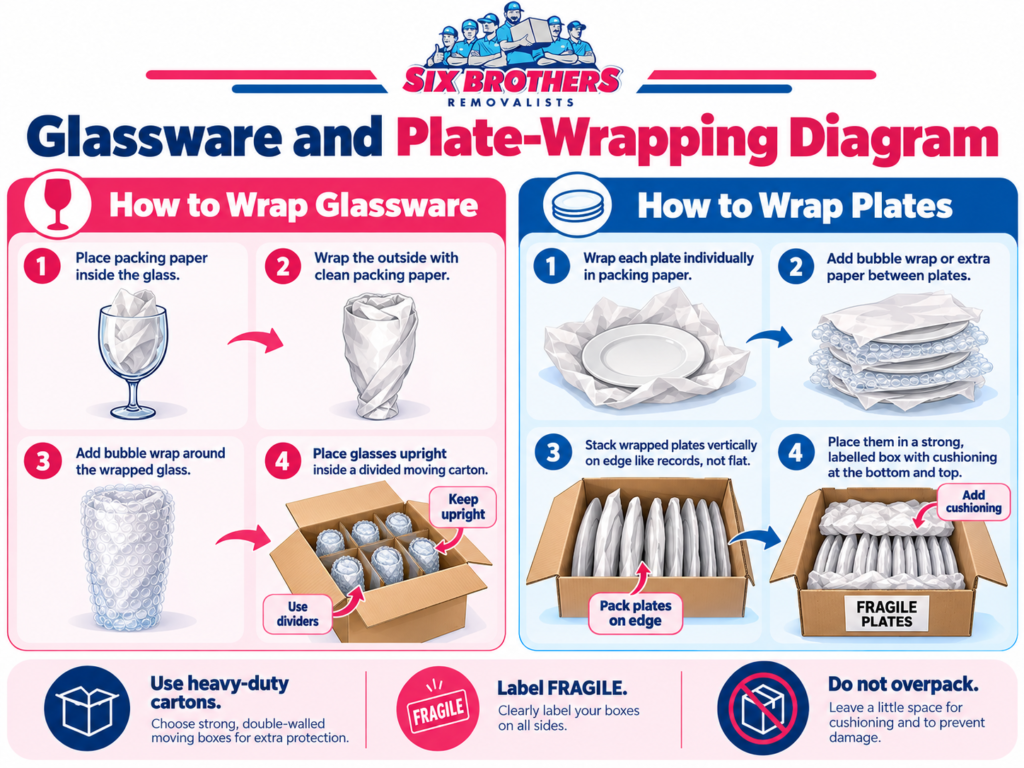
Pack wedding china, crystal glasses, and holiday serving dishes in small, supported cartons. Wrap each piece separately. Fill spaces so items cannot knock together.
For casserole dishes, wrap the body and lid separately. Cushion handles, edges, and glass lids. Pack heavy ceramic dishes below lighter serving pieces.
Infrequent Appliances
Clean and dry mixers, food processors, waffle makers, and slow cookers before packing. Remove loose bowls, blades, and lids. Secure each removable part in a labelled bag or wrapped bundle.
To pack a blender for moving, wash and dry its jug first. Protect the blade assembly and prevent the jug from shifting. Keep cords neatly tied with reusable straps.
Excess Storage
Clear high shelves, under-sink organisers, and spare food-storage drawers. Nest clean plastic containers without crushing lids. Keep a few leakproof containers for your final meals.
Avoid filling every gap with loose cutlery. Small metal items can damage neighbouring surfaces. Use separate pouches or a cutlery wrap.
Set Aside the “Essentials Box”
Choose a distinct carton or lidded tub for your first-night kitchen supplies. Keep it open until the final morning. Mark it OPEN FIRST: KITCHEN on several sides.
Add enough plates, cups, utensils, tea, and basic cleaning supplies for your household. Keep medicines and important documents in your personal bag, not this carton.
Pack everyday crockery
Keep only one practical set of plates and bowls per household member. Wrap the rest individually and stand plates on their edges. Add cushioning between pieces and along carton walls.
Secure glassware
To pack glasses for moving house, wrap each glass separately and protect its rim. Use a cell divider when available. Stand sturdy tumblers upright and follow specialist guidance for delicate stemware.
For glass food containers, wrap containers and lids separately. Don’t assume clipped lids can withstand pressure. Fill empty carton spaces with clean paper.
Consolidate small appliances
Group your kettle, toaster, microwave accessories, and coffee machine parts by appliance. Photograph cable connections where helpful. Wrap detachable glass trays separately.
To pack a microwave for moving, unplug it and remove its turntable. Wrap the tray and support the oven inside a suitable carton. Never rely on loose padding alone.
Leave out the bare minimum
Keep one frying pan, one saucepan, one chopping board, and basic cutlery accessible. Leave one everyday mug and plate per person. Use easy meals while packing the rest.

Phase 3: 1 to 2 Days Before – Prep & Whitegoods Shut-down
Clear surfaces and prepare appliances before the removalists arrive. Don’t leave water lines, fridge drawers, or loose cables until loading starts. The final 48 hours should be about checking, not searching.
Countertop Appliances
Unplug the toaster, kettle, rice cooker, and coffee machine after their last use. Empty crumbs, reservoirs, and removable tanks. Let hot parts cool completely before wrapping.
For pots and pans, nest only when surfaces won’t scratch. Use clean tea towels or paper between each pan. Wrap lids separately and protect handles.
Bar Fridge / Wine Fridge
Empty drinks and remove loose shelves from your bar fridge or wine fridge. Clean spills and dry the interior. Tape shelving bundles, not the appliance’s painted surface.
Check the manufacturer’s transport instructions and confirm collection details with your removalist. Plan safe handling if stairs, narrow doorways, or limited parking affect access.
Defrost and drain the fridge/freezer
Check your fridge manual before moving day and follow its defrosting instructions. Remove food, ice trays, and loose shelves. Allow enough time for frost to melt and surfaces to dry.
To move a fridge safely, keep it upright wherever possible. Use a suitable appliance trolley and trained help. Protect timber, vinyl, and tile floors with appropriate floor protection. Never drag the fridge across bare flooring.
After delivery, follow your manufacturer’s waiting instructions before restarting. Advice varies by model and transport position. Let the appliance reach a safe temperature before returning chilled food.
Prepare major appliances
Check whether your dishwasher, washing machine, or plumbed fridge needs disconnection. Arrange a qualified tradesperson where the appliance or connection requires one. Secure hoses without sharply bending them.
Keep transit bolts, brackets, and manuals together where applicable. Tell the crew about stairs and narrow passages. Don’t disconnect electrical or plumbing fittings beyond your competence.
Pack the remaining kitchen drawers
Wrap sharp tools separately and close small parts inside clearly marked containers. Keep one drawer of final-use utensils until morning. Bundle measuring spoons, tongs, and serving tools by function.
To pack kitchen utensils for moving, protect blades and points before boxing. Fill spare spaces without adding excessive weight. Mark cartons containing sharp items.
Clean as you go
Wipe emptied cupboards, splashbacks, and fridge seals while access remains easy. Collect cleaning cloths and rubbish bags in one bucket. Leave required cleaning products available until handover.
If you’re renting, check your lease and inspection arrangements. The Sydney moving house checklist covers other rooms while your kitchen stays usable.
Phase 4: Moving Day – The “First Night” Essentials Box
Finish the essentials box before the last kitchen carton leaves. It’s your first-night rescue kit, not another mixed storage box. Keep it with you or request clear unloading priority.
Daily Utensils
Put aside a can opener, scissors, serving spoon, and safe kitchen knife cover. Add reusable plates, cups, and cutlery. Carry an extra tea towel and washing-up sponge.
Count supplies against the people arriving at the new house. One missing mug feels bigger after a long day.
Survival Fuel
Pack shelf-stable snacks, tea bags, instant coffee, and drinking water. Choose food needing little preparation. Keep infant feeding supplies or special dietary items under your direct control.
Sydney traffic can stretch a simple relocation. A ready snack stops hunger becoming everyone’s problem. Keep essential food separate from chemical cleaners.
Fridge Emptying
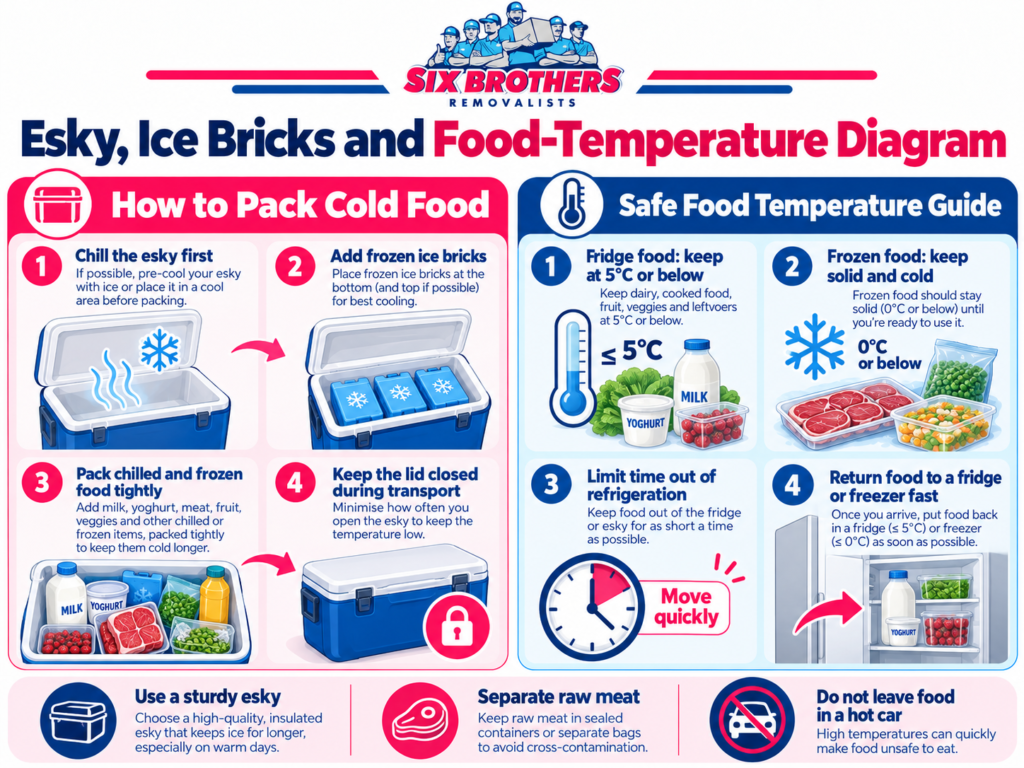
Remove the final chilled items shortly before their safe transport starts. Place suitable food directly into an esky with frozen ice bricks. Keep raw meats sealed below ready-to-eat food.
Don’t load perishable food into a warm moving truck. Arrange separate temperature-controlled transport when needed. Discard anything that becomes unsafe.
Pack the Kitchen Essentials Box
Add a roll of kitchen paper, rubbish bags, dishwashing liquid, and a basic breakfast kit. Seal liquids in leakproof bags. Put cleaning chemicals in a separate safe container.
Final Walkthrough
Open every cupboard, drawer, dishwasher, and appliance compartment. Check the pantry floor and spaces above overhead cupboards. Photograph the empty kitchen if useful for your handover records.
Have you checked the last mug behind the dish rack? Make one careful final pass. Confirm the fridge and appliance arrangements with the crew.
Top Packing Tips for Sydney Removals
A sensible packing order matters more than expensive wrapping products. Use the right carton size, steady cushioning, and clear labels. These habits prevent avoidable surprises on Sydney’s busy moving days.
The “Golden Rule” of Plates
Stand wrapped plates vertically inside a sturdy small carton. Place cushioning beneath, beside, and above them. This helps spread pressure instead of pressing down on a flat stack.
Keep heavy plates together and stop movement inside the box. Write FRAGILE: PLATES and the destination kitchen on the carton.
Cushioning is Free
Reuse clean tea towels for added protection around sturdy pots and bowls. Still wrap delicate glass and china individually. Use proper packing paper where ink transfer or scratching could occur.
Packing is like building a stable shelf. Heavy items need a firm base. Light items need protection from pressure above.
Label Excessively
Write the destination room, contents, weight warning, and opening priority on each carton. Label at least two sides so writing remains visible when boxes stack. Add numbers matching a phone inventory.
Use labels such as KITCHEN 06: PANS: HEAVY and KITCHEN 12: GLASSES: FRAGILE. That detail speeds both loading and unpacking.
Kitchen Packing Safety Before Boxes Are Sealed
Safety checks protect people as much as crockery. A carton can look fine while hiding sharp blades or leaking oil. Check every kitchen box before applying the final tape.
Secure Knives and Sharp Tools
Fit knife guards or wrap blades in rigid, cut-resistant protection. Tape the protective wrap securely without exposing sharp points. Never leave loose knives among spoons.
Keep sharp tools out of reach of children and pets. Mark the carton SHARP ITEMS and tell anyone helping you move.
Seal Oils and Open Liquids
Tighten bottle lids and place each container inside a sealed bag. Stand suitable bottles upright in a leak-resistant container. Don’t pack oils beside electronics or cloth items.
Ask your removalist about any restrictions on liquids. Some chemical products need separate disposal instead of transport.
Limit Heavy Carton Weights
Use smaller cartons for cast-iron pans, crockery, and glass jars. Stop filling when the box becomes awkward to lift safely. Avoid publishing one universal weight limit for every person and box.
Test the sealed box gently on a stable surface. Reinforce weak bottoms and redistribute weight. A heavy kitchen carton shouldn’t put the crew at risk.
Moving Chilled and Frozen Food Safely
Cold food needs its own transport plan. Don’t treat an esky like an ordinary kitchen carton. Safe storage depends on temperature, time, and the food involved.
Prepare an Esky for Food
Use a clean insulated esky with enough ice bricks for the journey. Pack chilled food at 5°C or colder where possible. Keep raw meat below cooked or ready-to-eat foods.
Use a food thermometer to check the temperature when necessary. Move frozen items only if you can keep them frozen safely.
Did you know?
The NSW Food Authority uses a cumulative two-hour/four-hour guide for food between 5°C and 60°C. Time spent preparing, carrying, and waiting all counts.
Control Time Outside Refrigeration
Track how long perishable food spends above 5°C, including loading and travel. For suitable foods, under two hours allows return to refrigeration. From two to four hours, use immediately rather than refrigerating again.
After four hours in the danger zone, discard the food. The NSW Food Authority’s food safety guidance explains these rules. When unsure, throw it out.
Return Food to Safe Storage
Make sure the new fridge is operating and cold before unpacking the esky. Place chilled products back promptly. Keep frozen foods frozen rather than repeatedly thawing and refreezing them.
Check temperatures instead of guessing from a cool exterior. If the fridge is still settling after transport, use another working fridge or suitable refrigeration.
Sydney Kitchen Carton Collection and Loading Order
Labelled cartons are easier to move when the collection route stays clear. Decide which boxes can leave first and which must arrive first. A good loading plan is like a queue with clear priorities.
Stage Cartons for Collection
Place sealed cartons in a dry, accessible room near the collection route. Keep exits, stairs, and walkways clear. Separate fragile cartons from heavy boxes and appliances.
Ask about packing and removals if you want help preparing fragile kitchen cartons. Confirm what’s included in your quote before booking.
Plan Stairs and Long Carries
Measure narrow passages and tell the crew about staircases, lift bookings, and long driveway carries. Check where the truck can park legally. Flag your fridge’s dimensions and access challenges early.
A Parramatta unit with a booked lift differs from a North Shore home with steep stairs. The same kitchen may need different handling plans.
Set Carton Unloading Priority
Mark OPEN FIRST cartons separately and show the crew your preferred delivery room. Heavy boxes should sit low and stay stable. Fragile cartons need secure support during transport.
For moving arrangements, Six Brothers Removalists can talk through access and packing needs. Share your carton count, appliance list, and any stair details when requesting a quote.
Want help planning the kitchen part of your Sydney house move? Request a free quote. Call 1300 764 372 or email info@sixbrothersremovalist.com.au.
Kitchen Unpacking Order at the New House
Unpack for function before appearance. You need safe food storage and breakfast supplies before display bowls. Once the essentials work, the rest can follow at a steady pace.
Map New Kitchen Storage Zones
Walk through the kitchen before opening every carton. Choose zones for cooking, plates, food storage, and cleaning. Place heavy cookware on stable lower shelves where practical.
Keep fragile cartons away from busy walkways. Check shelving condition before filling cupboards. A little planning now saves repeated lifting.
Restore Everyday Cooking Stations
Set up clean cups, plates, cutlery, and one saucepan first. Check the fridge is cooling safely before adding perishables. Keep cleaners separate from food and food-contact equipment.
Check for Transit Breakages
Inspect fragile cartons as you open them. Photograph visible damage and keep affected packaging for reporting. Contact the removalist promptly and follow the agreed claims process.
Don’t rush into stacking broken glass or chipped plates. Safely isolate damaged pieces first. Keep your inventory and move records together if a question arises.
Unpacking time depends on carton numbers and household needs. Focus on a working kitchen before arranging every drawer.
A Sydney kitchen move feels easier when every phase has a clear stopping point. Pack seldom-used items first. Leave cold food and essentials until last. Unpack what makes your first evening comfortable.
For help with careful packing and a written moving quote, contact Six Brothers Removalists. Call 1300 764 372 or request your free quote online.
FAQs
Where can I buy boxes for packing a Sydney kitchen?
Removalist box packs are one option. You can also source strong cartons from packaging suppliers.
How do you pack plates without breaking them?
Use small cartons and firm padding. Don’t stack unwrapped plates flat beneath heavy cookware.
When should I finish packing my everyday kitchen?
Finish most items one or two days before moving. Keep only a small cooking kit until moving morning.
How do you move a fridge without damaging the floor?
Protect the travel path and use suitable handling equipment. Check door clearances before anyone lifts.
What should go in a first-night kitchen box?
Pack only what you need before full unpacking. Keep the box small enough to find and carry easily.
Do removalists pack for you?
Some offer packing services, while others only load prepared cartons. Confirm the scope, materials, and labour in writing.
What should you unpack first in a new kitchen?
Start with food safety, drinking water, and daily crockery. Leave occasional appliances until later.