


Table of Contents
A garage can hide more work than the rest of a Sydney house. Bikes, tools and storage tubs build up quietly. Then moving day arrives, and nobody knows what belongs on the truck.
This Sydney garage clearout checklist starts six weeks before removal day. It covers decluttering, unsafe goods, recycling, bulky equipment and the final garage handover. Why pay to move things you never use?
Give your removalist a complete garage inventory before confirming the job. That simple habit helps plan truck space, crew handling and access. It also keeps your own priorities clear.

Sort and Purge (4–6 Weeks Out)
Start with a full stocktake rather than another quick tidy. A little groundwork now saves a bigger scramble later.
The Three-Pile Rule
Make three clearly marked areas: keep, donate or sell, and dispose. Take every loose item off the shelves. Count bikes, power tools, garden gear and storage tubs before deciding.
Keep only working items you need at your next home. Set aside usable duplicates for donation. Put broken pieces aside for suitable recycling, not automatically in the household bin.
This is decluttering before moving house with a practical aim. Your final keep pile becomes the first draft of your moving inventory checklist.
Book a Council Clean-Up
Check your local council’s bulky waste booking rules early. Parramatta, Blacktown and Inner West households may have different collection arrangements. Bookings, eligible items and lead times can vary.
Do not assume a council clean-up accepts batteries, paint, chemicals or electronic waste. Check its current accepted-items list before placing anything on the kerb.
Keep anything waiting for collection away from paths, neighbour driveways and truck parking areas. A clear kerb is worth its weight in gold on moving day.

Host a Garage Sale
Choose a sale weekend before the busiest packing fortnight. Test small appliances and price each item clearly. Photograph larger tools and outdoor equipment for local listings.
Arrange safe collection times and leave enough space for buyers to collect bulky pieces. Remove unsold items promptly rather than sending everything back onto the shelves.
For bigger homes, read about garage and shed moving costs. It covers extra gear and removal quotes.
Identify Dangerous Goods
Treat the garage as a safety checkpoint. Don’t play with fire when sorting cylinders, fuels and chemicals.
Gas Bottles & BBQ Cylinders
Separate LPG cylinders from your moving cartons. Check whether the removalist accepts any gas bottles. Many crews restrict them for safety and transport reasons.
For unwanted bottles, use an approved household problem-waste service. The NSW EPA lists gas bottles among items accepted by Community Recycling Centres.
Do not vent gas, puncture cylinders or hide them inside a carton. Ask your supplier about safe return arrangements for reusable bottles.
Hazardous Chemicals
Identify pool chemicals, herbicides, solvents, paints, petrol and cleaning products. Keep original labels visible. Never mix leftovers or pour them into drains.
A Community Recycling Centre accepts selected problem waste. Other chemicals may need a Household Chemical CleanOut event. Use the NSW EPA disposal finder for an appropriate local option.
If a container is leaking, unknown or damaged, ask the waste service for instructions. Do not put it on the removals truck or improvise a clean-up.
Batteries
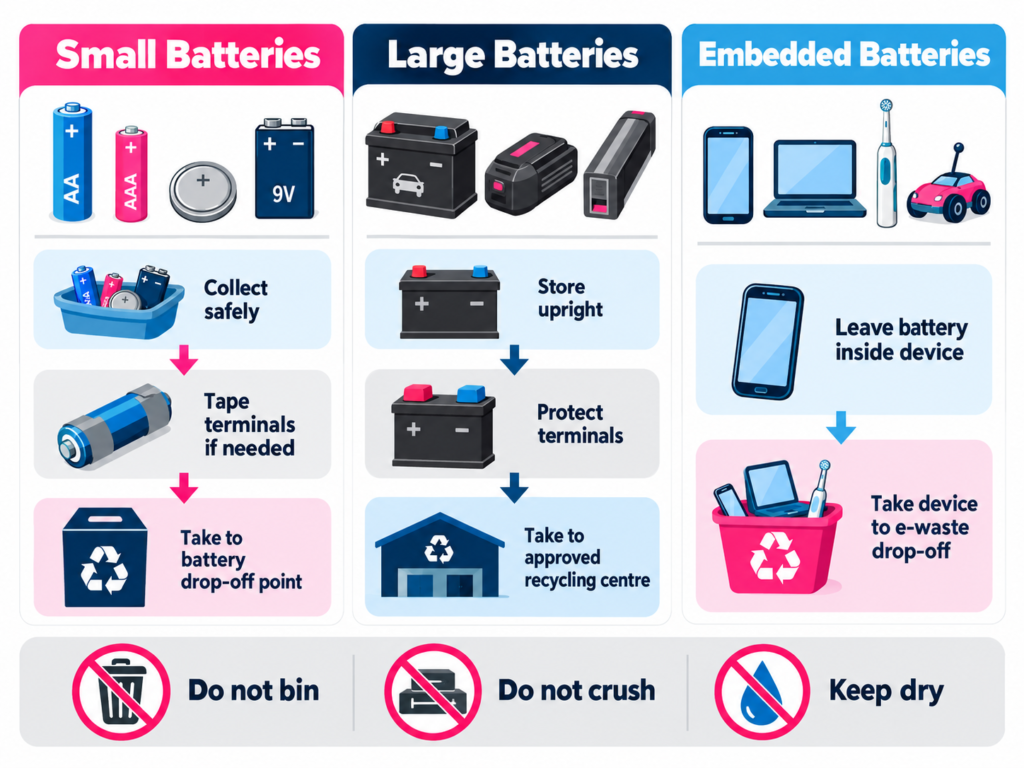
Gather loose household batteries, car batteries and old cordless-tool packs separately. Never place them in regular household rubbish. They can create a serious fire risk.
For battery recycling Sydney residents should use suitable collection points. Tape exposed terminals before drop-off, following NSW EPA guidance. Different battery sizes need different facilities.
Ask where to dispose of batteries Sydney-wide through the EPA finder. Battery acceptance can vary by site. Keep packs away from loose metal fasteners.
Did you know?
NSW Community Recycling Centres accept selected household problem waste. The usual guide is 20 litres or 20 kilograms per waste type.
Handle Garage E-Waste Separately
An old printer is not just another bit of rubbish. Sorting electronics properly keeps hazardous parts out of ordinary bins.
Sort Old Electronics
Look for unused routers, monitors, printers, chargers, cables and broken electric tools. Decide whether each item can be reused, repaired or recycled.
Wipe personal data from storage devices before donation or recycling. Remove connected accounts and memory cards. Keep any device you still need for your home setup.
For old drill bodies and cordless equipment, ask the recycler whether they accept electrical tools. Battery packs may need a separate drop-off.
Separate E-Waste From Rubbish
Make a labelled e-waste tub instead of mixing electronics with metal scrap. Keep loose batteries in their own safe container.
E-waste recycling Sydney services often accept computers, accessories and many home electronics. Acceptance for larger items, batteries and workshop equipment differs.
Check whether a council collection requires a booking. Do not assume electrical recycling Sydney programs accept every powered item.
Find E-Waste Drop-Offs
Search your council’s current e-waste page for collection days or permanent locations. City of Sydney offers specific recycling services to its eligible residents.
When checking where to recycle electronics Sydney residents should confirm the exact item category first. Also check quantity limits, opening hours and proof-of-residency rules.
If you need to know where to recycle old power tools, contact the receiving site. Ask about removable or embedded batteries before leaving home.
Document High-Value Garage Items
A short paper trail gives valuable gear a clearer identity. It also helps you compare what leaves and arrives.
Photograph Power Tools
Photograph each valuable drill, saw, compressor and tool kit before packing. Include accessories and any existing scratches or damage.
Take one wide shot of each workbench and shelving bay. Then capture detailed images of individual items. Save everything in a dated move folder.
For especially costly gear, keep receipts or purchase records beside your photos. This can help if you later need to identify missing items.
Record Serial Numbers
Write the model, brand and serial number beside each photographed tool. Note the estimated replacement value only when you have a reasonable basis.
Number tool cases and cartons to match your inventory. For example, G-07 can mean garage carton seven. List its contents in your phone or spreadsheet.
Share the final item count with your house removalists. They need accurate quantities, not necessarily your private purchase records.
Check Transit Cover
Ask exactly what transit insurance for moving house covers. Compare exclusions, excesses and the steps needed to make a claim.
NSW Government guidance says removalists do not automatically have to insure your goods. Read the written policy, not just a website badge.
Ask about damage during loading, transport and unloading. Confirm high-value tools are included and whether owner-packed cartons change cover. The NSW guidance on choosing a removalist explains these checks.
Choose a removalist based on written scope and suitable cover. A cheap headline price matters less if your valuable equipment is exposed.
Prep Tools and Outdoor Equipment (1–2 Weeks Out)
Prepare each item for handling, not just transport. There is no shortcut around clean, stable equipment.
Drain Mechanical Fuel
Tell your removalist about mowers, whipper snippers, generators and petrol-powered tools. Ask for their exact fuel and battery preparation rules.
If the manufacturer allows fuel removal, follow its instructions safely. Never siphon, burn off or pour fuel into drains. Use an approved waste service for unwanted fuel.
Leave anything with unknown leaks outside the packed area until you obtain safe handling advice. Do not assume a drained engine is accepted automatically.
Clean Garden Tools
Brush loose soil from shovels, rakes, hoses and lawn equipment. Wipe oily surfaces and dry damp metal before packing.
Check for garden pests or seeds if moving interstate. State requirements differ, so review applicable biosecurity rules before loading plants or soil.
Dry equipment also protects nearby furniture and cartons. Nobody wants a muddy rake resting on a clean mattress.
Bundle Long Items
Group broom handles, fishing rods, poles and lightweight garden stakes by type. Protect sharp ends with rigid caps or thick wrapping.
Do not bundle heavy spades or blades so tightly that nobody can grip them safely. Leave clear lifting points and avoid excessive weight.
Ask the crew how they prefer to handle ladders and extra-long equipment. Odd shapes can use more truck space than expected.
Lock Toolboxes
Close and secure toolbox drawers before moving them. Remove loose blades and heavy items that might shift during carrying.
Use small labelled pouches for keys, sockets and drill bits. Place them inside a closed compartment if safely secured.
Photograph packed toolboxes before collection. Keep their keys and access codes with your personal essentials rather than hidden in a carton.
Prepare Garage Shelving and Workbenches
Fixed storage needs a separate plan. This is easier said than done when every shelf is still full.
Empty Garage Shelving
Remove items from freestanding racks and wall-mounted shelves. Never ask removalists to carry loaded shelving.
Check whether each rack is part of the property sale or tenancy agreement. Leave fixtures that must stay. Seek permission before removing attached structures.
If shelving will travel, list each unit separately. Include width, height and any loose support panels in your inventory.
Dismantle Workbenches
Ask whether your crew can dismantle heavy workbenches. Some need specialist disassembly or cannot be moved safely in one piece.
Photograph joints and brackets before taking anything apart. Label legs, tops and drawers as one set. Keep sharp attachments protected.
For heavy cabinets or benches, discuss furniture removalists in Sydney before booking. Confirm handling equipment.
Bag and Label Fixings
Put matching screws, bolts, washers and brackets in individual sealed bags. Write the matching item ID on every bag.
Tape the bag to a protected section only when it cannot damage the surface. Otherwise store it in a dedicated parts carton.
Record whether assembly is included at the new home. That avoids a half-built bench taking over your new garage.
Flag Heavy and Oversized Garage Items
Big garage gear needs clear measurements and a lifting plan. Don’t bite off more than your crew can safely handle.
Measure Garage Access
Measure garage doors, side gates and the narrowest turning points. Include steps, slopes and driveway length.
In Parramatta or the Inner West, street parking may leave long carry distances. Photograph any steep driveway or tight side access.
Give the removalist the smallest usable width, not just the front garage door measurement. Access problems are easier to solve early.
Flag Heavy Items
Identify tool cabinets, safes, compressors, workbenches and heavy shelving before quote day. Supply dimensions and manufacturer weights where possible.
A dense steel cabinet may need more people or specialist handling. Mention wheels, fragile parts and whether it can be dismantled.
See house move quotes that forget the garage for details. Unexpected gear can change a removal quote.
Confirm Lifting Equipment
Ask whether the crew expects to use trolleys, straps, protective blankets or specialist lifting equipment. Confirm who supplies each item.
Send photos showing steps, thresholds and turning points. Ask what cannot be safely moved and whether extra help is needed.
A detailed garage list helps Six Brothers Removalists assess the move. Request a free written quote before locking in your date.
Pack Loose Garage Items Safely
Pack garage odds and ends in small, sensible groups. Little things can cause big problems when left loose.
Box Small Hardware
Sort nails, washers, screws, nuts and bolts into separate lidded containers. Tape lids closed and place containers inside strong cartons.
Use smaller boxes for dense metal items. Heavy fittings can split oversized cartons. Fill unused space without making the box difficult to lift.
Label each carton by shelf or project. What good is a box nobody can identify? A clear system makes unpacking easier.
Protect Sharp Tools
Fit rigid blade guards before packing saws, pruning tools and cutters. Wrap exposed points with suitable protective material.
Do not put bare blades near soft fabric, loose cords or your hands. Keep sharp objects separated from ordinary kitchenware and toys.
Mark cartons with handling warnings and tell the crew about unusual items. A clear warning is better than an unwelcome surprise.
Label Spare Parts
Group spare wheels, brackets, hoses and fixings by the item they belong to. Mark each packet with its matching inventory number.
Use plain labels such as “Workbench A fixings” or “Bike rack bolts”. Avoid vague labels like “garage stuff”.
If packing support is needed, discuss the exact item list before booking. Not every garage item suits a standard packing carton.
Deep Clean the Space (The Week of the Move)
Leave time for the final sweep. A clean slate is easier to inspect and hand over.
Treat Oil and Grease Stains
Check your lease or sale obligations before cleaning concrete floors. Use products suited to the surface and follow the label.
Absorb small fresh spills with suitable materials. Do not wash oil into stormwater drains. Seek professional help for large spills or uncertain chemicals.
Photograph existing stains before you start. That helps distinguish old marks from new problems at the property handover.
Clear Cobwebs
Brush accessible cobwebs from corners, window frames and empty shelving. Wear suitable protection around dusty areas.
Do not reach blindly into dark corners. Watch for spiders, exposed wires and broken glass. Ask for help with unsafe or elevated areas.
Sweep the floor once bulky items have left. Keep the exit path clear while the crew works.
Wipe Down Surfaces
Wipe benches, cupboard doors and reachable windowsills after packing. Check behind removed cabinets and storage tubs.
Keep one cleaning kit accessible for final use. It should not leave on the truck before your inspection is finished.
Take final photos after cleaning. They provide a simple record of the garage condition at handover.
Create a Garage No-Load Zone
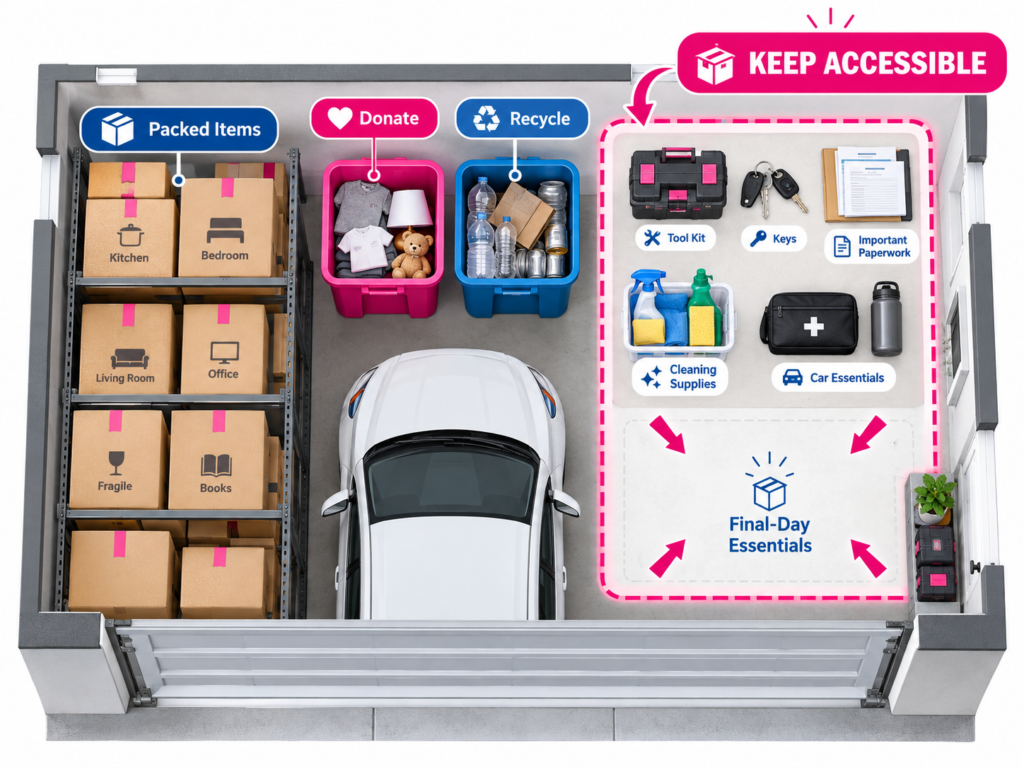
Mark a small corner for things that must stay accessible. Keep the right kit within arm’s reach.
Keep Car Essentials Handy
Place vehicle keys, registration papers, tyre inflator and essential tools in a labelled personal bag. Keep the bag out of the truck loading route.
Leave a clear path to the family car. Avoid trapping it behind moving boxes or booked collection items.
Check the spare tyre and charging cables before the garage is empty. You will need them later.
Hold Back Cleaning Gear
Keep a broom, dustpan, cloths and safe cleaning supplies until the last inspection. Clearly mark them “DO NOT LOAD”.
Do not leave unwanted cleaning chemicals in the garage. Sort them for approved disposal well before moving day.
Once cleaning is complete, place your small kit in the car only when safe and permitted. Keep hazardous materials separate.
Separate Final-Day Items
Make a final-day zone for remotes, keys, spare hardware and the garage inventory. Use bright labels and keep it away from removalist cartons.
Tell every adult in the house which items must not be loaded. A simple floor marking can prevent mix-ups.
Use the home moving calculator to check your overall item count before the truck arrives. The garage is only one part of the handover.
Final Moving Day Logistics
The final lap is about information, space and keys. Get those three right before anything leaves.
Provide an Accurate Inventory
Walk the crew through your final garage list before loading. Point out fragile tools, heavy benches, unboxed bikes and any excluded goods.
Share photos of items that were added after quoting. Ask for written confirmation if their inclusion changes truck capacity, labour or price.
Tick off carton IDs as the garage empties. A good list makes a later check far easier than memory alone.
Clear the Driveway
Move your car before the removalists arrive. Keep bins, hoses, sale items and garden tools away from the driveway.
Check that truck access will not block a neighbour or restricted kerb. Ask about lawful parking if your street is narrow.
Give the team a safe walking path from garage to truck. A clear route protects both people and possessions.
Hand Over Remotes
Collect garage remotes, door keys, security codes and gate fobs. Test each remote before handing it over to the right person.
Check shelving, ceiling storage, side doors and the no-load zone one last time. Photograph the empty garage after its final clean.
If your garage inventory has changed, share the revised list before moving day. Call Six Brothers Removalists on 1300 764 372. You can also ask for a free written quote.
FAQs
How to Prepare for Removalists?
Declutter the garage, label cartons and list heavy items. Set aside dangerous goods. Send the removalist photos, inventory details and access measurements early.
Do Removalists Have Insurance?
Some do, but cover is not automatic under NSW law. Ask for the policy wording, exclusions, excess and claim steps. Confirm your tools are covered.
Can removalists take petrol and gas bottles?
Never assume so. Ask the company about restricted items before booking. Arrange safe storage, return or approved disposal for anything excluded.
Where can I recycle batteries in Sydney?
Check the NSW EPA recycling finder and approved battery drop-offs. Tape exposed terminals. Confirm whether your batteries need a larger-item facility.
What garage items should go on my moving inventory?
Include bikes, ladders, workbenches, power tools, shelving, cabinets and cartons. Note dimensions and approximate weights for difficult items.
Should I dismantle garage shelving before moving?
Empty it first. Check whether it belongs to the property. Ask the removalist whether dismantling is necessary and included.
When should I start clearing my garage before moving?
Start four to six weeks out. Book council services early. Prepare equipment one to two weeks before moving. Clean and check the space during the final week.