


Table of Contents
A Sydney house move rarely ends at the back door. Pots, hoses, mowers and shed shelves still need a plan. Leave them until moving day, and small jobs quickly pile up.
This garden, shed and outdoor move checklist follows a simple timeline. You will learn how to move plants when moving house, protect heavy pots and prepare access. It also helps you give removalists a clearer inventory before booking.
4 to 6 Weeks Before the Move
Start outdoors early. The garden can be a second storeroom hiding in plain sight. Walk every area before requesting your final quote.
Audit the Garden and Shed
Count pots, chairs, ladders, storage tubs, bikes, hoses and power tools. Photograph bulky pieces beside a tape measure. Use this outdoor item inventory to catch items indoor lists miss.
Check Council Rules
Ask your local council about green waste, booked collections and truck parking. Rules vary across Sydney suburbs. In Parramatta or the Inner West, check your actual street signs before moving day.
Review Legal Boundaries
Confirm which plants, paving pieces and outdoor fixtures belong to you. Tenants should check lease conditions. Homeowners should confirm sale inclusions before removing fixed garden items.
Assess Biosecurity Risks
Moving plants interstate Australia can trigger quarantine checks. Plants, potting mix and soil may face movement restrictions. Check the official NSW plant movement rules and your destination state before packing.
Sort the Shed
Separate items into keep, sell, donate and safe disposal groups. Keep bolts with their matching equipment. Earlier sorting reduces the garage and shed moving costs that surprise households.
Safe Chemical Disposal
Do not put pesticides, pool chemicals or old fuel into household bins. Use the NSW EPA Household Chemical CleanOut guidance to find suitable disposal options. Keep containers labelled and never mix chemicals.

Prep Your Plants
Group pots by size and photograph delicate stems. Check which plants tolerate repotting or pruning. For large specimens, seek specific nursery advice before digging or moving.
Stop Fertilising
Pause unnecessary feeding before transport, especially for stressed plants. Avoid major changes to routine without plant-specific guidance. A little preparation goes a long way.
Tell Your Removalist About Outdoor Items Early
Share the outdoor list before your quote is final. Don’t keep awkward items up your sleeve. A clear description helps the crew plan safely.
Declare Heavy Outdoor Items
List concrete planters, stone tables, water features and heavy benches separately. Include approximate measurements and access photos. Ask whether specialist equipment or extra crew members may be needed.
Share Access Photos
Photograph gates, narrow paths, stairs, slopes and the likely loading spot. Send photos from both Sydney properties. The Six Brothers Removalists quote form also includes outdoor and garage inventory options.
Question: How to prepare for removalists? Send an accurate inventory, share access photos and separate any restricted items. Keep your loading route clear.
Flag Unusual Shed Items
Mention workbenches, compressors, oversized ladders and mounted cabinets. Tell the team if anything contains oil or a built-in battery. Do not assume every item can travel.
Confirm Restricted Items
Ask what the removalist truck can legally and safely carry. Fuel, gas bottles and hazardous chemicals need special attention. Arrange approved disposal or separate transport when required.
Plan the Yard-to-Truck Access Route
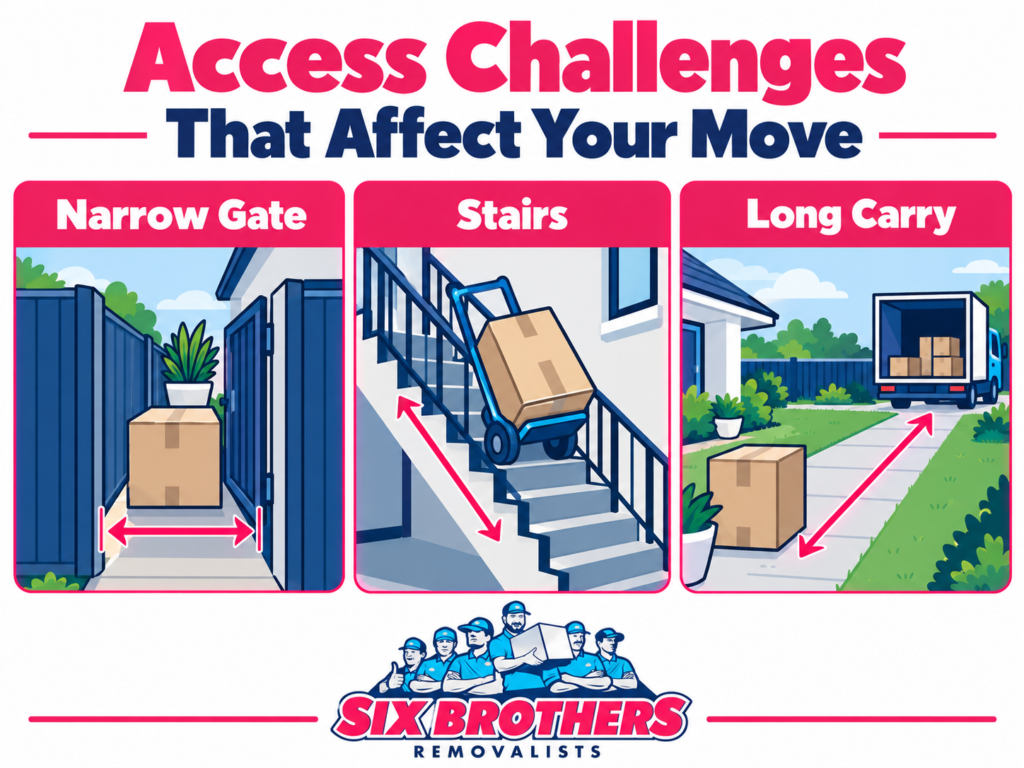
Walk the full route from shed to street. In Sydney, a narrow side path can be the sticking point. Measure the tightest section, not just the gate.
Measure Gates and Side Access
Measure gate clearances, corner turns and low roof sections. Compare them with table, mower and pot widths. Account for carrying handles and safe lifting space.
Check Stairs and Slopes
Count steps, note steep grades and flag slippery surfaces. Photograph any uneven sandstone or timber stairs. Crews need this information before choosing equipment.
Identify Long Carry Routes
Trace the distance from backyard to legal truck parking. Long carries add handling time. Do not assume a truck can park across a driveway or footpath.
Clear the Loading Path
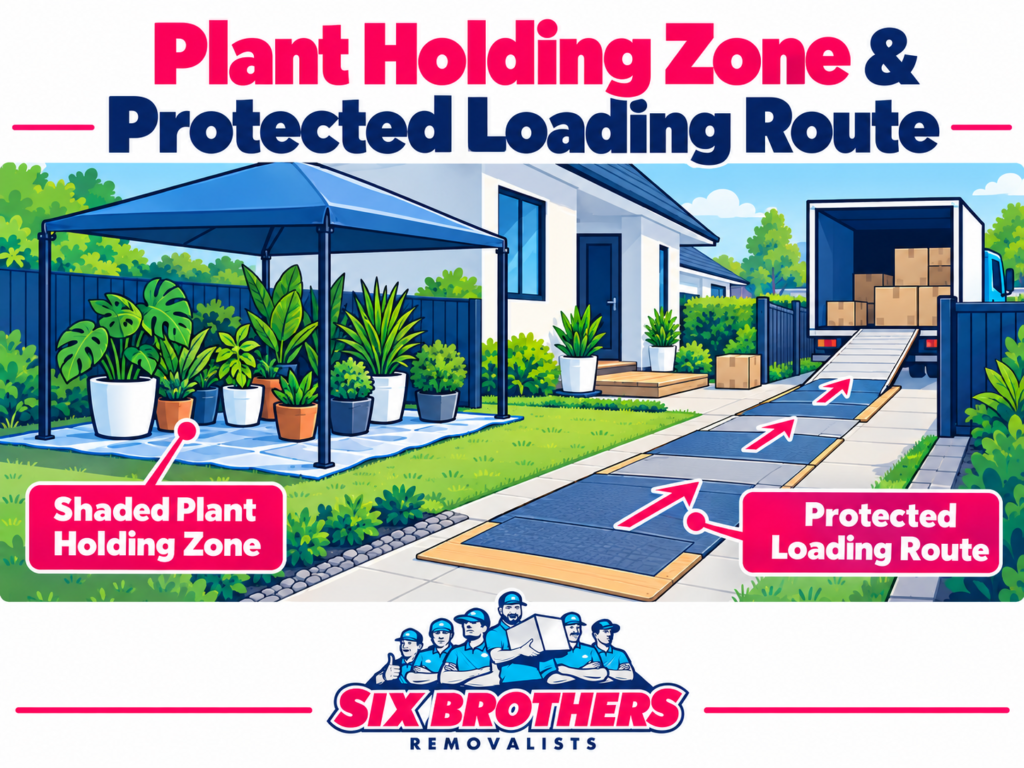
Remove toys, hoses, loose branches and empty pots. Tie back plants without damaging them. Keep pets and children away from the route.
How Outdoor Items Affect Your Removalist Quote
Outdoor items can change the load volume, carrying time and handling plan. A mower, six stone pots and a large table need more space than they appear. Apples with apples matters when comparing quotes.
Tell house removalists about weights, stairs, gate widths and dismantling needs. Ask whether packing, access time and specialist handling are included. A low headline rate may not reflect the whole job.
After your outdoor list is complete, ask Six Brothers for a free, itemised quote. Confirm the agreed scope and any variation conditions before booking.
Identify Outdoor Items Needing Special Handling
Some outdoor pieces cannot be treated like ordinary cartons. A little extra care here saves grief later. Identify them before the final pack.
Stone Pots and Planters
Moving heavy garden pots takes a safe lifting plan. Photograph cracks and estimate empty weights. Never lift large stone pots by their rims or plant stems.
Statues and Water Features
Drain detachable water features and dry separate pieces. Wrap vulnerable edges and label fragile parts. Confirm whether fixed pumps or plumbing need a qualified tradesperson.
BBQs and Outdoor Kitchens
Remove loose plates, trays and cooking tools. Let hot surfaces cool fully. Gas connections and cylinders require proper isolation and your removalist’s approval.
Battery Garden Equipment
Check the manufacturer’s battery transport instructions. Protect exposed terminals where recommended. Disclose lithium batteries and ask about separate handling.
For bulky furniture, the furniture removalist service can help you discuss safe handling and access needs. Confirm each specific outdoor item before booking.
2 Weeks Before the Move
Two weeks out, switch from planning to practical preparation. It is better to tackle one task daily than leave everything to chance.
Clean Outdoor Furniture
Brush off dirt, leaves and spider webs. Wash surfaces as appropriate, then allow proper drying. Wet cushions and dirty frames complicate packing.
Dismantle Large Items
Photograph tables, shelves and modular seating before disassembly. Bag and label screws. Keep assembly instructions with the matching parts.
Disconnect Gas
Follow appliance instructions and use licensed help where required. Never cut or improvise connections. Keep disconnected cylinders out of the removal load unless expressly approved.
Transfer Potted Plants
Where suitable, repot vulnerable plants into manageable containers earlier. Avoid last-minute root disturbance. Check drainage, pot integrity and the new garden conditions.
Prune and Treat
Trim dead leaves and overhanging growth conservatively. Avoid harsh treatments just before travel. Seek local gardening advice for diseased or fragile plants.
Pest Check
Inspect pot bases, shed corners and furniture joints for insects. Remove soil clumps from equipment. This matters even more for interstate moves.
Drain Fuel and Fluids
Follow the mower or equipment manual and the removalist’s instructions. Use qualified help for unfamiliar engines. Never release petrol into drains or soil.
If you need cartons or wrapping support, ask about packing and removals before the final week. Do not wait until the shed is full of loose gear.
2 to 3 Days Before: The Final Downcount
The final days are for checks, not a fresh start. Keep your head above water by grouping similar jobs.
Deep Hydration
Water plants according to their needs before travel. Avoid soaking every pot immediately before lifting. Extra water adds weight and can leak.
Bundle Long Tools
Clean rakes, brooms and spades. Cover sharp blades with suitable guards. Bundle safely without creating a heavy, awkward package.
Pack the Shed Contents
Use strong cartons for smaller fittings and light tools. Label batteries, blades and breakable parts clearly. Keep chemicals and prohibited goods completely separate.
Prepare for Sydney Weather on Removal Day
Sydney weather can turn quickly, especially during stormy periods. Have covers and a dry route ready. Better safe than sorry.
Protect Plants From Heat
Move sensitive pots into shade before collection. Avoid leaving foliage inside a hot parked vehicle. Ask the crew how plants will be positioned.
Keep Outdoor Items Dry
Cover cushions, timber furniture and cardboard cartons. Dry wet items before wrapping them airtight. Do not trap water against delicate surfaces.
Prepare for Wet Access
Watch for slippery tiles, grass and timber steps. Use safe traction protection where suitable. Discuss severe rain or unsafe access with your removalist.
Protect Your Property During Outdoor Loading
Protection matters at both properties. Scratched decking and crushed garden beds can sour a good move. Flag delicate areas before loading starts.
Protect Lawns and Garden Beds
Mark soft soil, irrigation heads and new turf. Agree on approved carrying routes. Never assume a loaded trolley belongs on wet grass.
Cover Paving and Decking
Discuss suitable protective materials for vulnerable surfaces. Inspect tiles and boards beforehand. Avoid makeshift covers that become slip hazards.
Secure Gates and Fences
Test latches, remove loose gate stops and note unstable fence panels. Keep gates open only when safely supervised. Protect hinges from heavy contact.
Protect Narrow Passages
Check wall lights, pipework and air-conditioning units along the route. Point these out to the crew. Small snags can stop a large item cold.
Moving Week & Moving Day
Treat this as the last preparation pass. The right loading sequence depends on your home and truck layout. Keep the plan flexible with your crew.
Dry the Soil
Aim for manageable, non-leaking pots, not bone-dry roots. Let excess surface moisture drain after watering. Protect pot bases from leaking onto furniture.
Wrap Terracotta & Ceramic
Use padding around each pot and separate hard surfaces. Pack small pots in suitable cartons. Large pots need their own stable handling plan.
Secure Loose Tools
Sheath blades and tape small attachments inside marked containers. Keep heavy tools low in sturdy packaging. Never hide sharp equipment inside soft bags.
Pack Plants Last
Plants often benefit from a shorter period inside the vehicle. Agree on placement with the driver. They may travel separately if the removalist cannot accept them.
Final Yard Sweep
Check under decks, behind bins and inside outdoor cupboards. Find sprinklers, hoses, pegs and hidden hand tools. The last look often catches the forgotten bits.
Moving Day: Execution
Keep one person available to answer outdoor questions. Crews work faster when decisions are clear. A calm final check beats last-minute guesswork.
Create a Plant Holding Zone
Choose a sheltered spot away from foot traffic. Group pots by fragility and destination. Keep damaged pots out of the main loading path.
Secure the Pots
Separate ceramic edges with padding. Keep pots upright and stable. Ask the team how they prevent heavy planters shifting in transit.
Load Outdoors Last
Discuss loading order rather than dictating it. Some plants and fragile items should go late, subject to safety. Heavy outdoor furniture may need another position.
The Final Walkthrough
Photograph the cleared shed, patio and garden. Check gates, taps and storage cupboards. Confirm no tools or prohibited items remain with the wrong load.
Did you know?
The Six Brothers quote form lists Outdoor / Plants and Garage separately. Enter both, even for a small backyard.
Check Access at Your New Home
Your destination needs as much planning as your old place. One overlooked side gate can spoil the landing. Send measurements before the truck arrives.
Measure the New Side Access
Check gate width, steps, low eaves and turning space. Compare clearances with the largest outdoor item. Remember a narrow corner can defeat a wide opening.
Choose a Plant Unloading Area
Pick a shaded, stable holding spot. Keep pots away from the main carrying route. Plan quick watering checks based on each plant’s condition.
Plan Large Item Placement
Mark final positions for stone tables, raised beds and outdoor kitchens. Heavy items are difficult to shift twice. Confirm any reconnection needs before arrival.
Check Backyard Truck Access
Only use vehicle access your property and local rules permit. Check the road, driveway slope and turning room. Let the driver decide safe truck positioning.
Set Up the Garden After the Move
Unpack outdoors with the same care you used to pack. There is no prize for rushing. Start with living plants and fragile pots.
Check Plants for Stress
Unwrap promptly and check leaves, roots and moisture. Offer suitable shade or water for the species. Avoid sudden full-sun exposure after enclosed travel.
Inspect Pots for Damage
Check hairline cracks, chips and drainage holes. Take clear photos before moving fragile items again. Keep any damage records and quote paperwork together.
Reassemble Outdoor Equipment
Match labelled fasteners with tables, shelves and planters. Use manufacturer instructions for tools or appliances. Arrange qualified reconnection for gas or plumbing where required.
Reorganise Shed Storage
Store sharp tools securely and keep walkways clear. Put chemicals in suitable labelled storage, not the moving cartons. Make a place for frequently used gear first.
Outdoor moves feel simpler when every item, access point and safety rule is visible. For a Sydney home move, request a free quote from Six Brothers Removalists. Call 1300 764 372 or email info@sixbrothersremovalist.com.au with your outdoor inventory.
FAQs
Can I move garden plants interstate?
Sometimes, but not every plant can travel freely. Check the species, soil and destination rules first.
How much extra do heavy garden pots cost to move?
There is no safe flat figure. Size, weight, access and the booked service determine the quote.
How do I move large planters?
Remove loose decorations, check the pot structure and plan the carrying route. Ask professionals about heavy or fixed planters.
Can a removalist carry an LPG gas bottle?
Do not assume so. Check the company’s dangerous-goods policy and arrange a compliant alternative.
How do I move a lawn mower?
Clean it, secure moving parts and disclose fuel or batteries. Check the carrier’s accepted preparation method.
Do removalists pack for you?
Many offer packing services, but inclusions vary. Confirm whether your booking covers outdoor gear and shed contents.
What happens if it rains on moving day?
Rain may change handling and access. Protect goods, keep walkways safe and confirm your crew’s wet-weather plan.