

Moving interstate is a big job. Add storage into the mix and it feels bigger.
But here’s the thing. Storage and removals work brilliantly together when you plan them right. Maybe your new home isn’t ready. Maybe you’re selling first and buying later. Maybe the dates just clash. Whatever the reason, you need a safe spot for your stuff. And a way to get it across the country.
Do it in two separate bookings and things get messy. Miss a date and your gear sits in limbo. Do it as one smooth plan and life gets easy. That’s where a team like Six Brothers Removalists earns its keep.
This guide shows you how to combine the two. Step by step, with no jargon and no fluff. You’ll learn the methods, the costs, and the traps to dodge. Ready to make a tricky move simple? Let’s go. A little planning up front turns a stressful move into a calm one. That’s the whole goal here.
Why Use Storage When Moving?
Sometimes your move-out and move-in dates don’t match. That gap can be days or months. Storage bridges that gap. Your things wait safely until your new place is ready. It also takes the pressure off. You can move in stages instead of racing the clock.
Selling a home? Empty rooms show better. Storage lets you clear clutter before the photos.
Renovating the new place first? Store the bulky gear until the paint dries.
Downsizing but not ready to part with things? Storage gives you time to decide.
Moving for work on short notice? Store now, sort the rest once you land.
So storage isn’t a last resort. For many interstate movers, it’s the smart middle step. It buys you time, calm, and room to breathe. On a big interstate move, that’s priceless. Best of all, it lets you move without forcing two dates to line up perfectly.
It even helps with settlement clashes. If your sale and purchase don’t align, storage covers the gap. For anyone moving states, that flexibility can be the difference between calm and chaos.
Plan the Storage-to-Move Workflow
A move without a plan is a mess waiting to happen.
Before you lift a single box, sort your gear into groups. It saves hours later. Think of it like packing a suitcase. What you need first goes on top, not the bottom. Grab a notebook or a phone note. Jot down what goes where as you sort each room.
Separate Direct-Delivery Items
Some things go straight to your new home. Daily-use gear, work items, kids’ basics. Mark these clearly. They skip storage and ride the truck to the door.
Keeping them apart stops them getting buried in a unit for weeks. Pack a clearly marked essentials box for night one. Kettle, chargers, bedding, toiletries.
Group Storage-Only Items
Other things can wait in storage. Spare furniture, seasonal gear, boxes you won’t need soon. Keep these separate from day one. It makes loading the unit far simpler.
Label the group clearly so movers know what heads to the warehouse.
Set a Redelivery Window
Work out roughly when you’ll want your stored items back. Even a rough date helps. It lets your removalist plan the second leg early. Popular dates fill up fast.
A window also helps you budget. You’ll know how many months of storage to expect. Flexible on the date? You may unlock a cheaper backload slot for the second leg.
Confirm the Final Destination Address
Lock in the exact address for delivery. Down to the unit number and access notes. One wrong detail sends the truck to the wrong spot interstate. That gets costly. Share parking limits and lift bookings too. It saves a wait on delivery day. If the new address is still unconfirmed, tell your mover early. They can hold your goods a little longer.
Did you know?
Around one in three Australian moves involves a gap between homes. Storage is often the missing piece that keeps the whole move on track.
Select the Right Storage Method
Not all storage works the same way. The method you pick shapes cost and convenience. Here are the four main options for interstate movers. Each suits a different kind of move.
Removalist-Managed (Container/Module) Storage
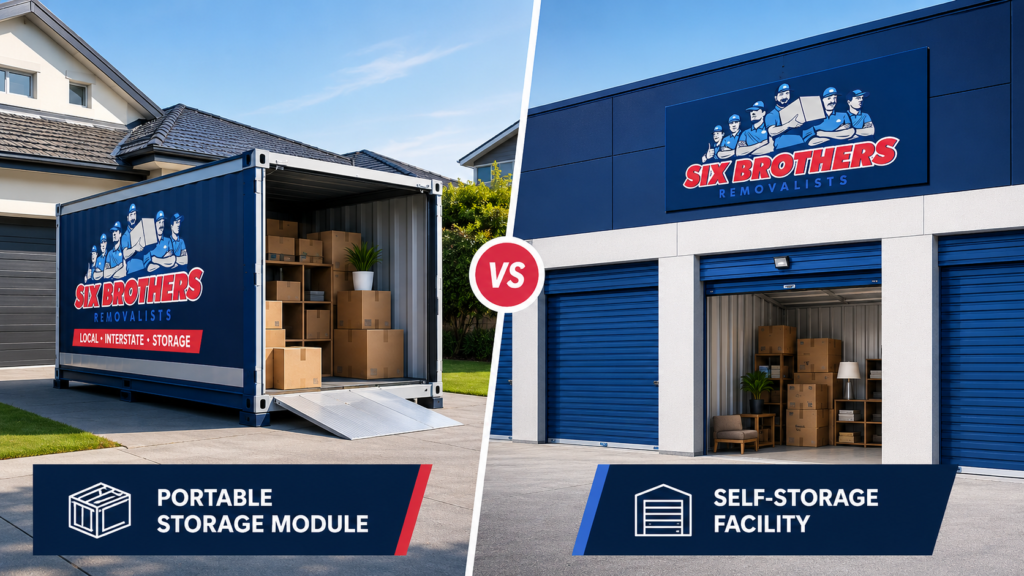
Your removalist packs your goods into a container or module. It stays sealed in their warehouse. Nobody touches it until redelivery. Fewer handles means fewer chances for damage.
This is often the safest choice for a long-distance move. One team, one chain of custody. It also saves you a loading day. The crew who packs it does all the lifting. It’s also tidy. Your goods travel in the same module they were stored in. Ask if the module is weatherproof and sealed. That keeps dust and damp out during the wait.
Mobile / Portable Box Storage
A portable unit is dropped at your door. You pack it at your own pace. The company then collects and stores it. Handy when you want time to load up. It suits busy people who’d rather not rush a single loading day. Load a bit each evening after work. No pressure, no sore back from one big push.
Traditional Self-Storage Partnerships
You rent a unit at a facility and pack it yourself. Your mover delivers to and from it. It gives you easy access to your things. But it adds extra loading and handling. Good if you’ll need to grab items during the storage period.
Staged Delivery
Some items go now, the rest come later. Your mover holds the balance in storage. Great for phased moves. You settle in slowly without a mountain of boxes on day one. It’s a gentle way to move a big household without the chaos. Families love this one. The kids’ rooms can come first, the garage later.
Choose One Provider or Separate Providers
Two bookings or one? This choice changes your whole experience. Here’s how a single provider stacks up against juggling separate ones.
Compare Single-Point Responsibility
With one provider, the buck stops in one place. No blame games if something goes wrong. Separate providers can point fingers at each other. That leaves you stuck in the middle.
One team also means one contract to read, not three. If a delay hits, one call fixes it. You’re not stuck relaying messages between firms.
Clarify Warehouse Handover
Ask exactly where your goods sit between legs. A secure warehouse beats a random shed. Know who holds the keys and who’s liable. Get it in writing before you book.
A clear handover point removes the biggest grey area in a combined move. Ask for the warehouse address too. Knowing where your goods rest brings real peace of mind.
Confirm the Claims Process
Find out how a damage claim works before you need it. Ask about timeframes and proof. A clear process is a green flag. Vague answers are a red flag. Photos and a matching inventory make any claim far easier to settle.
Share Inventory Records
Give every party the same inventory list. Everyone tracks the same items. Matching records make handovers clean. They also protect you if a box goes missing. Keep your own copy too. Two matching lists remove all doubt.

Request an Integrated Quote
A combined quote gives you the real number. No hidden second bill later. Give your mover the full picture so the quote is accurate. Rough guesses lead to rough surprises.
Inventory Volume
Storage and transport both price on volume. So an accurate inventory matters. List your rooms and big items. Our moving home calculator gives a quick volume estimate. The better your list, the tighter your quote. It’s worth the ten minutes.
Don’t forget the garage, shed, and balcony. They hide more volume than most people expect.
Redelivery Fees
Ask what it costs to get your goods out again. Redelivery is part of the true price. Distance and access at the new home change this figure. Get it upfront, not later.
Some quotes hide this fee. A good provider states it clearly. Ask if redelivery to a tricky address costs extra. Stairs, narrow streets, and lifts can all add up.
Ask for All-in-One Quotes
Request one quote covering pickup, storage, and delivery. Compare it against separate bookings. A bundled price is usually clearer and cheaper. It also saves you chasing two invoices.
Ask what could push the price up. Then there are no shocks on the day.
How Much Does Storage Cost?
Storage isn’t one flat fee. It’s a few costs bundled together. Prices shift with unit size, location, and how long you store. Here’s a rough guide.
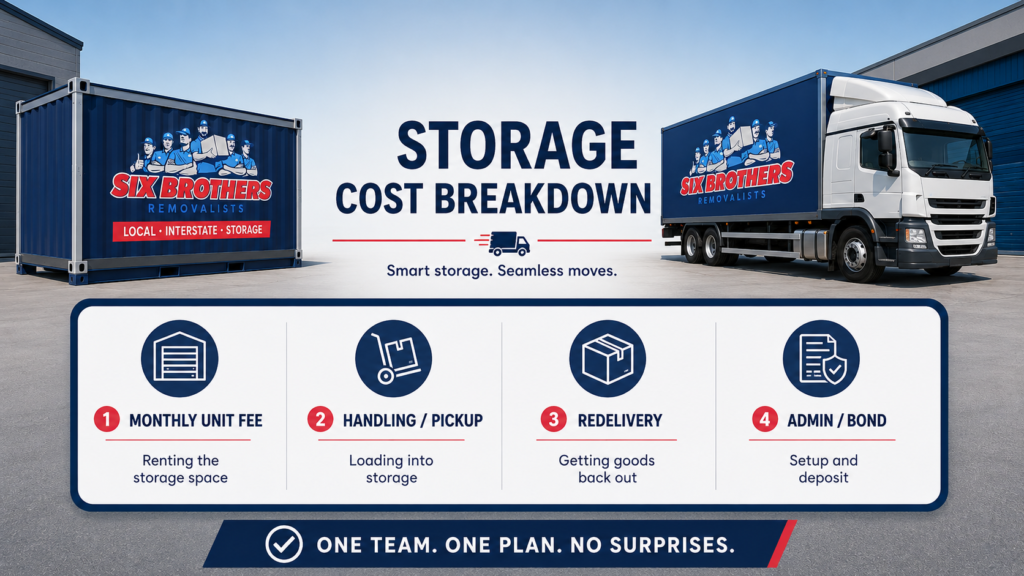
A combined move can trim these costs. One team handling both legs cuts double-handling. Climate control adds to the monthly fee. But it protects timber, leather, and electronics. Longer terms sometimes come with a discount. Ask if a multi-month rate is on offer.
Watch for minimum terms too. Some places charge a set period even if you leave early. Always ask for the total, not just the monthly rate. That’s the number that matters.
Combine Storage and Moving for Maximum Savings
Booking both together often unlocks better value. You skip duplicate handling and travel. Your goods move once into storage, then once to your home. Fewer trips, lower cost. It also means one team knows your whole move. From the first box to the last, including your furniture removalist needs.
Think of it like a direct flight versus two connections. Same trip, far less hassle. And when one crew owns the whole job, nothing falls through the cracks. You also save on your own time. No chasing two companies or repeating your details twice. For a long haul across the country, that single point of contact is worth a lot.
Combine Storage With Backloading
Want the cheapest way to move interstate? Backloading is often it. Backloading shares truck space with other moves heading your way. Pair it with storage and you save more.
Best for Flexible Dates
Interstate backloading shines when your dates can flex. You fit into a truck already on the road. Storage gives you that flexibility. Your goods wait safely until a backload is ready. The more you can bend on timing, the more you tend to save.
Not Ideal for Urgent Delivery
Backloading trades speed for savings. So it suits movers who aren’t in a rush.
Need it there by a set day? A dedicated truck may suit better. Weigh the saving against the wait. For many, the trade is well worth it. If your job or lease has a hard start date, plan around it. Don’t gamble a deadline to save a little.
Use Storage as a Buffer
Storage acts as a holding bay between legs. It absorbs date changes without stress. That buffer is what makes backloading work smoothly. No scrambling if plans shift. It turns a rigid timeline into a flexible one. And a flexible timeline is a cheaper one. You wait for the right truck, not the first one.
Check Extra Handling Risk
More handling means more chances for bumps. Ask how many times your goods are moved. Good packing and a single team keep this risk low. Always confirm who handles what.
Well-wrapped, well-labelled boxes travel through extra stops just fine. Ask for blanket wrap on furniture. It’s the simplest guard against knocks in transit.
Coordinate the Timeline and Documentation
Paperwork isn’t glamorous. But it’s what keeps a combined move honest and safe. Tick these off before your goods leave the house. Ten minutes now saves days of stress.
Sync the Dates
Line up your pickup, storage, and delivery dates. Write them all in one place. A shared calendar stops crossed wires. Everyone works from the same plan. Add buffer days between legs. Moves rarely run to the exact minute. Confirm each date in writing. A quick email keeps everyone honest and on the same page.
Verify Transit and Storage Insurance
Check you’re covered for both the road and the warehouse. These can be separate policies. Read what’s included and excluded. The basics of how contents insurance works are a good starting point. Don’t assume you’re covered. Confirm it, in writing, before the move.
Audit the Inventory Log
Keep one master inventory for the whole move. Update it as items go in and out. A clean log is your safety net. It proves what you handed over and when.
Number the boxes so the log and the labels always match. Snap a photo of the packed unit before it’s sealed. It’s proof of what went in.
Check Facility Security
Ask about cameras, alarms, and access control at the storage site. Security matters for long stays. A well-run facility protects your gear. A dodgy one puts it at risk. Drive past if you can. A quick look tells you a lot. Ask how they handle pests and flooding. Both can ruin stored goods in a poorly run site.
Confirm Removals Insurance
Confirm your mover’s transit cover before the truck rolls. Know the limits and the process. Peace of mind on the road is worth the extra question. Ask it early.
A reputable mover will answer clearly and hand you the details. Keep the policy summary with your inventory. If you ever need it, it’s all in one spot.
Label Your Boxes Carefully
Write the contents and room on each box. Number them to match your inventory. Clear labels speed up both storage and delivery. They also help you unpack faster.
Mark fragile boxes on the top and sides. It flags them at a glance. Write your surname on each box too. In a shared warehouse, it keeps your goods together.
Prepare Items for Long-Term Holding
Long-term storage needs a little extra prep. It protects your gear from damp and pests. A few small habits now keep everything fresh for months.
Dry Everything Thoroughly
Any moisture left in items breeds mould. Dry appliances, fabrics, and dishes fully. A day of air-drying now saves a ruined couch later. Don’t rush this step. Wipe down damp corners of the fridge and washer. Hidden water is where mould starts.
Leave fridge and washer doors ajar so they breathe. Toss a few moisture absorbers into boxes. They quietly pull damp from the air.
Avoid Prohibited Items
Storage bans fuel, gas, paint, and food. These can leak, rot, or catch fire. Check the facility’s list before packing. Breaking the rules can void your contract. Use up or safely dispose of anything on the banned list first. Empty the mower fuel and drain the gas bottle. Both are firm no-gos in any unit.
Label for Priority
Mark the boxes you’ll want first. Good packing and clear labels are the heart of protecting your belongings in storage.
Need materials? Our packing and removals service sorts boxes and wrap for you. Put priority boxes near the door of the unit. First in your hands, not last. Colour-code by room if you can. A quick glance then tells you where each box belongs.
Keep a simple key of your colours on your phone. Then anyone helping knows the system too.
Check Interstate Biosecurity Rules
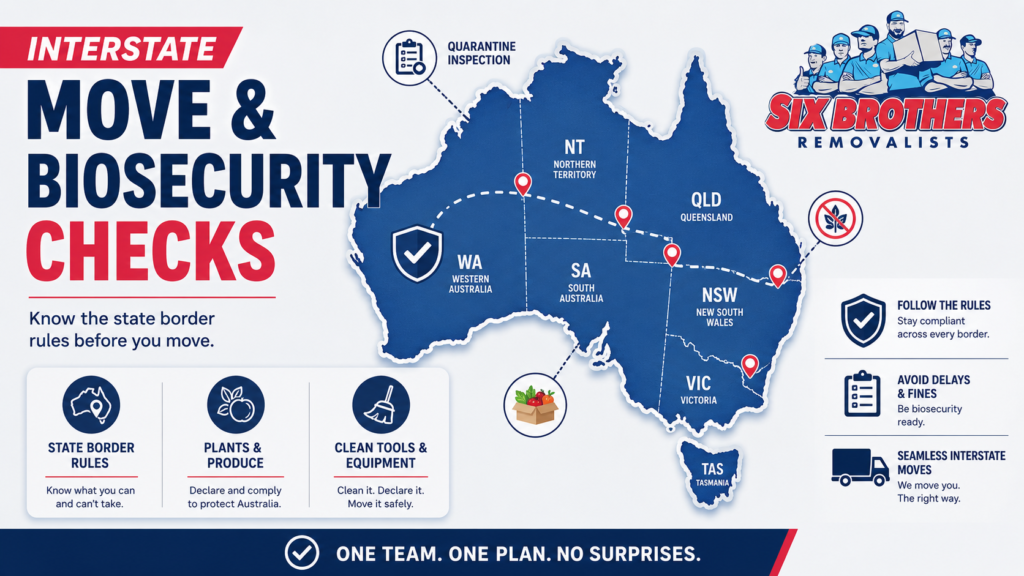
Australia takes state borders seriously. So should you. Each state has rules on what you can bring in. Break them and you risk fines or seized goods.
Plants and Soil Rules
Many states limit plants, soil, and potted greenery. Pests hide in dirt and roots. Check the interstate quarantine rules before you pack the garden. Bare-rooted plants or fresh soil often can’t cross. Know the limits early.
If a plant can’t come, gift it to a neighbour. Better that than losing it at a checkpoint.
Food and Produce Limits
Fruit, veg, and honey often can’t cross certain borders. Fruit fly zones are strict. Eat it, gift it, or bin it before you go. Don’t risk it in a box. A forgotten fruit bowl can cause a real headache at the border.
Check for fruit fly exclusion zones on your route. They apply to more produce than you’d think.
Clean Garden Equipment
Mowers and tools carry soil and seeds. Clean them down before the move. A quick wash keeps you on the right side of the rules. It’s a small job. Hose off wheels, blades, and undersides especially.
Let them dry fully before packing. Damp tools rust and spread mould in storage. Wrap sharp blades in cardboard. It protects your other boxes and the people lifting them.
Check Destination State Rules
Rules differ from state to state. A move like a Sydney to Melbourne removalist job has its own checks. Look up your destination’s rules early. It saves a nasty surprise at the border.
Western Australia and Tasmania are especially strict. Their island and border checks catch a lot out. When in doubt, ask your removalist. They move interstate every week.
Bring It All Together
Combining storage and interstate removals sounds tricky. Done right, it’s the simplest way to move. Plan your groups, pick one solid team, and get a combined quote. Sync your dates and sort your paperwork. Do that, and your gear moves once, waits safely, and lands where it should. No stress, no double-handling.
The movers who plan early always come out ahead. A calm move starts weeks before the truck arrives. Keep this guide handy as you book. Work through each step and you’ll dodge the common traps. That’s exactly what Six Brothers Removalists does every week for Sydney movers heading interstate.
Get your free quote today. Call 1300 764 372 or email info@sixbrothersremovalist.com.au. One team, one plan, no surprises.
Frequently Asked Questions
How much do interstate removalists cost?
Interstate removalist costs depend on distance, volume, and dates. Adding storage changes the total too. A small load costs less than a full home moving across the country. Combining services often lowers the price. A free quote gives you the exact figure for your move.
Do removalists pack for you?
Yes, most removalists offer packing as an add-on. They use proper materials and pack for safe transport or long-term storage. It saves you time and cuts the risk of damage. Just ask for packing when you request your quote.
Can I use one company for both storage and interstate moving?
Yes, and it’s usually the smoother option. One team handles pickup, storage, and delivery as a single job. That means fewer handovers and one clear point of responsibility. It often works out cheaper than booking two separate providers.
How does removalist-managed storage work?
Your removalist packs your goods into a sealed container or module. It stays in their secure warehouse until you’re ready. Nobody opens it in between. When your new place is set, the same team delivers it to your door.
Is it cheaper to combine storage with backloading?
Often, yes. Backloading shares truck space with other moves, which cuts the transport cost. Storage gives you the flexible dates backloading needs. Together they suit movers who aren’t in a rush and want to save money.
What items can’t go into storage during an interstate move?
Storage bans fuel, gas bottles, paint, and fireworks. It also bans food, plants, and anything that can rot or attract pests. Some states restrict plants and produce at the border too. Always check both the facility and biosecurity rules before packing.
Do I need separate insurance for storage and transit?
Sometimes, yes. Transit cover protects goods on the road, while storage cover protects them in the warehouse. These can be two different policies. Ask your provider what’s included at each stage, and check whether your home contents policy helps.
How far ahead should I book combined storage and removals?
Book two to three weeks ahead where you can. Interstate slots and storage units fill fast, especially at end of month. Early booking locks in your dates, price, and unit size. It also gives you time to sort packing and paperwork.