


Selling your home? You might dodge capital gains tax completely. That’s the quiet magic of the main residence exemption.But moving house makes things tricky. Dates blur. You crash with family. You rent for a bit. You build while living elsewhere. The ATO sees all of it.
This guide breaks down the main residence exemption Australia in plain English. We’ll cover the 6-month overlap. The 6-year absence rule. The build-and-move traps. And what proof you need before you sell.
Ever sold a home and wondered if the tax man gets a cut? You’re not alone. Most Sydney movers only find out the rules after the move. Let’s fix that. Think of this article as your map before the journey.
Quick note. This isn’t tax advice. Talk to a registered tax agent before selling. Rules shift and every situation is a little different.

What the Main Residence Exemption Means
The main residence exemption is a tax break. It lets you sell your home without paying capital gains tax. That’s it in one line. In Australia, most assets get taxed when you make a profit. Houses are assets too. But the ATO gives a pass on your main home. This rule exists so everyday families aren’t punished for moving up.
The capital gains tax main residence exemption is one of the biggest tax savings homeowners get. Some people save tens of thousands. Others save hundreds of thousands in hot Sydney suburbs. Full exemption means zero CGT on the sale. A partial main residence exemption means you pay some CGT, just not the full amount. That happens when the home wasn’t your main residence the whole time.
You might’ve rented it out. You might’ve run a business from it. You might’ve owned it as a foreign resident for part of the ownership. Each bite out of “main residence” time chips away at the full break.
The rule lives inside the CGT laws. Think of it like a shield. Strong when used right. Cracked when paperwork and timing go sideways.
Who Can Claim the Main Residence Exemption
Any individual Australian resident can claim it. Companies and most trusts can’t. That’s the first gate. You must own the dwelling. The dwelling has to be your home. Not a holiday pad. Not an investment box. Your actual home.
If you’re married or in a de facto couple, you and your partner can only nominate one main home between you. Two homes and two separate main residences doesn’t fly. The ATO treats couples as one unit for this rule. Foreign residents at the time of sale usually can’t claim it. Even if you lived there for 20 years. This rule tightened in 2019. Be careful if you moved overseas for work.
Kids under 18 who own property can also claim it in limited cases. Most people though? It’s simple. You’re an Aussie resident, you own it, you live there, you can claim. Inherited homes have their own set of rules. If you inherited your parents’ home and sold it within two years, the exemption often still applies. Get advice if this is your situation.
This is where six brothers sees a lot of confusion. Clients move in. Move out. Move back. Then sell. The main residence exemption cgt can still apply, but the story matters.
What the Main Residence Exemption Covers When Moving House
Here’s what the rule actually covers. First, the dwelling itself. Your house, unit, townhouse, or apartment.
Second, the land under it. Up to two hectares, including the land your home sits on. Bigger block? The extra land might get taxed.
Third, some adjacent structures. Granny flats, garages, sheds. As long as they’re used with the main home. Rent out the granny flat and you lose that piece.
Moving between homes? The exemption can stretch. It covers short overlap periods. It covers the old home for a few years after you leave. It covers a build period in some cases. Main residence exemption Australia rules also cover certain life events. Divorce transfers. Inheriting a partner’s share. Moving for medical care. Each has its own sub-rule.
What it doesn’t cover is the kitchen sink. You can’t claim it on a home you never lived in. You can’t stretch it past the time limits. And you can’t double-dip across two homes at once, except briefly. If you’re using movers parramatta way and selling your old home soon after, timing is everything. A few weeks can mean the difference between full exemption and a partial bill.
What Factors Determine Your Main Residence for CGT Purposes
The ATO looks at the whole picture. Not just one box. They ask where your life actually happens. Key factors include how long you live there. One night doesn’t cut it. A few weeks feels thin. A few months starts to look real.
Are your belongings in the home? Clothes, furniture, tools, kids’ toys. A home without your stuff looks like a shell.
Is your mail coming there? Bills, bank letters, licenses. Mail is one of the first things ATO checks.
Is your family living there with you? Partner, kids, pets. A home that splits the family raises eyebrows.
Are your utilities in your name? Water, gas, power, internet. These show real life, not just an address.
Is it on your electoral roll? The AEC record is hard to fake. It’s a timestamp the ATO trusts.
No single factor decides it. But stack them up and you get a clear answer. The ATO calls this a “weight of evidence” test. Think of it like a jury. Each piece of proof is a witness. Enough witnesses and you’re safe.
How to Establish a Main Residence When Moving House in Sydney

Moving into a new home? Here’s how to lock in the main residence exemption from day one. These four moves matter most.
Family Occupancy and Belongings
Move in with your family. All of them if you can. Bring your furniture, kitchen gear, clothes, beds. The ATO wants to see a home, not a staged sale. Half-moving is a red flag. If the kids stay at grandma’s and you crash on a couch, the story falls apart. Be there, fully there, as soon as you can.
A good Sydney removalist helps here. Booking cheap movers sydney that finish in one day makes the move clear. Not dragged out over weeks.
Electoral Roll Address
Update the electoral roll. Do it the first week. It takes five minutes online. This single act creates a dated record tied to the new address. It’s one of the cleanest pieces of evidence you can give the ATO. Small step, big proof.
Mail Delivery Address
Redirect your mail. Australia Post mail redirection is cheap and easy. Update your bank, super fund, driver’s license, Medicare, tax office. Bonus tip, update online retailers too. If your Amazon orders still go to the old place, that’s a weird signal. Tie everything to the new house.
Utilities in Your Name
Put every utility in your name at the new home. Water. Electricity. Gas. Internet. Council rates where relevant. These accounts create monthly records. Each bill is a receipt of real living. Twelve months of bills equals a year of rock-solid proof.
What Counts as Actually Living in a Property for Main Residence Rules
Let’s get more specific. The ATO published a checklist of what counts. These five points come straight from the rule book.
Family Occupancy
The whole family lives there. Partner, kids, pets. If they’re spread across three houses, it’s not a main residence. Separation cases are different. There’s a carve-out for families going through hard times. Get advice if that fits you.
Belongings in the Home
Your stuff lives there. Beds. Couches. Dishes. Clothes. Tools.
An empty house with a mattress isn’t home. It’s a landing pad. Movers often sort this out fast, especially packers and movers sydney crews that unpack for you.
Mail Delivery
Mail shows up at the address. Government mail especially. Tax notices. Medicare cards. Bank statements. The ATO loves mail proof. It’s hard to fake. It’s dated. It’s boring and exactly what they need.
Electoral Roll Registration
You’re on the roll at that address. Your partner is too. Your adult kids as well if they live with you.
This record ties you to one address at one time. It shows the ATO you’re not just ticking boxes.
Utilities in Your Name
Gas, power, water, internet, all in your name. All billed monthly. All going back years in some cases. High usage matters too. A house with near-zero power bills for months doesn’t look lived in. Normal usage looks like normal life.
The 6-Month Main Residence Overlap Rule When Moving Between Homes
Here’s a common moving scenario. You bought a new home. You haven’t sold the old one yet. Can you claim the exemption on both?
Short answer, yes, for up to six months. The 6-month overlap rule lets you hold two main residences at once. This is a lifesaver when settlement dates don’t line up.
Conditions
A few strings come with this rule. Three to be clear.
First, the old home must’ve been your main residence for at least three continuous months in the 12 months before sale. If you moved out years ago, this rule doesn’t apply.
Second, the old home can’t have been used to produce income in any of those 12 months where it wasn’t your main residence. Renting it out kills this rule for that period.
Third, the new home has to become your main residence within the six months. Sit on it empty for too long and you’re out.
Extending the Period
Can you stretch it past six months? Not easily. The rule is strict.
If you can’t sell the old home in six months, you might get a partial exemption. You’d split the calculation. You pay a bit of CGT on the overlap period past six months. This is where good moving plans pay off. Using movers and packers parramatta with a locked-in settlement date keeps the window tight.
As the old saying goes, measure twice, cut once. Same rule for move-in and sale dates. Plan them together or pay the difference.
The 6-Year Absence Rule When Moving Out and Renting Your Home
This one saves movers serious money. You move out. You rent your old home to tenants. You can still treat it as your main residence for up to six years.
Yes, even while it’s earning rental income. Wild but true. The 6-year absence rule is a gift most Sydney owners don’t know about.
Conditions
You need to have lived in it as your main residence first. Just a few months isn’t enough if the ATO smells a scheme. Establish it properly before you leave.
You can’t claim another property as your main residence during the six years. Pick one. The ATO won’t let you double-count. You can claim this rule each time you return and move out again. But you reset the count each time you move back in. More on that below.
If You Do Not Rent It Out
Here’s the twist. If you move out but don’t rent it out, the 6-year rule becomes unlimited. You can be away for 10, 20, 30 years.
As long as you don’t nominate another home as your main residence, the old one stays exempt. Empty homes with no income get extra grace. This helps people who travel long-term or move for family reasons. Great rule to know.
Resetting the Clock
Move back in and the clock resets. Live there for a while, then move out again, and you get another six years of coverage. This is a genuine way to run the clock twice. Some people plan their lives around it. Not crooked, just smart.
Moving out for a job? Using removalist and storage near me to stash gear while tenants move in? That fits neatly inside this rule. Just keep your records tight.
Main Residence Exemption Rules When Building or Renovating a Home
Building a new home? Big renovation that takes years? You can still claim the main residence exemption during the build.
Up to Four-Year Rule
You get up to four years. That’s the cap. During this time, the vacant block or build site counts as your main residence.
Conditions apply. You must finish the build. You must move in as soon as practical after it’s done. You must live there for at least three months after moving in. If the build drags past four years, you lose the grace for the extra time. Partial CGT kicks in for the excess.
This matters for owner-builders and knock-down-rebuild jobs. A lot of Sydney families fall into this. A delay of six months feels small until the four-year clock runs out. Use solid removalists before and after. Pack things to storage during the build. Unpack when the new home is ready. A clean paper trail keeps the exemption safe.
Special Main Residence Exemption Scenarios for Sydney Movers
A few special cases pop up often. Here are two the ATO has clear rules for.
Delays in Moving In
Bought a new home but can’t move in yet? Happens a lot. Tenants still in there. Repairs needed. Settlement drama. The ATO allows a reasonable delay. There’s no fixed number of months. But “as soon as practical” is the test.
Document why you couldn’t move in right away. Emails with agents, tradie quotes, tenant lease end dates. Evidence is your friend.
Building a Home
We covered the four-year rule above. But there’s a niche case for vacant land. If you buy land, plan to build, but end up selling the land, you won’t get the exemption. The dwelling has to be built and lived in. Raw land doesn’t count.
Whether you use removalists parramatta style services or a crew from out west, the rule is the same. Dwelling first. Residence second. Exemption third.
Common Main Residence Exemption Pitfalls When Moving House
Let’s save you from the classic traps. These four catch most Sydney movers off guard.
Owning Two Homes
You bought the new home before selling the old one. You didn’t move in within six months. You just held both hoping for prices to rise. Partial exemption. CGT on part of the gain. Not the end of the world but avoidable with a tighter plan.
Line up your move and sale dates. Six months isn’t forever. Use cheap removalist sydney options to move fast when settlement hits.
Foreign Residents
This one stings. If you became a foreign resident and sell while still a foreign resident, you lose the exemption entirely. Not partial. Full CGT on the whole gain, including years you lived in it as a resident. The rule changed in 2019 and caught thousands off guard.
Move overseas for work? Talk to a tax agent before selling. Timing the sale to your Australian tax residency status is critical.
Using Part of the Home for Income
Rented out a room on Airbnb? Used a spare bedroom as your office for your business? Charged a lodger? That income-producing portion loses its exemption. You’ll pay partial CGT on the part of the home used for income. The ATO calculates this on floor area and time used.
Working from home as an employee and just claiming some electricity usually doesn’t trigger this. But running a business from a dedicated room often does. Know the line.
Land Size
Two hectares is the cap. That’s about five acres. Most Sydney blocks are way under that, no stress.
But if you’re in rural NSW or on acreage in places like Dubbo, you might hit the limit. Removalists dubbo clients especially. The extra land gets CGT treatment even with the exemption.
Records to Keep Before Selling a Home in Sydney
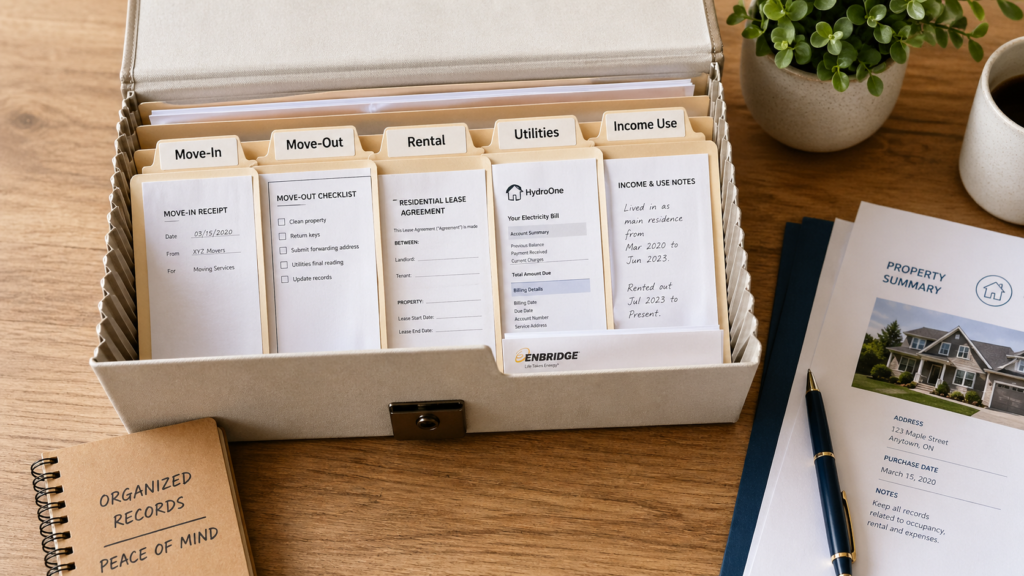
Want a clean exemption claim? Keep records. A stitch in time really does save nine on tax paperwork.
Move-In Dates
Write down the date you moved in. Keep the removal invoice. Keep the settlement paperwork. Keep the first utility bill.
A dated photo of the front of the house with a calendar helps too. Overkill? Maybe. But it beats an ATO audit.
Move-Out Dates
Same for move-out. Keep the final utility bill at the old address. Keep mail redirection confirmations. Keep the new lease or settlement docs.
If you used a removalist for the move, save the invoice. Companies like 6 brothers removalists give dated receipts. That’s evidence.
Rental Start Dates
If you rented out the old home after moving, keep the lease. Keep bond lodgement receipts. Keep the managing agent agreement.
These prove exactly when the 6-year absence clock started. Critical for the rental exemption path.
Occupancy Proof
Collect everything that shows you actually lived there. Utility bills in your name. Electoral roll confirmations. Medicare updates. Bank statements showing the new address.
More is more here. Ten years of casual records beat one single letter.
Income Use Proof
If you rented out a room or ran a business from home, log every detail. Floor plans showing the business area. Dates of income. Tenant records.
This helps your accountant calculate partial exemption correctly. Too much estimation in an audit gets painful fast.
Putting It All Together
Moving house is already stressful. Tax on top of that feels unfair. But the main residence exemption rules are built for regular movers, not investors. Use them. Time your moves. Keep your records. Don’t rush sales without thinking about the 6-month overlap or the 6-year absence rule.
Whether you’re doing a removalist sydney to wollongong trek or a full interstate haul, the rules still apply. Same for removalists sydney to brisbane moves or a local movers parramatta job. Same for a removalists wagga relocation too.
Worried about losing your exemption after a big move? Talk to a tax agent first. Then book the movers. Then count the savings.
Why Good Movers Matter for Your Tax Records
Here’s the bit most tax guides skip. Your mover gives you dated receipts. Those receipts prove when you left the old home and arrived at the new one. At Six Brothers Removalists, we hand every client a tax-invoice receipt with the date, address, and items moved. That single piece of paper has saved clients from painful audit surprises.
Looking for removalists near me who keep clean paper trails? That’s us. Parramatta-based, servicing Sydney, Dubbo, Wagga, and everything in between.
Call 1300 764 372 or email info@sixbrothersremovalist.com.au. We’ll give you a fixed hourly rate for removalists, proper insurance, and a dated invoice for your records.
Moving in Sydney or going interstate? We cover it all. Our pricing is transparent. No hidden fees. No tax-time regrets. Pair your moving house checklist Australia with solid records. Book a trusted mover. Keep every invoice. That’s the playbook.