


Table of Contents
An interstate move can turn a familiar home into hundreds of separate pieces. A moving inventory list keeps those pieces visible from packing through delivery. It records what you own, where it belongs, and what needs special care. That simple record can also improve quotes, support claims, and speed unloading. For Australian families, it becomes the control sheet behind the whole move. Think of it as the flight plan for your belongings. The truck may travel far, but your records stay clear. Six Brothers Removalists works across Sydney and interstate routes throughout Australia. A detailed inventory helps everyone start with the same expectations. It also helps you compare removalists without guessing about what each quote includes. This guide shows what to record and how to use it properly. You will also see how photos, values, labels, and backups work together. As the saying goes, a stitch in time saves nine.

What to Include in an Interstate Moving Inventory List?
A useful interstate inventory records enough detail to identify every important item. Start with each room, then list furniture, boxes, appliances, and special pieces. Give every box a number that connects with your master list. Add the destination room, broad contents, and handling notes. Include estimated replacement values for costly belongings. Photograph valuable or fragile items before packing. Record existing marks, scratches, chips, or dents. Keep receipts when you already have them. Add serial numbers for electronics and appliances where practical. Your home inventory checklist for moving should also flag items travelling with you. That includes passports, medicines, jewellery, keys, and irreplaceable documents. A room by room moving checklist makes the process much easier. Work through one space before jumping to another. Measure twice, cut once. Good records now prevent arguments and confusion later.
Track High-Value and Fragile Items Separately for Interstate Moves
High-value and fragile belongings deserve their own section inside your moving inventory list. These items create the biggest financial and emotional risk during transport. Separate tracking tells your interstate removalists what needs extra planning. It also lets you check those items first at delivery. Use a dedicated tab, colour, or label for valuables. Note the box number and packing method. Add photos from several angles before the item leaves your home. Where possible, record purchase information and replacement value. This approach also helps when discussing removalist insurance Australia options. Better safe than sorry applies strongly here. Your rare artwork and everyday plates should not receive identical tracking.
Electronics
Electronics need model details, serial numbers, photos, and clear box references. Record televisions, laptops, monitors, gaming systems, speakers, cameras, and smart devices. Photograph each item while working, when practical. Then photograph the screen and outer case before packing. Note any existing scratches or dead pixels. List cables and accessories with the main device. Mark whether original packaging is being used. Keep passwords and private account details off the inventory. Your list should identify the object, not expose sensitive information. For larger appliances, record brand and model information too. This detail helps furniture removalists and house removalists plan safe loading zones. It also supports a faster condition check after delivery. Keep your ducks in a row. Electronics become much easier to trace when every identifier matches one box.
Artwork
Artwork should be listed by title, size, medium, frame type, and condition. Add clear front and back photos before protective wrapping starts. Note existing frame marks or glass damage. If the work has a certificate, keep that document separately. Do not tape paperwork directly onto valuable art. Large framed pieces may require crates, corner protection, or specialist blankets. Tell your interstate furniture removalists about unusual dimensions before quoting. A large canvas can affect truck space more than expected. The inventory should also show which wall or room receives each piece. That helps room-by-room unloading at the new property. For valuable collections, keep appraisals with your private records. The proof is in the pudding. Detailed art records make later checks much clearer.
Antiques
Antiques need descriptions that capture age, material, maker marks, and current condition. Photograph joints, legs, handles, veneers, carvings, and existing repairs. Record dimensions for bulky pieces before requesting quotes. An antique cabinet may need more space than modern flat-pack furniture. Note whether shelves, doors, or removable parts travel separately. Keep small hardware in labelled bags linked to the item number. If you own provenance documents, store copies in cloud backup. The same approach works for inherited furniture and collectible pieces. A specialist furniture removalist can plan padding and lifting more accurately with this information. Do not rely on memory after a long packing week. Strike while the iron is hot. Record the details while every piece is still visible.
Glassware
Glassware needs item counts, box numbers, and strong handling notes. You do not need to list every ordinary drinking glass separately. Group everyday sets by quantity and type. Record special crystal, heirloom pieces, decanters, and display glass individually. Photograph rare items before wrapping. Mark each box with fragile handling notes and orientation arrows. Use colour coded moving labels for quick recognition. Your list should show the room and general contents without advertising expensive items. Keep the description practical and discreet. Good box records also help you check breakables before packaging is discarded. Many hands make light work. Clear labels let movers and family members treat fragile boxes consistently.
Serial Numbers
Serial numbers give you a precise way to identify electronics and appliances. Record them for televisions, computers, cameras, sound systems, and valuable tools. Add model numbers when the serial number is hard to read. Photograph the manufacturer label as a backup. Store those images in the same folder as your inventory. This method also supports a home inventory app for insurance records. Never depend on one handwritten copy alone. Digital records are easier to search when something is missing. Serial numbers are especially useful when several similar devices move together. Keep tabs before the truck leaves. A unique identifier removes doubt about which item belongs to your household.
Proof of Value
Proof of value can include receipts, invoices, appraisals, warranties, and replacement-price research. Keep these documents outside moving boxes whenever possible. Scan important records and save them with your digital inventory. For older items without receipts, photograph condition and note realistic replacement costs. Australian Government Moneysmart contents insurance guidance recommends detailed records. Include receipts, photos, condition, and serial numbers. That approach is useful beyond moving day. It can support broader contents insurance records as well. Check your own insurer or policy wording before assuming any move-related cover. Policies and transit arrangements can differ. Do not count your chickens before they hatch. Evidence matters most when a claim actually needs proof.

How Inventory Lists Help You Get Accurate Interstate Moving Quotes?
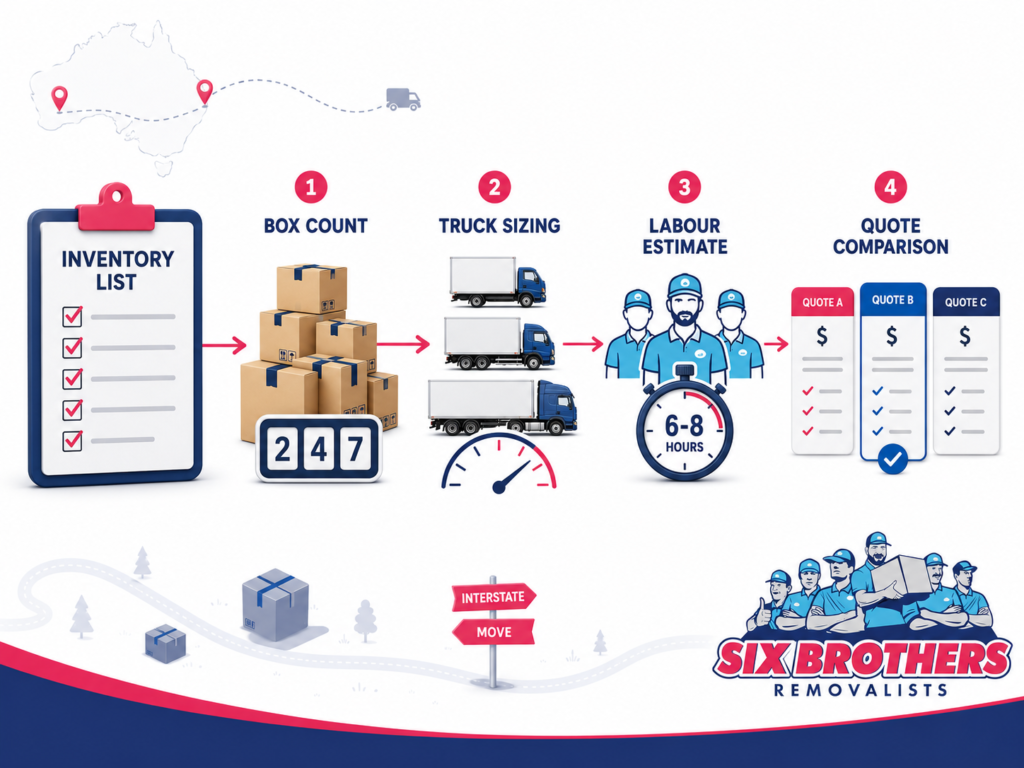
A detailed inventory helps a removalist estimate labour, truck space, equipment, and access needs. Quotes become weaker when the item list is vague or incomplete. An accurate list reduces that uncertainty before the move. The CHOICE moving house checklist recommends detailed move information. This supports stronger written quotes. It specifically notes that an inventory can help. Your list should cover furniture sizes, box counts, appliances, stairs, lifts, and unusual items. Add pickup and delivery access details alongside the inventory. That information helps removalist companies compare the same scope. It also helps you compare like with like. This matters when researching cheap removalists or premium full-service options. Penny wise can become pound foolish. A low quote means little when half the move was missing from the estimate.
Did you know?
A detailed item inventory can help removalists provide a more accurate quote because the job scope is clearer.
Prevents Surprises
A complete list reduces last-minute additions that can change time and space requirements. That includes forgotten garage items, balcony furniture, plants, storage cages, and outdoor equipment. Large mirrors and exercise machines are often missed too. Add dismantling needs beside beds, tables, shelving, and modular furniture. Note anything needing special lifting equipment. If a piano is included, identify it before requesting the quote. Piano removalists need different handling than ordinary box movers. The same rule applies to office removalists moving safes or server equipment. No surprises is the goal. Forewarned is forearmed. The more complete your inventory, the easier honest planning becomes.
Easy Comparison
Use one inventory when requesting several quotes. That gives each removalist the same job description. Compare pricing, inclusions, estimated time, insurance details, and extra charges. Do not compare totals without comparing scope. One quote may include packing materials or dismantling. Another may charge those separately. Your inventory becomes the common reference point. It also helps when comparing removalists Sydney, removalists Melbourne, or removalists Brisbane options. Interstate routes can have different scheduling models. Some companies use dedicated loads. Others offer backloading space. Keep the playing field level. Apples should be compared with apples, not a different move altogether.
Truck Sizing
Truck sizing depends on volume, item shape, access, and loading efficiency. Box counts alone do not tell the whole story. A three-seater sofa uses space differently from stacked cartons. Large appliances and fragile pieces can limit stacking options. Record dimensions for oversized furniture and awkward items. Your list can also note dismantled dimensions when relevant. That helps a team choose between a van and larger truck. It can also reduce unnecessary removalist truck hire decisions. Accurate sizing matters for interstate routes because unused space still affects cost. Backloading may suit smaller loads with flexible dates. Horses for courses. The right truck depends on the actual inventory, not guesswork.
How an Inventory List Supports Moving Insurance Claims?
An inventory can provide useful evidence if something arrives damaged or goes missing. It does not replace policy terms or claim requirements. However, good records can make facts easier to establish. Keep before-move photos, item descriptions, serial numbers, and proof of value together. Note the condition before packing. At delivery, check high-value items before signing off where possible. Photograph visible damage promptly. Moneysmart also recommends photos and videos when documenting damage for insurance claims. Your own insurer may request different evidence. Always check the relevant Product Disclosure Statement and claim process. An ounce of prevention is worth a pound of cure. Strong records are easier to build before problems appear.
Evidence of Condition
Condition photos show what an item looked like before transport. Take wide shots and close-ups of existing marks. Use consistent lighting where practical. Photograph fragile corners, screens, glass, and polished surfaces. Add the date through your phone’s file information instead of editing images. Keep photos linked to the same inventory number. For furniture, note loose joints or old scratches honestly. That protects both you and the removalist from confusion. Evidence should describe reality, not create a perfect-looking record. A fair dinkum inventory is factual. Clear condition notes help everyone separate pre-existing wear from new damage.
Missing Items
Numbered boxes make missing items easier to detect at delivery. A sequence like 1 through 62 gives you a fast count. Your master list then shows what each number contains. Use room codes if your move has many cartons. For example, K-01 can mean kitchen box one. Do not reuse numbers after discarding a box. That can create duplicate references. Shared interstate loads benefit especially from strong identification. The interstate backloading service also highlights detailed inventory and labelling. That separation reduces mix-ups on shared truck space. Keep your eye on the ball. A missing number is easier to notice than a missing brown box.
Claim Processing
Good records can reduce time spent reconstructing what happened after a loss. Keep the item entry, photos, value evidence, and delivery notes together. Do not throw away damaged packaging before checking claim instructions. Photograph the box and packing materials if damage is visible. Record when you noticed the problem. Contact the relevant removalist or insurer promptly. Your contract may set notification steps or time limits. Avoid assuming that all removalists carry identical insurance arrangements. Ask before booking and keep written answers. The wheels turn more smoothly with organised evidence. A clean file gives claim handlers something concrete to assess.
How Inventory Lists Improve Delivery and Unloading Accountability?
Your inventory becomes a delivery checklist when the truck reaches your new home. Use it to count cartons, direct furniture, and confirm priority items. Give one person responsibility for checking items off. Another person can guide the unloading team. This split reduces interruptions around the truck. Keep the master list available on your phone and in print. Mark each box as it enters the property. Check large furniture by item name. Make notes about anything held for later delivery. The same system works for house moves and office relocations. Too many cooks spoil the broth. One clear checker keeps accountability simple.
Box Counting
Box counting works best when every carton has a unique number. Write the number on several visible sides. Add the room colour beside it. Keep a total count on your master sheet. At delivery, tick boxes as they cross the threshold. Do not rely on memory during a busy unload. Use our how to label boxes for an interstate move guide. The count becomes faster. Colour, number, and room details work together. A numbered system also helps removalists near me searches become more useful. You can ask potential movers how they manage box accountability. Count twice, worry once. That small habit can catch a missing carton early.
Room-by-Room Unpacking
A room-based inventory reduces double handling after unloading. Boxes should arrive in the room named on their labels. Furniture can be checked against the same destination plan. Use simple room names that everyone understands. Avoid vague labels like spare room when two rooms look similar. Put a colour key near the entrance. This is where colour coded moving labels earn their keep. Your room by room moving checklist can then guide unpacking priorities. Start with bedrooms, bathroom basics, and kitchen essentials. Leave decorative boxes until later. Rome was not built in a day. Your new home does not need to be unpacked in one night.
Essential Items
Mark essential boxes with a clear priority code. Include bedding, basic cookware, toiletries, chargers, medicines, and children’s needs. Keep critical documents and valuables with you instead. Your inventory should identify those items as owner-carried. That prevents anyone from waiting for them at delivery. Add one first-night box for each important household zone. Families may need a child essentials box. Pet owners may need food, leads, and bowls. Office managers may need routers, laptops, and access keys. First things first. A priority system keeps exhaustion from turning unpacking into a treasure hunt.
Use Your Inventory List to Declutter Before an Interstate Move
An inventory exposes how much you own before you pay to move it. That makes decluttering easier and more rational. Review each room before finalising the quote. Mark items as move, sell, donate, recycle, or discard. Do not list unwanted furniture in the final removalist inventory. Measure new spaces before keeping oversized pieces. Consider replacement cost against transport cost for low-value bulky items. Your moving house checklist Australia plan should include this review early. Decluttering also reduces packing materials and unpacking time. Less is more. Every item removed from the load is one less item to pack, track, and carry.
Lighten the Load
Start with bulky items that no longer suit your next home. Old wardrobes, damaged shelves, spare mattresses, and unused outdoor furniture deserve scrutiny. Check duplicates in kitchens, linen cupboards, garages, and storage rooms. Sell useful items while you still have time. Donate clean goods through suitable local channels. Dispose of unusable items responsibly. Keep important sentimental belongings out of rushed decisions. Your list should show a final move status beside every major item. That prevents discarded furniture returning to the truck plan. Trim the fat before moving day. A lighter inventory usually means simpler logistics.
Lower Fees
A smaller load can reduce required truck space, packing volume, and handling time. Savings vary by route and pricing model. That means decluttering should happen before final quotes whenever possible. Update the removalist after major inventory changes. Do not assume the original price automatically changes. Dedicated interstate moves and backloads can price space differently. Smaller loads may have more flexible options. People searching cheap removalists Sydney or affordable removalists Sydney should still compare service scope carefully. Cheap should never mean unclear. Every little bit helps. Removing low-value bulk can free money for the items you truly want moved.
How Inventory Lists Help With Downsizing and Space Planning?
A moving inventory list can double as a space-planning tool for your next property. Add dimensions for large furniture, appliances, artwork, and storage units. Compare those measurements with doorways, lifts, hallways, and room sizes. Mark where each large item should go before loading day. This is especially useful for apartment moves and retirement downsizing. It also helps families moving from houses into smaller townhouses. Identify furniture that cannot fit before paying to transport it. Keep a floor plan beside your inventory if possible. Know the lay of the land. A measured plan beats discovering that your sofa blocks the new hallway.
Downsizing also works better when emotional decisions have a clear process. Mark must-keep items first. Then review duplicates and oversized pieces. Photograph sentimental items before letting some objects go. Family members can use the same list to divide inherited belongings. A good inventory gives decisions a structure. It does not remove emotion, but it reduces chaos. People using international removalists often apply similar volume discipline. Long-distance Australian moves benefit from it too. Cut your coat according to your cloth. New space should shape what you move, not the old home’s storage habits.
Best Digital Inventory Tools for Interstate Moves
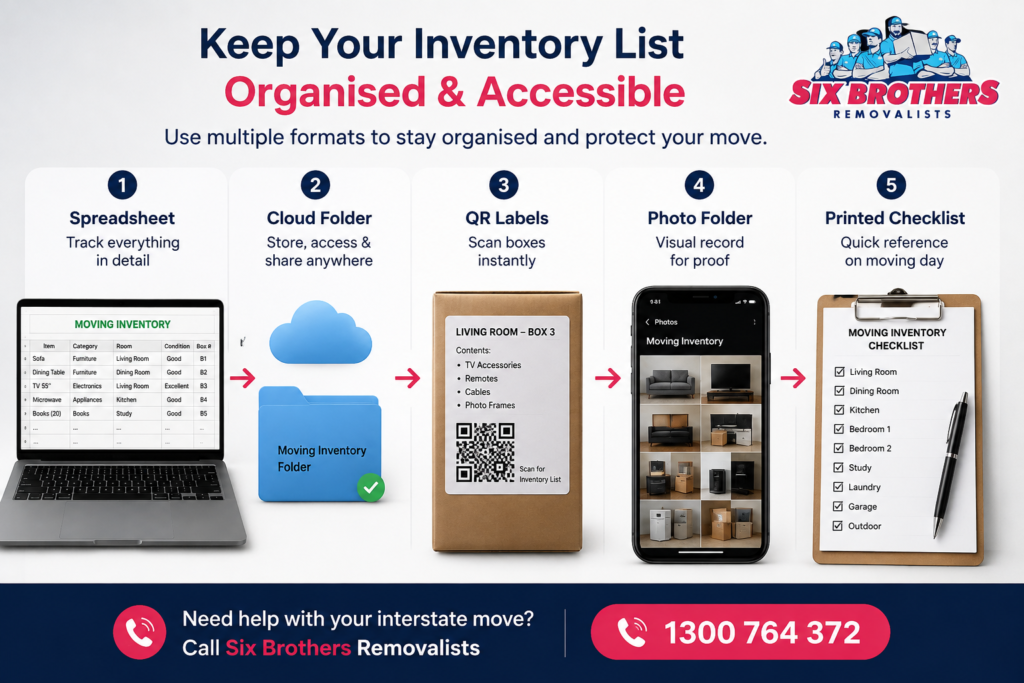
The best digital tool is one you will actually update. A simple moving inventory spreadsheet is enough for most households. Larger moves may benefit from cloud folders, QR labels, and shared documents. Keep the system searchable and easy to back up. Avoid apps that lock your data into an unfamiliar format. Your list should still be readable on moving day. Give trusted household members access where useful. Keep sensitive documents in secure storage, not open links. Technology should simplify the move, not create another job. Keep it simple, sunshine. A clear spreadsheet often beats a complicated app nobody uses.
Spreadsheet List
Create columns for item number, room, description, quantity, value, condition, and destination. Add a box number where relevant. Include a status column for packed, loaded, delivered, and checked. Freeze the top row for easier mobile viewing. Use filters to show only high-value or fragile items. A spreadsheet also helps create a home inventory checklist for moving. Keep formulas minimal unless you genuinely need totals. Add replacement values for selected items, not every teaspoon. Share the file with one trusted person as backup. Keep all your eggs out of one basket. A second trusted copy protects you from phone or laptop failure.
Cloud Backup
Cloud backup protects your list if a device breaks or disappears during the move. Save the master spreadsheet and photo folders in a trusted account. Turn on account security features like multi-factor authentication. Do not share public links containing addresses, values, or private documents. Create a folder structure by room or inventory number. Keep a downloaded offline copy on your phone too. Internet access may be patchy during travel or delivery. Sync important files before leaving Sydney. Cover all bases. One online copy and one offline copy give practical redundancy without much extra work.
QR Labels
QR labels can connect a box with a private digital contents list. They work best for large households, storage, or split deliveries. Use short codes that reveal nothing sensitive to strangers. Keep the destination page private or access-controlled. Test every code before placing it on a carton. Add written room and box numbers as a fallback. Phones can run flat and labels can get damaged. QR systems should support traditional labels, not replace them entirely. This is also useful for office removalists managing many crates. Belt and braces works well here. Digital speed and visible text give you two ways to identify the box.
Photo Folders
Photo folders make condition checks easier when files match inventory numbers. Name images with the item code and short description. For example, TV-01-front is clearer than IMG_7843. Keep before-packing photos separate from after-delivery photos. Add close-ups for existing marks on valuable furniture. Photograph box contents before sealing fragile sets. Do not photograph private paperwork unnecessarily. Your goal is evidence, not a full record of personal information. These folders can support a home inventory app for insurance workflow too. A picture is worth a thousand words. Good file names make those pictures far easier to use.
Printed Copy
Keep one printed inventory in your moving-day folder. Phones fail, batteries die, and reception can disappear. A paper list remains available during loading and delivery. Print the box count and valuable-item pages first. You do not need every photo on paper. Leave space for check marks and delivery notes. Keep the copy with you, not inside the truck. A clipboard can make checking easier at the door. Your interstate moving checklist should reference the printed list. Old school can still be gold. Paper gives you a simple backup when technology has a bad day.
Common Inventory Mistakes That Cause Problems During Interstate Moves
Most inventory problems come from rushed records, vague descriptions, or missing backups. The list must be detailed enough to identify belongings later. It also needs to stay practical during a busy move. Avoid creating a huge document nobody can use. Focus detail where value, fragility, or tracking risk is highest. Keep box numbering consistent from packing through delivery. Update the list when plans change. Tell your removalist about major additions before the truck arrives. Do not mix discarded items with confirmed move items. Haste makes waste. A rushed inventory often creates more work exactly when you need less stress.
Vague Labels
Labels like stuff, misc, or bedroom do not help enough. Use a room, broad contents, priority, and handling note. Write on several sides of each carton. Add the box number in a consistent place. Avoid writing valuable contents too specifically on the outside. Use a private code for high-value boxes. The master list can hold the full description. Clear labels help removalist furniture handling and unloading decisions. They also reduce questions at the new home. Call a spade a spade. Useful labels should tell the team exactly what they need, without exposing unnecessary detail.
No Photos
Skipping photos removes an easy source of condition evidence. Take photos of valuable, fragile, and easily damaged belongings. Include furniture surfaces, screens, glass, artwork, and antiques. Photograph existing marks before packing. Keep the images linked to inventory numbers. Do not rely on social media photos or old family pictures. Those may not show current condition. Fresh images are easier to compare. For claims, follow the insurer’s exact evidence requirements. The camera never lies is only partly true. Good photos still need clear dates, angles, and item references.
Missing Values
Missing values can make insurance and replacement planning harder. You do not need exact prices for every household object. Focus on costly electronics, furniture, art, jewellery, tools, and collections. Use receipts or current replacement research where available. Keep personal jewellery descriptions in a secure private file. The moving-day list can use coded references instead. Review cover limits for valuable categories under your own policy. Do not assume purchase price equals insured replacement value. Know what you are dealing with. A realistic value record is more useful than a guess made after damage occurs.
No Backup Copy
A single inventory file creates a single point of failure. Your phone can break during the move. A laptop can be packed accidentally. Paper can disappear under boxes. Keep at least one cloud copy and one offline copy. Share a backup with a trusted household member. Print a short moving-day version too. Store passwords separately from the inventory itself. Test access before departure. Backups should be current, not week-old versions missing new boxes. Do not put all your eggs in one basket. Redundancy turns a small technical problem into a minor inconvenience.
Last-Minute Listing
Building the whole inventory the night before moving creates errors. Start while decluttering and packing begins. Add items room by room. Number each box when it is packed, not later. Photograph valuables before wrapping hides their condition. Update totals at the end of each packing session. A little daily work keeps the list accurate. Your moving interstate checklist Australia plan should assign inventory time each week. Leave final changes for true last-minute additions only. Slow and steady wins the race. Ten minutes each evening beats two frantic hours before the truck arrives.
How to Optimize Your Moving Inventory for a Smoother Interstate Move?
Optimise your inventory by making it easy to scan, filter, share, and check. Start with a consistent numbering system. Use room codes and colour labels for quick identification. Flag fragile, high-value, heavy, and owner-carried items. Add dimensions for large furniture. Keep access notes near the main item list. Create one filtered view for your removalist. Keep private values and documents in a separate secure view. This lets the team plan without seeing unnecessary personal details. Link box labels with the inventory process throughout the move. Make the list work for people, not just storage. Form follows function. A useful inventory should answer questions in seconds.
Review the list before requesting final quotes. Remove sold or donated items. Add newly packed boxes. Confirm oversized pieces and dismantling needs. Ask your interstate removalist how inventory changes affect pricing. If using furniture removalists Sydney services, confirm large pieces and access conditions early. Use the same scope for interstate removalists Sydney and interstate removalists Melbourne. Do likewise for interstate removalists Brisbane. That keeps route quotes meaningful. A moving interstate checklist for Australians can support the wider planning. Get your house in order. The inventory is strongest when it connects with every other moving task.
How Inventory Lists Give Families Peace of Mind During an Interstate Move?
A clear inventory reduces the mental load of remembering hundreds of moving details. Families can see what is packed, loaded, delivered, and still outstanding. Children can have their important boxes marked clearly. Partners can divide packing work without duplicating tasks. Older relatives can record sentimental belongings before downsizing. The list becomes a shared source of truth. That matters during stressful interstate travel. It also gives you a simple answer when someone asks where something is. Peace of mind comes from visibility, not perfection. No worries becomes easier when the basics are organised.
A professional removalist can use the same information to plan space and handling. Six Brothers Removalists serves households across Sydney and interstate routes around Australia. The company also provides specialist options for furniture, offices, and backloading. Searches for removalists near me or removalist near me often produce many choices. Your inventory gives each company a clearer brief. That helps you judge communication and quote quality. It can also reveal whether a cheap removalist has understood the complete job. The proof is in the detail. Better information supports better decisions before booking.
Before booking, make sure the inventory matches the quote request. Confirm pickup access, delivery access, dates, and service inclusions. Ask how the team handles fragile items and missing-box checks. Keep written records of important answers. You can also explore removalist tips for broader moving preparation. Six Brothers Removalists can provide a free quote for your interstate move. Call 1300 764 372 or email info@sixbrothersremovalist.com.au. Easy does it. A well-built list lets you focus on the family, not every box.
Build the List Before the Truck Arrives
A moving inventory list is not busywork. It is the record that connects packing, quoting, transport, and delivery. Start room by room. Number boxes as you pack. Photograph high-value and fragile belongings. Record serial numbers and useful value evidence. Back up the list in more than one place. Then use the same inventory to compare quotes and check delivery. That process gives your family more control during a long interstate move. It also gives removalists clearer information before the truck arrives. If you want help planning the move, Six Brothers Removalists can prepare a free quote. Call 1300 764 372 or email info@sixbrothersremovalist.com.au. Make hay while the sun shines. Build the list early, then let it carry the memory for you.
Frequently Asked Questions
Do removalists have insurance?
Insurance arrangements vary between removalists and services. Ask what cover applies before booking. Request written details and read relevant policy terms. Keep your own contents insurance details available too. Better safe than sorry. An inventory supports evidence, but it does not create cover.
How to compare removalists quotes?
Give each removalist the same inventory, access details, dates, and service requirements. Compare total scope, not only price. Check packing, dismantling, stairs, waiting time, storage, and insurance details. Apples with apples is the rule. A shared inventory makes those comparisons much fairer.
What is the best format for a moving inventory list?
A spreadsheet is the easiest format for most households. Use columns for room, item, box number, condition, value, and status. Add photo links for valuable belongings. Keep a printed moving-day copy. Horses for courses. The best system is the one your household will maintain.
Should every item be listed separately?
No. Group low-value everyday items when individual tracking adds little value. List costly, fragile, sentimental, or identifiable belongings separately. Record furniture and appliances individually. Group ordinary clothes, books, and kitchen items by box. Do not make a mountain out of a molehill. Detail should follow risk.
When should I start my moving inventory?
Start before serious packing begins. Build the list while decluttering each room. Add box numbers as cartons are sealed. Photograph valuables before wrapping hides their condition. Slow and steady wins the race. Early listing prevents rushed gaps before moving day.
Can an inventory reduce interstate moving costs?
It can help indirectly. Accurate inventories improve truck-space and labour estimates. Decluttering can also reduce the load before quoting. Savings depend on route, service, access, and pricing method. Every little bit helps. Ask the removalist to update pricing after major inventory changes.
How should I track boxes during backloading?
Use unique box numbers, room colours, customer identifiers, and a master list. Write labels on several sides. Keep valuable details private. Count boxes at pickup and delivery. Keep your eye on the ball. Shared truck space makes clear identification especially useful.
What should I keep off visible box labels?
Avoid writing cash, jewellery, expensive electronics, passwords, or sensitive document details. Use neutral descriptions and private inventory codes instead. Keep passports, medications, keys, and small valuables with you. Loose lips sink ships. Visible labels should help logistics without exposing private information.