


Table of Contents
Buying and selling homes at once can make moving day hard to coordinate. You must align settlement, keys, utilities, packing, truck access and cleaning. One late handover can affect every task that follows.
This whole-house moving guide for owner-occupiers gives each job a clear place. It follows the practical order for a Sydney move between owned properties. Use it with your contract and your conveyancer’s advice. A good timeline keeps your ducks in a row.
The goal is simple. Leave the old home properly, collect the new keys, then unload safely. Your removalist should know the inventory, access limits and likely arrival window. That leaves fewer decisions for settlement day.

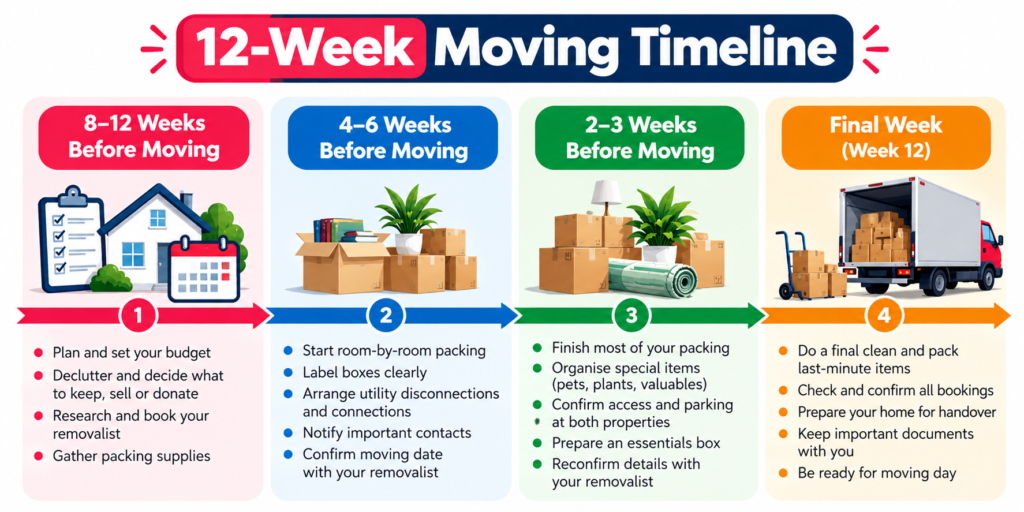
Phase 1: The Timeline Foundation (8 to 12 Weeks Out)
Start with the property dates, not the packing boxes. The timeline is the spine of the move. Work backwards from the expected settlement and handover dates. Keep your ducks in a row before committing to truck times.
Determine your transaction strategy
Decide whether both property settlements are planned for the same day. You might sell first, buy first, or have a short gap. Each option changes when you can access a property and unload furniture.
Ask your conveyancer to explain the agreed sequence. Confirm which contract settles first and what happens if one date changes. Do not plan around an assumed key collection time. Don’t put the cart before the horse.
A same-day sale and purchase needs close coordination. Give your removalist a provisional window, not a guaranteed unloading time. Keep a backup plan for temporary storage or delayed delivery.
Review contract specifics
Read the settlement date, vacant possession terms and special conditions. Check the contract for included fixtures, agreed repairs and access arrangements. Your conveyancer can explain what the wording means for handover.
Confirm whether anyone has agreed to early access or delayed possession. Never assume a handshake changes the contract. Ask who will confirm settlement completion and who releases the keys. The devil is in the detail.
Keep the contract, conveyancer details and agent contacts together. Save the latest written updates in one folder. This simple habit stops old dates circulating through the plan.
Declutter by zone
Declutter before you estimate the truck space. Work through bedrooms, wardrobes, kitchen cupboards, garage, shed and garden. Sort items into keep, sell, donate, recycle and dispose groups.
Owner-occupiers often forget stored items and built-in spaces. Check under stairs, lofts, spare rooms, pool areas and outdoor storage. A garage can change the size of a whole-house move. A stitch in time saves nine.
Photograph bulky furniture and unusual items before requesting a quote. Keep a room-by-room list of beds, lounges, cabinets and appliances. Once your load is clear, estimate it with the home moving calculator.
Phase 2: Booking & Admin Logistics (4 to 6 Weeks Out)
Use this stage to secure the crew, materials and property access. Give removalists the full picture, not just two postcodes. Measure twice and confirm the details before booking.
Secure an AFRA-certified removalist
Look for current AFRA accreditation when comparing removalists. The formal industry wording is AFRA-accredited. Ask for a written, itemised quote and clear service terms. See the NSW Government guide to choosing a removalist for accreditation details.
Give each company the inventory, access details and likely settlement window. Ask how it prices travel, stairs, long carries, tolls, waiting time and storage. Confirm cancellation terms and the process for changing dates. A fair dinkum quote makes the scope clear.
Check that the service matches the job. House removalists and furniture removalists handle household loads. A furniture removalist may need specialist equipment for delicate or heavy pieces. Ask about piano removalists when a piano is included.
Office removalists suit business inventories, while interstate removalists need route planning. An interstate removalist or interstate furniture removalists team needs confirmed access at both ends. International removalists handle separate overseas requirements. Removalist truck hire suits people managing their own labour.
Some people search removalists near me or removalist near me before comparing removalist companies. Check the written scope instead of choosing only cheap removalists. Keep the removalist furniture list specific, with one line per large item. This guide focuses on removalists Sydney, not removalists Melbourne or removalists Brisbane.
For larger homes, ask Six Brothers Removalists about inventory and access. For a larger home, review the 4-5 bedroom removalist service. Ask which services are included before accepting any quote.

Audit Packing Supplies
Count the boxes and packing materials before the final weeks. You may need cartons, tape, labels, mattress covers, wrapping and protective blankets. Add specialty crates for artwork, glass or fragile equipment.
Keep supplies in one dry area. Separate strong cartons from damaged or damp boxes. Label boxes by room and priority, not just by broad category. A stitch in time saves nine.
Review Property Access
Check both properties before confirming the truck size. Measure driveway clearance, gates, entry doors, stairs, lift dimensions and tight turns. Share photos if the route looks awkward.
Sydney streets can vary sharply between suburbs. A terrace in Newtown or Balmain may have tight kerbside access. A unit near Parramatta CBD may need a loading dock or lift booking. Know the lay of the land before moving day.
Tell the removalist about steep driveways, low branches and long walking distances. Check whether a truck can stop safely without blocking traffic. Better information now means fewer surprises later.
Coordinate strata regulations
Contact the strata manager as soon as you know the likely date. Ask about moving hours, lift bookings, loading docks, floor protection and deposits. Get the approved time window in writing.
Some buildings require a booking form or a refundable bond. Others limit weekend work or restrict shared-area access. Follow the building’s current by-laws. When in Rome, follow the building rules.
Give the removalist the booking confirmation and access instructions. Do not assume the building manager will coordinate the crew. Keep the contact number handy on moving day. Why risk a missed lift booking when one quick call can settle it?
Arrange specialized parking permits
Check the local council rules for the exact street and date. A residential parking permit does not automatically reserve space for a removalist truck. Ask whether a separate approval or temporary traffic arrangement applies.
Look for clearways, no-stopping signs, bus zones, driveways and loading restrictions. Confirm where the truck can stand safely. Each council may handle requests differently. Better safe than sorry.
Send the crew a photo of the proposed parking position. Include the street number and any access notes. This is especially useful around busy centres and narrow residential roads.
Phase 3: The Packing & Disconnection Phase (2 to 3 Weeks Out)
Now the plan moves from preparation to action. Pack gradually and confirm each service change. Slow and steady beats a frantic final weekend.
Book the “Connect/Disconnect” cycle
Arrange electricity, gas, water and internet changes for both addresses. Confirm the start date at the new home before ending old services. Keep essential power available for the final clean and inspection.
Ask each provider when the change takes effect. Record reference numbers and confirmation emails. Internet transfers may need extra lead time or new equipment. Do not leave every booking until the last minute.
Redirect mail and update registries
Set up mail redirection before leaving the old address. Update banks, insurers, employers, schools and relevant government records. Check vehicle registration details with the NSW authority.
Also update healthcare providers, subscriptions and delivery accounts. Tell family members and trusted contacts about the new address. Keep a short admin list beside your settlement papers. Don’t leave loose ends.
Pack non-essentials
Start with spare rooms, books, decorations and seasonal items. Pack one zone at a time and leave daily essentials accessible. Label each carton with its room and a brief contents note.
Keep important documents, jewellery, medication and chargers with you. Photograph complex cable setups before disconnecting them. Ask the crew about dismantling large furniture. Little by little, the house becomes easier to manage.
Finalise Settlement Logistics
Confirm the expected settlement date with your conveyancer. NSW Government says settlement usually occurs around six weeks after contracts are exchanged. The contract can set a different timeframe. For details, check the NSW Government settlement guidance.
Ask who will confirm successful settlement and notify the agent. Agree how you will collect keys and access devices. Tell your removalist that unloading depends on confirmed possession. Don’t count your chickens before they hatch.
Did you know?
In NSW, settlement commonly occurs around six weeks after exchange. The agreed contract can set a different period, so use your own settlement date.
Keep the agent, conveyancer and removalist on one update thread. Share changes as soon as they arise. The settlement-to-move-day plan gives another practical view of the handover sequence.
Phase 4: The Final Week & Handover
The final week is for checks, essentials and a tidy handover. Avoid starting major jobs that could have been finished earlier. You’re on the home stretch, but keep your head clear.
Conduct the pre-settlement inspection
Arrange the final inspection as close to settlement as practical. Compare the property’s condition with the contract and earlier records. Check agreed inclusions, repairs, access devices and vacant possession.
Photograph new damage or missing items. Send concerns to your solicitor or conveyancer before settlement. Do not treat the inspection as a building report. Use the pre-settlement inspection checklist for a more detailed room-by-room review.
NSW Government recommends a final inspection on settlement day. Your contract and conveyancer guide the exact arrangements. Trust, but verify.
Pack an “Essentials Box”
Keep one clearly marked box or bag with you. Include chargers, toiletries, a kettle, cups, basic tools and a change of clothes. Add children’s items, pet supplies and essential medication.
Keep contracts, identification, keys and settlement paperwork separate. Do not load these items into the truck. First things first, make the first night easy.
Defrost and Deep Clean
Defrost the fridge and freezer according to the manufacturer’s instructions. Empty and dry them before loading. Clean cupboards, appliances, bathrooms and floors after furniture leaves.
Check the laundry, garage, outdoor areas and storage spaces. Dispose of food and rubbish through suitable local services. Slow and steady wins the race.
Execute the final clean
Complete the clean after the rooms are empty. Work from the back of the home towards the exit. Check cupboards, wardrobes, shelves, windowsills and behind doors.
Keep receipts if a cleaner has been booked. Take dated photos of the finished rooms. Check your contract for handover requirements. Leave no stone unturned.
Phase 5: Moving & Settlement Day (The Sequence)
Settlement day works best when each person knows their next task. Treat it like a relay race, with clear handovers between the conveyancer, agent and crew. Keep the plan flexible until access is confirmed.
Morning (Load Out)
Have one adult available when the crew arrives. Walk through the inventory, fragile pieces and priority cartons. Confirm the truck can park safely and the path stays clear.
Keep personal documents, valuables and essentials with you. Check wardrobes, sheds, garage corners and outdoor storage before the truck leaves. Steady as she goes.
Midday (The Financial Bridge)
Use midday for settlement updates, not assumptions. Your conveyancer should confirm when the transaction completes. The agent can then explain the key collection process. Do not send the crew to unload before access is released.
Keep the removalist updated if the timeline changes. Ask about waiting, storage or rescheduling terms before the day. Never promise a fixed arrival time while settlement remains unconfirmed. Don’t jump the gun.
Afternoon (Load In)
Collect the keys only after the authorised release. Check that the property is accessible and ready for delivery. Walk the crew through each room before unloading begins.
Point out stairways, floor coverings and fragile areas. Place boxes in their labelled rooms. Keep exit routes clear while furniture moves inside. Home stretch, but stay organised.
Direct the Moving Crew
Choose one person to give instructions. Share the floor plan and room labels before unloading. Tell the crew which items need priority or special handling.
Keep children and pets away from loading areas. Check large pieces as they enter each room. Mark delivered items against your inventory. Many hands make light work when everyone knows the plan.
Planning a Sydney whole-house move? Call Six Brothers Removalists on 1300 764 372. You can also email info@sixbrothersremovalist.com.au for a free quote. Share both addresses, the property size, access notes and likely settlement window.
Verify the Removal Inventory and Transit Insurance
A clear inventory helps you track what leaves and what arrives. It also supports questions about condition or missing items. Measure twice, move once.
Create a Room-by-Room Inventory
List the main furniture, appliances and cartons in each room. Note items stored in the garage, shed, balcony and garden. Add photos for unusual or valuable pieces.
Record existing marks on timber, glass and polished surfaces. Keep serial numbers for major appliances where useful. A room-by-room inventory becomes your paper trail.
Check Transit and Storage Cover
NSW Government says removalists are not required by law to insure your belongings. AFRA-accredited removalists have public liability insurance and can provide transit cover. Request the policy wording, exclusions, excess and claims process. Check whether storage in transit has separate terms.
Ask how homeowner-packed cartons are treated. Confirm rules for antiques, artwork, electronics and fragile items. Do not assume every item is automatically covered. Read the fine print.
Flag High-Value and Fragile Items
Tell the removalist about pianos, glass cabinets, artwork and antiques early. Share dimensions, weight and access photos. Ask whether specialist equipment or extra protection is needed.
Keep passports, cash, jewellery and important records with you. Label fragile cartons clearly and explain any special orientation. Handle with care from the first quote.
Build Sydney Traffic and Route Buffers Into Moving Day
Sydney traffic can change the order of a move. Allow time for road conditions, parking and access checks. A little breathing room beats a rushed arrival.

Allow for Peak-Hour Traffic
Check the likely route and date before choosing the crew’s arrival window. School traffic, roadworks and peak periods can affect cross-city travel. Time is money, so avoid an unrealistic schedule.
Parramatta-to-city moves can face different conditions from local suburb trips. Ask the driver which route suits the truck. Keep a buffer for unexpected delays.
Check Truck Routes and Arrival Windows
Check low-clearance structures, narrow turns, steep streets and loading restrictions. A route that suits a car may not suit a large truck. Know before you go.
Share the pickup and delivery addresses, parking photos and building rules. Confirm a realistic arrival window with the removalist. Ask who will call if the truck runs late.
Coordinate Departure and Arrival Times
Set a loading window and a separate unloading window. Keep the second window flexible until settlement and keys are confirmed. Share changes with the agent and removalist promptly.
Do not schedule cleaners, trades and truck access too tightly. Leave room for final readings and a last inspection. Give yourself a buffer. Would you rather protect a clear access window than pay for avoidable waiting?
What If Settlement or Key Release Is Delayed?
Stop and get an update before changing the truck plan. Contact your conveyancer, agent and removalist. Keep calm and carry on, but do not guess.
Ask the conveyancer whether settlement has completed. Ask the agent when keys can be released. Tell the removalist what is confirmed and what remains uncertain.
Agree a backup before moving day. Options may include waiting under agreed terms, temporary storage or a revised delivery date. Ask about charges and availability in writing.
Do not ask the crew to unload before the agent or conveyancer confirms access. Keep your documents and essentials with you while the plan changes.
A short delay can affect parking, strata bookings and cleaning. Record who made each decision and when. If the property is not available, protect the goods first and rearrange the delivery second.
Secure Both Properties During the Handover
Finish with a deliberate check at both addresses. Secure the old home and confirm access at the new one. Leave no loose ends as the keys change hands.
Record Final Meter Readings
Photograph the electricity, gas and water meters where accessible. Make sure each image shows the reading clearly. Keep the date and address with the photos.
Send readings to providers when required. Keep confirmation numbers and final bills together. What gets measured gets managed.
Gather Keys, Remotes and Manuals
Collect keys, garage remotes, gate fobs and access cards for the new property. Check the number against the agent’s handover list. Ask for appliance manuals and warranty details when available.
Return every key, remote and access device required for the old property. Keep a written record of what you hand over. Don’t leave loose ends.
Reset Smart-Home Access and Security Codes
Update Wi-Fi, alarm, smart-lock and camera access after handover. Remove old user access where the system allows it. Follow the device maker’s reset instructions.
Check that new codes work before relying on them. Store backup keys and recovery details securely. Change access, not just passwords.
The following questions cover common booking and handover concerns for owner-occupiers.
FAQs
How to Hire a Removalist?
Compare written quotes using the same inventory and access details. Check accreditation, service scope, timing terms and cover. Ask questions before paying a deposit.
Do Removalists Have Insurance?
Removalists are not required by law to insure your belongings. Ask whether transit cover is available and request the policy wording. Check exclusions, excess and claims steps. Ask how homeowner-packed goods and storage are treated.
How early should owner-occupiers start preparing for relocation?
Start the planning process around eight to twelve weeks ahead where possible. Begin with dates and access, then book the crew and pack. A shorter timeline needs firmer priorities.
Can you move into a new property before settlement?
Do not assume you can. Early access depends on the contract and written permission. Ask your conveyancer before arranging delivery.
What happens if property settlement is delayed?
Your conveyancer should explain the legal position and next steps. Tell the agent and removalist straight away. Use the backup plan for waiting, storage or rescheduling.
How much time should you leave between settlement and furniture delivery?
There is no safe universal gap. Confirm the likely key release process and the removalist’s travel window. Build in extra time for cross-city traffic and access.
What should go into an essentials box for settlement day?
Pack documents, keys, chargers, medication, toiletries and first-night basics. Keep the box with you rather than inside the truck. Add anything your household needs immediately.
How do you coordinate buying and selling a property on the same day?
Use one written timeline shared with your conveyancer, agent and removalist. Separate settlement confirmation from truck arrival. Keep storage or rescheduling options ready.
Once dates, inventory and access are clear, request a free quote from Six Brothers Removalists. Call 1300 764 372 or email info@sixbrothersremovalist.com.au. The office is at Suite 1, Level 5, 58-60 Macquarie Street, Parramatta NSW 2150.