

Moving interstate is stressful enough. Now add a storage unit in the middle.
Maybe your new place isn’t ready yet. Maybe the settlement dates just won’t line up. Either way, your whole life needs a safe home for a bit. And that’s where a lot of Sydney movers come unstuck. They toss everything in a unit, shut the door, and hope for the best. Then months later they open it up. Mould on the couch. A scratched dresser. Boxes they can’t even find.
Sound like a nightmare? It doesn’t have to be.
Think of your storage unit like a fridge. Pack it right, and everything stays fresh. Pack it lazy, and things go off fast.This checklist walks you through it, step by step. From sorting your gear to loading the unit to getting it all back. It’s the same care Six Brothers Removalists brings to every interstate job across Sydney.
No guesswork. No nasty surprises on redelivery day. Ready to do this properly? Let’s start with a sort-out.
Preparation and Sorting Checklist for Interstate Movers in Sydney
Here’s an old moving truth. The best box is the one you never packed.
Storage costs money every single month. So the less you store, the less you pay. Sorting first is the smartest move you’ll make.
Purge Before You Pack
Go room by room. Be honest with yourself.
That treadmill you swore you’d use? The chipped mugs? The books you’ll never read again? Let them go.
Sell it, donate it, or bin it. A good rule: if you haven’t touched it in a year, you won’t miss it interstate. Sydney makes this easy. Facebook Marketplace moves furniture fast across Parramatta and the Inner West.
Not sure where to start? Keep the sort simple:
● Keep what you use and truly love.
● Sell anything with resale value in good nick.
● Donate usable goods to a local op shop.
● Bin broken or worn-out items for good.
Photograph Everything
Before a single thing goes in a box, grab your phone. Snap photos of your furniture and valuables. Get the corners, the legs, the screens. Anything that could scratch or dent.
Why bother? Because if something arrives damaged, photos are your proof. They turn a “he said, she said” into a done deal.
Did you know?
Most storage insurance claims get knocked back for one reason. No proof of the item’s condition before it went in. A two-minute photo run can save you thousands.
Purchase Heavy-Duty Boxes
Cheap boxes crush under weight. In long-term storage, that means squashed contents. Buy double-walled boxes for books and heavy gear. They hold their shape and stack clean and square. Strong boxes also make loading safer. If you want a hand with materials, our packing and removals service sorts the lot.
Check Prohibited Items
Storage units have strict rules. Some items simply can’t go in.
No fuel, gas bottles, paint, or fireworks. No food, plants, or anything that can rot or attract pests. Check your facility’s list before packing. Breaking these rules can void your contract fast.
Storage Unit Pre-Booking and Facility Logistics for Interstate Movers
Not all storage units are equal. The one you pick shapes your whole experience. Run these checks before you sign anything. Five minutes now saves a world of grief later.
Climate Control Verification
Sydney gets humid. Humidity is the enemy of stored furniture. Summers here can be sticky for weeks. That damp air seeps into anything left in a plain unit.
Climate control keeps temperature and moisture steady. That protects timber, leather, electronics, and artwork. For long-term storage, it’s worth the extra cost. Warped wood and mould cost far more to replace.
Size Estimation Audit
Too small and your stuff won’t fit. Too big and you’re paying for empty air. Most facilities offer a size guide. Use it, then round up one step for breathing room. Remember, you can stack upward. So don’t just measure the floor. Think about height too.
The table below gives a quick starting point by home size.
Access Hours Alignment
Some units are 24/7. Others lock up at 6pm sharp. Match the access hours to your move schedule. A locked gate on delivery day is a costly headache.
Insurance Coverage Check
Never assume your items are covered. Many facilities require separate storage insurance. Ask what the policy covers and what it doesn’t. If you’re unsure how cover works, the contents insurance basics from Moneysmart are a solid starting point.
Truck Clearance Check
A big removalist truck needs room to move. Low roofs and tight driveways cause problems. Confirm the truck can reach the unit door. Ask about height limits and turning space upfront.
Some older facilities have narrow ramps and tight corners. That slows loading and can add labour time. A quick call to the facility clears this up. Ask where trucks park and how close they get.
Packing Checklist for Long-Term Storage During an Interstate Move
Packing for a week is easy. Packing for six months is a different game. Long-term storage needs stronger protection. Here’s how the pros do it.
Plastic Tote Swap
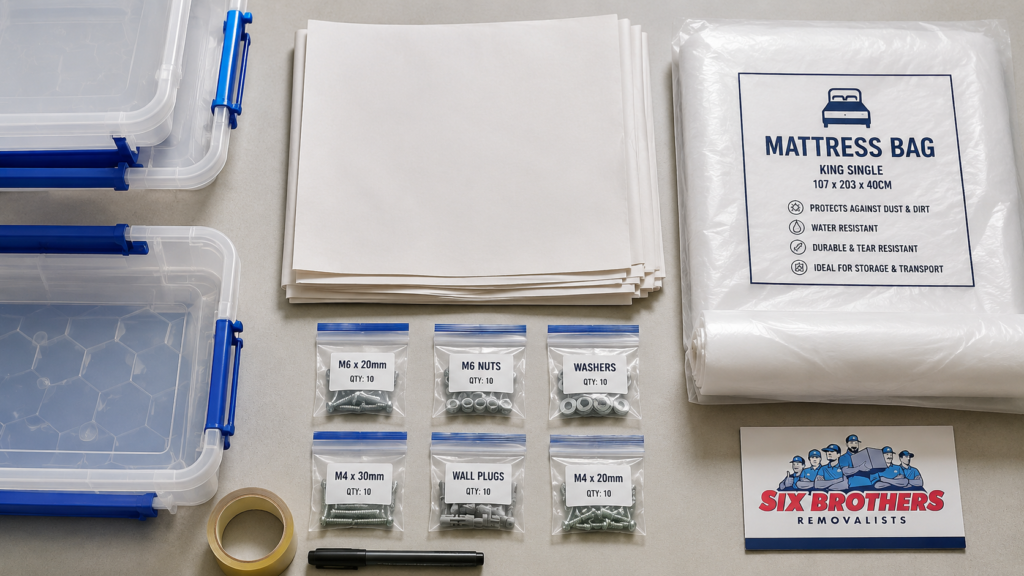
Cardboard sags over time. It also soaks up moisture and attracts pests. Swap key boxes for sealed plastic totes. They stack better and keep damp and bugs out.
White Paper Wrapping
Newspaper ink transfers onto plates and glassware. That’s a stain you can’t scrub off. Use clean white packing paper instead. It protects surfaces without leaving a mark.
Furniture Breakdown System
Flat-pack your furniture where you can. Take apart bed frames, tables, and shelves. Broken-down pieces save space and travel safer. They also lower the risk of snapped legs. Snap a photo before you dismantle each item. It becomes your guide when it’s time to rebuild.
Hardware Tracking Bags
Screws and bolts vanish in a move. Then reassembly becomes a nightmare. Bag the hardware for each item. Label the bag and tape it to the matching piece.
Mattress Bag Seals
A bare mattress in storage gets dusty and damp. Mould loves that combination. Seal each mattress in a proper mattress bag. Keep it upright against a wall to save floor space.
Appliance Deep Clean
Fridges and washers hold hidden water. Sealed up wet, they grow mould inside. Clean and fully dry every appliance. Leave doors slightly ajar to let air move.
Defrost the freezer a full day before. Wipe out the drum of your washer too. Tape cords to the back so they don’t dangle. A tidy appliance loads and stores far easier.
Vacuum Seal Bags
Doonas, pillows, and winter coats hog space. They also absorb moisture. Vacuum-seal soft items into flat bags. You’ll shrink the pile and keep it dry.
One warning here. Don’t vacuum-seal leather or feather items long term. They need a little air to stay healthy.
Prevent Mould and Rust
Damp air is the silent destroyer in storage. It rusts metal and rots fabric. Toss silica gel packs or moisture absorbers into boxes. They quietly pull damp from the air.
Wipe metal tools and bikes with a light oil. That thin coat keeps rust from taking hold.
Label Every Box
A box with no label is a mystery you’ll regret.
Write the contents and room on two sides of each box. Number them to match your inventory list.

Inventory and Security Checklist for Storage Units in Sydney
Once the door shuts, you can’t see inside. So your records become your eyes. Good records and strong locks give you real peace of mind.
Numbered Box Logging
Give every box a number. Write that number in a simple list or spreadsheet. Note what’s inside each one. When you need something, you’ll know exactly where it lives.
A phone note works fine for this. The point is a record you can search in seconds.
Photo Documentation Archive
Photograph the packed unit before you lock it. Snap it from the door and both sides.
Store these photos in the cloud with your inventory. This habit sits at the heart of protecting your belongings during a move.
High-Security Padlock Purchase
A cheap padlock is an open invitation. Bolt cutters slice through them in seconds. Buy a closed-shackle or disc padlock. The design leaves no room for cutters to grip.
Prohibited Items Sweep
Do one last check before you lock up. Pull out anything banned or perishable. No food, no liquids, no aerosols. This sweep keeps pests and leaks out of your unit. A single forgotten grocery bag can attract mice. Two minutes of checking saves a big mess.
Smart Storage Unit Loading and Layout for Interstate Movers
Loading a unit is like a game of Tetris. Plan it, or lose to it. A smart layout protects your gear and saves you money on space.
Heavy Items Baseline
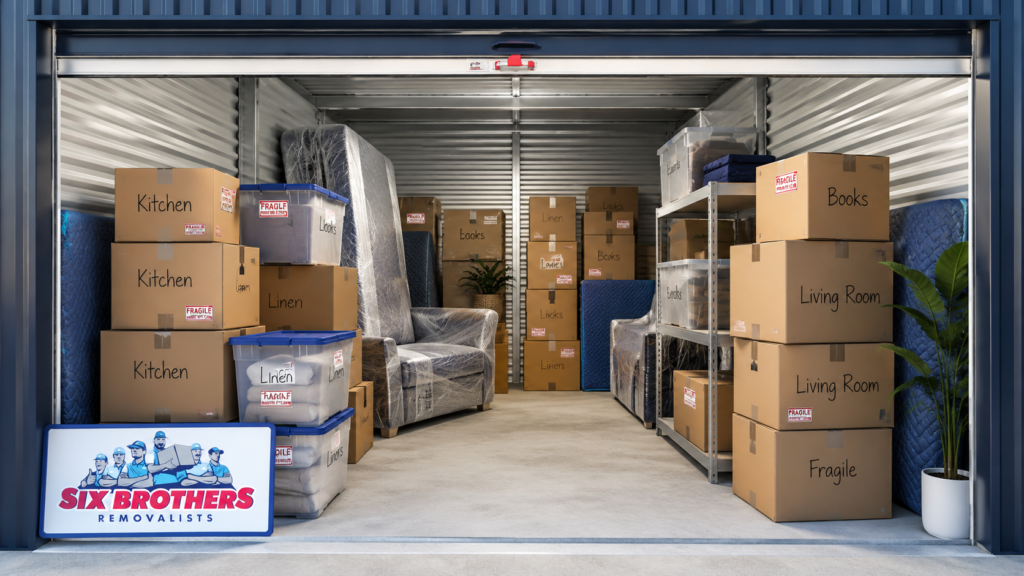
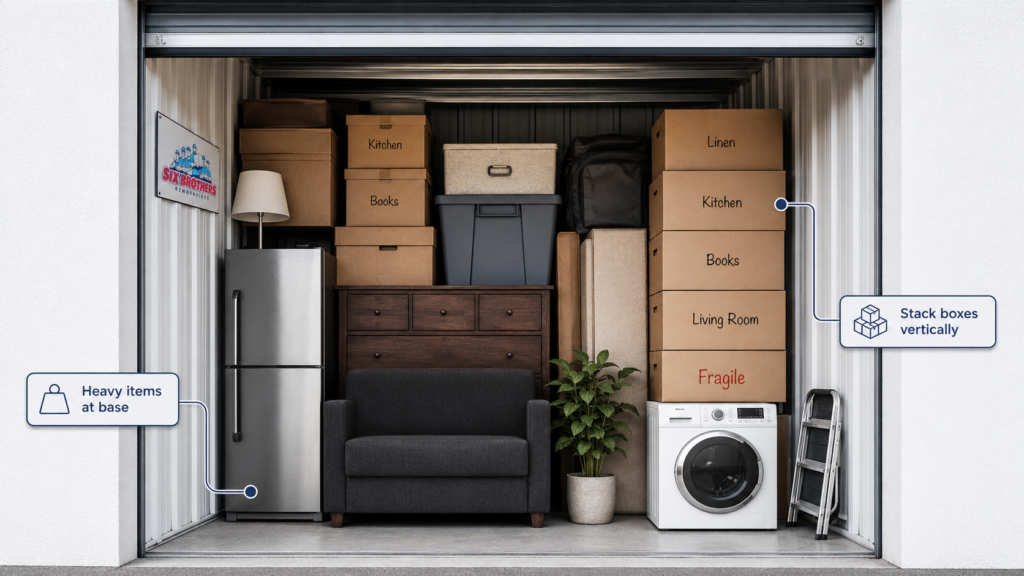
Heavy things go in first, along the back. Think whitegoods, wardrobes, and lounges. They form a stable base for lighter boxes on top. Nothing gets crushed that way. Lay a tarp or old blanket under big items first. It guards against dust and floor damp.
Vertical Space Maximization
Most people forget the height of a unit. That’s a lot of wasted air. Stack boxes upward in neat, square columns. A smaller unit suddenly holds much more. Put heavy boxes low and light ones high. That keeps your stacks stable and safe to reach.
Central Walkway Creation
Pack wall to wall and you’re stuck. You can’t reach a thing without unloading everything. Leave a clear path down the middle. It lets you grab items without a full unpack.
First-Out Positioning
Some things you’ll need before the rest. Tools, documents, the kettle. Place those near the door, labelled clearly. Future you will be grateful.
Airflow Perimeter Buffer
Boxes jammed against the walls trap moisture. That’s how mould creeps in. Leave a small gap around the edges. Air can circulate and keep everything drier.
Moving Day Storage Strategy for Interstate Movers in Sydney
Moving day moves fast. A clear plan keeps the storage part calm. Run through this before the truck arrives.
Pack the Unit Strategically
Don’t just dump boxes as they come off the truck. Direct the flow. Heavy at the back, first-out near the door. A little direction saves hours later.
Create an Aisle
Keep that central walkway open as you load. It’s tempting to fill it, but resist. An aisle means you can reach the back without a full teardown. Handy for long stays.
Confirm Mover Delivery Details
Before the crew leaves, confirm the next step. Storage address, unit number, access code. Nail down the redelivery date too. Everyone should be on the same page. Swap phone numbers with the crew lead. A direct line saves time if plans shift on the day.
Want the storage stress handled for you?
Six Brothers can pack, store, and redeliver as one smooth job. Call us on 1300 764 372 or email info@sixbrothersremovalist.com.au for a free quote.
Storage Timeline Checklist Before Your Interstate Move
Timing is everything with storage. Book late and you’ll scramble for a spot. Map these dates out early and the whole move flows.
Book Storage Early
Good units fill fast, especially at end of month. Book two to three weeks ahead. Early booking locks in size, price, and location. No last-minute panic. Demand spikes at end of financial year too. Facilities near Blacktown and Parramatta fill quickest then.
Confirm Move-In Date
Know the exact day your gear goes in. Line it up with your removalist booking. A clear date keeps the truck and the unit in sync.
Set Reminder Dates
Storage bills roll over quietly each month. Miss one and late fees stack up. Set phone reminders for payment and review dates. Stay ahead of the charges.
Plan Redelivery Window
Know roughly when you’ll want your things back. Even a rough window helps. It lets you book the furniture removalist leg early. Popular dates get snapped up quickly.
Storage Unit Cost and Quote Checklist for Interstate Movers
The sticker price is rarely the full price. Storage quotes hide little extras. Ask about all of these before you commit.
Monthly Unit Fees
This is the base rent for your unit. It’s charged every month you stay. Bigger units and climate control cost more. Get the exact monthly figure in writing.
Minimum Storage Term
Some facilities lock you into a minimum term. You pay it even if you leave early. Ask about the shortest term available. Flexibility matters when move dates shift.
Admin and Bond Fees
Many places charge a setup or admin fee. Some ask for a refundable bond too. These one-off costs add up. Factor them into your total from day one. Ask how the bond gets refunded and when. Get the answer in writing to avoid surprises later.
Pickup Storage Charges
If movers collect and store for you, there’s a handling fee. It covers the labour. Bundling pickup, storage, and delivery often works out cheaper. Try our moving home calculator for a quick estimate.
Redelivery Costs
Getting your items out isn’t always free. Redelivery to your new home has a cost. Ask for this figure upfront. It’s part of the real price of storage. Distance and access at the new place change the price. A clear quote now avoids a shock later.
Removalist Handover Checklist for Interstate Storage Moves
The handover is where things can go wrong. Clear details keep it clean. Tick these off when your movers take over.
Confirm Storage Address
Give your removalist the full storage address. Include the unit number and gate code. One wrong digit sends the truck to the wrong spot. Double-check it.
Share Booking Details
Pass on your storage booking reference. The facility may need it for access. It smooths the entry and avoids delays at the gate.
Match Inventory List
Hand your movers a copy of your inventory. They can tick items on and off. A matched list is your best defence if something goes missing. Keep your own copy too. Two matching lists remove any doubt at delivery time.
Record Arrival Time
Note when the truck reaches the storage unit. A simple timestamp helps. It keeps a clear record if you’re charged by the hour.
Sign Delivery Proof
Don’t skip the paperwork at the end. Check items against your list first. Only sign once you’re happy everything’s accounted for. Your signature is the record.
Special Item Storage Plan for Interstate Movers in Sydney
Some things need more than a box and a prayer. Fragile and precious items earn extra care.
Fragile Item Zone
Keep glass, mirrors, and ceramics together. Store them upright, never flat under weight. Cushion each piece well. Our guide on how to pack fragile items walks through it properly.
Artwork Protection
Paintings hate heat and damp. They warp, crack, and fade over time. Wrap art in acid-free paper and bubble wrap. Store it upright in a climate-controlled unit. Add corner protectors to framed pieces. Never lay them flat where a box can press down.
Electronics Storage
Screens and circuit boards fear moisture. Static and dust hurt them too. Pack electronics in their original boxes if you can. Add silica gel to fight condensation.
Leather Furniture Care
Leather dries out and cracks in stale air. Then it grows mould in damp. Wipe it with a leather conditioner first. Cover it with a breathable sheet, not plastic.
Sentimental Items Plan
Photo albums and heirlooms can’t be replaced. They deserve special treatment. Consider keeping these with you rather than in storage. Some things are just too precious to risk. If they must go in, seal them in a waterproof tote. Place it up high, away from the floor.
Redelivery and Storage Exit Plan After an Interstate Move
You’re on the home stretch. Don’t fumble the final step. A clean exit means everything arrives right and the account closes properly.
Confirm New Address
Give the facility and movers your new address. Get it exact, right down to the unit. A clear address avoids a delivery to the wrong door interstate.
Update Access Details
Your new place may have its own access quirks. Parking limits, lift bookings, gate codes. Share these with your removalist ahead of time. It saves a frustrating wait on the day. Book the building lift early if you’re in a unit. Many blocks need notice for a move-in slot.
Book Final Delivery
Lock in your redelivery date early. If your dates are flexible, interstate backloading can cut the cost. It shares truck space with other moves. Great value if you’re not in a rush.
Check Stored Items
As items come off the truck, check them against your list. Tick each one. Note any damage on the spot. Photos and a written record protect any claim. Compare against those photos you took at the start. Side by side, any change is easy to spot.
Close Storage Account
Once the unit’s empty, close the account formally. Don’t just walk away. Confirm the final bill and any bond refund. Get written proof the account is shut. Cancel any auto-payment linked to the unit. That stops a stray charge months down the line.
Your Interstate Storage Move, Sorted
A storage unit doesn’t have to be the weak link in your move. Pack smart, label well, and keep good records. Do that, and your gear comes out the way it went in. No mould, no dramas, no missing boxes.
The reader who plans early always wins here. A little prep now saves a big headache down the track. And if you’d rather hand the whole thing over, that’s what we’re here for. Six Brothers Removalists handles packing, storage, and interstate delivery as one job.
Get your free quote today. Call 1300 764 372 or email info@sixbrothersremovalist.com.au. No hidden fees, no surprises on the day.
Frequently Asked Questions
How much do interstate removalists cost?
Interstate removalist costs depend on distance, volume, and dates. A small load might start a few hundred dollars. A full home moving across the country costs more. Storage and backloading can lower the total. A free quote gives you an exact figure for your move.
Do removalists have insurance?
Most reputable removalists carry transit insurance, but cover varies. Always ask what’s included and what’s excluded. For storage, you often need a separate policy. Check the details before you book, so you know exactly where you stand if something goes wrong.
What size storage unit do I need for a 3-bedroom house?
A 3-bedroom house usually fits in a 15 m² to 18 m² unit. That covers furniture, whitegoods, and garage gear. If you have large or bulky items, round up a size. It’s cheaper than cramming and risking damage.
How long can I keep my belongings in storage during an interstate move?
Most facilities let you store month to month, for as long as you need. Some have a minimum term. If you pack for long-term storage, your gear stays safe for months. Just keep up with payments and check on it now and then.
What does storage insurance cover in Australia?
Storage insurance usually covers fire, theft, and water damage. It may not cover mould, pests, or gradual wear. Cover and limits differ between policies. Read the product disclosure statement, and check whether your home contents policy already extends to stored items.
Can removalists pack items for storage?
Yes, many removalists offer packing as part of the service. They use proper materials and pack for long-term holding. It saves you time and lowers the risk of damage. Ask for packing when you request your quote.
What’s the best padlock for a storage unit?
A closed-shackle or disc padlock is the safest choice. Both designs resist bolt cutters far better than a standard lock. Avoid cheap open-shackle locks. Spend a little more here, because it guards everything you own.
Should I use climate control for interstate storage?
For long-term storage in Sydney’s humid climate, yes. Climate control protects timber, leather, electronics, and artwork from damp and heat. For a short stay with hardy items, standard storage may do. Weigh the extra cost against the value of what you’re storing.