


Table of Contents
Your moving house garden checklist should start four weeks before the truck arrives. Start outdoors, not just inside. A Sydney backyard can hide bulky gear, rubbish and tricky access. What if the gate is narrower than your outdoor lounge? Those surprises cost time on removal day.
Walk the whole property. Sort what stays, what goes and what needs special handling. This plan covers the jobs homeowners often miss, from compost bins to heavy garden tables.
The 4-Week “Outdoor Inventory” Audit
Start your outdoor audit four weeks ahead. Check every garden zone before you request or confirm a quote. It’s easy to overlook the things you barely notice anymore.
Use four labels: move, sell, donate and dispose. Give each bulky item a destination. A list beats a last-minute guessing game.
The Hidden Storage Trap
A backyard often works like a spare room without a door. Look behind pot plants and under outdoor seats. Open sheds, storage benches, pool cupboards and carports.
Record items such as folded chairs, hoses, spare tiles and old garden edging. Remove rubbish from the moving inventory. Flag any shed or fixed structure for separate assessment.
Count and Measure
Count every chair, planter and loose tool. Measure wide objects, especially dining tables, storage units and trampolines. Check the narrowest gate, not just the item’s size.
A quick inventory helps Six Brothers Removalists understand what needs moving. Send full dimensions for awkward items. Measure steps, long carries and overhead branches too.
Photograph Bulky Items
Photograph the whole item and the route out. Include a ruler or tape measure in close-ups. Capture gates, stairs, drains and tight bends.
Send these pictures before the booking. A photo can show more than a vague ‘big table’ description. Keep a copy for your own condition records.

The Legal & Handover Essentials
Before you remove anything outdoors, check what belongs with the property. It’s better to ask now than argue at settlement. Your sale contract or lease comes first.
Clarify “Fixtures” vs. “Chattels”
An item fixed to the property may not be yours to take. Examples include built-in BBQs, anchored pergolas and fitted irrigation. Portable chairs and free-standing pots are different.
For a sale, read the contract’s inclusions and exclusions. Ask your conveyancer about uncertain items before unscrewing anything. For rentals, check your agreement and entry condition report.
Leave Council Bins Behind
Council-issued bins usually belong with the address or council service. Do not load them as personal belongings. Empty them and place them where the next occupant can find them.
Check your local council’s rule for damaged, extra or privately owned bins. Put spare bin keys or access details with handover papers. Don’t leave loose rubbish beside the bins.
Empty the Compost Bin
Deal with compost before the final packing week. Mature compost may suit garden beds at the current property. Unfinished scraps and wet contents need safe disposal.
Do not load an active compost bin full of soil and food waste. Clean portable units if you plan to move them. Check any plant and soil movement rules first.
Sydney Suburban Waste & Council Rule Checks
Each Sydney council sets its own collection rules. Check the service covering your address. Good timing saves a pile of trouble at the kerb.
Booking Council Cleanups Early
Book garden rubbish and bulky item collections as soon as you sort the yard. City of Sydney allows booked collections, but rules vary across councils. Check accepted materials, booking windows and collection limits.
Some services reject soil, building waste, chemicals and heavy stone items. Do not assume a skip bin accepts everything either. Confirm placement rules before delivery, especially on public land.
Truck Parking Constraints
Measure walking distance from the yard to legal truck parking. Check signs, loading zones, school periods and driveway restrictions. A long carry adds labour even on flat ground.
Ask the relevant council whether permits or approvals apply. Arrange shared driveways with neighbours beforehand. Parking at Parramatta can differ from a quiet Penrith street.
DID YOU KNOW?
City of Sydney says booked bulky collections should happen before moving day. Other Sydney councils use different limits and schedules.
Pest Management & Soil Biosecurity
Inspect the yard before packing pot plants and stored furniture. Pests can travel in soil, timber and old storage tubs. Better safe than sorry here.
Fire Ant & Pest Sweeps
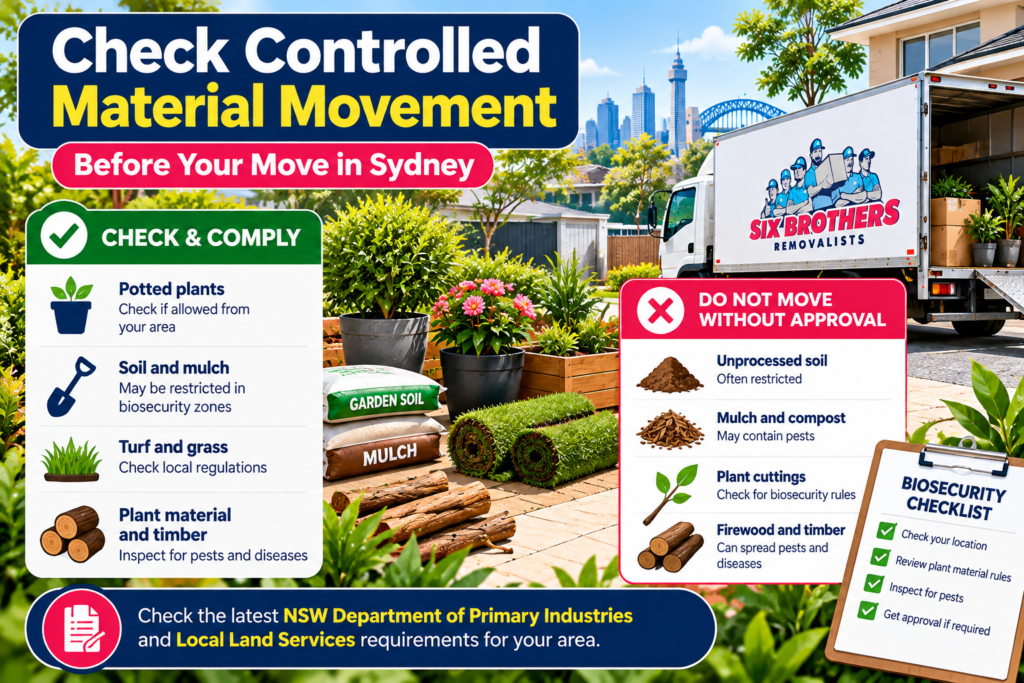
Check exposed soil, pot bases, mulch, lawn edges and outdoor gear. Look for suspicious nests without disturbing them. Wear closed footwear while inspecting ordinary garden hazards.
If you suspect fire ants, leave the area undisturbed. Take a safe photo and report it to NSW Biosecurity. Do not spray, dig out or move the nest yourself.
Pest Inspections
Inspect furniture joints, timber, shed corners and stacked pots. Look for spiders, wasps, termites and rodents. Stop work around active nests or unsafe infestations.
Arrange a licensed pest professional when needed. Keep cleaning and treatment separate from packing. Tell your removalist if any item might carry pests or contamination.
Fire Ant Biosecurity Zones
The Enfield fire-ant control order took effect on 26 October 2026. It covers a zone around the intermodal centre. Movement rules can affect soil, mulch, turf and potted plants.
Check current NSW fire ant controls before moving carrier materials out of or through affected areas. Rules also apply elsewhere in NSW. Do not assume every Sydney suburb has identical restrictions.
End-of-Lease & Pre-Sale Yard Grooming
Leave the yard in the condition your agreement requires. A neat lawn helps, but photos and records matter too. Don’t cut corners around safety or property damage.
Lawn Mowing and Edging
Mow when the ground is dry enough. Edge paths, garden beds and entry areas. Follow your lease or sale agreement rather than an invented mowing standard.
Collect grass clippings before the truck arrives. Keep the main carry route clear of hoses and mower cables. Photograph the finished lawn before handover.
Weed Removal
Pull manageable weeds from paths, paved edges and garden beds. Use safe methods for any declared weeds. Avoid disturbing contaminated soil or spreading seed heads.
Dispose of the weeds under local council guidance. Do not pack weed-filled potting mix for another property. Remove sharp plants beside the carrying route.
Pressure Wash the Sandstone
Clean sandstone only when the surface and product can handle it. Strong pressure can damage soft stone and grout. Start with gentle methods or ask a specialist.
Keep run-off away from drains and neighbours. Let paving dry before trolleys arrive. Slippery stone and a heavy table make a bad pair.
Clay Soil and Leaf Litter Maintenance
Clay-heavy gardens can hold water after Sydney rain. Clear wet leaves from paved paths, steps and drains. Avoid walking heavy loads across sodden soil.
Use a broom or soft rake before the truck arrives. Keep loose leaf litter away from packed cushions. Where mud is likely, plan a different route.
Tree Pruning
Trim only branches you can reach and handle safely. Check council tree controls before major pruning. Protected trees and street trees may need approval.
Book a qualified arborist for height, powerline or heavy-limb hazards. Do not let a rushed prune damage the property. Photograph any branches affecting truck access.
Prepare BBQs, Fuel and Hazardous Garden Products
Treat fuels and chemicals as separate jobs. A removals truck is not a household chemical cupboard. Check the carrier’s written acceptance rules first.
Check BBQ Gas Cylinder Restrictions
Remove loose BBQ parts and clean grease from the cooking area. Ask about the appliance and cylinder separately. Most removalist companies do not transport gas cylinders.
NSW advises upright, secured transport under strict conditions for private vehicles. Never hide cylinders inside cartons. Consider supplier exchange or approved disposal instead.
Prepare Fuel-Powered Garden Tools
Clean and cool mowers, whipper snippers and chainsaws. Check the manual and carrier rules about fuel and oil. Never assume draining is identical for every machine.
Our guide to garden tools and power equipment explains how to protect blades and fittings. Put hazardous leftovers aside for approved collection. Never empty fuel onto the ground.
Dispose of Garden and Pool Chemicals
Sort pesticides, fertilisers, petrol containers and pool chemicals before packing. Keep products labelled in original containers where safe. Never mix leftovers or pour them into drains.
Check NSW EPA Chemical CleanOut events for suitable household drop-off options. Permanent recycling centres accept selected products, not every chemical. Ask what each location accepts.
Check Battery Transport Requirements
Identify lithium batteries inside cordless mowers, tools and garden lights. Protect loose terminals and follow the manufacturer’s instructions. Damaged or swollen batteries need specialist advice.
Ask the removalist whether each battery type can travel. Do not pack batteries beside metal screws. Use an authorised recycling point for unwanted packs.
Dismantle Bulky Outdoor Furniture and Play Equipment
Take down bulky gear before removal day when you can do so safely. More pieces can mean less wasted truck space. But every screw needs a home.
Disassemble Trampolines and Swing Sets
Check the manufacturer’s instructions before loosening frames, nets or springs. Rusted fasteners and ground anchors may need specialist tools. Do not attempt unsafe spring removal.
Photograph each stage and bag parts together. Mark long poles by section. Ask in advance whether reassembly is included in the quote.
Fold Gazebos and Outdoor Umbrellas
Lower and dry canopies before storage. Remove detachable fabric, weights and side panels. Protect long frames from bending or rubbing against other furniture.
Keep umbrella bases separate from the pole. Stone and concrete bases can be much heavier than expected. Tell the crew about every weight.
Protect Glass and Stone Tabletops
Remove glass tops when the design allows it. Protect each edge with fitted guards and suitable padding. Never lift a heavy stone slab without enough trained help.
Ask furniture removalists in Sydney about suitable protection and handling. Share slab dimensions, weight if known, and the full carrying route. Specialty pieces may require separate arrangements.
Label Bolts and Fittings
Put each screw group in a sealed, labelled bag. Tape the bag to a matching safe component. Keep assembly tools in a separate small kit.
Take one photo before every major step. A label reading ‘gazebo left leg’ helps more than ‘metal bits’. Rebuilding goes faster with fewer mysteries.
Clean and Pack Garden Tools and Outdoor Gear
Brush, dry and contain outdoor gear before the truck arrives. Dirt and water can reach cleaner household items. An ounce of prevention goes a long way.
Clean Outdoor Furniture Before Loading
Wipe down tables, chairs, storage tubs and pot stands. Remove loose soil, leaves and insects. Let surfaces dry before adding covers.
Do not pack cushions against wet timber. Separate fragile finishes from sharp metal edges. Use breathable protection for surfaces that might hold moisture.
Secure Sharp Garden Tools
Clean secateurs, saws, forks and hedge trimmers. Lock blades or fit rigid guards. Place dense tools inside strong, manageable containers.
Mark cartons clearly as sharp tools. Keep handles from sticking through cardboard. Never put unguarded blades beside textiles or children’s belongings.
Bundle Long-Handled Equipment
Group rakes, brooms and shovels by length. Cover sharp ends before securing handles together. Use straps that won’t slip during carrying.
Do not make one huge bundle. Separate heavy steel tools from light brooms. Tell the crew when an item is longer than a standard doorway.
Pack Outdoor Cushions and Covers
Wash or shake out removable covers where appropriate. Dry everything fully before bagging. Store clean cushions away from fuels and garden chemicals.
Large breathable bags suit many outdoor cushions. Avoid crushing foam into damp containers. Label these bags as clean soft goods.
Drain and Coil Garden Hoses
Turn the tap off and release remaining hose pressure. Drain, coil and secure the hose without sharp bends. Remove loose connectors into a labelled pouch.
Dry hose reels before wrapping. Keep heavy reels from rolling during loading. Put wet hoses away from cardboard boxes.
Prepare Portable Water Features and Spas
Drain water features early, then allow time for drying. Water is heavy, and pumps need protection. Don’t leave the job until the crew arrives.
Empty Portable Fountains and Birdbaths
Drain water from transportable bowls and fountains. Clean algae from accessible surfaces and let pieces dry. Remove loose stones before lifting.
Wrap fragile ceramic bowls separately from bases. Fixed fountains may belong to the property. Confirm ownership and trade needs before disconnecting anything.
Disconnect Pumps and Filters
Switch off power before handling portable pumps. Follow equipment manuals and use qualified trades for hardwired connections. Drain hoses and filter housings safely.
Bag small fittings by unit. Photograph wiring and connections only when safe to approach. Keep pumps upright if the manufacturer requires it.
Arrange Specialist Spa Handling
A portable spa needs more than a normal furniture lift. Confirm whether drainage, electrical disconnection and access require specialist help. Check its dry weight and dimensions.
Send photos showing fencing, gates and any steps. Confirm the handling scope before agreeing to a price. Permanent spas may not be removable under the property agreement.
Moving Day Logistics for Plants
Move plants with their health and legal requirements in mind. Many plants handle short trips better when prepared gently. It’s not always greener on the other side.
Dry Out Potted Plants
Avoid soaking pots immediately before loading. Water enough for plant health, but reduce excess surface moisture. Adjust for weather, species and journey length.
Check soil, pests and current movement restrictions first. Some interstate journeys need extra biosecurity checks. Ask whether the removalist accepts live plants at all.
Wrap Terracotta and Ceramic Pots
Fragile pots need edge protection and a stable base. Wrap the container, not delicate leaves, where possible. Keep tall plants upright during carrying.
Separate very heavy pots from the plants if safe and practical. Check root size and weight before attempting a lift. Consider taking cuttings instead of transporting enormous specimens.
Clear the Garden-to-Truck Access Route
Plan one safe path from each outdoor item to the vehicle. The best route is clear, stable and legal. Measure twice, move once.
Check Gates and Side Access
Measure open gate widths and the narrowest turning points. Include fence posts, downpipes, bin areas and low awnings. Test the route with large-item dimensions.
Ask permission before temporarily removing a gate. Confirm who will reinstall it. Do not assume a large outdoor couch can turn through every corner.
Remove Outdoor Trip Hazards
Move hoses, toys, loose tiles, pots and extension leads away. Clear steps and secure any loose mats. Keep children and pets away during loading.
Mark shallow drains and uneven paving for the crew. Do not cover hazards without telling anyone. A clean path beats a hurried detour.
Protect Turf and Garden Pavers
Use suitable boards or floor protection when carrying heavy items. Avoid dragging tables across lawns or fragile pavers. Get advice for stone surfaces and soft ground.
Heavy trolleys can crack loose pavers or mark turf. Check who supplies protective materials. Photograph fragile areas before work starts.
Plan for Slopes and Steps
Count steps and record steep sections at both addresses. Flag retaining walls, narrow landings and slippery tiles. Large planters may need extra handling equipment.
Do not improvise with heavy loads on a slope. Send photographs and ask for a safe carrying plan. Extra labour may be necessary.
When you’ve measured the access route, share those photos with Six Brothers before booking. Ask for your free quote on 1300 764 372. A clear scope makes planning easier for everyone.
Plan for Rain, Mud and Wet Outdoor Loads
Wet weather changes outdoor loading conditions quickly. Sydney storms can turn a level lawn into slippery ground. Keep a dry backup plan ready.
Check Lawn and Soil Conditions
Check the garden after rain, especially clay patches and slopes. Soft ground may not support a trolley safely. Use a paved route where possible.
Avoid dragging equipment through mud. Tell the crew about any waterlogged access. The lawn can act like a sponge under a heavy load.
Cover Outdoor Items Before Loading
Use fitted, waterproof covers for suitable outdoor pieces. Dry them before wrapping when possible. Keep plastic away from trapped moisture during storage.
Cover fabric seats, timber surfaces and packed metal parts. Secure loose corners against wind. Remove covers safely when the crew needs a firm grip.
Keep Packing Materials Off Wet Ground
Place cartons on dry boards, benches or pallets. Keep tape, paper and fabric covers under shelter. Wet cardboard can fail during lifting.
Stage small items close to the exit without blocking it. Keep chemicals and batteries in separate safe areas. Replace any packaging that has gone soft.
Prepare a Wet-Weather Loading Plan
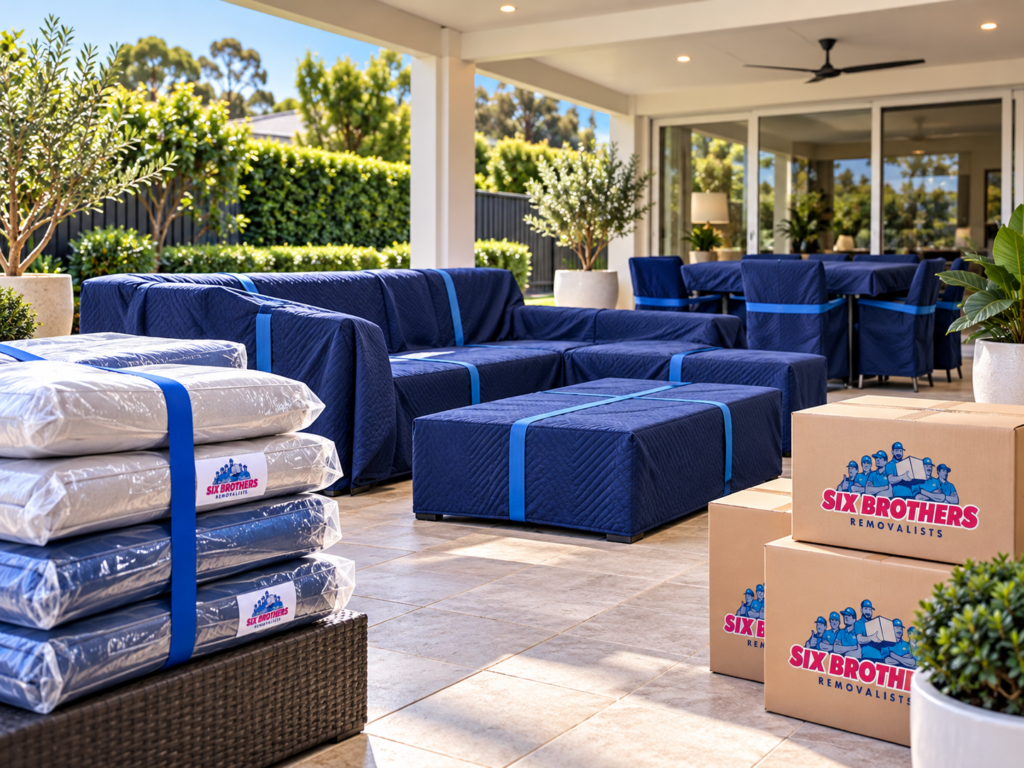
Choose a sheltered staging spot near the truck. Identify a second path if the lawn becomes unsafe. Confirm any schedule changes with the removalist.
Keep towels and spare floor protection handy. Tell the team about flooded drains or slippery steps. Safety matters more than rushing one last load.
What Yard Preparation Can Increase Removalist Costs?
Outdoor preparation can affect the quote through time, space, handling and access. Large objects and unclear inventories make planning harder. The devil is in the detail.
Why pay for extra loading time when better preparation could avoid confusion? Common cost drivers include dismantling play gear, long garden carries and heavy stone pots. Extra truck space, specialist lifting and multiple trips can also matter. Ask for the exact inclusions in writing.
Six Brothers lists its published removalist rates, but your backyard needs its own assessment. Mention steps, restricted parking, heavy items and wet-weather risks. Never assume ordinary house removals include shed relocation or hazardous goods.
See our guide covering outdoor furniture, BBQs and pool gear for related cost factors. Then compare your prepared item list against the final written scope. That check helps avoid late surprises.
FAQs
How to Prepare for Removalists?
Finish the outdoor inventory, clear access, and set restricted items aside. Send photographs before removal day.
Do Removalists Disassemble Furniture?
Some do, but outdoor items need prior approval. Confirm dismantling, reassembly and extra labour in writing.
Can removalists transport garden chemicals?
Do not assume they can. Use approved disposal services or obtain explicit carrier instructions.
Can I move a garden shed without dismantling it?
That depends on size, anchoring, access and transport approvals. Ask a specialist before booking.
Should I move heavy garden pots?
Compare their value with handling risk and transport cost. Check plant and soil rules first.
Do I need to book a council clean-up?
Only if you have eligible waste. Check your own council and book before moving day.
Can outdoor gear change the moving quote?
Yes. Volume, access, weight and preparation can increase labour or equipment needs.
What if rain makes the garden unsafe?
Use a prepared dry path or agree on a revised loading plan. Tell your removalist promptly.
Most yard problems start with items nobody listed. A clear checklist gives you more control over time and costs. Get your free Six Brothers quote with every outdoor item included.