


Table of Contents
Access problems can turn a planned interstate move into an expensive, stressful delay. A truck needs legal parking, safe entry, and enough working room. The crew also needs clear paths, usable lifts, open gates, and accurate directions. Miss one detail, and the whole schedule can slide.
What happens when the truck arrives and cannot reach your building? The answer is usually waiting time, longer carries, or a smaller shuttle vehicle. Those changes can affect timing and your final bill. Access planning is the runway for moving day. Clear it early, and the move can take off cleanly.
This guide shows how to prevent those problems before the interstate removalists arrive. It covers Sydney parking rules, strata access, bulky furniture, stairs, neighbours, timing, and delivery access. You will also build a simple backup plan. A bit of prep keeps the day from becoming a dog’s breakfast.

Lock Down Parking and Council Permits Before Moving Day
Parking should be confirmed before the removalist truck leaves the depot. Start with the pickup address and the delivery address. Check both kerbs, both building entries, and every sign nearby. Do not assume an empty street today stays empty on moving day.
Sydney councils can apply different permit rules across neighbouring suburbs. City of Sydney visitor permits can cover a removalist truck during a move. Eligibility still depends on the property and parking area. Check the official City of Sydney visitor parking permits page before relying on one.
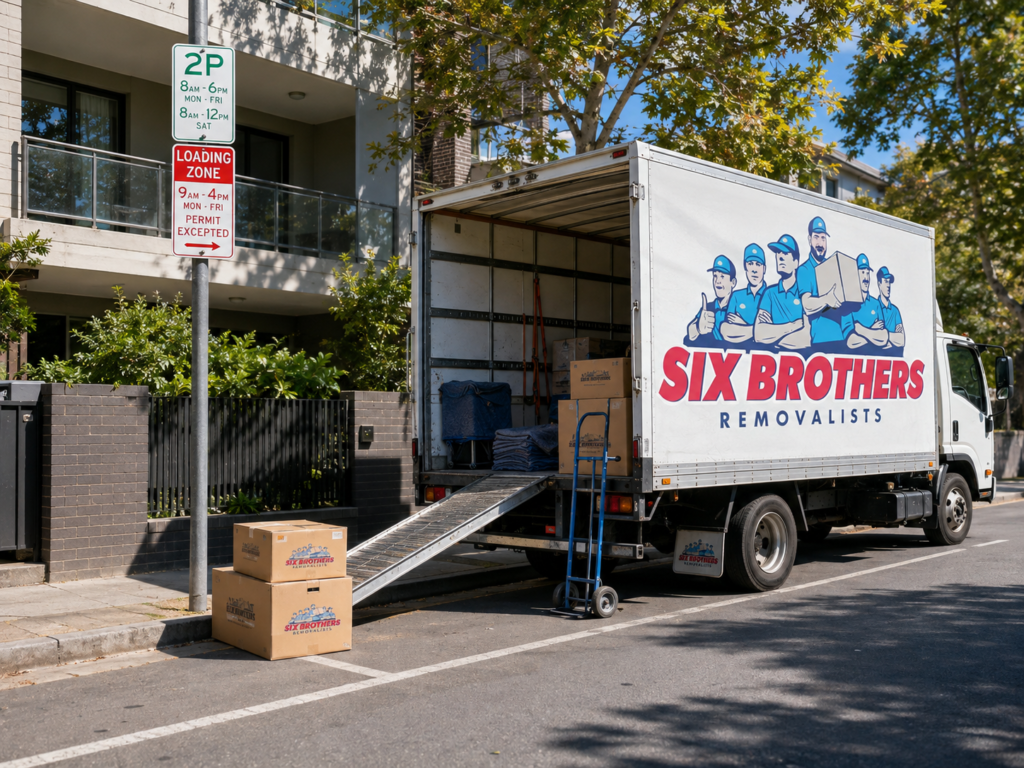
If your street needs special access, contact the council early. Ask what permit suits a moving truck at that address. Confirm the application lead time and vehicle limits. Keep the approval saved on your phone and printed with the moving papers.
Your earlier guide to interstate removalist truck parking is useful here. It explains space, permits, truck dimensions, and backup parking. Use that guide beside your interstate moving checklist. No worries is a great feeling, but it comes from preparation.

Coordinate Apartment, Strata, and Building Access Early
Apartment access needs more planning than a simple kerbside house move. Building managers may control lifts, docks, loading bays, keys, and moving hours. Some buildings also require deposits or protective coverings. Ask for the move-in and move-out rules before booking the final arrival window.
Reserve the service lift if the building has one. Confirm its door width, internal dimensions, weight limit, and booking period. Ask whether the lift needs protective pads. Also confirm the loading dock height and the route from dock to lift.
For office removalists, building access can be even tighter. Security desks may need crew names, insurance details, or vehicle registrations. Loading docks can also have strict time slots. Send those rules to the interstate removalist before the team travels.
A building manager saying ‘she’ll be right’ is not a booking. Get the approved time and access method in writing. Keep the building contact available on moving morning. That saves awkward delays when reception changes shifts.
Check Street Signs and Loading Restrictions Before the Interstate Move
Street signs can override your preferred parking plan. Walk the street at the same time your truck will arrive. Photograph every sign within the likely loading area. Then compare the restrictions with your booked arrival window.
Current NSW parking rules treat clearways and no-stopping areas seriously. Loading zones also have vehicle and time conditions. A legal loading spot at 10am may become illegal during peak traffic.
Do not copy a parking plan from another suburb. Parramatta, the Sydney CBD, Inner West, and coastal areas can feel very different. Local enforcement also depends on the exact sign and road. The safe rule is simple: read the street you are actually using.
This is where ‘she’ll be right’ can get expensive. Treat every sign like a hard boundary. Build your arrival around the road rules, not around hope.
Clearway times
Clearways can remove an otherwise perfect parking option during busy periods. Note the exact start and finish times. Plan loading before or after those windows. Never expect a moving truck to receive special treatment.
Loading zone limits
Loading zones can help when your truck qualifies and loading is active. Time limits still matter. A large home move may need longer than one loading-zone window. Prepare another legal option before the limit expires.
No-stopping areas
No-stopping areas are not short-term loading spaces. Keep the truck completely outside those signed sections. That protects the driver, neighbours, and your moving schedule.
Resident parking rules
Resident parking areas may allow permit holders to avoid certain limits. The permit must match the location and conditions. Confirm whether your moving vehicle can use it. Keep proof ready if council officers ask.
Did you know?
In NSW, qualifying goods vehicles may use loading zones while actively loading or unloading. The usual maximum is 30 minutes unless the sign shows another limit.
Confirm Truck Size, Street Access, and Shuttle Needs
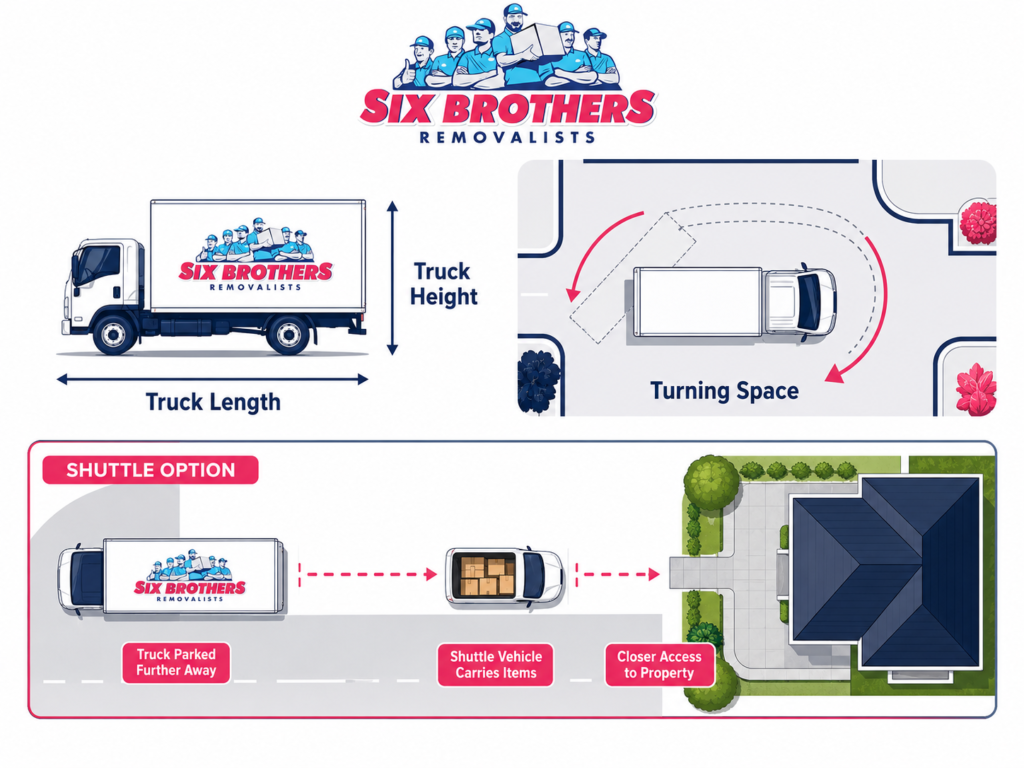
Truck size changes every access decision. Ask the removalist for the planned truck length, height, and turning needs. Also ask whether the vehicle can enter your street legally. A tight corner can matter more than a wide parking bay.
Some interstate furniture removalists use larger vehicles for long routes. Others use smaller trucks with depot transfers or backloading. A big truck may suit the load but not the street. That is when a shuttle van can keep the move working.
A shuttle adds handling, walking, and coordination. It can also add time. Tell your removalist about narrow lanes, low branches, steep driveways, and weight limits. Photos and measurements help the operations team choose the right vehicle.
This applies across routes, not only Sydney. Removalists Melbourne, removalists Brisbane, removalists Perth, and removalists Adelaide face different street patterns. The same access logic still works. Match the vehicle to the street, and you are good as gold.
Sydney interstate removalists must plan local streets before the long highway leg. Interstate removalists in Sydney need the same detail for apartments and houses. Specialist piano removalists may also need wider turns and safer trolley paths. Removalist truck hire still requires accurate dimensions before choosing a vehicle.
Share Access Photos With Your Interstate Removalist
Good access photos remove guesswork before moving day. Take wide photos first, then close details. Send them with short labels showing where the truck should approach. A driver should understand the site without visiting it first.
Photos are especially useful for interstate removalists Sydney routes. They help when the driver has not seen your property before. A removalist from Sydney can also review the destination before leaving New South Wales. That reduces surprises after a long drive.
Send the images through one agreed channel. Email works well because the team can find them later. Include a simple map pin and written directions. Give the driver a fair go by making the route obvious.
Street frontage
Photograph the full frontage from both directions. Include signs, trees, poles, parked cars, and driveway entries. Show enough road for the driver to judge turning space.
Driveway slope
Take a side photo showing the driveway gradient. A steep slope can affect tail lifts and vehicle clearance. Note slippery surfaces or sharp changes in angle.
Entry points
Photograph gates, doors, foyers, garage entries, and loading docks. Include a tape measure when width looks tight. That gives scale without extra explanation.
Tight-turn spots
Show corners where a trolley, sofa, or long item must turn. Photograph the space from both sides. The crew can then plan disassembly or another route.
Map Out Long Carries, Stairs, and Lift Access
A long carry can quietly add hours to a move. Measure the walking distance from truck to entry. Then count stairs, landings, and door changes. Share those details before the quote is finalised.
Many people ask how much do removalists charge without describing access. That makes quote comparisons weaker. One company may price a short carry. Another may already allow for stairs and a distant loading point.
When you compare removalist quotes, make access identical in every request. Mention stairs, lift bookings, long corridors, and parking distance. That helps you compare the same job. It also reduces day-of surprises.
For cheap removalists, affordable removalists near me, or premium teams, access still affects labour. Long carries are a time tax on the move. Better information helps everyone price and plan fairly. Hard yakka is fine, but pointless hard yakka is not.
Measure Bulky Items Before the Interstate Removalists Arrive
Bulky furniture should be measured before the crew arrives. Record width, height, depth, and awkward fixed parts. Measure the doors, lifts, hallways, and stair turns too. The smallest opening usually decides the plan.
Will my sofa fit through the door? Measure the sofa at its widest fixed points. Then measure the clear door opening, not the frame outside. Check whether removing feet, doors, or cushions creates enough space.
If furniture won’t fit through door openings, tell the furniture removalist early. The crew may dismantle safe components or choose another exit. Never assume a balcony lift or window removal is available. Those options need extra planning and safety controls.
The move a sofa interstate guide gives more preparation detail. The same thinking applies to wardrobes, dining tables, pianos, gym equipment, and large artwork. Measure twice and save the moving-day wrestling match.
Clear the Access Path Before Removalists Arrive
The crew should arrive to a usable path, not a household obstacle course. Clear the route from each room to the truck. Keep children and pets away from working zones. Move loose mats that could slip under a trolley.
House removalists work fastest when doors stay open and pathways stay predictable. Office removalists need the same control around workstations and shared corridors. A clear path protects people, walls, furniture, and time.
Think through the route at trolley height. A bike handle or pot plant can block more than expected. Remove anything that narrows turns or hides a step. She’ll be apples when the path stays clean.
Move bins and bikes
Shift wheelie bins, bikes, scooters, and garden tools before the truck arrives. Keep them away from kerbs and gates. Do this the night before when possible.
Unlock gates early
Unlock side gates, garages, storage cages, and shared doors before arrival. Test stuck locks and remotes. Leave spare keys with the access contact.
Remove hallway clutter
Clear shoes, boxes, prams, plants, and loose decorations from halls. Keep fire exits and shared areas open. The crew needs a full-width route.
Keep doors accessible
Prop approved doors safely when building rules allow it. Do not block fire doors illegally. Have someone manage doors when automatic closers slow every trip.
Protect Common Areas So Access Delays Do Not Escalate
Common-area protection should be agreed before the first trolley moves. Ask building management what coverings they require. Bring suitable floor protection, corner guards, or lift pads. Do not tape materials to surfaces without approval.
Damage disputes can stop a move while people take photos and make calls. Pre-move condition photos reduce confusion. Photograph existing marks in lifts, foyers, walls, and door frames. Time-stamped images help everyone separate old damage from new damage.
A careful removalist furniture plan includes protection before speed. This matters for international removalists and interstate teams too. Shared buildings often have stricter handover rules than houses. Keep everyone sweet by protecting the route before loading starts.
Floor protection
Use the covering approved for the surface and building. Secure edges so nobody trips. Replace wet or torn protection during the move.
Wall corner guards
Protect corners near tight turns and lift doors. Tall furniture often catches these points. Guards can prevent small scrapes becoming a long dispute.
Pre-move condition photos
Photograph shared areas before the crew starts. Capture existing dents, scratches, chips, and stains. Keep those images with the moving paperwork.
Damage report process
Ask management how damage must be reported. Know the contact person and required photos. Fast reporting stops a minor issue delaying the whole move.
Prevent Neighbour and Shared Driveway Access Conflicts
Neighbours can make access easier when they know your plan. Give nearby residents a short notice before moving day. Include the date, likely truck window, and your contact number. Ask politely for shared driveways to stay clear.
Do not reserve public parking with unsafe objects or fake signs. Use council-approved methods where required. If visitor parking is limited, tell friends and helpers not to fill the truck space.
Removalists near me and removalist near me searches often focus on price. Neighbour access can affect that price through waiting and extra carries. A two-minute conversation can save thirty minutes of confusion.
Nobody wants a blue with the neighbours while boxes sit on the footpath. Keep the notice friendly and specific. Thank people afterwards if they helped.
Notify neighbours early
Give notice several days ahead when access is shared. A friendly message works better than a moving-morning demand. Include only the timing they need.
Keep driveways clear
Keep your driveway and neighbouring driveways usable. Do not let helpers park across entries. Assign one person to watch the kerb during arrival.
Manage visitor parking
Tell helpers where they should park before they arrive. Keep the closest legal space for the removalist truck. This matters on narrow Sydney streets.
Avoid shared-area blockage
Stage boxes inside your property where possible. Do not fill shared corridors, foyers, or stairs. Keep emergency access open throughout the move.
Time the Interstate Move Around Local Access Pressure
Timing can solve access problems without changing the property. Choose a window when streets, lifts, and loading areas are quieter. Ask your removalist which arrival time suits the route. Then check local pressure points yourself.
Interstate removalists Sydney to Melbourne and interstate removalists Sydney to Brisbane face long travel windows. Small delays at pickup can ripple into delivery. The same applies to interstate removalists Sydney to Adelaide and Sydney to Canberra removalists.
Route planning matters for removalist Sydney to Melbourne bookings and Sydney to Melbourne removalists. It also matters for removalist Sydney to Brisbane jobs and Sydney to Brisbane removalists. Removalists Sydney to Canberra and removalists Sydney to Newcastle face the same access checks.
If you are using removalists western Sydney or removalists Parramatta, peak traffic matters early. Inner-city moves also compete with deliveries and commuters. Coastal suburbs can tighten on weekends. Beat the traffic before the street gets chockers.
A good moving interstate checklist Australia plan includes access timing at both ends. Do not schedule only around your preferred wake-up time. Schedule around the street, building, and route.
Peak-hour traffic
Avoid major commuter windows where practical. A truck may lose time before it reaches your street. Check the route and local road conditions.
School-zone congestion
School streets can become packed during drop-off and pickup. Avoid those short windows when possible. Keep crossings and signed zones completely clear.
Bin collection day
Bins can occupy the exact kerb space you need. Check collection day and move bins promptly. Ask neighbours not to leave extras near your loading point.
Weekend move limits
Some buildings restrict weekend moving hours. Councils may also manage events or special parking differently. Confirm both building and street rules before choosing Saturday.
Confirm Delivery-Side Access Before the Interstate Truck Arrives
Delivery access deserves the same attention as pickup access. Recheck the destination one or two days before arrival. Streets change, cars move, and building managers update bookings. A second check catches problems while there is still time.
This matters on routes using removalists Sydney to Melbourne or removalists Sydney to Brisbane. It also matters for removalists Sydney to Adelaide and removalist Sydney to Newcastle. Removalists Sydney to Wollongong need the same clean final approach.
If you booked interstate removals, send updated delivery details before dispatch. Include the legal parking point, key contact, and any after-hours process. Confirm where the crew should call if the building is locked.
Do not treat the destination as tomorrow’s problem. ‘She’ll be right’ is not an access strategy after eight hours driving. Make the final stop as clear as the first.
New street layout
Check one-way changes, roadworks, new barriers, and temporary closures. Send a fresh map pin if the approach changed. Include the safest truck entry direction.
Delivery parking point
Confirm the exact unloading space before arrival. Photograph it when possible. Keep helpers away from that space until the truck parks.
After-hours access
Check gates, security desks, intercoms, and lift controls after normal hours. Arrange codes or keys before staff leave. Do not rely on one unavailable manager.
Final access check
Call the destination contact before the truck reaches the area. Confirm parking, lift access, and keys. Fix any change before the driver turns in.
Build a Moving-Day Access Run Sheet for the Removalist Team
A one-page run sheet keeps access details in one place. Send it to the booking team and driver. Print one copy for yourself. Keep another on your phone.
The run sheet is the move’s flight plan. It should show arrival windows, parking instructions, contact names, lift bookings, and gate codes. Add backup locations and approval contacts. Keep sensitive access codes limited to the people who need them.
This document also helps when comparing removalist companies. A professional team can tell you what access details they still need. That conversation can reveal gaps before moving day.
Six Brothers Removalists can use clear access information to plan labour and vehicle needs. You can call 1300 764 372 or email info@sixbrothersremovalist.com.au. Keep the sheet simple, and the day becomes too easy.
Arrival windows
List pickup and delivery arrival windows. Add building booking times beside them. Leave a small buffer for traffic and handovers.
Driver directions
Write the final street approach in plain language. Mention one-way entries and difficult turns. Add a map pin, not only the street address.
Access contact list
List the customer, building manager, strata contact, and destination contact. Include phone numbers and roles. Mark who can approve changes.
Key handover plan
State who holds keys, remotes, loading-dock fobs, and lift access. Set a handover time. Keep spare access items available where practical.
Prepare a Backup Plan for Blocked Access on Moving Day
A backup plan stops one blocked space from stopping the whole move. Choose an alternate legal loading point before moving day. Measure the extra carry distance. Decide when the team should switch plans.
Your backup should also cover a smaller shuttle vehicle. Ask whether one is available if the main truck cannot reach the property. Confirm any likely extra cost before you need it. That protects your budget and decision-making.
Access problems can also affect the cheapest way to move interstate Australia. A low quote can lose value when waiting time grows. Ask how access delays are charged. Also ask whether stairs, shuttles, or long carries change the rate.
If you are reviewing packing and removals, include access in that planning too. Packed boxes still need a safe route outside. Plan B keeps you out of strife when Plan A disappears.
Alternate loading point
Pick a second legal place within practical carrying distance. Check signs and restrictions there too. Tell the driver how to reach it.
Waiting-time trigger
Set a clear point when waiting stops making sense. For example, switch plans after an agreed delay. The crew should know who makes that call.
Approval contact
Choose one person who can approve extra labour, shuttle use, or changed parking. Keep that person reachable. Avoid five people giving different instructions.
Temporary holding area
Choose a safe place for staged items if access changes suddenly. Keep it dry and supervised. Never block public paths or emergency exits.
How Access Planning Helps Control Interstate Moving Costs
Access planning cannot remove every moving cost. It can remove avoidable waiting, extra carries, and emergency changes. Those are the costs that often feel most frustrating. They appear when the move is already underway.
People often search how much do removalists charge, cheap removalists, or compare removalist quotes. Price still depends on load, distance, labour, and service. Access should be part of that same conversation before booking.
Ask whether your quote allows for stairs, lift delays, long carries, shuttles, or restricted parking. Also ask about removalist insurance Australia and the cover applying during transit. Clear answers help you compare value, not just the first number.
Cheap removalists Sydney, affordable removalists Sydney, and full service removalists Sydney can quote differently. The best comparison uses the same access facts for every company. Fair dinkum comparisons start with identical job details.
House removalists Sydney and furniture removalists Sydney still price from the real job details. Cheap interstate removalists Sydney can only quote properly when access facts are accurate. An interstate removalist Sydney team still needs parking, stairs, and lift details. Sydney removalists handling long-distance work also need the delivery-side plan.
Final Moving-Day Access Checklist
Run one last access check before the crew arrives. Confirm parking, signs, keys, lift bookings, gates, and the clear path. Recheck the destination contact. Keep your backup plan ready but out of the way.
Your interstate moving checklist should include access beside packing and utilities. It belongs near the top because every box eventually uses that route. A smooth move needs more than a packed truck. It needs a clear path to the truck.
If you want a team to plan those details with you, request a free quote. Share both addresses and every access issue you already know. Call Six Brothers Removalists on 1300 764 372. You can also email info@sixbrothersremovalist.com.au.
Good access planning creates relief before moving morning starts. Parking is sorted, doors fit, lifts are booked, and the team knows the route. That is the kind of ‘no worries’ moving day worth planning for.
Frequently Asked Questions
How to prepare for removalists?
Prepare by clearing access paths, confirming parking, unlocking gates, and reserving lifts. Measure bulky furniture and share access photos before moving day. Keep children, pets, and helper cars away from the working route.
What to ask a removalist before hiring?
Ask about truck size, parking needs, stairs, long carries, shuttle options, waiting charges, and insurance. Also ask who confirms delivery access. Written answers make quote comparisons much clearer.
How early should I organise parking for an interstate move?
Start as soon as your moving date is confirmed. Council permits and building approvals can take several working days. Early planning also gives neighbours time to keep shared access clear.
What if the removalist truck cannot park outside my home?
Use the agreed backup loading point or a smaller shuttle vehicle. Confirm the extra carry distance and any cost before work changes. Never block a restricted zone just to save time.
How do I know whether my sofa will fit through the door?
Measure the sofa’s widest fixed dimensions and the clear door opening. Check hallway turns, stairs, and lift doors too. Ask whether safe disassembly can reduce the size.
Can strata stop a removalist from using the lift?
Strata or building management can set move procedures for shared property. That may include lift bookings, moving hours, deposits, and protection. Check the building rules before finalising your arrival time.
Do access problems increase removalist costs?
They can. Waiting, long carries, stairs, shuttles, and extra handling may increase labour time. Share accurate access details when requesting quotes so the estimate reflects the real job.
What should be on a moving-day access run sheet?
Include arrival windows, parking instructions, truck approach, and building contacts. Add lift bookings, keys, gate codes, and backup loading points. Keep it short enough for the driver to scan quickly.