


Table of Contents
Heavy garden pots, statues, and water features can change a removalist quote fast. These items look simple until weight, access, and fragility meet on removal day. Sydney yards also hide steps, side gates, slopes, and long carries. The devil is in the detail.
A small stone feature may use little truck space but demand careful handling. A large pot can also be awkward before anyone knows its real weight. Clear details help a removalist plan labour, equipment, truck space, and risk. A good quote works like a map, not a guess.
This guide shows what to disclose before you accept a quote. It also explains materials, surcharges, truck planning, refusals, and interstate plant rules. You can then compare quotes on the same scope. Measure twice, move once.
Why These Items Inflate Your Quote ?
Heavy outdoor items inflate quotes because they combine weight, awkward shapes, and fragile surfaces. Each factor can slow handling or change the planned crew. Dense objects also create risk without filling much truck volume. Heavy is the head that wears the crown.
The backyard can become a second inventory room before anyone notices. Pots, statues, fountains, plinths, and stone benches can hide behind normal furniture lists. A complete outdoor inventory gives the quote a firmer base. Forewarned is forearmed.
Specialist Equipment Requirements
Heavy garden items may need equipment beyond basic hand carrying. Trolleys, dollies, ramps, straps, and protective padding may be considered. The right choice depends on shape, access, weight, and surface condition. Horses for courses.
Safe planning matters because lifting, pushing, and pulling can become hazardous manual tasks. High force and awkward posture can increase handling risk. Tell the removalist about slopes, stairs, gravel, and narrow gates. Better safe than sorry.
Increased Labour Costs
Labour can rise when an item needs more people or slower handling. A crew may need extra positioning, wrapping, spotting, or route preparation. Each delay can extend the booked time for the job. Time is money.
A pot beside the truck is different from one behind steep garden steps. The item may also need careful turns through a side passage. Access changes effort even when the item itself stays unchanged. Many hands make light work.
Dead Weight vs. Volume
Dead weight means a dense item can be small yet difficult to handle. Concrete, stone, and wet soil can concentrate weight into limited space. That can affect carrying, lifting, loading, and restraint planning. Do not judge a book by its cover.
Truck volume still matters, but volume cannot describe the whole task. A large plastic planter may be bulky but relatively manageable when empty. A compact stone statue may demand far more care. Good things come in small packages, sometimes with heavy consequences.
Extreme Liability Concerns
Fragile and high-value outdoor pieces can increase handling concern. Cracked terracotta, loose mosaics, unstable statues, and brittle fittings need careful assessment. Existing damage should be photographed before the item is handled. A picture is worth a thousand words.
Water features can also contain pumps, tubing, wiring, or delicate decorative sections. Fixed components may need another qualified trade before removalists arrive. Confirm who disconnects each component before removal day. A stitch in time saves nine.
Details to Give Before the Quote
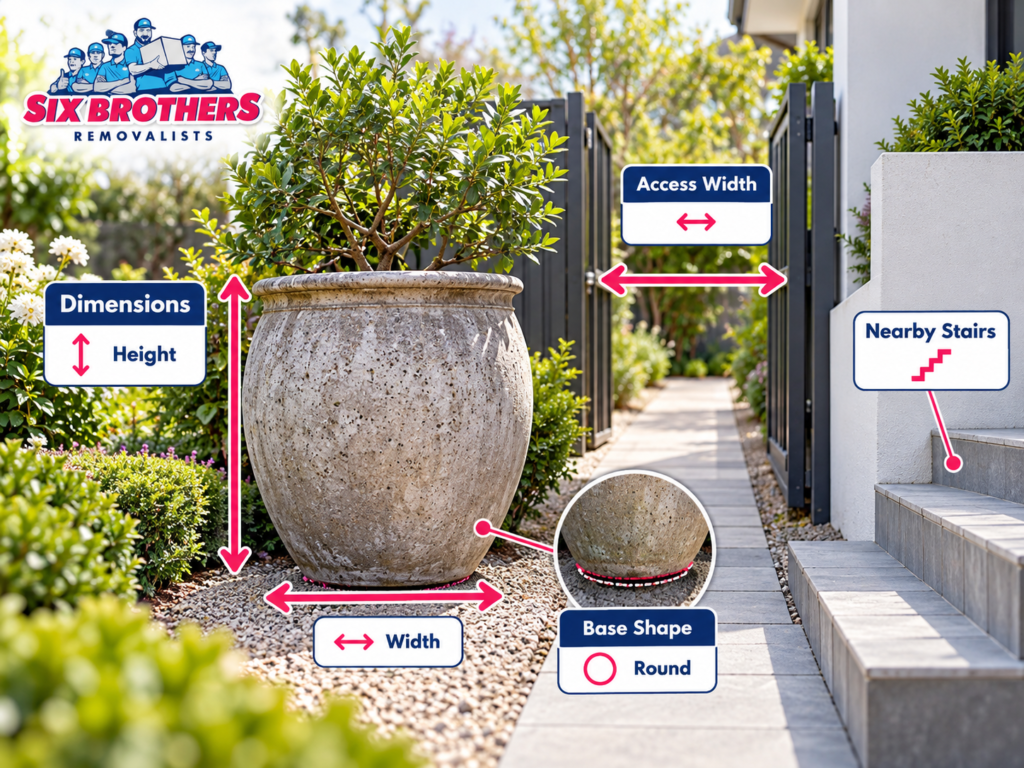
Give the removalist enough detail to price the real task. Include size, approximate weight, material, access, stability, and preparation needs. Add clear photos from several angles where possible. Get your ducks in a row.
Do not describe a concrete fountain as simply ‘one garden item’. That label hides the handling questions that shape a quote. Better information reduces assumptions before the booking. Call a spade a spade.
Material and Approximate Weight
State the material first, then provide the best weight information available. Use manufacturer details, invoices, product pages, or a sensible estimate. Say when the weight is unknown rather than guessing confidently. Honesty is the best policy.
Also mention soil, water, stones, or internal bases that add weight. A planted pot can differ greatly after watering or rain. Emptying approved contents may change the handling plan. Every little bit counts.
Exact Dimensions
Give the height, width, depth, and widest fixed point. Measure handles, lips, pedestals, and overhanging decorative sections too. Those details help assess gates, corners, stairs, and truck fit. Measure twice, move once.
Record the narrowest access point along the carrying route. A wide fountain may fit the yard but fail at one gate. Sydney terraces and side passages can create this problem quickly. The bottleneck sets the pace.
Base Shape and Stability
Explain whether the base is flat, rounded, tapered, uneven, or top-heavy. A stable base can simplify resting and securing during handling. An unstable shape may require extra support and planning. Keep your feet on solid ground.
Flag separate plinths, loose feet, detachable bowls, or stacked sections. These parts may shift when the main item moves. Photos should show the base and all connection points. Leave no stone unturned.
Fixed or Connected Items
Tell the removalist whether the item is fixed, bolted, plumbed, wired, or concreted in place. Removalists should not discover hidden connections after lifting starts. Some disconnection work may need another suitable trade. Know the lay of the land.
Drain water features and isolate approved connections before the crew arrives. Confirm the preparation steps in writing with the removalist. Do not assume dismantling sits inside the standard quote. Read the fine print.
Photos for Assessment
Photos let the removalist see shape, condition, access, and surrounding obstacles. Take one full item photo and one wider access photo. Add close-ups of cracks, joins, handles, bases, and fragile details. Seeing is believing.
Include stairs, gates, turns, slopes, gravel, decks, and the truck approach. One clear photo can answer several quote questions at once. Send new photos after any major preparation changes. A picture is worth a thousand words.

Material Type Changes the Handling Plan
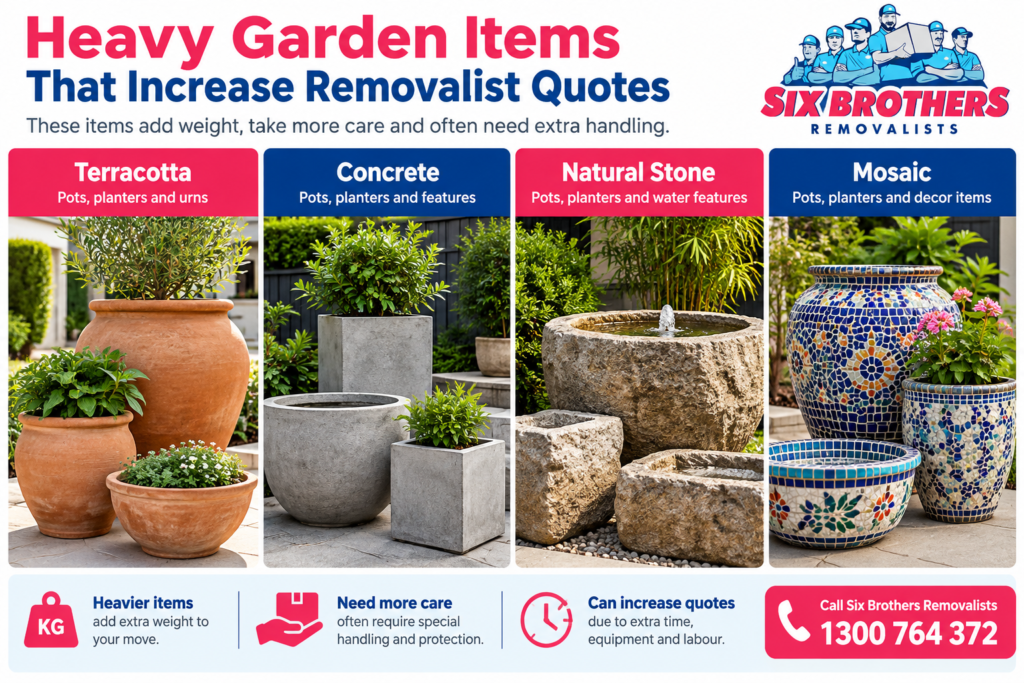
Material changes the protection, support, and handling plan for each item. Weight alone does not show brittleness, surface sensitivity, or weak connection points. Tell the removalist exactly what the item is made from. Different strokes for different folks.
A furniture removalist may plan dense outdoor pieces differently from normal indoor furniture. furniture removalists in Sydney still need the same clear item details before booking. Material disclosure helps everyone plan from the same facts. Horses for courses.
Terracotta and Ceramic Pots
Terracotta and ceramic pots can chip, crack, or split under pressure. Old pots may already contain hairline cracks around rims or bases. Photograph damage before handling and remove loose saucers. Handle with kid gloves.
Ask whether plants should stay inside each pot for the planned trip. Weight, soil moisture, plant shape, and destination rules can change that answer. Do not water heavily just before removal without discussing it. Better safe than sorry.
Concrete Features
Concrete features combine high weight with hard, sometimes brittle edges. Fountains, planters, benches, and plinths may also separate into sections. Confirm every detachable part before the crew plans lifting. Slow and steady wins the race.
Do not assume a hollow concrete piece is light. Internal reinforcement, thick bases, and retained water can add weight. Provide product specifications when you still have them. The proof is in the pudding.
Natural Stone Statues
Natural stone statues can be dense, irregular, and vulnerable at thin features. Arms, wings, necks, or decorative edges may be weaker than the main body. The centre of gravity can also be hard to judge. Tread carefully.
Tell the removalist whether the statue sits loose or uses a fixed plinth. Mention marble, sandstone, granite, or another known stone type. Surface protection may differ between polished and rough finishes. Leave no stone unturned.
Glass and Mosaic Features
Glass and mosaic features need protection from impact, twisting, and loose components. Mosaic tiles can detach even when the main body stays intact. Photograph missing tiles or existing cracks before handling. Handle with care.
Remove loose glass shelves, bowls, or decorative inserts when safe. Wrap detachable parts separately after confirming the approach. A fragile feature should never become a last-minute surprise. An ounce of prevention beats a costly repair.
Did you know?
A heavy outdoor item can use little truck volume while still demanding more handling time, planning, and restraint.
How Heavy Items Affect Truck Planning ?
Heavy items affect truck planning through placement, access, restraint, and loading order. Dense pieces may need a clear route into the truck. They also need stable positioning before other goods are packed around them. Plan ahead, save headaches.
A bulky plastic pot and a compact stone statue create different loading problems. One consumes space while the other concentrates weight. The crew must plan around both without compromising other furniture. Do not put all your eggs in one basket.
Truck choice also depends on the whole inventory, not one garden item. This matters for house removalists, office removalists, and furniture removalists alike. The best plan sees the entire load before departure. The whole is greater than the sum of its parts.
Common Hidden Surcharges to Watch For
Hidden surcharges can appear when the quoted scope misses real work. Heavy items, difficult access, and unfinished preparation can create variation discussions. Ask how changes are handled before you book. Read the fine print.
The same risk applies to outdoor furniture, BBQs and pool gear. Outdoor areas often contain items missed during room-by-room quoting. Put everything on the table early. No surprises is the better outcome.
Heavy Item Fees
A heavy item fee may apply when the item needs special handling. The trigger should be clear in the quote or booking terms. Ask what item details cause that fee and when it applies. Better the devil you know.
Do not compare a headline hourly rate without checking these inclusions. A lower starting rate can still produce a higher final job cost. Compare the same scope across every removalist. Apples with apples.
Difficult Access Penalties
Difficult access can add time and handling complexity to the job. Common examples include stairs, long carries, slopes, narrow gates, and distant parking. Sydney properties can combine several issues at once. Forewarned is forearmed.
Ask whether access charges use fixed fees, extra time, or another method. Then show photos and measurements before accepting the quote. One hidden corner should not rewrite the job later. Know before you go.
Emptying and Prep Penalties
Preparation gaps can increase cost when crews must stop and fix them. Filled pots, undrained fountains, loose parts, and blocked paths can slow work. Confirm your preparation duties before removal day. A stitch in time saves nine.
Do not empty soil or water without checking plant and destination requirements. Some items may need careful disposal or biosecurity handling. Finish agreed preparation early and keep photos as proof. Waste not, want not.
Check What Your Quote Actually Includes
Check every quote for labour, truck, access, protection, and heavy-item handling. Review variation terms too. Confirm whether dismantling, preparation, and waiting time sit inside the price. Ask about removal insurance where it matters. The small print can carry big consequences.
People describe Sydney services with many different search phrases. You may see removalist Sydney, Sydney removalists, removalist in Sydney, or removalists in Sydney. Price searches include cheap removalists Sydney, budget removalists Sydney, and removalists Sydney cost. You may also see removalists Sydney price or removalists Sydney prices. Names change, but the quoted scope still decides value.
Service searches can also include furniture removalists Sydney and furniture removalists in Sydney. Others use house removalists Sydney, home removalists Sydney, or Sydney house removalists. Office removalists Sydney and office removalist Sydney describe another job type. One size does not fit all.
Interstate searches add another layer to the comparison. Common phrases include interstate removalists Sydney, interstate removalist Sydney, and Sydney interstate removalists. Routes include removalists Sydney to Melbourne and removalist Sydney to Melbourne. Brisbane routes include removalists Sydney to Brisbane and removalist Sydney to Brisbane.
Local-area searches also vary across the city. People may compare removalists western Sydney, removalists eastern suburbs Sydney, or removalists Sydney north shore. Some look for best removalist Sydney, recommended removalists Sydney, or removalist services Sydney. A familiar label never replaces item-specific disclosure.
The same caution applies beyond Sydney. Searchers may use removalists Melbourne, removalists Brisbane, or international removalists. Others compare interstate furniture removalists, piano removalists, piano removalists Sydney, or removalist truck hire. Search terms like removalist furniture can be vague. The devil is in the detail.
Broader searches include removalists near me, removalist near me, removalist companies, and cheap removalists. Those phrases do not tell you whether a statue or fountain is included. Ask the removalist to name heavy-item exclusions in writing. Better safe than sorry.
When a Removalist May Refuse the Item ?
A removalist may refuse an item when safe handling cannot be reasonably planned. Unknown weight, unsafe access, unstable structures, or hidden connections can trigger concern. Fixed items may also sit outside the agreed removal scope. Safety comes first.
Refusal can also happen when the item needs equipment not booked. A cracked fountain may present extra breakage risk during lifting. A statue can be too unstable for the planned route. Do not bite off more than the crew can safely chew.
Send details early so the removalist can assess alternatives. Six Brothers Removalists can review the inventory before the booking is finalised. Call 1300 764 372 with photos and access notes. Better an early answer than a removal-day dispute.
Interstate Rules for Potted Plants
Interstate plant rules can decide whether a potted plant travels with your load. Restrictions vary by plant, soil, origin, destination, and current biosecurity zones. Some movements can need treatment, certification, or other conditions. Rules can change, so check first.
Australian Interstate Quarantine says every jurisdiction applies quarantine conditions to plant goods. Household potted plants can also face restrictions because soil carries pests. Destination rules should be checked before loading. Do not count your chickens before they hatch.
For moves into, within, or out of NSW, current plant movement rules matter. NSW guidance says plants, soil, and related items can have movement conditions. Some movements may require certification or permits. When in doubt, check the official destination rules.
Strategies to Minimize the Cost
Cost control starts by reducing avoidable handling before the quote becomes final. Remove unnecessary contents, improve access, and disclose every heavy item. Compare what each quote includes rather than chasing one low number. A penny saved is a penny earned.
Do not cut preparation corners that create damage or safety problems. The cheapest path on paper can become expensive after delays. Use a practical plan that suits the item. Cut your coat according to your cloth.
De-pot and Empty Everything
De-potting or emptying can reduce weight when the item allows it. This can help with planters, removable stones, and drained water features. Confirm the approach before changing a living plant. Look before you leap.
Interstate plant rules may also affect whether soil can travel. Keep required biosecurity steps separate from simple cost-saving choices. Do not dump soil where disposal is restricted. Waste not, want not.
Opt for Lightweight Alternatives Early On
Lightweight replacements can reduce future handling costs during planned garden upgrades. Fibreglass, resin, or lighter planters may suit some designs. The decision works best before buying very heavy pieces. Prevention is better than cure.
Do not replace valued stone or ceramic items only for removal convenience. Balance style, durability, value, and future relocations. A cheaper pot is not always the better pot. You get what you pay for.
Sell and Replace
Selling and replacing can make sense when transport effort exceeds personal value. This is more relevant for common, replaceable, very heavy items. Compare replacement cost with handling and transport before deciding. Do the sums first.
Sentimental, custom, or rare pieces deserve a different calculation. Replacement may be impossible even when transport is expensive. Money is not the only measure of value. Horses for courses.
How to Save Money ?
Save money by making the job easier to assess and easier to access. Clear information reduces quote uncertainty and last-minute changes. Preparation also helps the crew start useful work sooner. Time is money.
A strong quote is not always the lowest headline number. It should reflect your real inventory and access conditions. The best saving is avoiding a preventable surprise. Penny wise should not become pound foolish.
Clear the Path
Clear the full carrying path before the removalists arrive. Move hoses, toys, bins, loose furniture, branches, and trip hazards. Open gates and protect access to agreed areas. Clear the decks.
Show the truck approach in advance when parking is difficult. Parramatta streets, sloping blocks, and narrow Sydney lanes can change carrying time. A smooth route helps the crew keep moving. Make hay while the sun shines.
Do It Yourself
DIY preparation can save paid time when it is safe and agreed. You can clean items, remove loose parts, label sections, and clear access. Do not attempt unsafe lifting or unqualified disconnection work. Know your limits.
You may also photograph condition and measure access yourself. Keep fragile parts together and label their parent item. Small preparation jobs can create a smoother removal day. Many a little makes a mickle.
Get Quotes
Get quotes using the same inventory, photos, dimensions, and access notes. That creates a fairer comparison between removalists. Ask each company to explain heavy-item handling and possible variations. Compare apples with apples.
If you want a clearer Sydney quote, send the heavy items first. Include pots, statues, fountains, plinths, and difficult access. Six Brothers can review the job before removal day. Better the devil you know than the devil you don’t.
Common questions
How Much Do Furniture Removalists Cost?
Furniture removalists cost depends on crew time, truck needs, access, distance, and item complexity. Heavy garden items can change several of those factors. Ask for a quote built from your actual inventory. Prices without scope can mislead.
What to Ask a Removalist Before Hiring?
Ask what the quote includes, how heavy items are assessed, and how access changes pricing. Confirm preparation duties, exclusions, variation terms, and insurance options. Send photos before booking whenever an item looks difficult.
Can removalists move large concrete pots?
Removalists may move large concrete pots when the task can be planned safely. Weight, dimensions, access, condition, and equipment all matter. Send those details before the quote is accepted.
Do I need to empty water features before removal day?
Many water features need draining before safe transport, but the preparation depends on the design. Ask who handles pumps, tubing, wiring, and fixed connections. Get those duties confirmed before removal day.
Should I remove plants from heavy pots before moving?
It depends on plant health, pot design, weight, route, and destination rules. Do not de-pot automatically for an interstate move. Check current biosecurity conditions and ask the removalist first.
Can a removalist refuse a statue or fountain?
Yes, a removalist may refuse an item when safe handling cannot be planned. Unknown weight, unstable construction, unsafe access, or missing equipment can matter. Early disclosure gives more time for alternatives.
Do interstate plant rules apply to household potted plants?
They can. Household potted plants and soil can face quarantine restrictions between Australian jurisdictions. Check the destination regulator’s current requirements before loading the plant.
Heavy garden pots, statues, and water features need more than a room count. Weight, material, access, stability, and preparation can all change the quote. Give those details before booking and keep the scope in writing. Knowledge is power.
Six Brothers Removalists can review photos, dimensions, access notes, and your wider inventory. Call 1300 764 372 or email info@sixbrothersremovalist.com.au for a free quote. A clear plan gives everyone a better removal day. Start as you mean to go on.