

Table of Contents
DIY moving can work brilliantly for a studio or lightly furnished unit. A three-bedroom Sydney home changes the maths quickly. Furniture, access problems, and truck space start stacking together.
That does not mean every DIY move fails. It means your margin for error becomes much smaller. One poor estimate can turn Saturday into a two-day scramble.
So, where does the plan usually break? It often starts with volume, labour, or access. Then time and unexpected costs begin joining the party.
Why Does a Three-Bedroom House Change the DIY Moving Equation?
A three-bedroom house changes DIY because volume and complexity rise together. You are not simply adding another bedroom. You are adding another layer of moving-day decisions.
That is where the wheels can fall off. A small move behaves like a backpack. A full three-bedroom move starts behaving more like a freight train.
More rooms mean more than extra boxes
Every room adds furniture, boxes, cables, lamps, and loose household items. Bedrooms also hide wardrobes, drawers, mattresses, and under-bed storage. Those items quickly fill usable truck space.
The lounge, kitchen, laundry, and hall cupboards still need moving. Outdoor furniture and storage areas remain outside the bedroom count. Your inventory can grow quietly until moving day.
A family may also have several workstations, televisions, bikes, and appliances. These pieces need protection and careful loading. More items also mean more walking between home and truck.
Garages, sheds and outdoor items change the load
Garages and sheds often turn a manageable move into a bigger job. Tools, shelving, bikes, mowers, and storage tubs take space. Outdoor settings can also be awkward to stack.
Many homeowners count rooms and forget everything around the house. That creates a false picture of the actual load. The truck calculation then starts on the wrong foot.
Balconies, courtyards, garages, and sheds should enter your inventory early. Include pot plants, ladders, barbecues, and sporting equipment. Count first and make the truck decision afterwards.
Furniture volume matters more than bedroom count
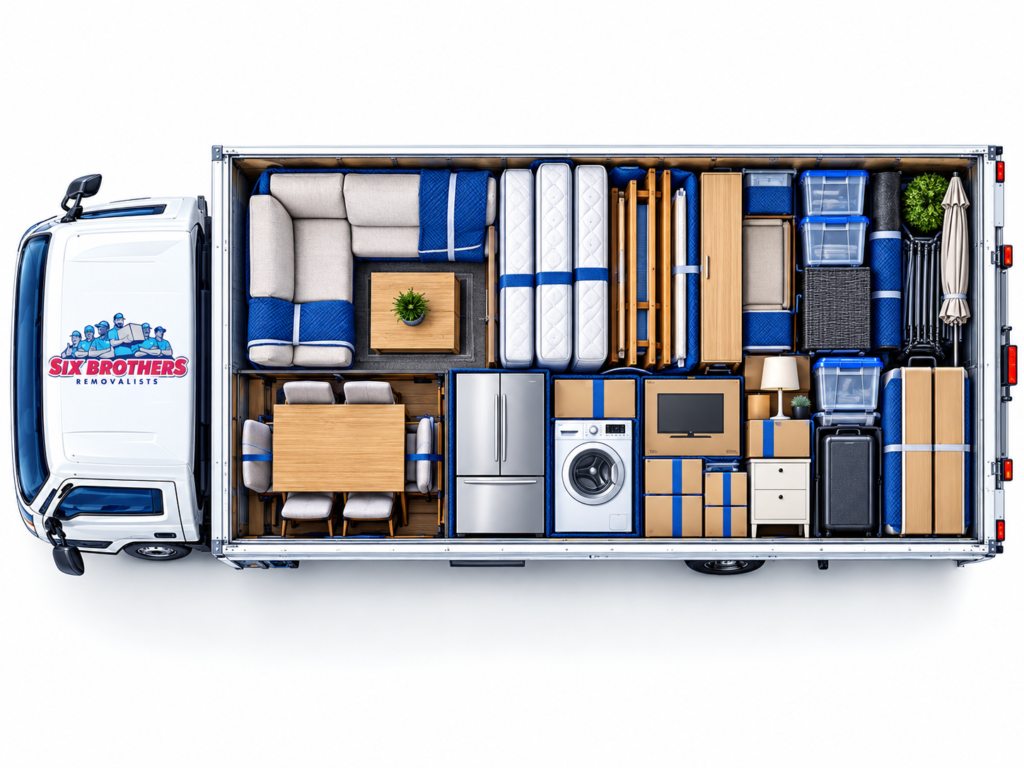
Bedroom count gives you a starting point, not a final truck size. Two three-bedroom homes can hold very different volumes. One may be minimal while another has years of stored belongings.
Six Brothers lists a 50–55 m³ average for its 3–4 bedroom service. That option uses two removalists and a 12–14 tonne truck.
That benchmark shows why truck planning matters. Volume is the real puzzle underneath the bedroom count. A wrong piece can throw the whole puzzle out.
Did you know?
A three-bedroom label does not tell you the full moving volume. Garages, outdoor areas, bulky furniture, storage, and access can change the truck and labour needed.
How Much Work Is Really Hiding Inside a Three-Bedroom Move?
Most moving work sits outside the actual drive between properties. Packing, lifting, dismantling, loading, and reassembly consume the hours. The devil is in the detail here.
DIY moving Sydney households often underestimate these smaller tasks. Each job looks harmless when viewed alone. Together, they can swallow most of moving day.
Packing and dismantling before moving day
Packing a three-bedroom home can involve dozens of separate decisions. Fragile items need wrapping, while furniture may need dismantling. Beds and tables can take longer than expected.
Starting late creates pressure before the truck even arrives. Boxes then become mixed, overloaded, or poorly labelled. Unpacking becomes harder at the other end.
Professional packing and removals can remove part of that workload. DIY packers can still reduce costs by starting early. The important part is finishing before transport begins.
Loading, transport and unloading
Loading is not simply carrying boxes through a doorway. Furniture needs positioning, padding, restraint, and sensible truck placement. Poor loading can also waste valuable truck space.
The same work happens again after transport. Every sofa, carton, mattress, and appliance leaves the truck. Then each piece travels to the correct room.
A DIY crew can lose rhythm after several hours. People start taking longer breaks and making slower decisions. Small delays then begin stacking together.
Reassembly and unpacking after the truck arrives
Beds, tables, desks, and shelving may need rebuilding. Appliances still need placing in practical positions. Essential boxes must remain easy to find.
This stage often gets ignored during DIY planning. People assume unloading means the move is finished. In reality, the home still needs to function.
A good plan protects energy for the final stretch. Keep tools, bed parts, chargers, and essentials together. Otherwise, the last hour can feel like three.
Why One Rental Truck Often Stops Being Enough
One rental truck becomes risky when your inventory approaches its usable capacity. Furniture rarely packs into perfect blocks. Odd shapes create gaps that reduce available space.
Measure twice, move once. That simple rule matters when choosing a vehicle. Guessing from bedroom count alone can leave belongings behind.
The truck-space problem
A rental truck can look enormous while sitting empty. Sofas, mattresses, fridges, and wardrobes change that view quickly. Their shapes determine how efficiently everything can fit.
Boxes can usually stack well. Furniture often cannot. Fragile pieces also need space for blankets and safe positioning.
Truck capacity must suit your actual inventory. Weight limits matter alongside volume. A physically full truck may not always be legally suitable.
Why second trips wreck the DIY schedule
A second trip adds more than extra driving. You load again, secure everything again, and unload again. Fuel, tolls, and rental time can also rise.
Traffic can make that second journey even harder. Sydney travel times vary across the day. Your original moving timetable can disappear very quickly.
A one-day DIY plan may suddenly need another evening. Lease handovers can then become stressful. Cleaning and key returns may also get pushed back.
What happens when large furniture will not fit
Bulky furniture creates another common problem. A sofa may fit your room but not the doorway. Wardrobes and tables may need dismantling before loading.
Leaving these decisions until moving day wastes time. Measure doors, stairs, lifts, and large furniture beforehand. Check the destination as carefully as the pickup property.
If dismantling looks difficult, prepare tools early. Photograph furniture before taking pieces apart. Keep screws and fittings in labelled bags.

The Labour Problem Gets Bigger Faster Than the House
Labour becomes harder because heavier moves create more repeated handling. Your strongest helper also becomes tired eventually. Many hands make light work only when everyone works safely.
SafeWork NSW identifies lifting, lowering, pushing, pulling, and carrying as manual tasks. High force and awkward postures can make those tasks hazardous.
Heavy furniture needs enough capable hands
Large sofas, mattresses, cabinets, and appliances need controlled movement. Tight turns make those loads harder. Stairs raise the challenge again.
One strong person cannot solve every lifting problem. Some items need coordinated handling from both ends. Trolleys and other aids can also reduce manual effort.
The crew needs enough people for the property. They also need suitable equipment. Strength alone does not replace planning.
Fatigue slows every later trip
Fatigue works like a tax on every later lift. The first hour may feel easy. The fifth hour rarely feels the same.
Walking, lifting, bending, and carrying repeat throughout the day. Decision-making also slows when people get tired. That can affect loading quality and furniture handling.
Plan breaks before exhaustion arrives. Keep water and easy food available. Do not leave the heaviest work until everyone is spent.
Friends helping is not the same as a removalist crew
Friends can be incredibly helpful during a move. Their experience levels can still vary widely. Some may not feel comfortable handling heavy furniture.
A professional removalist crew works around moving tasks regularly. They also use moving equipment as part of that work. Friends usually learn the plan while doing it.
That difference matters more as the property grows. A studio can forgive a messy system. A packed three-bedroom house often cannot.
Sydney Access Can Break a DIY Moving Plan
Sydney access can turn a simple move into hours of extra carrying. Parking, stairs, lifts, and narrow entrances affect every load. Know the lay of the land first.
A house in Parramatta creates different challenges from a Sydney CBD apartment. Inner West streets can create another set of problems. Every property deserves its own access plan.
Stairs, lifts and apartment loading zones
Stairs increase carrying effort and slow each trip. Apartment lifts can create waiting time. Building rules may also affect when moving can happen.
Confirm lift access before moving day. Ask whether protective covers or bookings are required. Check both the pickup and destination buildings.
NSW parking rules also place conditions on designated parking areas. Check relevant parking and loading-zone rules before arriving.
Narrow streets and limited truck parking
A large truck only helps when it can reach the property. Street width and legal parking can change the carrying distance. That distance repeats for every item.
A truck parked nearby sounds manageable at first. Fifty carrying trips can change that feeling. Long carries quietly add labour to the move.
Visit the destination before moving day where possible. Look at corners, gates, kerbs, and parking. Photos can also help when requesting a quote.
Long carries between the property and truck
Every extra metre matters across a large inventory. Boxes may stay easy, but furniture becomes tiring. Appliances can make the problem much harder.
A clear path saves time and reduces unnecessary handling. Remove garden clutter and hallway obstacles before loading. Keep children and pets away from working areas.
This preparation costs almost nothing. It can still improve the whole day. Good access is worth its weight in gold.
What Does a DIY Three-Bedroom Move Really Cost?
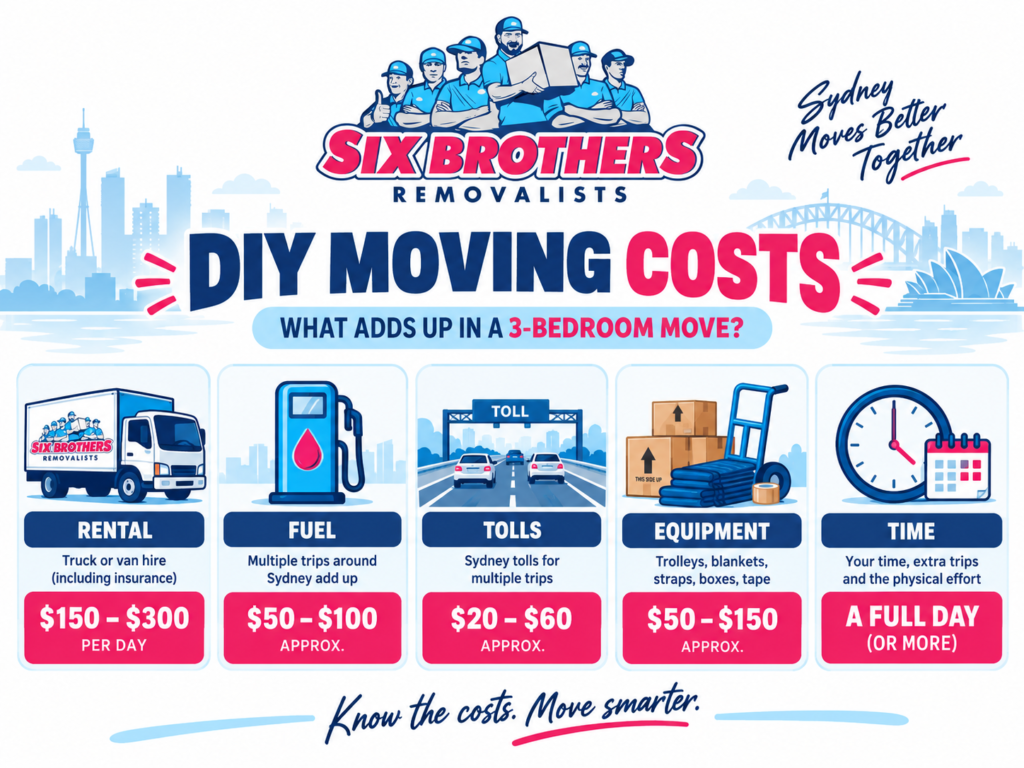
DIY cost includes far more than the rental vehicle. Equipment, time, fuel, tolls, and mistakes all matter. Being penny wise can become pound foolish.
The correct comparison uses the total moving cost. Do not compare a truck rental alone with a removalist quote. Those two figures cover different things.
Truck hire, fuel and tolls
Truck rental normally forms the obvious DIY expense. Fuel then joins the bill. Toll costs can apply depending on your Sydney route.
Rental duration matters as well. Delays can keep the vehicle longer than planned. Another day can change the original saving.
Check kilometre allowances and return conditions before booking. Understand refuelling requirements as well. Keep those costs inside your DIY budget.
Boxes, blankets, trolleys and moving equipment
Boxes are only the start. You may need tape, wrap, blankets, straps, and mattress protection. A trolley can help with heavier loads.
Equipment hire or purchases add smaller expenses. Several small expenses can still create a meaningful total. Keep receipts while preparing the move.
Do not skip protection to save a few dollars. Furniture damage can cost far more. Proper wrapping also makes truck loading easier.
Time off work and extra rental hours
Your time has value even without a formal invoice. A weekday move can use annual leave. Preparation may also consume evenings and weekends.
A delayed move can affect cleaning and handover plans. Parents may also need childcare. Business owners can lose working hours.
Time should enter your comparison beside cash costs. Otherwise, DIY can appear cheaper than reality. Count what the move takes from your week.
Damage, delays and unplanned second trips
The biggest DIY surprises often come from unexpected events. A second truck run creates more travel. Damaged furniture creates another possible expense.
A rushed move can also affect the property itself. Walls, doors, and floors need protection. Large furniture needs enough clearance during handling.
Is saving on labour worth another truck trip and lost day? Sometimes the answer remains yes. Sometimes the maths changes completely.
DIY vs Professional Removalists for a Three-Bedroom Sydney Home
DIY gives you control but puts the full moving system on you. Professional removalists shift much of that workload. Compare apples with apples before choosing.
Look at labour, vehicle capacity, equipment, access, and total time. Price is important, but scope matters too. A cheaper option can include much less.
Crew and equipment
DIY means organising your own helpers and equipment. Availability can change at short notice. Equipment also needs collecting and returning.
Six Brothers lists two experienced removalists for its 3–4 bedroom option. The service also lists a 12–14 tonne truck.
Its listed equipment includes blankets, straps, trolleys, dollies, and a tailgate lifter. Those tools support loading and furniture handling.
Time and workload
DIY gives you freedom over preparation and timing. It also places every task under your control. That includes packing, loading, driving, unloading, and rebuilding furniture.
Professional house removalists split those responsibilities differently. You can still pack yourself if preferred. The removalist crew then handles the physical relocation.
That hybrid approach can suit budget-conscious households. You keep control over packing. The heavier transport work moves to the removalist team.
Furniture protection and handling
Furniture protection becomes more important as item numbers rise. Blankets and wrapping help prevent rubbing. Straps help control movement inside the truck.
Professional furniture removalists regularly handle awkward household pieces. DIY helpers may have less experience with those items. That gap matters around stairs and tight corners.
Furniture removalist services can also suit partial moves. You may only need help with large pieces. Smaller boxes can remain part of your DIY plan.
Cost certainty and moving-day risk
DIY costs can change when the schedule slips. Rental hours, fuel, and additional trips can rise. Professional quotes can also vary by scope and conditions.
Read the quote carefully before booking. Confirm minimum charges, travel fees, access, and specialty items. Clear information protects both sides.
When Does DIY Still Make Sense?
DIY can still make excellent sense under the right conditions. Not every three-bedroom property contains a large household. Horses for courses is the useful rule here.
Look at what you own rather than the property label. Access and distance matter just as much. Your available helpers also change the equation.
Small and lightly furnished homes
A lightly furnished three-bedroom home may behave like a smaller move. Minimal furniture reduces loading complexity. Fewer boxes also improve truck flexibility.
This situation suits organised households with enough helpers. Preparation still needs finishing before moving day. Large furniture should already be measured.
Decluttering can also shift the calculation. Selling unused furniture reduces truck volume. Donating unwanted items creates the same benefit.
Short moves with easy access
A nearby relocation gives DIY more breathing room. Easy driveways and ground-floor access help further. Short carrying paths also protect energy.
Simple access makes unexpected delays easier to absorb. Another small trip may remain practical. That changes with longer Sydney routes.
Distance alone should not decide your plan. Combine distance with inventory and access. Use the whole picture.
Hybrid moves where you pack and removalists handle transport
A hybrid move gives you another option. You pack boxes and prepare furniture yourself. Removalists then handle loading, transport, and unloading.
This can reduce professional packing time. It also keeps the harder physical work with the moving crew. Many households find this middle ground practical.
Label every box clearly before the crew arrives. Dismantle approved furniture in advance when suitable. Keep access clear for efficient loading.
When Should You Bring in House Removalists?
Bring in house removalists when DIY risks outweigh its practical savings. Large inventories and difficult access are strong signals. Better safe than sorry applies here.
The decision does not need to be all-or-nothing. You can still handle packing and small items. Professional help can focus on the difficult parts.
Your inventory has outgrown a small truck
Your inventory has outgrown DIY when truck capacity becomes uncertain. A second trip should not be your default plan. It should remain a backup.
A full garage makes this warning stronger. Several large sofas or wardrobes do the same. Outdoor furniture can push volume further.
For larger family moves, 3–4 bedroom house removalists give you a purpose-built service option. The listed service targets larger household volumes.
You have stairs, bulky furniture or difficult access
Stairs change how every heavy item moves. Tight landings can make large furniture harder. Long carries add repeated effort.
Tell the removalist about these conditions before quoting. Share photos where useful. Mention narrow doors, steep driveways, and limited parking.
Better information supports better planning. It can influence crew size and vehicle choice. Nobody wants surprises after the truck arrives.
Your move cannot spill into another day
Some moves have almost no timetable flexibility. Settlement dates, leases, cleaning, and key handovers may overlap. A delay can affect several commitments.
DIY becomes riskier when the schedule has no spare room. One second trip can push everything backwards. Professional support can simplify that timetable.
Choose the option that matches your real deadline. Do not plan around the perfect scenario. Give yourself some breathing room.
How to Get a More Accurate Quote for a Three-Bedroom Move
An accurate quote starts with an accurate picture of your move. Bedrooms alone do not provide enough information. Get your ducks in a row first.
Your removalist needs inventory, access, locations, and special handling details. More detail can reduce misunderstandings later. It also makes competing quotes easier to compare.
Count the whole property, not just bedrooms
Walk through every area before requesting a quote. Count furniture, boxes, appliances, and unusual items. Include anything stored away.
A written inventory gives everyone the same starting point. It also helps when comparing removalist companies. Keep one copy while gathering quotes.
Use a Sydney removalist quote checklist before choosing between prices. The cheapest headline number may not include the same scope. Compare the details behind each figure.
Include garages, balconies and outdoor areas
Do not stop counting at the back door. Garages, sheds, balconies, and yards often hold bulky items. Those pieces need truck space too.
Include barbecues, outdoor tables, plants, bikes, and storage shelving. Mention anything unusually heavy. Photos can make those details easier to explain.
This step also improves your own DIY calculation. You see the full inventory early. That makes truck planning more realistic.
Tell your removalist about access before moving day
Access can change moving time significantly. Tell the company about stairs, lifts, parking, and long carries. Mention narrow hallways and difficult entrances.
Read your house moving contract before moving day. Check how agreed work and variations are handled. Keep important terms in writing.
Accurate information helps both sides plan properly. It also makes quote comparisons more useful. Everyone starts on the same page.
FAQs About DIY and Three-Bedroom Moves in Sydney
How much do removalists cost in Sydney?
Sydney removalist costs depend on crew size, time, access, travel, and required services. Bulky items can also affect the scope. Always compare what each quote actually includes.
Ask when billing begins and ends. Check minimum time, travel charges, and possible extras. Give every company the same inventory information.
How to prepare for removalists?
Finish packing before arrival unless you booked packing services. Label boxes by room and keep walkways clear. Separate valuables and essential documents.
Tell the crew about fragile or heavy items. Reserve building access where required. Keep children and pets away from working paths.
Can you move a three-bedroom house yourself?
Yes, some three-bedroom households can move themselves successfully. Light inventories and easy access make DIY more practical. Reliable helpers also make a major difference.
The risk rises with garages and bulky furniture. Difficult stairs increase the workload further. Calculate volume before committing to DIY.
What size truck do you need for a three-bedroom house?
Truck size depends on the actual household volume. Bedroom count provides only a rough starting point. Garages and outdoor items can change the answer.
Six Brothers lists 50–55 m³ for its 3–4 bedroom category. Its published option uses a 12–14 tonne truck.
How long does a three-bedroom house move take?
There is no single reliable duration for every property. Inventory, stairs, parking, travel, and crew size affect timing. Packing readiness matters as well.
A lightly furnished local move can differ greatly from a packed family home. Ask for an estimate using your actual inventory. Include both property access conditions.
Is hiring removalists cheaper than doing two DIY truck trips?
It depends on your rental costs and total professional quote. Include fuel, tolls, equipment, time, and extra rental hours. Do not compare labour charges alone.
A second DIY trip increases both time and vehicle use. It can also affect other moving-day commitments. Compare the complete cost of each option.
Should I pack myself and hire removalists for moving day?
That hybrid option can work very well. You control packing while professionals handle transport and heavier lifting. It can balance cost and workload.
Finish packing before the booked arrival time. Label every carton clearly. Tell the removalist about special items beforehand.
When is a house too large for a DIY move?
There is no universal bedroom cutoff. DIY becomes less practical when capacity and labour become uncertain. Difficult access adds another warning sign.
A packed three-bedroom home can already reach that point. Larger four-bedroom homes increase the challenge further. Judge the inventory rather than the label.
The Three-Bedroom Mark Is Where Planning Matters Most
A three-bedroom home is not automatically too large for DIY. It is simply where small mistakes become more expensive. At the end of the day, preparation decides plenty.
Start with your full inventory and property access. Then compare truck capacity, labour, equipment, and your available time. Choose the option that fits the real move.
If professional help suits your plan, Six Brothers Removalists can provide a tailored quote. Call 1300 764 372 or request a free quote online.