


Table of Contents
Moving house is a second job when both partners already work full-time. The trick is to manage it like a shared project, not a weekend scramble. A clear eight-week plan protects your work hours, your budget and your relationship.
How do you organise a whole house move when both calendars are already packed? Start with one shared plan, clear task owners and early removalist quotes. This guide focuses on Sydney moves, from Parramatta apartments to family homes in the Inner West.
You do not need to spend every evening packing. You need to make decisions early, then give each task one owner. Think of the move as a relay race. Every handover should be clear, timed and easy to follow.

The 8-Week Timeline & Division Strategy
An eight-week timeline gives working couples room to plan around jobs and home life. It spreads decisions across small weekly steps, rather than one exhausting final weekend. Use it as a template, then adjust it for your property size and move date.
Sydney moves often involve lift bookings, narrow streets and peak-hour traffic. A stitch in time saves nine, especially when both diaries are full.
8 Weeks Out (Strategic Alignment)
Eight weeks out, agree on the move date, budget and the jobs each person owns. Confirm whether you are renting, selling or buying. Then list the dates that can change your plan, such as settlement, lease end and work deadlines.
Walk through every room together and note large items, storage needs and access issues. Agree what to sell, donate, keep or replace. Start at the top, not the tail, and the smaller tasks become easier. Use a home moving calculator to build a more complete inventory before requesting quotes.
6 Weeks Out (Vendors & Decluttering)
Six weeks out, request written quotes and book key services. Share the same inventory with each removalist company. Also arrange cleaners, storage or packing help where needed.
Declutter spare rooms, garages and wardrobes before buying boxes. Many hands make light work, so give each person a clear area. If you need a longer runway, the six-month moving house checklist for Sydney homeowners gives you a broader preparation window.
4 Weeks Out (Packing & Admin)
Four weeks out, pack items you rarely use and finish your moving paperwork. Start with books, spare linen, seasonal clothes and decorations. Label every box with its room and a short contents note.
Update your address list and check provider transfer dates. Keep receipts, quotes and building emails in one folder. A place for everything makes the next steps much easier.
2–3 Weeks Out (Leave & Utilities)
Two to three weeks out, confirm work leave, utilities and access arrangements. Check internet availability at the new address before choosing a connection date. Share any meeting-free or work-from-home needs with your manager.
Confirm the removalist booking in writing and repeat the inventory changes. Better safe than sorry, so do not rely on a phone call alone.
1 Week Out / Moving Day
One week out, finish most packing and keep daily essentials accessible. Confirm arrival windows, addresses, parking and lift bookings with the crew. Put chargers, medication, work devices and key documents in your own vehicle or bag.
On moving day, use one shared contact sheet and one agreed decision-maker. Keep your ducks in a row, even if the schedule shifts.
Separate the tasks into thinking and doing
Separate planning decisions from physical jobs before dividing the workload. Thinking tasks include comparing quotes, checking access, setting budgets and choosing dates. Doing tasks include packing boxes, cleaning cupboards and moving items into storage.
The person who spots a task should not automatically own every step. Assign the decision, the action and the deadline separately. Share the load, not just the list, and the move feels fairer.
For example, one partner can compare removalist quotes while the other measures furniture. They can then swap roles for packing and utility checks.

The Divide-and-Conquer Matrix
A task matrix makes responsibility visible and reduces repeated conversations. Give every task one owner, one supporter and one due date. A fair go starts with clear ownership, not guesses about who will remember.
The Digital Stack: Async Collaboration
Use a simple digital stack so either partner can update the plan at any time. Keep one calendar, one task board and one shared document folder. Think of it as a control tower for the move, not another app to babysit.
Stay on the same page, even when your workdays do not line up.
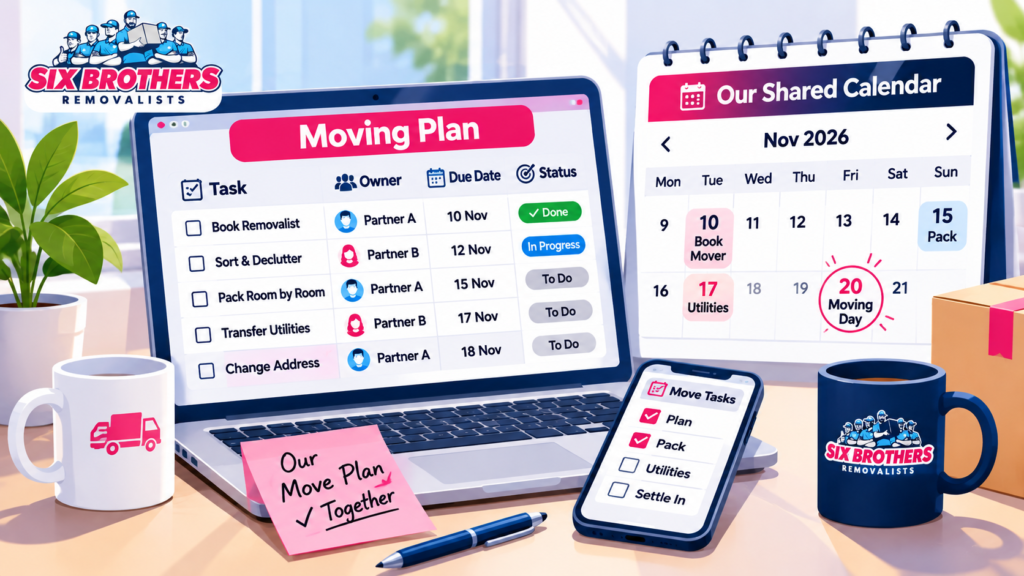
Shared Calendar
Put every fixed date and time-sensitive task in a shared calendar. Add lease dates, settlement checks, quote visits, lift bookings and work commitments. Time and tide wait for no one, so set alerts before deadlines.
Use separate colours for work, moving tasks and property appointments. Add the address and contact details to each booking. Both partners should be able to see changes.
Kanban Board / Task App
A Kanban board shows what is still to do, what is underway and what is finished. Create columns for To Do, Doing, Waiting and Done. Do not let the wheels fall off by leaving tasks without owners.
Each card needs a due date, owner and next action. Add a photo or link when a task needs proof. A shared board works well in Trello, Notion or a simple spreadsheet.
Central Repository
Keep quotes, inventories, insurance details and building rules in one shared folder. Use clear file names with the address and date. A tidy desk keeps a tidy mind, even when the house is full of boxes.
Create folders for removalists, utilities, property access, receipts and work arrangements. Save the latest version only, or mark older files clearly.
Protecting Full-Time Work Hours
Protect work hours by moving relocation tasks into planned blocks. Avoid treating every spare minute as moving time. Do not burn the candle at both ends, or the move will affect your work and home life.
Time-Block Off-Hours
Set two or three fixed moving blocks each week outside work hours. Use short weekday sessions for calls, labels and admin. Keep longer packing jobs for weekends when both people are available.
Make hay while the sun shines, but stop when the block ends. A 45-minute task can be more useful than an unfocused evening.
Outsource High-Friction Tasks
Outsource tasks that take too long or need specialist equipment. Professional packing, furniture dismantling and end-of-lease cleaning can save several evenings. Work smarter, not harder, when the budget allows.
A packing service can handle kitchens, fragile items and full-room packing. Compare the cost with your time, energy and other commitments.
Communicate Capacity Drops
Tell your partner early when work becomes unusually busy. Share deadlines, travel days and late meetings before they affect the plan. A heads-up goes a long way, especially during a settlement week.
Move tasks to the other partner only after agreeing on the change. Update the task board so both people see the new owner.
The 20/80 Rule
Use the 20/80 rule as a simple way to choose the tasks that matter most. Focus first on dates, access, quotes, packing and essential services. Pick your battles, and leave low-value jobs until the essentials are safe.
Do not spend hours folding spare linen while the lift booking remains unconfirmed. Finish the tasks that could delay the move first.
Strict Hard Stops
Set a hard stop for moving jobs on work nights. Agree when the laptop closes and the packing tape goes away. Enough is as good as a feast, particularly before an early start.
Leave a short reset period before bed. A rested partner makes better decisions than an exhausted one.
Choosing the Right Removalist Service to Save Time and Work Hours
The right removalist service can reduce the work you must do after hours. Compare scope, staffing, access and written charges before choosing. Measure twice, move once, and give every quote the same job details.
A local house move may need house removalists or furniture removalists. An office move may need office removalists with clear equipment plans. A furniture removalist may ask for photos of wardrobes, beds and modular lounges.
Searches for removalists Sydney, removalists near me and removalist near me can show broad results. Compare at least two removalist companies using the same inventory. Cheap removalists are not always the lowest-cost choice when key details are missing. For a local overview of service coverage, review Six Brothers’ Sydney removalist service before requesting a quote.
Comparing Itemised Removalist Quotes
An itemised quote should explain what the crew will move and what the price includes. Check labour, truck size, travel time, minimum hours, stairs, long carries and waiting time. The devil is in the detail, so read every line before paying a deposit.
Ask whether GST, tolls, fuel, packing materials and furniture assembly are included. Confirm how changes to the inventory affect the price. A pre-move inspection in Sydney can help your removalist quote reflect stairs, access, bulky items and packing needs.
Ask for the arrival window, crew size and cancellation terms in writing. Do not compare one hourly quote with another fixed-price offer without checking scope.
Full-Service vs Partial Packing vs Transport-Only
Full-service packing reduces your own packing workload, while partial packing targets selected rooms. Transport-only service leaves packing and most preparation with you. Do not bite off more than you can chew when both people work full-time.
Full packing may suit a large home or a tight schedule. Partial packing can suit kitchens, fragile items or bulky furniture. Transport-only may suit couples who have already packed and labelled everything.
If you want help with the most time-consuming part, compare the packing and removals service against your available evenings.
Checking Insurance, Exclusions and Additional Charges
Ask what cover applies during loading, transport and unloading. Request the policy wording, limits, excess and exclusions. Read the fine print before the rubber hits the road.
Do not assume every item is covered in the same way. Ask about owner-packed boxes, fragile goods, high-value items and pre-existing damage. Take photos before the crew starts.
Check whether access problems, extra stops or waiting time create added charges. A clear written answer is worth more than a broad promise.
Preparing an Accurate Inventory for the Removalist
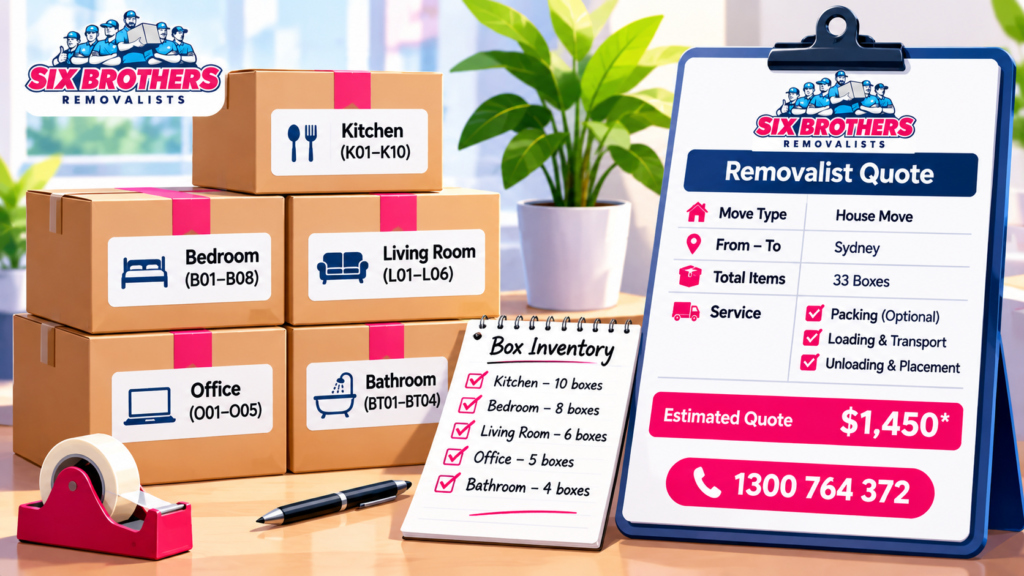
An accurate inventory helps the crew plan space, labour and equipment. List major furniture, appliances, boxes and items needing special care. A picture tells a thousand words, so add photos for unusual or bulky pieces.
Your removalist furniture inventory should include dimensions, access notes and any dismantling needs. Tell the crew about a piano, safe, glass cabinet or large artwork. For a piano, ask piano removalists about the handling plan.
A removalist truck hire option may not include the crew, equipment or packing support. For interstate jobs, compare interstate removalists and an interstate removalist against the route and delivery window. Some interstate furniture removalists offer different loading or storage arrangements.
An overseas relocation needs a separate plan, so speak with international removalists about shipping and customs. Search phrases such as removalists Melbourne and removalists Brisbane matter only when those destinations match your move.
Balancing Moving Costs Against Time-Saving Professional Services
Balance moving costs against the hours and effort each option saves. Compare the full cost of doing a task yourself with a professional service. Time is money, but your evenings and energy matter too.
Calculating the Value of Outsourced Moving Tasks
Estimate the time each task will take, then compare its price with your available hours. Include travel, supplies, equipment and clean-up in your DIY estimate. Every little bit adds up when both partners have full workweeks.
Do not treat your salary as the only value measure. Consider deadlines, fatigue, family needs and the cost of taking leave.
Identifying Tasks Worth Paying Professionals to Handle
Pay for tasks that are slow, difficult or risky to manage alone. Packing fragile items, moving heavy furniture and dismantling large beds may justify professional help. Do not be penny wise and pound foolish when the job needs trained hands.
You might outsource a kitchen pack, bulky-item handling or a full clean. Keep simple jobs, such as sorting papers, for your own time.
Comparing DIY Moving Costs With Professional Services
A DIY move includes more than the truck price. Add fuel, tolls, boxes, blankets, trolleys, parking, insurance and time. You get what you pay for, so compare the full job rather than one headline cost.
A removalist truck hire quote may not include labour or carrying equipment. Professional removalists may provide a crew and a planned loading process. Check which option fits your home, access and schedule.
Why choose a cheaper option if it creates extra days away from work? Compare the total cost and the time each option uses.
Setting a Contingency Budget for Unexpected Expenses
Keep a separate buffer for delays, storage, extra packing and access changes. Choose an amount that fits your budget and the risks around your move. Save for a rainy day, rather than relying on a credit card.
Write down what the buffer can cover and who can approve spending. That keeps a surprise from turning into an argument.
Coordinating Property Access, Key Handover and Building Requirements
Property access needs the same planning as the truck and packing schedule. Confirm when you can enter, where the truck can stop and who controls building access. Good fences make good neighbours, so communicate with agents, strata and neighbours early.
Aligning Settlement Dates and Key Collection
Align your removalist booking with confirmed access, not just the expected settlement time. Ask your conveyancer when settlement is complete and when key release is authorised. Do not count your chickens before they hatch.
For a rental, confirm the lease start, key pickup and final inspection times. Keep the removalist updated if either property date changes.
Booking Apartment Lifts and Loading Zones
Ask the building manager or strata contact whether a lift booking is required. Confirm the allowed time, loading route, padding rules and lift protection. Book it in before the rush, particularly in busy apartment blocks.
Some strata schemes set rules for parking and common areas. Check the current NSW strata by-laws and your building’s own rules before confirming the crew.
Did you know?
Strata by-laws can cover parking and common-property use. Check your scheme’s rules before reserving a lift or loading area.
Checking Council Parking and Truck Access Restrictions
Check the signs and local council advice before choosing a truck position. A loading zone is not a general parking bay, and rules can depend on the sign. When in doubt, check the signs and confirm with the council.
Review the NSW parking rules before the move. Check truck height, street width, clearways, bus zones and any temporary roadworks. This matters in the Sydney CBD, Newtown, Surry Hills and narrow Inner West streets.
Managing Delays Between Property Handover and Moving In
Plan a backup when your old home and new home are not ready together. Ask about short-term storage, a later delivery or a revised booking. Keep a plan B up your sleeve, especially around settlement day.
Confirm any extra handling or storage costs before changing the plan. Keep essential work gear and documents with you.
Contingency Planning for Delays, Disruptions and Unexpected Changes
A contingency plan tells both partners what happens when the schedule changes. Agree on backup contacts, spending limits and the order of calls. Treat it like a seatbelt, not a sign that something will go wrong.
Preparing for Delayed Keys or Settlement
If keys are delayed, contact your conveyancer or agent before redirecting the crew. Ask the removalist about waiting, rescheduling or storage options. Prepare for the bumps in the road, and avoid making promises before access is confirmed.
Keep the new address ready, but do not send the truck into a property you cannot enter. Save all updated instructions in the shared folder.
Handling Removalist Delays and Schedule Overruns
If the crew is running late, contact the booking office and request a revised arrival estimate. Check the booking terms before approving extra hours or waiting fees. A stitch in time saves nine when the next booking is at risk.
Tell the other partner and any building manager about the change. Record the time, contact and agreed next step.
Creating Backup Arrangements for Work Commitments
Choose a backup contact who can answer basic questions if one partner is working. Share access instructions and the agreed decision limits before moving day. Do not put all your eggs in one basket.
Move meetings where possible and tell key colleagues about any likely disruption. Keep one partner available for urgent calls, not every routine update.
Establishing Emergency Contacts and Decision Authority
Keep the removalist, agent, building manager and conveyancer contacts together. Decide who can approve a schedule change or extra cost. Have your ducks in a row before the first box leaves.
Write down the backup plan and make sure both partners can access it. Do not rely on one person’s phone or inbox.
The Moving-Day Command Plan: Managing Two Locations Simultaneously
A moving-day command plan keeps both addresses under control. Give each property one contact and agree how updates will flow. Stay cool, calm and collected when the day gets busy.
Assigning an Outgoing and Incoming Home Coordinator
Assign one person to the old property and one to the new property when possible. If one partner must work, name a trusted backup for that location. Too many cooks spoil the broth, so keep one clear lead at each address.
The outgoing coordinator checks rooms, meters and keys. The incoming coordinator confirms access, lift rules and where large furniture should go.
Managing Removalist Communication on the Day
Give the crew one main contact for instructions and changes. Share both addresses, access notes and the inventory before loading starts. Clear instructions beat mixed messages every time.
Keep updates short and confirm any cost or timing change in writing. If something is unclear, fix it before the truck leaves.
Tracking Furniture and Essential Belongings
Use room labels and a simple inventory to track important items. Take photos of fragile or valuable pieces before loading. A place for everything and everything in its place keeps the handover clear.
Keep laptops, work papers, keys and chargers in a separate essentials bag. Do not bury items you need on the first night.
Completing Final Property Checks and Key Handover
Check cupboards, storage cages, balconies and sheds before leaving. Take meter photos and record the property condition where needed. Leave no stone unturned before handing over keys.
Confirm the agent or landlord has received the keys and any agreed documents. Keep proof of handover with your moving records.
Getting the New Home Work-Ready Before Returning to Normal Routines
Set up the rooms and services that let both partners return to work. Prioritise internet, power, desks and secure storage before unpacking every box. Home is where the work is, at least for the first few days.
The first week does not need to look perfect. It needs to be safe, functional and calm enough for normal routines to restart.
Prioritising Internet and Workstation Setup
Arrange the internet connection before moving day where possible. Confirm the service type, activation date and equipment needs with your provider. First things first, especially when both jobs rely on a stable connection.
Set up one desk and test the connection before the first workday. Keep a mobile hotspot plan available if your provider appointment moves.
Keeping Work Devices and Important Documents Accessible
Carry laptops, backup drives, work phones and important documents yourself. Keep them away from general boxes and cleaning supplies. Keep the important things close at hand, not buried under bedding.
Use one labelled bag for chargers, cables, access cards and notebooks. Keep confidential work papers secure during the move.
Setting Up Essential Rooms Before Unpacking Everything
Set up bedrooms, bathrooms, the kitchen and workstations first. Leave spare rooms and decorative items until the home works day to day. Do not run before you can walk.
Unpack the kettle, basic cookware, bedding and toiletries before non-essential items. A working home matters more than a perfect-looking home.
Planning a Manageable First Week After Moving
Keep the first week light and divide unpacking into short sessions. Order simple meals, confirm service connections and protect sleep. One day at a time is a sensible way to settle in.
A moving house task schedule for two people can continue after the truck leaves. Close each task when both partners agree it is complete.
The questions below cover the details couples often check before booking.
FAQs
Do removalists pack for you?
Many removalists offer full or partial packing, but service levels vary. Ask what materials, rooms and fragile items are included.
How to compare removalists quotes?
Give each company the same inventory and access details. Compare crew size, minimum hours, travel, packing, exclusions and extra charges.
How early should working couples start planning a move?
Eight weeks is a useful starting point for a planned local move. Start earlier when dates, building access or work schedules are uncertain.
Can you move house without taking annual leave?
Sometimes, yes. Use evenings for small tasks, weekends for packing and professional help for high-friction jobs. Keep moving day itself covered.
Should both partners be present on moving day?
Not always. One partner can coordinate each address, or one can appoint a trusted backup contact.
What happens if settlement is delayed on moving day?
Contact your conveyancer and removalist straight away. Ask about waiting, rescheduling or storage before approving extra charges.
How can couples protect work equipment during a move?
Carry laptops, work phones and key documents separately. Set up internet and one workstation before returning to normal work.
Ready to make the move easier? Ask Six Brothers Removalists for a free quote with your inventory, access notes and preferred date. Request your free quote or call 1300 764 372. You can also email info@sixbrothersremovalist.com.au.