


Table of Contents
Your settlement date looks final on paper. Your removal day still needs a separate plan. Keys, money transfers and truck bookings rarely move at the same pace.
This settlement to move day plan Sydney homeowners can use connects those moving parts. It covers key collection, the final inspection, removalists and what happens when settlement slips.
Think of it as an air-traffic plan for your whole house. Every person needs a clear signal before anything moves.

What Settlement Day Means for Your House Move
Settlement completes the property transaction. It does not automatically mean your removal crew can enter straight away. Plan around confirmed possession, not just the date printed on your contract.
The buying process and the physical house move need two linked schedules. Keep both in one shared note. That simple habit avoids crossed wires.
Settlement Confirmation, Key Release and Property Access
In NSW, most settlements take place electronically. Your solicitor or conveyancer confirms completion after the required documents and funds are processed.
Next, confirm how the selling agent will release the keys. Agree who collects them and how access is confirmed. Check any special possession terms with your conveyancer.
The NSW Fair Trading guidance on settlement explains this electronic process. It also recommends a final inspection before completion.
Don’t send a removals truck towards a locked property. Ask one person to send an explicit access-ready message.
Did you know?
NSW property settlements usually happen electronically. Your conveyancer confirms completion, while you still need a clear plan for collecting the keys.
Why Settlement Day and Removal Day May Differ
Settlement and key handover can happen later than your preferred loading time. A chain of property sales adds uncertainty. Traffic, parking and cleaning can also affect the schedule.
For many Sydney house owners, loading the next day offers more breathing space. Same-day moves can work when handover terms and a backup plan are clear.
Never assume you can enter early. Obtain any earlier-access agreement through the correct property contacts.
Your Settlement-to-Move-Day Timeline
Build your timeline backwards from the earliest confirmed access time. Then schedule packing, the removalist and utility services around it. A little slack is better than an expensive standoff.
Use these checkpoints as planning targets, not legal deadlines. Your contract and conveyancer control the actual settlement arrangements.
4–6 Weeks Before Settlement
Confirm the contracted settlement date with your conveyancer. Ask whether another property sale must complete first. Record both outgoing and incoming property addresses.
Request written removalist quotes with identical inventories. Include your garage, garden, outdoor furniture, stairs and access photos. Ask how a changed settlement date affects the booking.
Use the Sydney removalist quote checklist to compare waiting charges, minimum hours, packing and storage. Choose a preferred removal date and a realistic backup.

2 Weeks Before Settlement
Confirm whether your lender and conveyancer still expect settlement on schedule. Contact the selling agent about inspection timing and key collection.
Finish packing rarely used items. Label cartons by the new room, not their old location. Arrange electricity and other services around confirmed possession.
Check truck access in Parramatta, the Inner West or whichever Sydney suburb applies. Ask council or the building manager about lawful loading arrangements.
72–24 Hours Before Settlement
Recheck the final inspection, settlement contact and removalist arrival window. Share one updated schedule with everyone involved. Keep every phone number together.
Pack medication, identity documents, valuables, chargers and a change of clothes in your own bag. Photograph the furniture inventory before loading.
Agree when the crew may begin and what triggers a pause. Avoid a fixed unloading promise without confirmed keys.
- Final inspection appointment and contact person confirmed
- Removalist date, arrival window and access instructions confirmed
- Personal essentials kept off the truck
Settlement Day and Key Collection
Attend the arranged final inspection before settlement, where practicable. Raise any concern with your conveyancer promptly. Do not attempt to resolve contract issues with the removalist.
Wait for your solicitor or conveyancer to confirm settlement completion. Then obtain the agent’s key release confirmation. Check locks, access codes and garage remotes.
If the truck is booked that day, give the crew a single go-ahead contact. Do not rely on silence as consent to unload.
The First 24 Hours After Access
Inspect the new home before cartons fill the rooms. Photograph existing damage, check essential utilities and test doors and locks. Record any concerns with the appropriate agent or conveyancer.
Place furniture in its final rooms first. Keep boxes off hallways and exits. Set up beds, medication and basic kitchen items before optional unpacking.
Keep receipts, removalist paperwork and condition photos together. You can tidy the rest once the dust settles.
Choose the Right Moving Arrangement
The safest moving arrangement depends on access certainty, both property contracts and your budget. A cheaper date can become costly when a truck waits outside.
Compare the total plan, not just the quoted hourly rate. Add storage, cleaning, accommodation and lost work time when relevant.
Moving the Day After Settlement
A next-day move separates key collection from truck arrival. It gives you time to inspect, clean and measure the new property.
This can be useful for families with large inventories or limited loading access. You’ll still need somewhere to stay overnight. Confirm both arrangements before booking.
Moving on Settlement Day
A same-day move can reduce overlap costs. It also depends on a reliable settlement and possession sequence.
Book a later loading window only when it makes sense for both addresses. Confirm waiting charges and a fallback plan. Don’t make a tight schedule tighter than necessary.
For example, a morning load in Blacktown may clash with afternoon key collection in Parramatta. An overnight hold could change the cost.
Selling and Buying With Linked Settlements
When selling and buying together, both settlements affect your removal timing. One delay can leave a fully packed truck without a destination.
Ask your conveyancer to explain the sequence and any contract risks. Discuss holding options and temporary accommodation in advance. Don’t promise the old keys before your adviser confirms the handover terms.
A linked move works like a relay race. The next stage should not start before the baton arrives.
Coordinate Your Removalists, Agent and Conveyancer
A good plan gives every person one job and one decision point. Assign responsibility before removal day instead of making frantic calls at the kerb.
What happens if everyone thinks someone else confirmed the keys? A short contact sheet prevents that mess.
Assign Responsibilities and Confirm Contact Details
Your conveyancer confirms settlement matters and explains contract terms. The agent handles agreed key release. You authorise the removalist’s loading and unloading schedule.
Nominate one household contact for the crew. Keep a second contact for emergencies. Send updates in writing so everyone has the same version.
Arrange Truck Access, Parking and Building Bookings
Inspect both properties for safe truck access. Record loading distances, narrow turns, stairs, gates and height limits. Share photos before the quote is final.
For a strata property, book any lift or loading bay the building requires. On Sydney streets, check local restrictions before assuming kerb space is available.
If access looks awkward, compare a smaller vehicle, a longer carry or a different arrival window. Get any price changes in writing.
Finalise Your Inventory, Quote and Essential Items
Your final inventory should match the actual job. List large furniture, cartons, garage contents and awkward pieces. Note items staying with the property.
Ask your chosen Sydney removalists to confirm crew size, vehicle, included work and payment terms. Check any extra charges for waiting, stairs, travel or storage.
The home moving calculator can help organise household volume before your final quote. Keep the quote, inventory and access notes in one folder.
NSW Government guide to choosing a removalist recommends itemised written quotes and clear contracts. It also advises checking insurance arrangements carefully.
- Itemised quote and inventory match
- Waiting, travel, stairs, parking and storage terms checked
- Insurance and claims process discussed
What Happens if Property Settlement Is Delayed?
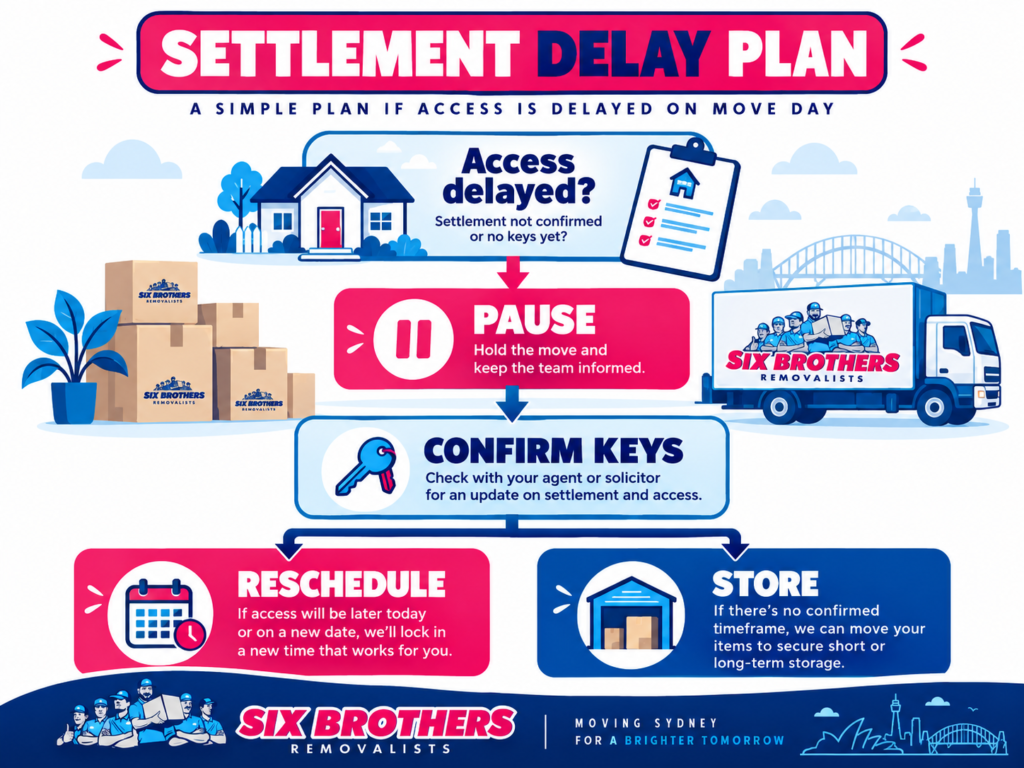
A delayed settlement changes access and sometimes the entire moving budget. The first priority is to stop avoidable labour and travel costs.
Tell your conveyancer about the issue immediately. Let the removalist know what is confirmed and what remains uncertain. Follow the contract advice you receive.
Before the Removalists Start Loading
Ask the crew to hold at the agreed decision point. Confirm any call-out, cancellation or rescheduling charges before changing the booking.
Check whether you can remain at your old address. If not, arrange a safe alternative for belongings and your family. Keep essentials with you.
After Loading or When Keys Are Unavailable
Contact your removalist before the truck reaches the destination. Ask about secure storage, overnight holding and revised delivery charges. Get the options in writing.
Separate legal settlement questions from transport decisions. Your conveyancer handles the first. Your removalist can explain the practical options for the second.
Avoid promising an unloading time until your new access is confirmed. Keep a list of every additional cost for later review.
Final Inspection and Property Handover
The final inspection checks the property’s condition before settlement. The arrival walkthrough records what you find when you take possession. They serve different purposes.
A thorough inspection can save arguments later. Photograph specific issues and raise them through the appropriate professional promptly.
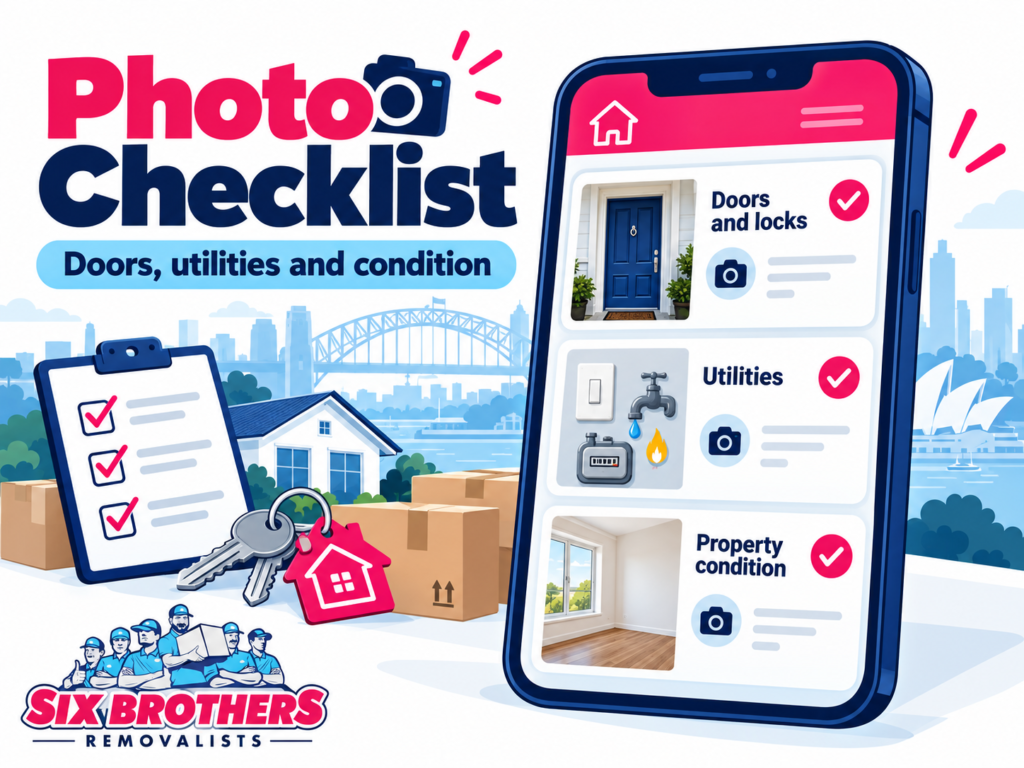
What to Check Before Settlement
Use your arranged pre-settlement inspection Sydney appointment to compare the property against the contract. Check agreed inclusions, visible damage and whether the property is vacant as required.
Test accessible doors, windows, taps and appliances when appropriate. Note concerns immediately and send them to your conveyancer before settlement finishes.
Do not treat this checklist as legal advice. Your conveyancer should explain what the contract requires and what remedies may apply.
What to Check When You Arrive
Take dated photos before unloading. Note condition, access problems, missing remotes and utility issues. Check the garage and outdoor areas too.
Direct the crew room by room and keep common walkways clear. Reconcile larger items against your inventory before the truck leaves.
If damage appears, record it and follow the removalist’s written claims process. Different incidents may have different insurance or legal implications.
Plan Your Sydney House Removal With Confidence
A settlement-aware booking starts with a realistic access window. Share your contract date, tentative key handover and full household inventory.
Six Brothers Removalists can discuss your Sydney move plan and provide a quote based on the information supplied. Ask about any rescheduling conditions before you confirm.
Use one agreed timeline, a written quote and a backup decision point. That is a calmer way to manage a busy day.
For a practical starting point, request a free quote or call 1300 764 372.
Final Settlement-to-Move-Day Checklist
Keep the plan practical. Confirm settlement, inspect the property, organise the crew and prepare a backup. Then enjoy arriving with your keys, not a guessing game.
Ask Six Brothers Removalists about a Sydney house relocation quote with your access details. Call 1300 764 372 or use the free quote page when your plan is ready.
- Conveyancer confirms the settlement status
- Agent confirms key collection and possession
- Final inspection concerns have been reported
- Removalist has a written load-and-unload plan
- Truck access and any building bookings are approved
- Backup storage or rescheduling terms are understood
- Essentials, documents and medication stay with you
- Condition photographs and receipts are safely saved
Frequently Asked Questions
These are the settlement and removalist questions Sydney homeowners often need answered before confirming their booking.
Can I Move In on Settlement Day?
Often, yes, once settlement is completed and you have the right to possession. Confirm key release and access with your conveyancer and agent. Don’t assume a particular time.
When Should I Book Removalists Before Settlement?
Start comparing quotes several weeks beforehand, especially for larger homes. Confirm the date once the arrangements are clear. Ask about changes if settlement moves.
What Happens if Settlement Is Delayed?
Your conveyancer should explain the legal position. Contact the removalist before loading or travel where possible. Discuss rescheduling, waiting, storage and accommodation options.
How Do I Coordinate a Sale and Purchase on the Same Day?
Ask your conveyancer to map both settlements and handover duties. Make one contact responsible for telling the crew when the new property is accessible.
How Much Do Removalists Cost in Sydney?
Costs depend on volume, distance, crew, access and job duration. Settlement delays may add waiting or storage charges. Request an itemised written quote instead of relying on a broad average.
What to Ask a Removalist Before Hiring?
Ask what the quote includes, when the clock starts, and what happens if keys are late. Check insurance options, access charges, rescheduling terms and inventory details.
Should I Connect Utilities on Settlement Day?
Book connections around the earliest lawful occupancy date. Check provider lead times and whether existing services remain active. Avoid relying on last-minute appointments.
Can Removalists Store Goods if My Keys Are Delayed?
Some removalists offer storage or holding arrangements, but conditions vary. Ask about security, availability, handling fees, insurance and the revised delivery date before loading.