


Table of Contents
Booking a Sydney house removalist involves more than comparing hourly rates. Your belongings, moving date, and final bill are at stake. One missing detail can turn a simple move into an expensive scramble.
Use this checklist before paying a deposit. Check the business, paperwork, crew, access, insurance, and delay arrangements. You’ll know what to request, what to question, and what to confirm in writing.

Why a Sydney Moving Checklist Matters ?
A pre-booking checklist helps you compare actual services, not attractive headline prices. Sydney brings narrow terrace streets, busy loading zones, steep driveways, and strict apartment schedules. Every overlooked detail can add time, cost, or risk.
Picture a Newtown terrace with tight stairs and no nearby truck space. Compare that with a Parramatta house offering direct driveway access. Both might contain three bedrooms, yet their removal quotes can differ significantly. The devil’s in the detail.
A reliable booking needs verified identity, clear scope, written pricing, a suitable crew, and a backup plan. Treat your written agreement like a seatbelt. You hope nothing goes wrong, but it matters when plans change.
Credentials & Legal Verification
Check who will handle your belongings before discussing a deposit. The name on your quote should match an identifiable business. A polished advert isn’t proof of operational experience. Better safe than sorry.
Verify the ABN & Trading Name
Ask for the business’s Australian Business Number and legal trading name. Search the Australian Business Register’s ABN Lookup for current registration details. Compare them with the invoice, website, bank account, and booking agreement.
An active ABN confirms a registered business identifier, not removalist skill or insurance. If names differ, ask why. Keep the written reply with your booking records.
Check for AFRA Accreditation
Ask whether the company holds current Australian Furniture Removers Association accreditation. AFRA assesses member standards covering equipment, premises, vehicles, and staff training. Membership is useful evidence, but it isn’t compulsory.
Smaller removalist companies may operate professionally without AFRA membership. Check credentials and processes independently either way. Never accept an accreditation logo without checking its current status.
Screen Reviews for “Flight Risks”
Read recent low-rated reviews before counting five-star ratings. Look for repeated complaints about cancellations, late crews, damaged furniture, changed prices, or unfinished jobs. A single complaint rarely tells the whole story.
Compare review patterns across platforms and dates. Ask the company how it handles illness, truck breakdowns, and late arrivals. Reliable house removalists should explain who answers the phone when plans change.
Insurance Verification (Look, Don’t Listen)
Insurance must be checked through documents and policy wording. A verbal promise of being ‘fully insured’ tells you very little. Cover for the truck doesn’t automatically protect your household goods. Don’t leave it to chance.
Request the Certificate of Currency
Request a current certificate of currency for public liability insurance. Check the named insured party, policy period, limits, and relevant activities. Confirm the business on the certificate matches your booking entity.
For goods insurance, ask for the specific policy details and available cover options. Identify who is insured and who can claim. A certificate alone never explains every exclusion.
Clarify Public Liability vs. Transit Insurance
Public liability may address certain third-party injury or property damage claims. Goods-in-transit insurance concerns eligible belongings during transport under policy conditions. Neither should be mistaken for blanket protection.
NSW Fair Trading advises arranging your own suitable cover when needed. Ask about loading, unloading, storage, breakage, excesses, limits, and excluded items. Confirm whether you must arrange or purchase separate cover.
Did you know?
NSW removalists aren’t legally required to insure your belongings during the move. Review your own policy and the removalist’s offered cover before booking.
Price Transparency & Quote Architecture
A useful quote explains the actual move, not just an hourly figure. Compare the total expected cost and the rules for changes. A cheap headline can hide expensive gaps. The proof is in the pudding.
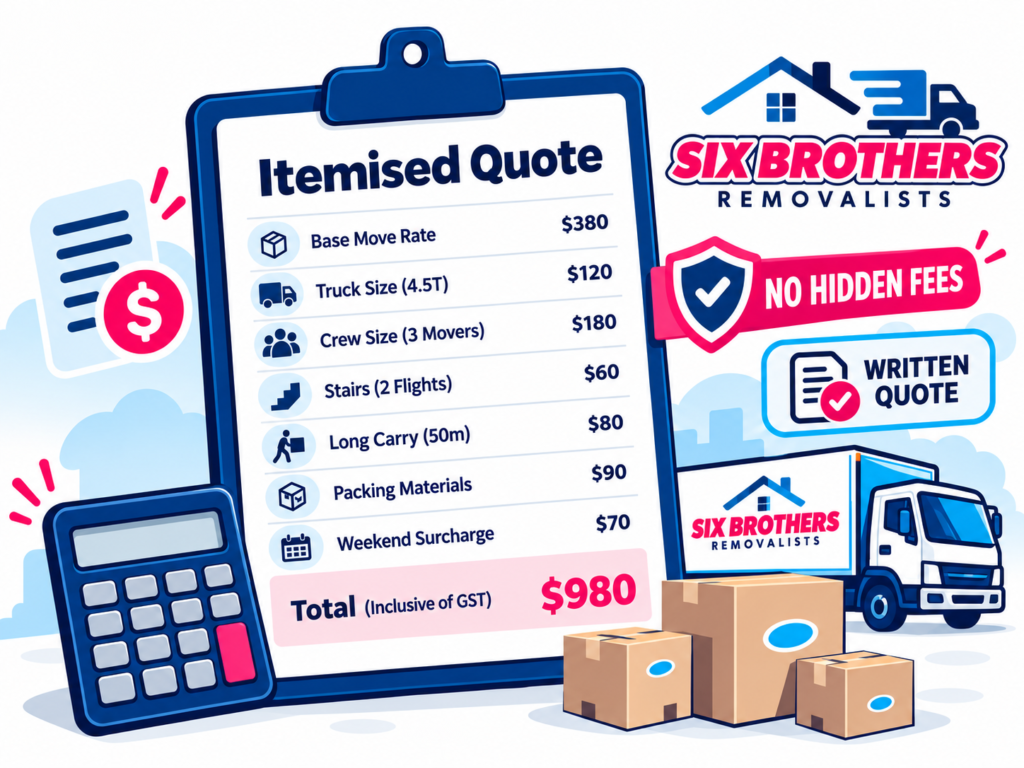
Itemised Written Quote
Ask for itemised written pricing showing labour, travel, truck, minimum hours, and included equipment. Record pickup and delivery addresses, estimated volume, floors, stairs, and access conditions. Get inclusions and exclusions beside the figures.
Use this Sydney removalist quote checklist to challenge missing items. It helps separate legitimate extras from surprises.
Get a Binding, Written Quote
Ask whether the provider offers a fixed-price quote or an hourly estimate. A written figure isn’t automatically an unconditional price guarantee. Confirm what remains fixed and what can change.
Request any price cap, re-quote trigger, or scope-change rule in writing. If the inventory changes, get an updated quote before loading. The agreement must match the job you actually booked.
Identify Fee Inclusions vs. Surcharges
Check whether GST, tolls, fuel, travel time, loading time, and equipment are included. Ask when the clock starts and stops. Clarify waiting time, after-hours work, card surcharges, and weekend premiums.
Compare affordable removalists in Sydney using their full written terms. The lowest quoted hourly rate may not mean the lowest final invoice.
Potential Extras to Clarify
Check extra charges for stairs, long carries, oversized items, packing materials, and heavy garden furniture. Garage clutter, storage rooms, and balcony items often get missed. A walk-through catches what a phone estimate cannot.
Move-Date Availability & Settlement Timing
Book a realistic loading window, not merely a calendar date. Coordinate keys, legal settlement, packing, and truck arrival with everyone involved. A smooth handover needs breathing room. Don’t count your chickens before they hatch.
Confirm the Moving Date & Arrival Window
Get written confirmation of your date, arrival window, pickup address, and contact number. Ask whether your booking is exclusive or sits alongside another job. Confirm what happens if the crew arrives late.
A time range is often more realistic than one exact arrival minute. However, vague promises deserve specific questions. Keep text messages and booking emails together.
Align the Move With Settlement Day
Wondering what happens if house settlement is delayed? Your new home’s keys may remain unavailable until settlement completes. That can leave a loaded truck waiting outside, with extra charges possible.
Ask your conveyancer or solicitor when access is expected. Then ask your removalist about waiting fees, later delivery, temporary storage, and rebooking. Never assume a same-day settlement guarantees immediate access.
Check Peak-Day Booking Availability
Fridays, month-end periods, public holidays, and school holiday moves may have tighter availability. Ask about the specific date instead of assuming a standard lead time. Earlier planning gives you more options.
For a settlement-dependent move, consider an alternative unloading date. A small gap between contracts and moving day can reduce pressure. Confirm any storage costs before choosing that option.
Sydney-Specific Logistics & Access Proofing
Your removalist needs a complete picture of access at both properties. The truck must reach a lawful stopping position, and the crew needs a safe carrying route. In Sydney, measure twice and move once.
Inventory & Pre-Move Survey
List furniture, cartons, appliances, plants, outdoor gear, and shed contents. Add dimensions and photographs for bulky pieces. Ask whether a video or on-site survey is needed.
A large house might need more than a simple bedroom-based truck estimate. Try the Moving Home Calculator to organise your inventory. Confirm final capacity with the removalist before booking.
Disclose Every “Awkward” Detail
Mention narrow hallways, split-level stairs, low branches, sloped paths, and tricky turns. Include detached garages, garden sheds, and storage cages. Give both addresses the same attention.
A North Shore driveway may restrict a large truck. An Inner West terrace might require a longer carry. Clear photos help the team plan safer handling.
Map Out Truck Parking
Check street restrictions, vehicle height, kerb access, and likely walking distance. Ask the local council about permits or approved arrangements where necessary. Never assume a loading zone is available for private use.
Tell the removalist about school zones, clearways, and busy commuter streets. Confirm who handles any required permit application. A lawful parking plan protects time and avoids fines.
Coordinate Apartment Constraints
Some Sydney strata buildings require lift bookings, protective padding, or a loading-dock reservation. Check moving hours and building-manager requirements early. Forward the rules before paying your deposit.
Even house moves can involve a unit at one end. Arrange keys, visitor access, and lift dimensions at both locations. The lift booking should match the actual crew window.
Stop-Work & Scope Clauses
Ask when the crew may pause or refuse unsafe work. Understand what happens after unforeseen stairs, additional items, denied access, or payment disputes. Safety limits are reasonable, but vague termination terms create risk.
Review these house moving contract clauses before acceptance. Ask who can approve a revised scope or restart work. Get that decision process in writing.

Vehicle & Crew Alignment
Match the booked crew and truck to your home’s true contents and access. Two people and a small vehicle won’t suit every five-bedroom move. The right tools make light work.
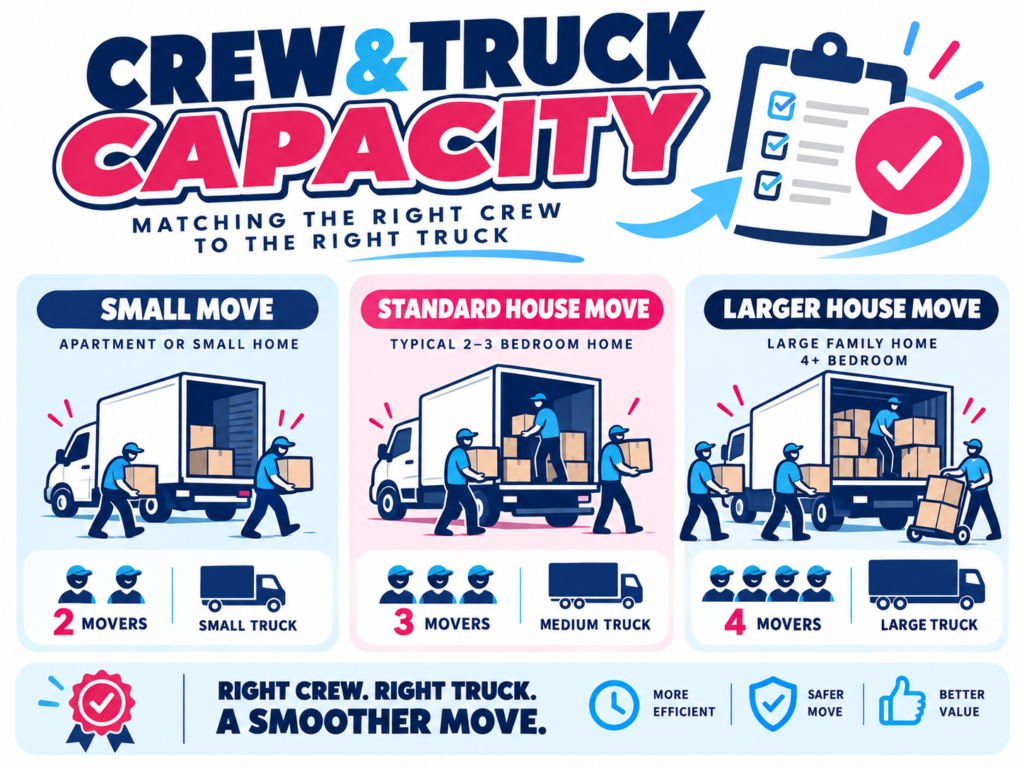
Secure a Written “Crew & Vehicle Lock”
Ask for the planned number of removalists, truck capacity, and key equipment in writing. Include tail-lift needs, dollies, moving blankets, and protective covers. Request notice before material changes to the booking.
A ‘crew and vehicle lock’ is a confirmation request, not an industry-wide legal guarantee. Ask how substitutions are approved and priced. Confirm whether a second trip would cost extra.
Understand Subcontracting Policies
Ask whether employees or subcontractors will complete your move. Clarify who supervises them and who handles claims or complaints. The contracting company should remain easy to contact.
For interstate removalists, ask whether different crews handle collection and delivery. Interstate furniture removalists may also use transfer points. Confirm custody records, handovers, and the delivery contact.
Check Overtime Rules
Confirm what happens when loading exceeds the planned hours. Ask about crew availability, overtime rates, late-night restrictions, and incomplete deliveries. Don’t assume every team can work indefinitely.
Keep an escalation number for moving day. If a job starts running late, agree the next step early. That beats arguing beside a half-loaded truck.
Red Flags
Watch for pressure to pay cash immediately or sign incomplete paperwork. Be cautious about refusal to identify the business, share terms, or confirm crew size. Repeatedly shifting quotes also warrant scrutiny.
Packing Responsibilities & Transport Exclusions
Agree on packing duties before you assume the crew will handle everything. Packing, wrapping, appliance preparation, and prohibited items vary by service. Better to ask now than scramble later.
Agree on Who Packs What
Separate self-packed cartons from professional packing services. Confirm who supplies boxes, tape, labels, and fragile-item packaging. Ask whether packing time is included in your quote.
Some furniture removalists specialise in large items rather than full packing. Office removalists may use separate computer and document protocols. Compare service scope, not job titles alone.
Confirm Furniture Dismantling Duties
List beds, desks, dining tables, wardrobes, and modular lounges needing dismantling. Ask who brings tools and protects small hardware. Confirm reassembly and its limits.
A furniture removalist might offer a different scope from full house removalists. If you book piano removalists, request a separate handling plan. Specialist moves often need more than standard blankets.
Check Appliance Preparation Requirements
Ask whether you must empty, defrost, drain, disconnect, or secure appliances. Refrigerator travel arrangements and washing-machine transit bolts need attention. Licensed trades may be required for some disconnections.
Keep manuals and fittings together. Confirm who reconnects appliances at delivery. Never assume removalists can undertake electrical, plumbing, or gas work.
Identify Items Removalists Won’t Transport
Ask for a written prohibited-items list. Typical concerns include fuel, gas cylinders, chemicals, dangerous goods, and unsecured batteries. Policies may differ by vehicle, route, and insurer.
International removalists face separate customs and shipping rules. An interstate removalist may apply different restrictions from a local crew. Ask before packing anything questionable.
Property Protection & Specialist Item Handling
Check how the crew will protect both homes and the goods inside them. A low price means little if floors or furniture get damaged. An ounce of prevention is worth a pound of cure.
Check Floor, Wall & Door Protection
Ask what protection is available for timber floors, carpets, doorframes, stairs, and lift walls. Confirm whether coverings are included or charged separately. Photograph existing marks before work begins.
For polished floors or tight hallways, discuss access and handling techniques. Property protection should suit the actual home, not a generic promise.
Confirm Furniture Wrapping Methods
Discuss moving blankets, mattress covers, stretch wrap, corner guards, and fragile-item cartons. Check what is included and who applies it. Wrapping methods vary by material and item.
Your removalist furniture protection plan should cover leather, glass, stone, and polished surfaces. Ask whether furniture is loaded upright or secured differently. Clear handling instructions reduce avoidable damage.
Verify Specialist Item Handling
Flag pianos, pool tables, aquariums, antiques, artwork, and unusually heavy furniture. Provide weights, dimensions, photographs, and access details. Ask about handling expertise, equipment, insurance, and exclusions.
A standard removalist truck hire arrangement may not include specialist lifting support. Confirm whether an extra crew, crane, or outside contractor is necessary. Don’t improvise on the day.
Storage & Settlement Delay Arrangements
A storage plan protects your move when the new property isn’t ready. Know where goods will go, who holds them, and how redelivery works. It’s useful to have a Plan B.
Check Short-Term Storage Options
Ask whether short-term storage is available and who operates the facility. Confirm inventory records, minimum periods, handling fees, and storage insurance. Clarify access and prohibited goods.
Storage may require unloading and reloading. That affects handling risk and the final price. Request a written cost breakdown before approving the change.
Confirm Storage-to-Home Delivery
Confirm the earliest redelivery window and any minimum notice. Ask whether a new crew or different vehicle may attend. Check charges for redelivery, stairs, or prolonged storage.
Keep contact details current during settlement changes. Ask how the company tracks cartons and specialist items across transfers.
Plan for Delayed Property Access
Tell the removalist immediately if settlement timing changes. Ask your conveyancer for reliable updates and confirm when keys become available. Request written prices for waiting, storage, or a new date.
The contract determines many scheduling charges. Property-settlement obligations depend on your sale agreement and legal advice. Your removalist cannot promise access before the legal handover.
Deposit, Payment & Cancellation Conditions
Understand the payment rules before entering card details. Upfront clarity protects both sides when dates or inventories change. Read the fine print before biting the bullet.
Check Deposit & Refund Terms
Ask how much deposit is required and whether it is refundable. Record the exact conditions for cancellation, postponed settlement, or company-initiated changes. Demand a receipt for payment.
Be wary when large deposits go to an unrelated personal account. Check that payee details match the business documents.
Confirm Payment Methods & Deadlines
Ask which payment methods are accepted and when the balance is due. Confirm card surcharges, payment milestones, and disputed-extra procedures. Keep invoices and receipts after the move.
For cheap removalists, examine minimum hours and travel charges especially carefully. A low advertised rate doesn’t replace a clear total estimate.
Review Cancellation & Rescheduling Rules
Check notice periods, fee tiers, date-change costs, and available alternatives. Ask whether illness, severe weather, or delayed settlement changes those terms. Don’t assume goodwill overrides a signed contract.
The terms should explain what happens if the company cancels. Ask about refunds, substitute crews, and prompt notice. A fair policy works both ways.
Damage Reporting & Dispute Resolution
Agree on a damage-reporting process before the first carton moves. Photos, inventories, and written records help establish what happened. Keep your cool and keep the evidence.
Document Pre-Existing Damage
Photograph furniture, appliances, floors, doorframes, and high-value items before loading. Capture serial numbers or receipts where practical. Use time-stamped images and a shared inventory.
Note any existing scratches or dents during the survey. Photograph the same areas after delivery. Good evidence beats a vague memory.
Confirm the Damage Reporting Process
Ask who receives claims and what evidence they require. Check reporting channels, policy deadlines, and expected response steps. Report new damage promptly with photographs and item details.
Keep damaged packaging until the claim process is clear. Do not discard documents or rely only on calls. Ask for written acknowledgement.
Identify Complaint Escalation Steps
Find the company’s complaints contact and management escalation pathway. Ask how unresolved billing and damage issues are reviewed. Save messages, invoices, photos, and the signed agreement.
If direct resolution fails, consult NSW Fair Trading’s removalist guidance. It explains complaint options and important consumer protections.
Understand Your Consumer Rights
Australian Consumer Law generally requires services to use due care and skill. Consumers may qualify for remedies when a service fails relevant guarantees. Contract wording cannot simply remove these statutory protections.
Check the specific circumstances before assuming liability or compensation. Insurance and consumer-law rights are different things. Seek individual advice for a serious dispute.
Clear Communication is Key
Keep one written record covering the inventory, booking, crew, quote, insurance, and settlement plan. Share changes with the booking manager promptly. Clear communication keeps everyone on the same page.
Before agreeing, send a short confirmation email. State your moving date, both addresses, inventory, access restrictions, crew, vehicle, price basis, and exclusions. Ask the company to reply with corrections.
If you search ‘removalists near me’ or ‘removalist near me’, don’t stop at the results page. Compare verified Sydney removalists and ask what each price includes. A sensible shortlist beats rushing to book.
Six Brothers Removalists can discuss a move based on your actual inventory and access details. For local options, see the Sydney removalist service. Check every agreed inclusion before accepting a quote.
Tips from Professional Sydney Removalists
A good booking starts with complete information and clear questions. Use this final check before paying anything. Slow and steady wins the race.
- Verify the business identity, recent reviews, and accreditation claims.
- Request insurance documents and review available goods cover.
- Get the itemised quote, payment terms, and scope-change rules in writing.
- Confirm crew, vehicle, packing, protection, parking, and lift access.
- Agree on settlement-delay, storage, cancellation, and complaint procedures.
For one-item jobs, furniture removalist Sydney services may offer a different quote structure. Full-service house removalists Sydney teams may cover more tasks. Ask which service fits your actual move.
If you’re leaving Sydney, compare interstate removalists separately. People search ‘removalists Melbourne’ or ‘removalists Brisbane’ for different routes. Their delivery and insurance terms can differ.
Six Brothers Removalists also supports planning for furniture and household moves. You can review Six Brothers Removalists before requesting a tailored written quote. Tell the team about every awkward detail upfront.
FAQs
How to Choose a Removalist in Sydney?
Check the ABN, reviews, written quote, insurance, crew plan, and contract. Compare like-for-like services before paying a deposit.
Do Removalists Have Insurance?
Some have public liability or vehicle cover. Goods-in-transit protection isn’t automatically included. Check your cover and the policy terms.
What happens if house settlement is delayed?
Your keys may not be released as expected. Ask about waiting fees, storage, redelivery, or rescheduling. Confirm access timing with your conveyancer.
Should I pay a deposit before seeing the contract?
No. Read the complete terms, cancellation rules, and quoted service before paying.
Can a removalist change the truck or crew?
Substitutions may occur under the contract. Ask for notice, equivalent capacity, and written confirmation of price changes.
Who organises parking and lift bookings?
Responsibilities vary. Ask the company and building manager who must secure each approval.
Are fixed-price quotes always final?
Not necessarily. Added inventory or undisclosed access issues may trigger agreed adjustments. Read the scope and exclusions.
What should I do if furniture is damaged?
Photograph the issue, keep records, and notify the company promptly. Ask for its written claims process.