


Table of Contents
A suburban Sydney garage can hide years of gear behind one roller door. Garden tools, screws and shelving rarely pack themselves.
This checklist shows how to pack garden tools for moving without damage, lost parts or last-minute surprises. Start with unsafe goods. Then sort tools, protect equipment and check the path to the truck.
Families in Parramatta, Blacktown and the Hills District often face narrow side gates and packed sheds. A little preparation helps everyone stay on the same page.

The Ultimate Garage & Tool-Shed Checklist
Start by sorting everything into move, sell, donate and dispose groups. The garage is often the forgotten room. Getting it sorted early saves a mad scramble later.
- Make an inventory of power tools, hand tools, outdoor equipment and storage tubs.
- Photograph larger items and record valuable tool serial numbers.
- Set aside prohibited goods before you pack cartons.
- Check which shelving, hooks and fixtures you may legally remove.
- Measure heavy equipment and your route to the truck.
Banished Hazardous Materials
Separate fuel, LPG bottles, solvents, paint, pesticides, pool chemicals and leaking batteries. Do not put them inside normal removal cartons. Carriers may refuse these goods.
The NSW EPA Household Chemical CleanOut accepts many household chemicals at scheduled collections. Check current limits and local options first. Never pour fuel or chemicals down drains.
For rechargeable tool batteries, follow the NSW EPA battery recycling advice. Tape loose battery terminals before recycling, and isolate damaged batteries safely. Keep rejected goods out of the truck.
Tip: Ask your removalist for their restricted-items list before booking. That beats discovering a full petrol can at loading time.
Leisure & Large Disassembly
Dismantle bikes, portable basketball stands and freestanding racks where appropriate. Keep bolts in labelled bags. Tape each bag to its matching item or case.
Photograph complex joints before taking them apart. Use a second person for awkward frames. Do not dismantle anything that needs qualified work.
Day-One Essentials Box
Pack one clearly marked tub for the first evening. Include a screwdriver, torch, tape measure, basic fasteners and work gloves. Keep keys and remotes with you.
Add a small tool kit for reassembling beds or securing shelves. Keep this tub separate from the truck load. It becomes your first-night safety net.
Core Hand & Power Tools
Pack everyday tools by weight, sharpness and how soon you will need them. Use original cases whenever possible. Small, dense tools belong in sturdy cartons, not giant tea chests.
Cordless Drill and Driver Kit
Remove detachable batteries and bits before packing drills or impact drivers. Cover exposed contacts and follow the carrier’s battery rules. Place each tool in a hard case with padding.
Label chargers by tool model. Loose screws can scratch the housing. Keep drill bits in a closed organiser.
Socket and Spanner Set
Close socket trays firmly and secure latches. Put spanners into a roll or divided box. Wrap loose metal pieces so they cannot shift against one another.
Count ratchets, extensions and common socket sizes before sealing. A quick photo can save an hour of searching later.
Basic Hand Tools
Group screwdrivers, pliers, hammers and adjustable spanners by purpose. Cap sharp tips and wrap striking heads. Use small cartons with reinforced bases.
Avoid overfilling a box because metal weight adds up fast. If it feels unsafe to lift, split it into two.
Measuring & Levelling
Retract tape measures and lock them before packing. Protect spirit levels with cardboard sleeves. Keep laser levels inside their cases with batteries handled separately.
Do not bend long rulers just to fit a box. A few extra centimetres of packaging can prevent replacement costs.
Handsaws
Fit blade guards over handsaws and pruning saws. Make a thick cardboard sheath when a proper guard is unavailable. Tape the sheath securely without exposing the teeth.
Wrap handles separately to stop rubbing. Label each package “Sharp tool” so nobody gets caught out.
The Sydney Garage Packing Timeline
An eight-week plan gives time for council bookings, recycling and safe packing. Start earlier if your workshop is large. Slow and steady wins the race.
8 Weeks Out – The Council & Kerbside Sort
Check council bulky-waste rules for your specific address. Parramatta, Blacktown and Northern Beaches collections may use different booking systems. Never assume paint, batteries or gas bottles qualify.
List unwanted shelves, broken furniture and old equipment. Arrange suitable drop-offs before packing begins. Clear access first, then sort what stays.
4 Weeks Out – Digital Inventory & Supply Gathering
Photograph each shelf and list tools by category. Record the dimensions of benches, mowers and large cabinets. Order cartons, tape, padded wraps and marker pens.
The garden shed and outdoor move checklist helps you capture items outside the garage. Include bikes, pots, hoses and hidden storage areas.

1 Week Out – Full Breakdown & Pack
Finish dismantling portable shelving and freestanding workstations. Wrap blades, sort fittings and seal tool cases. Set aside the equipment needed for final cleaning.
Check the weather forecast before leaving cartons on a shed floor. A dry, raised holding area helps protect metal tools. Label every heavy box clearly.
Garden & Outdoor Maintenance
Garden equipment needs extra preparation because it may be sharp, dirty or fuel-powered. Here is how to pack garden tools for moving safely. Clean and dry each item first.
Lawnmower
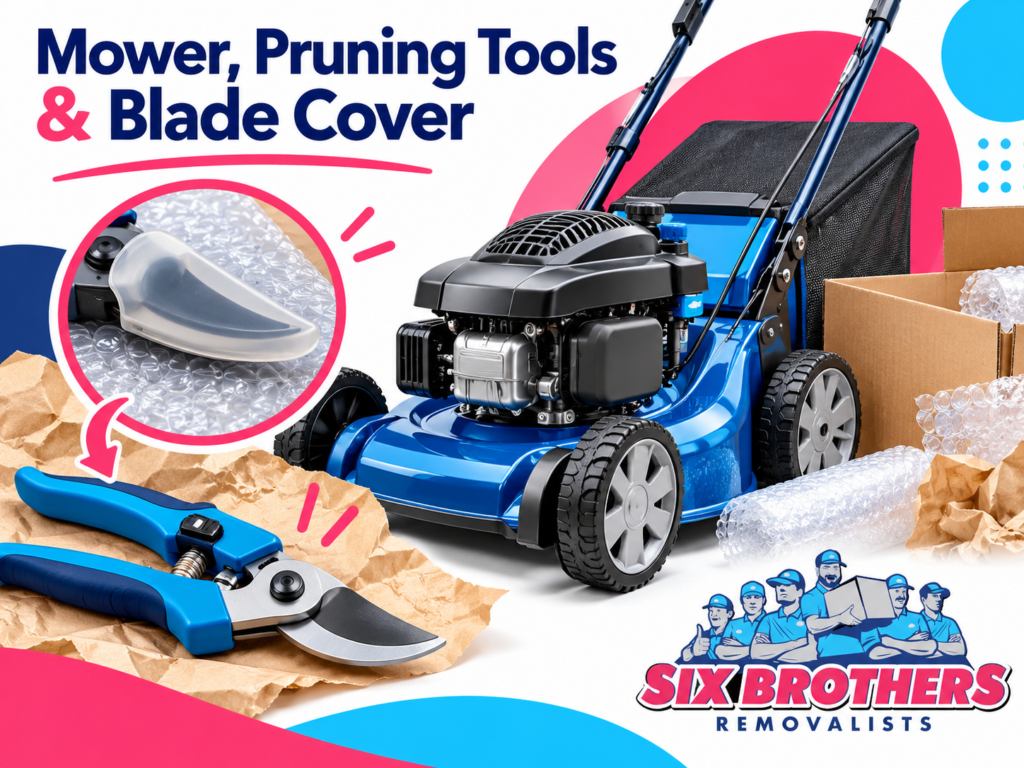
Brush away grass and soil, then wipe the mower dry. Ask your removalist how they handle petrol, oil and batteries. Follow the manufacturer’s transport instructions.
Fold or remove the handle only when the manual allows it. Shield exposed blades without handling their cutting edges. Secure detached parts in a labelled bag.
Line Trimmer (Whipper Snipper)
Remove detachable batteries and secure the cutting head. Fit a protective cover over the line spool or blade. Keep shafts straight, not bent across cartons.
Separate fuel-powered models for carrier approval. A whipper snipper may look light, but its shape makes stacking tricky.
Leaf Blower
Disconnect the tube and keep attachments together. Clean dust from vents without opening the motor housing. Use padding around plastic nozzles and fragile controls.
Treat batteries or remaining fuel under carrier guidance. Label the main body and tube as one set.
Pruning Tools
Close secateurs and loppers before packing. Fit blade covers on shears, pruning saws and hedge trimmers. Wrap handles so sharp parts cannot pierce cardboard.
Keep hand pruners separate from powered cutters. The right tool guard is worth its weight in gold.
Garden Hose & Attachments
Drain hoses fully and allow them to dry. Coil them loosely to avoid kinks. Put connectors, spray guns and tap adaptors into a labelled zip pouch.
Secure hose reels against unwinding. Move only clean, dry equipment alongside household belongings.
Automotive and DIY Project Items to Pack
Automotive gear often weighs more than its size suggests. Treat it as a separate part of the inventory. Measure twice, lift once.
Car Jacks and Axle Stands
Clean off grease and check for fluid leaks. Secure jack handles and moving parts. Tell your removalist the weight before lifting begins.
Never pack a leaking hydraulic jack beside fabrics. Use suitable trays during your own preparation, not loose plastic over oily parts.
Spare Tyres and Auto Parts
Bag clean spare tyres and protect nearby furniture from rubber marks. Box dry parts with padding. Keep liquids, fuels and car batteries outside standard cartons.
Label dense brake components and metal parts. Your inventory should distinguish a lightweight wheel cover from a heavy axle assembly.
Timber and DIY Materials
Bundle clean timber by length and remove protruding nails. Protect sharp corners with cardboard. Ask whether long boards will fit the planned vehicle.
Separate reusable materials from rubbish and hazardous coatings. Loose screws should travel in sealed tubs, not inside wood offcuts.
Storage, Organization & Workshop
Take time to make storage units safe before the removalists arrive. Freestanding units can often travel dismantled. Fixed fittings need permission or contract checks.
Heavy-Duty Freestanding Shelving
Empty every level and photograph the frame. Number poles and shelves before dismantling. Put bolts, clips and braces in one clearly labelled bag.
Check whether the new garage has space for the original layout. Pack flat parts together to avoid a missing bracket.
Pegboards and Hooks
Remove hooks and containers before lifting a portable pegboard. Wrap corners and bundle hooks in a closed box. Check ownership before removing wall-mounted boards.
Keep wall plugs, fixings and screws separate from loose tools. Some fixtures must stay with the property.
Clear Storage Tubs
Inspect plastic tubs for cracks and broken latches. Tape lids closed without covering labels. Transfer heavy metal tools into sturdier cartons if necessary.
Avoid stacking fragile tubs under tool chests. Colour labels can help match each tub to its destination room.
Sturdy Workbench
Clear drawers and remove detachable vice handles. Photograph how the bench comes apart. Protect corners and tell the team about its weight.
Some timber benches are better moved intact. Ask first when dismantling could weaken the frame.
Safety & Clean-Up
Keep cleaning and safety gear accessible until the garage is empty. Nobody wants a nasty surprise under the final shelf. Check equipment dates and condition.
First Aid Kit
Keep your first aid kit with you, not buried under boxes. Check bandages, gloves and sealed dressings. Replace expired supplies before moving day.
Fire Extinguisher & Blanket
Check inspection requirements and your removalist’s acceptance rules for extinguishers. Fire blankets should stay dry and easy to reach. Do not pack hazardous cylinders without approval.
Personal Protective Equipment (PPE)
Set aside closed shoes, safety glasses, gloves and a suitable dust mask. Use them while sorting sharp or dusty gear. Leave specialist hazards to qualified workers.
Broom and Dustpan
Keep a broom, dustpan and rubbish bags for the last sweep. Remove cobwebs and fallen screws. Cleaning supplies should travel separately from packed tools.
How to Pack Tools and Loose Hardware for Moving ?
Pack tools in small, strong boxes and separate sharp edges from loose metal. Start with a clean work surface. Sorting now prevents a treasure hunt later.
- Use original cases for power tools and padded sleeves for sensitive equipment.
- Wrap blades in fitted guards or strong cardboard before boxing.
- Place nuts, bolts and washers in small sealed, labelled bags.
- Match each hardware bag to its shelf, bench or machine.
- Reinforce the bottom of heavy cartons and test each lift.
- Write the contents, destination room and “HEAVY” on every dense box.
The packing and removals service can help with household cartons and awkward furniture. Confirm which garage items are accepted and how they need preparation.
Tip: Photograph every hardware bag beside its matching furniture piece. Treat the photo as a map for rebuilding.
For a full scope review, ask Six Brothers Removalists for a quote on 1300 764 372. Include your tool inventory and access photos. You can confirm exclusions before booking.
Weatherproofing & Protection (Sydney Specific)
Sydney sheds can get damp after storms and humid weather. Water and exposed metal make poor travelling companions. Keep packed items raised and sheltered.
Moisture Absorbers / Dehumidifiers
Dry tools before packing and add sealed desiccant packs where suitable. Do not pack wet or leaking moisture containers beside equipment. Empty portable dehumidifiers as the manual directs.
Anti-Corrosion Sprays
Use protective products only where the manufacturer recommends them. Let treated tools dry before wrapping. Check spray-can restrictions with your removalist before transporting any aerosols.
Pest Control Supplies
Inspect tubs for spiders, droppings and nesting material. Clean safely before loading. Dispose of pest-control chemicals through approved channels rather than packing them with clothes.
Heavy-Duty Padlocks
Lock only items the removalist has agreed to carry locked. Keep keys with you and label storage units. Do not trap loose metal parts inside an inaccessible cabinet.
What Garage and Shed Fixtures Can You Take?
You can usually move your own portable tools, freestanding shelves and removable benches. Built-in cabinets, fixed shelving and wired equipment need closer checks. Better safe than sorry.
If you rent, check the lease and written approval for alterations. If you are selling, check the sale contract and agent’s fixtures list. Never remove something simply because you installed it.
Photograph each fitting before removal and protect exposed surfaces. A properly agreed list prevents handover disputes and unexpected repairs.
Did You Know?
In NSW, permission and contract terms matter for fixed shed fittings. A freestanding bench differs from wall-mounted shelving.
Preparing Heavy Workshop Equipment for Transport
Heavy workshop gear needs measurements, weight estimates and a safe lifting plan. Do not assume every removalist handles every machine. A quick call can prevent a costly detour.
Tool Chests and Compressors
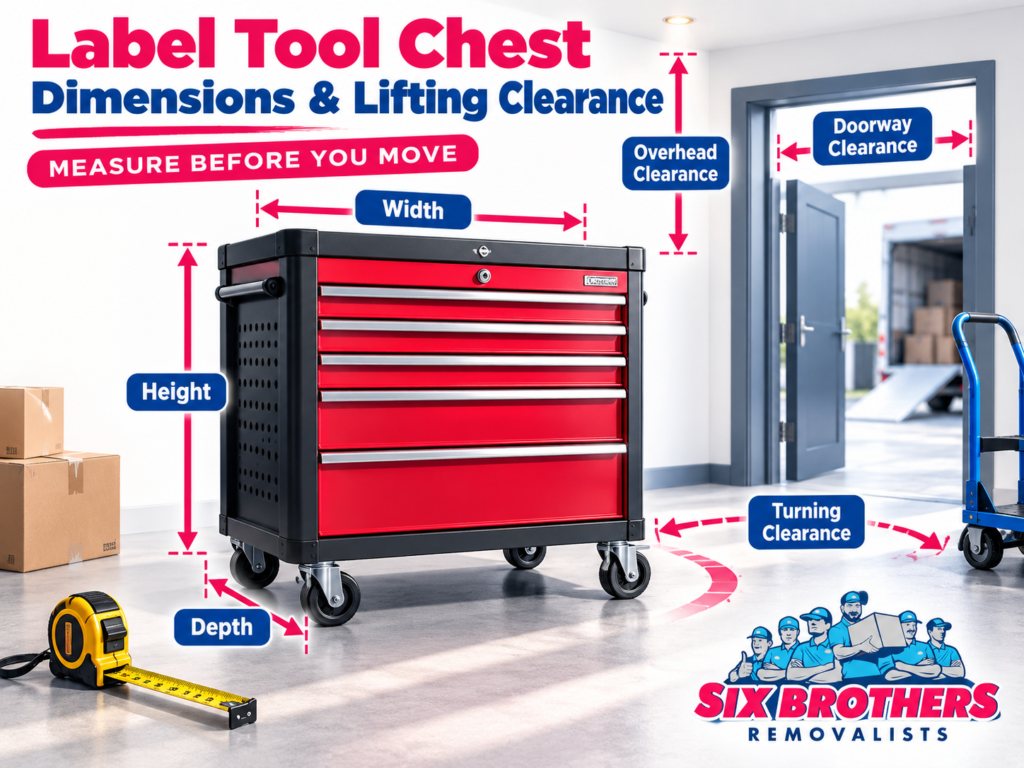
Empty tool chest drawers and secure them separately if needed. Confirm whether compressor tanks and fluids meet carrier rules. Never loosen pressure parts without the manufacturer’s procedure.
Flag castors, uneven weight and high centres of gravity. A rolling tool chest can tip if its drawers open.
Check Equipment Weight and Size
Record length, width, height and manufacturer-listed weight. Include stands, guards and protruding handles. Measure both equipment and the narrowest gate or doorway.
If a bench cannot clear a corner, extra muscle will not fix the geometry. Plan the route before removal day.
Confirm Specialist Handling
Ask whether a piano trolley, hydraulic lift or specialist crew is required. Do not treat heavy workshop machines like ordinary removalist furniture. Confirm exclusions in writing.
Complex machinery may need an equipment specialist, not general furniture removalists. Share photographs before requesting a fixed scope.
Sydney Suburban Garage and Shed Access Checks
Check every metre between the shed and the truck. Sydney’s older blocks and newer estates create different access problems. The shortest path is not always safest.
Measure Side Gates and Doors
Measure clear opening width, not the overall frame. Check low awnings, steps and sharp turns. Compare these figures with your mower and bench dimensions.
Some Parramatta terraces have tight passages. Hills District homes may have long garden routes. Photos help the crew prepare.
Check Driveway Slopes
Walk the route and mark steep drops, cracked paving and slippery sections. Keep hoses, toys and garden debris off the path. Flag steep driveways during quoting.
Plan Truck Parking and Carries
Find lawful truck parking that leaves driveways and paths clear. Tell your removalist about stairs and long carries. Check local parking rules rather than guessing.
A long carry from the rear shed can add loading time. Send photos of the street and gates before booking.
How Garage and Shed Contents Affect Removalist Costs ?
Garage contents affect a quote through weight, volume, labour and access. Tool chests, spare tyres and workbenches use space differently from bedroom cartons. The final bill should not be a guessing game.
The guide to garage and shed moving costs explains why overlooked stock can change truck size. Show your removalist the whole load before agreeing on rates. Get packing and special-item charges in writing.
Searches such as “removalists near me”, “removalist near me” and “cheap removalists” help create a shortlist. They cannot confirm whether a shed has been priced properly. Compare written inventories instead.
House removalists often quote different work from office removalists or piano removalists. Furniture removalists may move benches and cabinets, but machine handling needs confirmation. Cheap rates do not replace a clear scope.
Compare “removalists sydney” and “removalist sydney” listings by access and packing details. “Sydney removalists” is another search starting point. Searches for “removalists parramatta”, “removalists western sydney” and “cheap removalists sydney” need that same check.
An interstate removalist also needs the correct load volume and route information. Interstate removalists and interstate furniture removalists may have different exclusions for batteries, plants and workshop equipment. Ask about destination rules before accepting a price.
For wider relocations, terms like “removalists melbourne”, “removalists brisbane” or “international removalists” describe different markets. They do not answer a Sydney shed packing question. Interstate removalists Sydney to Melbourne must still know your garage load.
Some customers compare a furniture removalist with removalist truck hire or general removalist companies. A hired vehicle alone does not provide packing, lifting or specialist skills. Treat “removalist furniture” listings as a starting point, not a guarantee.
Longer moves include removalists Sydney to Brisbane and removalists Sydney to Canberra. Removalists Sydney to Wollongong need access details too. Similar planning applies to removalists Newcastle, removalists Central Coast and removalists Port Macquarie. Route distances change the quote, not safe tool packing basics.
A local removalist may charge hourly. Interstate removalists Sydney can price truck space. Brisbane removalists, Melbourne removalists and Adelaide removalists may structure charges differently. Always request the full written terms.
If you need a removalist from Sydney, ask about fuel levies, loading time and access. Compare affordable removalists Sydney with best removalists Sydney results using the same inventory. Clear details beat a headline discount.
Final Garage and Tool-Shed Moving Day Checks
Complete a final sweep after the garage is packed. Check high, low and behind every door. The devil is in the detail.
Check Rafters and Overhead Storage
Inspect rafters, ceiling shelves and high cupboards safely from the ground. Use proper access equipment when needed. Never climb unstable racks to retrieve a forgotten item.
Count Cartons and Tool Cases
Match loaded tool cases and boxes with your inventory. Note damaged cartons before the crew leaves. Keep a photo of the final count.
Set Aside Shed Keys and Remotes
Place shed keys, gate keys and garage remotes in your personal essentials bag. Do not seal them inside a random carton. Test the roller door before handover.
Record Condition Before Loading
Photograph expensive tools and workshop equipment from several angles. Record visible marks and case condition. Check the agreed scope against your load list.
Checking Your Garage and Tools After Moving
Check equipment before rebuilding your workshop. Start with cases and cartons, then inspect larger gear. Do not plug in damaged electrical tools.
Match Tools to Inventory
Count drills, saws, garden gear and tool boxes against your photos. Flag missing pieces promptly. Check bags holding nuts and bolts before unpacking every shelf.
Inspect Cases and Equipment
Look for cracked cases, bent guards, damaged plugs and leaks. Photograph any damage before cleaning or repair. Follow the company’s claims process if something is missing or broken.
Rebuild Shelving and Workstations
Put freestanding shelves on a level floor and follow their assembly instructions. Secure wall-mounted units only with suitable permission and fixings. Test stability before storing heavy tools.
For the rest of your home, the moving house checklist Sydney covers room-by-room tasks. Six Brothers Removalists can help plan your household move with a complete inventory.
Below are the most common packing questions Sydney households ask. Keep these answers handy before the final shed sweep.
FAQs
How to pack garden tools for moving?
Clean and dry each tool. Guard sharp edges, group fittings and label cases. Check battery and fuel rules first.
Do removalists pack for you?
Some removalists offer packing services. Confirm whether garage tools and garden machines are included in the written scope.
How to prepare for removalists?
Finish your inventory, separate hazardous goods and clear access. Label heavy boxes and share equipment dimensions.
Can removalists take petrol lawnmowers?
Ask the carrier first. Fuel and oil restrictions vary, so follow their acceptance rules and manufacturer instructions.
Can power tool batteries go in a removalist truck?
Battery acceptance depends on carrier and battery condition. Never pack damaged or recalled batteries with ordinary belongings.
How do I pack rakes, shovels and long-handled tools?
Clean and dry them. Bundle similar handles loosely, protect sharp ends and label the bundle.
Should I dismantle my garage shelving before moving?
Usually, empty and dismantle portable units when safe. Check the manufacturer’s instructions and ownership of attached fixtures.
What increases the cost of moving garage tools?
Extra weight, bulky equipment, access problems and packing time can increase costs. Share a complete inventory when requesting quotes.
A well-packed garage makes unloading much easier. You will know what arrived and where it belongs. That is a solid start in your new home.
For a free moving quote, call 1300 764 372 or email info@sixbrothersremovalist.com.au. Share your garage photos and tool list. Confirm any hazardous-item or specialist-handling exclusions before booking.