


Table of Contents
A safe two-storey house move needs a clear loading order, stair routes and balanced truck. Heavy pieces often load early. Fragile items need supported positions. First-night essentials must stay accessible without compromising restraint.
For Sydney homes, the job also depends on landings, parking and where each carton belongs upstairs. This day-plan helps you brief a removalist and spot delays before moving day.
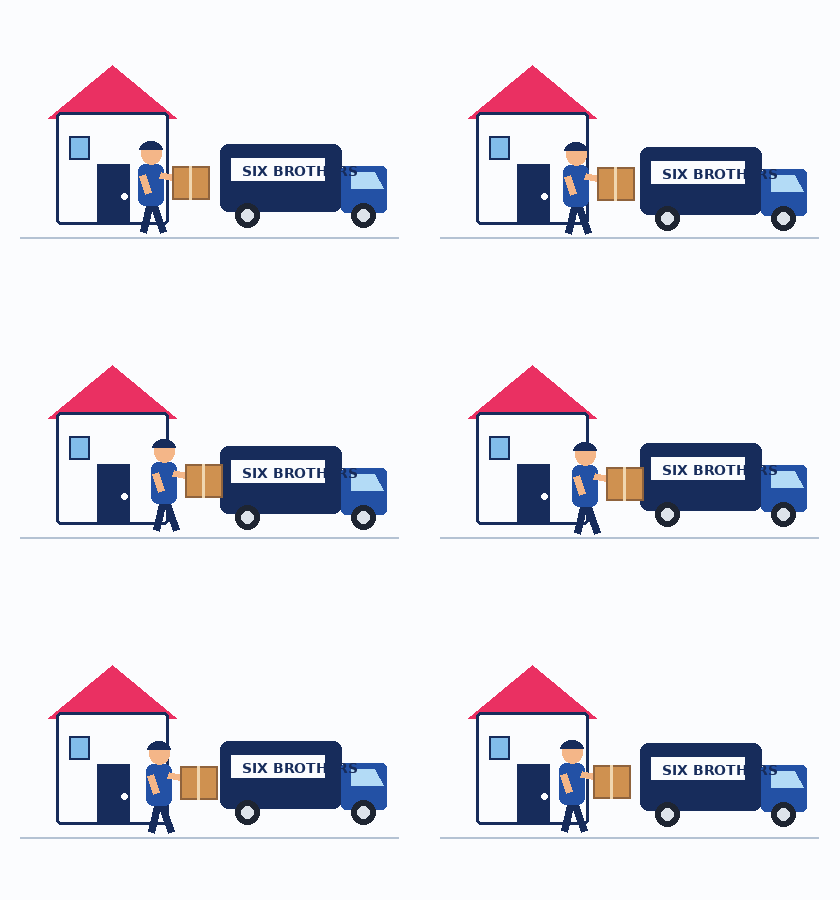
Phase 1: Front Wall (Heavy, Large & Non-Fragile Items)
Start with large, sturdy pieces that the crew can secure safely near the front. This is a planning guide, not a fixed rule for every removals truck. The driver must still manage axle limits and weight distribution.
Refrigerators and washing machines
Prepare appliances before the crew arrives. Empty the fridge, secure loose shelves and follow manufacturer transport instructions. Drain the washing machine and fit transit bolts where its manual requires them.
Use an appliance trolley only where the route allows it. Protect doorways and agree on the lifting path first. The crew decides the safest position and restraint method inside the truck.
Large mattresses and base frames
Keep mattresses clean inside fitted covers. Stand them only when properly supported and secured. Never wedge a mattress where it could topple or crush another item.
Label each base frame and tape its fixings inside a small bag. Pack the frame as separate, protected components when disassembly improves stair clearance.
Heavy solid-wood furniture
Move solid-wood dressers, tables and buffets with extra care. Remove drawers when appropriate. Protect corners and separate fragile tops before the carry begins.
A heavy buffet might fit through the lounge but fail at a stair landing. Check each turn before anyone lifts. The right load order starts with the route, not the truck door.
Phase 2: The Floor Base (Heavy/Sturdy Boxes)
Build a stable lower layer with well-sealed, strong cartons. Heavy does not mean stackable. Weight, crush resistance and truck balance matter more than a neat-looking pile.
Heavy, dense boxes
Books, tools and pantry tins belong in smaller cartons. Mark each box with its room and a clear HEAVY label. Spread dense cartons across suitable floor positions.
Do not place heavy cartons above lamps or soft furnishings. Avoid overloading one side of the vehicle. Keep lifting weights manageable for the planned crew.
Downstairs bulky items
Move sturdy downstairs pieces when they suit the load plan. Dining chairs, small cabinets and packed storage tubs may fill supported gaps. Protect every exposed surface.
Do not use sofas or fragile furniture as structural supports. Secure every layer independently where needed. The crew should retain access to restraint points.
Phase 3: The Middle Layer (Medium and Medium-Weight Boxes)
The middle layer holds medium cartons and protected dismantled furniture. It should stay stable during braking and turning. The goal is fewer gaps, not maximum height.
General room boxes
Group cartons by strength and destination room. Kitchen, study and living-room boxes usually need different protection. Place crush-resistant cartons beneath lighter boxes.
Avoid mixing cleaning liquids with clothing or food. Keep the item inventory handy. A room-by-room whole-house move checklist can catch missed cupboards before departure.
Dismantled bed frames and table legs
Wrap bed rails and table legs separately. Bundle matching parts without stressing joins. Attach labelled hardware bags to the relevant furniture, not loose cartons.
Long pieces need secure positioning to prevent sliding. Sharp fittings must face away from fabric and people. Never rely on packing film as load restraint.
Upstairs non-fragile items
Bring upstairs storage tubs and sturdy bedroom cartons down in a controlled sequence. One-way stair traffic helps prevent collisions. Keep the landing clear between trips.
Check each upstairs room against its door label. Do not move nursery essentials into the truck early. Set those aside for the accessible final-load zone.
Phase 4: Top Tier and Tail End (Fragile & Last-Minute Items)
Reserve protected positions for fragile and last-needed items. Fragile goods are not automatically safe on top. Their packaging, support and restraint determine placement.
Fragile boxes and TVs
Pack TVs upright in suitable cartons when their manufacturer recommends it. Cushion screens and keep pressure away from display panels. Mark fragile cartons on several sides.
Avoid high, unstable stacks. Glassware, mirrors and framed artwork need appropriate vertical or supported transport. Tell the crew about every awkward item before loading.
Upstairs essentials and bedding
Keep bedding, medications, chargers and one change of clothes separate. These are your first-night essentials. Load them only after confirming the crew can reach them easily.
A labelled essentials carton helps the family settle quickly. Carry vital documents and medication yourself when practical. Do not leave them buried behind furniture.
First-unload items
Load the first-unload kit last only when it remains properly secured. Include basic tools, bed fixings and protective floor covers. Place nothing loose near the truck doors.
Make unloading priorities explicit before departure. A mattress needed upstairs may require a different truck position. Safe restraint always outranks perfect unloading order.

Moving Day Timeline: The 4 Phases
Use this four-part timetable as an example for a manageable local Sydney move. It is not a promised eight-hour service. Distance, stairs, inventory and access can change every stage.
07:00 AM – 08:00 AM: Prep & Clear Paths
Check parking, unlock gates and remove shoes or rugs from tight walkways. Set protective covers where needed. Walk the removalist supervisor through stairs and fragile furniture.
Confirm which bedrooms must be ready first. Keep children and pets away from the work area. Place labelled first-night cartons in their own safe corner.
08:00 AM – 11:30 AM: Active Loading
The team clears planned staging zones and carries furniture down safely. A supervisor coordinates the truck and stairs. Heavy items receive extra people or equipment where assessed.
Progress might slow around tight landings. Never rush a lift to match the clock. Pause and rethink the route when clearance becomes uncertain.
11:30 AM – 01:00 PM: Travel & Handover
Finish a room-by-room check before locking the old home. Confirm keys, access instructions and delivery parking. The driver checks the secured load before leaving.
Allow for Sydney traffic and variable travel time. These example times assume a relatively short local journey. Longer routes require a different day plan.
01:00 PM – 04:00 PM: Unloading & Setup
Direct each carton to its labelled room as it leaves the truck. Prioritise beds and essential furniture where the load plan permits. Recheck tight stair routes before carrying upstairs.
Confirm that fittings, shelves and furniture components have arrived. Walk through both floors before the team leaves. Raise any visible damage or missing items promptly.
Check Staircase and Truck Access at Both Homes
Inspect both properties before moving day. Sydney terrace stairs and suburban split-level homes create different problems. Photos and measurements prevent guesswork when the truck arrives.
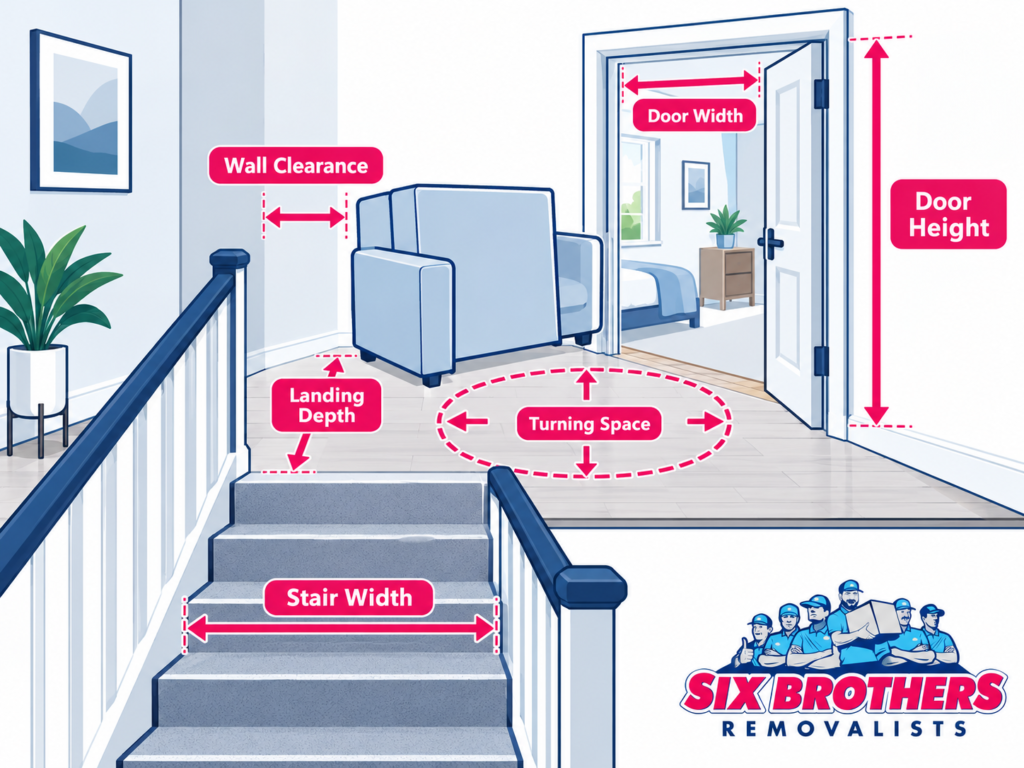
Measure Stair Widths and Landings
Measure the narrowest staircase opening and each turning landing. Include railings, ceiling slopes and the angle through each turn. A sofa can fit the stairs but fail on the landing.
Share measurements with your house removalists before they quote. For a deeper local guide, read multi-storey house moves.
Check Doorway and Hallway Clearance
Measure doorway openings with doors fully open. Note hinges, skirting boards and narrow hall corners. Photograph any fixed obstructions or delicate finishes.
Measure the item too, including handles and feet. Do not assume furniture will rotate through an opening. Ask whether professional disassembly is sensible.
Confirm Truck Parking and Driveway Access
Check driveway slopes, turning space and street signs at both addresses. Parramatta units and Inner West terraces often need different parking arrangements. Ask the relevant council about local restrictions.
Give the crew a realistic truck-to-door distance. Mention stairs between the kerb and entrance. Long carries can change crew planning and the quote.
Protect Stairs, Floors and Doorframes
Use suitable surface protection on high-traffic routes. Secure coverings so they cannot slip underfoot. Protect corners with correctly fitted guards.
Avoid loose plastic on steps. Agree on which surfaces need protection before heavy lifting starts. A small setup delay can prevent expensive repairs.
Plan Oversized Furniture Around Tight Stair Turns
Measure large furniture and plan its route before the first lift. Awkward shapes cause more trouble than their weight suggests. Small changes can make a safe carry possible.
Check Sofa and Wardrobe Clearance
Record sofa length, back height and diagonal depth. Check wardrobe dimensions after removing detachable doors or feet. Compare those measurements with the smallest landing.
A wardrobe that reaches the ground floor may still block the front door. Tell your furniture removalists about stair turns before booking.
Identify Furniture Needing Disassembly
Flag bed frames, dining tables and modular lounges for possible dismantling. Photograph fixings before taking anything apart. Keep each item’s screws and brackets together.
Some glued joints or fitted cabinets should not be dismantled. Ask the crew first. Confirm whether assembly and disassembly appear in your written quote.
Plan Specialist Lifting Equipment
Identify objects requiring a trolley, stair-climbing aid or specialist crew assessment. Heavy cabinets, pianos and bulky appliances deserve an early review. Equipment must suit the actual stairs.
Never improvise balcony lifting or use unapproved anchor points. Discuss restricted access with the removalist company. Specialist lifting may need a different plan and quote.
Create a Floor-by-Floor Loading Staging System
Give each floor its own clear staging zone. Separate fragile, essential and heavy goods. A simple map saves repeated instructions during a busy Sydney house move.
Set Upstairs and Downstairs Staging Zones
Choose an upstairs room beside a safe carrying route. Pick a downstairs zone that does not block doors. Leave space for safe turns and rest breaks.
Keep the stairs and exits free. Do not stack boxes against handrails. Walkways should never become storage shelves.
Label Boxes by Destination Floor
Write FLOOR 1 or FLOOR 2 beside the room name. Number cartons within each room. Use the same wording at the new house.
For example, mark FLOOR 2 | BEDROOM 3 | 04. A numbered system is a map for unloading. It reduces the chance of double handling.
Mark Items for Special Handling
Label fragile glass, awkward shapes and unusually heavy cartons. Add this information to the inventory. Speak directly with the crew about unsafe or unusual items.
Use labels such as KEEP UPRIGHT or DO NOT STACK when appropriate. Labels support safe planning. They do not replace protective packing or restraints.
Coordinate Removalist Crews Across Both Floors
Assign clear roles before loading starts. A two-storey move is a team relay, not a race. The supervisor adjusts duties when stairs, loads or access change.
Assign Stair and Truck Loading Roles
Place a competent crew member at each important handover. One person coordinates loading position inside the truck. Another manages furniture movement around the stair landing.
The exact crew depends on furniture sizes and safe handling requirements. For larger homes, compare 3–4 bedroom house removalists and discuss the carrying route.
Avoid Two-Way Stair Traffic
Use a clear call-and-response system at narrow turns. Send people up only when the carry path is empty. Keep spectators out of the working zone.
This prevents stop-start collisions around landings. One awkward mirror can hold up the whole staircase. Give every large item space.
Coordinate Heavy-Furniture Handovers
Choose safe set-down points before lifting. Agree on signals for stopping and changing grip. Avoid passing heavy furniture between unsupported positions.
Use mechanical aids or extra staff where the assessment requires them. Follow SafeWork NSW guidance on hazardous manual tasks for risk-based planning. Good teamwork starts before the lift.
Rotate Stair-Carry Duties
Rotate demanding tasks and allow recovery time as the supervisor judges appropriate. Carrying cartons repeatedly upstairs causes fatigue. Fatigue can affect grip, attention and balance.
A schedule should never pressure the crew into unsafe handling. Equipment and route changes matter more than motivational speeches.
Step-by-Step Two-Storey Clearing Plan
Clear the old house in a sequence that preserves access. Start with movement routes, then clear rooms systematically. Keep one person responsible for the final check.
1. Clear the Traffic Arteries First
Remove boxes from hallways, stairs and entry doors. Secure pets away from these areas. Keep cleaning supplies and essential documents outside the moving path.
Confirm the removals truck can load without blocking pedestrian routes. Where possible, create a direct path from the house to the truck.
2. Empty the Top Floor Completely
Clear upstairs bedrooms in a defined order. Check wardrobes, under-bed drawers and linen cupboards. Keep essential bedding separate until the final load.
An upstairs room is finished only after someone checks it. Tick off the inventory instead of relying on memory. This reduces surprise return trips.
3. Clear the Ground Floor & Garage
Move through living spaces, the kitchen and the garage in sequence. Look behind doors and beneath shelving. Keep restricted or hazardous goods separate from household cartons.
Garden tools and loose equipment can change the load. Tell the supervisor before adding them. The quote should reflect all moving-day items.
4. The Final Walkthrough
Open every cupboard and check power points for forgotten chargers. Inspect the garage, balcony and laundry. Photograph empty rooms where useful.
Record meter readings and check keys before leaving. The final walk should happen while a helper can still retrieve missing items.
Balance and Secure the Removal Truck Load
Secure the load to suit the vehicle, not a simple heavy-first formula. The driver or loading professional controls load distribution. This protects road users and your belongings.
Check Truck Payload and Axle Limits
Confirm the vehicle can carry the expected weight and volume. Payload capacity differs between trucks. An apparently empty corner does not mean spare legal capacity.
The operator must consider gross mass and axle limits. These factors may change where heavy goods sit. Never insist on a fixed placement against the driver’s assessment.
Balance Weight Across Both Sides
Distribute dense pieces across suitable floor positions. Avoid placing every heavy item against one wall. Keep the load’s centre of gravity as stable as practical.
A fridge and solid-wood buffet can outweigh many cartons. Balance must also work front-to-back. The operator checks steering and braking implications.
Secure Furniture With Rated Straps
Use serviceable restraint equipment with suitable ratings. Fit protection where straps contact delicate furniture. Ensure the anchorage and restraint method suit the load.
Straps alone are not always enough for unstable items. Blocking, containment and direct restraint may be necessary. Refer to the National Heavy Vehicle Regulator’s load restraint guidance.
Prevent Load Movement During Transit
Fill voids using appropriate packing and restraint methods. Prevent cartons from toppling or sliding. Never treat unfastened loose items as harmless fillers.
Confirm doors close without pressure from unsecured goods. The driver conducts a final load check. The safe load is the one that stays put.
Did you know?
A neat stack is not necessarily a safe load. The truck operator must also assess axle limits, centre of gravity and suitable restraint methods.
Reverse-Plan Unloading at the New Two-Storey Home
Plan the new-home layout before the truck doors open. Put a floor map near the entrance. The aim is to carry each item once to its final room.
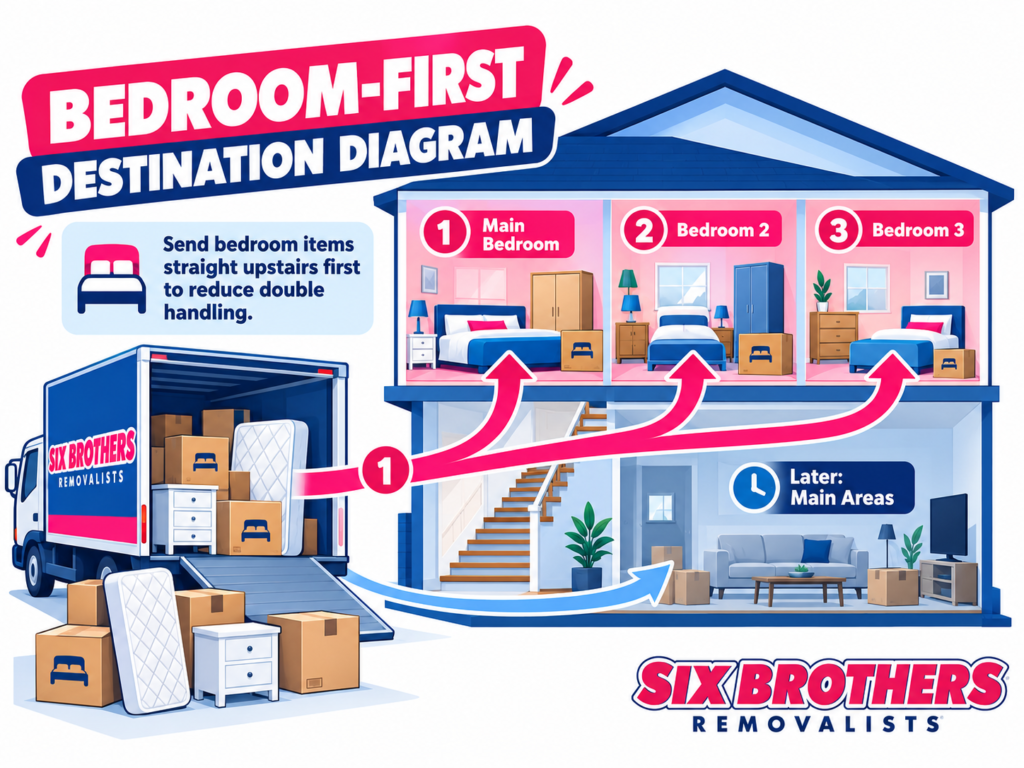
Prioritise Upper-Floor Furniture Placement
Identify bed frames, mattresses and large wardrobes needed upstairs. Ask the supervisor when those pieces can safely come off the truck. Check stair clearance again.
Set up essential bedrooms first when practical. That first-night plan matters for families with children. Do not compromise load restraint merely to unload faster.
Direct Boxes to Their Destination Rooms
Use room labels and a simple floor plan at the new entrance. A helper can point each team member upstairs or downstairs. Avoid building piles in the hallway.
Mark any room with delicate floors or doorframes. If the team cannot place an item safely, agree on a temporary spot immediately.
Avoid Double Handling Between Floors
Carry each carton directly to the correct floor whenever possible. Repeated stair trips waste energy and time. Correct labels make a big difference.
Check the inventory as rooms fill. Keep an access lane open to bathrooms and bedrooms. Finish with furniture placement and a shared walkthrough.
How Stairs, Crew Size and Loading Time Affect Moving Costs?
Stairs, crew size and access can increase the time and resources required. Two Sydney homes with equal bedrooms may need different quotes. Compare the full scope, not just the hourly rate.
A narrow staircase may require extra crew members or dismantling time. Long truck carries and difficult parking can add labour. Larger loads may need a different removals truck.
To estimate furniture volume before requesting a price, use the home moving calculator. Share photos of tight turns and tell the company about both floors.
For a written plan, ask Six Brothers Removalists about the crew, truck and handling method. You can call 1300 764 372 or email info@sixbrothersremovalist.com.au.
FAQs
How long do removalists take?
A two-storey move has no reliable universal duration. Inventory, travel and access set the timetable. The schedule above is illustrative, not a guarantee.
Do removalists disassemble furniture?
Some providers offer it, depending on the booking and item. Confirm included work and exclusions in writing before moving day.
Do stairs increase house removal costs?
They can add labour and carrying time. The impact depends on item weight, route design and crew requirements.
Should upstairs boxes go onto the truck first?
Not automatically. Pack by stability and restraint needs. Plan unloading separately, without compromising safety.
What if a sofa cannot turn on the stairs?
Stop the carry. Recheck measurements and assess safe disassembly or specialist alternatives.
How many removalists should handle a two-storey house?
The safest crew depends on furniture, stairs and access. Request a property-specific assessment.
Should fragile cartons be loaded last?
Not as a blanket rule. They need protection, stable support and suitable restraint.
What details make a moving quote more accurate?
Supply an inventory, floor plans, parking details and photographs of tight spaces.
A thoughtful loading order is a strong starting point. Access checks and safe securing complete the plan. If you are comparing Sydney house removalists, request a quote with your full inventory.