


Table of Contents
Picture this. Your whole life sits packed in a truck. It left Melbourne yesterday. Now it’s idling two streets from your new Sydney home. And it just can’t get any closer.
That’s a gut-drop moment. You didn’t plan for it. Nobody warned you the street was too tight. Suddenly the move you budgeted feels like it’s slipping away from you.
Here’s the thing, though. Street access trouble is common across Sydney. Old suburbs were never built for big rigs. Terraces, laneways, and low wires all get in the way.
So what happens next? Do you pay more? Wait longer? Watch your sofa get carried a block by hand? Deep breath. Every access problem has a fix. This guide walks you through the lot. What blocks a truck. What it costs. And how to dodge the whole mess before moving day.
Common Sydney Street Access Problems for Interstate Removalist Trucks
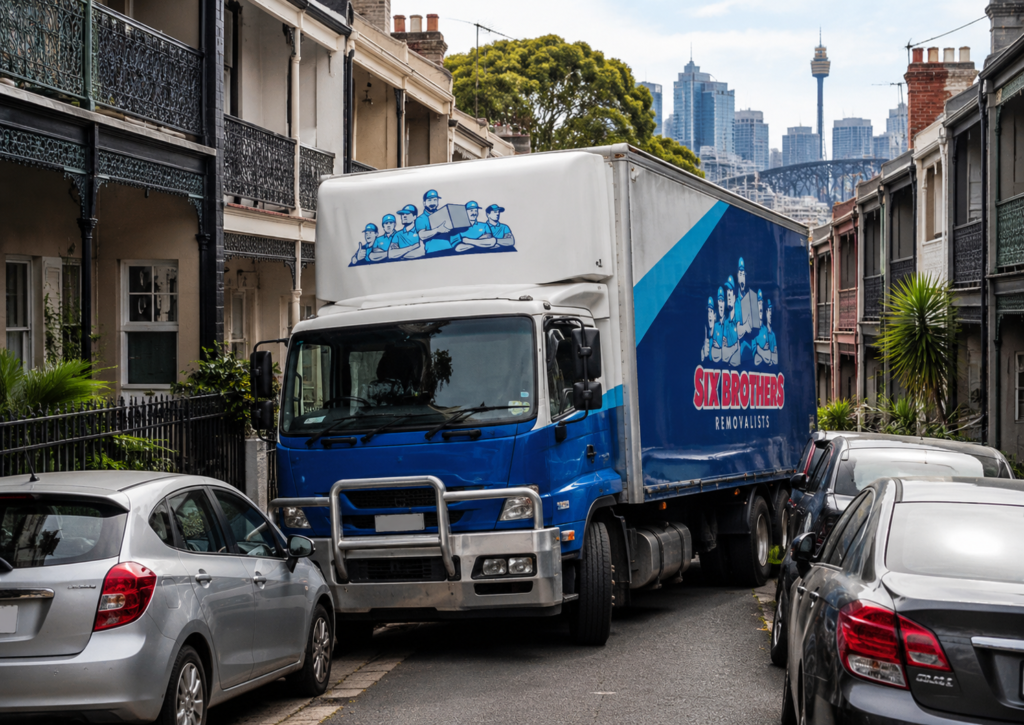
A big interstate truck is like a whale in a fish tank. It needs room to breathe. Sydney’s older streets rarely give it that room.
Most access dramas come down to width, height, and turning space. Let’s break down the usual suspects. Spot yours early and you save yourself a headache.
Why does this matter for interstate moves in particular? Because interstate trucks are big. They’re built for long hauls and heavy loads. That size is great on the highway and awkward on a narrow street.
Narrow terrace streets
Think Balmain, Newtown, or Paddington. The terraces are gorgeous. The streets in front of them are not truck-friendly. Cars park both sides. That leaves a slim lane down the middle. A full-size furniture truck simply can’t squeeze through safely.
One-way streets
One-way streets force the driver into a fixed approach. If the loading side sits on the wrong end, that’s a problem. The truck may need to loop the block again and again. Each loop burns time. And time on a move usually means money.
Tight turning points
Some corners are just too sharp for a long trailer. A rigid truck needs a wide arc to swing around. Get it wrong and the truck clips a fence or a parked car. So a smart driver won’t even risk the turn.
Cul-de-sacs
Dead-end streets look quiet and easy. They’re often the opposite for a truck. There’s nowhere simple to turn around. The driver may have to reverse a long way out. That’s slow, risky, and stressful for everyone watching.
Low trees and wires
Always look up, not just around. Low branches and power lines catch out plenty of movers. A tall truck can snag a wire or scrape a limb. That halts the job on the spot. Nobody’s unloading under a live cable.
Steep driveways
A steep driveway seems handy. Park up top, carry down short, right? Not quite. Heavy trucks can bottom out on a sharp slope. They can also lose grip in the wet. Safety wins, so the truck stays on the street.

Apartment, Strata, and Loading Dock Access Problems in Sydney
Houses have their own headaches. Apartments bring a whole new set. High-rise moves in Sydney come with rules, docks, and locked doors. Good interstate removalists plan for these before they roll in. Skip the planning and the truck waits outside while the clock ticks.
Loading dock height
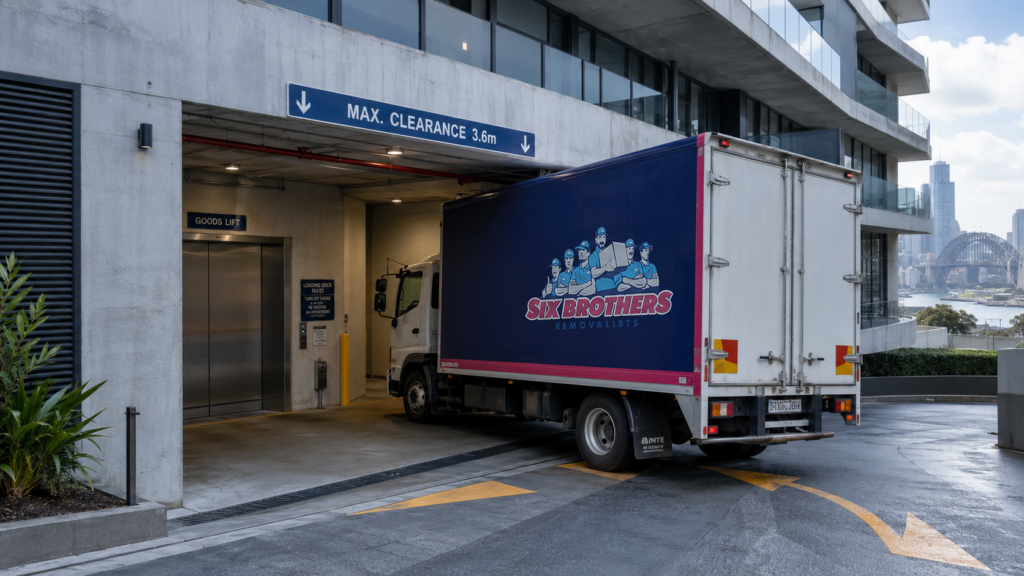
Many buildings have a covered loading dock. Sounds perfect. But each dock has a height limit. A tall interstate truck may not fit under the beam. Then the crew unloads on the street instead. That adds carry time.
Basement clearance
Some blocks send trucks into a basement bay. The clearance signs matter here. Ignore them and you dent the roof. Big rigs almost never fit a basement. So the crew parks up top and hauls gear down by lift.
Lift booking
Most towers make you book the goods lift. You get a set window, not the whole day. Miss the slot and another resident grabs it. Then your move stalls. Always lock the lift booking in early.
Building time limits
Plenty of Sydney buildings only allow moves in set hours. Some ban weekend moves entirely. Run past your window and management can stop the job. That’s a real risk for a long interstate delivery.
Concierge approval
A concierge may need paperwork before the truck arrives. Insurance details. A move-in form. Sometimes a bond. No approval, no entry. So sort this with the building days ahead, not on the morning of.
Shared driveway access
Some units share a narrow driveway with neighbours. Block it and you upset the whole block. A parked neighbour’s car can freeze the truck out. A quick chat beforehand keeps the peace.
How Poor Street Access Affects Your Interstate Moving Quote
Here’s where it hits the wallet. Access shapes your price more than most people expect. Movers price the job on effort, not just distance. A truck that parks at your door is quick to load. A truck stuck a block away is slow and costly. That gap shows up on your bill.
Access can push a quote up in a few ways. More crew hours. A shuttle vehicle. A parking permit. Sometimes a long carry charge on top. This is exactly why honest quoting matters. A vague quote hides these costs until the day. That’s how people get stung with extra charges when moving interstate they never saw coming.
Good movers flag access issues upfront. They ask about your street. They check the map. Want to see how a fair estimate is built? Our moving home calculator gives you a clear starting figure in minutes.
It also pays to think about both ends of the trip. Your pickup street might be easy. Your new Sydney street might be a nightmare. Access at either end can move the price.
And remember, distance is only one piece. Two moves over the same route can cost very different amounts. The one with the tight street and no parking will always run higher.
Did you know?
Access-related add-ons are one of the most common surprise costs on interstate moves. A shuttle, permit, or long carry can each add real dollars. Yet most of these are fully avoidable with one honest phone call before booking.
When a Smaller Removalist Truck Can Avoid Street Access Issues
Bigger isn’t always better. Sometimes the fix is simply a smaller truck. It’s the difference between forcing a key and using the right one. A smaller rig turns tighter. It slides down narrow lanes. It ducks under lower branches. For a snug Sydney street, that’s gold.
The catch? A smaller truck holds less. So a big house may need two trips or two trucks. That can lift the cost.
For interstate work, many movers solve this cleverly. They run a large truck on the highway leg. Then a smaller shuttle handles the tight final street. A smaller truck also handles inner-city buildings better. It slips into loading zones the big rig can’t touch. That saves carry time at both ends.
Choosing the right vehicle is half the battle won. Our guide on picking the right-sized truck shows how the sums actually work. Match the truck to the street and most access dramas vanish.
Using a Shuttle or Ferry Service When the Main Truck Cannot Fit
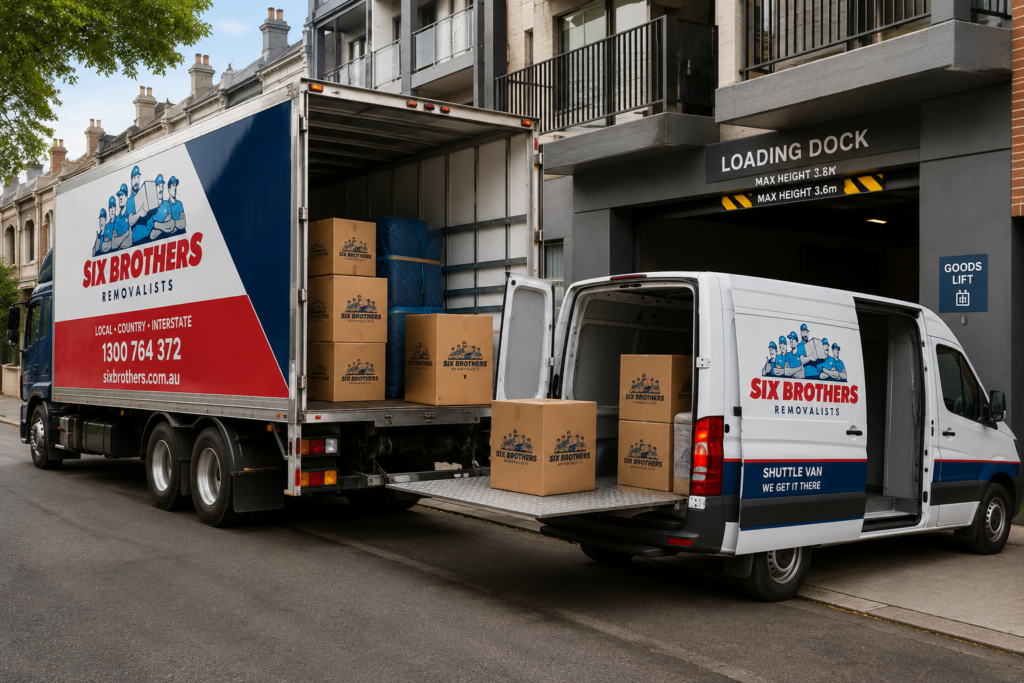
When the main truck can’t reach your door, a shuttle steps in. It’s a smart workaround, not a failure. Think of it as a relay race for your furniture.
The Fix
The big interstate truck parks somewhere legal and safe. That might be a wide road nearby. Or a car park with room to move. Then a smaller shuttle van does the short runs. It ferries your gear from the truck to your door. Back and forth until the job’s done.
The Process
The crew unloads the big truck onto the shuttle. The shuttle drives the tight last stretch. They unload it at your place, then repeat. It takes longer than a single unload. But it beats a truck stuck out on the main road. Your stuff still gets home.
The Cost
A shuttle adds cost because it adds labour and a second vehicle. The charge depends on distance and load size. Ask for it in writing before the day.
Using a Long Carry When the Truck Cannot Park Close Enough
Sometimes the truck fits the street but can’t park near you. That’s when a long carry kicks in. The crew walks your gear a longer way by hand.
The Rule
Most movers give you a set carry distance for free. Park within that and there’s no charge. Go past it and the extra metres get billed. The rule protects the crew’s time and backs. Carrying a fridge fifty metres is real, hard work. So the charge is fair when it applies.
The Cost
Long carry usually costs by the metre or by the extra time. A short overrun is cheap. A very long carry adds up fast. Ask your mover where the free carry ends. Then you’ll know before the truck even shows up. No nasty maths on the day.
Sydney Parking Permits for Interstate Removalist Trucks
Parking is a blood sport in Sydney. For a big truck it’s even tougher. Clearways and no-stopping zones make legal parking hard to find. In many inner suburbs you’ll need a permit to hold a spot. That lets the truck park close and load in peace. No permit can mean a fine or no space at all.
Permits come from your local council, not the mover. Rules and fees change from council to council. You can start with the City of Sydney council parking permit pages. They show how it works in the CBD zone.
Apply early. Most councils want several business days’ notice. Leave it late and you may miss out. A good crew serving removalists in Sydney will tell you if your street needs one. They know which suburbs are strict and which are simple.
A permit does more than dodge a fine. It reserves the spot right at your door. That cuts carry time and speeds the whole job up.
One more thing catches people out. The permit is usually your job to arrange, not the mover’s. Some crews help with the form, but the responsibility sits with you.
Delivery Delays Caused by Street Access Problems
Access problems don’t just cost money. They cost time too. And on an interstate move, time can spiral. Say the truck can’t reach your door. The crew sets up a shuttle. That eats an hour or two you didn’t plan for.
Now stack on a lift booking you missed. Or a permit you forgot. Small delays pile up into a lost afternoon. Worse, interstate trucks often run tight routes. Yours might share a load with other families. A big delay at your stop can bump everyone’s timing.
Delays also drain your energy on an already long day. You’re tired. The kids are cranky. The last thing you need is a truck circling the block.
This is why access planning matters so much. The smoothest moves aren’t lucky. They’re planned. That’s the whole point of a proper quote and a site check.
Short-Term Storage When Delivery Access Fails
Sometimes access fails on the day itself. A promised permit falls through. A lift breaks down. A neighbour blocks the drive. When that happens, storage saves the day. The crew takes your gear to a secure depot. It waits there until access clears.
Storage costs by the day or the week. It’s not free, but it beats a truck with nowhere to unload. Your belongings stay safe and dry. Storage also buys you breathing room on settlement. Furniture sometimes arrives before you get the keys. A depot holds it until your place is ready.
Ask your mover if short-term storage is on offer. A full-service crew usually has a depot ready. It’s a handy safety net for tricky sites.
Damage and Safety Risks When Removalist Access Is Poor
Tight access isn’t just slow. It’s risky. Cramped space and long carries raise the odds of damage. So let’s name the hazards.
This is a big reason to use trained, insured movers for hard sites. A DIY crew of mates means well. But they lack the gear and cover when things get tight.
Narrow path damage
A snug path leaves no room for error. A wide wardrobe can graze the wall. Corners take the worst hits. Skilled movers pad and angle everything. Still, the tighter the path, the higher the risk to your gear.
Stair carry risks
Stairs plus heavy furniture is a classic danger combo. One slip can hurt a mover and wreck an item. Steep or narrow stairs make it worse. This is where trained crews really earn their keep.
Wet weather risks
Rain turns a driveway into a slide. It also makes floors and ramps slick. Grip drops right when you need it most. A good crew adjusts in the wet. They slow down and protect the load. Safety beats speed every time.
Heavy item handling
Fridges, pianos, and lounges are brutal to carry far. Add a tight bend and the danger climbs. Proper gear and technique matter here. It’s why moving heavy pieces is a job for pros, not mates with a ute.
Public footpath hazards
Long carries often cross public footpaths. Uneven pavers and gutters trip people up. Passers-by add to the risk. Crews cone off the zone and stay alert. It keeps your gear and the public safe during the haul.
Who Pays Extra Access Charges When the Truck Cannot Reach Your Property?
Here’s the question everyone asks. If the truck can’t reach the door, who foots the bill? The short answer: usually you.
Access costs like shuttles, permits, and long carries fall to the customer. That’s standard across the industry. The mover supplies the labour and gear. You cover the site’s quirks.
Think of it like a taxi meter. The base fare gets you moving. Detours and extra stops add to the tab. Access hurdles work the same way on a move.
But there’s a fair way and an unfair way to handle it. The fair way is upfront disclosure. The unfair way is a surprise fee on the day.
This is where trust separates the good movers from the cowboys. An honest crew tells you the risks before you book. They put likely add-ons in the quote, not in the fine print.
Reading the quote closely helps too. Knowing what’s included in an interstate moving quote stops nasty shocks. If a mover won’t spell out access costs, that’s your cue to walk.
Choosing an AFRA accredited removalist adds another layer of safety. These members follow a code of conduct and clear paperwork. It’s one simple way to sort the pros from the chancers.
Proactive Steps to Prevent Street Access Problems Before Moving Day
Enough about the risks. Let’s talk prevention. As the old saying goes, a stitch in time saves nine. A little prep now saves a lot of stress later. These six steps take an afternoon at most. They can save you real money and a world of chaos. Work through them one by one.
Scope the Street Width
Go stand on your new street. Look at how much room a truck really has. Note where cars park and how tight it feels.
Warn the Company
Tell your mover everything you spotted. Narrow lane, low wires, steep drive, the lot. The more they know, the better they plan.
Budget for Extra Costs
If access looks tricky, set aside a buffer. A shuttle or permit may be needed. A small budget cushion keeps surprises calm.
Use Google Maps
Street View is your best free scout. Check the approach, the corners, and the parking. It shows problems before the truck does.
Organise a Council Parking Permit
If your street needs one, apply now. Don’t wait for moving week. Councils need lead time, and slots fill up fast.
Talk to Your Neighbours
A quick chat works wonders. Ask neighbours to leave the loading zone clear. Most are happy to help a new local out.
How Six Brothers Handles Tricky Sydney Streets
Tight streets don’t scare us. We’ve moved families into terraces, high-rises, and dead-end lanes across the city. We plan for access, not around it. Before we quote, we ask about your street. We check the map. We flag any shuttle, permit, or long carry you might need. No surprises on the day.
Doing a long-haul run? Our interstate backloading option can trim the cost while still handling your tight street with care. You get a fair price and a plan that fits your address.
That upfront honesty is what people remember. Moving is stressful enough. With Six Brothers Removalists, the access side is handled long before the truck arrives.
Don’t Let a Tight Street Derail Your Move
A truck stuck two streets away is a rotten start to a new chapter. But it’s almost always avoidable. Access problems are predictable, and predictable problems can be planned for.
Scope your street. Warn your mover. Sort your permit. Do those three things and most access dramas simply disappear. The rest comes down to hiring a crew that plans, not one that improvises.
That’s the whole idea behind an upfront, no-surprises quote. You deserve to know the real cost before the truck rolls in. And you deserve movers who treat your street as a puzzle to solve. Not a problem to bill.
So don’t leave access to chance. A five-minute street check today can save you hours and dollars on moving day. It’s the cheapest insurance you’ll ever buy for a move.
Ready to move without the guesswork? Get a free, honest quote from Six Brothers Removalists today. Call 1300 764 372, email info@sixbrothersremovalist.com.au, or request your quote online. We’ll check your access and give you a fair price, no strings attached.
Frequently Asked Questions
What happens if the removalist truck can’t fit down my street?
Your mover switches to a workaround. Usually that’s a smaller shuttle van or a long carry. The big truck parks nearby and your gear is ferried the last stretch. It takes longer but your move still goes ahead.
Do I have to pay extra if the truck can’t park close to my house?
Most likely, yes. Long carry, shuttle, and permit costs fall to the customer. A good crew tells you upfront and puts it in the quote. Surprise fees on the day are a red flag.
What is a removalist call-out fee?
It’s a base charge to get the truck and crew to your job. It covers travel and set-up before any lifting starts. On interstate work it’s often built into the total quote. Always ask what your call-out covers.
How much do interstate removalists cost?
It depends on distance, home size, and access. A small load costs far less than a full house. Access add-ons like shuttles and permits can lift the total. The best move is to get a clear, itemised quote.
Can a smaller truck solve access problems?
Often, yes. A smaller truck turns tighter and fits narrow streets. The trade-off is less space, so a big home may need two trips. Many movers run a big truck plus a small shuttle to get the best of both.
Do I need a council parking permit for a removalist truck in Sydney?
You might, especially in inner suburbs with clearways or no-stopping zones. Permits come from your local council, not the mover. Apply five to ten business days ahead. Your mover can tell you if your street needs one.
How do I check if my street has access problems before moving day?
Start with Google Street View to scan the approach and corners. Then walk the street and note parking and low wires. Finally, share what you find with your mover. Early checks stop most day-of surprises.