


Alright, let’s talk about something that makes a lot of people squirm. Tipping. Specifically, is a 10% tip disrespectful? Whether you’re sitting at a restaurant table or watching movers haul your couch up three flights of stairs, this question keeps popping up.
Here’s the thing. The answer isn’t one size fits all. It depends on where you are, what service you got, and honestly, what you can afford to tip. In places like America, tipping 10 is often seen as low. But in Australia? The whole tipping culture works differently.
Let’s break this down. No fluff. No guilt trips. Just real talk about money, service, and doing right by the people who work hard for you.

Tipping Removalists in Sydney Explained
Moving house in Sydney is already stressful enough. You’ve got your change of address checklist Australia to deal with. You’re figuring out the cheapest way to move interstate Australia. And now you’re wondering if you should tip your movers too.
How Local Tipping Culture Actually Works
Australia doesn’t have the same tipping norm as the United States. Here, every worker earns a fair minimum wage. The government requires employers to pay staff properly. So tipping isn’t baked into the social contract the way it is in America.
That said, Australians aren’t cold about it. You’ll see someone leave a few dollar coins after a good meal. Or round up the bill at a cafe. It’s casual. It’s optional. Nobody’s going to give you a dirty look if you don’t tip your server at a restaurant.
It’s Not Mandatory Here
Let’s be clear. Tipping movers in Sydney is not required. There’s no standard tip percentage that people expect. Your removalists already get paid a proper wage by their employer. They don’t survive on tips the way a waiter in Texas might.
So if you choose not to tip? That’s perfectly fine. No one’s going to think you’re wrong or cheap.
It’s Appreciation Based
When you do tip movers in Sydney, it’s a genuine bonus. It says, “Hey, you did a great job and I noticed.” That’s it. It’s personal. It’s not about meeting some social standard. It’s about saying thank you with a bit of extra money when the service genuinely impressed you.
Think of it like this. Tipping in Australia is the cherry on top. Not the cake itself.
What Affects Your Moving Tip Decision
So what actually makes you reach into your wallet? A few things tend to matter.
The difficulty of the move. Did your movers carry a piano up a narrow staircase? That’s harder than rolling boxes across a flat driveway. The harder the job, the more a tip makes sense.
How they treated your stuff. If nothing got scratched and everything arrived safe, that’s better service than the bare minimum. That deserves recognition.
The weather. Moving in 40 degree Sydney heat? Those workers earn every cent. Hauling furniture through rain? Same deal.
Their attitude. Were they happy to help? Professional? Did they show up on time? A good impression goes a long way.
Your budget. This is the one people don’t talk about enough. If you just spent thousands on a move, nobody expects you to spend more than you can handle. You shouldn’t feel bad about it either.
As the old saying goes around here, “you don’t miss the water till the well runs dry.” Value good service when you find it.

When a 10% Tip Is Acceptable in Sydney
Here’s where it gets practical. A 10% tip on your moving bill is absolutely fine in most Sydney situations. Remember, tipping isn’t the norm here. So 10 percent is already generous by local standards.
For a quick studio apartment move that took a couple of hours? 10% works great. For a small 1 bedroom place with no tricky stairs or fragile items? Totally acceptable.
If the movers did a standard job without any major issues, 10% shows you appreciate their work. It’s not low in this context. Not even close.
Honestly? A lot of people in Sydney tip nothing at all. So if you’re tipping 10 percent, you’re already ahead of the game.
When a 10% Tip May Feel Too Low in Sydney
Now, there are times when 10 might not cut it. Not because anyone expects more. But because the effort genuinely deserves more.
Complex moves. If your crew spent 8 hours moving a 4-5 bedroom house with heavy furniture, tight corners, and three flights of stairs, 10% of the total bill might feel like a lack of recognition for their hard work.
Exceptional service. Did they wrap every item perfectly? Reassemble furniture without being asked? Handle your grandmother’s antique dresser like it was their own? That kind of care is hard to find.
Long distance hauls. Interstate moves from Sydney to Melbourne or Sydney to Brisbane take a full day or more. The physical toll on the movers is higher.
Terrible conditions. Pouring rain. Scorching heat. Tight parking that made everything take twice as long. When movers push through bad conditions without complaint, they deserve more than the minimum.
In these cases, bumping your tip to 15 or even 20 percent makes sense. Or better yet, skip percentages altogether.
A Better Way to Tip Movers Than Using Percentages
Percentages work great at a restaurant. You check the bill, move the decimal, and figure out 15-20 percent. Simple.
But moving costs vary wildly. A percentage of a $500 move looks very different from a percentage of a $5,000 move. So here are three smarter approaches.
The Per Mover System
This one’s popular and it’s fair. You tip each mover directly. Think $20 to $50 per person depending on how tough the job was. This way, every worker gets recognised. Not just the team leader.
It’s direct. It’s personal. And the money goes straight to the person who earned it.
The Hourly Tip Model
Some people prefer to tip based on how long the movers worked. Maybe $5 to $10 per hour per mover. A crew of three working six hours? That’s somewhere between $90 and $180 total.
This model rewards effort over time. It also makes sense for those marathon moves that just keep going.
The Flat Rate Option
Don’t want to do math? Pick a flat amount. $50 for a small move. $100 for a medium one. $150 or more for a big job. Split it among the crew.
Flat rate keeps it simple. No calculators. No awkward percentage debates. Just a lump sum that says, “Thanks for your hard work.”

Should You Tip Movers on Every Move?
Short answer? No. Not every move requires a tip. Let’s get specific.
When Tipping Makes Sense
You should consider tipping when movers go above and beyond. When they handle fragile items with extra care. When they work through bad weather. When they’re polite, efficient, and treat your home with respect.
If you’re a customer who values good service, recognising it with a tip is a nice thing to do. It doesn’t have to be a huge amount. Even a small gesture matters.
If you use the same removalists regularly, tipping builds a relationship. Next time you call, they might prioritise your booking or take extra care.
When It’s Not Needed
If the service was just okay, you’re not obligated. If movers showed up late, were careless with your stuff, or gave bad service, don’t feel guilty about skipping the tip. A tip isn’t a charge on your bill. It’s a reward.
And honestly? If your budget is tight after paying for the move, packing supplies, and all the other costs, that’s totally understandable. You can show appreciation in other ways.
Smart Alternatives to Tipping Removalists
Money isn’t the only way to say thanks. Here are some options that movers seriously appreciate.
Provide Refreshments
This one’s huge. Movers work hard physically. A cold drink on a hot day goes a long way. Stock up on water bottles, maybe some soft drinks, and have food ready. Sandwiches, pizza, fruit. Even snacks from the shop nearby.
You’d be surprised how much a simple “Hey, want a drink?” brightens someone’s day. It shows you see them as people, not just workers hauling your stuff.
Leave Positive Reviews
In today’s world, a good online review is worth its weight in gold for a business. If your movers did a great job, take five minutes and leave a review. Mention specific names if you can.
This helps the employee stand out. It helps the company get more customers. And it costs you zero dollars.
Offer Repeat Business
If you liked your movers, use them again. Recommend them to friends. Word of mouth is the best marketing any business can get. When you regularly choose the same team, you’re supporting their livelihood in a way that lasts longer than any single tip.
Is a 10% Tip Considered Low in the United States?
Let’s shift gears and talk about tipping in the US. Because if you’ve ever eaten out in America, you know it’s a whole different world.
The Standard in American Restaurants
In the United States, the standard tip at a restaurant is typically 15-20 percent. That’s the norm. Anything below 15 is generally considered low. And 10 percent? A lot of people would call that inappropriate for full table service.
Why so high? Because the system is built on tipping. Many servers earn a base wage of just $2.13 per hour. That’s the federal tipped minimum wage. Their employer isn’t required to pay the full minimum wage because tips are supposed to make up the difference.
How Servers Perceive a 10% Tip
Tipping servers in America isn’t just polite. It’s how they pay rent. For a server in America, a 10 percent tip can feel like a slap. It sends the impression that something went wrong. Even if the food was fine and the service was decent, a tipper leaving 10 percent is seen as socially sending a message.
Some servers will wonder what they did wrong. Others will just feel like they wasted their time at your table. It’s not fair, but it’s the reality of tipping culture in America.
When 10% Is Still Acceptable in the US
There are a few exceptions. For takeout orders, 10 percent is common and accepted. Nobody expects a full tip when no server waited on you. At a counter service place or coffee shop, 10 is fine too.
Also, for bad service that was truly terrible, some people leave 10 as a way to show they know tipping is expected but the experience didn’t deserve more. Though plenty of folks would argue you should still leave 15 and just never come back.
Is a 10% Tip a Common Minimum in Canada?
Canada sits somewhere between Australia and America on the tipping spectrum.
The Range Canadians Typically Tip
In Canada, 15 to 20 percent is the standard at restaurants. Ten percent is seen as the absolute floor. You might leave 10 for mediocre service. But anything less and you’re making a statement.
Canadian servers earn higher base wages than American ones. But tipping is still deeply embedded in the culture. Most Canadians tip without thinking about it. It’s just what you do.
The cost of living in Canadian cities like Toronto and Vancouver is high. Workers in the food and service industry count on tips to survive. So while 10 percent won’t get you dirty looks, it won’t win you any friends either.
How 10% Tipping Compares in Australia and Other Countries
Tipping norms vary wildly around the globe. What’s considered generous in one place is barely minimum in another.
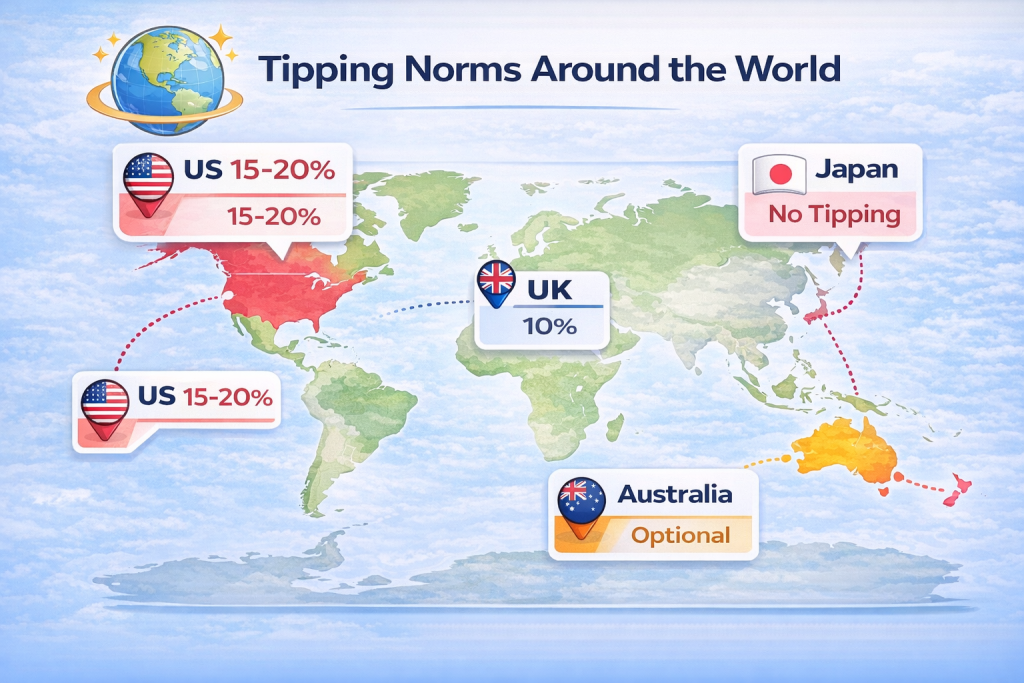
United Kingdom and Europe
In the UK, tipping around 10 percent is perfectly standard at restaurants. Some places add a service charge to the bill automatically. If that’s the case, you don’t need to tip on top of it.
Across Europe, norms vary. In places like France and Italy, rounding up the bill is common. Leaving a few euros on the table is appreciated. But 10 percent would be considered generous in most European restaurants.
Australia’s Approach
As we covered, Australia doesn’t require tipping. Workers here earn a fair wage. The minimum wage in Australia is among the highest in the world. So when you eat at a restaurant or hire removalists, tips are a bonus. Not an expectation.
For removalists specifically, any tip at all puts a smile on their face. Whether it’s $20 per person or a percentage of the bill, it’s welcome but never demanded.
It’s a personal choice here. Nobody judges you either way. That’s what makes the Australian system feel so relaxed compared to places like the US where there’s real social pressure.
Japan
In Japan, tipping can actually be seen as rude. Seriously. Handing someone extra money implies their employer doesn’t pay them enough. It can create an awkward situation. The Japanese take pride in delivering excellent service without expecting anything extra.
If you ever visit Japan, just pay what’s on the check. Don’t leave money on the table. Don’t try to hand cash to your waiter. They’ll likely chase you down thinking you forgot your change.
How’s that for a different perspective?
Key Things to Consider Before Giving a 10% Tip
Before you decide what to leave, think about where you are and what the situation calls for.
US Standards
In America, 10 percent is low for sit-down dining. The standard is 15-20 percent. Servers rely on tips because their base pay is often just $2.13 an hour. If you can’t afford to tip at least 15, many Americans would say you shouldn’t eat out. Harsh? Maybe. But that’s how the system works there.
The whole setup puts the burden on the customer rather than the employer. Workers in food service often struggle to survive on their base wage alone. Tips aren’t a nice extra. They’re essential income. That’s why leaving 10 percent feels like an insult to many servers.
A lot of people think this system is broken. And they might be right. But until it changes, servers still need those tips to pay their bills.
Exceptions That Make Sense
Takeout, counter service, and quick serve restaurants are different. Ten percent or even nothing is socially acceptable. You didn’t sit at a table. Nobody waited on you. The rules are different.
For moving services, especially in places like Australia, 10 percent is generous. Context matters more than a fixed number.
Alternative Perspectives on Tipping
Some people argue the whole tipping system is wrong. They believe employers should pay employees a livable wage. They think customers shouldn’t have to make up the difference between what workers earn and what they need to survive.
There’s a growing movement to reduce reliance on tipping. Some restaurants in the US have tried no-tip models where they charge higher prices and pay staff more. Results have been mixed.
Does a percentage-based system really make sense? Or should we value service workers enough to pay them fairly from the start?
The debate gets heated. But one thing’s clear. Better service should be rewarded regardless of which system you believe in. Whether that reward comes through tips or higher wages is a bigger question for society to figure out.
How Other Regions Handle It
In the United Kingdom, 10 is standard. In Australia, any tip is a bonus. In Japan, tipping is wrong to do. Each place has its own rules based on local wage structures and social expectations.
Context Always Matters
A 10 percent tip at a high-end restaurant in New York sends a very different message than a 10 percent tip to your Sydney removalists. The place, the service, the local culture. All of it shapes what’s appropriate.
Before you tip, ask yourself two questions. Did this person go out of their way for me? And what does tipping look like in this specific place?
Wrapping It Up
So is a 10 percent tip disrespectful? It depends.
In Australia, especially for removalists, 10 percent is kind and welcome. You’re already going beyond what most people do. In the United States, it might leave a bad impression with your server who depends on tips to pay rent.
The truth is, tipping isn’t about a magic number. It’s about recognising good work. A waiter who made your dinner special. A mover who treated your belongings like gold. These people deserve to know you noticed.
If you’re moving house in Sydney, spend your energy on the things that matter. Figure out how to pack kitchen for moving. Download a moving house checklist Australia PDF. Think about how early should you start packing for a move. Those things will save you real stress.
Don’t overthink the tip. If the service was great, reward it however you can. If you can’t afford a big tip, a cold drink and a kind word still go a long way.
And when moving day comes, if your removalists from Six Brothers Removalists do a brilliant job, show them some love. Whether that’s cash, cold drinks, or a five star review. They’ll remember it.
At the end of the day, what matters most is treating people well. Whether you tip 10 percent, 20 percent, or nothing at all, being respectful and grateful costs nothing. That’s something we could all do more of.
Need help with your next move? Contact Six Brothers Removalists at 1300 764 372 or email info@sixbrothersremovalist.com.au. Visit us at Suite 1 Level 5, 58/60 Macquarie St, Parramatta NSW 2150, Australia.