

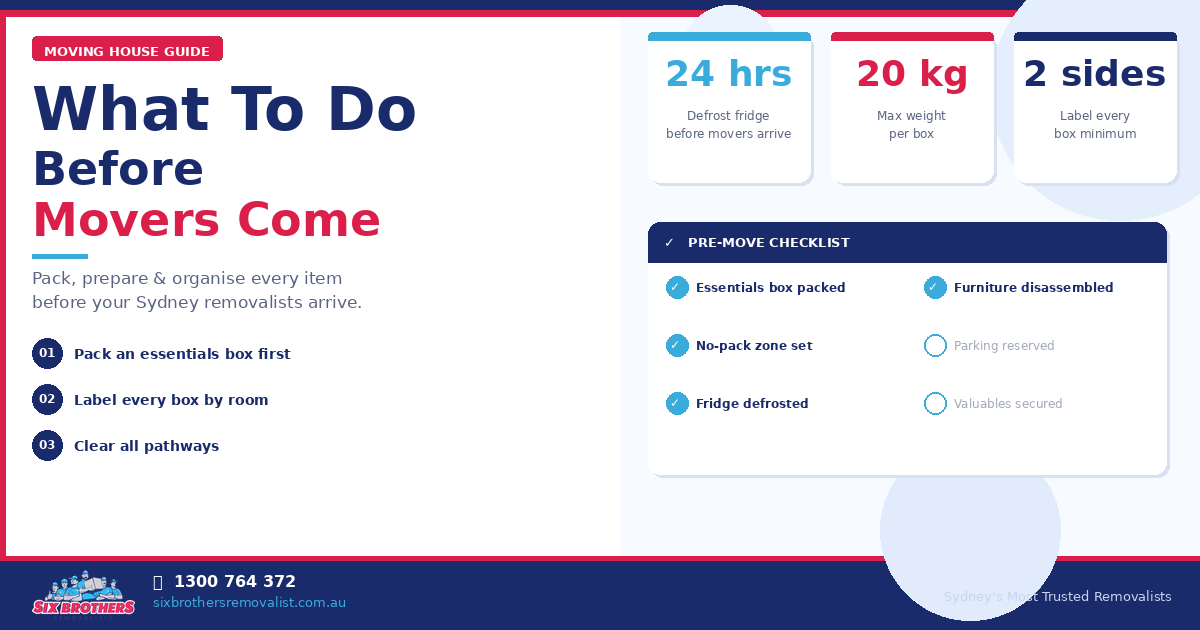
Knowing what to do before movers come is the difference between a smooth move and a chaotic one. Moving house in Sydney feels like running a marathon you didn’t train for. One day you’re scrolling listings. The next you’re drowning in cardboard boxes and bubble wrap. But here’s the thing. A little preparation goes a long way.
Whether you hire professional packers or handle it yourself, the hours before movers arrive matter most. This is when small steps save time, reduce stress, and keep your possessions safe.
At Six Brothers Removalists, we’ve helped thousands of Sydney households move. We know what works. We know what causes damage. And we’ve seen what happens when people skip the basics.
This guide covers everything you need. From how to pack fragile items to what movers won’t transport. Think of it as your moving house checklist. Print it. Bookmark it. Share it with anyone else who’s moving.
Let’s sort out your belongings and get ready for the big day.
Sydney Moving Checklist — Preparations the Day Before Movers Arrive
The day before movers arrive is your final prep window. Don’t waste it binge-watching TV. Use it wisely. These steps make the actual move smoother for you and your mover team.
As they say in Australia, “she’ll be right” — but only if you’ve done the work the day before. Trust us on that.
Pack an “Essentials” Box
Pack one box with items you’ll need right away. Think phone chargers, toiletries, medication, snacks, and a change of clothes. Keep this box separate from the rest.
This is the box you unpack first at your new place. Label it clearly. Put your name on it. You’ll thank yourself later when you’re not digging through twenty boxes for your toothbrush.
A good idea is to throw in some basic packing supplies too. Extra tape, a marker, and a small roll of bubble wrap. You never know when you’ll need a quick fix before the truck leaves.
Establish a “No-Pack” Zone
Pick one room or corner as the “no-pack” zone. Place your essentials box, valuables, jewellery, important documents, and anything sentimental here. Tell movers this area is off-limits.
This keeps your most valuable possession items safe during the chaos. It also helps you stay organised when everything else feels messy.
Defrost and Clean Appliances
Unplug your fridge at least 24 hours before the move. Let it defrost fully. Wipe down the inside and leave the door open to air out. Clean your oven, washing machine, and any other appliance you’re taking.
Movers can’t transport a wet, leaking fridge. It causes damage to other items in the truck. Plus, a clean appliance arrives at your new home in good condition and ready to use.
Don’t forget smaller items like toasters and kettles. Unplug each cord and wrap it with tape so nothing dangles or gets tangled.
Disassemble Furniture
Take apart bed frames, tables, and shelving units in advance. This is a huge time saver. If you’re wondering “do removalists disassemble furniture” — yes, many do. But disassembly done beforehand speeds up the moving process.
Not all furniture needs to come apart. But if a piece won’t fit through doorways, break it down. The movers’ job gets easier and you also save on hourly costs. That’s useful when every minute counts.
Secure Small Parts
When you disassemble furniture, small screws and bolts scatter everywhere. Bag them up. Label each bag clearly. Tape the bag directly to the furniture piece it belongs to.
This one step saves so much frustration during unpacking. Trust me, nobody wants to hunt for a missing bolt at 10pm in a new house.
Charge Devices
Charge your phone, laptop, and tablet the night before. You’ll need them for directions, communication, and confirming details with your mover team.
Keep charger cords in your essentials box. Not in a random box buried at the bottom of the truck.
Label Boxes
Label every box on at least two sides. Write the room name and a short description. “Kitchen — plates, fragile” works better than just “kitchen stuff.”
Use colour-coded tape or stickers for each room if you want to go the extra mile. This helps movers know exactly where to place each box. It also helps when you unpack because you can tackle one room at a time.
Good labelling is like a roadmap. Without it, your move becomes a guessing game. And nobody wins at that game.
Room-by-Room Packing Plan for a Move
Don’t just throw things in boxes and hope for the best. A room by room packing checklist keeps you on track. Start with rooms you use least and finish with daily-use spaces.
Pack by Zones
Start packing the guest room, storage areas, and garage first. These hold items you don’t want to take every day. Move to bedrooms and living areas next. Pack the kitchen last because you’ll need it until moving day.
This approach keeps your household running while you prepare. You won’t be eating takeaway for a week because you packed all your pots too early.
How to pack for a house move without losing your mind? Go zone by zone. Room by room. Box by box.
Box Size Rules
Use small boxes for heavy items like books and tools. Use medium boxes for kitchen items, toys, and general household goods. Use large boxes for light, bulky things like pillows, blankets, and linens.
Here’s a handy tip. If you can’t lift the box comfortably, it’s too heavy. Repack it. Split the material into two boxes instead.
Cardboard boxes from the shops work fine. But proper moving boxes hold up better during transport. They stack cleaner in the truck too.
Fragile Packing
Wrap each fragile item individually. Use bubble wrap, packing paper, or old towels. Place heavier fragile items at the bottom. Put lighter ones on top.
Fill gaps in the box with crumpled paper or wrapping material. Nothing should shift when you shake the box gently. That’s how damage happens.
For extra protection, double-box your most delicate possessions. Place the wrapped item in a small box. Then put that box inside a larger one with padding around it.
Mark every box containing fragile items with “FRAGILE” on all sides. Professional packers do this automatically. If you’re packing yourself, don’t skip it.
Weight Limits
Keep each box under 20kg. This protects your back and your items. Heavy boxes are harder for movers to handle safely. They also increase the chance of a box giving out during handling.
Spread weight evenly. Mix heavy and light material in each box when possible. This makes the load more stable during transport.
Protect Floors, Walls & Doorways Before Movers Arrive
Your home needs protection during a move. Heavy furniture and boxes can scratch floors and ding walls faster than you’d think.
Floor Runners
Lay down floor runners or old blanket strips along the main walkways. Hardwood and tile floors scratch easily. Carpet gets dirty from boot traffic.
Runners create a clear path and keep things clean. Most good movers bring their own. But it’s a good idea to have extras on hand.
Corner Guards
Attach corner guards to door frames and wall corners. These are cheap cardboard or foam pieces that absorb impact. They protect the spots that furniture hits most often.
You can make simple corner guards from cardboard yourself. Cut, fold, and tape them into place. Five minutes of prep saves hundreds in wall repairs.
Lift Padding
If your building has a lift, check with management about lift padding. Many apartments require protection in the lift during a move. Some buildings provide it. Others expect you to bring your own.
Either way, confirm this in advance. You don’t want surprises on moving day.
Remove Hazards
Walk through your home and remove tripping hazards. Roll up rugs. Move pot plants. Clear shoe racks from hallways.
Pick up anything loose from the floor. Kids’ toys, pet bowls, extension cords — all of it. A clear path is the safest path. It reduces the chance of damage to your items and injury to anyone involved.
Prepare Your Sydney Home Before Movers Come
A prepared home means a faster move. Here’s how to set up before your mover crew shows up.
Clear Pathways
Every pathway from inside to outside should be clear. That means hallways, staircases, front yards, and driveways. Move bikes, bins, and garden tools out of the way.
The wider the path, the faster the move. Think of it like clearing a runway. Movers carrying a couch don’t have time to dodge pot plants and garden hoses.
Protect Floors
We said it already, but it deserves a repeat. Protect your floors. Lay down runners, mats, or old sheets. Focus on high-traffic areas between the main rooms and the front door.
This is especially important if you’re renting. You want your bond back.Check the NSW Fair Trading moving guide for what landlords can and can’t deduct. Floor damage from a move is common but totally avoidable with basic preparation.
Reserve Parking
In Sydney, parking is a battlefield. Reserve a spot for the moving truck as close to your entrance as possible. Check local council rules for parking permits.
If you’re moving from or to an apartment, contact building management well in advance. Most require a loading dock booking. Some charge fees. Sort this out early so there’s no stress on moving day.
If you’re curious about removalist cost Sydney, parking delays and access issues are one of the biggest factors that push the estimate higher.
Secure Valuables
Keep jewellery, cash, important documents, and sentimental items with you. Don’t pack them in the truck. These should go in your car or your “no-pack” zone.
It’s not about trust. It’s about being smart. Even the most careful relocation can have bumps. Your most valuable items are safer in your hands.
Move Logistics — Communication Before Movers Come
Good communication is like oil in an engine. Without it, things grind. Here’s what to confirm before your mover team arrives.
Confirm the Details
Call your moving company the day before. Confirm the start time, address, and any special instructions. Ask how much do removalists charge per hour if you haven’t locked in a flat rate.
Double check the truck size. Make sure it fits your inventory. If you’ve added items since the original estimate, let them know. Surprises cost money.
This is also a smart time to confirm insurance details. Ask what’s covered. Ask what’s not. Get it in writing if you can.
Plan for Kids and Pets
Moving day is chaos. Kids get bored. Pets get stressed. Both get underfoot. Arrange for a pet sitter, family member, or friend to take care of them.
If your pet is coming in the car, make sure their crate, food, and water are packed separately. Keep the pet calm and away from the action.
Same deal with kids. Pack a bag with snacks, games, and chargers. A busy kid is a happy kid on moving day. And a happy kid means less stress for everyone.
Movers’ Comfort
Offer water. Point out the bathroom. Be respectful of the people carrying your life across Sydney. A little kindness goes a long way.
Some people offer lunch or snacks. You don’t have to. But it builds rapport. And movers who feel respected often go above and beyond in their handling and care.
How to choose a removalist? The CHOICE moving house guide covers what to look for and look for one that respects your time and your home. And then show them the same respect back.
What Movers Will Handle — Services & Responsibilities
Not sure what do removalists do? Here’s a breakdown of what they handle.
Full-Service vs Basic
Full-service movers pack, load, transport, unload, and unpack. Basic service covers loading, transport, and unloading only.
If you hire a full-service team, they bring packing supplies, boxes, tape, bubble wrap, and wrapping material. They pack your entire household. This is the most hands-off experience for you.
Basic service is cheaper. But you do all the packing yourself. Pick the option that fits your budget and your energy level.
Packing Responsibility
Do removalists pack for you? Yes. If you book a full-service move, your mover team will pack everything. They bring their own material and handle each item with care.
If you choose basic, the packing responsibility falls on you. Make sure you properly wrap every item. Use the right box sizes. Seal every box with tape.
If you’re unsure about how to pack clothes for moving house, here’s a quick tip. Use wardrobe boxes for hanging clothes. Fold everything else into medium boxes with layers of tissue paper.
Disassembly Expectations
Most movers will disassemble and reassemble basic furniture. Bed frames, dining tables, and desks are standard. Complex items like wall units or custom shelves may need a specialist.
Ask in advance. Confirm disassembly expectations during your pre-move call. This avoids last-minute stress and extra fees.
Special Items Plan
Got a piano? Pool table? Antique cabinet? These need a special items plan. Discuss them with your expert mover well before moving day.
Special items often need extra wrapping, blanket padding, and careful handling. Some require separate transport. The earlier you tell your mover, the better they can prepare.
What Movers Won’t Move — Restricted Items List
There’s a list of things movers won’t load on the truck. Knowing this saves you time and avoids surprises. Here’s what to expect.
Chemicals & Flammables
Paint, solvents, cleaning chemicals, aerosol cans, and petrol are all no-go. Movers won’t transport anything flammable or hazardous. It’s a safety and insurance issue.
Dispose of these items properly before moving day. Your local council has waste drop-off points for chemicals. Don’t throw them in the regular bin.
Perishables
Perishable food can’t go in the truck. It spoils during transport and attracts pests. Clean out your fridge and freezer. Use up or donate food you can’t take.
Plan your meals for the week before the move. Use what you have. Reduce waste. Give extras to neighbours or a local food bank.
Living Things
Movers won’t transport pets or plant life. Animals and plants need specific conditions movers can’t provide in a moving truck.
Take your pet in your own car. For plants, wrap pots in plastic and transport them yourself. Some plants don’t survive moves well. Consider giving sensitive ones to friends.
Avoid Extra Moving Fees — Confirm These Details
Extra fees sneak up on people. Here’s how to prepare and avoid them.
Start Time Confirm
Confirm the exact start time the day before. A late start pushes the whole schedule. Movers often charge waiting time if they’re ready and you’re not.
Be ready 15 minutes before the scheduled arrival. Doors open. Pathways clear. Boxes ready. That’s the standard.
Address Accuracy
This sounds obvious. But wrong addresses happen more often than you’d think. Double check both the pickup and delivery address. Include unit numbers, street names, and postcodes.
If you’re going through a Sydney to Melbourne move, accuracy matters even more. Interstate moves are long. A wrong address at either end wastes hours and costs money.
Access Notes
Tell your mover about any access issues. Narrow driveways, steep stairs, low ceilings, tight hallways — mention it all. Movers need to know what they’re walking into.
Access issues affect the estimate. If you didn’t mention stairs and lifts during the quote, you might get charged extra on the day.
Stairs and Lifts
Stairs cost extra. Most movers charge per flight. If there’s a lift, confirm it’s available and booked for your move.
If you live in a walk-up building, tell your mover upfront. They’ll plan the crew size and equipment. Nobody likes carrying a fridge up four flights with no warning.
Travel Time Clarity
Long-distance moves like Sydney to Brisbane, Sydney to Adelaide, or Sydney to Canberra come with travel time charges. Confirm these in your estimate.
Even shorter moves like Sydney to Wollongong, Sydney to Gosford, Sydney to Port Macquarie, or Sydney to Orange can involve extra travel fees. Know the total cost before the truck rolls.
Interstate backloading is a smart way to reduce costs on long hauls. Ask your moving company about it. It shares truck space with another load heading the same direction. You save money. The mover fills the truck. Everyone wins.
Final Checks Before Movers Arrive
You’re almost there. These final checks make sure nothing slips through the cracks.
Confirm Time
One last call or text to confirm the arrival time. Know who’s coming. Know when they’ll be there. Have your phone charged and handy.
Check Every Room
Walk through every room. Open every cupboard and drawer. Check behind doors. Look under beds. Don’t leave anything behind.
People forget items in the weirdest spots. The top shelf in the laundry. The back of the linen closet. That random drawer in the kitchen you never use. Check them all.
Photograph Items
Take a photo of valuable or fragile items before the move. This creates a record of their condition. If anything arrives damaged, you have proof.
Photograph large furniture, electronics, and appliances from multiple angles. Store the photos on your phone or cloud. This takes five minutes and could save you a major headache later.
It’s also useful for your inventory. You can cross-check what left the old place against what arrives at the new one.
Supervise Movers
Be present during loading. Not hovering. Just available. Answer questions. Point out fragile items. Direct traffic to the right rooms.
If you can’t be there, appoint someone you trust. Someone who knows the plan. Someone who can make decisions on your behalf.
A smooth move needs one person in charge. That’s the captain of this ship. Whether it’s you or anyone else, make sure they know what to do.
You’re Ready to Move
That’s it. Your complete guide on what to do before movers come and how to prepare for removalists the right way.
Follow this moving house checklist and you’ll walk into moving day with confidence. The movers will love you. Your items will stay safe. And the whole experience will feel a lot less like chaos.
Need expert movers in Sydney? Six Brothers Removalists handles everything. From packing to transport to careful unloading. We’re your people.
Whether you’re moving a studio apartment, a 1 bedroom unit, a 2 bedroom house, or a 4-5 bedroom home, we’ve got the right crew and truck size for you. We cover house removals, office removals, business removals, and interstate moves across Australia.
Give us a call at 1300 764 372 or email info@sixbrothersremovalist.com.au. We’re based at Suite 1 Level 5, 58/60 Macquarie St, Parramatta NSW 2150.
What to pack first when moving house? Start with the rooms you use the least. Check our blog for more tips on packing, planning, and saving on your next move.