

Table of Contents
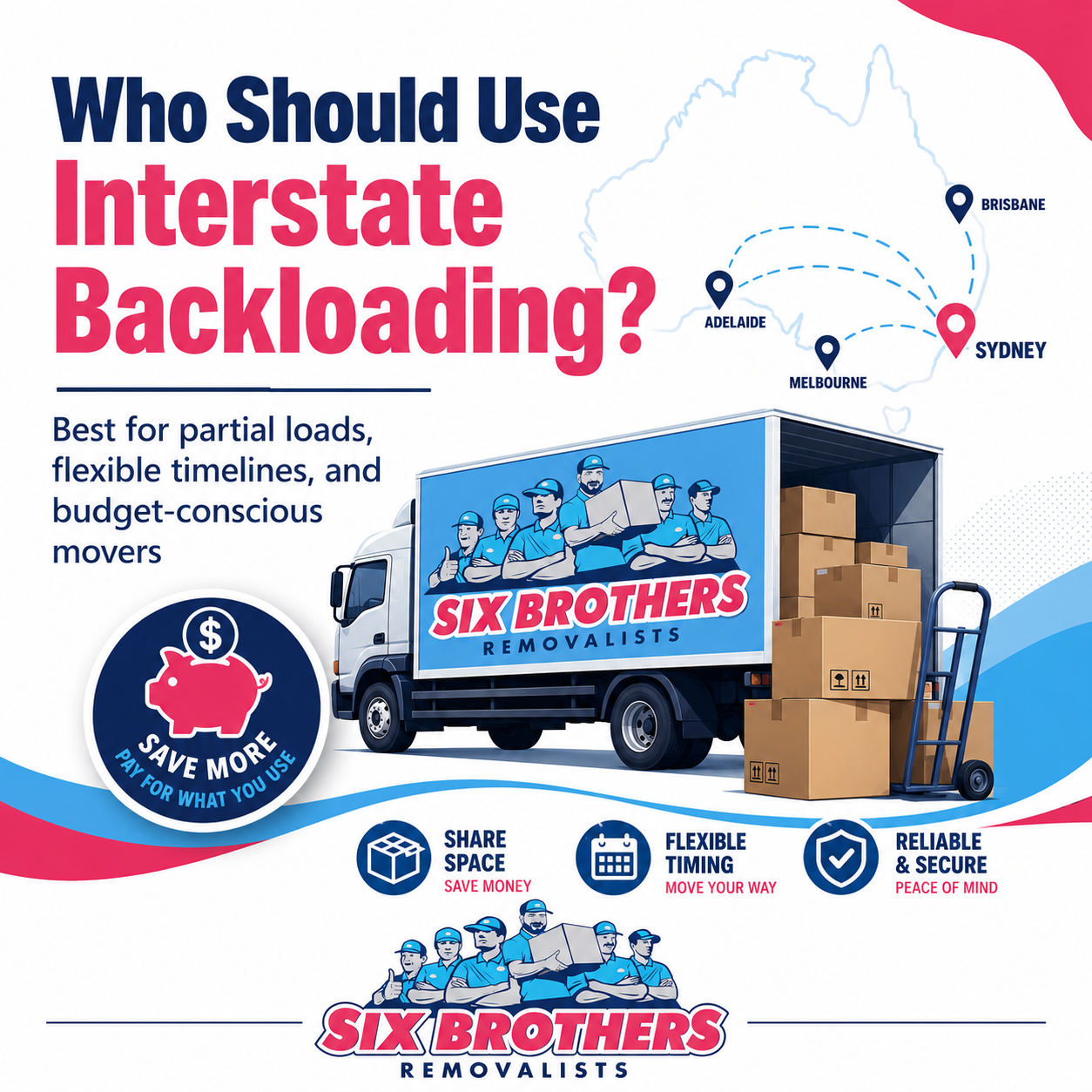
Interstate backloading suits anyone moving a partial load between states who needs to cut costs without cutting corners. If your move isn’t time-critical and your volume doesn’t fill a whole truck, backloading can save you hundreds compared to booking a dedicated vehicle.
For Parramatta residents and Western Sydney households weighing up interstate options, the difference between backloading and a full removal can be significant. Knowing which service fits your situation protects your budget and your timeline.
This guide covers who backloading works best for, what it costs, which routes are available, how to pack for a shared load, and how to choose a removalist you can actually trust.
What Is Interstate Backloading and How Does It Work?
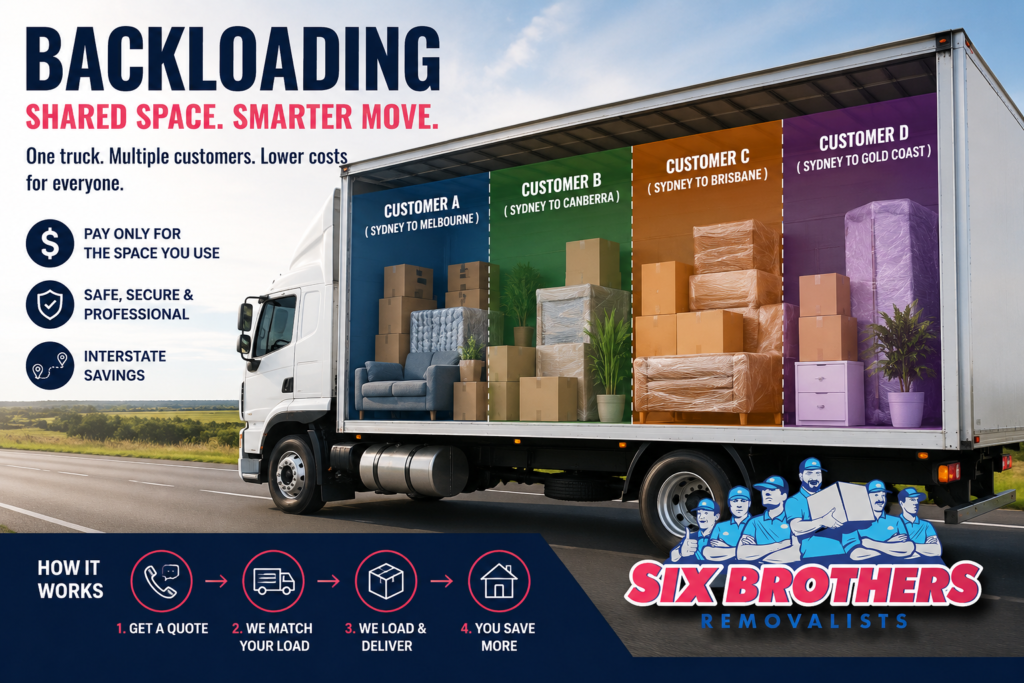
Interstate backloading is a shared freight arrangement where your belongings travel on a removal truck that is already scheduled to make an interstate run. Instead of hiring the entire truck, you pay only for the space your items occupy. The truck is heading in that direction regardless, so the removalist fills available capacity with additional loads from other customers moving along the same route.
This model works because interstate removalist trucks frequently complete one-way jobs and need to fill the return leg or add stops along a planned route. Rather than driving back empty or underloaded, the company accepts secondary bookings to maximise the truck’s capacity. You benefit from a significantly lower rate. The removalist benefits from a more efficient operation.
The process typically works like this: you contact a backloading removalist, describe your inventory and preferred destination, and receive a quote based on cubic metres or weight. The company matches your load to an upcoming truck run that passes through your pickup and delivery points. You agree on a pickup window, your items are loaded alongside other customers’ goods, and delivery occurs within an agreed timeframe at the destination.
How Backloading Differs from a Full Truck Hire
A full truck hire means the entire vehicle is reserved exclusively for your move. The truck arrives at your address, loads only your belongings, and drives directly to your destination. You control the schedule, the loading sequence, and the delivery timing. This is the standard model for most house removals and office relocations.
Backloading shares that truck space with other customers. Your items are loaded and secured alongside other loads, and the truck may make multiple stops before reaching your destination. The trade-off is straightforward: less control over timing in exchange for a meaningfully lower price. For moves where flexibility is possible, that trade-off is often worth making.
How Backloading Routes Are Scheduled
Backloading availability depends entirely on existing truck movements. A removalist company running a Sydney to Melbourne job on a given date may have spare capacity on that truck. They advertise or accept bookings to fill that space. Routes are not created on demand. They follow the company’s existing interstate schedule.
This is why backloading works best when you have a flexible pickup and delivery window. If a truck is heading from Sydney to Brisbane next Tuesday and you need to move from Parramatta to the Gold Coast, that run may suit you perfectly. But if you need delivery by a specific date and no truck is scheduled for that window, you may need to wait or consider a dedicated service instead.
Who Is Interstate Backloading Best Suited For?
Backloading is not a one-size-fits-all solution. It suits specific types of movers well and is a poor fit for others. Understanding where you fall in that spectrum saves time, money, and frustration.
The ideal backloading customer has a partial load, a flexible timeline, and a clear destination along an established interstate route. They are not moving an entire four-bedroom house under a tight settlement deadline. They are moving a manageable volume of belongings and can work within a pickup and delivery window rather than a fixed date.
Renters Moving Interstate on a Budget
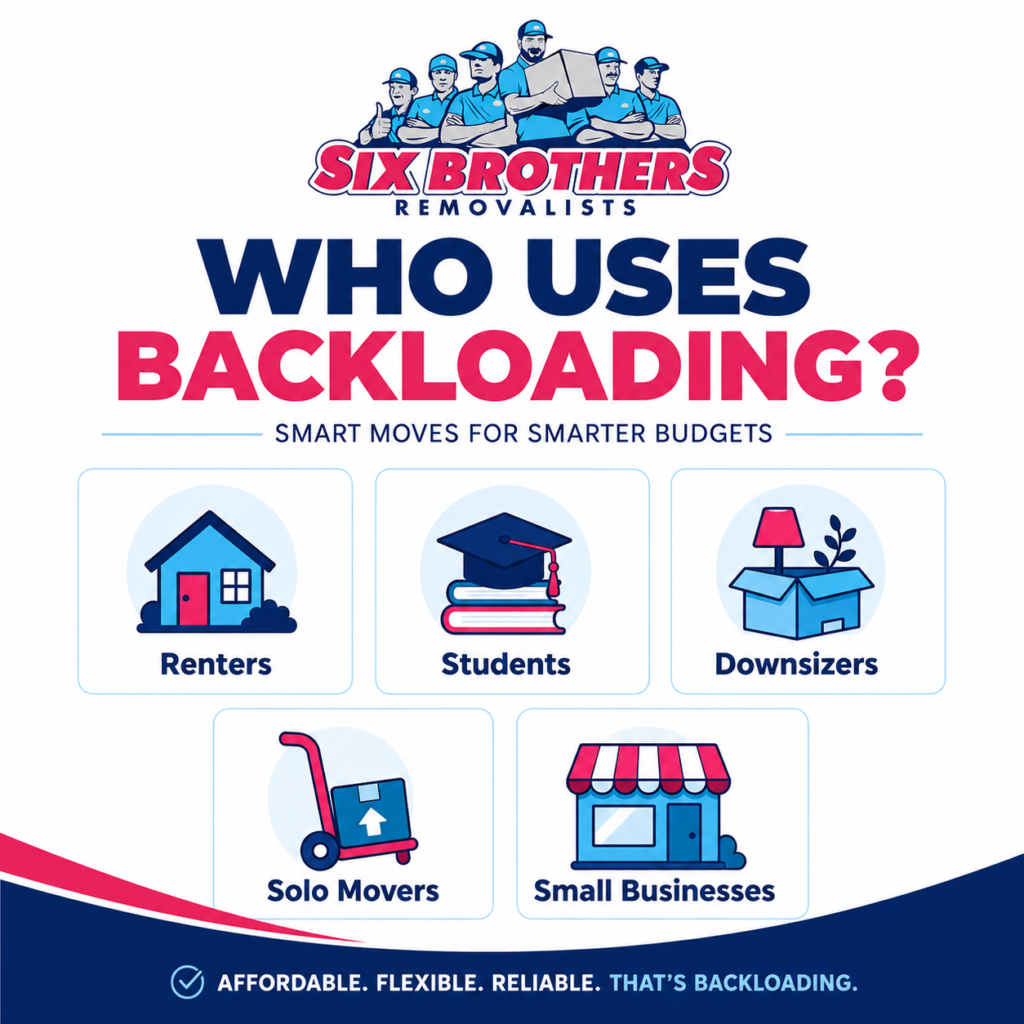
Renters typically accumulate less furniture than long-term homeowners. A one or two-bedroom rental often contains a bed, a couch, a dining table, kitchen essentials, and personal items. That volume rarely fills a full truck. Paying for an entire vehicle to move a partial load is inefficient and expensive.
Backloading is built for exactly this situation. A renter moving from Parramatta to Melbourne or Brisbane can book space for their actual load, pay a fraction of the full-truck rate, and have their belongings delivered safely without overpaying for unused truck space. For renters on tight budgets navigating the cost of a new bond, first month’s rent, and relocation expenses, the savings from backloading can be substantial.
Homeowners Downsizing or Relocating Without a Fixed Date
Homeowners who have sold their property and are moving interstate sometimes have more flexibility than they realise. If settlement has occurred and you are staying with family or in temporary accommodation before your new home is ready, a fixed delivery date may not be essential. You need your belongings to arrive safely, but you can work within a window rather than demanding a specific day.
Downsizers moving from a larger family home to a smaller interstate property often find their load does not fill a full truck either. Furniture has been sold, donated, or passed on to adult children. What remains is a manageable volume that suits a shared load arrangement. Backloading gives these movers a cost-effective path without sacrificing care or professionalism.
Students and Solo Movers with Smaller Loads
A student relocating interstate for work or study typically moves with a bedroom suite, a few boxes of personal items, and perhaps a small desk or bookshelf. That is a very small cubic metre volume. Booking a full truck for that load is like hiring a courier van to deliver a single envelope.
Solo movers in this category benefit most from backloading because the price difference is most dramatic at low volumes. The less space you need, the more disproportionately expensive a full truck hire becomes. Backloading charges you for what you actually use, making it the logical choice for anyone moving a bedroom’s worth of belongings across state lines.
Small Business Owners Relocating Equipment or Stock
Small businesses occasionally need to move equipment, office furniture, stock, or machinery interstate without the volume to justify a dedicated truck. A business relocating a small office from Parramatta to Brisbane, or sending surplus stock to a warehouse in Melbourne, may have a load that sits comfortably within a backloading arrangement.
The key consideration for business movers is whether the items are time-sensitive. If the equipment is needed immediately to resume operations, a dedicated truck with a guaranteed delivery date is the safer choice. But if the items are non-urgent, backloading offers a cost-effective way to move commercial goods interstate without the overhead of a full vehicle booking.
When Does Backloading Make Sense Financially?
The financial case for backloading is strongest when your load is small relative to a full truck’s capacity and your timeline is flexible. The savings are real, but they are not uniform across every situation. Understanding the cost structure helps you decide whether backloading genuinely saves money for your specific move.
How Much Does Interstate Backloading Cost Compared to Full Removals?
Backloading is typically priced by cubic metre or by the weight of your load. A full truck hire for an interstate move is priced as a flat rate for the entire vehicle regardless of how much space you use. The gap between these two pricing models is where backloading’s financial advantage lives.
For a one-bedroom move from Sydney to Melbourne, a full truck hire might cost between $1,500 and $2,500 depending on the company, timing, and inclusions. A backloading booking for the same volume could come in between $600 and $1,200. The range varies based on cubic metres, route demand, and the specific removalist. For a two-bedroom move, the comparison shifts, but backloading still typically undercuts a dedicated truck by a meaningful margin.
The savings narrow as your load grows. Once your belongings approach half a truck or more, the price difference between backloading and a full hire shrinks. At that point, the added control and scheduling certainty of a dedicated truck may be worth the modest premium.
What Affects the Final Price of a Backloading Job?
Several variables influence what you will actually pay for a backloading service. Volume is the primary driver. More cubic metres means a higher price. But route, timing, and demand also play a role.
Popular routes like Sydney to Melbourne and Sydney to Brisbane have more frequent truck movements, which means more backloading availability and more competitive pricing. Less common routes may have fewer trucks running, which reduces availability and can push prices up. Seasonal demand matters too. Moving during peak periods like December and January, or around school holidays, typically increases prices across all removal types including backloading.
Packing also affects cost. If you supply your own packed and labelled boxes, the removalist’s handling time is reduced. If you need packing services, that adds to the total. Insurance, access difficulty at pickup or delivery, and the need for storage between legs of the journey are additional cost factors worth clarifying before you book.
What Are the Limitations of Interstate Backloading?
Backloading is a practical and cost-effective option for many movers, but it is not suitable for everyone. Being clear about its limitations before you book prevents disappointment and avoids situations where the wrong service choice creates more stress than it saves.
Flexible Timelines Are Essential for Backloading
The single most important requirement for backloading is timeline flexibility. You cannot book a backloading service and expect delivery on a specific date the way you can with a dedicated truck. Backloading operates around existing truck schedules. Your pickup and delivery happen within a window, not on a fixed day.
For most backloading jobs, that window is typically two to five days for pickup and a similar range for delivery, though this varies by route and company. If your lease ends on a specific date, your new home settles on a fixed day, or your business cannot operate without its equipment by a certain deadline, backloading introduces risk. In those situations, a dedicated truck with a confirmed schedule is the appropriate choice.
What Happens If Your Delivery Is Delayed?
Delays in backloading can occur for several reasons. The truck may take on additional stops. Road conditions, weather, or mechanical issues can extend transit times. If your load is the last delivery on a multi-stop run, your items may arrive later than the initial estimate.
A reputable backloading company will communicate delays promptly and provide updated delivery windows. Before booking, ask specifically about the company’s delay policy, how they communicate schedule changes, and whether they offer any compensation or storage arrangements if delivery falls outside the agreed window. If a company cannot answer these questions clearly, that is a signal to look elsewhere.
Which Interstate Routes Are Commonly Available for Backloading?
Backloading availability is tied directly to the routes that removal companies service regularly. High-traffic interstate corridors have the most frequent truck movements, which means more backloading opportunities and shorter wait times for available space.
Sydney to Melbourne Backloading
The Sydney to Melbourne corridor is one of the busiest interstate moving routes in Australia. Trucks run this route frequently in both directions, which means backloading availability is generally strong. For Parramatta residents moving to Melbourne or surrounding suburbs, this route offers some of the most competitive backloading rates and shortest wait times for available truck space.
Transit time for Sydney to Melbourne backloading is typically one to three days depending on the number of stops and the specific route taken. Pickup from Western Sydney suburbs including Parramatta, Blacktown, Penrith, and Liverpool is standard for removalists operating on this corridor.
Sydney to Brisbane Backloading
Sydney to Brisbane is another high-frequency route with strong backloading availability. The drive covers roughly 920 kilometres and transit typically takes one to two days. For movers heading to Brisbane, the Gold Coast, or anywhere along the Queensland coast, this route is well-serviced by interstate removalists running regular schedules.
Backloading rates on this corridor are competitive due to the volume of traffic. Parramatta and Greater Western Sydney are natural pickup points for trucks heading north on the Pacific Highway or New England Highway routes.
Parramatta and Western Sydney Backloading Connections
Parramatta’s position as a major hub in Greater Western Sydney makes it a practical pickup point for interstate backloading runs in multiple directions. Trucks heading south toward Melbourne, north toward Brisbane, or west toward Adelaide and beyond regularly pass through or originate from the Western Sydney region.
For residents of Parramatta, Blacktown, Penrith, Liverpool, Campbelltown, and surrounding suburbs, backloading is accessible without the need to transport goods to a Sydney CBD depot first. A removalist based in Parramatta can coordinate pickup directly from your address and load your belongings onto the next available run heading to your destination.
How to Prepare Your Belongings for a Backloading Move
Preparation for a backloading move requires more attention than a standard dedicated truck hire. Because your belongings share space with other customers’ goods, proper packing and labelling is not optional. It protects your items and ensures the removalist can handle your load efficiently.
Packing Requirements for Shared Truck Loads
All items in a backloading arrangement should be fully packed and ready before the truck arrives. Unlike a dedicated move where the removalist may have more flexibility around timing, a backloading truck is often on a schedule with multiple stops. Delays at your address affect other customers and the driver’s timeline.
Boxes should be sturdy, sealed, and clearly labelled with your name, destination address, and a brief description of contents. Fragile items need appropriate internal padding and external labelling. Furniture should be wrapped in moving blankets or protective covers. Disassemble large items like bed frames and dining tables before pickup day. The more prepared your load is, the smoother the process and the lower the risk of damage during transit.
What Items Cannot Be Included in a Backload
Certain items are excluded from backloading arrangements for safety, legal, or practical reasons. Hazardous materials including flammable liquids, gas cylinders, chemicals, and certain cleaning products cannot travel on removal trucks. Perishable food items are not suitable for interstate transit. Plants may be restricted depending on the destination state’s biosecurity requirements.
High-value items such as jewellery, important documents, and irreplaceable personal items are best transported personally rather than included in any shared load. If you have items of significant monetary or sentimental value, discuss this with your removalist before booking and ask about their insurance coverage for high-value goods.
How to Choose a Reliable Interstate Backloading Company
The backloading market includes a wide range of operators, from established interstate removalists with structured processes to informal operators with little accountability. Choosing the wrong company can result in delayed delivery, damaged goods, or in worst cases, belongings that go missing entirely. Due diligence before booking is essential.
Questions to Ask Before Booking a Backloading Service
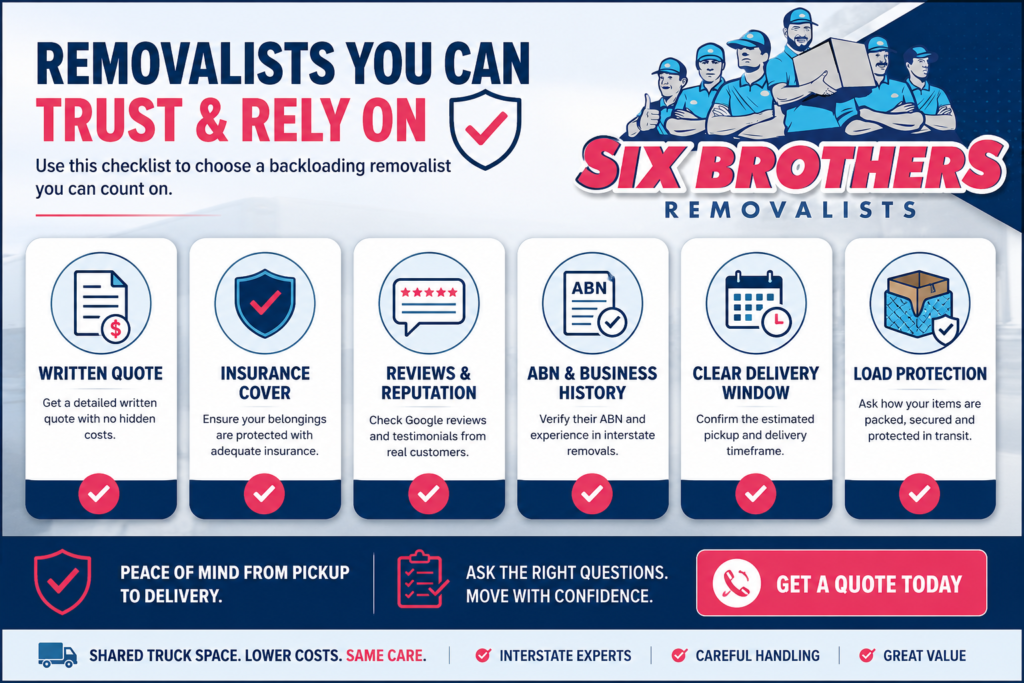
Before committing to any backloading company, ask these questions directly and pay attention to how clearly and confidently they answer.
What is the estimated pickup window and delivery window for my route? A professional company will give you a realistic range, not a vague “as soon as possible.”
How is my load secured on the truck alongside other customers’ goods? You want to hear about load restraints, protective wrapping, and separation between loads.
What insurance coverage applies to my belongings during transit? Understand whether the company’s policy covers your items and at what value. Ask whether you need to arrange separate transit insurance.
How do you communicate if there is a delay? A reliable company has a clear process for keeping customers informed. If they cannot explain it, that is a concern.
Can you provide references or reviews from customers who have used your backloading service? Established companies have a track record. Ask to see it.
Red Flags to Watch for When Comparing Removalist Quotes
Price is not the only factor when comparing backloading quotes. An unusually low quote can indicate corners being cut on insurance, vehicle maintenance, or staff training. If a quote is significantly below every other company you have contacted, ask why before accepting it.
Be cautious of companies that cannot provide a written quote, ask for full payment upfront before pickup, or are vague about their licensing and insurance. Check that the company has a physical address and a verifiable business history. Read reviews on independent platforms rather than relying solely on testimonials on the company’s own website. A removalist with consistent positive reviews across Google, Word of Mouth, and industry directories is a safer choice than one with no verifiable track record.
Interstate Backloading vs. Full Truck Hire: Which Should You Choose?
The choice between backloading and a full truck hire comes down to three factors: load volume, timeline flexibility, and budget. Neither option is universally better. The right choice depends on your specific circumstances.
Comparison Table: Backloading vs. Full Removalist Service
| Factor | Interstate Backloading | Full Truck Hire |
| Cost | Lower, charged by cubic metre | Higher, flat rate for full truck |
| Schedule control | Flexible window, not fixed date | Fixed date, you control timing |
| Best for | Partial loads, flexible movers | Full household, time-critical moves |
| Transit time | Variable, may include multiple stops | Direct, typically faster |
| Availability | Depends on existing truck routes | Available on demand |
| Suitable load size | 1-3 bedrooms or partial loads | Any size, especially 3+ bedrooms |
| Insurance | Varies by company, confirm before booking | Varies by company, confirm before booking |
| Packing requirement | Must be fully packed before pickup | Packing services often available |
If your load is small, your timeline is flexible, and cost is a priority, backloading is the logical choice. If you are moving a full household, need delivery on a specific date, or are relocating a business that cannot afford delays, a dedicated truck hire gives you the control and certainty that backloading cannot guarantee.
Storage Options If Your Backloading Delivery Window Doesn’t Align
Sometimes the timing between your backloading pickup and your ability to receive delivery at the destination does not align perfectly. Your new home may not be ready. Settlement may be delayed. You may be staying in temporary accommodation while you find a permanent place. In these situations, storage becomes a practical part of the moving plan.
Short-Term and Long-Term Storage Solutions in Parramatta
Storage facilities in Parramatta and Greater Western Sydney offer flexible options for movers who need a gap between pickup and delivery. Short-term storage typically covers periods of one to four weeks and suits movers who need a brief holding period while their new property becomes available. Long-term storage covers months or longer and is used by movers who are travelling, waiting on construction, or managing a staged relocation.
When choosing a storage facility, look for climate-controlled units if you are storing timber furniture, electronics, artwork, or anything sensitive to temperature and humidity. Confirm that the facility has adequate security including CCTV, access controls, and insurance options. Ask whether your removalist can coordinate pickup from storage directly to your destination, which simplifies the final leg of your move.
Six Brothers Removalists offers storage solutions alongside our interstate backloading service, which means your belongings can move from your Parramatta address into secure storage and then onward to your destination without needing to coordinate multiple providers. That continuity reduces handling, reduces risk, and simplifies the entire process.
Conclusion
Interstate backloading suits renters, downsizers, students, and small business owners who need to move a partial load across state lines without paying for an entire truck. The financial savings are real, the process is straightforward, and the right removalist makes it stress-free. Flexibility on timing is the main requirement.
Six Brothers Removalists handles interstate backloading from Parramatta and across Greater Western Sydney, with routes covering Melbourne, Brisbane, and beyond. Our team manages the logistics, the packing guidance, and the communication so you are never left wondering where your belongings are.
If you are planning an interstate move and want to know whether backloading suits your situation, contact Six Brothers Removalists for a straightforward quote and honest advice on the best option for your load, your route, and your timeline.
Frequently Asked Questions
What is interstate backloading and how does it work?
Interstate backloading means your belongings share space on a removal truck already scheduled for an interstate run. You pay only for the cubic metres your load occupies, making it significantly cheaper than booking a dedicated truck for a partial load.
Is backloading safe for my furniture and belongings?
Yes, when handled by a professional removalist. Items are wrapped, secured, and separated from other loads using load restraints and protective materials. Choosing a licensed, insured company with verified reviews is the most important step in protecting your goods.
How much does interstate backloading cost from Sydney?
Backloading from Sydney to Melbourne typically ranges from $600 to $1,200 for a one-bedroom load, while Sydney to Brisbane is comparable. Final pricing depends on cubic metres, route demand, and the specific company. Always request a written quote before confirming.
How long does interstate backloading take to deliver?
Delivery timeframes vary by route and the number of stops on the truck’s run. Sydney to Melbourne typically takes one to three days. Sydney to Brisbane is usually one to two days. Your removalist should provide a realistic delivery window at the time of booking.
Can I choose a specific pickup and delivery date with backloading?
Backloading operates within a window rather than on a fixed date. You agree on a pickup range and a delivery range based on the truck’s schedule. If you need a guaranteed specific date, a dedicated truck hire is the more appropriate option.
What size move is backloading suitable for?
Backloading works best for moves up to around three bedrooms in volume. Solo movers, renters, students, and downsizers with partial loads benefit most. Once your load approaches half a truck or more, the cost difference between backloading and a full hire narrows considerably.
Does Six Brothers Removalists offer interstate backloading from Parramatta?
Yes. Six Brothers Removalists provides interstate backloading services from Parramatta and across Greater Western Sydney, covering major routes including Sydney to Melbourne and Sydney to Brisbane. Contact us for a quote based on your specific load and destination.