

Table of Contents
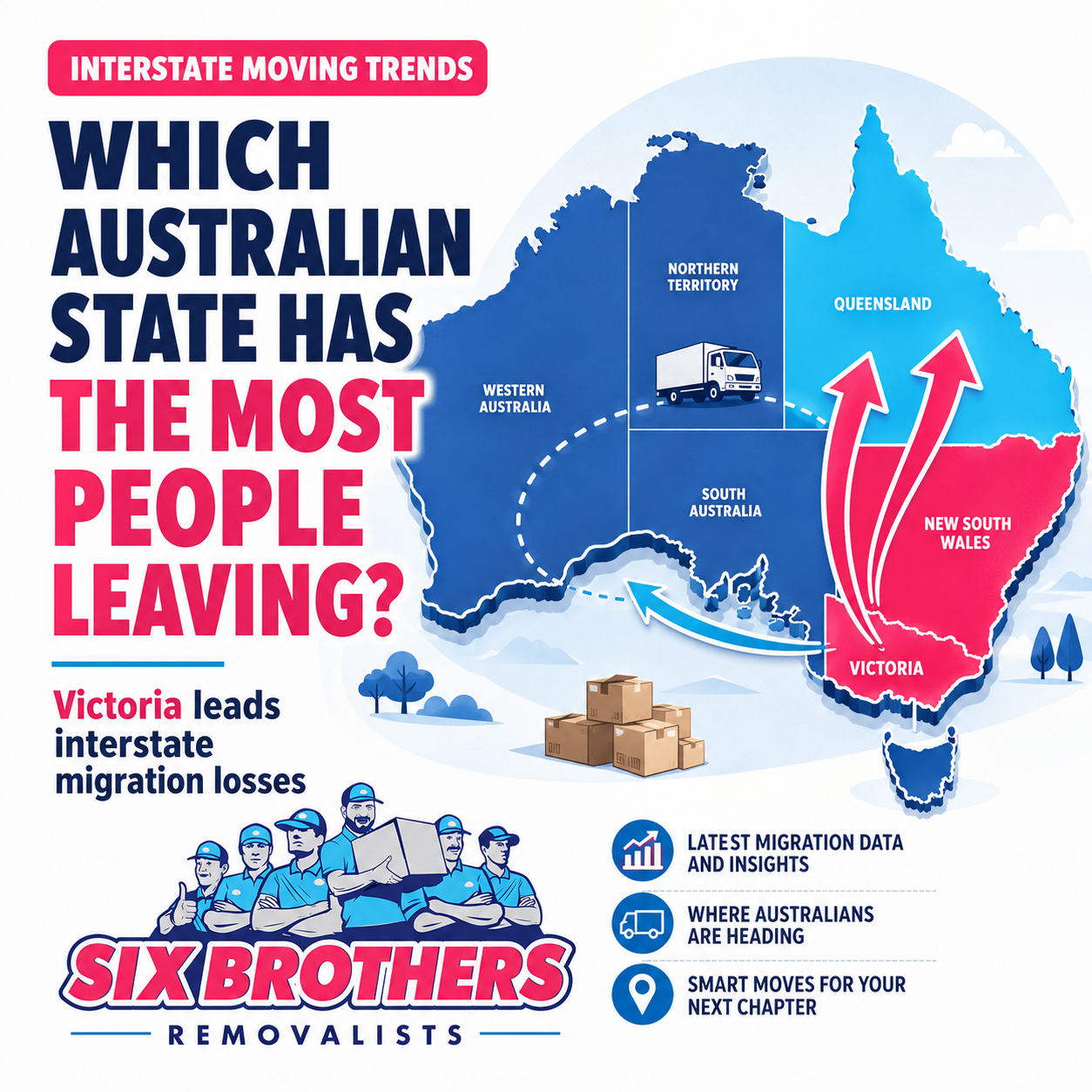
Victoria consistently records the highest net interstate migration losses in Australia, with tens of thousands of residents relocating to other states each year. For anyone planning a move, these population shifts are more than statistics they directly affect removalist availability, backloading routes, and interstate moving costs.
Understanding where Australians are moving and why helps you plan smarter. Whether you’re leaving NSW, heading to Queensland, or weighing up your options, the data tells a clear story about which corridors are busiest and when.
This guide covers the states losing the most residents, the reasons driving those decisions, where people are landing, and exactly what it means for planning and pricing your interstate move from Parramatta or Greater Western Sydney.
Which State Are Australians Leaving the Most Right Now?
Australia’s internal migration patterns have shifted significantly over the past several years. The states recording the largest outflows are not necessarily the smallest they are the most expensive, most congested, and most pressured by housing demand.
The Australian Bureau of Statistics tracks net interstate migration quarterly, measuring the difference between arrivals from other states and departures to other states. When departures consistently outpace arrivals, a state records a net loss.
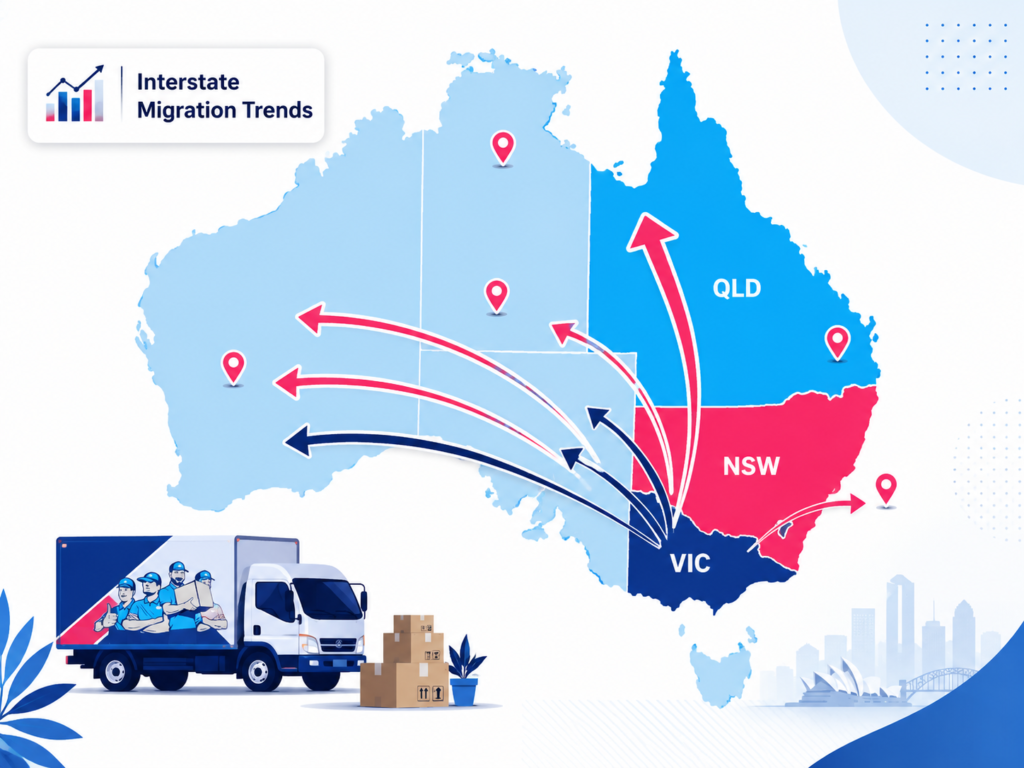
Victoria and New South Wales have both recorded net interstate migration losses in recent years, with Victoria’s losses being particularly pronounced following the pandemic period. Queensland, by contrast, has recorded consistent net gains, absorbing large numbers of movers from both southern states.
Victoria’s Net Interstate Migration Losses Explained
Victoria has recorded some of the largest net interstate migration deficits of any Australian state in recent years. The state saw significant population outflows particularly from 2020 onward, driven by a combination of extended lockdowns, rising property prices in Melbourne, and a growing awareness among residents that lifestyle and affordability were available elsewhere.
ABS data on interstate migration shows Victoria losing residents to Queensland and regional NSW at rates not seen in decades. Melbourne’s inner and middle-ring suburbs, once magnets for interstate arrivals, began generating outflows as residents reassessed what they needed from where they lived.
The losses are not uniform across demographics. Young families, retirees, and remote workers have been the most mobile cohorts, and Victoria has been losing all three to warmer, more affordable destinations.
How Queensland, NSW, and WA Compare in Population Outflows
New South Wales also records net interstate migration losses, though the picture is more complex. Sydney’s high property prices push residents outward, but NSW also attracts arrivals from Victoria and other states, partially offsetting those losses. The net result is a smaller deficit than Victoria’s, but a deficit nonetheless.
Western Australia tells a different story. WA has shifted from a state that historically lost residents during mining downturns to one that now records net gains, driven by strong employment in resources, construction, and healthcare. South Australia has similarly moved into positive territory, attracting movers priced out of Melbourne and Sydney.
Queensland remains the standout destination state, recording consistent net gains that dwarf the inflows of any other state. The combination of relative housing affordability, lifestyle appeal, and improving infrastructure has made it the dominant recipient of Australia’s internal migration.
What the Latest ABS Data Shows About State-to-State Movement
The ABS releases interstate migration estimates as part of its Regional Population data series. The most recent available figures confirm the broad pattern: Victoria and NSW are net exporters of residents, while Queensland, SA, and WA are net importers.
What the data also shows is that these movements are not random. They follow predictable corridors Melbourne to Brisbane, Sydney to Brisbane, Sydney to regional NSW, Melbourne to regional Victoria and beyond. These corridors matter enormously for anyone planning a move, because they determine backloading availability, truck scheduling, and ultimately what you pay.
The volume of movement along the Melbourne-Brisbane and Sydney-Brisbane corridors means removalists run regular services on these routes, which creates genuine cost advantages for movers who understand how to use them.
Why Are People Leaving Victoria and NSW in Large Numbers?
Population movement at this scale does not happen without clear, consistent reasons. The drivers behind Victoria and NSW’s outflows are well-documented and largely economic, though lifestyle factors have become increasingly significant since 2020.
Understanding these push factors matters for anyone considering a move, because the same pressures that are driving others out may be exactly what you are navigating right now.

Cost of Living and Housing Affordability as Key Push Factors
Housing affordability is the single most cited reason Australians give for relocating interstate. Melbourne and Sydney consistently rank among the least affordable housing markets in the world relative to local incomes, and that pressure has been building for years.
For renters, the situation has become acute. Vacancy rates in both cities have remained extremely low, while rents have risen sharply. Many renters who cannot afford to buy in Sydney or Melbourne are discovering they can purchase a home outright in Brisbane, Adelaide, or regional areas for what they were paying in annual rent.
For homeowners, the calculus is different but equally compelling. Selling a Sydney or Melbourne property and buying in a lower-cost market can eliminate a mortgage entirely, fund a business, or provide financial security that was simply not achievable while staying put.
Remote Work and Lifestyle Shifts Driving Relocation Decisions
The normalisation of remote work has fundamentally changed the geography of where Australians can live. Before 2020, proximity to a CBD employer was a hard constraint for most workers. That constraint has loosened significantly, and the migration data reflects it directly.
Workers who no longer need to commute to a Sydney or Melbourne office five days a week are free to optimise for lifestyle, space, and cost rather than proximity to work. Queensland’s climate, coastal access, and lower property prices make it an obvious beneficiary of this shift. Regional NSW, the Sunshine Coast, and southeast Queensland have all recorded strong population growth as a result.
This is not a temporary trend. Employers who initially expected a full return to office have largely settled on hybrid arrangements, and many workers have made permanent interstate moves on the basis of those arrangements. The lifestyle migration that was once the domain of retirees now spans every working-age demographic.
How Infrastructure Pressure and Congestion Influence Moves
Beyond cost and work flexibility, liveability factors play a real role in interstate migration decisions. Melbourne and Sydney are large, congested cities where commute times, infrastructure strain, and population density affect daily quality of life in tangible ways.
Traffic congestion, school enrolment pressure, hospital wait times, and the general friction of living in a very large city all accumulate over time. For families in particular, the prospect of a quieter, less pressured environment in a smaller city or regional area carries genuine weight.
Brisbane, Adelaide, and regional centres offer most of the amenities of a major city with significantly less of the congestion and cost. That combination is proving persuasive for a growing number of Australians who have the flexibility to act on it.
Where Are People Moving When They Leave These States?
The destination side of Australia’s internal migration story is as important as the origin side. Knowing where people are going helps explain the removalist routes that are busiest, the markets that are growing, and the areas where housing demand is rising fastest.
Queensland Remains the Top Destination for Interstate Movers
Queensland has been the dominant destination for interstate migrants for several consecutive years. The state’s combination of relative housing affordability, warm climate, strong employment growth, and improving infrastructure has made it the clear first choice for Victorians and NSW residents looking to relocate.
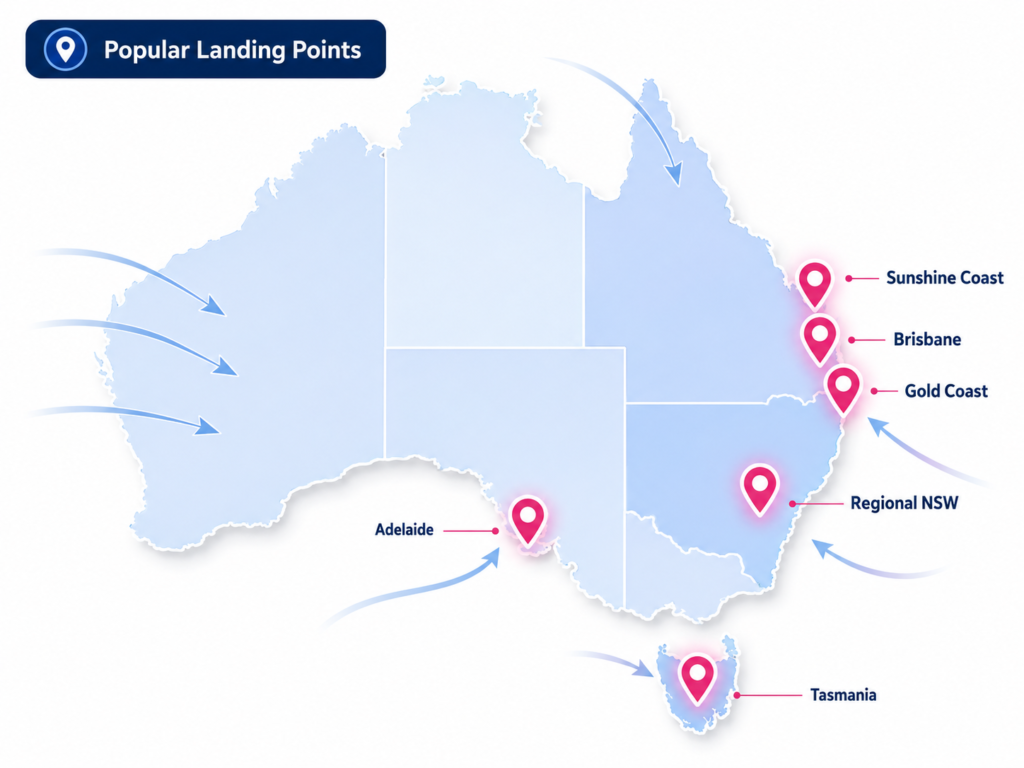
Southeast Queensland particularly Brisbane, the Gold Coast, the Sunshine Coast, and the Moreton Bay region absorbs the majority of interstate arrivals. Brisbane’s transformation ahead of the 2032 Olympics has accelerated infrastructure investment and economic activity, making it an increasingly attractive destination for both families and businesses.
The Sydney-to-Brisbane corridor is one of the highest-volume interstate moving routes in Australia. Removalists who operate on this corridor run regular services, and backloading opportunities are frequent, which directly benefits movers who are flexible on timing.
South Australia and Tasmania Gaining Population from Eastern States
South Australia has emerged as a significant beneficiary of eastern states outflows. Adelaide offers a combination of affordable housing, a strong food and wine culture, good schools, and a growing technology and defence sector that has attracted both families and professionals.
The South Australian government’s population data shows consistent net interstate migration gains in recent years, a reversal of the long-term trend that saw SA lose residents to larger states for decades.
Tasmania has also recorded net interstate migration gains, driven largely by lifestyle appeal and housing affordability. Hobart in particular attracted significant interest from Melbourne residents during and after the pandemic period, though rising Hobart property prices have moderated some of that inflow more recently.
Regional Areas vs Capital Cities: Where People Are Actually Going
Not all interstate migration ends in a capital city. A significant proportion of movers are choosing regional destinations coastal towns, inland cities, and lifestyle areas that offer space, community, and affordability that neither origin nor destination capitals can match.
Regional Queensland, the NSW north coast, the Sunshine Coast hinterland, and parts of regional Victoria and SA have all recorded strong population growth. These moves are often more complex logistically, requiring removalists who understand regional delivery, access constraints, and the additional planning that comes with moving to areas outside major metropolitan networks.
For movers heading to regional destinations, backloading is often the most practical and cost-effective option, provided the route aligns with existing truck movements between major centres.
What Does This Mean If You Are Planning an Interstate Move?
Australia’s internal migration patterns have a direct and practical impact on anyone planning to move interstate. The volume of movement along specific corridors affects everything from removalist availability to pricing to how far in advance you need to book.
Understanding these dynamics puts you in a much stronger position when comparing quotes and planning your timeline.
How Migration Trends Affect Removalist Demand and Booking Timelines
High-volume migration corridors generate high removalist demand. The Sydney-Brisbane and Melbourne-Brisbane routes are among the busiest in the country, which means removalists on these routes are often booked weeks or months in advance during peak periods.
If you are moving along one of these corridors, booking early is not just advisable it is often the difference between securing your preferred dates and having to work around whatever availability remains. Peak periods typically align with school term breaks, end-of-financial-year, and the summer months from November through January.
Conversely, high demand on popular routes also creates genuine backloading opportunities. When trucks are moving frequently between major cities, the chance of finding a truck with available space on your preferred route is higher than on less-travelled corridors.
Interstate Backloading Routes That Follow High-Volume Migration Corridors
Backloading is one of the most cost-effective ways to move interstate, and it works best on routes where trucks are moving regularly in both directions. The Sydney-Brisbane, Melbourne-Brisbane, and Sydney-Melbourne corridors all qualify.
Backloading means your belongings share truck space with another customer’s load, travelling on a truck that is already scheduled to make the journey. Because the truck is going anyway, the cost per cubic metre is significantly lower than chartering a dedicated vehicle.
The trade-off is flexibility. Backloading works best when you have a window of several days rather than a fixed date, and when your volume of goods is not so large that it requires a full truck. For movers with a one or two-bedroom home’s worth of belongings, backloading on a high-volume corridor is often the smartest financial decision available.
Planning Your Move During Peak Interstate Migration Periods
Peak interstate migration periods create both challenges and opportunities. Demand for removalists is highest from November through January and around school holiday periods, which means prices are higher and availability is tighter. If you can move outside these windows particularly in the quieter months of April through August you will generally find better pricing and more flexible scheduling.
That said, sometimes your timeline is fixed by lease end dates, settlement dates, or employment start dates. In those cases, the key is to book as early as possible and to be clear with your removalist about your constraints so they can plan accordingly.
How Much Does It Cost to Move Interstate from NSW?
Interstate moving costs vary significantly depending on the volume of your belongings, the distance, the service type, and the time of year. Understanding the cost structure helps you compare quotes accurately and avoid being caught out by charges you did not anticipate.
Sydney to Brisbane Removalist Cost Breakdown
The Sydney-to-Brisbane corridor is approximately 920 kilometres by road and is one of the most frequently serviced interstate routes in Australia. For a standard two to three-bedroom home, a full-service move on this route typically ranges from around $2,500 to $5,000 or more, depending on volume, access conditions at both ends, and whether packing services are included.
Backloading on the same route can reduce that cost substantially. Backloading rates on the Sydney-Brisbane corridor are competitive because of the volume of trucks operating on the route, and movers with flexibility on dates can often secure significantly lower rates than a dedicated truck would cost.
Factors that affect the final price include the number of flights of stairs at origin or destination, the distance from the truck to the front door, the presence of large or fragile items requiring special handling, and whether you need storage at either end.
Sydney to Melbourne Moving Costs and What Affects Pricing
Sydney to Melbourne is approximately 880 kilometres and is another high-volume corridor. Full-service moving costs for a two to three-bedroom home on this route are broadly similar to the Sydney-Brisbane corridor, typically ranging from $2,000 to $4,500 depending on the same variables.
One factor that affects Sydney-Melbourne pricing specifically is the direction of travel. Because net migration is running from Melbourne to Sydney and from both cities to Brisbane, there can be more backloading availability on the Melbourne-to-Sydney direction than the reverse. Movers heading from Sydney to Melbourne may find slightly less backloading availability, though the route is busy enough that options exist.
Always confirm what is included in any quote. A low headline price that excludes packing materials, insurance, or difficult access charges can end up costing more than a higher quote that covers everything.
Backloading vs Full Truck: Which Option Suits Your Interstate Move?
The choice between backloading and a dedicated full truck comes down to three factors: volume, timing flexibility, and budget.
Backloading suits movers with a smaller volume of belongings typically up to a three-bedroom home who have flexibility on their exact moving date and are prioritising cost. It is the most economical interstate option available and works particularly well on high-volume corridors like Sydney-Brisbane and Sydney-Melbourne.
A dedicated full truck suits movers with a larger volume of belongings, those who need to move on a specific date, or those moving to a regional destination that is not on a regular backloading route. The cost is higher, but you get complete control over timing and your belongings travel without sharing space.
For most movers along the major NSW interstate corridors, backloading is worth serious consideration. The savings are real, and on busy routes, the service is reliable and well-established.
How to Choose a Removalist for an Interstate Move from Parramatta or Greater Western Sydney
Choosing the right removalist for an interstate move is one of the most important decisions in the entire process. The wrong choice can mean damaged belongings, unexpected costs, missed delivery windows, and a level of stress that undermines the entire reason you moved in the first place.
Here is what to look for and what to ask before you commit.
What to Look for in a Licensed and Insured Interstate Removalist
Any removalist operating interstate in Australia should hold a current Australian Business Number, carry transit insurance, and be able to provide evidence of both on request. Transit insurance covers your belongings while they are in the truck without it, you have no recourse if something is damaged or lost in transit.
Beyond insurance, look for a removalist with verifiable experience on your specific route. A company that regularly runs Sydney-Brisbane or Sydney-Melbourne services will have established processes, reliable truck schedules, and the kind of route knowledge that prevents problems before they start.
Check reviews on Google, Word of Mouth, and other independent platforms. Look specifically for reviews that mention interstate moves, not just local jobs. The skills and logistics required for an interstate move are meaningfully different from a local house move, and you want evidence of both.
Questions to Ask Before Booking an Interstate Moving Company
Before signing anything, ask these questions directly:
Does the quote include transit insurance, or is that an additional cost? What is the claims process if something is damaged? Is the truck dedicated to my move, or is it a backload? What is the estimated delivery window, and what happens if it is missed? Are there any additional charges for stairs, long carries, or difficult access? Who do I contact if there is a problem during the move?
A reputable removalist will answer all of these questions clearly and without hesitation. Vague answers, reluctance to put things in writing, or pressure to book immediately without time to review the quote are all warning signs worth taking seriously.
Why Local Western Sydney Removalists Understand These Routes Best
Removalists based in Parramatta and Greater Western Sydney have a practical advantage on interstate moves originating from this region. They know the local road network, the access conditions in Western Sydney suburbs, the traffic patterns that affect loading times, and the logistics of moving from areas like Penrith, Blacktown, Liverpool, and Campbelltown.
That local knowledge translates directly into smoother moves. A removalist who has done hundreds of pickups in Western Sydney knows how to plan the loading day, how to navigate narrow streets and tight driveways, and how to get your belongings onto the truck efficiently so the interstate leg starts on time.
Six Brothers Removalists operates from Parramatta and serves the full Greater Western Sydney region. Our team runs regular interstate services to Brisbane, Melbourne, Adelaide, and beyond, with backloading options on the major corridors and full-service dedicated moves for larger volumes or fixed-date requirements.
Conclusion
Australia’s internal migration patterns are clear: Victoria and NSW are losing residents to Queensland, South Australia, and regional areas, driven by housing costs, lifestyle shifts, and the freedom that remote work has created. These movements define the busiest interstate moving corridors in the country and directly shape removalist pricing, availability, and backloading opportunities.
If you are planning an interstate move from Parramatta or Greater Western Sydney, understanding these trends helps you book smarter, time your move better, and choose the right service type for your situation. The corridors are busy, the options are real, and the cost savings available through backloading on high-volume routes are significant.
Six Brothers Removalists is ready to help you plan and execute your interstate move with the local knowledge, route experience, and honest pricing you need. Contact our team today for a clear, obligation-free quote on your move.
Frequently Asked Questions
Which Australian state has the highest rate of people leaving?
Victoria has recorded the highest net interstate migration losses in recent years, with more residents departing for other states than arriving from them. Queensland has been the primary destination for those leaving Victoria, followed by regional NSW and South Australia.
Why are so many people leaving Victoria?
The main drivers are housing affordability, the high cost of living in Melbourne, and the lifestyle flexibility created by remote work. Extended pandemic-era lockdowns also accelerated the decision for many residents who had already been considering a move.
Where are most people moving to within Australia?
Queensland is the dominant destination for interstate migrants, particularly southeast Queensland including Brisbane, the Gold Coast, and the Sunshine Coast. South Australia and regional NSW are also recording strong inflows from Victoria and Sydney.
Is it cheaper to move interstate using backloading?
Yes, backloading is generally significantly cheaper than a dedicated truck for interstate moves. It works best on high-volume corridors like Sydney-Brisbane and Sydney-Melbourne, where trucks run regularly and shared space is available. The trade-off is flexibility on your exact moving date.
How far in advance should I book a removalist for an interstate move?
For moves during peak periods, November through January and school holiday breaks booking six to eight weeks in advance is advisable. For moves in quieter months, three to four weeks is generally sufficient, though earlier is always better on busy corridors.
Does Six Brothers Removalists handle moves from Parramatta to Queensland?
Yes. Six Brothers Removalists runs regular interstate services from Parramatta and Greater Western Sydney to Brisbane and southeast Queensland. We offer both backloading options for cost-conscious movers and dedicated full-truck services for larger volumes or fixed-date requirements.
What is the best time of year to move interstate in Australia?
The most cost-effective and logistically straightforward time to move interstate is typically between April and August, outside of school holiday periods. Demand is lower, removalist availability is better, and pricing is generally more competitive than during the summer peak season.