


Moving house ranks right up there with the most stressful things you can do in life. It also tends to hit the wallet harder than most people expect. But here is the good news: the cheapest way to move a house is not about cutting corners. It is about cutting waste.
Whether you are relocating across Parramatta, heading out to Western Sydney, or planning an interstate move to Melbourne or Brisbane, there are real strategies that save serious money without turning your move into a disaster.
This guide breaks it all down. Practical, honest, and written for people who need to get the job done without blowing their budget.
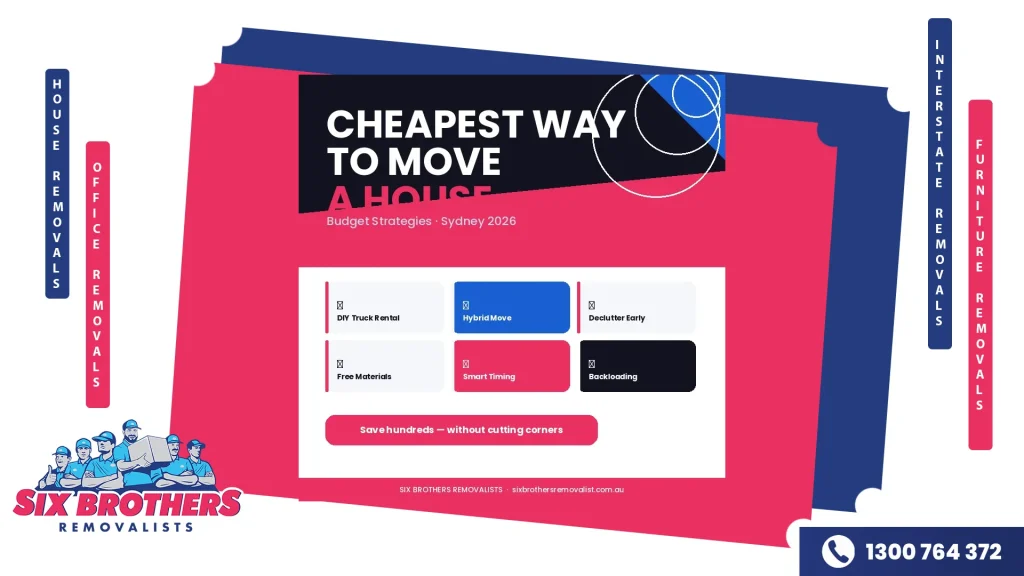
Key Budget Moving Strategies
Before diving into the details, it helps to understand the big picture. There are a handful of core strategies that form the backbone of any cheap move. Use one or mix a few together depending on your situation.
DIY Truck Rental
Renting a truck yourself is often the first option people consider, and for good reason. You cut out labour costs entirely. In Sydney, a basic truck hire for a local move can cost anywhere from $100 to $300 for the day, depending on truck size and hire company.
The real cost is your time and physical effort. If you have help from friends or family and do not have particularly heavy or fragile items, this can be the cheapest way to move your furniture interstate or across the city.
Just remember: petrol, insurance, and any toll charges can add up quickly. Always read the fine print before signing a hire agreement.
Hybrid Moves
A hybrid move is exactly what it sounds like. You do part of the work yourself and bring in professionals for the rest. Think of it as building a house: you do not have to hire someone for every single task. You might lay the groundwork yourself and call in the experts for the tricky parts.
For example, you pack and move boxes yourself, but you hire a labour-only removalist crew to handle the heavy furniture. This combination keeps costs manageable while protecting your back and your belongings.
Declutter and Pack Early
The more you move, the more you pay. It is that simple. Before packing a single box, walk through your home and get brutal about what actually needs to come with you.
Sell what you can on Gumtree or Facebook Marketplace. Donate to charity. Put the rest out for hard rubbish. Lightening the load before moving day is free. It also makes packing and unpacking at your new place much faster.
Start this process at least four to six weeks before your moving date. The earlier you start, the less frantic it gets.
Find Free Packing Materials
Buying boxes and packing materials adds up faster than you think. Most people underestimate how many boxes a full household actually needs.
Instead of buying new, try these options first:
- Liquor stores and supermarkets often have sturdy free boxes available if you ask.
- Facebook community groups frequently have people giving away boxes after they have moved.
- Gumtree is another reliable source for free or very cheap second-hand packing materials.
- Use your linen, towels, and clothing to wrap fragile items instead of buying bubble wrap.
Getting your packing materials for free can save you anywhere from $50 to $200 or more, depending on how much you have to pack.
Strategic Timing
When you move matters almost as much as how you move. Removalists charge more during peak periods: weekends, the start and end of months, school holidays, and the December to January summer rush.
Moving on a Tuesday or Wednesday in the middle of the month? That is the sweet spot. You are more likely to get a better rate, and removalists are less stretched, which means a smoother experience.
If you can be flexible with your dates, that flexibility is worth money.
Backloading
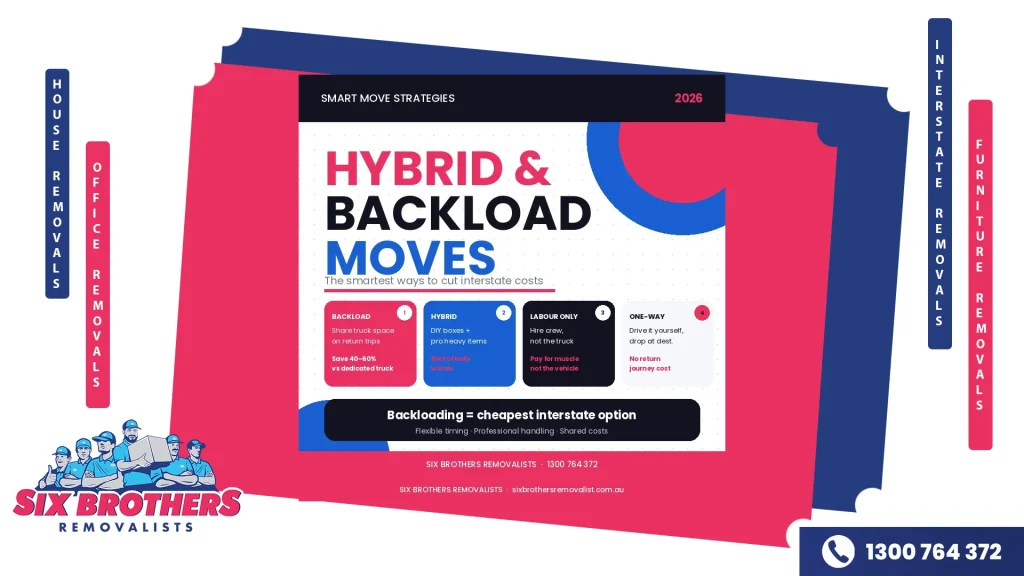
Backloading is one of the best-kept secrets in the moving industry, particularly for interstate moves. Here is how it works: a removal truck completes its main job and then takes on extra cargo at a reduced rate to fill the empty space on the return trip.
For an interstate move in Australia, backloading can cut your transport costs dramatically compared to a full-service dedicated truck. The trade-off is flexibility on timing. You work around the truck’s schedule, not the other way around.
For people who are not in a rush and want the cheapest way to move interstate, backloading is hard to beat.
Critical Cost-Saving Moving Strategies in Sydney
Living in Sydney brings its own moving challenges: traffic, tight apartment access, strata rules, and a competitive rental and property market. Here are strategies specifically designed to help Sydney siders save money.
Rigorous Decluttering
Sydney storage space is expensive. The less you bring to your new place, the less you spend on both moving and storage. Be honest about what you actually use. Decluttering before moving saves time and money at every stage of the process.
A good rule: if you have not used it in twelve months, question whether it needs to make the trip.
Free Packing Materials
As mentioned above, Sydney locals have plenty of options for finding free boxes. But take it further. Use suitcases, laundry baskets, and bins as packing containers. These are items you are moving anyway, so filling them with clothes or soft furnishings makes them do double duty.
Move on Weekdays
This applies everywhere but especially in Sydney. Moving companies often charge weekend and public holiday rates that can be 15 to 30 percent higher than weekday rates. A mid-week move saves money and often means less traffic on Sydney roads, which saves time too.
Plan Ahead
Rushed moves are expensive moves. When you book last-minute, you lose negotiating power, and you often make mistakes that cost more to fix. Book your removalist or truck hire at least two to four weeks out. For interstate moves, aim for six to eight weeks.
Planning your move well in advance also gives you time to research, compare, and make better decisions.
Multiple Quotes
Never accept the first quote you receive. Contact at least three removalists and compare. Be specific about what you need: number of rooms, access challenges, distance, packing requirements. The more detail you give, the more accurate the quote.
Getting multiple quotes takes maybe an hour of your time. It can save you hundreds of dollars.
Budget Moving Considerations
Saving money is the goal, but there are a few things you should never compromise on. Keep these in mind as you plan.
Expenses
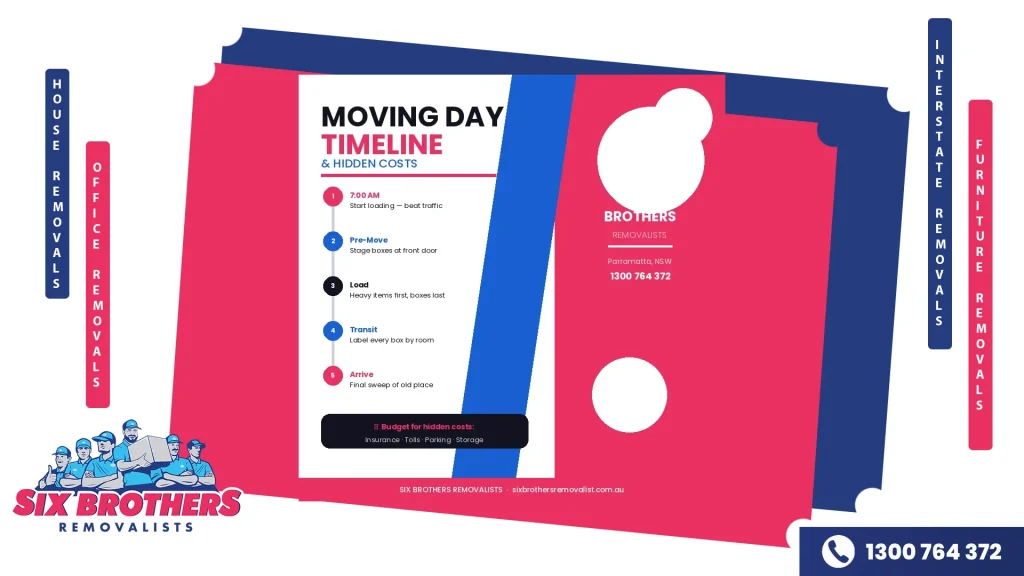
The obvious costs of moving are truck hire, labour, and fuel. But hidden costs catch people off guard. Think about:
- Insurance coverage for your belongings during transit
- Toll charges on major Sydney roads
- Parking permits if you are moving to or from an apartment or inner-city address
- Storage units if there is a gap between your move-out and move-in dates
- Cleaning costs if your old rental needs a professional clean
Factor these into your budget from the start. They are not optional extras; they are part of the real cost of moving.
Safety
DIY moving looks cheap on paper, but injuries are expensive in every way. Back injuries from lifting heavy furniture can affect you for months. Dropping items on stairs is a real risk.
If you are moving a piano, antique furniture, or anything fragile and valuable, think carefully before trying to handle it yourself. The cost of professional movers for those specific items is almost always worth it.
Time
Time is money, and moving takes more of it than almost anyone expects. A DIY move that saves $400 but takes two exhausting days and leaves you unable to work the next day has a real cost too.
Be honest about how much time you have and how much energy you actually want to spend on this.
Cheapest DIY Moving Plan
If you have decided to go full DIY, here is how to do it as efficiently as possible.
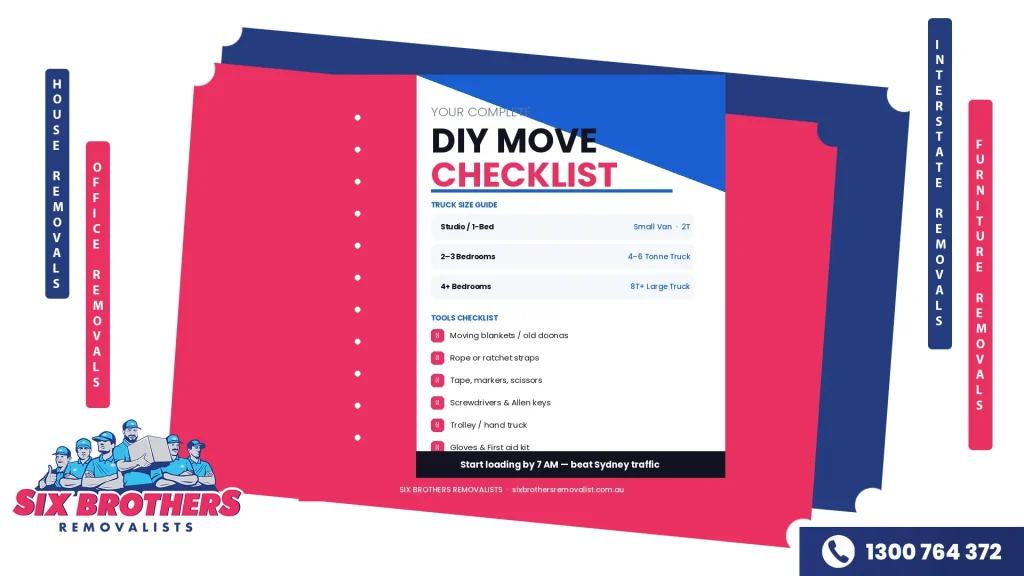
Truck Size Pick
Choosing the right truck size is one of the most important decisions in a DIY move. Too small, and you are making multiple trips. Too large, and you are paying for space you do not need and handling a harder-to-drive vehicle.
A rough guide for Sydney moves:
- Studio or one-bedroom unit: a small van or 2-tonne truck
- Two to three-bedroom home: a 4 to 6-tonne truck
- Four-plus bedroom home: an 8-tonne truck or larger
When in doubt, size up slightly. Multiple trips burn time, fuel, and energy.
Load Order
Load heavy, large items first. Couches, wardrobes, and appliances go in at the back of the truck against the cab wall. Boxes stack on top and fill in the gaps. Fragile items travel last, closest to the rear doors where you can access them carefully.
Distribute weight evenly from side to side to keep the truck balanced and easier to drive.
Friend Workflow
If friends are helping, assign roles before you start. Do not let everyone try to do everything. One person directs loading in the truck. Others bring items from the house to a staging zone. One person handles doors and lifts. Clear roles prevent confusion and prevent items from being set down in random places where people trip over them.
Organise a proper thank-you for your helpers. A good feed and cold drinks at the end of the day is the unwritten law of the Australian DIY move.
Damage Prevention
Furniture scratches and broken items are costly mistakes in a DIY move. Prevent them with these basics:
- Wrap furniture corners with moving blankets or old towels
- Remove legs from tables and beds before moving
- Use furniture sliders under heavy items to slide rather than lift where possible
- Disassemble what you can before moving day
- Tape drawers and doors shut on furniture
Checklist: Tools to Bring
Before the truck leaves, make sure you have:
- [ ] Moving blankets or old doonas
- [ ] Rope or ratchet straps to secure the load
- [ ] Tape and markers for box labelling
- [ ] Screwdrivers and Allen keys for disassembly
- [ ] Gloves for grip and hand protection
- [ ] Trolley or hand truck for heavy boxes
- [ ] First aid kit
- [ ] Your phone charger and power bank
Tips for Moving Furniture Yourself – The Cheapest Way to Move in Sydney
Moving furniture yourself is not complicated, but it does require a bit of technique.
Use the right body mechanics. Lift with your legs, not your back. Keep the item close to your body. Never twist while holding something heavy.
Slide whenever possible. Furniture sliders are cheap and incredibly useful. Place them under sofa legs and large furniture and glide items across hard floors without lifting. On carpet, use a flat piece of cardboard.
Remove what you can. Wardrobes are heavy. Wardrobes with all the clothes still in them are extremely heavy. Empty everything before moving furniture. Remove drawers. Take doors off hinges if they are making the item awkward to manoeuvre through doorways.
Protect floors and walls. Sydney apartment buildings and rental homes often have strict damage policies. Use corner protectors on walls, and lay down drop sheets in hallways where heavy items are being carried through.
Know your limits. There is no shame in saying a particular piece of furniture needs professional help. A dropped fridge or a crushed foot is not worth the saving.
Best Hybrid Moving Setups to Save Money
Hybrid moves give you the best of both worlds. Here are the most practical setups for Sydney residents.
Big-Items Only
Hire a removalist crew just for the large, heavy, or awkward items. Couches, mattresses, fridges, washing machines, and large wardrobes are the things most likely to cause injury or damage in a DIY move. Let the professionals handle those. You manage everything else.
Labour-Only Crews
Some removal services offer labour-only options. They bring the people and the muscle but not the truck. You hire the van or truck separately. This setup can save money compared to a full-service booking while still protecting you from the physical hard work.
One-Way Hire
For interstate moves, one-way truck hire allows you to pick up a truck in Sydney and drop it off at your destination. You do not have to drive back. This suits people who are making a permanent move and want control over packing their own belongings.
Backload Booking
Booking a backload slot through a removal company is one of the cheapest interstate options available. You share transport space, you pay less, and your belongings are still handled by professionals. For a Sydney to Brisbane or Sydney to Melbourne move, this can be significantly cheaper than a full dedicated truck.
Who Wins: Unit vs House
For a one or two-bedroom unit, a full DIY move is genuinely achievable with a couple of strong helpers and a hired van. The savings are real and the effort is manageable.
For a three-plus-bedroom house, a hybrid approach usually wins. The volume and weight of items in a larger home pushes DIY into a zone where injuries, multiple trips, and damage risks start to outweigh the cost savings. Using labour-only crews or a partial-service removalist for the heavy lifting often ends up saving time, energy, and money overall.
Move-Day Timeline That Saves Money
A well-run moving day costs less. Delays mean extra hire hours, tired helpers who make mistakes, and a stressful experience that lingers.
Early Start
Start loading no later than 7 AM. Traffic in Sydney builds quickly from 8 AM onwards. An early start also gives you buffer time if anything takes longer than expected.
Staging Zone
Set up a staging zone near your front door or garage the day before. All packed boxes and disassembled furniture pieces should be ready to go before the truck arrives. Do not waste hire hours packing while the truck sits waiting.
Box Labelling
Label every box with its destination room and a brief content description. This makes unloading faster and means you are not opening random boxes to find the kettle at 9 PM on moving night.
A simple system: write the room name in big letters on the top and two sides of every box. Use a different colour marker per room if you want to go the extra step.
Final Sweep
Before you hand back the keys to your old place, do a full room-by-room sweep. Check every cupboard, shelf, and storage space. Check the roof space and garage. Check behind and under appliances. People lose items they forget about all the time, and replacing them is more expensive than spending five minutes checking.
Plan Your Moving Day in Sydney
Good moving day planning in Sydney means factoring in local realities.
Book street parking or loading zones in advance if you are moving from an apartment. Some councils require permits. Contact your local council or strata manager at least a week ahead.
Check whether your new address has any access restrictions. Narrow driveways, low-clearance parking structures, and building access hours can all affect the move.
If you are using a removalist like Six Brothers Removalists, confirm all logistics with them 48 hours out. Confirm the start time, address, and any special instructions. Good communication is the cheapest form of insurance on moving day.
Have cash or payment ready if required, and keep a copy of your booking confirmation handy.
Cheapest Moving Mistakes to Avoid in Sydney
Even the most careful movers make avoidable mistakes. Here are the most common and costly ones.
Underbooking Time
People consistently underestimate how long moving takes. A two-bedroom unit that looks straightforward can take eight hours when you factor in traffic, wrapping fragile items, navigating apartment lifts, and reassembling furniture. If you are hiring labour by the hour, being wrong about time is expensive.
Always add a buffer of at least two hours to whatever you think the job will take.
Wrong Truck Size
Booking a truck that is too small is one of the most frustrating mistakes in a DIY move. You get partway through loading and realise you cannot fit everything. Now you either make multiple trips or call for help at the last minute.
Measure large items before booking. Use an online truck size calculator if you are unsure, or ask the hire company directly.
Unpacked Smalls
Loose items are the enemy of an efficient move. Small objects that are not packed into boxes take up awkward space in the truck, slide around, and get damaged. Pack everything that can be packed. Use small boxes for books and heavy items. Use medium boxes for kitchen items. Use large boxes only for light, bulky things like cushions and bedding.
No Essentials Box
Pack a separate box or bag with everything you need for the first 24 hours. Think: phone chargers, toiletries, a change of clothes, medications, bedding for the first night, coffee-making supplies, and snacks.
When the truck is unloaded and you are exhausted, you will not want to tear through fifteen boxes to find your toothbrush.
Damage Photo Routine
Before you move a single item, photograph every room in your old place. Document existing marks on walls, floors, and fixtures. Do the same when you arrive at your new address.
This takes ten minutes and protects your bond refund. It also protects you from being blamed for pre-existing damage at your new place. Make it a non-negotiable habit.
Should I Compare Quotes from Movers in Sydney?
Yes. Absolutely, every time.
The difference between the first quote you receive and the best quote available can be hundreds of dollars. Moving companies price based on availability, demand, and how well they understand your job. The more detail you provide when requesting quotes, the more accurate and comparable those quotes will be.
When comparing quotes, look beyond the bottom-line price. Check what is included. Does the quote cover transit insurance? Are there call-out fees or minimum hours? Will they disassemble and reassemble furniture? Are there extra charges for stairs, heavy items, or long carry distances?
A cheap quote that excludes these things can quickly become the most expensive option once the real costs appear.
Six Brothers Removalists offers transparent quotes with no nasty surprises. You can reach them on 1300 764 372 or email info@sixbrothersremovalist.com.au to get a clear, honest price for your move.
What If You Can’t DIY? Tips for Hiring a Budget Removalist in Sydney
Not everyone can do a DIY move, and that is perfectly fine. Here is how to get the best value from a professional removal service without overspending.
Book in advance. Last-minute bookings are almost always more expensive. Book your removalists at least two to three weeks ahead for local Sydney moves. For an interstate move, give yourself six to eight weeks.
Choose weekdays. As mentioned, weekday rates from most removal services are lower than weekend rates. If you have any flexibility, use it.
Be ready. Removalists charge by the time they spend. If they arrive and you are still packing, the clock is ticking. Being fully packed and ready to go from the moment they arrive saves real money.
Do your own packing. Most removal services offer packing as an optional add-on. Doing your own packing saves money, and it also means you know exactly where everything is.
Ask about backloading. If you are making an interstate move in Australia, ask every removalist you contact whether they offer backloading. Many do, and the savings can be substantial.
Check customer reviews. Cheap does not always mean good value. A removalist who loses items, causes damage, or fails to show up costs you far more than a slightly higher-priced reliable team. Read reviews on Google and look for consistency in what customers say.
Six Brothers Removalists are based in Parramatta at Suite 1, Level 5, 58/60 Macquarie St, and cover the wider Sydney metro area and beyond. Their team is experienced in everything from small unit relocations to full family home moves and interstate transport.
Random Moving Tips That Save Money and Make Life Easier
Some of the best money-saving moving tips do not fit neatly into a category. Here they are.
Defrost your fridge and freezer 24 to 48 hours before moving day. A fridge that has not been defrosted can leak, damage your new floors, and become a hygiene problem. Some removalists will not move an unprepared fridge.
Transfer your utilities before you move. Do not leave this to the last minute. Electricity, gas, internet, and water transfers all take time. Missing this means extra costs or living without services in your new home.
Change your address early. Your bank, Medicare, the ATO, and your employer all need your new address. Update your address with Australia Post to redirect mail. Missing bank statements or government notices can cause real problems.
Use your wardrobe boxes wisely. Wardrobe boxes with a hanging rail let you move hanging clothes without packing them. They are a genuine time-saver for larger wardrobes.
Take photos of your electronics setup before disconnecting. Photograph the back of your TV, stereo, and gaming setup before pulling out cables. Reconnecting everything without that reference is a frustrating time sink.
Move plants strategically. Large indoor plants are awkward and heavy. Trim them back before the move and transport them in your own car if possible. Many removalists are reluctant to take responsibility for plants.
Label your boxes with a number and keep a master list. Number each box and write in a notebook what is in each. This is especially useful for interstate moves where boxes sit in storage or transit for a period.
How Can I Move House on a Tight Budget in Sydney?
As they say: measure twice, cut once. Planning is the single biggest factor in the cost of a move. The people who end up spending too much are almost always the ones who left things to the last minute.
Here is a practical framework for moving house on a tight budget in Sydney:
Eight weeks out: Start decluttering. Research removalists and truck hire companies. Get at least three moving quotes.
Six weeks out: Book your removalist or truck. Start collecting free packing materials. Begin packing items you rarely use.
Four weeks out: Notify utilities, Australia Post, and important contacts of your upcoming address change. Pack room by room. Label every box.
Two weeks out: Confirm your removalist booking. Arrange parking or access permits if needed. Pack all non-essential items.
One week out: Pack almost everything. Leave out only the essentials you need for daily life. Confirm all logistics with your removalist.
Moving day: Start early. Stay organised. Have your essentials bag packed and accessible.
Following this structure removes the chaos that causes expensive last-minute decisions. It also makes your moving day feel much more manageable, which is a form of saving money too. Less stress means fewer mistakes.
Cost Factors When Relocating a Physical House Structure
If you are not just moving your belongings but actually relocating a physical house structure, the cost considerations are in a completely different league. This applies to things like Queenslanders, relocatable homes, or rural structures being moved to a new block.
Lighten the Load
Before any physical house relocation, everything removable comes out first. Furniture, fittings, appliances, and personal belongings all need to be transported separately. The lighter the structure, the lower the transport cost and the easier the logistics.
Foundation Choice
The type of foundation you are moving the house onto significantly affects the overall cost. A slab-on-ground is generally cheaper and faster than a raised stump or pier foundation. Get multiple quotes from contractors and factor in council approval requirements, which vary across NSW.
Clear Site Access
Physical house transport requires wide, clear access routes. Overhanging trees, power lines, narrow roads, and restricted access points all add cost and complexity. Have the transport company inspect the route before you commit to a price.
This type of job always involves specialised contractors, engineers, council permits, and often utility companies. It is not a DIY territory. Get expert advice early.
Frequently Asked Questions
What is the cheapest day of the week to move house? Mid-week days, particularly Tuesday and Wednesday, are typically the cheapest days to move in Sydney. Demand is lower, and many removalists offer better rates.
Is DIY moving cheaper than hiring removalists? For small moves, yes, often significantly. For larger homes or interstate moves, the cost difference narrows when you factor in truck hire, fuel, tolls, time, and the risk of injury or damage.
What is backloading and how does it save money? Backloading means booking empty space on a truck that is already making a trip your way. It is one of the cheapest ways to move interstate in Australia because you share the transport cost rather than paying for a dedicated truck.
How far ahead should I book removalists in Sydney? For local moves, two to three weeks is a good guide. For interstate removalists, aim for six to eight weeks, especially around holiday periods.
Are there hidden costs with cheap removalists? Yes, sometimes. Always ask what the quote includes. Common extras include call-out fees, minimum hours, charges for stairs or heavy items, and insurance coverage costs.
Ready to Move? Talk to Six Brothers Removalists
If you want professional removalists in Sydney who give you a straight answer and a fair price, Six Brothers Removalists are ready to help.
Based in Parramatta and serving the entire Sydney metro area, they offer local moves, interstate removals, backloading services, and labour-only options to suit different budgets.
Call 1300 764 372 Email info@sixbrothersremovalist.com.au Suite 1, Level 5, 58/60 Macquarie St, Parramatta NSW 2150
Get your free moving quote today and take the first step toward a stress-free move.
cheapest way to move interstate: What is the cheapest way to move a house long-distance?
The cheapest way to move a house long-distance usually combines planning ahead of time, decluttering possessions you no longer need, and choosing the right transport option. To find the cheapest way consider selling or donating large items you won’t need, packing smaller items yourself, and utilising a freight or shared shipment service instead of a dedicated removal team. Off-peak bookings and flexible dates can cut moving costs, and getting multiple quotes from removal services or a removalist will help you compare prices. This approach saves time and energy and makes moving to a new house more affordable without sacrificing safety.
ways to move interstate: What are the common ways to move furniture interstate and when is each cheapest?
One of the most common ways to move furniture interstate is hiring a professional removalist, but this is often expensive for full-service moves. Cheaper interstate options include renting a moving truck and driving it yourself, using a courier or pallet freight for bulky items, or booking a part-load or shared truck shipment if you’re flexible on timing. For smaller items, postal or parcel services and using removal services that offer economy or long-distance packages can be significantly cheaper. Assess your moving costs by comparing time and energy trade-offs—DIY saves money but costs you time, while a removal team saves time but can cost extra money.
moving costs: How can I reduce moving costs when you’re moving interstate or long-distance?
To reduce moving costs, start early and create a checklist so you can take advantage of off-peak rates and discounts. Declutter and sell items you no longer need to reduce shipment volume, buy free or cheap packing materials from hardware stores, and pack smaller items yourself to avoid paying for packing services. Getting several quotes and reading customer reviews can help you choose affordable removal services. Consider hybrid options—hire professionals for heavy items and move boxes yourself—to balance time and energy while keeping the move on a budget.
removal services: Is getting a removalist necessary and how can customer reviews help you save?
Getting a removalist is not always necessary, but it can make the process easier and less stressful for big interstate relocations. If you decide to hire a removal team, check customer reviews to verify reliability and hidden fees; reviews often highlight whether a company offers cost-saving options like part-load shipments or off-peak discounts. Reviews can also point to removal services that handle specialised items safely, reducing the risk of damage and extra replacement costs—helping you save both money and time.
start early: How does starting early and using a checklist make moving to a new house cheaper?
Start early with a checklist to book cheaper dates, organise removal services, and locate affordable packing supplies at hardware stores. Early planning lets you sort items you no longer need, sell or dispose of them, and reduce moving costs by lowering shipment weight and volume. It also gives time to compare quotes, schedule off-peak shipments, and arrange help from friends or hire a smaller removal team for heavy lifts. In short, starting early helps you utilise cheaper options and manage moving costs so the move is easier and less stressful.
5 Surprising Facts About the Cheapest Way to Move a House
- Sometimes the cheapest option is to move only the structure and rebuild the interior at the new site — stripping out heavy fixtures and modularizing the home can cut transport costs dramatically.
- Timing matters: moving during off-season months or mid-week can lower permit fees, contractor rates, and hauling costs compared with peak moving seasons.
- Short-distance moves can be more expensive per mile than long hauls because fixed mobilization costs (crane, permits, crew) are spread over fewer miles — consolidating jobs or scheduling nearby moves can reduce cost per project.
- Negotiating permits and utility disconnections yourself, and coordinating with local authorities, can save significant fees; many homeowners overpay by letting movers handle every administrative step.
- In some cases, demolishing and rebuilding is cheaper than moving the house, especially for older or heavily modified structures — a cost comparison that includes salvage value and site prep often reveals unexpected savings.