

Table of Contents
Moving interstate is a big leap. New city, new keys, new everything. But here’s the snag most people hit. Your old place closes before your new one opens. So where do your things go in the gap? That’s the storage question. And honestly, it trips up more movers than you’d think.
Pick the wrong storage and you pay too much. Or your stuff sits in the wrong spot. Either way, stress. The right call comes down to three things. Your timeline, your budget, and how often you need to grab your gear. Sounds simple. It mostly is, once you see it laid out.
This guide breaks down short-term storage vs long-term storage in plain words. No jargon. No fluff. Just what works for a real interstate move out of Sydney. We help families do this every week as furniture removalists in Sydney. So this comes from the truck, not a textbook.
Do You Actually Need Storage When Moving Interstate?
Quick gut check before you book anything. Not every move needs storage. Some do. Some don’t.
Here’s the old saying we live by. Measure twice, cut once. Same goes for moving. Plan the gap first, then decide. Run through these four checks. They sort out fast if storage earns its keep for you.
Match Dates First
Line up your move-out date and your move-in date. Side by side. Is there a gap?
A clean same-day swap means no storage at all. Your stuff goes straight to the new place. But interstate moves rarely line up that neat. Settlement slips. Leases overlap. A few days turns into a few weeks. That gap is your storage answer.
Check Property Access
Can the truck even reach your new home on day one? Sometimes the answer is no. Maybe the lift booking isn’t ready. Maybe the keys come late. Maybe the new owner is still moving out. Storage buys you time.
Review Delivery Readiness
Is the new place ready for your things? Fresh paint drying? Floors being sanded? Renovation half done?
Dumping boxes into a worksite is asking for damage. Short hold in storage keeps everything safe and clean.
Compare Risk and Cost
Now weigh it up. Storage costs money. But so does a failed delivery or damaged goods. Sometimes paying for two weeks of storage beats the chaos of no plan. Sometimes it’s overkill. This is where you decide.
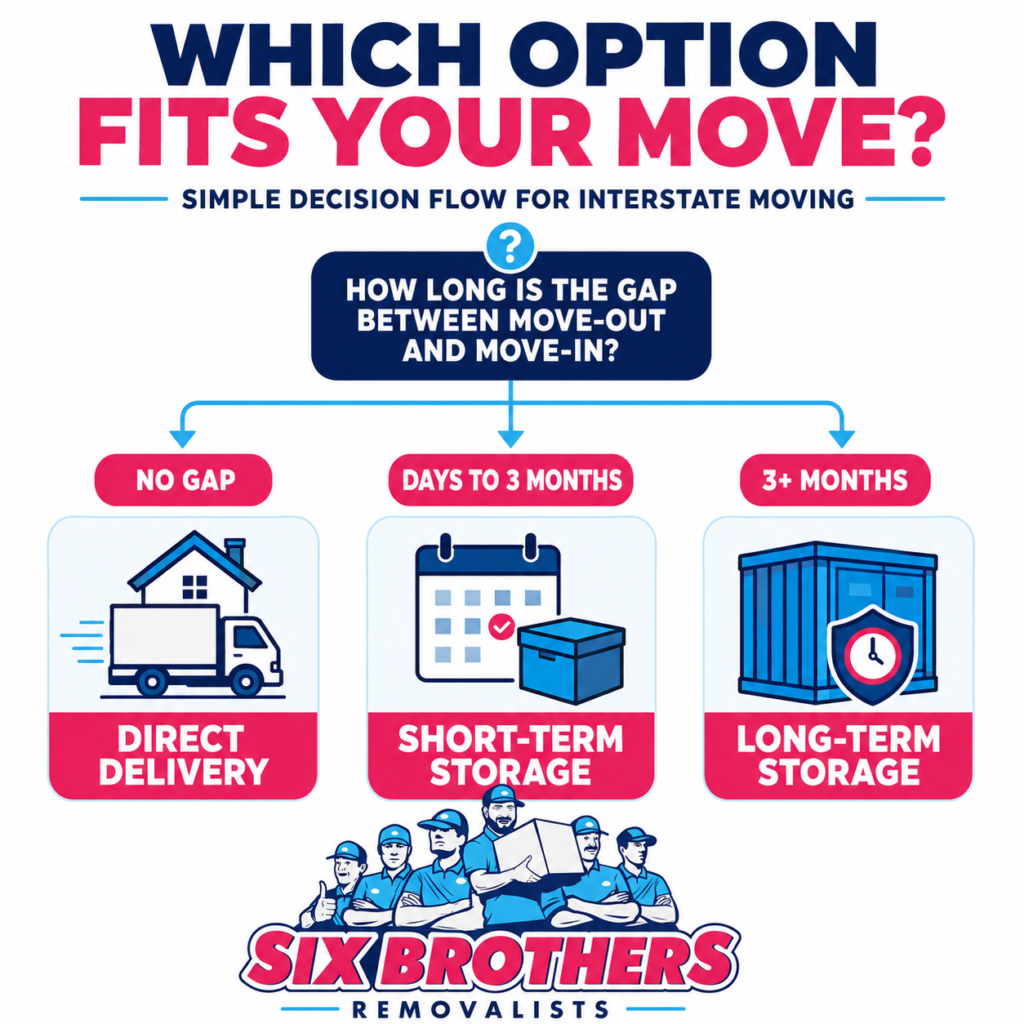
| QUICK DECISION CHECK• Same-day move-in possible? → You likely need no storage.• Gap of days to 3 months? → Short-term storage fits.• Gap longer than 3 months? → Long-term storage is smarter.• New place under renovation? → Store first, deliver later. |
What Is Short-Term Storage?
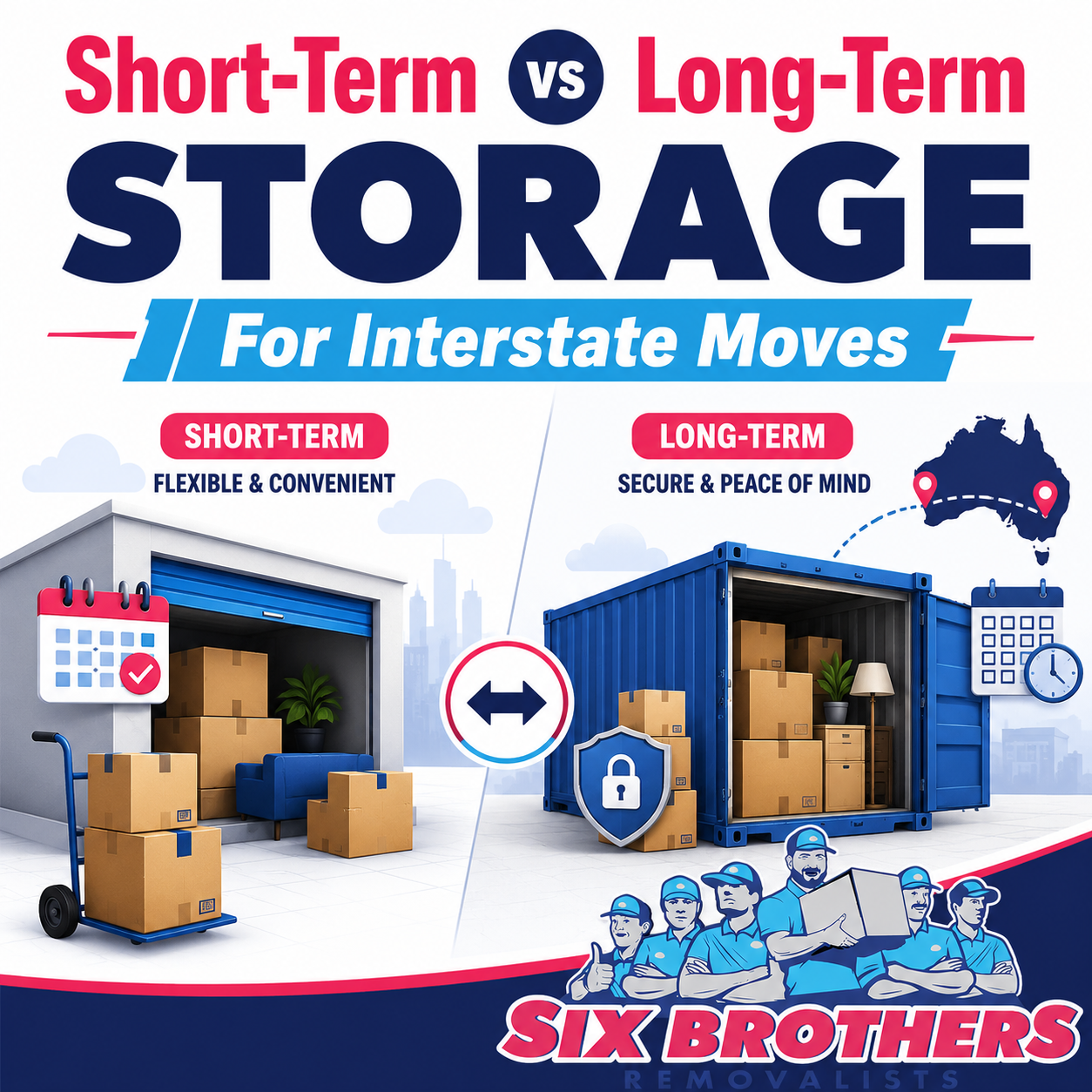
Short-term storage holds your stuff for a short window. Think a few days up to three months. It’s the bridge over a gap. You’re between homes and your things need a safe spot for a bit.
Most short-term storage is flexible. Often month to month. You’re not locked into a long deal. That suits a move in motion. It’s best when settlement is delayed. Or when you’re crashing in temp housing. Or just bridging the move while the new place sorts out.
The trade-off? It usually costs more per month. You pay for the freedom to come and go.
What Is Long-Term Storage?
Long-term storage is the slow lane. Three months and beyond. Could stretch to a year or more. This is for stuff you won’t touch for a while. You’re not unpacking next week. You’re parking it.
It fits a few clear cases. You’re downsizing and need to let go slowly. You’re travelling for months. Or you’ve moved into a smaller temp space that just won’t fit it all. The upside is the price. Monthly fees drop a lot for longer holds. But you often sign a lock-in or pay up front for the best rate.
You won’t pop in often. That’s the whole point. Pack it well, lock it, leave it.
Core Differences Between Short-Term and Long-Term Storage
Let’s get specific. Same idea, two very different setups. Here’s where they split.
Typical Duration
Short-term runs a few days to a few months. Long-term runs several months to years. Duration is the first fork in the road.
Primary Use
Short-term bridges a transition. Long-term holds things you’ve set aside. One is a pause. The other is a park.
Best Storage Style
Short-term often pairs with your removalist as storage-in-transit. Long-term usually means a dedicated facility or sealed module.
Accessibility
With short-term you may need frequent access. Grabbing things as you settle. Long-term is infrequent. You rarely open the door.
Pricing Model
Short-term costs more per month but stays flexible. Long-term costs less per month but may want a contract. You trade freedom for savings.
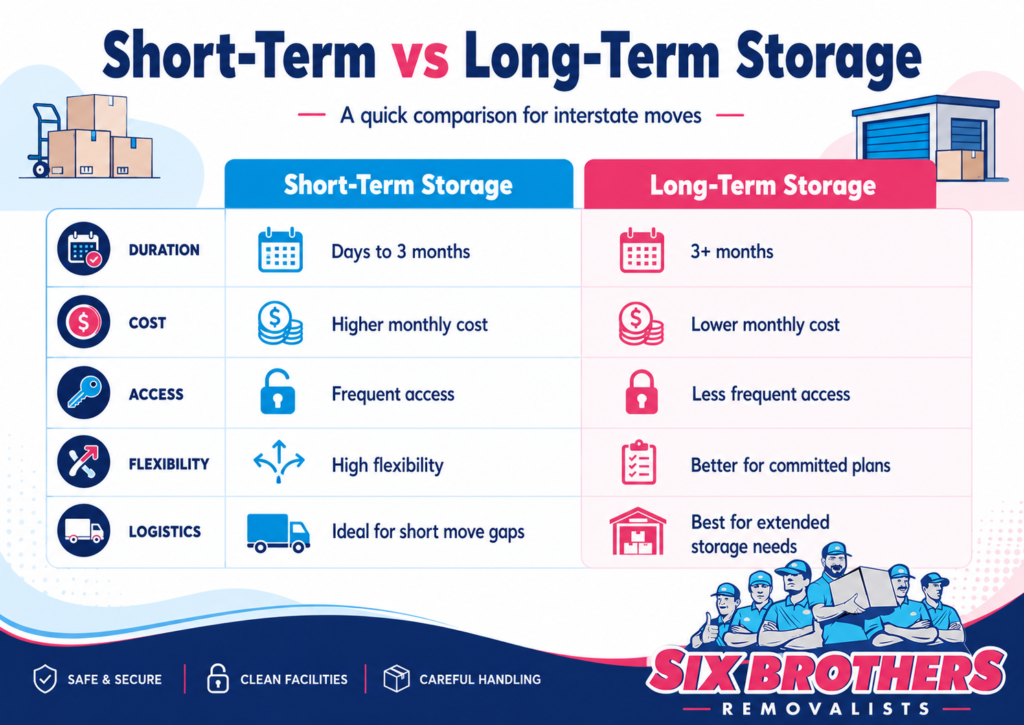
| KEY DIFFERENCES AT A GLANCEDuration — Short-term: days to a few months. Long-term: months to years.Flexibility — Short-term: high, often month-to-month. Long-term: lock-in or up-front for best rates.Cost — Short-term: higher per month. Long-term: lower ongoing fees.Access — Short-term: frequent as you unpack. Long-term: infrequent.Logistics — Short-term: often storage-in-transit with movers. Long-term: usually a dedicated facility. |
Common Situations Where Short-Term Storage Is Useful
When does short-term storage actually earn its spot? More often than you’d guess. Here are the everyday cases.
• Delayed settlement. Your sale or purchase date moves. Stuff needs a home for a week or two.
• Lease overlap gap. Old lease ends before new lease starts. Classic short gap.
• Temporary housing. Crashing with family or in a rental while you find the right place.
• New home not ready. Paint, floors, or a reno still wrapping up.
• Staggered move. Sending furniture ahead but living out of a suitcase for a bit.
See the pattern? Short-term is the gap filler. It buys you breathing room when dates don’t behave.
Situations Where Long-Term Storage Makes Sense
Long-term storage is a different beast. It’s for the long haul, not the quick fix. When does it fit?
• Downsizing slowly. You’ve moved smaller but can’t part with everything yet.
• Extended travel. Heading overseas or around Australia for months.
• Smaller temp space. Your new spot won’t fit it all, but it’s only for now.
• Holding an inheritance. Furniture or keepsakes you’ll deal with later.
• Property still selling. Your old home hasn’t sold and the gear has nowhere else to go.
Ask yourself one thing. Will I need this in the next three months? If the answer is no, long-term wins.
Storage vs Direct Delivery
Here’s a fork plenty of movers miss. Do you store at all? Or send everything straight to the new door? Direct delivery is the dream. One load, one drop, done. But it only works when the timing is locked.
Best for Fixed Dates
Got firm dates on both ends? Direct delivery is your friend. No storage. No double handling. Cheapest path by far.
Best for Uncertain Dates
Dates wobbly? Storage saves you. It absorbs the unknown so a slipped settlement doesn’t blow up your whole move.
Cost Difference
Direct delivery skips storage fees. Storage adds a monthly cost plus possible handling charges. Fixed dates almost always cost less.
Handling Difference
Every load and unload is a chance for a knock. Direct delivery touches your stuff once. Storage means loading in, then out again later.
How Interstate Storage Works
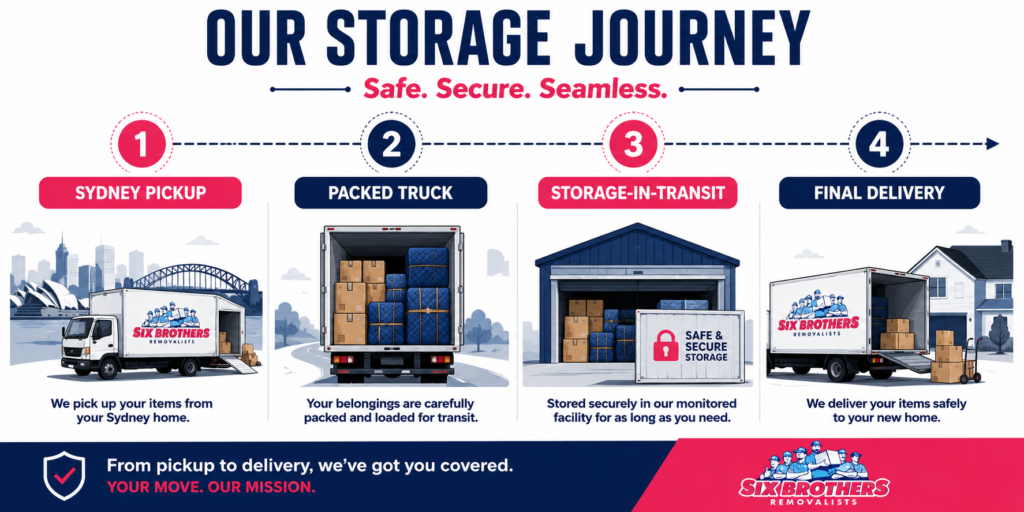
So how does storage fit into a long-haul move? It’s smoother than it sounds. Here’s the flow. Your removalist packs and loads at the Sydney end. From there, your goods either head straight to your destination or pause in storage along the way.
The smart setups limit double-handling. Less loading and unloading means less risk. Your stuff moves fewer times, so fewer chances for damage. For the full picture on long hauls, our guide on interstate furniture transport walks through the moving parts. Storage slots right into that journey.
Whether it’s a few weeks or a few months, the goal stays the same. Safe, sealed, and easy to deliver when you’re ready.
Short-Term Storage (Under 3 Months)
Let’s zoom in on short holds. Under three months, your options narrow to a few solid picks. Each has a sweet spot.
Storage-in-Transit (SIT)
This is the mover’s special. Your goods stay with the removalist between pickup and delivery. No separate facility to chase. It’s clean and simple. One company handles the lot. Pickup, hold, delivery. Great when your gap is short and your dates are still firming up.
Mobile Pods / Containers
A container lands at your home. You fill it. Then it’s whisked to a secure facility. Providers like TAXIBOX and Super Easy Storage run this model. The win here is less handling. Your stuff loads once and stays in that box. Works for short and long holds alike.
The Access Factor
Short-term often means you’ll want to dip in. Grab a coat. Find the kettle. Pick a setup that lets you reach your boxes without a fuss.
Packing Strategy
For a short hold, pack by priority. Stuff you’ll need soon goes near the front. Label clearly. You’ll thank yourself in two weeks.
Long-Term Storage (3+ Months)
Now the long game. Three months plus changes how you pack and what you choose. Protection becomes the priority.
Containerised & Module Storage
Your goods get sealed in a wooden module or container at the depot. It stays shut for the whole stretch. Less dust, less handling, more peace of mind. This is the gold standard for long holds. Seal it once, store it safe, open it when you land.
Climate Control is Critical
Here’s a thing people forget. Heat and damp are quiet killers. Over months, they warp wood and fog up electronics. Sydney summers swing hot and humid. So do Queensland depots. Climate-controlled storage shields the sensitive stuff from those swings.
Think of it like a fridge for your furniture. Stable air keeps timber, leather, and screens in one piece.
The Access Factor
Long-term means you barely visit. That’s fine. But pack like you won’t see it for a year. Because you might not.
Packing Strategy
Never wrap wood furniture in plastic for the long haul. Plastic traps moisture. Trapped moisture breeds mildew. Use breathable covers instead. Pad corners. Stack heavy on the bottom. Keep aisles clear if you ever do need a look. Long-term packing is all about defence.
Advantages of Short-Term and Long-Term Storage
Both styles pull their weight. The trick is matching the perk to your situation. Here’s what each brings.
Short-term wins on flexibility.
• Easy access while you settle in.
• Month-to-month freedom, no long lock-in.
• Often bundled with your removalist as SIT.
• Perfect for short gaps and shifting dates.
Long-term wins on value.
• Lower monthly cost for extended holds.
• Sealed modules mean less handling damage.
• Climate options protect over the long run.
• Set it and forget it while life moves on.
When Movers Provide Storage Solutions
Good news. You don’t always need a separate storage company. Plenty of full-service movers handle it for you. This is where storage-in-transit shines. Your removalist picks up, holds your goods, then delivers when you’re set. One team. One invoice. Less hassle.
It’s a real perk for interstate moves. Your stuff doesn’t bounce between three different companies. It stays in trusted hands the whole way. If you’re planning a Sydney to Melbourne move, ask whether storage-in-transit is on the table. It often is. And it can smooth out a tricky timeline.
Sydney Storage Challenges During Interstate Moves
Moving out of Sydney brings its own headaches. The city throws curveballs that storage planning has to dodge. Let’s name them.
Apartment Access
High-rise living means narrow halls and tight doors. Getting bulky furniture out takes planning. Storage timing has to flex around it.
Lift Bookings
Most Sydney towers make you book the service lift. Miss the slot and your move stalls. That delay can push you straight into needing storage.
Strata Rules
Strata sets the moving hours. Some buildings ban weekend moves. Others limit the windows tight. Check the by-laws early so storage dates line up.
Parking Limits
Where does the truck even park? Inner Sydney streets are brutal. You may need a council permit. Sort it before move day, not on it.
Peak Traffic Delays
Sydney traffic doesn’t care about your schedule. A jammed run can blow your lift slot. Build buffer time, or let storage soak up the slip.
Factors That Influence Storage Pricing
Why does one quote sit double another? Storage pricing isn’t random. A handful of factors move the dial. Here they are.
• Volume. More cubic metres, more cost. Simple as that.
• Duration. Longer holds drop the monthly rate but add up overall.
• Access frequency. Easy-access units cost more than sealed long-term modules.
• Climate control. Temperature-stable units carry a premium for the protection.
• Location. City depots cost more than regional ones.
• Handling. Each load and unload can add a fee.
Want a fuller picture of moving costs across home sizes? Our removalist cost breakdown lays it out in plain numbers.
Cost Elements to Watch Out For
Some costs hide in the fine print. They sneak up at the worst time. Spot them early and you save a packet.
Double-Handling Fees
Every extra load and unload can cost you. If your goods move from truck to storage to another truck, fees stack. Mobile containers cut this right down.
Location Pricing
A depot in central Sydney costs more than one out west. Sometimes a slightly further facility saves real money. Worth a look.
Contract Discounts
Long-term often unlocks better rates. Pay quarterly or up front and the monthly price can drop. Ask about it. Don’t assume the first quote is the floor.
How to Proactively Choose Your Strategy
Enough theory. Let’s pick your path. Three quick steps and you’ll know exactly what to book.
Calculate Your Timeline Gap
Count the days between leaving and arriving. That number is your guide. Under three months leans short-term. Over three months leans long-term.
Assess Your Destination Certainty
How sure are you about the new place? Locked in? Go direct or short-term. Still up in the air? Flexible storage protects you.
Verify the Location
Check where the storage actually sits. Near your route? Near your new home? A handy spot saves time and handling fees down the line.
| YOUR 3-STEP STRATEGY1. Count the gap → days, weeks, or months decides short vs long.2. Rate your certainty → firm dates go direct, shaky dates go flexible.3. Check the location → close to your route cuts cost and handling. |
What to Ask Before Booking Storage
Before you sign anything, ask the right questions. The answers tell you who’s solid and who’s winging it. Here’s your list.
• Is storage-in-transit available, and what does it cover?
• Are your goods insured while in storage?
• Is the unit climate-controlled?
• How much notice do you need for access or redelivery?
• Are there double-handling or admin fees?
• Can I get the full quote in writing?
That last one matters most. Always ask for a written quote. A verbal price means nothing when the bill lands.
On insurance, it pays to know your rights. The NSW Government’s guidance on choosing a removalist and transit cover explains how storage can be added to your transit insurance. Worth a read before you commit.
Packing and Inventory for Stored Items
Storage is only as good as your packing. Pack lazy and you’ll regret it. Pack smart and unpacking feels easy. Here’s how to nail it.
Label Every Box
Write what’s inside on at least two sides. Future you, digging through a dark unit, will be grateful. No guessing. No re-taping.
Create a Room List
Keep a master list. Box number, room, contents. A simple sheet or phone note works. It turns chaos into a quick scan.
Photograph Valuables
Snap photos of anything precious before it goes in. Proof of condition. Handy if you ever need to make an insurance claim.
Separate Essentials
Keep a box of must-haves with you, not in storage. Chargers, meds, a few clothes. The stuff you’d hate to be locked away.
Need a packing refresher? Our fragile items packing guide covers the delicate stuff that storage can rattle.
Avoid Storing Restricted Items
Not everything is welcome in storage. Some items are banned for safety. Others just don’t survive the wait. Know the no-go list.
• Flammables like gas bottles, petrol, and aerosols.
• Perishable food that’ll rot and draw pests.
• Hazardous chemicals and paints.
• Plants, which won’t last and may breach biosecurity rules.
• Anything illegal or live, like firearms without proper handling.
Moving interstate adds another layer. Some states have strict biosecurity checks. Australia’s biosecurity and import conditions guidance is worth checking if you’re carrying plants, soil, or produce across borders.
Key Tips for Interstate Moves
A few habits make interstate moves with storage so much smoother. Steal these. They’ve saved plenty of our customers real grief.
Ask About Storage-in-Transit (SIT)
It’s the easiest storage there is. Your mover holds your goods between pickup and delivery. One team, fewer handoffs, less to chase.
Prepare an Essentials Box
Pack a survival kit for the first night. Toiletries, a kettle, phone chargers, a change of clothes. Don’t let it vanish into storage.
Insure Your Belongings
Storage isn’t risk-free. Fires and water damage happen. The Queensland Government’s advice on storage insurance suggests taking out cover for items going into storage for any length of time. Smart move for peace of mind.
Common Storage Mistakes to Avoid
Most storage horror stories trace back to the same slip-ups. Dodge these five and you’ll be miles ahead.
Booking Too Late
Storage fills up, especially in peak season. Leave it late and you scramble. Lock it in early when you spot a gap coming.
Underestimating Volume
Stuff always takes more room than you think. Measure or ask for help sizing it. A too-small unit means a second trip or a scramble.
Mixing Urgent Items
Don’t bury the things you’ll need soon. Keep urgent gear near the front or out of storage entirely. Digging for a charger is no fun.
Ignoring Access Rules
Some facilities limit hours. Others need notice. Read the access terms so you’re not locked out when you really need in.
Skipping Written Quotes
A handshake price means nothing later. Get it in writing. Every fee, every condition. It’s your only real protection.
| THE 5 MISTAKES IN ONE LINE1. Booking too late — start early, beat the peak rush.2. Underestimating volume — measure before you book.3. Mixing urgent items — keep need-soon gear up front.4. Ignoring access rules — read the hours and notice terms.5. Skipping written quotes — get every fee in writing. |
Getting Your Items Delivered After Storage
The finish line. Your new place is ready and it’s time to bring everything home. Here’s how to land it smooth.
Confirm Move-In Date
Nail down the exact day before you book redelivery. A firm date stops your goods arriving before you’re ready for them.
Book Building Access
New place a unit? Book the lift and clear the parking. Same drill as the Sydney end. Sort it before the truck rolls up.
Arrange Redelivery
Give your storage provider or mover enough notice. Most need a few days. Plan it so delivery lands when access is locked in.
Check Items on Arrival
Walk through your inventory as boxes come off. Tick each one. Spot any damage now, not weeks later. That’s where your photos and list earn their keep. If something’s amiss, you’ll want it documented straight away. Australian Consumer Law covers services done with due care and skill, so good records protect you.
The Bottom Line on Storage for Your Interstate Move
So which one is right for you? It really does come down to the gap, the budget, and the access.
Short on time and dates wobbly? Short-term storage or storage-in-transit keeps you flexible. Settling for the long haul? Long-term storage saves you money and protects your gear.
There’s pride in getting this right. A move that lands clean, with nothing lost or broken, feels good. You earned that. And you don’t have to figure it all out alone. As experienced interstate removalists, we sort the storage piece every week. We’ll match the plan to your move, not the other way round.
| READY TO PLAN YOUR INTERSTATE MOVE?Six Brothers Removalists handles storage-in-transit, packing, and interstate delivery across Australia.Call 1300 764 372 for a free, written quote.Email info@sixbrothersremovalist.com.auSuite 1, Level 5/58-60 Macquarie St, Parramatta NSW 2150 |
Frequently Asked Questions
How much does furniture storage cost per month in Australia?
It varies a lot. Short-term flexible units cost more per month than long-term sealed modules. Volume, location, and climate control all move the price. Always ask for a written quote based on your exact cubic metres rather than guessing from a list price.
What is storage-in-transit (SIT)?
Storage-in-transit means your removalist holds your goods between pickup and delivery. One company handles the lot, so your stuff doesn’t bounce between providers. It’s ideal for short interstate gaps where your new place isn’t quite ready.
How do I protect furniture in storage?
Use breathable covers, never plastic, since plastic traps moisture and breeds mildew. Pad corners, stack heavy items low, and choose climate control for long holds. That stable air keeps timber, leather, and electronics safe over months.
How should I pack boxes for storage?
Label every box on two sides, keep a master room list, and pack by priority so need-soon items sit near the front. Photograph valuables before they go in. Keep an essentials box with you rather than locking it away.
Is short-term or long-term storage cheaper?
Long-term storage costs less per month but may need a lock-in or up-front payment. Short-term costs more monthly but stays flexible. For a gap under three months, short-term usually wins. Beyond three months, long-term saves money overall.
Do I need insurance for stored items?
Yes, it’s strongly recommended. Storage isn’t risk-free, with fires and water damage possible. You can often extend your transit insurance to cover the storage period. Check your cover before you commit so your belongings are protected.