
Moving to Australia sounds amazing until you check your bank account. Then reality hits hard. You start googling. You find ten different numbers. Some say $5,000. Others say $60,000. Nobody gives you one straight answer. Here’s why. The amount you need depends on your visa type, your city, your family size, and how comfortable you want to live. There’s no single magic number.
But don’t stress. We’ve broken it all down. Every visa requirement. Every hidden cost. Every monthly bill you’ll face when you land in Sydney or anywhere else in Australia. This guide is your moving house checklist Australia PDF in one long read. Bookmark it. Share it. Come back to it when you need real numbers. Let’s get into it.
Why Budgeting Matters Before Moving to Australia
As the old saying goes, “Fail to plan, plan to fail.” That’s doubly true when you’re moving overseas. Australia is one of the most expensive countries on the planet. Sydney alone ranks in the top 4% of the world’s priciest cities.
If you land without enough savings, you’ll burn through cash fast. Rent bonds alone can wipe out thousands. Then add groceries, transport, health insurance, and furniture setup costs on top. People who budget properly settle in faster. They avoid panic. They skip the dodgy share houses. They don’t end up sleeping on someone’s couch for three months.
Think of your budget like a seatbelt. You hope you won’t need the cushion. But you’ll be glad it’s there. The question isn’t whether you can afford Australia. It’s whether you’ve planned well enough to enjoy it when you arrive. So how much money do you actually need in your bank to move to Australia? Let’s look at the visa requirements first.
How Much Money Do You Need in Your Bank to Move to Australia?
Short answer? Between $7,000 and $70,000 depending on your situation. That’s a huge range. So let’s break it down. A single person on a Working Holiday Visa needs around AUD $5,000 plus flight money. A student needs closer to $30,000 to $65,000. A skilled worker or family moving permanently? You’re looking at $50,000 or more in savings to be safe.
These numbers cover visa proof of funds, flights, first month rent, bond, insurance, and basic living costs. They don’t cover luxury. They cover survival plus a small safety net. Want to know what to expect when moving to Australia? Keep reading. We’ll cover every visa type below.
Mandatory Proof of Funds to Move to Australia by Visa Type
The Australian Department of Home Affairs takes your bank balance seriously. They want proof you won’t become a burden on public services. Here’s what each visa requires.
Working Holiday Visa (Subclass 417/462)
This is the backpacker’s golden ticket. You need at least AUD $5,000 in your bank account. Plus you need a return flight ticket or enough money to buy one. The visa application fee is around AUD $635 to $670. You may also need funds for health checks and police certificates depending on your country. Total realistic budget to land in Australia on this visa? Around AUD $7,000 to $10,000 including flights and first week expenses.
Student Visa (Subclass 500)
Student visas have the toughest financial requirements. As of 2026, you must show AUD $29,710 for living costs alone for 12 months. Add your first year tuition (AUD $20,000 to $50,000 depending on the course). Add travel costs (around AUD $2,500 to $3,000).
Total funds you need to show? Somewhere between AUD $40,000 and $65,000 for a single student. Your bank statements need to show stable funds over 3 to 6 months. Random large deposits right before applying will raise red flags.
Additional Costs
Both visa types may require extra spending on health exams, English tests, police checks, and biometrics. Budget an extra AUD $500 to $1,500 for these depending on your home country. Visa processing fees also vary. Factor in AUD $700 to $1,600 for the application itself.
Dependents
Bringing family? Your costs multiply. For a student visa, add AUD $10,394 for a spouse or partner. Add AUD $4,449 per dependent child. If your kids are school aged, budget AUD $13,502 per child per year for school fees. Those numbers add up real fast.
Skilled/Permanent Visas (Subclass 189/190/482)
Skilled visas don’t always have a fixed proof of funds requirement like student visas do. But you still need enough savings to cover relocation expenses. The visa fees alone are steep. A Subclass 189 costs around AUD $4,640 for the primary applicant. Add AUD $2,320 for a partner and AUD $1,160 per child.
Skills assessments, English tests (like IELTS or PTE), and health checks add another AUD $1,000 to $3,000. For a family of four applying for a skilled visa? Budget AUD $10,000 to $15,000 just for visa related costs before you even pack a box.
How Much Bank Balance Is Required for an Australia Student Visa?
Let’s zoom in on this because students ask it the most. For 2026, the minimum living cost requirement is AUD $29,710 per year. This is set by the Department of Home Affairs and it’s non negotiable. On top of that you need proof of tuition fee payment for your first year. Course fees range from AUD $7,000 to $50,000 depending on the university and program.
You also need AUD $2,500 or so for travel costs. So the total for a single student? AUD $40,000 to $65,000. Your proof can include bank statements, education loan approvals, scholarship letters, or sponsor income documentation. Parents can sponsor you with their own bank statements and income tax returns. The key is consistency. Immigration officers want to see genuine savings. Not a sudden AUD $50,000 deposit the week before your application.
How Much Bank Balance Is Required for an Australian Tourist Visa?
Tourist visas (Subclass 600) don’t have a fixed dollar amount. But you do need to show you can support yourself. Most migration experts recommend showing AUD $1,000 to $1,500 per week of your planned stay. So a 4 week holiday? Show around AUD $5,000 to $6,000 in your bank.
You’ll also need proof of accommodation (hotel bookings or invitation letters) and return flight tickets. Six months of bank statements showing regular income and stable savings work best. The immigration department wants to see that you’re financially capable and that you plan to go home.
Estimated Total Relocation Budget for Moving to Australia
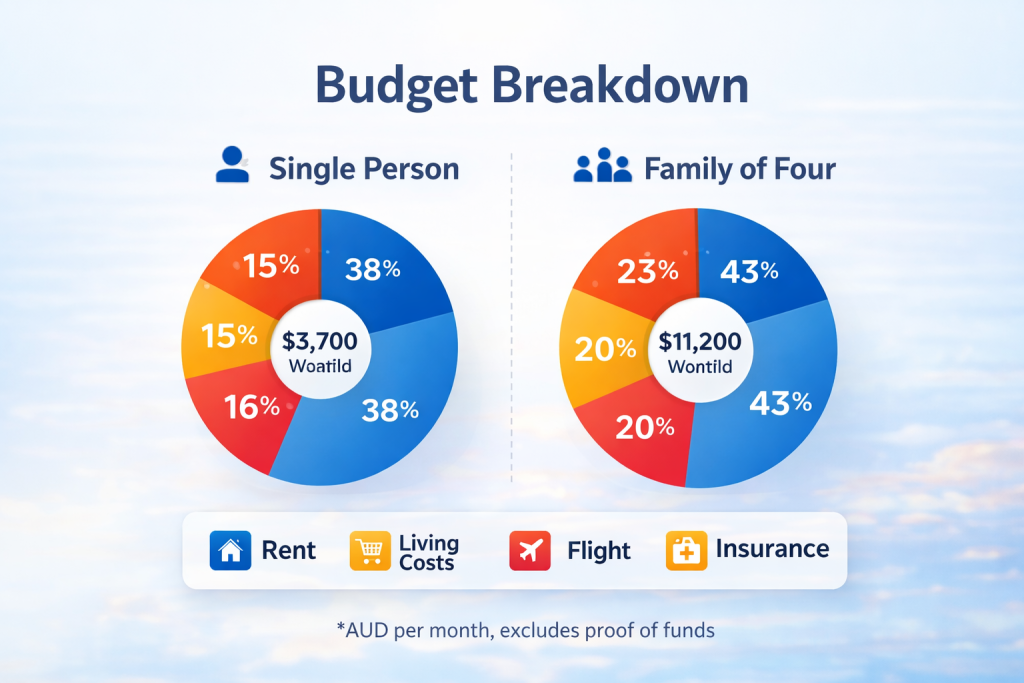
Here’s where we get real about how much money to move to Australia.
Single Person
| Cost Category | Estimated AUD |
| Visa fees and processing | $700 – $4,700 |
| Flights (one way) | $500 – $2,000 |
| Proof of funds (minimum bank balance) | $5,000 – $29,710 |
| First month rent + bond (Sydney) | $3,000 – $7,000 |
| Health insurance (first quarter) | $400 – $1,200 |
| Groceries and essentials (first month) | $600 – $1,000 |
| Transport setup (Opal card, etc.) | $100 – $300 |
| Furniture and household basics | $500 – $2,000 |
| Emergency buffer | $2,000 – $5,000 |
| Total range | $12,800 – $52,910 |
Family of Four
| Cost Category | Estimated AUD |
| Visa fees (all members) | $5,000 – $10,000 |
| Flights (one way, family) | $3,000 – $8,000 |
| Proof of funds / savings buffer | $30,000 – $50,000 |
| First month rent + bond (3BR house) | $6,000 – $14,000 |
| Health insurance (first quarter) | $1,500 – $4,000 |
| School enrolment fees | $2,000 – $13,500 |
| Groceries and essentials (first month) | $1,600 – $2,400 |
| Furniture and household setup | $3,000 – $8,000 |
| Transport setup (2 Opal cards + car deposit) | $500 – $3,000 |
| Emergency buffer | $5,000 – $10,000 |
| Total range | $57,600 – $122,900 |
These numbers are realistic. Not worst case. Not best case. Just real. If you’re shipping furniture to Australia, that’s a whole separate cost. International shipping can run $3,000 to $10,000 or more depending on volume and origin country. Sometimes it’s cheaper to sell everything and buy new.
Initial Arrival Expenses When Moving to Sydney, Australia
Sydney is where most newcomers land. It’s also where your money disappears fastest. Here’s what you’ll pay in your first 30 days.
Accommodation
A one bedroom apartment in central Sydney costs around $2,500 to $3,900 per month. Move to outer suburbs like Parramatta, Liverpool, or Bankstown and you’ll pay $1,600 to $2,200 per month. Most landlords want 4 weeks rent upfront as a bond plus 2 weeks rent in advance. So you’re paying 6 weeks rent before you even unpack. For a $2,000/month apartment? That’s roughly $3,000 on day one just for the roof over your head.
Health Insurance
If you’re on a student visa, Overseas Student Health Cover (OSHC) is mandatory. Expect $150 to $300 per month depending on coverage level. Working holiday makers and skilled visa holders should get private health cover. Budget $100 to $400 per month depending on your plan and family size.
Monthly Living Costs
Your first month will cost more than normal. You’re buying everything from scratch. Towels, plates, bedding, cleaning supplies, a kettle. Budget an extra $500 to $1,500 above your normal monthly expenses for first month setup purchases.
One-Time Costs People Forget When Moving
This is the section that saves people real money. Because these forgotten costs catch everyone off guard.
Rental Bond Fees
In NSW, the rental bond is capped at 4 weeks rent. For a $600/week apartment? That’s $2,400 locked up in the Rental Bond Board until you move out. You don’t get this back until your lease ends and the property passes inspection. Treat it as frozen money.
Furniture Setup
Unless you’re moving into a furnished place, you need the basics. A bed, fridge, washing machine, couch, and dining table. Budget $2,000 to $5,000 for decent secondhand furniture. New? Double that easily. Facebook Marketplace, Gumtree, and Ikea are your best friends here. Check charity shops too.
SIM Internet Setup
Getting a SIM card in Australia is easy. Telstra, Optus, and Vodafone all offer prepaid plans from $30 to $50 per month. Home internet costs around $70 to $90 per month for a decent NBN plan. Setup fees can add another $100 to $200. How to get a SIM card in Australia? Walk into any supermarket or phone shop. Bring your passport. Done in 10 minutes.
Transport Cards
Sydney runs on the Opal card system. You can get a physical Opal card for free at train stations and load it with credit. Weekly fares are capped at $50 for adults. Budget around $200 per month for regular public transport use. If you’re buying a used car? Add registration ($800/year), insurance ($70 to $100/month), and fuel costs.
Real Monthly Cost of Living in Sydney, Australia
Here are the real numbers. No sugar coating.
Rent Prices Sydney
| Property Type | Weekly Rent | Monthly Rent |
| 1BR apartment, city centre | $600 – $950 | $2,500 – $3,900 |
| 1BR apartment, outer suburbs | $380 – $520 | $1,600 – $2,200 |
| 2BR apartment, city centre | $850 – $1,300 | $3,500 – $5,500 |
| 2BR apartment, outer suburbs | $500 – $700 | $2,000 – $2,900 |
| 3BR house, outer suburbs | $650 – $900 | $2,700 – $3,800 |
| Shared room | $250 – $380 | $1,000 – $1,600 |
The cheapest suburbs to live in Sydney are out west. Think Blacktown, Mount Druitt, Campbelltown, and parts of Liverpool. Rents drop significantly the further from the CBD you go.
Food Costs Weekly
Groceries for a single person run about $150 to $250 per week if you cook at home. Shopping at Aldi saves 20 to 30% compared to Coles or Woolworths. Local markets like Paddy’s Markets and Flemington Markets are even cheaper for fresh produce. Eating out? An average meal costs $20 to $30. A mid range restaurant dinner for two runs around $100 to $140.
Transport Costs
| Mode | Cost |
| Opal weekly cap | $50 |
| Monthly public transport | $200 – $250 |
| Petrol per litre | $2.30 – $2.50 |
| Uber 5km ride | ~$10 |
| Car insurance monthly | $70 – $100 |
Utility Bills
| Utility | Monthly Cost |
| Electricity | $150 – $250 |
| Gas | $50 – $80 |
| Water (if applicable) | $80 – $100 |
| Internet (NBN) | $70 – $90 |
| Mobile phone plan | $30 – $50 |
| Total utilities | $380 – $570 |
Minimum vs Comfortable Budget Comparison for Living in Sydney
What does your lifestyle actually cost? Here’s a side by side comparison.
Survival Budget
This is the bare minimum. Shared house. No dining out. Public transport only. No savings.
| Expense | Monthly AUD |
| Rent (shared room) | $1,200 |
| Groceries | $500 |
| Transport | $200 |
| Utilities (share) | $100 |
| Phone + internet | $50 |
| Health insurance | $150 |
| Total | $2,200 |
You can survive on this but it’s tight. Zero room for emergencies.
Comfortable Living
Your own one bedroom apartment. Occasional eating out. Some weekend activities.
| Expense | Monthly AUD |
| Rent (1BR, suburbs) | $2,000 |
| Groceries | $700 |
| Transport | $250 |
| Utilities | $350 |
| Phone + internet | $120 |
| Health insurance | $200 |
| Entertainment + dining | $400 |
| Savings | $500 |
| Total | $4,520 |
Premium Lifestyle
Nice inner city apartment. Regular dining out. Gym membership. Weekend trips.
| Expense | Monthly AUD |
| Rent (1BR, city) | $3,500 |
| Groceries + dining out | $1,200 |
| Transport (car + Opal) | $500 |
| Utilities | $400 |
| Phone + internet | $150 |
| Health insurance (premium) | $350 |
| Entertainment + travel | $800 |
| Savings | $1,000 |
| Total | $7,900 |
Which budget fits you? That determines how much savings you need before moving.
Cheapest and Most Expensive Places to Rent in Australia
Not all Australian cities hit your wallet the same way. Most expensive cities for rent: Sydney leads the pack, followed by Melbourne and Brisbane. Eastern suburbs and beachside areas are the priciest in every city.
Cheapest states to live in Australia: South Australia (Adelaide), Tasmania (Hobart), and parts of Queensland outside Brisbane offer significantly lower rental costs. Regional . Here’s a rough comparison of weekly rent for a 2 bedroom apartment across capital cities.
| City | Weekly Rent (2BR) |
| Sydney | $700 – $1,300 |
| Melbourne | $500 – $900 |
| Brisbane | $480 – $750 |
| Perth | $500 – $700 |
| Adelaide | $380 – $550 |
| Hobart | $400 – $580 |
| Canberra | $500 – $750 |
Sydney vs Brisbane cost of living? Brisbane is roughly 30% cheaper on rent and 15% cheaper overall. That’s a huge difference over 12 months.
Is Moving to Regional Australia Worth It for a Lower Cost of Living?
Absolutely. If your visa allows it. Regional towns like Wagga Wagga, Ballarat, Toowoomba, and Cairns offer rents that are 40 to 60% lower than capital cities. Groceries and entertainment are cheaper too. The trade off? Fewer job options. Less public transport. Smaller social scenes.
But for working holiday makers doing regional farm work? It’s a no brainer. You earn decent money, spend very little, and tick the regional work requirement for visa extensions. For families wanting a quieter life? Regional Australia delivers excellent schools, clean air, and a genuine sense of community. Just make sure you research job availability first. Is it worth it? For the right person, it’s the smartest financial move you can make.
What You Need to Set Up Banking and Tax
Setting up an Australian bank account is easy. You can even open one before you arrive.
The Big Four banks are Commonwealth Bank, Westpac, ANZ, and NAB. Most offer accounts for newcomers with minimal paperwork if you apply within 6 weeks of arriving. You’ll need your passport, visa details, and an Australian address. Some banks accept temporary addresses like hostels for the initial setup.
Tax File Number (TFN): Apply for this the moment you land. You need it to work legally and avoid paying the highest tax rate (around 45%) on every dollar. Apply for your TFN online through the Australian Tax Office website. It takes 10 to 28 days to arrive by post.
Superannuation: Your employer will pay 11.5% of your salary into a superannuation (retirement) fund. Choose your own fund or you’ll be assigned a default one. Some visa holders can claim their super back when they leave Australia. Get your banking and tax sorted in week one. It makes everything else smoother.
How Much Savings Should You Have Before Moving?
Here’s the honest answer. More than you think. The minimum? Whatever your visa requires plus 3 months of living expenses. The ideal? Six months of living expenses saved and ready to go.
For a single person moving to Sydney? That’s around AUD $15,000 to $25,000 in savings beyond your visa proof of funds. For a family of four? You’re looking at AUD $40,000 to $60,000 in accessible savings to feel truly secure.
Why so much? Because things go wrong. Jobs take longer to find than expected. Rents cost more than you budgeted. Kids need school uniforms. The car breaks down. Having a financial cushion is the difference between enjoying your new life and surviving it. Which one sounds better to you? Here’s a practical rule of thumb. If you can’t cover at least 3 months of expenses without any income, you’re not financially ready yet. Keep saving. Australia isn’t going anywhere.
How to Reduce Your Moving Costs

Smart movers save thousands. Here’s how. Declutter before you pack. This is rule number one. How to declutter before moving house is simple. If you haven’t used it in 12 months, sell it, donate it, or bin it. Every box you don’t ship or move saves money. Compare removalist quotes. Don’t book the first mover you find. Get at least 3 quotes. Compare what’s included. Ask about insurance and damage policies. If you’re moving interstate within Australia, look into interstate backloading services. Backloading means your stuff shares truck space with other loads heading the same direction. It’s much cheaper than a dedicated truck.
Use a moving house essentials checklist. Write down everything you need to do and buy. A change of address checklist Australia keeps you from missing bills, subscriptions, and important mail.
Ship smart. If you’re bringing furniture from overseas, compare the shipping furniture to Australia cost against buying new locally. Often, buying secondhand furniture in Australia is cheaper than the shipping bill.
Time your move wisely. Moving on weekdays costs less than weekends. Mid month moves are cheaper than end of month when everyone’s lease expires.
Pack yourself. Professional packing costs extra. If you have the time, do it yourself. Just use proper packing materials to avoid damage.
Choose affordable suburbs. Picking a suburb 30 minutes further from the CBD can save you $200 to $400 per week in rent. That’s $10,000 to $20,000 a year.
Every dollar you save on moving is a dollar you keep for settling in. And settling in is where the real costs start.
Moving Within Australia? Let Six Brothers Removalists Help
Whether you’re moving to Sydney from another state or relocating across town, you need a reliable removalist team that won’t break the bank. Six Brothers Removalists has been helping families and individuals move across Australia for years. We handle everything from studio apartments to full 5 bedroom houses. We cover house removals, office moves, and interstate relocations.
Need to move from Sydney to Melbourne? Sydney to Brisbane? Sydney to Adelaide or Canberra? We do that too. Our interstate backloading service keeps costs down while your belongings travel safely. Call us on 1300 764 372 or email info@sixbrothersremovalist.com.au for a free quote. Visit us at Suite 1 Level 5, 58/60 Macquarie St, Parramatta NSW 2150. Planning your move to Australia is a big deal. Let us take the physical part off your plate so you can focus on the exciting stuff.
Final Thoughts
Moving to Australia takes money. More than most people expect. But with proper planning, real numbers, and a solid moving house checklist, you can make it happen without going broke. Start with your visa requirements. Build your savings above the minimum. Research your destination city. And don’t forget those sneaky one time costs that trip up even seasoned movers.
Australia is worth it. The lifestyle, the weather, the opportunities. But only if you’re financially prepared for the first 3 to 6 months. Save smart. Move smart. And when you’re ready to physically move your life across the country, you know who to call.