
You know that sinking feeling? You open a box after a move. Then you hear the rattle of broken glass inside.
Yeah. Nobody wants that.
Packing fragile items is the one thing most people put off until the last minute. And it’s the one thing that costs you the most when it goes wrong. A cracked vase. A shattered wine glass. A picture frame split right down the middle.
Here’s the thing. You don’t need to be a professional to pack fragile items safely. You just need the right materials, a bit of patience, and a system.
This guide walks you through everything. From choosing the right box to wrapping each fragile item individually. From labelling your fragile boxes to loading them in the moving truck.
As the old saying goes in Sydney: “She’ll be right” — but only if you actually prepare. So let’s get into it.
What Do You Need to Pack Fragile Items Safely for Moving?
Before you wrap a single thing, gather your packing materials. Think of it like cooking. You wouldn’t start a recipe without checking you have all the ingredients first, right?
Here’s what you’ll need:
• Bubble wrap (the good stuff, not the thin kind)
• Packing paper or butcher’s paper
• Packing tape and a tape dispenser
• Sturdy boxes in different sizes
• Double-corrugated boxes for heavy or extra-fragile items
• Packing peanuts or crumpled paper for void fill
• Tissue paper for delicate surfaces
• A thick marker for labelling
Having the right materials on hand makes a massive difference. You won’t be scrambling for newspaper at 11pm the night before your move. You won’t be wrapping your grandmother’s vase in an old t-shirt.
Stock up early. Buy more than you think you need. Extra bubble wrap never goes to waste.
One more thing. Don’t forget using newspaper as a last resort. It works for outer layers. But the ink can transfer and stain lighter surfaces. Butcher paper or plain packing paper is cleaner and safer.
If you’re moving house in Sydney, Six Brothers Removalists can supply all the packing materials you need. Quality boxes, tape, wrapping supplies. All delivered to your door so you can start packing without running around town.
Why Fragile Items Break During a House Move?
Let’s be honest. Fragile items don’t just break on their own. There’s always a reason.
Usually, it comes down to one of these:
• Not enough cushioning material around the item
• Empty spaces inside the box that let things shift
• Weak boxes that cave in under pressure
• Items packed flat instead of on their edge
• Boxes stacked wrong in the moving vehicle
Think of your box like a little house for your fragile item. If the walls are thin and the floor is soft, things collapse. If there’s too much room inside, items bounce around like pinballs.
Most breakage happens during transit. Sudden stops, sharp turns, bumpy roads. Every fragile item in that box needs to sit snug. No wiggle room. No shifting.
That’s why the wrapping and packing techniques matter so much.
We once had a customer who packed an entire set of fine china using just old newspaper and no cushion. By the time we delivered the boxes, over half the set was cracked. The plates weren’t wrapped individually. The box had no padding at the bottom. And the whole thing was stacked under a box of books.
That’s three mistakes in one go. And it’s more common than you’d think.
According to the Australian Furniture Removers Association (AFRA), improper packing is one of the leading causes of damage during residential moves in Australia. Following industry-approved packing standards significantly reduces the risk of breakage and gives you stronger grounds for any insurance claims if things do go wrong.
How to Choose the Right Box for Fragile Items When Moving?
Not all moving boxes are created equal. And grabbing whatever old box you find behind the supermarket? That’s a gamble.
Here’s how to choose:
Match box size to item size. A small fragile item in a huge box is asking for trouble. Too much empty space means too much movement.
Go double-walled for heavy items. Double-corrugated boxes handle weight better. They don’t buckle when you stack them.
Use dish pack boxes for kitchen stuff. These are taller and have thicker walls. They’re built for plates, bowls, and glassware.
Check for damage. Any box with dents, water stains, or soft spots? Toss it. A weak box is worse than no box.
Pro tip from our movers: new boxes beat used boxes every time. The cardboard hasn’t been weakened by moisture or pressure. It holds up better in the back of a truck.
Spend a few extra dollars on quality moving boxes. Your fragile items are worth it. And here’s something people overlook. The shape of the box matters too. Tall, narrow boxes work well for vases and bottles. Square boxes suit plates and bowls. Having a mix of sizes lets you match box to item. That tight fit reduces movement and avoids damage.
How to Wrap Fragile Items Properly?
Wrapping is where the magic happens. Get this step right and you’ve won half the battle.
Start with a clean, flat surface. Your kitchen table or a cleared bench works great. Lay out your packing paper or bubble wrap.
Place the fragile item in the centre. Carefully wrap the paper around it. Tuck the corners in. Wrap around again. Secure with taping.
For extra-delicate items, do a double layer. First wrap with tissue paper. Then a layer of bubble wrap or packing paper. Think of it like a winter jacket over a jumper. Layers protect.
The goal is simple. No part of the item should be exposed. No surface should touch another surface directly. If two items can clink together, there’s not enough wrapping between them.
Use bubble wrap or packing paper generously. This isn’t the time to save on materials.
A helpful tip? When you use packing paper, don’t just fold it flat around the item. Scrunch it a little. That creates air pockets. Those pockets act like tiny shock absorbers. Same idea as bubble wrap but with paper.
For very fragile surfaces like gold-leaf frames or antique porcelain, start with a layer of tissue paper before anything else. Tissue paper is soft enough that it won’t scratch or scuff. Then add layers of packing paper or bubble wrap on top for real protection.
Essential Techniques for Packing Fragile Items
Once your items are wrapped, how you place them in the box matters just as much. Here are the core packing techniques you need to know.
Individual Wrapping
Wrap each fragile item individually. Every single one. Even if it feels slow. Two unwrapped glasses touching each other? That’s a crack waiting to happen. Take the extra minute. It’ll save you hours of frustration when you unpack.
This applies to everything. Plates, bowls, figurines, photo frames. If two surfaces can touch, put wrapping between them. Even a single sheet of packing paper between items makes a difference.
Box Preparation
Before anything goes in, reinforce the bottom of your box. Run packing tape along the seam. Then add a cross of tape across the bottom. A box needs strong bones. The bottom is where all the weight sits. Don’t skip this.
Create a Cushion Layer
Drop a thick layer of crumpled paper or packing peanuts on the bottom of the box. About 5cm deep. This cushion absorbs shocks from below. It’s the safety net your fragile items land on.
Avoid Empty Space
Empty spaces are the enemy. Fill every gap with crumpled paper, packing peanuts, or scrunched-up butcher paper. When you close the box, give it a gentle shake. Hear anything move? Add more fill. Keep going until nothing shifts.
Vertical Packing for Dishes
Plates and dishes go in on their edge. Not flat. Think of them like records in a crate. Flat-packed plates put all the pressure on the bottom item. Stack them on edge and the force spreads evenly. Way safer in transit.
Step-by-Step Guide to Packing Fragile Items for Moving House
Want a clear process to learn how to pack fragile items properly? Follow these six steps.
Reinforce the Box
Tape the bottom seam with at least two strips of packing tape. Add an H-pattern for extra strength. The box needs to carry weight without folding.
Create a Cushion Base
Fill the bottom of the box with 5 to 7cm of cushioning material. Crumpled paper works. Packing peanuts work. Even old towels work in a pinch.
Wrap Items Individually
Carefully wrap each piece with packing paper or bubble wrap. Secure the wrapping with a small piece of taping so it doesn’t unravel.
For items like wine glasses, stuff paper inside the glass first. Then wrap around the outside. This gives you protection from both sides. Stemmed glasses need special attention. Wrap the stem separately with a small piece of bubble wrap. The stem is the weakest point. One bump and it snaps. A little extra wrapping there goes a long way.
Layer Strategically
Place heavier items on the bottom. Lighter items go on top. Add a layer of crumpled paper between each level of items. Never place heavy items on top of lighter ones. Weight flows downward. Pack strategically or things get crushed.
Fill All Gaps
Once everything is in, fill the remaining empty spaces. Use packing peanuts, crumpled paper, or even bubble wrap scraps. The shake test is your friend. Close the box. Shake gently. Silence means success.
Label Clearly
Use a marker to write “FRAGILE” on every side of the box. Add an arrow pointing up. Write which room it belongs to. Good labelling means your movers know exactly how to handle each box. It also makes your unpack so much faster on the other end.
Best Ways to Pack Different Fragile Items for Moving
Different fragile items need different approaches. What works for a plate won’t work for a mirror. Here’s how to handle the common ones.
Plates
Wrap each plate in packing paper. Stand them on edge inside the box. Place crumpled paper between each plate. Never stack plates flat. The weight crushes the ones at the bottom. On their edge, they distribute pressure evenly.
Glassware
To pack glasses safely, stuff packing paper inside each glass first. Then wrap the glass from the outside. Roll it lengthwise in the paper. Place the glass upside down in the box. Use cell dividers if you have them. They keep fragile items like glassware from touching.
Mirrors / Art
For items like mirrors and glass picture frames, make an X with taping across the glass surface. This holds shards together if it breaks. Wrap around with bubble wrap. Then slide into a mirror box or a flat picture box. Fill gaps with crumpled paper so nothing slides.
Electronics
Use the original box if you still have it. The foam inserts are designed for that exact item.
No original box? Wrap the item in bubble wrap. Place it in a snug box with packing paper on all sides. Label the side of the box with what’s inside.
For items with screens, place a sheet of cardboard over the screen before wrapping. This adds a rigid layer of extra protection. Screens crack easily under point pressure. Even a small bump can leave a web of cracks.
Remove any batteries, ink cartridges, or loose parts before packing. Pack the items separately in labeled bags. Tape the bags to the outside of the box so nothing gets lost.
Room-by-Room Guide to Packing Fragile Items
Instead of tackling everything at once, work through your home one room at a time. It keeps things organised and way less stressful.
Kitchen Breakables
The kitchen usually has the most fragile items. Start here first. Pack plates on edge. Wrap each bowl and mug separately. Use dish pack boxes for especially fragile items like fine china. Wrap wine glasses with extra care using packing paper or bubble wrap.
For sharp items like knives or kitchen gadgets with blades, wrap the sharp end in several layers of cardboard before packing. This protects both the blade and your other items inside the box.
Ceramic baking dishes, casserole pots, and mixing bowls are heavier than they look. Don’t overload a single box. Spread them across two or three smaller boxes instead.
Living Room Decor
Vases, ornaments, photo frames. These vary wildly in shape and size.
Wrap each vase in layers of packing paper. Fill the inside with scrunched paper. For odd shapes, use bubble wrap to create a protective cocoon. A large vase can be tricky. Place it in the centre of a large sheet of bubble wrap. Fold the sides up and over. Tape it securely. Then place it inside the box and fill every gap around it.
Ornaments with thin parts or small protruding features need extra attention. Wrap those bits separately before wrapping the whole item. Think of it as giving each delicate piece its own little protective jacket.
Bedroom Lamps
Remove the lampshade from the base. Pack them separately. Lampshades are surprisingly delicate. Wrap with tissue paper. Never use newspaper. The ink transfers and stains. Place the shade in its own box with packing paper using gentle pressure.
Bathroom Glass
Mirrors, glass shelves, perfume bottles. Wrap each piece with bubble wrap. Use small boxes so items don’t have room to rattle. Seal any liquid containers in a zip-lock bag first. The last thing you need is perfume leaking through your packing paper.
Home Office Tech
Monitors, external drives, printers. These items are packed best in their original boxes when possible. Wrap cables separately and label them. Put the cables in a bag taped to the item’s box. You’ll thank yourself when you set everything back up.
How to Handle Fragile and Valuable Items Safely When Moving in Sydney
Some items aren’t just fragile. They’re valuable. Sentimental or expensive. These need extra care and sometimes professional packing.
Electronics
TVs, gaming consoles, sound systems. These are high-value items that attract extra attention during a move. Wrap screens with a soft blanket first. Then secure with bubble wrap. Keep them upright. Never lay a TV flat in a truck.
Artwork/Mirrors
Artwork and mirrors travel best in custom or adjustable mirror cartons. Place the glass face against a layer of foam or bubble wrap.
Tape an X on the glass. Wrap around with protective material. Slide into the carton. Fill gaps so nothing moves inside the box.
If you don’t have a mirror carton, build a sandwich. Place the wrapped mirror between two flat pieces of cardboard. Tape them together. Then wrap the whole thing in bubble wrap. It’s not as secure as a proper box but much better than nothing.
For oil paintings, never let bubble wrap touch the painted surface directly. The texture can press into the paint. Use packing paper against the surface first. Then add bubble wrap over the top.
Oddly Shaped Items
Sculptures, antiques, instruments. If it’s oddly shaped, use bubble wrap to build a custom cushion around it.
Mould the bubble wrap to the shape. Use taping to hold it in place. Then put it inside a box with extra padding. When in doubt, call a professional. Six Brothers Removalists offer packing and unpacking services for items that need expert handling. We’ve seen it all.
Fragile Packing Safety and Box Labeling Tips
Labeling
Use a marker and write “FRAGILE” in big letters on every side of the box. Add “THIS SIDE UP” with an arrow. Include the destination room. “Kitchen – Fragile” is way more useful than just “Fragile.” It helps your movers know where to place it.
Weight Limit
A good rule? Keep fragile boxes under 15kg. Heavier than that and the box can sag or split. If it feels too heavy to lift comfortably, it is. Split the items into two boxes. A few extra boxes are cheaper than a breakage.
Load Order
Fragile boxes go in last and come out first. This means they sit on top in the truck. Less chance of something heavy landing on them. Tell your removalists which boxes are fragile. Good communication avoids damage.
How to Load Fragile Boxes Safely in a Sydney Moving Truck
Packing fragile items perfectly is only half the job. How they’re loaded in the truck matters just as much.
Top-Stack Placement
Fragile boxes always go on top. Never on the bottom where heavy furniture and appliances sit. Think of it like a layered cake. Heavy items on the bottom, lighter items on top, fragile items on the very top.
No Crush Zones
Create a no-crush zone in the truck. Designate a section near the back for all fragile boxes. Keep them away from shifting furniture. One loose bookshelf can ruin an entire box of glassware.
Secure In Truck
Use straps and ties to secure fragile boxes against the truck walls. Ropes work too. The goal is zero movement during transit.
A box that slides across the truck floor on a sharp turn can hit something hard. Strap it down securely.
If you’re hiring a mover, point out your fragile boxes before they start loading. Good communication saves everything. Our team at Six Brothers Removalists always asks about fragile boxes before we lift a single item.
Keep Upright
If the box says “THIS SIDE UP,” respect it. Turning a box sideways changes where the pressure lands. Items packed to sit upright don’t survive being flipped. Keep your labels visible so everyone knows.
Common Fragile Packing Mistakes to Avoid When Moving
Even smart people make dumb packing mistakes. Here are the biggest ones we see as Sydney removalists.
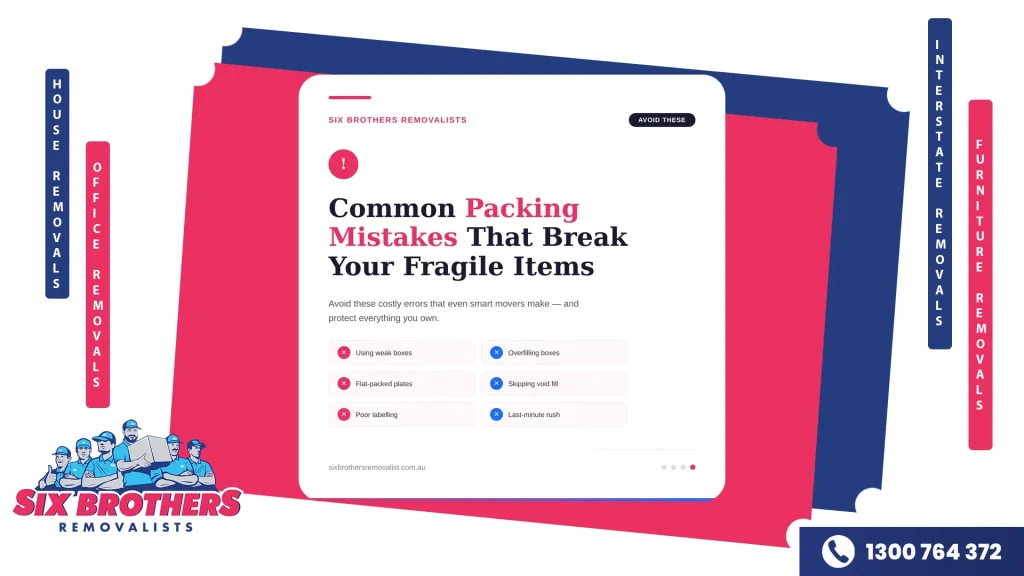
Using Weak Boxes
Old, soggy, or single-wall boxes are a risk. They buckle under weight. Use sturdy boxes or double-corrugated boxes for anything fragile.
Overfilling Boxes
If you can’t close the box flat, it’s overfilled. A bulging box can’t be stacked safely. Items inside get squeezed. Breakage follows.
Skipping Void Fill
Empty spaces inside the box let items shift. That shifting causes impact. Always fill gaps with crumpled paper or packing peanuts.
Flat-Packed Plates
Plates stacked flat puts all the pressure on the plate at the bottom. The one at the bottom cracks first. Always stand plates on their edge.
Poor Labeling
A box without a label is a mystery. Your movers won’t know to treat it gently. Your unpack becomes a guessing game. Label every fragile box clearly.
Late Packing Rush
Waiting until the night before moving day? That’s when mistakes happen. Rushed wrapping. Skipped cushioning. Missing tape.
Start packing fragile items at least a week before your move. Give yourself time to do it right.
A good plan is to pack one room per day. Start with the rooms you use least. Guest bedroom. Study. Garage. Leave the kitchen for last because you’ll need it right up until moving day.
Rushed packing also means you forget things. You skip the label on a box. You forget to fill a gap. You tape the bottom with one strip instead of three. Small shortcuts add up to big problems.
Which Fragile Items You Should Keep With You During a Move
Some things just shouldn’t ride in the truck. No matter how well they’re packed.
Keep these with you in the car:
• Jewellery and small valuables
• Important documents and passports
• Laptops, tablets, and phones
• Family heirlooms with sentimental value
• Medications and anything you need immediately
These are high-value items that would be hard to replace. Carry them yourself. Peace of mind is worth the extra bag in your backseat.
If it’s irreplaceable, it shouldn’t be in a truck with everything else. Simple.
Consider packing a small “essentials box” that rides with you. This box has your chargers, a change of clothes, toiletries, and any fragile items you can’t risk. Keep it on the passenger seat or in the boot.
Also think about items with data. Hard drives, USBs, old photo albums. These aren’t physically fragile but losing them would hurt just as much.
When to Pack Fragile Items Yourself or Hire Sydney Removalists?
Look. Some people love packing. They get satisfaction from organising everything just so. If that’s you, go for it.
But ask yourself two honest questions. Do you have the time? And do you know how to pack fragile items for moving without breaking anything?
If the answer to either is “not really,” it’s smart to hire help.
Professional packing services save time and reduce risk. Experienced removalists have the packing techniques, the right materials, and the muscle memory to handle especially fragile items.
Six Brothers Removalists offer full packing and unpacking services across Sydney. We bring the boxes. The bubble wrap. The paper. The tape. Everything.
Our team handles everything from fragile item packing to loading to delivery. We treat your stuff like it’s ours. Because we know how to pack fragile items for moving. We’ve done thousands of moves and our smart packing methods help your items arrive safely every time.
We use professional-grade packing materials. Not the thin bubble wrap from the dollar store. Not boxes held together with hope. Real materials. Real packing tips applied by people who do this every day.
Whether you need full professional packing or just help with the especially fragile items, we can tailor a removal package to fit. We’ve handled everything from antique china collections to 75-inch TVs to hand-blown glass sculptures.
Want an efficient move with zero breakage? Give us a call on 1300 764 372 or send us an email at info@sixbrothersremovalist.com.au and we’ll sort out a free quote.
Visit us at Suite 1, Level 5, 58/60 Macquarie St, Parramatta NSW 2150, Australia.
You’ve got enough on your plate during a move. Let us take the fragile stuff off your hands.