

Let’s cut to it. You’re moving house. Boxes everywhere. Tape sticking to itself. And then you walk into the kitchen.
That sinking feeling? Yeah, everyone gets it. It’s the most challenging room in the whole house.
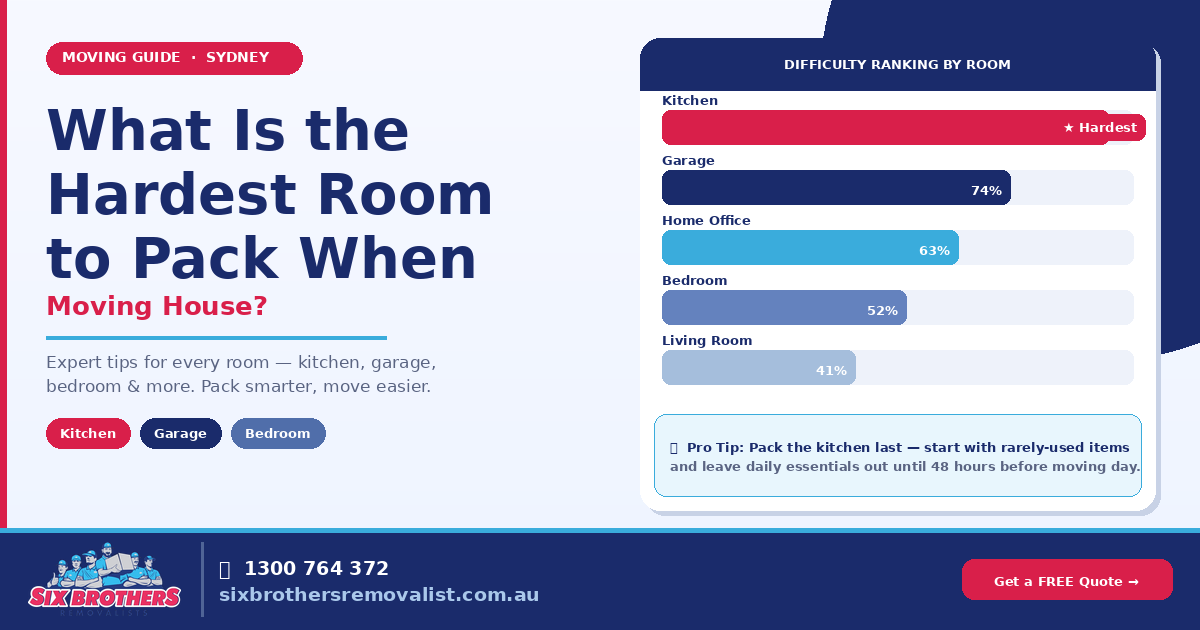
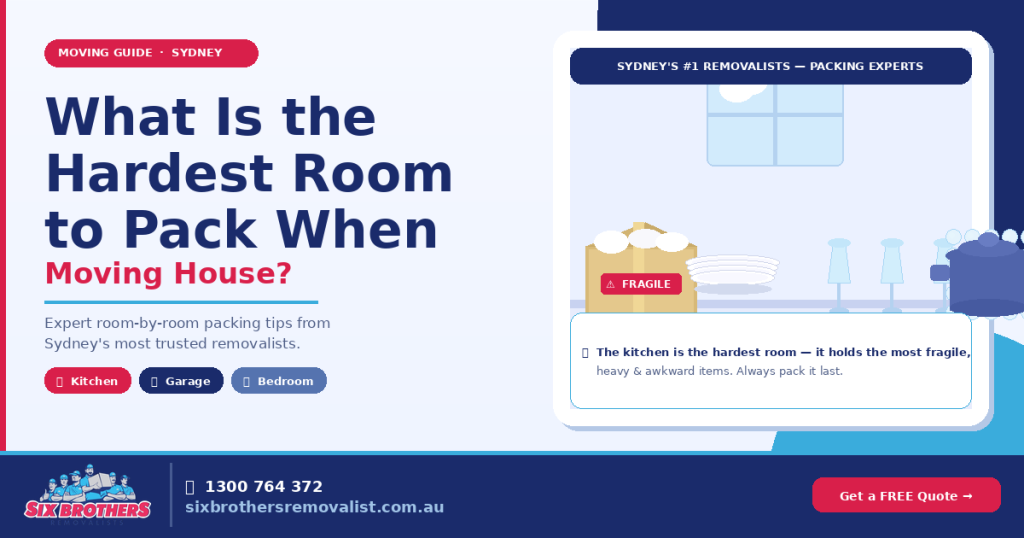
Ask any mover who’s done this a thousand times. They’ll point straight at the kitchen. It’s considered the hardest room to pack in any home. No contest.
Why? Because the kitchen holds a wild combination of fragile items, bulky appliances, tiny utensils, and liquids that love to leak. No other room throws that many curveballs at you.
Most people underestimate the time it takes to sort through kitchen drawers alone. You open one drawer and find a whisk, three sauce packets, a broken timer, and a corkscrew you forgot you owned. Multiply that by every shelf and cabinet.
But here’s the thing. The kitchen isn’t the only room that’s difficult to pack. Garages, bedrooms, and home offices all put up a fight too.
This guide breaks down every room, every challenge. With careful planning and our expert tips on packing each space, you’ll get through it. Plus a best way to pack plates and glasses for moving that actually works.
Ready to tackle it? Let’s go room by room.
What Makes Packing So Hard During a Move?
Before we talk rooms, let’s talk about why packing feels like climbing a mountain in flip-flops.
First, there’s the sheer volume of stuff. Most Sydney homes hold way more than people realise. Years of “I’ll deal with that later” stack up fast.
Then there’s the variety of items. Fragile dishes sit next to heavy cast iron. Tiny screws hide behind bulky power tools. Not everything fits neatly into standard boxes.
Add time pressure. Moving day creeps up on you. You planned to start packing three weeks early. Now it’s two days out and the spare room is still untouched.
And emotions. Packing forces you to touch every single thing you own. Old photos. Kids’ toys they outgrew. That blender you bought with big smoothie plans. Decluttering is draining.
The result? Packing becomes one of the most time-consuming parts of any move. It tests your patience, your body, and your planning skills all at once.
As the old saying goes in Sydney: “She’ll be right” — but not if you leave your kitchen for the last night.
Why the Kitchen Is the Hardest Room to Pack When Moving
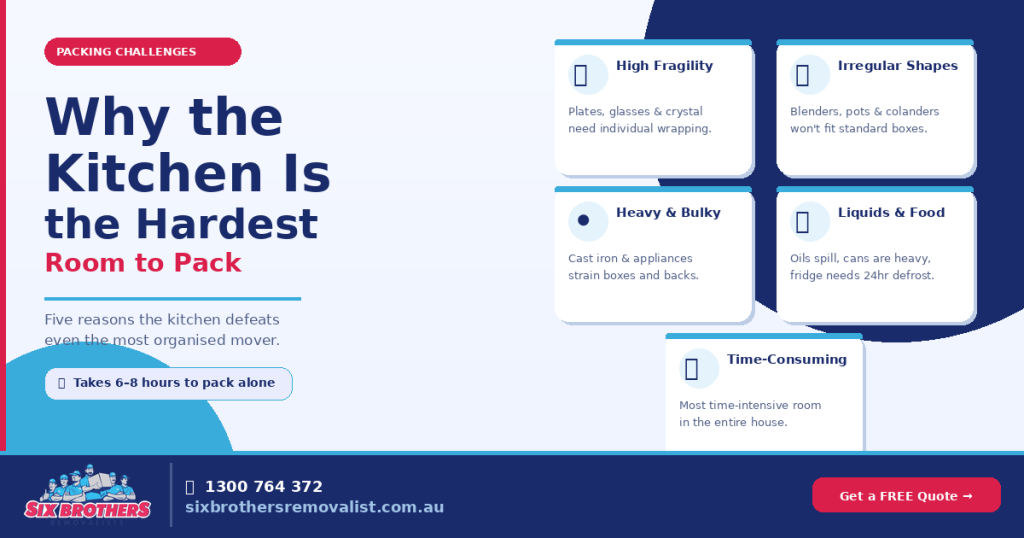
So what makes the kitchen the hardest room to pack? It’s not just one thing. It’s five things hitting you at the same time.
High Fragility
Your kitchen holds more breakable items than any other room in the house. Think about it. Plates. Bowls. Wine glasses. Glassware you got as wedding gifts. Fragile dishes you only use at Christmas.
Every single piece needs bubble wrap or packing paper. One lazy wrap job and you’re sweeping up shards at the new place. The risk of damage is real.
Packing fragile items takes patience. You wrap each plate. You stuff paper between each bowl. You can’t rush it. Every piece needs special care if you want to pack properly.
Want to know the best way to pack plates for moving house? Stand them on their edge like records. Never stack them flat. That small change can prevent breakage.
Irregular Shapes
Kitchen items come in all awkward shapes and sizes. Pots and pans don’t nest neatly. Colanders have handles poking out. That oddly shaped cake tin won’t sit flat in any box.
Small appliances are even worse. Your blender has a base, a jug, and a lid. Your food processor has six attachments. None of these fit neatly into standard boxes without creative arranging.
How do you pack something that’s awkwardly shaped and fragile at the same time? You get creative with packing paper and fill every gap.
Heavy and Bulky
Cast iron pans. Stand mixers. The slow cooker. Bulky appliances weigh a ton.
Pack too many heavy things in one box and it falls apart. Or worse, someone hurts their back lifting it. This is where sturdy boxes matter. Use small boxes for heavy items. It sounds backwards, but it saves your box and your spine.
Cookware is dense. Pots and pans stack, but they’re still heavy. Spread the weight across multiple boxes.
Perishables and Liquids
Here’s a challenge no other room gives you. The kitchen has food.
Pantry items need sorting. Canned goods are heavy. Spices leak. Oils spill. Cleaning supplies under the sink can be toxic if they mix.
You need to sort through the pantry, toss expired stuff, and figure out what travels and what doesn’t. Seal every bottle tight. Double-bag anything liquid to avoid leaks.
Pro tip: defrost your fridge 24 hours before moving day. Seriously. Nobody wants a puddle in the truck.
Time-Consuming
Put it all together and the kitchen is the most time-consuming room to pack in the house. It’s not unusual for a full kitchen to take six to eight hours.
That’s a full work day. Just for one room.
Between wrapping each fragile piece, sorting pantry items, disconnecting small appliances, and dealing with liquids, the kitchen eats up your clock like nothing else.
This is exactly why many people call professional movers for help. It’s not lazy. It’s smart.
Other Difficult Rooms to Pack When Moving House
The kitchen gets the crown. But other rooms in a house put up a solid fight too. Here are the runners-up.
The Garage/Shed
Garages and storage areas are sneaky hard. They collect years of “I might need this” items.
Power tools. Holiday decorations. Paint cans. Half-empty bags of potting mix. Garden hoses that tangle into knots you’ll never undo.
The garage is where unique challenges live. You’ve got sharp objects next to fragile things. Heavy gear next to light plastic bins. Nothing matches.
You’ll need to sort everything first. Toss or donate what you don’t need. Then pack what’s left using proper labels so you can find your drill on the other side.
Home Office
If you work from home, the office is a sneaky difficult room to pack. Electronics require careful handling. Monitors, printers, and hard drives don’t like bumps.
Keep cables together. Label which cable goes where. If you still have original boxes for your monitor or computer, use them. That original packaging was designed for this exact purpose.
Small items pile up fast in an office. Pens, chargers, sticky notes, random USB sticks. Toss them in a labelled bag so you don’t lose track.
Bedroom
Bedrooms seem easy until you start. Clothes fill boxes fast. Shoes take up awkward space. And that wardrobe? You might need to disassemble the frame.
Mattresses need covers. Bedding fills big bags. And everyone has “the drawer.” You know the one. Full of random cables, old phones, and things that have no home.
Sort through it before you pack. Decluttering the bedroom first saves you boxes and time.
Living Room
The living room throws a few curveballs. Big furniture needs wrapping or disassembly. TVs are fragile and expensive.
Bookshelves hold more weight than you’d expect. And wall art with glass frames? Treat them like fragile dishes.
Small items like remotes, game controllers, and coasters vanish during moves. Bag them together and label the bag.
Hardest Room to Pack by Home Type in Sydney
Not all homes are built the same. What’s hardest depends on where you live.
Sydney Apartments
In a Sydney apartment, the kitchen is still the toughest room to pack. But the real problem is space. You’ve got no room to stage boxes. Everything gets packed and stacked in the hallway.
Apartments often have compact kitchens with tight cabinets. Every utensil and bowl is crammed in. Getting it all out takes time.
Family Houses
Family houses have more rooms to pack. The kitchen stays the biggest job, but the garage runs a close second.
Kids’ rooms add chaos too. Toys, books, and games scatter everywhere. Getting three or four bedrooms packed is a marathon.
Shared Homes
Shared homes bring a different headache. Whose stuff is whose? That blender in the kitchen. Who bought it?
Sort ownership first. Label everything with names. Pack your own things separately so moving day doesn’t turn into a courtroom drama.
Downsizing Moves
When you’re downsizing, every room is hard. You’re not just packing. You’re deciding what stays in your life.
The kitchen hits hardest here too. Twenty years of cookware, appliances, and pantry items don’t fit into a smaller space. Decluttering is painful but necessary.
Best Order to Pack Rooms When Moving House
What room should you pack first when moving? Glad you asked. Order matters more than people think.
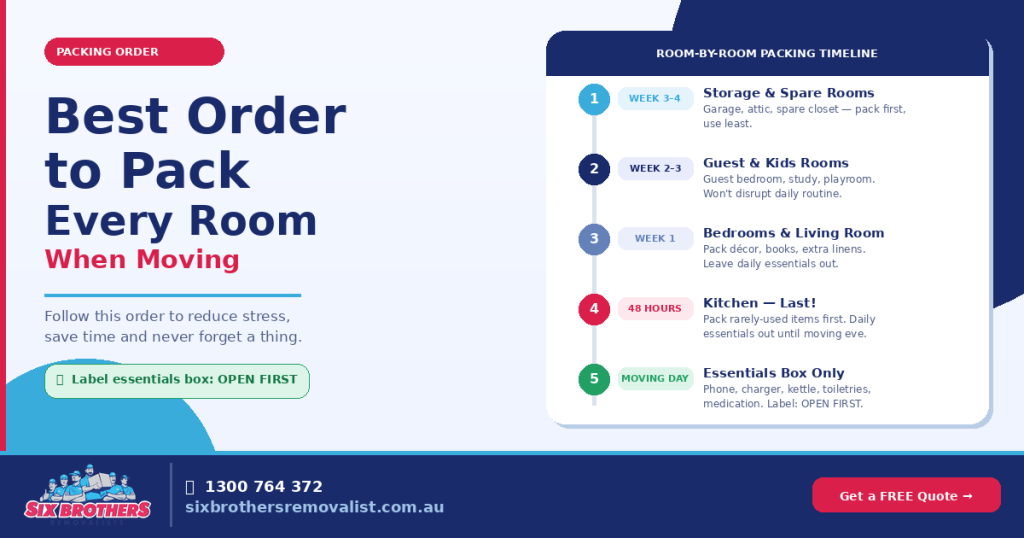
Here’s a moving house packing timeline that works.
Start With Storage
Begin packing the rooms you use least. Garages and storage areas, the attic, and the spare closet. These are out of the way and won’t mess up your daily routine.
Then Spare Rooms
Guest bedrooms, the study, and the kids’ playroom go next. Pack them a week or two before moving day. You won’t miss them much.
Leave Kitchen Late
Pack the kitchen last. You need it every day. Start boxing up rarely used kitchen items early. Things like the waffle maker, holiday platters, and extra glassware.
But leave your daily essentials out until two days before the move.
Keep Essentials Out
What to pack first when moving house is just as important as what to pack last.
Keep a box of essentials unpacked until the very end. Phone charger. Toiletries. Kettle. Mugs. Snacks. Toilet paper. Medication. A change of clothes.
Label it “OPEN FIRST” so it’s the first thing you unpack at the new place. This small step will make unpacking so much smoother.
Essential Packing Supplies for Every Room During a Move
Before you tape a single box shut, gather your packing supplies. Running out halfway through is a nightmare.
Here’s what you need. Sturdy boxes in small, medium, and large sizes. Packing paper for wrapping fragile items. Bubble wrap for extra protection on glassware and electronics. Strong packing tape. A thick marker for labels. Zip-lock bags for small items and screws. Stretch wrap for furniture. Mattress covers.
Don’t skimp on packing materials. Cheap boxes collapse. Thin tape peels off in the truck. Invest in proper supplies and your stuff arrives safe.
You can pick these up at any moving supply store. Or ask your removalists if they offer a packing kit. Many moving companies include supplies with their professional packing services.
How to Pack the Kitchen Like a Pro for a Move
You’ve seen why the kitchen is the challenge. Now let’s talk about how to pack the kitchen like a pro. Here’s your room by room moving checklist for the kitchen.
Start by emptying the pantry. Sort pantry items into keep, toss, and donate piles. Anything expired goes in the bin. Canned goods are heavy so pack them in small boxes.
Next, tackle the fragile stuff. Wrap each plate in packing paper. Stand plates on their edge in boxes. Wrap wine glasses individually. Use bubble wrap on anything extra delicate.
Now the appliances. How to pack kitchen appliances for moving? Unplug small appliances a day before. Wrap cords around the base and tape them. If you kept the original packaging, use it. If not, wrap the appliance in packing paper and place it snug in a box.
For cookware, nest pots and pans together. Place packing paper between each pan to prevent scratching. Wrap lids separately or bundle them with rubber bands.
Utensils go in zip-lock bags or bundles. Knives need cardboard sleeves. Don’t just toss them loose in a box. That’s how people get cut on moving day.
Last, deal with the fridge. Defrost it 24 hours ahead. Toss perishables. Wipe it down. Leave the door cracked so mould doesn’t grow in transit.
How to pack dishes and glasses for moving without breakage? Layer the bottom of the box with crumpled paper. Place heavy items at the bottom. Fill every gap with paper or bubble wrap. If you can shake the box and hear rattling, add more padding.
Tips for Packing the Kitchen Efficiently When Moving
Want to pack your kitchen faster without the stress? These expert tips on packing will help.
Pack Early
Start two to three weeks before moving day. Begin with things you rarely use. Holiday serving dishes. The fondue set. Specialty baking tools.
Leave daily items like mugs, a pot, and basic utensils for the last 48 hours.
Use Proper Supplies
Don’t grab random boxes from the supermarket. They’re flimsy and different sizes. Use sturdy boxes meant for moving. Dish-pack boxes are taller and thicker for a reason.
Wrap everything. Even if it seems tough enough to survive. One bump in the truck can crack a bowl you thought was fine.
Pack Vertically
This tip alone saves breakage. Pack plates, cutting boards, and baking sheets vertically. Like books on a shelf. Vertical packing spreads force across the item instead of focusing it on a single point.
Use this trick for how to pack plates for moving house. It works every time.
Label Everything
Every box needs a label. What’s inside. Which room it goes to. And whether it’s fragile.
Label everything on the top and the side. Boxes get stacked. If the label is only on top, you can’t read it once another box sits on it.
This step alone will make unpacking faster. Your movers will thank you too. They can sort boxes by room instead of guessing.
Write “KITCHEN — FRAGILE” on anything breakable. Write “KITCHEN — HEAVY” on pots and pans. Simple labels save time.
Common Packing Mistakes to Avoid When Moving House in Sydney
Moving in Sydney has its own wrinkles. Tight parking. Stairs. Summer heat. Here are mistakes that trip people up.
Waiting too long to start. Sydney traffic alone can blow your moving day schedule. Pack ahead so the truck rolls on time.
Overpacking boxes. One big box full of books weighs a ton. Keep heavy items in small boxes. Mix heavy and light in medium boxes.
Forgetting to protect floors and walls. Sydney apartments often have strata rules. Scratched floors or dinged hallways can cost you your bond. Wrap furniture corners. Lay down floor runners.
Not checking parking permits. Many Sydney streets need council permits for moving trucks. Check your local council at least a week out.
Ignoring the weather. Moving in January heat? Keep water bottles handy. Wrap anything heat-sensitive. Chocolate in a hot truck becomes a sticky mess.
Skipping the moving house packing checklist. A checklist keeps you sane. It’s your map through the chaos. Without one, you’ll forget something important.
Storage Solutions During a House Move
Sometimes everything doesn’t go to plan. Settlement delays. Renovations running late. The new place isn’t ready yet.
That’s when storage saves you. Short-term storage lets you move out on time and move in when the place is ready.
Look for storage that’s clean, secure, and accessible. Climate-controlled units protect fragile items and electronics from Sydney’s humidity.
Garages and storage sheds work for short stints. But for anything longer than a week, a proper facility is safer.
Pack storage boxes the same way you’d pack for a move. Label every box. Keep an inventory list. Stack heavy boxes at the bottom and light ones up top.
If you’re doing a big move, ask your removalists about storage options. Many moving companies bundle storage with their service. It simplifies the process and keeps everything with one team.
Professional Packing Services vs DIY Packing
So should you pack it all yourself? Or hire professional movers to handle it?
Here’s the honest answer. It depends on your budget, your timeline, and your patience.
DIY packing saves money. You control everything. You decide what goes where. But it takes way more time. And if something breaks because you wrapped it wrong, that’s on you.
Professional packing services cost more upfront. But they’re fast and thorough. A team of experienced movers can pack a full kitchen in a couple of hours. They’ve got the packing materials, the technique, and the muscle.
Think of it this way. Is packing your kitchen yourself worth a full weekend of stress? Or would you rather spend that time with family while experts handle the heavy lifting?
If you’re moving across Sydney or interstate, professional help makes even more sense. Long-distance moves have more bumps. Literally. Your stuff spends more time in the truck. Professional wrapping holds up better.
At Six Brothers Removalists, we’ve packed thousands of kitchens, garages, and offices across Sydney. We know which box fits what. We know how to pack plates and glasses so they arrive whole. And we do it without eating up your entire weekend.
Give us a call at 1300 764 372 or email info@sixbrothersremovalist.com.au. We’re based at Suite 1 Level 5, 58/60 Macquarie St, Parramatta NSW 2150.
Whether you need a full pack or just help with the hard to pack rooms, we’ve got you sorted.
Because honestly? Life’s too short to spend it wrapping wine glasses in newspaper at midnight. Let the experts handle it. You’ve got better things to do.