


Picture this. You stack the last box. You lock the front door. Then the bill lands like a brick. Moving interstate can feel like that, right? One quote says one thing. The truck arrives and the price grows legs.
So which model wins? Fixed-price interstate moving or hourly moving? That question keeps a lot of Sydney folks up at night. We hear it every week at Six Brothers Removalists. You want a clear answer, not a sales pitch.
Here is the deal. Both models can save you money. Both can also burn you. It all comes down to your home size, your route, and your move date. Let us break it down in plain words.
Why Interstate Moving Prices Can Feel Risky
Long-distance moves carry many moving parts. Fuel. Tolls. Traffic. Stairs. Parking. Each one can nudge the cost up. So a quote can feel like a guess wrapped in hope.
There is an old saying in the bush. You do not know the depth of the river by its surface. Moving quotes work the same way. The number on top hides a lot underneath. Most stress comes from one thing. The fear of a surprise charge. You budget for one figure. Then a fuel levy or a stair fee shows up. Nobody likes that gut punch on moving day.
Knowing how each pricing model works kills that fear. When you understand the rules, you stop guessing. You start planning. And a planned move is a calm move. Interstate moves cost more than local ones for good reason. The truck drives for hours, not minutes. Fuel burns the whole way. Crews give up a full day or two on the road. All of that sits inside your quote.
Then come the wildcards. A road closure near Albury. A storm on the Hume. A lift that breaks in your new block. These small events can shift the cost in either direction. The pricing model decides who carries that risk. Fixed-price hands the risk to the mover. Hourly keeps the risk with you. That single fact shapes the whole choice.
So the goal is not to find the cheapest model. The goal is to find the model that fits your move and your nerves. A good mover helps you do exactly that. We always explain both before you book.
Fixed-Price Interstate Moving Explained
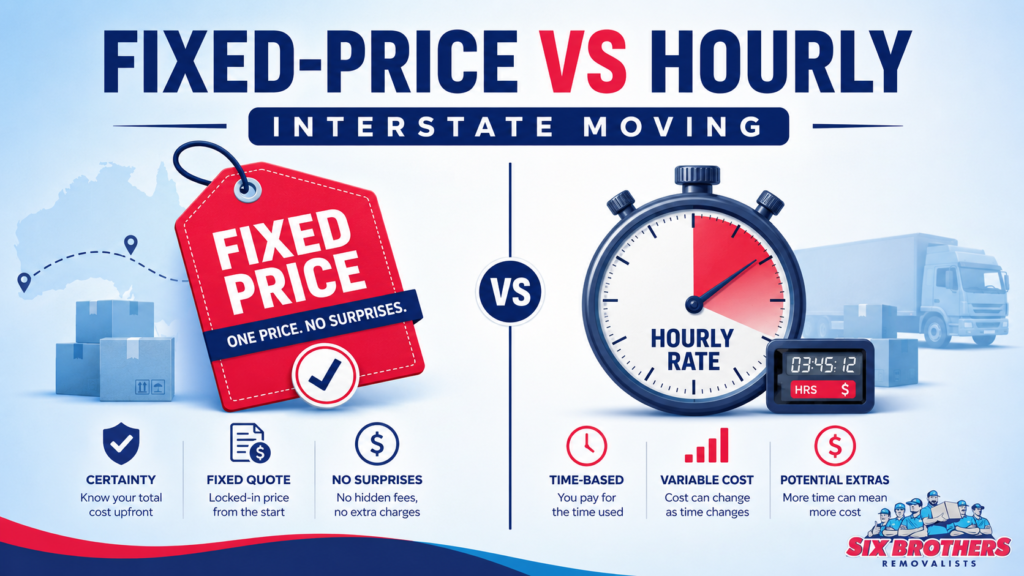
Fixed-price moving locks one number for the whole job. The mover looks at your stuff. They check the distance. They count the stairs and the access points. Then they hand you a set price. That price does not change on the day. It does not matter if traffic is bad. It does not matter if the lift is slow. You pay what you agreed. Simple as that.

Think of it like a flat-rate taxi to the airport. You know the cost before you climb in. No meter ticking. No sweaty math at every red light. Good fixed quotes start with a survey. The mover may visit your home. Or they may run a video call. Some use a detailed online form with photos. The more they see, the sharper the price.
That survey matters more than people think. It lets the mover spot the hard bits early. Narrow stairs. A piano. A fridge that fights the doorway. They price for reality, not a rough guess. Once both sides agree, the number is set. You sign. You relax. The mover now owns the timing risk. If the day runs long, that is on them, not your bank account.
Pros of Fixed-Price Moving
• Total cost certainty. You know the final figure upfront. That makes budgeting easy. No nasty shocks when the job ends.
• Less stress on the day. You stop watching the clock. Slow lifts and traffic become the mover’s problem, not yours.
• Easy to compare. One price next to another price. You can weigh quotes side by side without a calculator.
• Protects against delays. A flat tyre or a road closure will not blow your budget apart. The risk sits with the company.
• Better for planning. You can lock the date, the cost, and your loan timing in one go. That helps if you juggle a sale and a move.
Cons of Fixed-Price Moving
• Built-in buffer. Movers pad the price for worst-case days. So you may pay a little extra for that safety.
• Needs a proper survey. A good fixed quote needs a home check or a detailed list. Skip that and the number gets shaky.
• Less flexible. Add a few boxes at the last minute and the scope can change. That may trigger a new quote.
• Not always cheapest. For a tiny, easy load, the buffer can cost more than a quick hourly job would.
Best Situations for Fixed-Price Moving
Fixed-price shines for big homes and long routes. Are you moving a packed three-bedroom house from Sydney to Melbourne? Lock the price and sleep well.
It also suits anyone on a tight budget. If a surprise bill would hurt, certainty is worth gold. Families and first-home movers love this peace of mind. It works well for tricky homes too. Lots of stairs? A long carry to the truck? A flat rate means those slow spots cost you nothing extra. The mover already priced them in.
And it suits busy people. If you cannot babysit the move all day, fixed-price frees you. You hand over the job and get on with your life. The price will not move while your back is turned.
Hourly Interstate Moving Explained

Hourly moving charges by time. The clock starts when the crew begins. It stops when the last item lands. You pay a rate per hour, plus any extras like fuel or tolls. This model rewards a fast, smooth job. Pack well and the hours drop. Drag your feet and the hours climb. You hold real control over the meter.
It works like paying a tradie by the hour. Quick job, small bill. Messy job, bigger bill. Your prep work directly shapes the cost. Most hourly quotes name a minimum. You might pay for three hours even if the job takes two. That floor protects the mover for short bookings. Always ask what the minimum is.
The hourly rate often covers the truck and the crew. But the drive between cities still counts as time. On an interstate run, that travel can be the biggest chunk. Factor it in before you choose. Some movers also bill travel to and from their depot. So the meter may start before they reach your door. Read the terms so you know when the clock truly begins.
Pros of Hourly Moving
• Pay only for time used. A quick, tidy move can cost less than a padded flat rate. Speed saves you cash.
• Great for small loads. Studio flats and one-bed units often finish fast. Hourly suits these light jobs well.
• Flexible scope. Add a box or two and the price just shifts a little. No big re-quote needed.
• Rewards good prep. Boxes packed and labelled? The crew flies. Your effort trims the final number.
• Simple to book. No full survey needed. A quick chat about your load can be enough to get started.
Cons of Hourly Moving
• Cost can balloon. Bad traffic or tricky parking adds hours. The meter does not care about your budget.
• Hard to predict. You cannot know the final cost upfront. That uncertainty stresses some movers out.
• Risk on long routes. Interstate trips mean long drive times. Every slow hour adds to your bill.
• Punishes poor prep. Half-packed boxes slow the crew right down. Your mess becomes your cost.
Best Situations for Hourly Moving
Hourly fits small, simple moves. A studio or a one-bed unit with easy access? You will likely save money here. It also suits well-prepped movers. If you pack early and stack boxes by the door, the crew moves fast. Your speed becomes your discount.
Short interstate hops can work too. A Sydney to Canberra run is far shorter than a Perth trip. Less drive time means less risk on the meter. Hourly stays sensible on these routes. And it suits flexible movers. If your load might change, hourly bends with you. You will not need a fresh quote for one extra wardrobe box. The price simply tracks the real work.
Which Interstate Moving Option Is Better in Sydney?
Here is the honest truth. Neither model wins every time. The right choice depends on your move. But Sydney throws in a few twists worth knowing. Sydney streets are tight. Parking is brutal. Many homes sit in walk-up flats with no lift. These factors stretch hourly moves and add real risk.
For most Sydney interstate moves, fixed-price feels safer. You dodge the parking lottery and the traffic gamble. You pay one fair number and move on. But small loads with easy access can still win with hourly. A ground-floor studio in a quiet street? Hourly might beat a flat rate every time. Want to weigh it up fast? Try our home moving calculator before you book.
Sydney demand also swings hard by season. Summer and end-of-month dates get slammed. Crews book out and roads clog up. Both models cost more then, but hourly feels it worse. So think about your own move first. Big home, long route, peak date? Lean fixed. Small load, easy access, quiet day? Lean hourly. The city just nudges most people toward certainty.
Sydney’s spread matters as well. A move from Parramatta differs from one in the eastern suburbs. Inner-city streets fight trucks for space. Outer areas may offer easy parking but longer drives. Each pocket shifts the math.
Our crews work across more than 600 Sydney areas. We see these quirks every day. That local know-how lets us quote you the smarter model. We will not push a price that does not fit your street.
What Factors Affect the Choice Between Fixed-Price and Hourly Interstate Moving?
A few key things tip the scale. Get these clear and the right model jumps out at you.
• Home size. Big homes favour fixed-price. Small loads often favour hourly.
• Route distance. Longer trips add drive time. That makes hourly riskier on the budget.
• Access and stairs. Lots of stairs slow a crew. Hourly costs climb with every flight.
• Your prep level. Packed and ready? Hourly rewards you. Not ready? Fixed-price protects you.
• Move date. Peak days bring traffic and demand. That pushes hourly costs up fast.
• Your budget nerves. Hate surprises? Pick fixed. Happy to chase savings? Hourly can pay off.
Run your move through this list. Count how many points push each way. The model with more ticks is usually your best bet. It is a quick gut-check that works.
Still torn? Ask your mover to quote both ways. A good company will. You can then see the real gap in dollars. That makes the call easy.
Sydney Interstate Quote Factors That Affect Pricing
Every Sydney quote hides a few cost drivers. These shape both fixed and hourly prices. Know them and no quote will blindside you.
Apartment Access
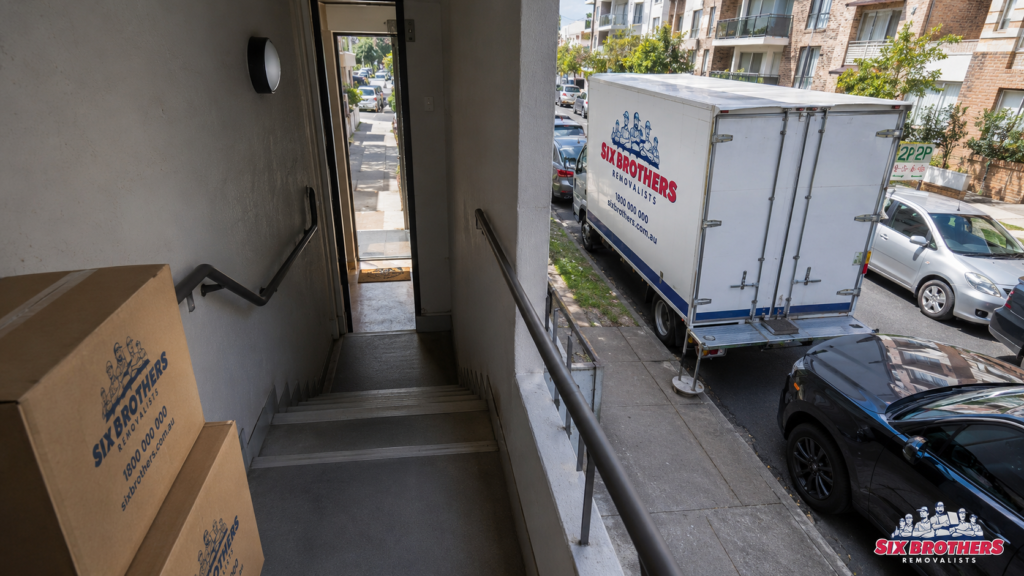
Lifts, stairs, and long carries all matter. A fifth-floor walk-up costs more than a ground-floor unit. Crews need extra time and muscle for hard access. Tell your mover about access early. A clear picture means a sharper quote. Hidden stairs are the number one cause of a blown hourly bill.
Lift size counts too. A small lift means many trips up and down. That slow shuffle adds real minutes. On an hourly job, those minutes turn into dollars fast.
Route Distance
Distance drives fuel and drive time. A Sydney to Adelaide run differs from a short hop. Longer routes lean toward fixed-price for safety. Backloading can cut this cost a lot. Sharing truck space on a set route saves real money. Our interstate backloading service does exactly that.
Distance also shapes the timeline. A long route may mean an overnight stop. That can add a day to delivery. Ask about the arrival window so you can plan your first night.
Toll Roads
Sydney tolls add up fast on a big move. Most quotes pass these costs to you. Ask if tolls sit inside the price or land as an extra. A fixed-price quote usually bundles tolls in. Hourly quotes often add them on top. Always check before you sign anything.
Parking Limits
Tight parking forces long carries. A truck stuck a block away means more walking. That eats hours on an hourly job. Reserve a spot near your door if you can. A clear loading zone speeds the whole job. Less walking means a smaller bill.
In some Sydney councils you can book a temporary zone. It costs a small fee but saves big on time. Ask your mover if it is worth it for your street. On a busy road, it often is.
Why Peak Season Can Make Hourly Interstate Moving More Expensive
Peak season changes the game. Summer weekends and end-of-month dates draw crowds. More demand means slower roads and busier crews. Hourly moves feel this pain the most. Heavy traffic adds drive time. A two-hour leg can stretch to three. That is one more hour on your bill.
Why does this matter so much? Because hourly cost rides on time. And peak days steal time at every turn. The meter never sleeps in a traffic jam. Demand also lifts the hourly rate itself. When crews are scarce, prices rise. So you face a double hit. More hours and a higher rate per hour.
Fixed-price stays steady through the rush. You agreed a number. Peak chaos becomes the mover’s risk, not yours. For more on dates and savings, see our guide to the cheapest month to move in Sydney.
The simple fix is to move off-peak when you can. A mid-week, mid-month date dodges the worst. Roads run clearer and crews cost less. Both models get cheaper, but the win is huge for hourly.
When Fixed-Price Interstate Moving Is the Better Choice
Some moves scream out for a flat rate. Spot these signs and lock your price with confidence.
• You move a large, full home across a long route.
• Your budget has no room for a surprise charge.
• Your home has tricky access, stairs, or tight parking.
• You move during a busy peak-season window.
• You want zero stress and total cost certainty.
If two or more of these fit you, fixed-price is your friend. It trades a small buffer for big peace of mind. That swap is worth it for most families.
When Hourly Interstate Moving Can Still Work
Hourly is not the villain here. For the right move, it saves real cash. Look out for these green lights.
• You move a small load like a studio or one-bed unit.
• Your access is easy with no stairs or long carries.
• You packed early and stacked everything by the door.
• You move on a quiet weekday, off-peak.
• You can park the truck right at your door.
Tick most of these and hourly may win the day. A speedy van move is built for exactly this kind of quick, light job.
How to Compare Fixed-Price and Hourly Moving Quotes
Comparing quotes feels like comparing apples and oranges. One shows a flat number. One shows a rate plus extras. Here is how to line them up fairly.
Written Scope
Always get the scope in writing. What rooms? What items? What access? A clear written scope stops arguments later.
A vague quote is a red flag. If a mover will not detail the job, walk away. Good removalists put it all on paper. List the big items by name. Fridge, sofa, bed, washer, piano. Naming them stops a mover from claiming surprise later. It also keeps a fixed price truly fixed.
Included Fees
Check what sits inside the price. Fuel, tolls, stairs, and insurance can hide as extras. Ask for the all-in number every time. Two quotes can look far apart on paper. But once you add the hidden fees, they may match. Compare the true total, not the headline.
Common add-ons trip people up. A heavy-item fee. A stair fee. A weekend surcharge. Ask for the full list so nothing jumps out on the day.
Variation Clauses
Read the fine print on changes. What happens if the job runs long? What if you add boxes? A fair clause sets clear rules for both sides. Watch for vague wording here. Open-ended clauses can balloon your bill. A solid mover spells out every what-if.
Ask one key question. If the scope grows, how is the new cost worked out? A fair answer gives a clear rate or a fresh quote. A dodgy answer leaves it open. That open door can cost you.
Quote Red Flags
Some warning signs scream trouble. A price far below the rest. No written scope. Pushy deposit demands. Trust your gut on these.
A quote that seems too good often is. Learn the common traps in our guide to red flags with moving companies. A little homework saves a big headache. Check reviews and an ABN too. A real, rated mover stands behind its work. No fixed address or no reviews? That is a sign to keep looking. Your stuff is worth a careful choice.
How to Save Money No Matter Which Interstate Pricing Model You Choose
Want a smaller bill on any move? You hold more power than you think. These simple steps cut costs across both models.
• Declutter first. Sell or donate what you do not need. Less stuff means less to move and a lower price.
• Pack yourself. Box your own goods early. You save on packing fees and speed up an hourly crew.
• Move off-peak. Pick a quiet weekday. You dodge demand and beat the worst of the traffic.
• Book early. Lock your date weeks ahead. Last-minute moves cost more and limit your choices.
• Use backloading. Share truck space on a set route. It is one of the cheapest ways to move interstate.
• Clear the access path. Reserve parking and clear the stairs. A smooth path trims time and cost.
Did you know a removalist insurance plan also protects your wallet? It covers damage on the road. A small spend now can save a big loss later.
One more tip. Book a mover who knows your route well. Experience cuts wasted time and dodges known traffic spots. A local crew with interstate runs under their belt is worth every cent. And do not skip the walk-through. Show the crew where everything goes at the new place. Clear labels on boxes help too. A planned unload is a fast unload, and fast always costs less. A few minutes of guidance can shave a whole chunk off your final hour.
The Bottom Line on Fixed-Price Versus Hourly
So, fixed-price or hourly? There is no single winner. There is only the right fit for your move. Match the model to your home, route, and date, and you win either way.
Choose fixed-price when certainty matters most. Big home, long route, peak date, or a tight budget? Lock the number and breathe easy. The mover carries the risk so you do not have to. Choose hourly when speed is on your side. Small load, easy access, quiet day, and boxes packed? Pay for the time you use and pocket the difference. Your prep becomes your saving.
Either way, the real secret is a good mover. A clear quote. A written scope. Honest answers to your what-ifs. That is what keeps a move calm from start to finish.
Ready to get a clear, honest quote? Call Six Brothers Removalists on 1300 764 372 or email info@sixbrothersremovalist.com.au. We will help you pick the model that saves you the most. Our Parramatta team has your back from quote to keys.
Quick Answers to Common Interstate Pricing Questions
Is fixed-price always more expensive than hourly?
No. Fixed-price holds a buffer, but it can still win. On a big or tricky move, that buffer often beats a runaway hourly bill. It depends on the job.
Can hourly moving go over the quote?
Yes. Hourly only estimates the hours. The real cost rides on the day. Traffic, stairs, and slow parking can push it past the guess.
Which is cheaper for a small interstate move?
Hourly usually wins for small, easy loads. A studio or one-bed unit on a short route fits this well. Pack early to keep the hours low.
Does backloading work with both models?
Yes. Backloading shares truck space on a set route. It can lower the cost under either pricing model. It is one of the cheapest ways to move interstate.